

Inspection · Huvadhoo Atoll, Maldives
Park Hyatt Maldives Hadahaa
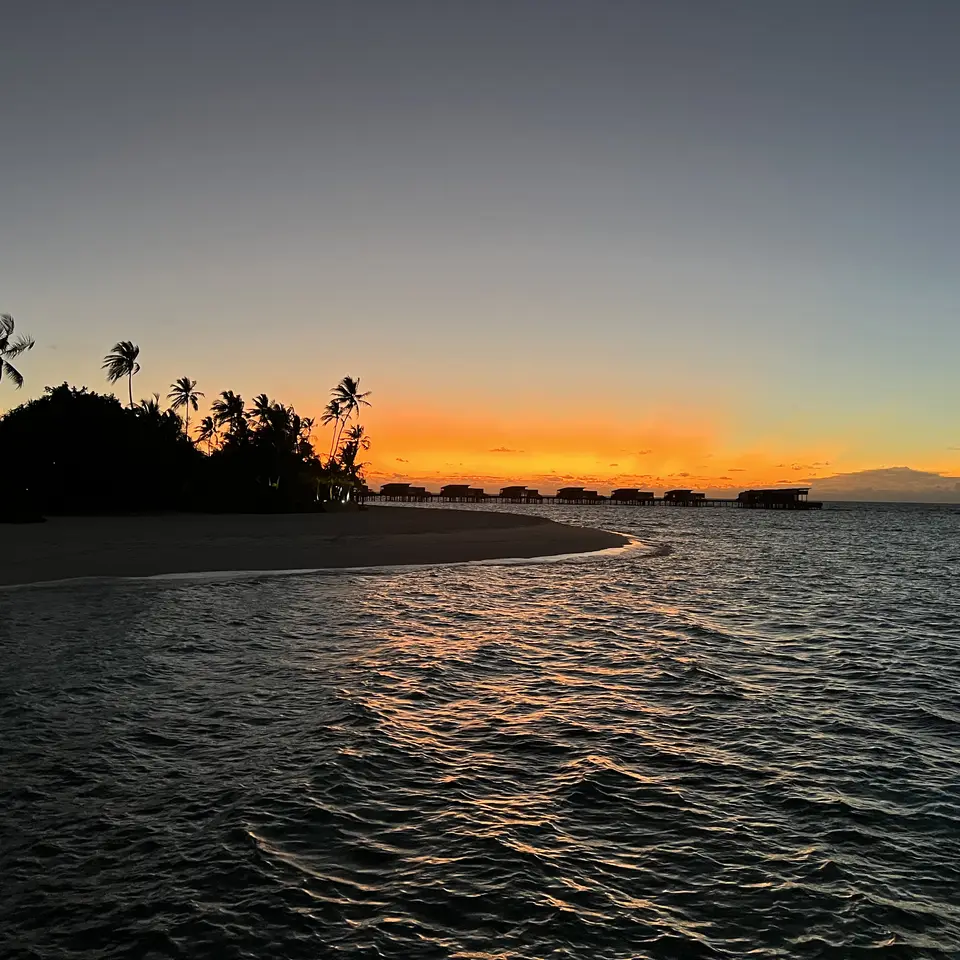
An island with nothing on the horizon, fifty kilometres north of the equator.
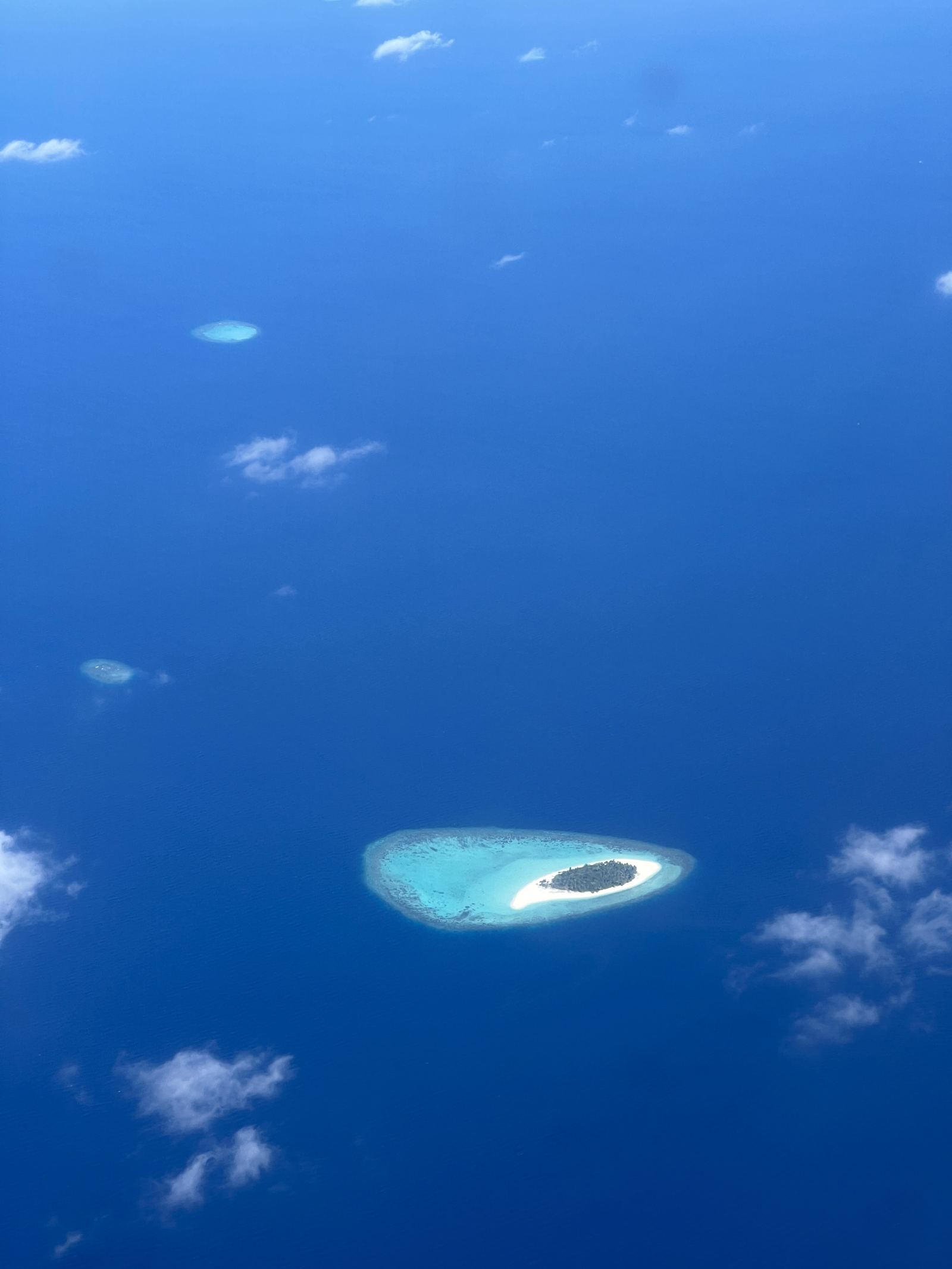
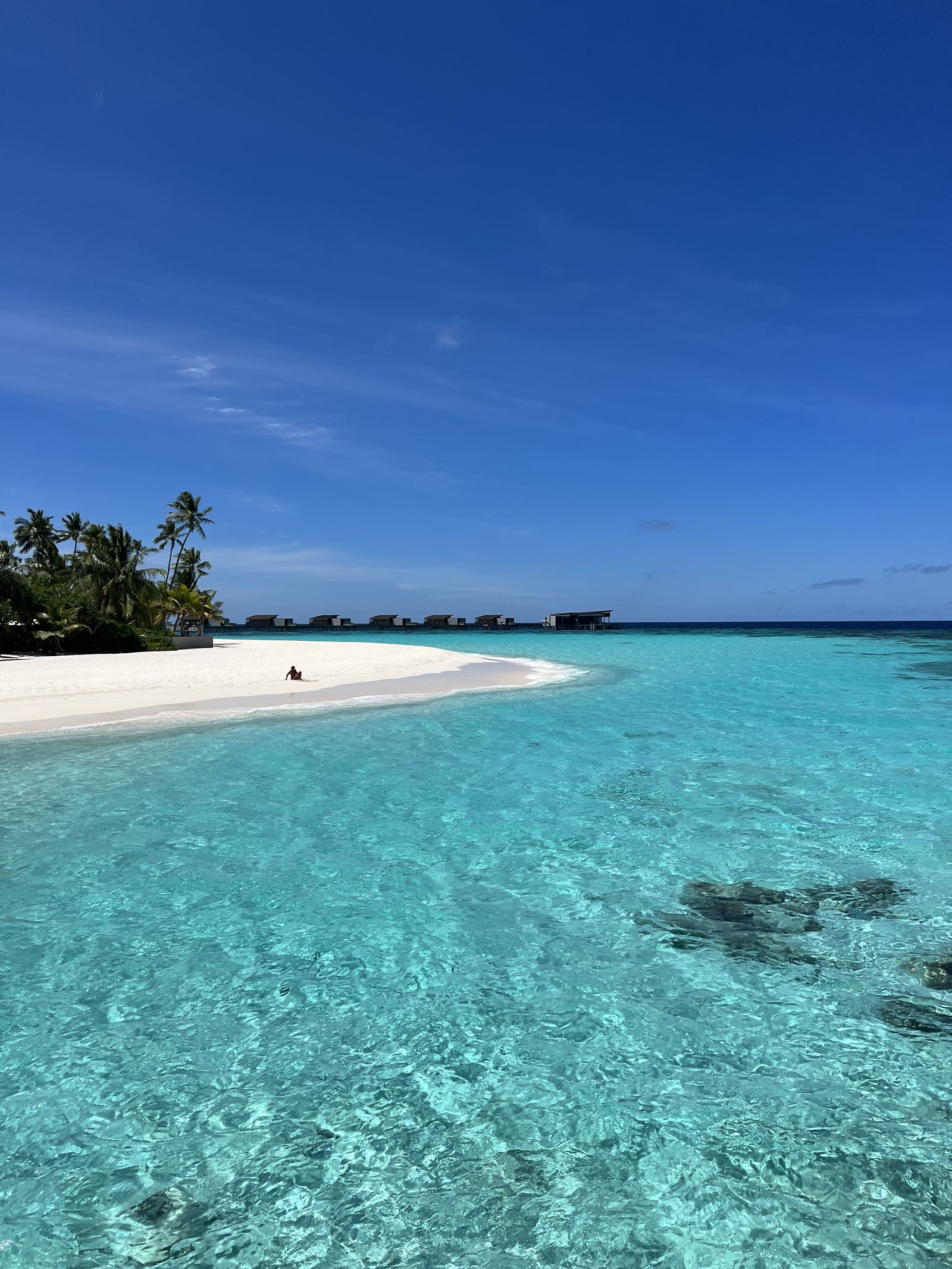
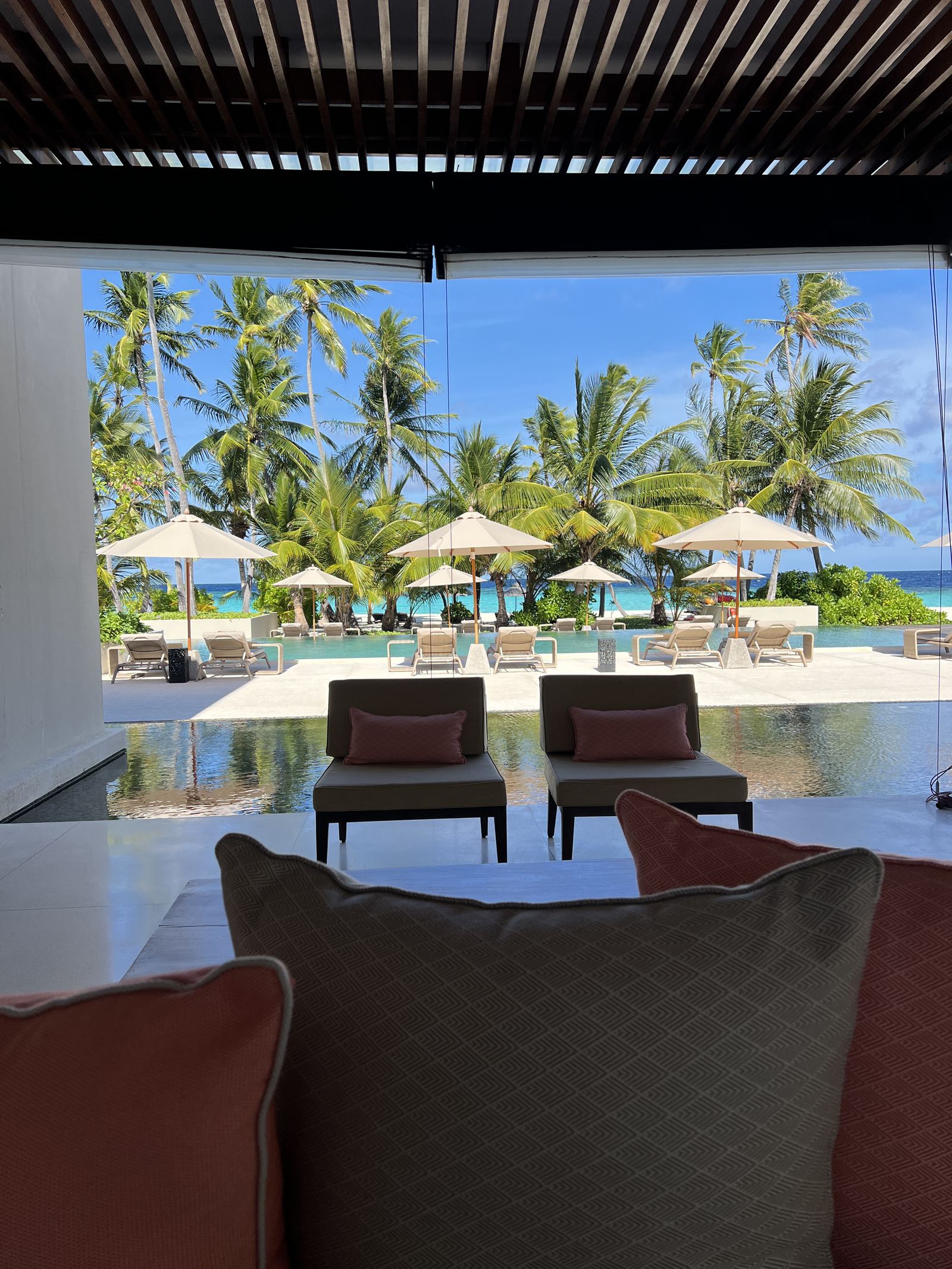
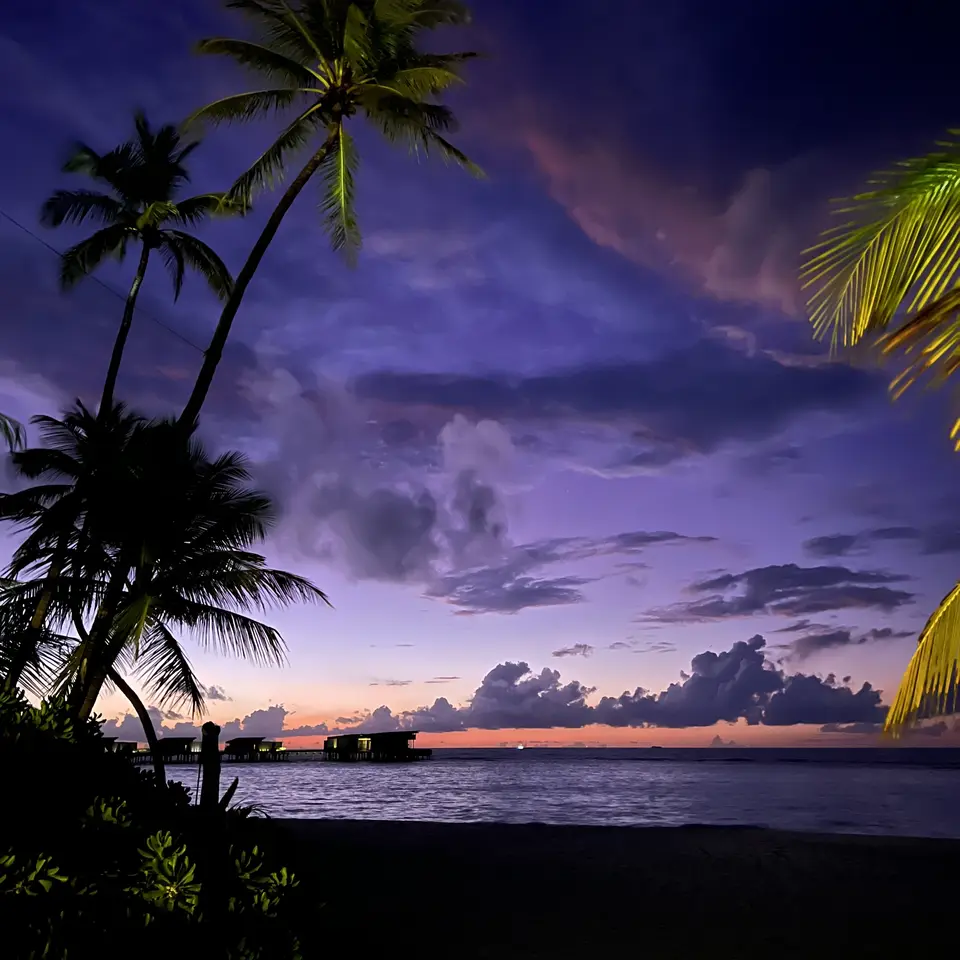
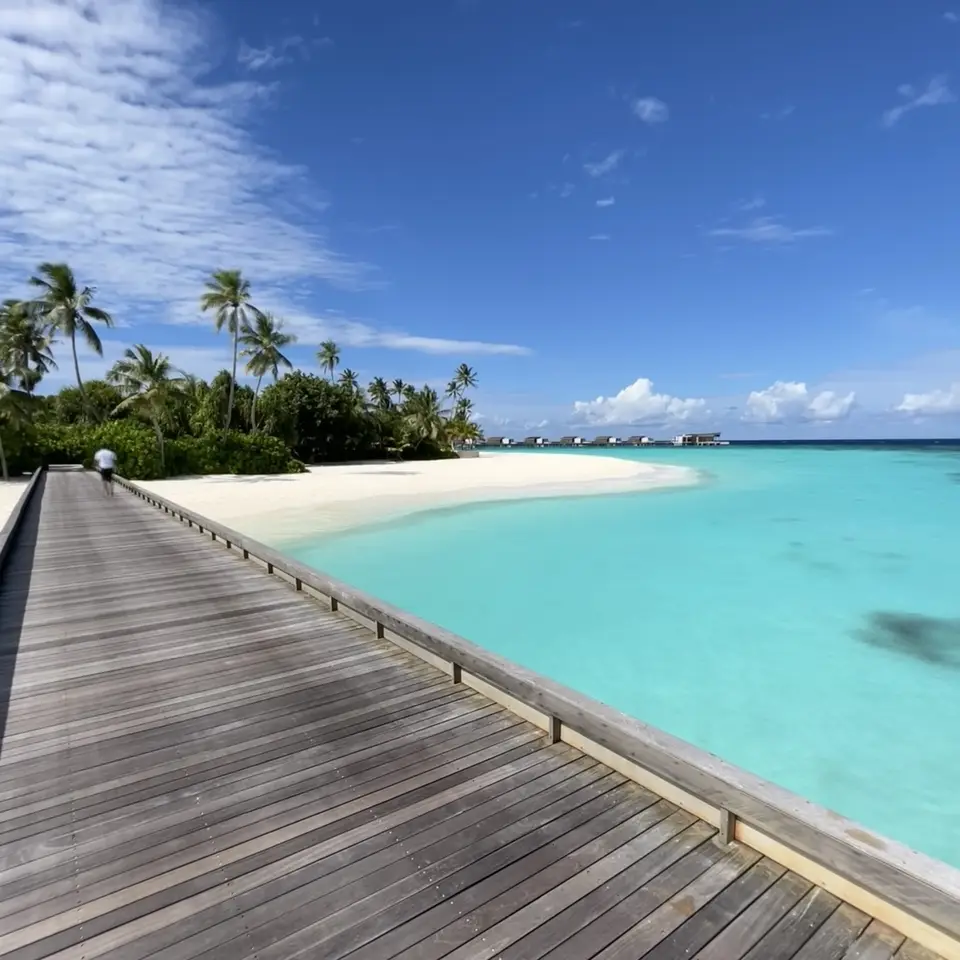
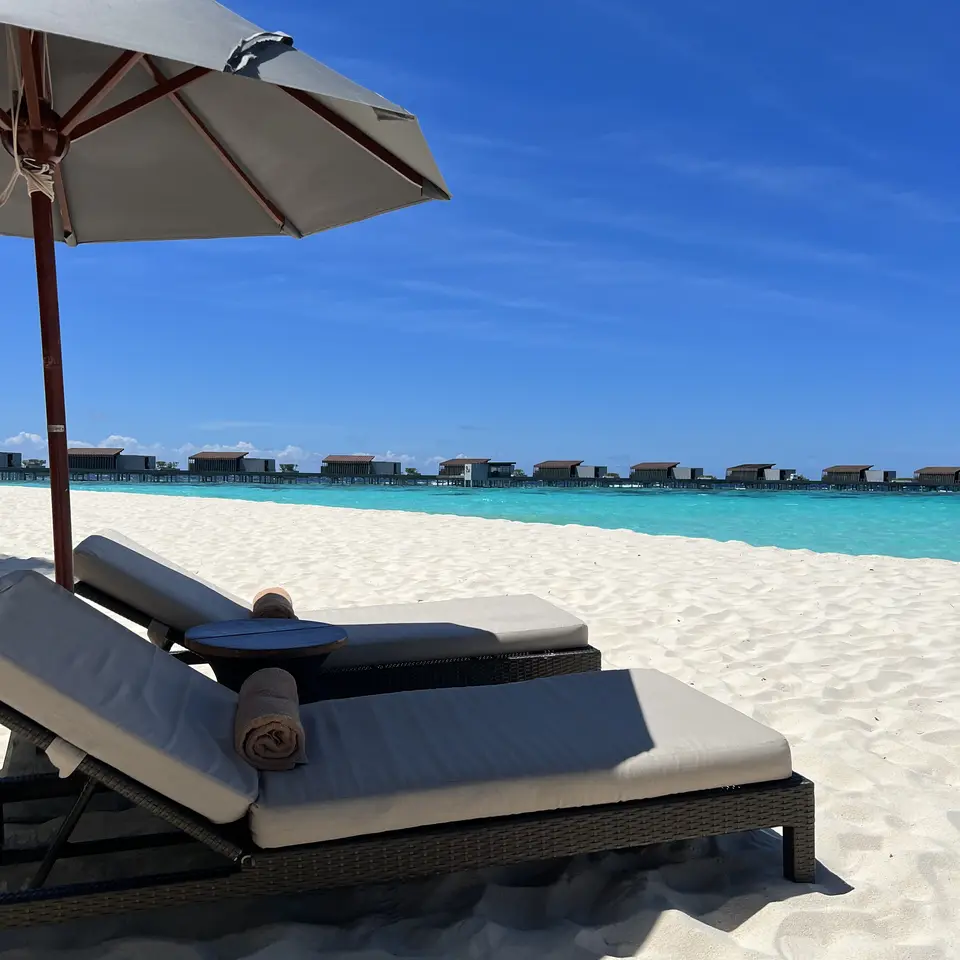
Book Park Hyatt Hadahaa with me, through Classic Travel Register first, free of charge, and the rates and partner benefits open up, with the account linked to Wheresnik. Tell me your dates before you book and I will say which room to ask for here, and which week I would avoid.The first thing to understand about Hadahaa is the emptiness around it. Stand on the jetty and turn through a full circle: no other island, no other resort, no lights at night in any direction. In a country of more than a thousand islands that takes some arranging, and it is the whole argument for coming this far south. The resort sits in the Huvadhoo atoll, roughly fifty kilometres north of the equator, which puts it a domestic flight beyond the part of the Maldives most people see.
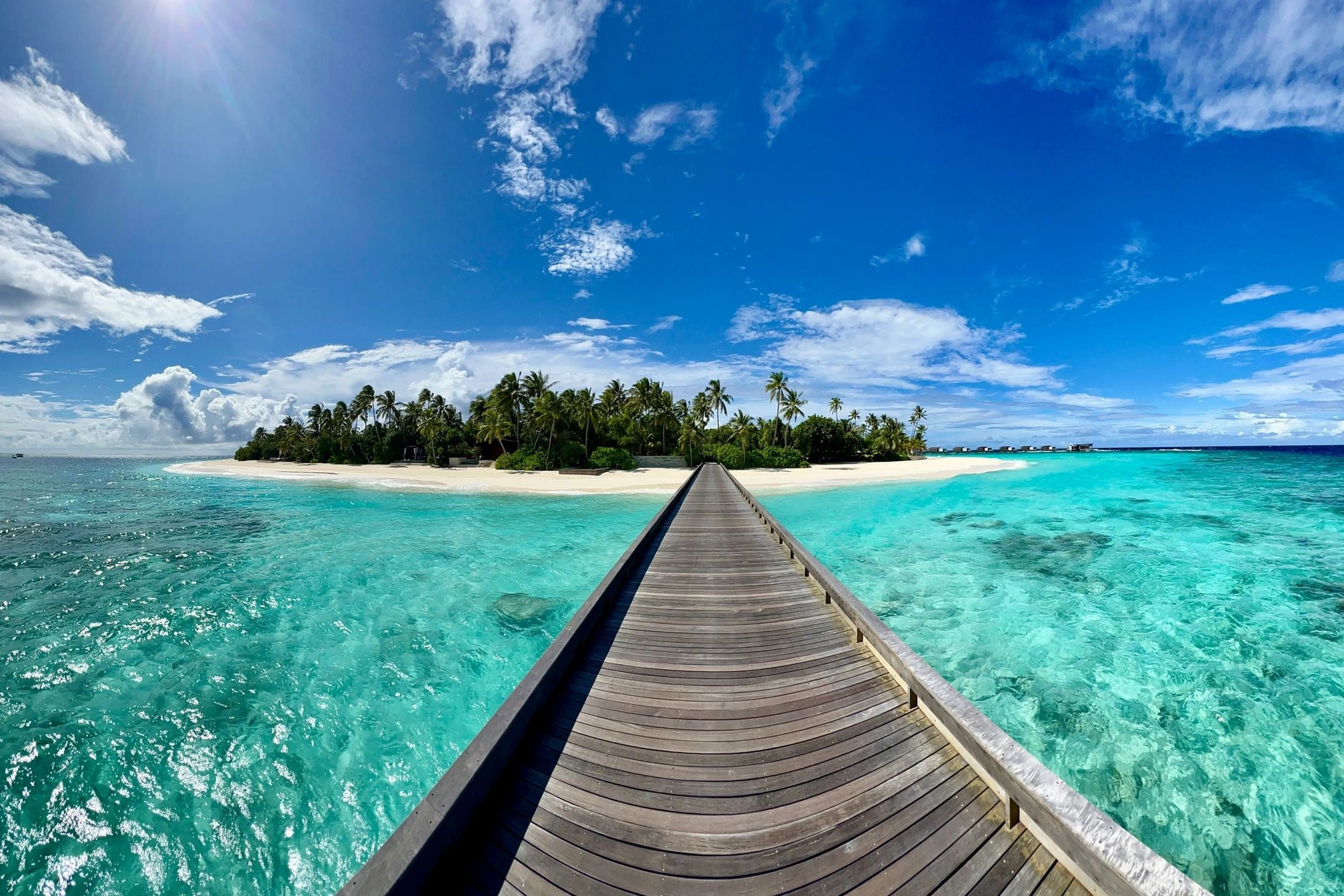
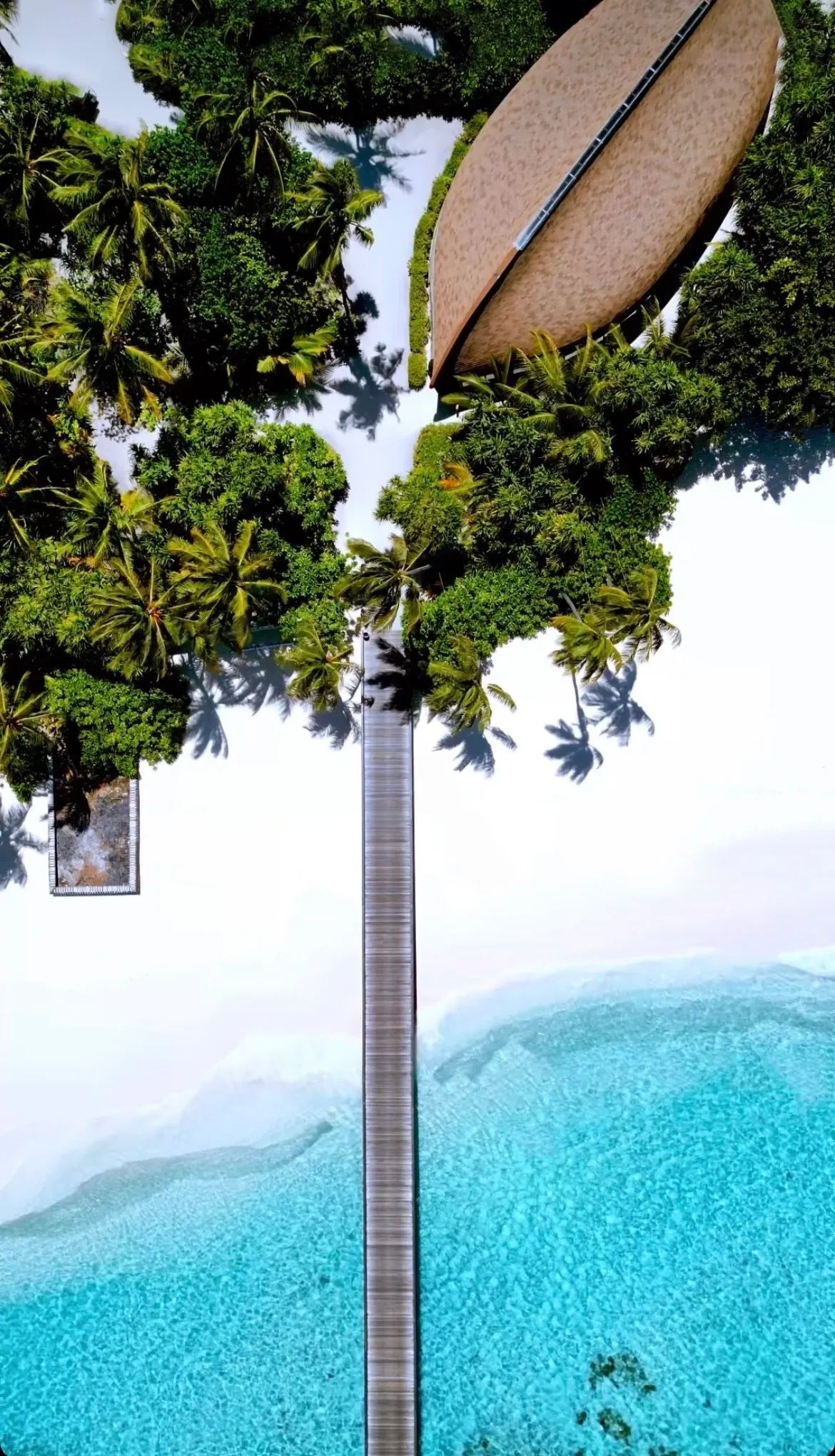
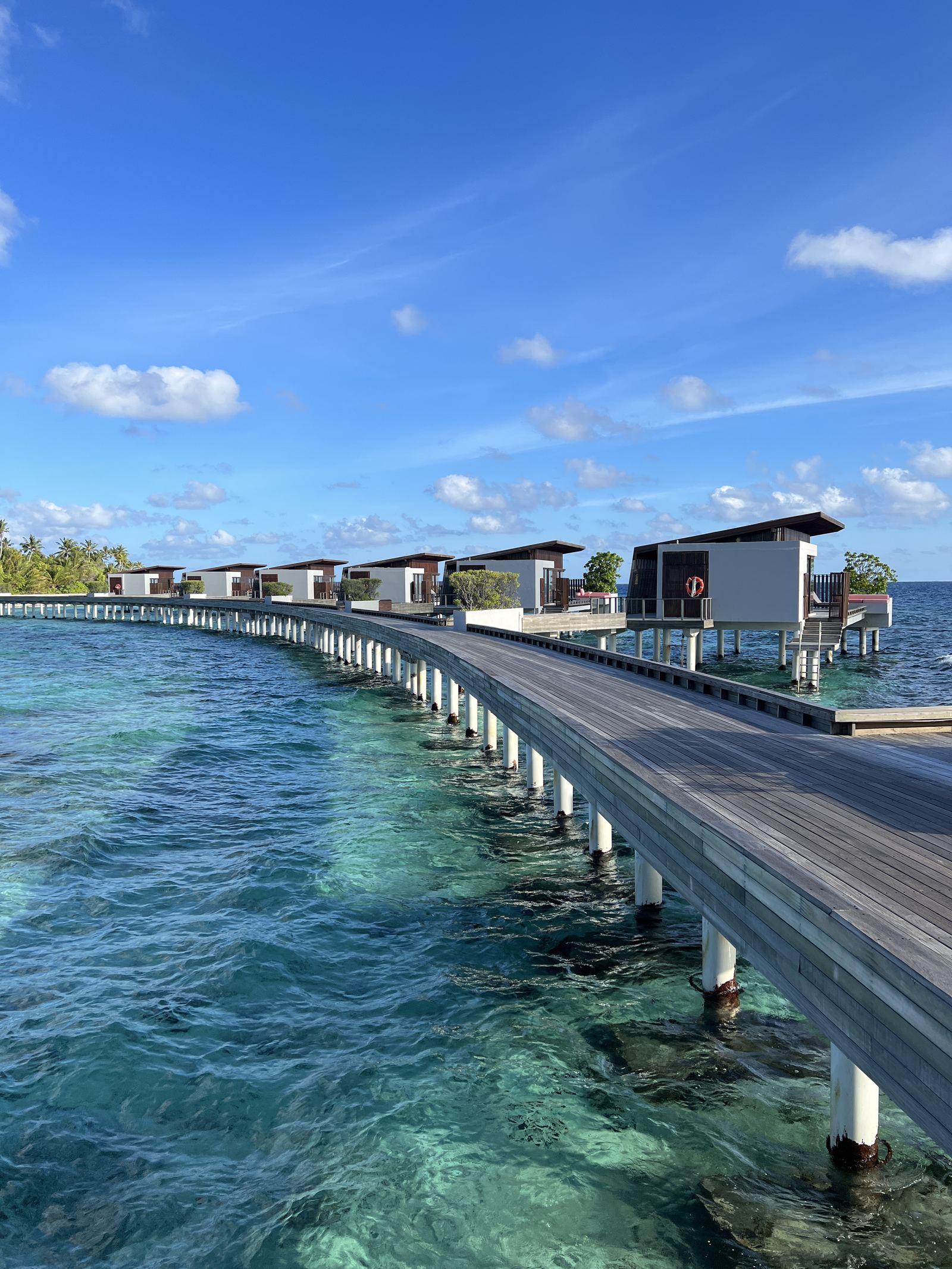
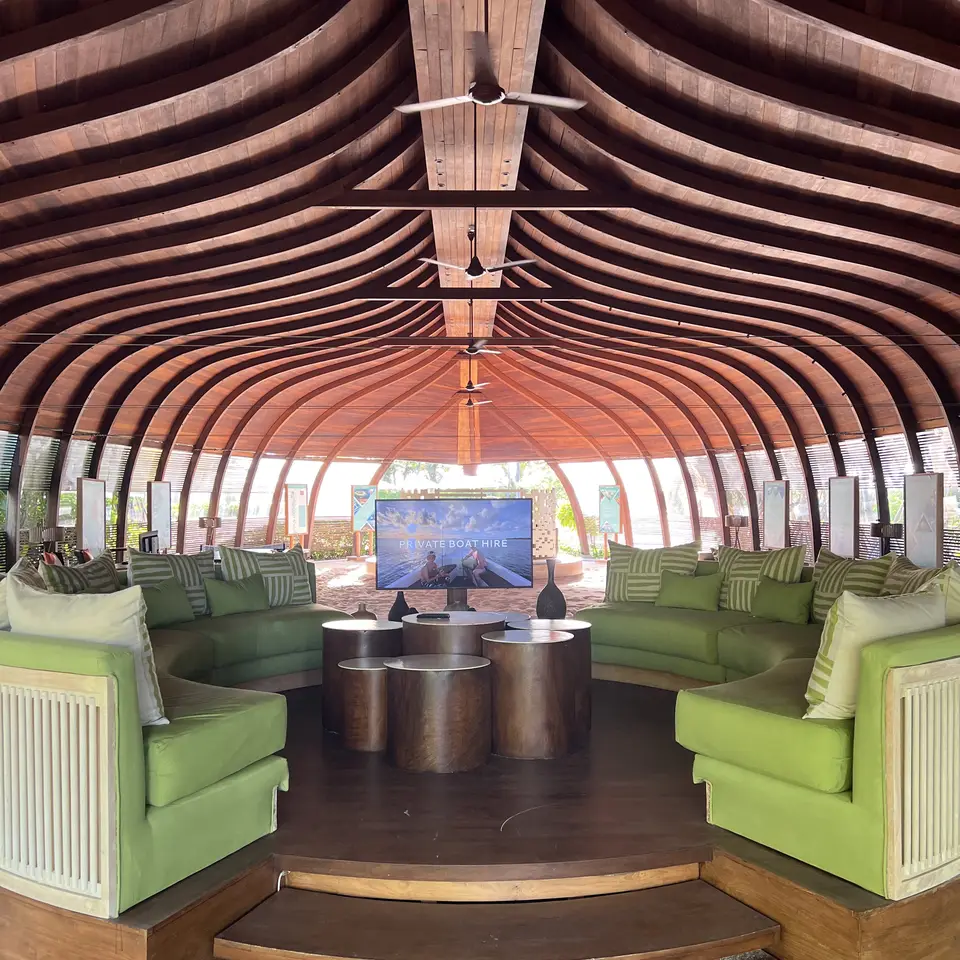
It opened in 2009 as an Alila and became a Park Hyatt in 2011. Fifty-one villas, most of them on the beach and the rest over the water, on an island you can walk around before breakfast without hurrying. The scale is the point: there is no shopping arcade, no second pool complex, no programme of events competing for your afternoon.
I went in the middle of December and had five days of clean weather with a breeze that the dry season does not usually supply. The old seasonal calendar has become a loose guide in both directions here, with rain turning up in the dry months and long settled spells arriving in the wet ones. Anyone planning a Maldives trip around the traditional months should treat them as a probability and keep the dates flexible where the fare allows.
The villa
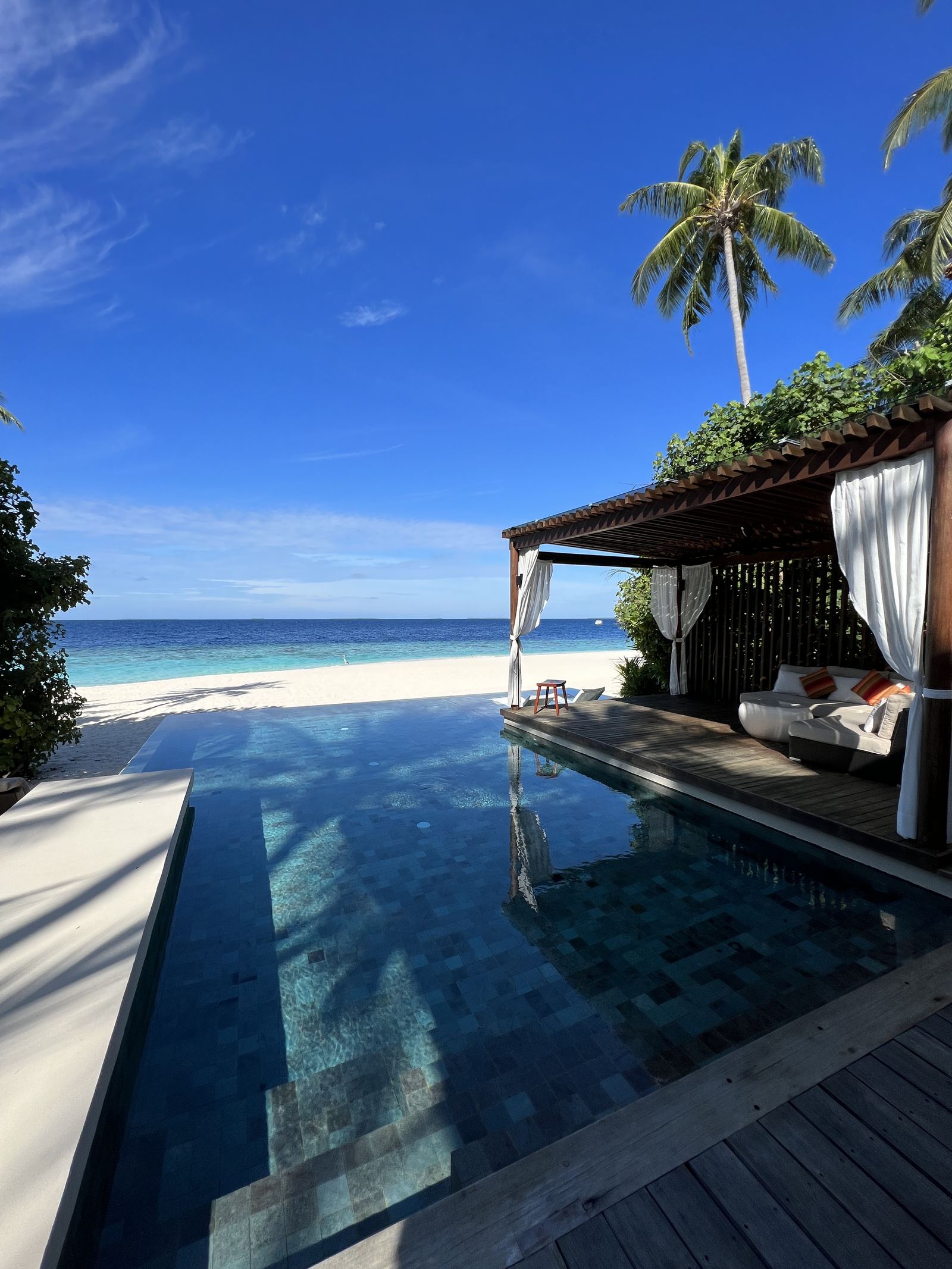
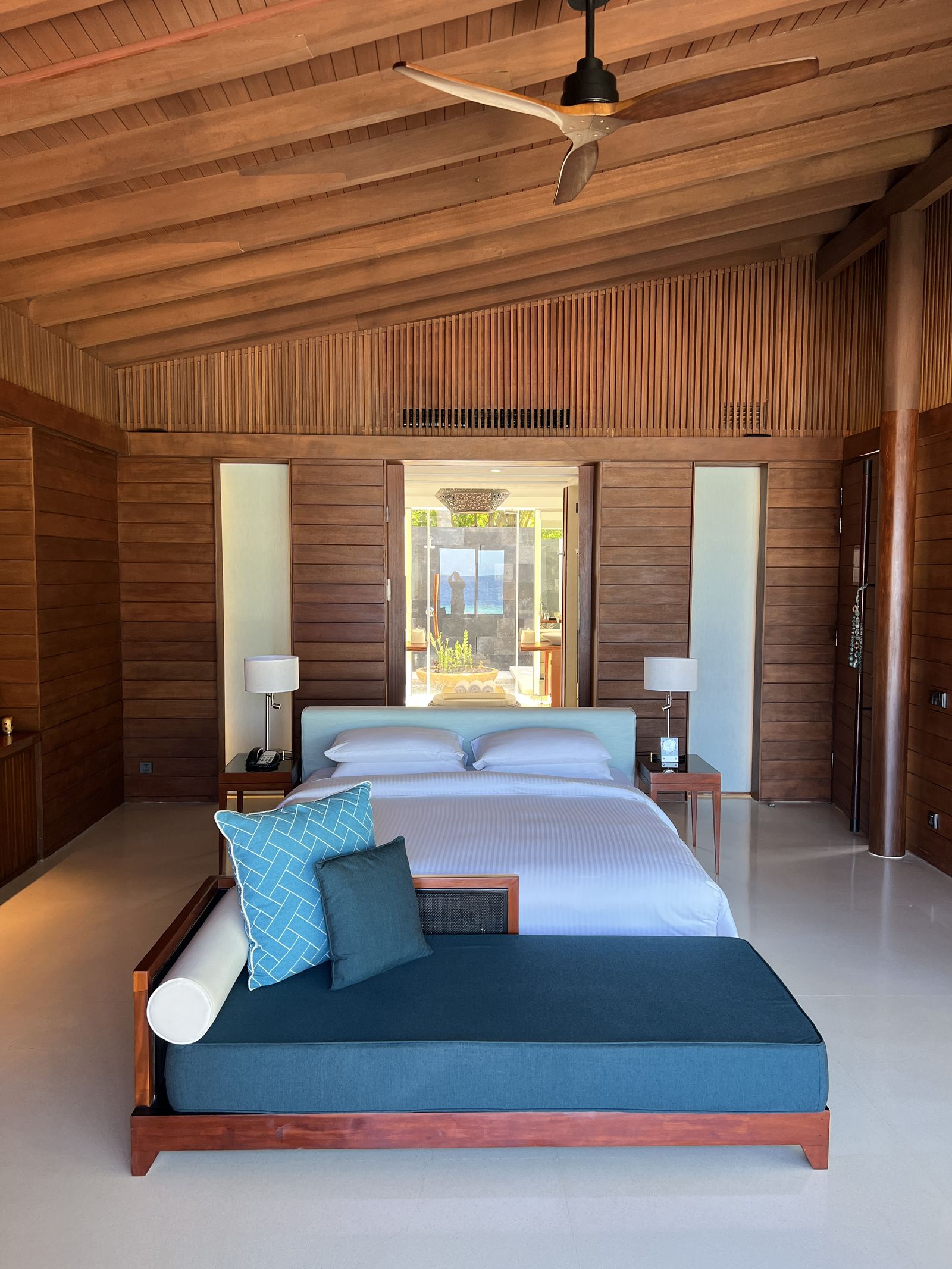
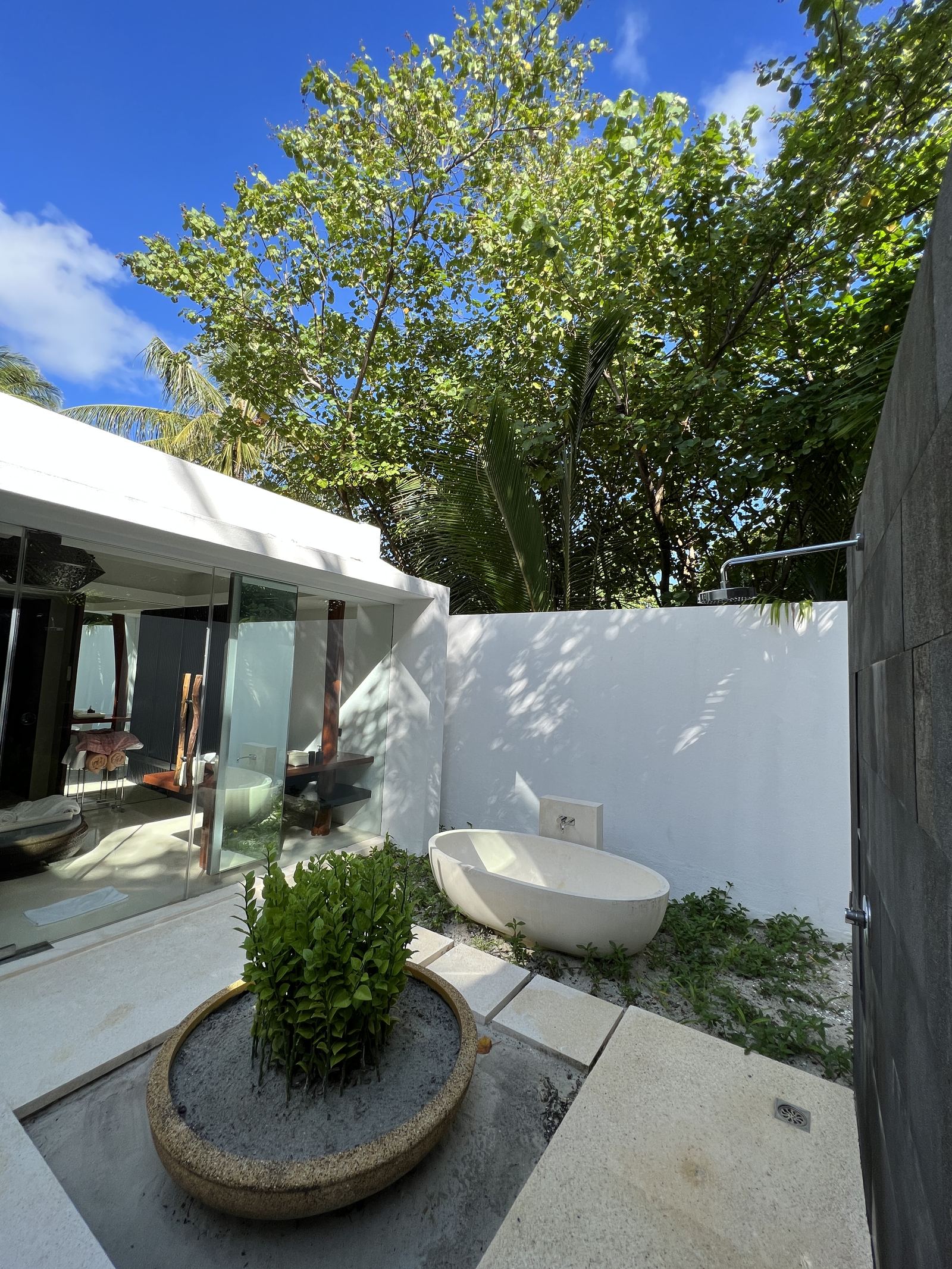
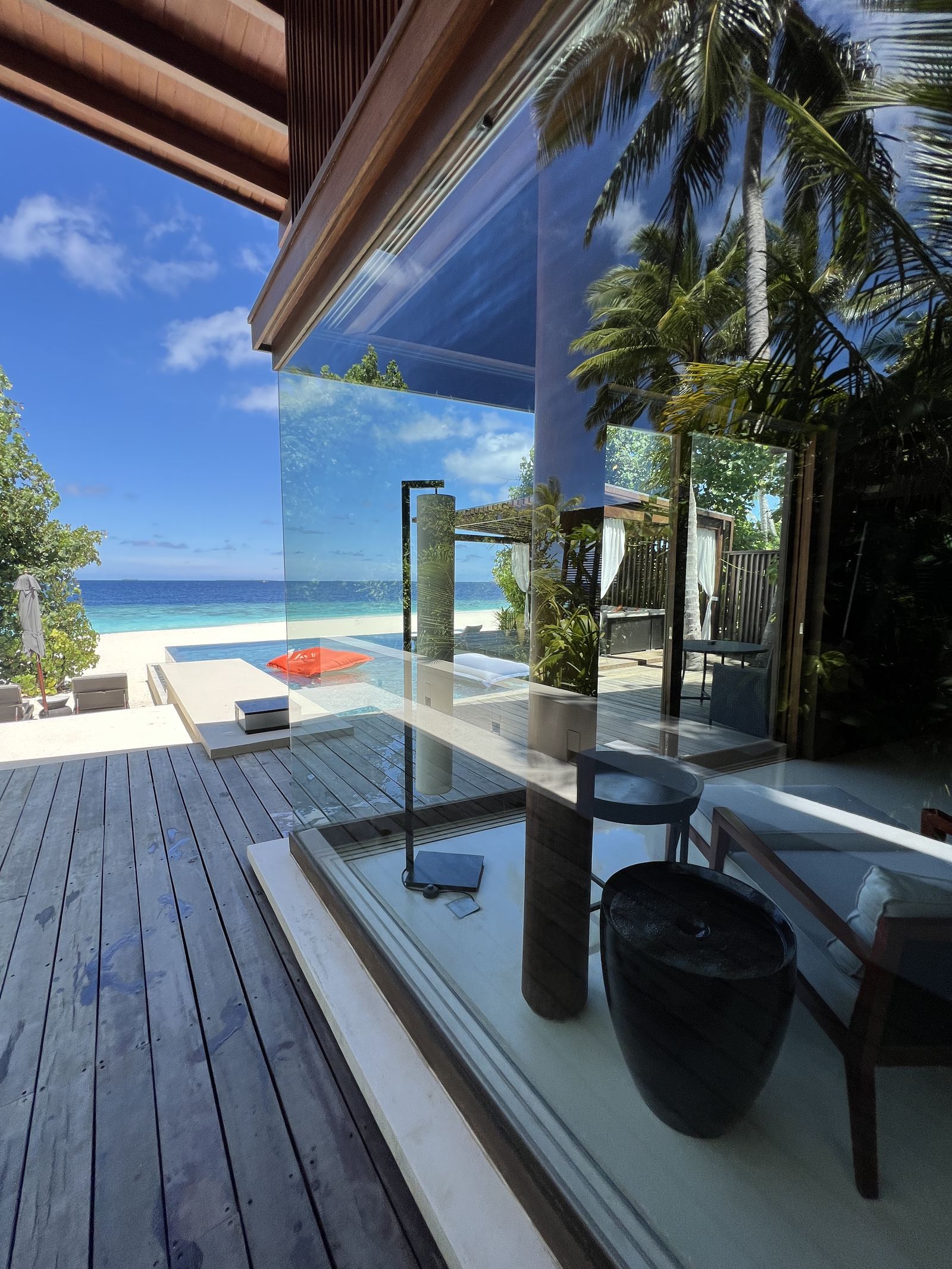
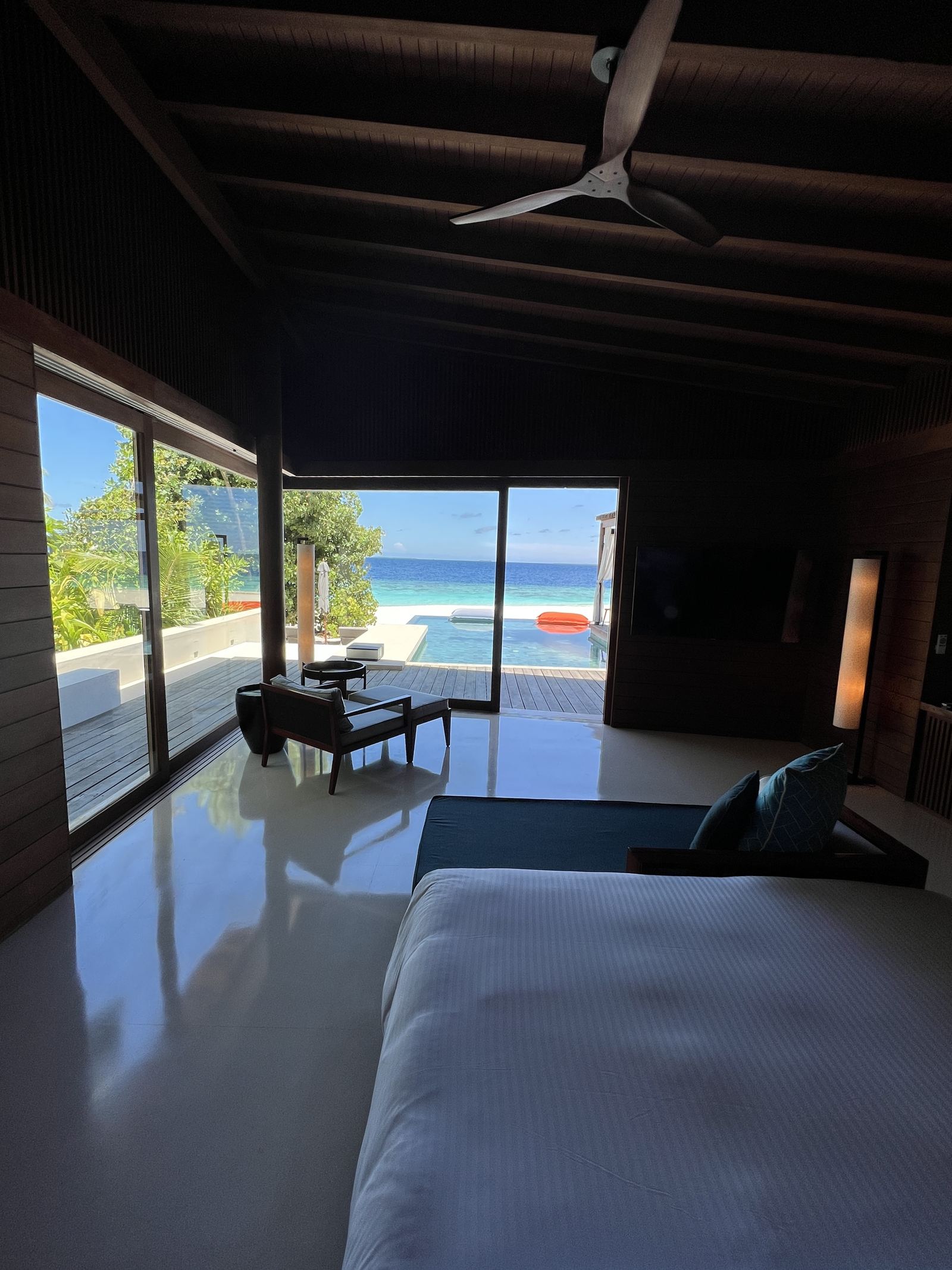
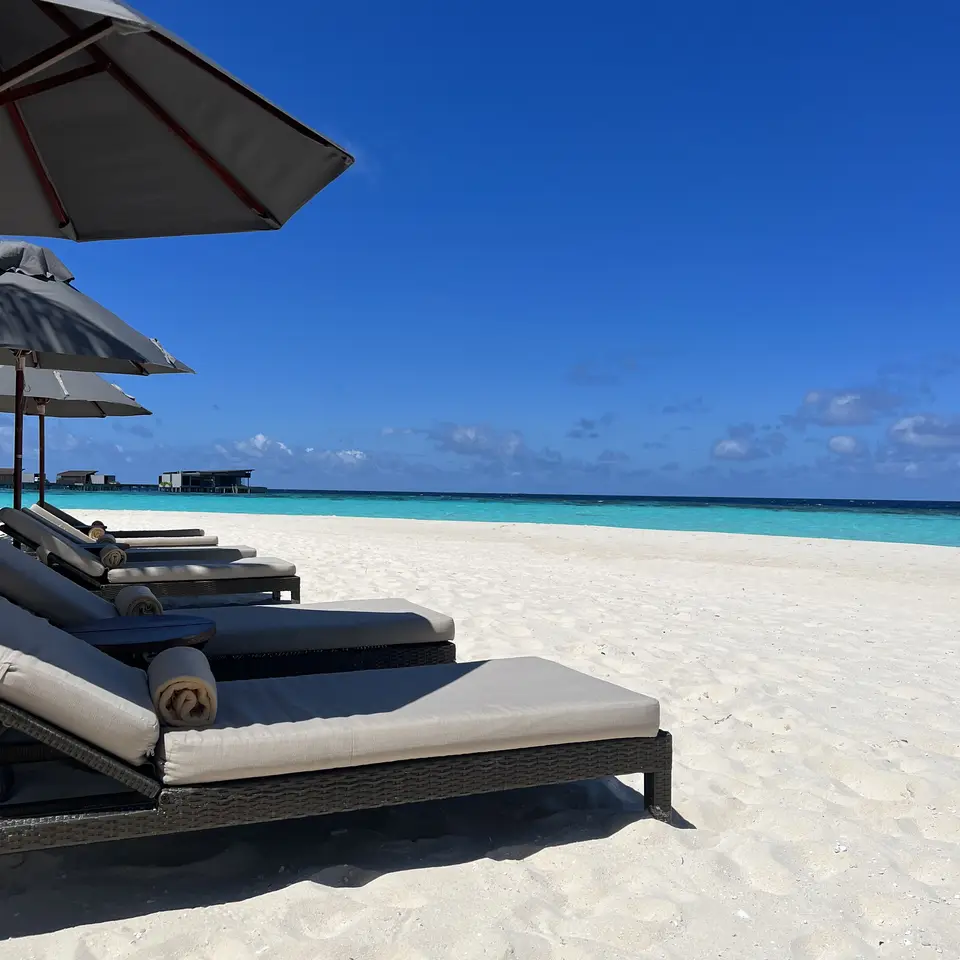
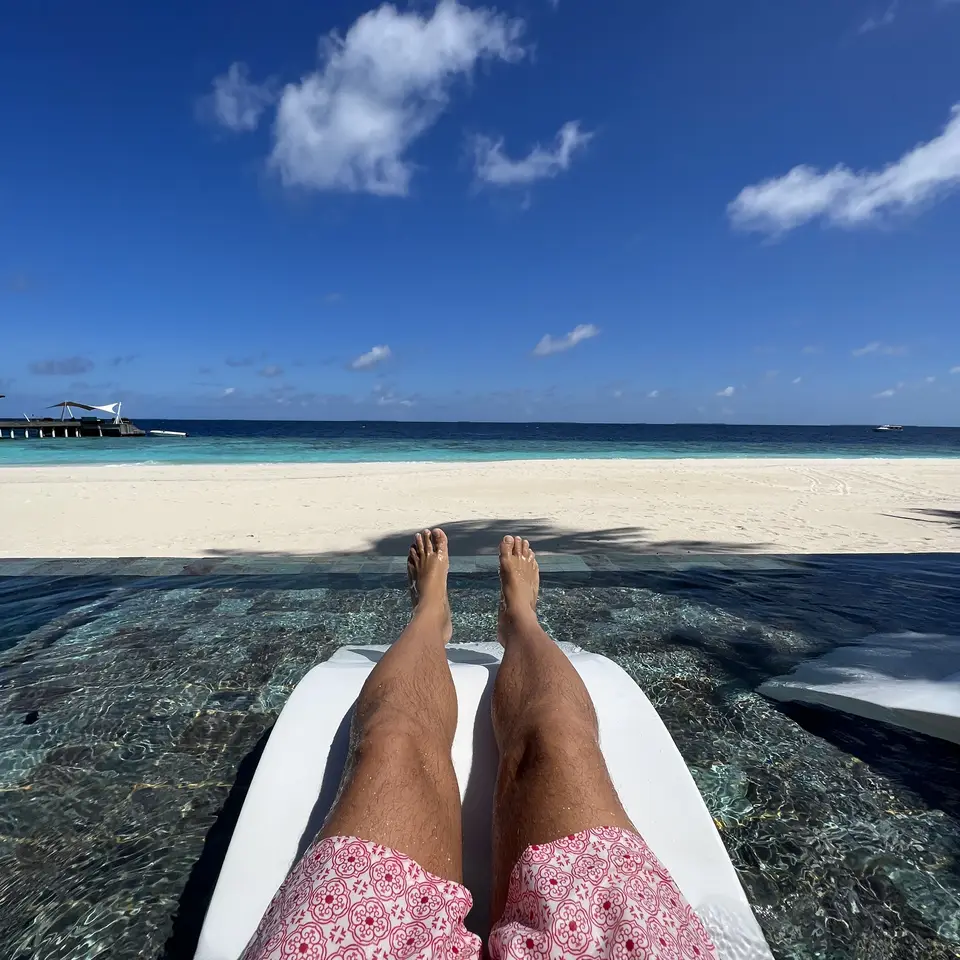
I was in a Beach Pool Villa, which puts the sand where the deck ends and the ocean about fifteen paces beyond it. Mornings began with the same view each time, sky and water running into each other with no line between them, and the villa is built to keep that uninterrupted: the boundary between the inside and the outside is deliberately vague, and after two days you stop closing anything.
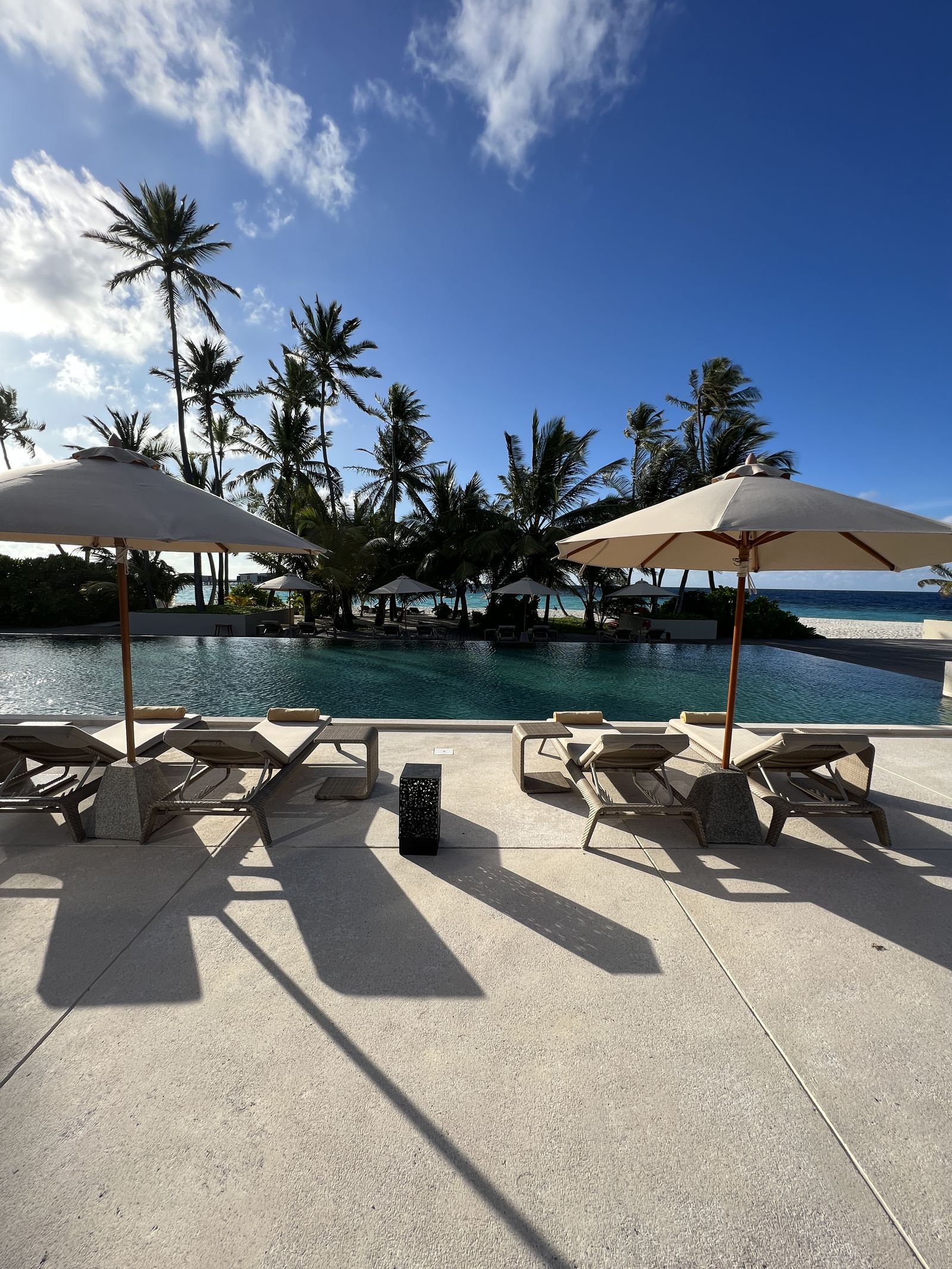
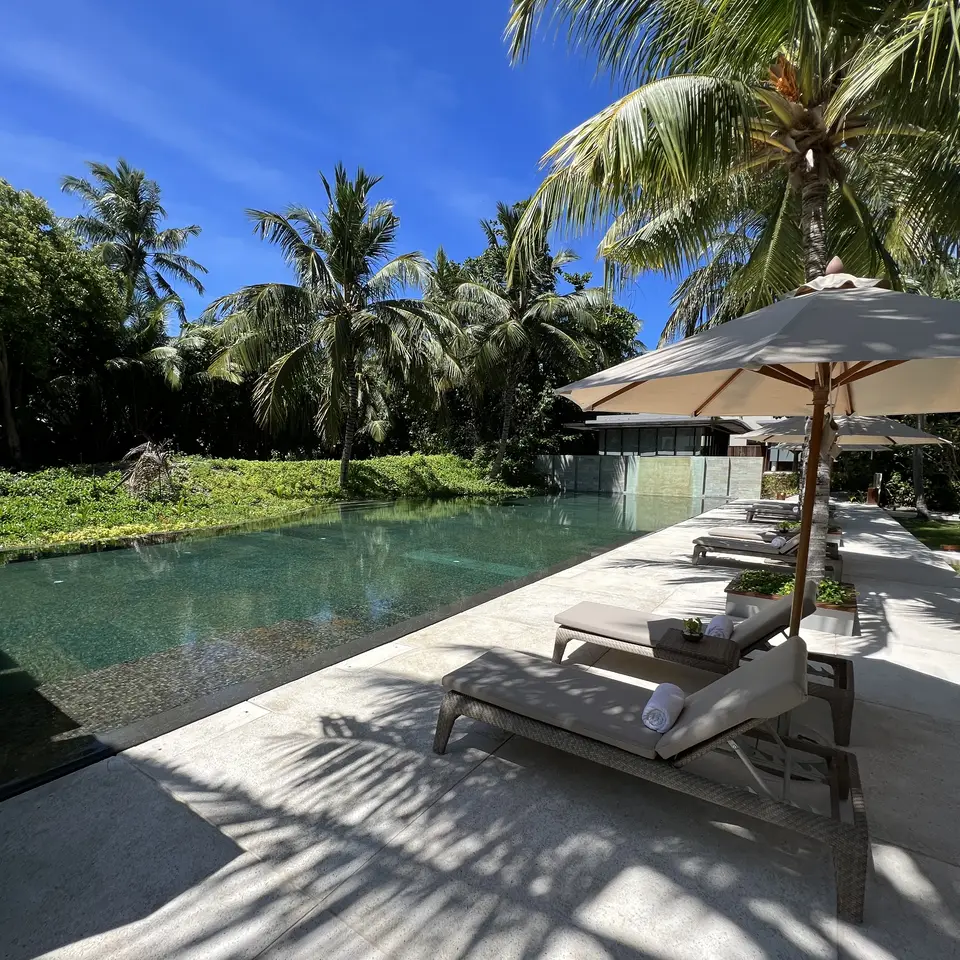
The pool earns its place in the afternoon. The sun this close to the equator is serious between eleven and three, and having water a metre from the bed, with the sound of the lagoon going on behind it, changes how the middle of the day works. Privacy is complete. I saw my neighbours twice in five days, both times at dinner.
The reef
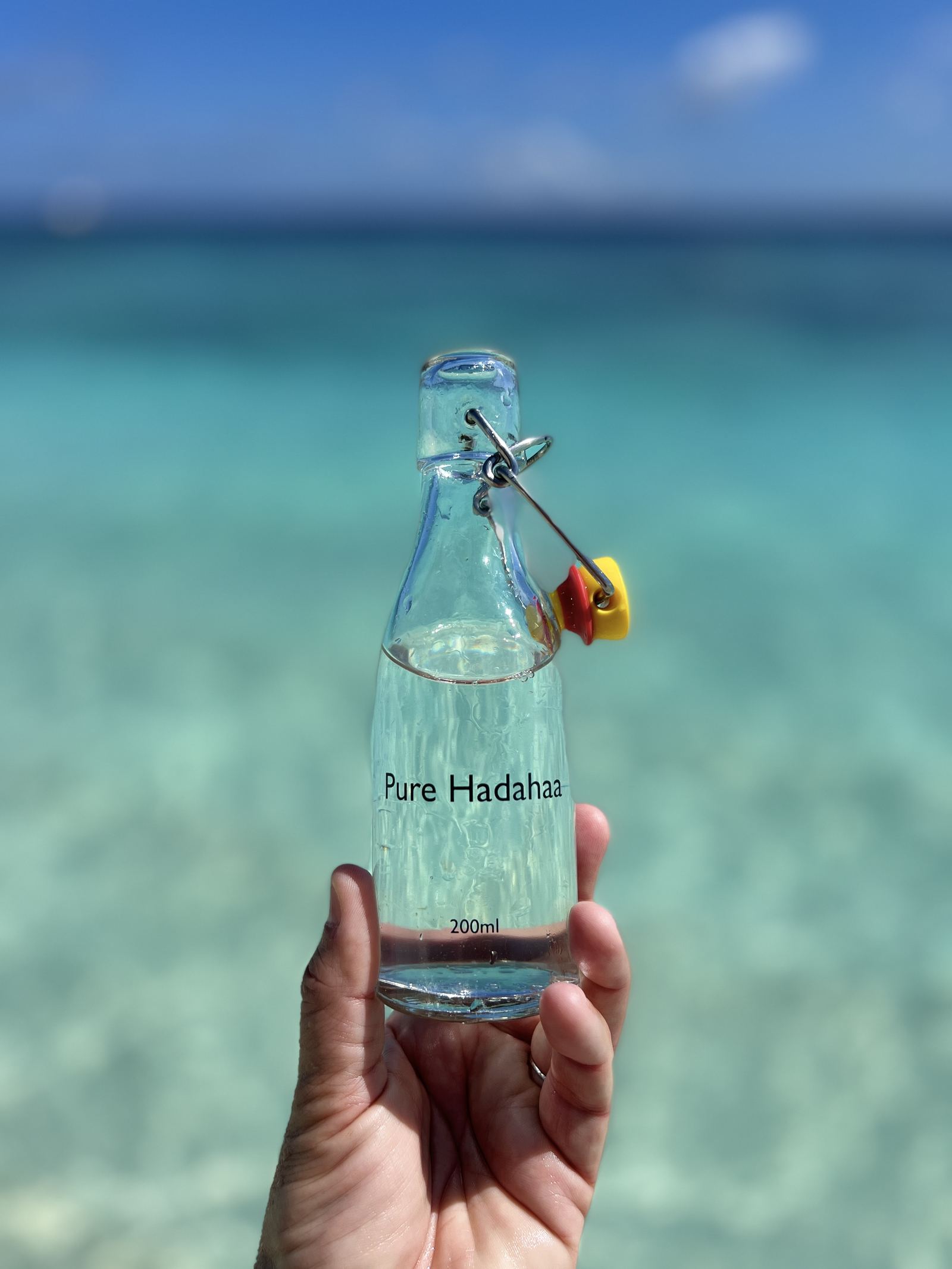
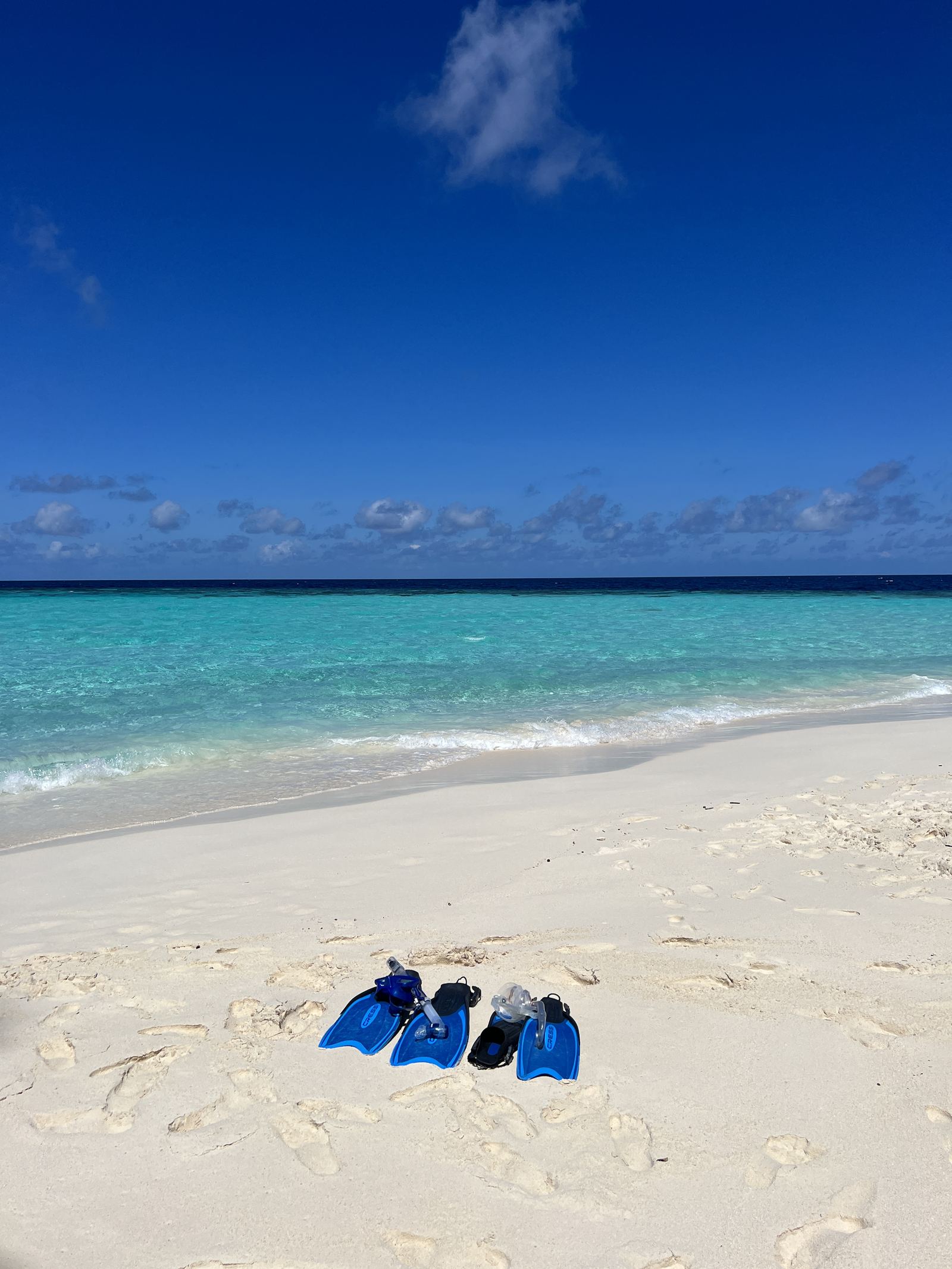
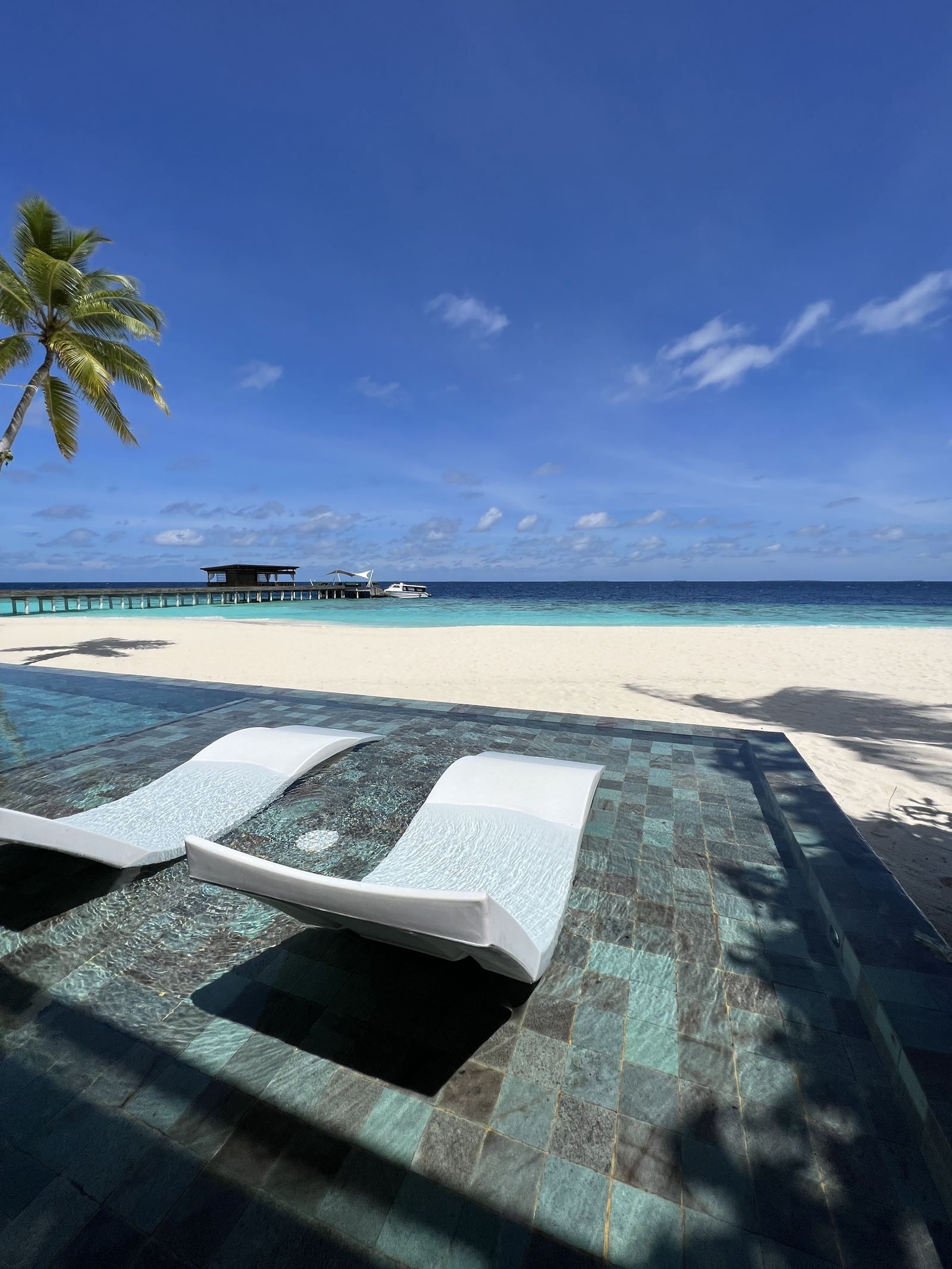
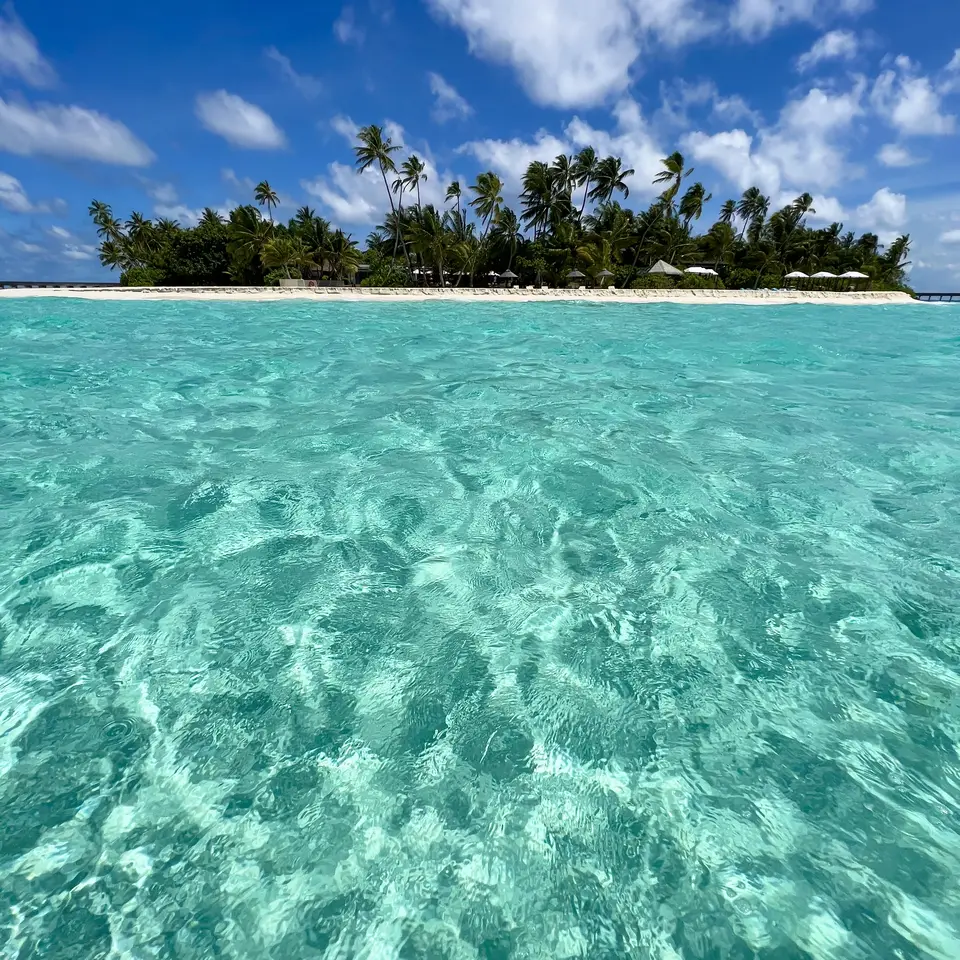
The house reef encircles the island, which is the detail that separates Hadahaa from most of its competition. You walk into the water from the beach and you are on it, with no boat, no schedule and no group. The drop-off holds turtles in the morning, barracuda patrol a little further out, and small sharks come close enough to the shore that guests stop photographing them by the third day. It is a working reef, with all the untidiness that implies.
The Blue Journeys dive and activity centre runs the diving and the conservation side, and they talk about the reef with the kind of specificity that comes from watching it every day. Ask them where to get in, and when: the answer changes with the tide and they are honest about which days are worth it.
Eating
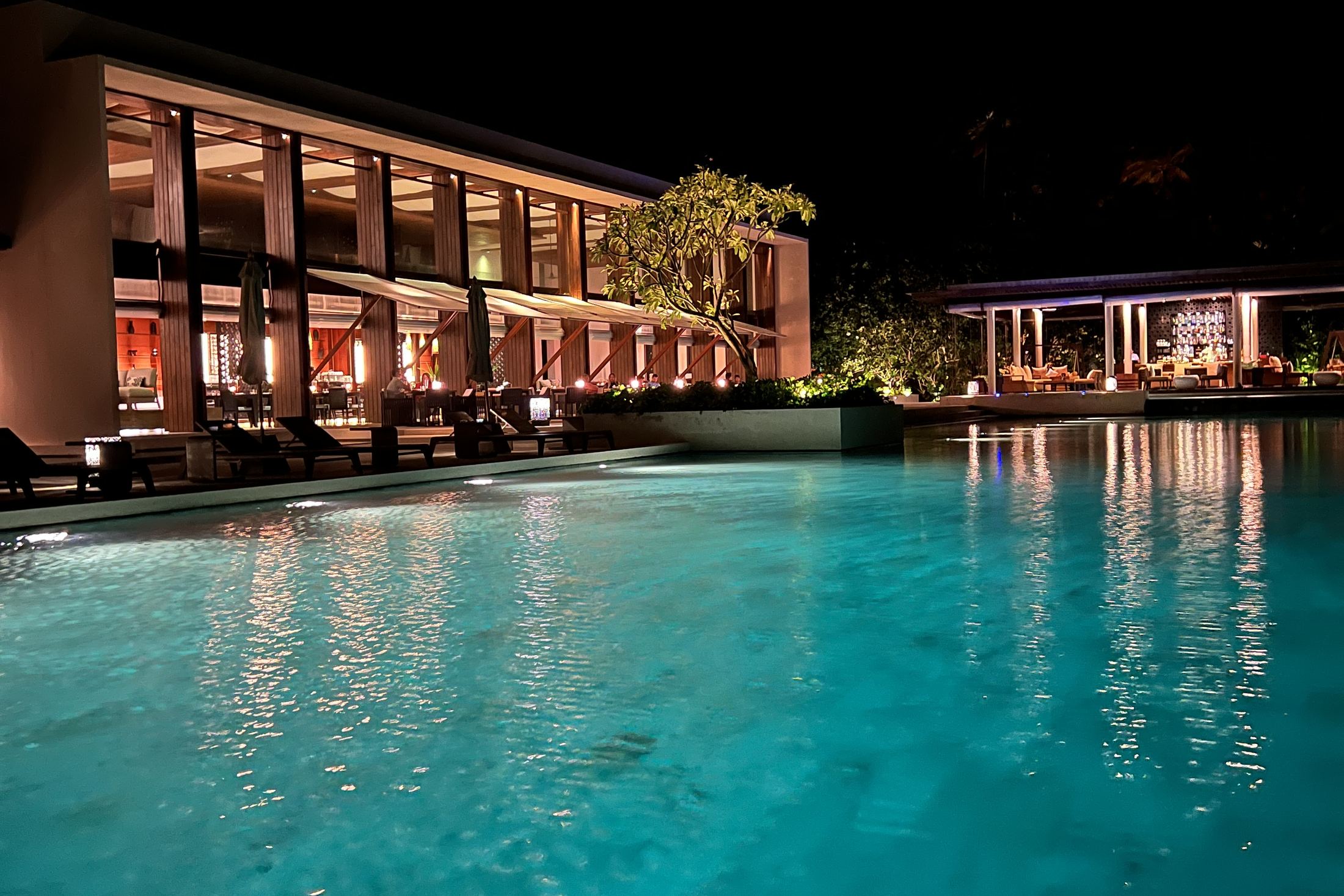
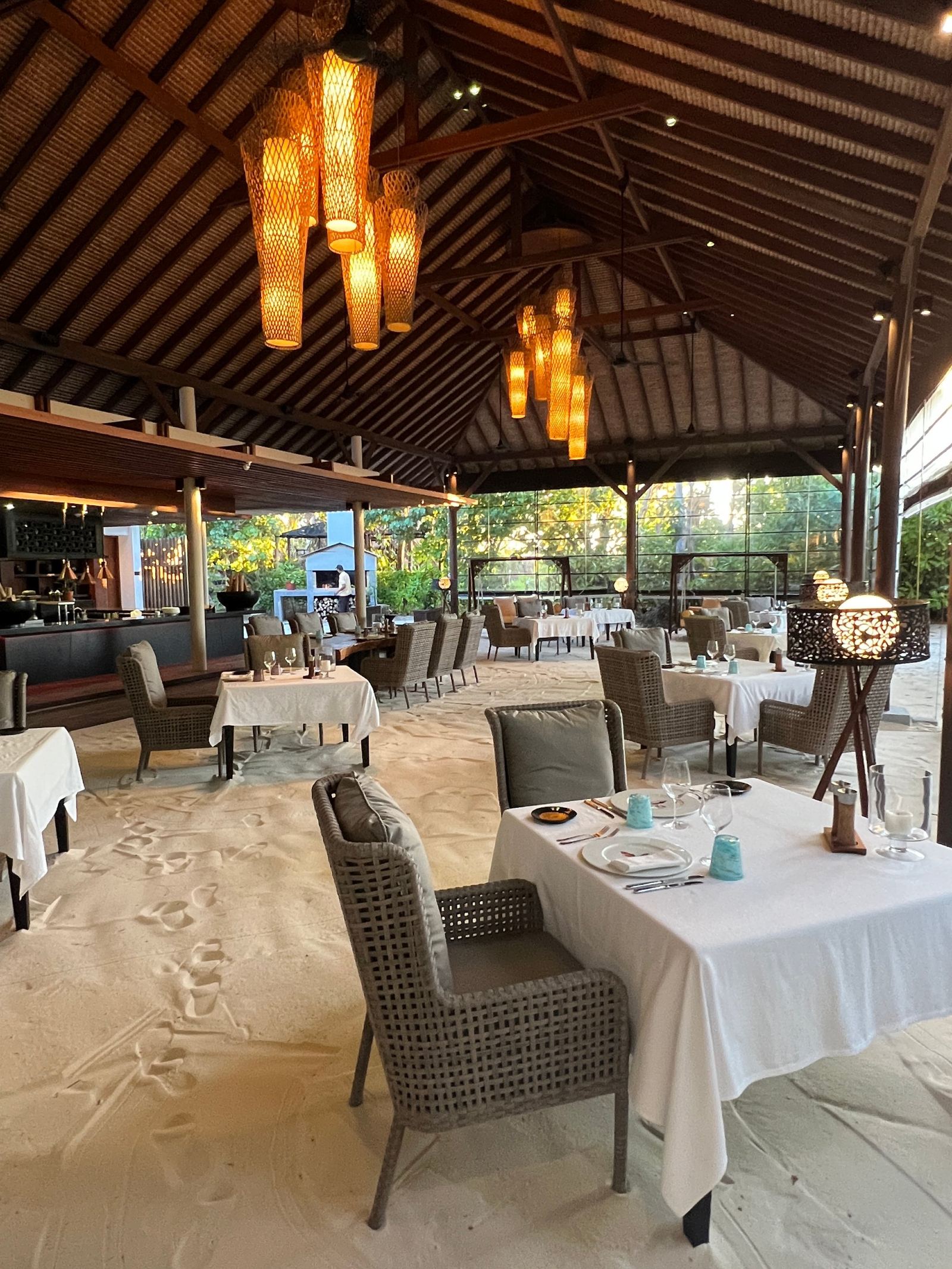
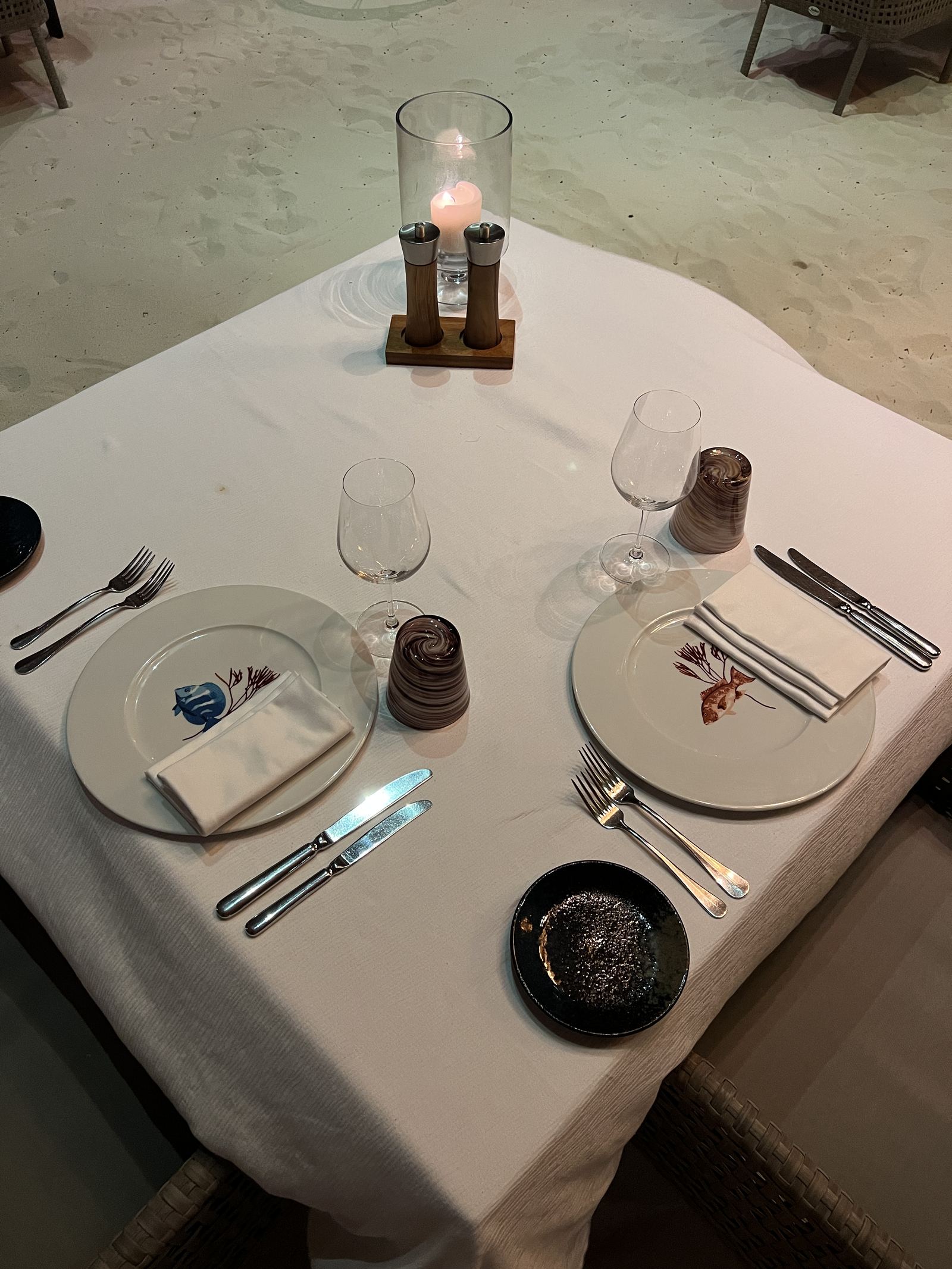
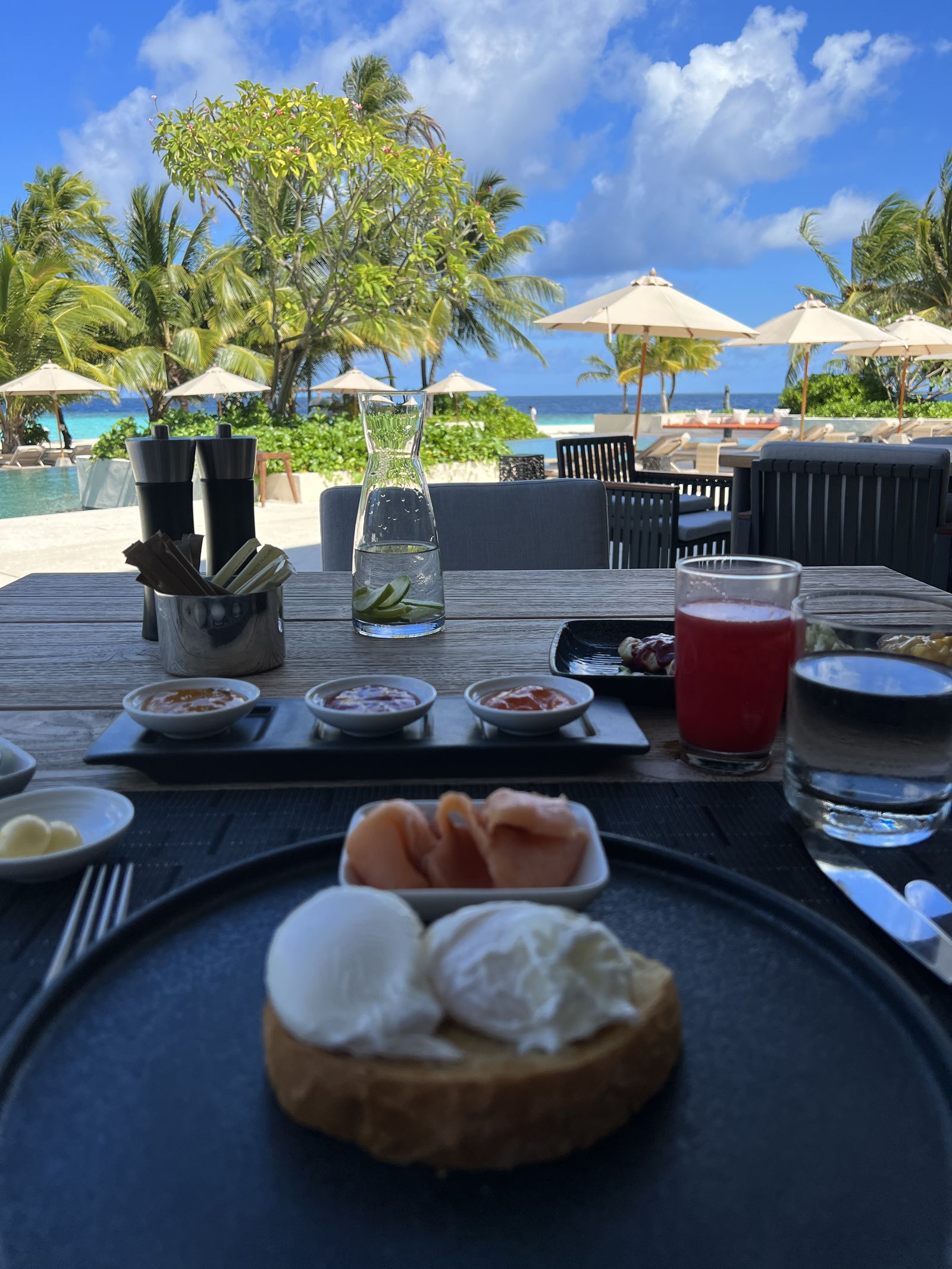
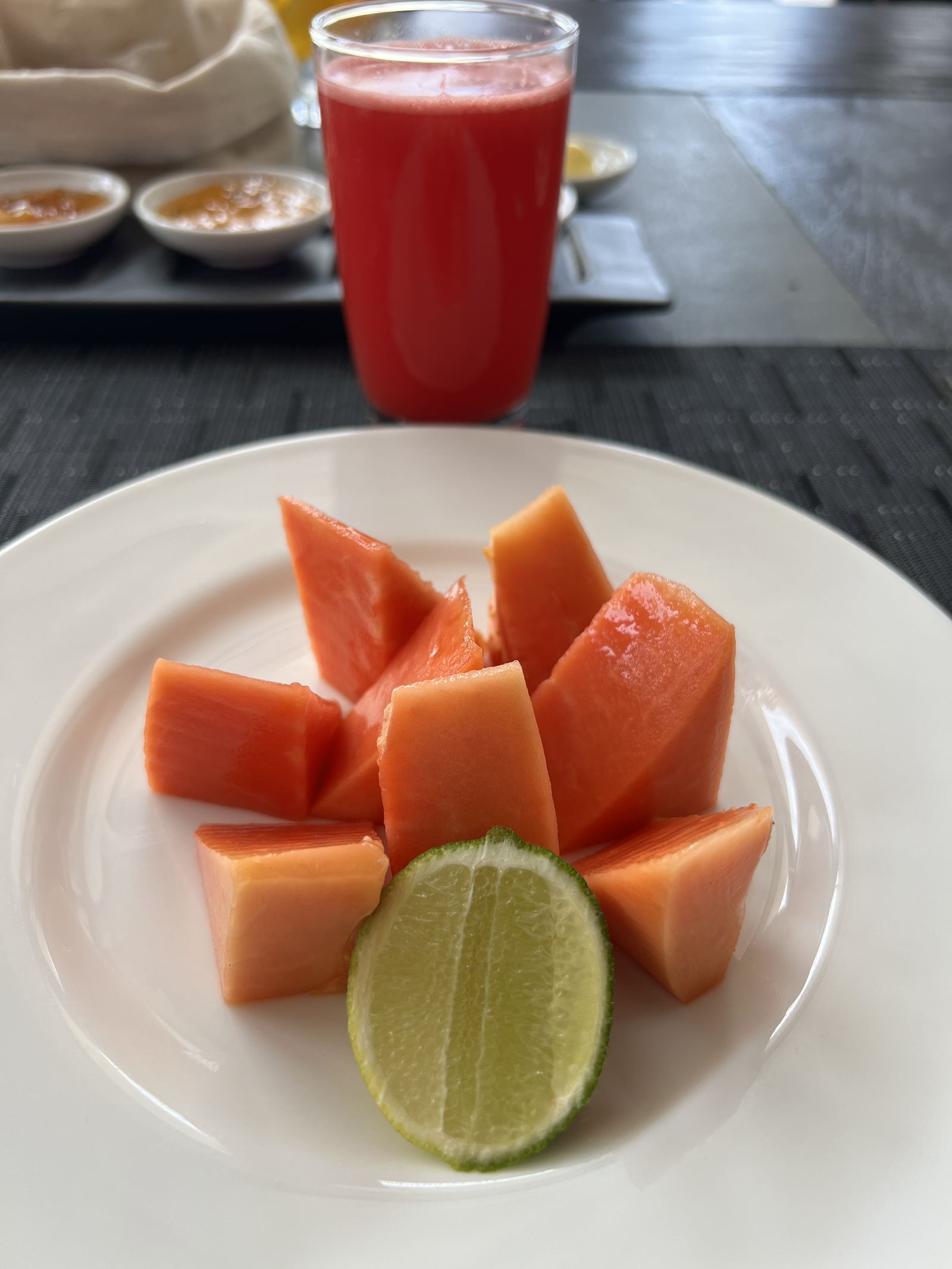
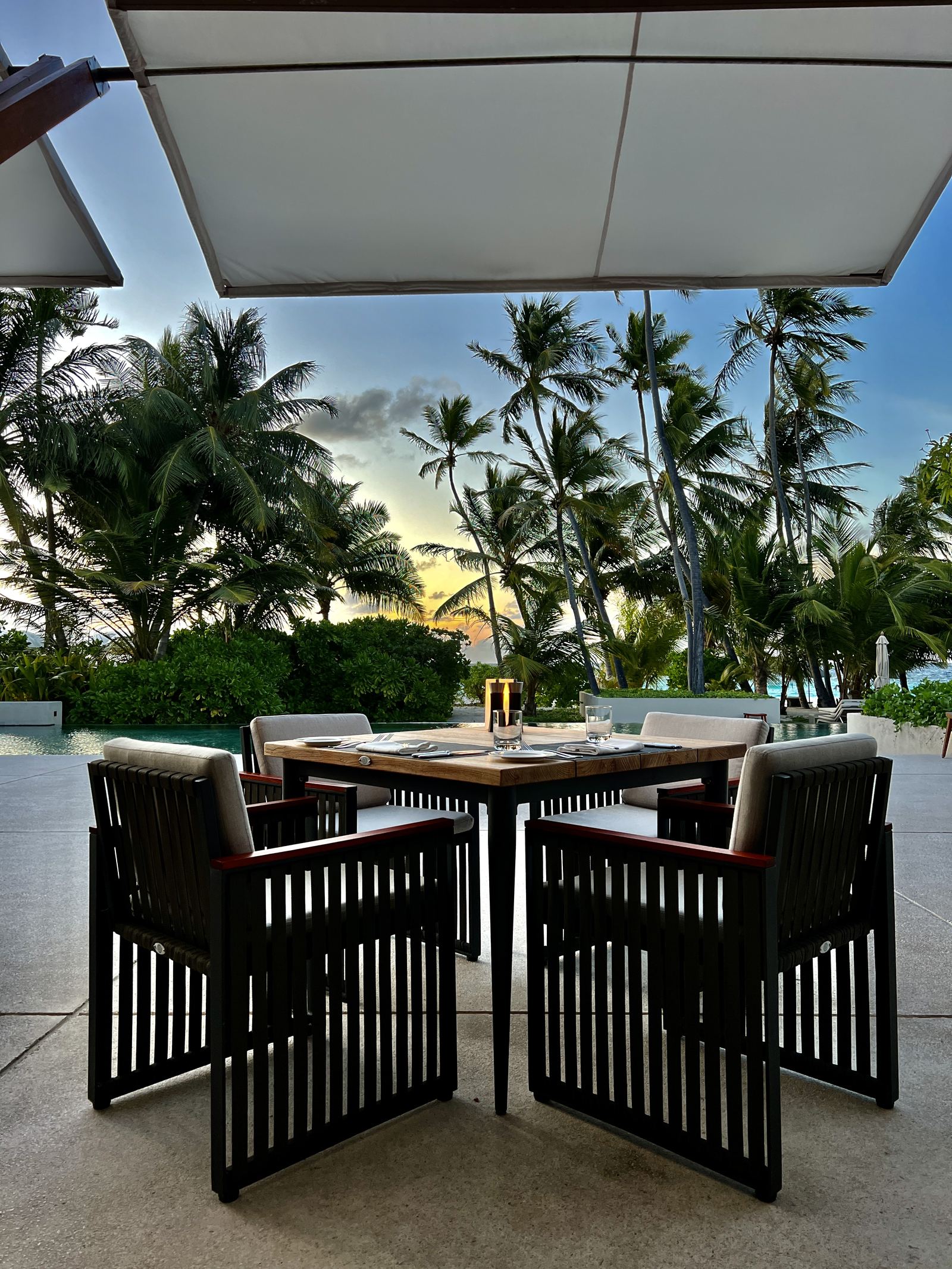
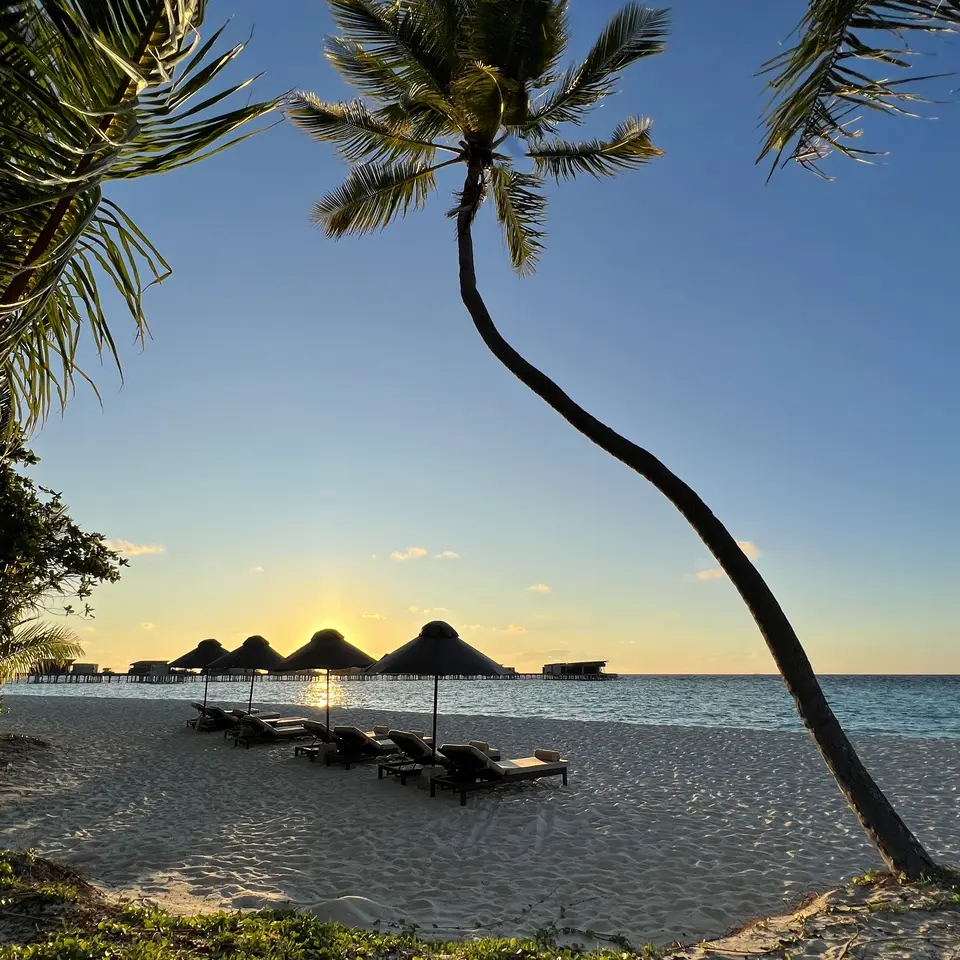
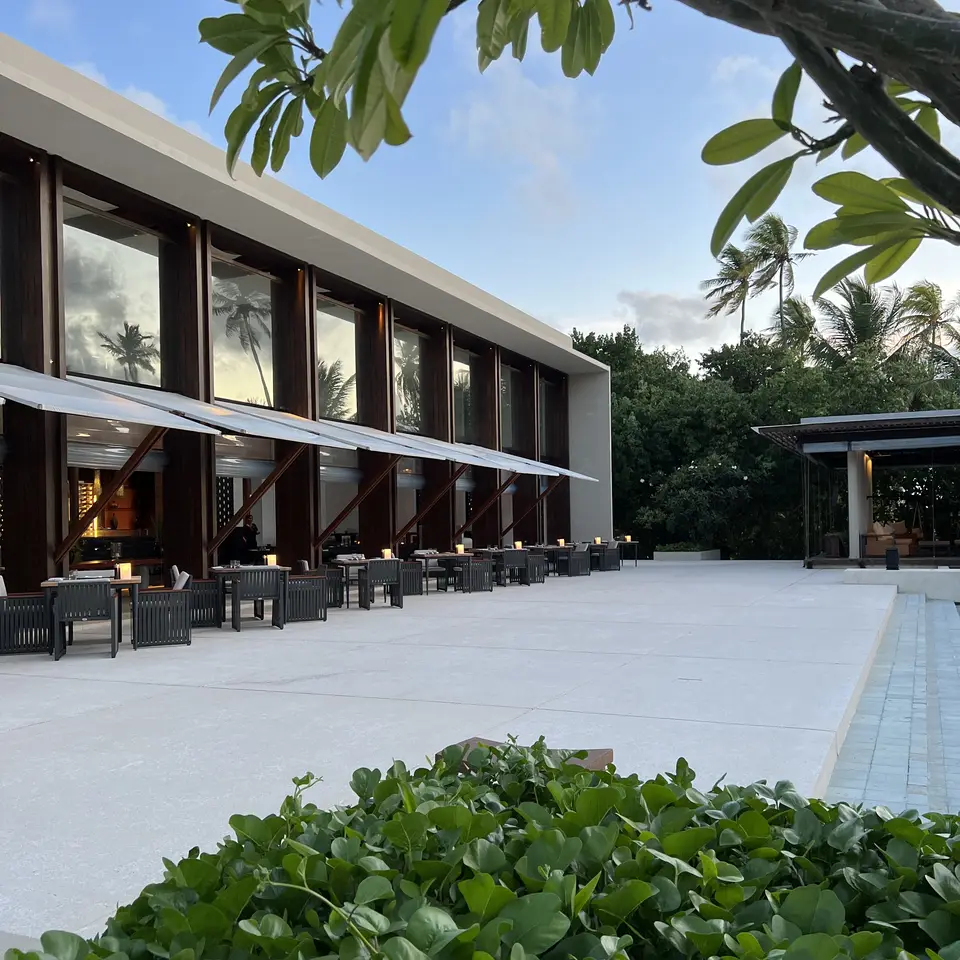
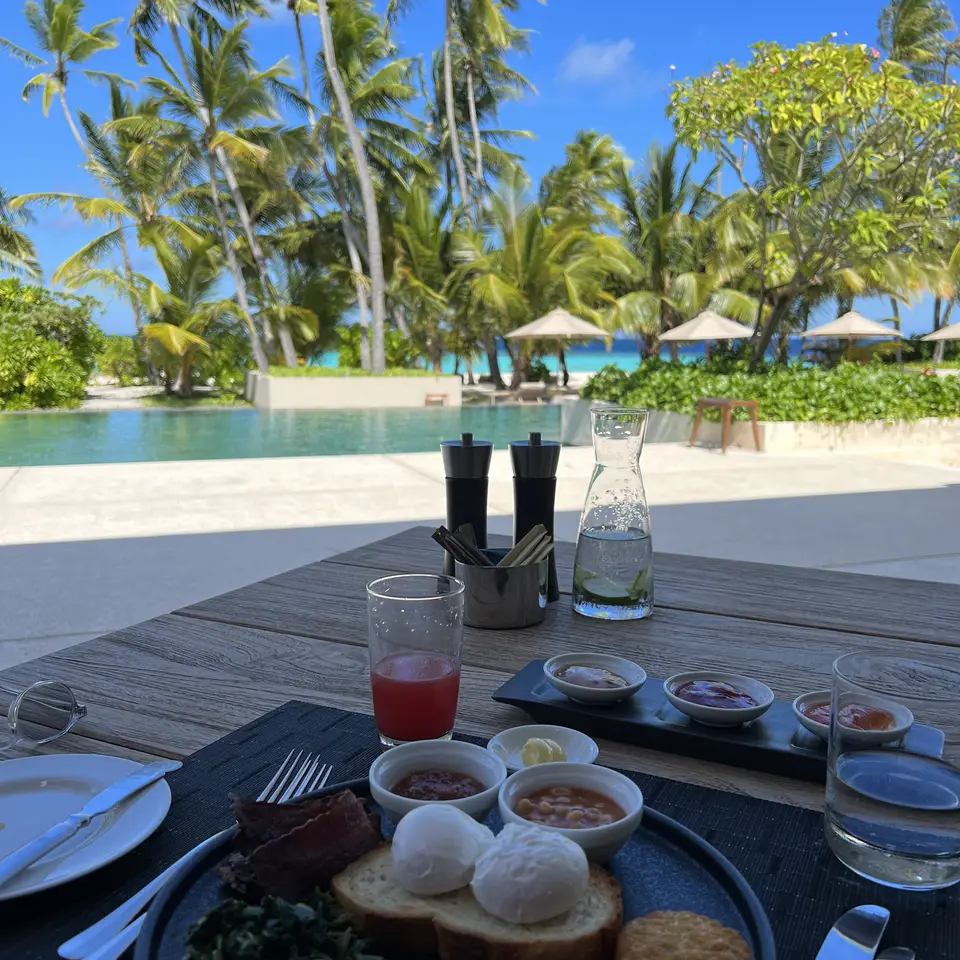
The kitchen is good and the settings are better. The meals I remember were all outside the dining room: a table laid on the sand with the lagoon a few metres away, fish caught that afternoon, and a picnic on an uninhabited island with nobody else on it at any point.
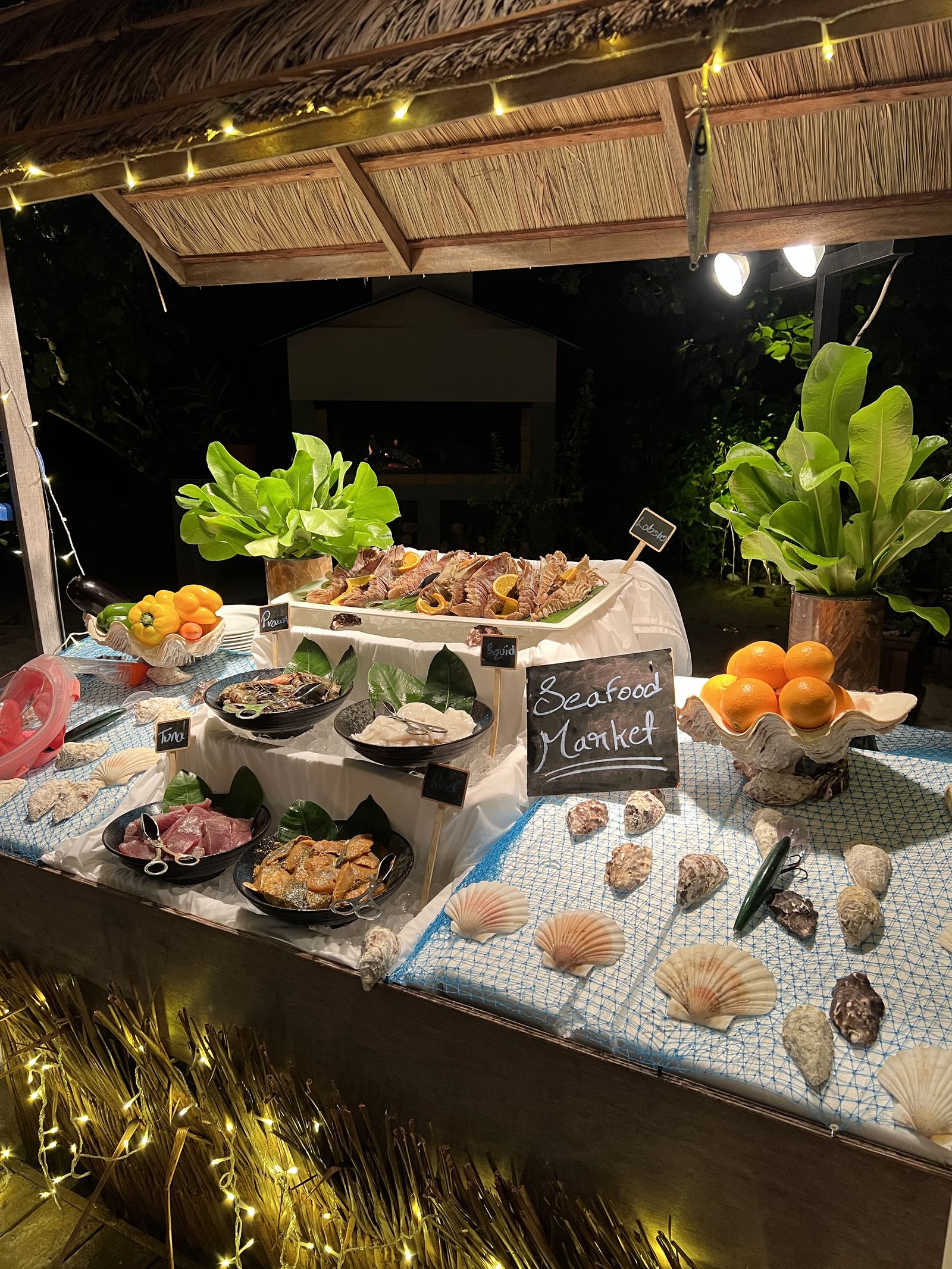
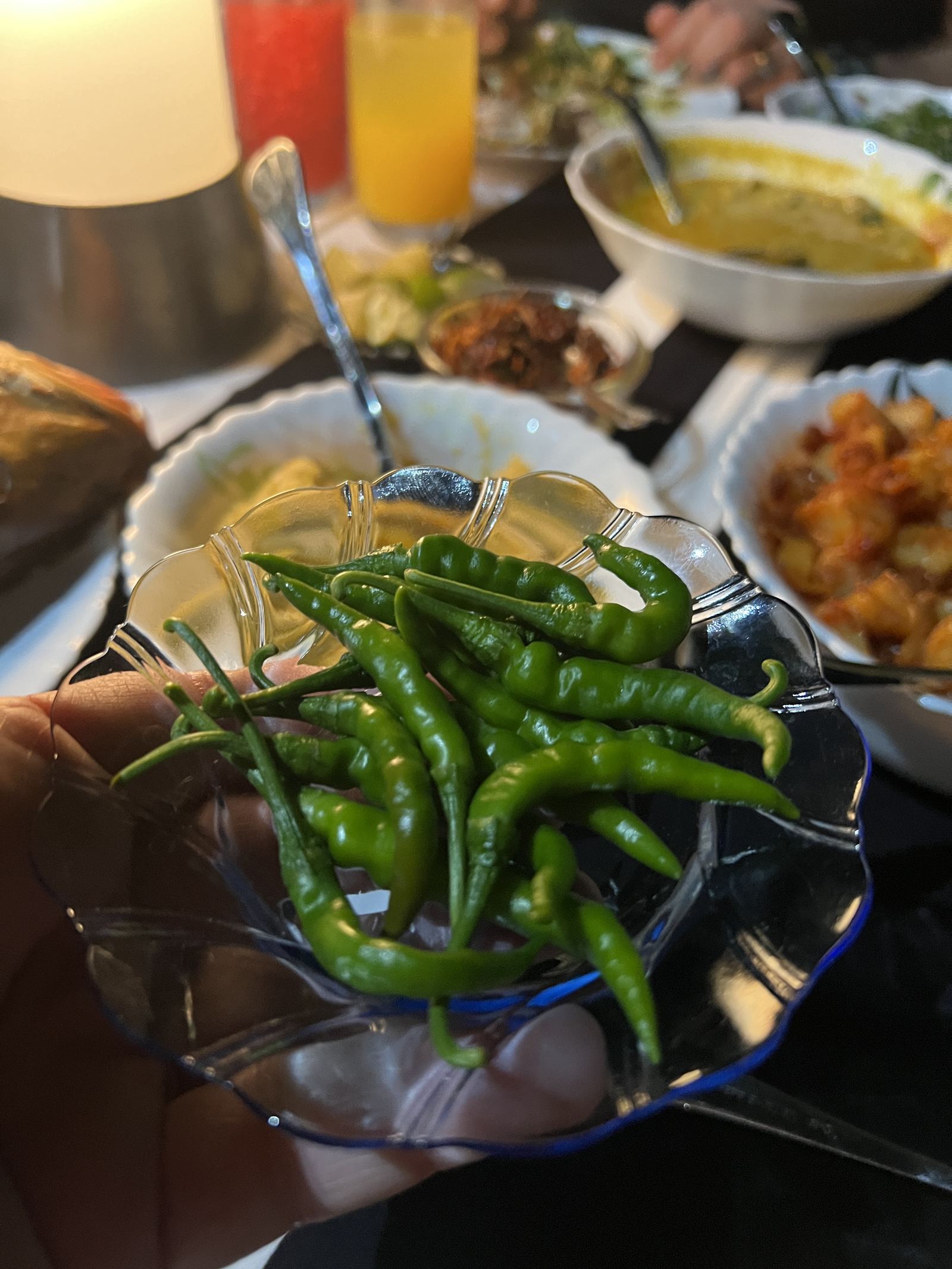
My stay coincided with Masters of Food & Wine, the Park Hyatt programme that brings in visiting chefs. Here it was built around the community on Gemanafushi, the inhabited island nearby, and the local cooks were part of it and never the subject of it. That is harder to pull off than the brochure makes it sound, and it gave the week a connection to the atoll that resort cooking usually leaves out.
Getting there
The route is a fifty-minute domestic flight from Malé to Kooddoo, then twenty-five minutes by speedboat. Guests compare this unfavourably with a seaplane before they travel and change their minds afterwards. Seaplanes operate in daylight only and they stop for weather, so an arrival that slips by two hours can cost a night in a Malé airport hotel. The domestic flight runs to a timetable and the boat runs after dark, which makes both ends of the trip calmer and the planning simpler.
Advisor's perspective
Hadahaa suits the traveller who wants very little to happen. Honeymooners, couples who dive or snorkel, anyone who has done the busier Maldives and found it crowded. It is a poor fit for a guest who wants six restaurants and a bar scene, and the transfer makes a three-night stay wasteful: five nights is where it starts to make sense, seven if the flights are long.
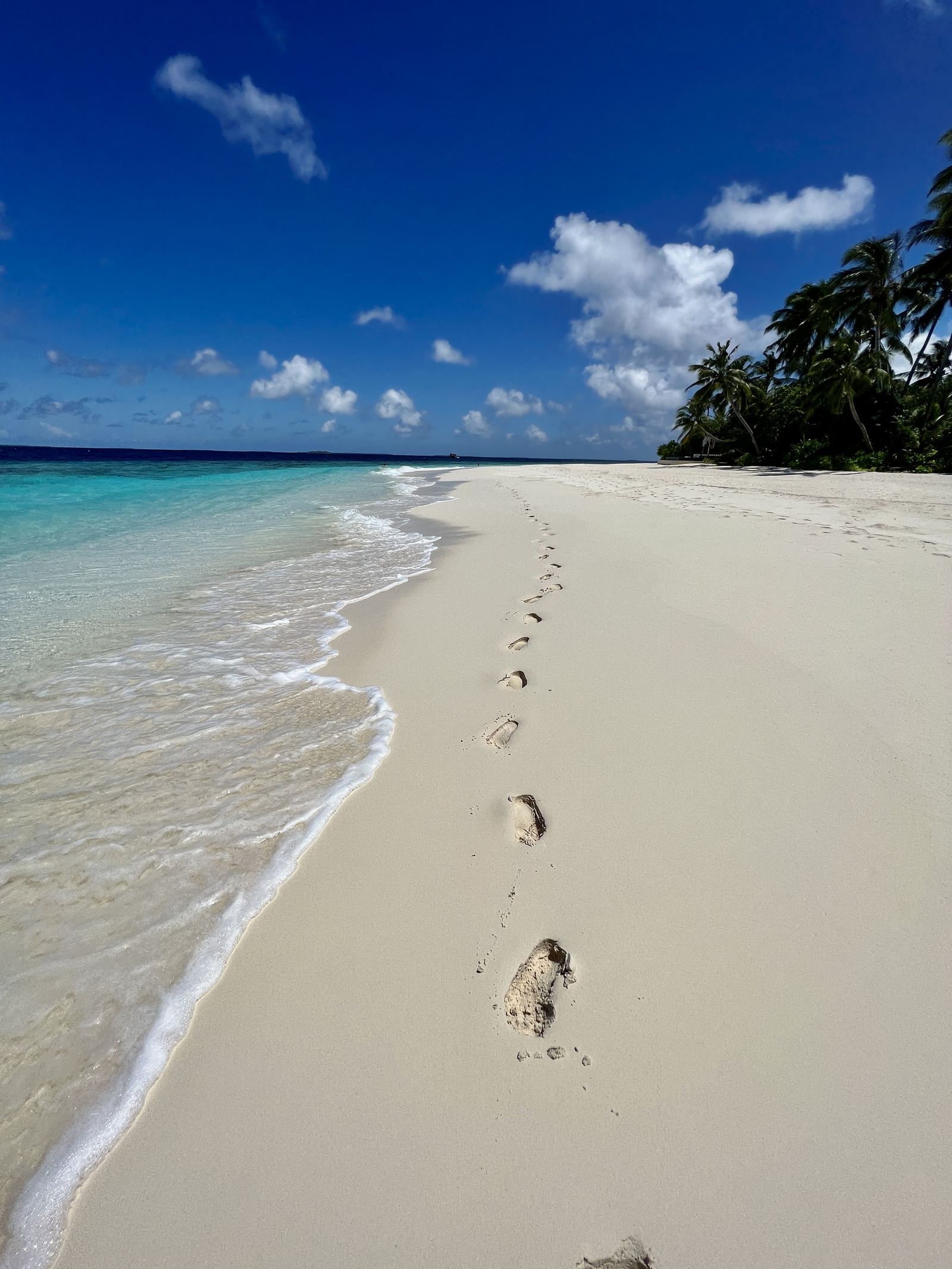
Two things stayed with me. The sand is the softest I have walked on in the country, and the island has been left without the sandbags and concrete groynes that hold the shoreline together at a good number of well-known resorts here. Hadahaa looks the way the Maldives are supposed to look, and keeping it that way appears to be a decision somebody makes repeatedly.
Before you book
The questions people send me about Park Hyatt Hadahaa.
- Seaplane or domestic flight? Everyone worries about this one.
- The domestic flight, and it is better than it sounds. Fifty minutes from Malé to Kooddoo, then twenty-five on a speedboat. Seaplanes fly in daylight only and give way to the weather, so a long-haul arrival that slips by two hours can cost you a night in a Malé airport hotel. The domestic flight runs to a timetable and the boat runs after dark, which means a late landing still ends with you on the island the same evening. Guests argue with me about this before they travel and agree with me afterwards.
- How many nights?
- Five is where it starts to make sense, and seven if your flights are long. The transfer makes three nights wasteful: you would spend a serious part of the stay getting there and leaving.
- Can I snorkel straight from the beach?
- Yes, and it is the detail that separates this island from most of its competition. The house reef goes right around it, so you walk in from the sand and you are on it, with no boat, no group and no schedule. Between nine and ten the drop-off has turtles, barracuda sit further out and small sharks come close to the shore. Ask the dive centre where to get in and when, because the answer changes with the tide and they tell you honestly which days are worth it.
- Beach villa or overwater villa?
- I slept in a Beach Pool Villa, so that is the one I can speak for: sand where the deck ends, ocean fifteen paces beyond, and a pool a metre from the bed that earns its place between eleven and three. I saw my neighbours twice in five days. The overwater villas sit out on their own jetty away from the beach and there are far fewer of them, fifty-one villas in total with most of them on the sand. If the reef is the reason you are coming, the beach side puts you on it without walking back down a jetty.
- Which month should I choose?
- I went in the middle of December and had five clean days with a breeze the dry season does not usually supply. The old seasonal calendar has become a loose guide in both directions down here, with rain in the dry months and long settled spells in the wet ones. Treat the traditional months as a probability and keep the dates flexible wherever the fare allows.
Something else you want to know? Write to me and I will answer it here.
Book online
Via Classic Travel, with the benefits attached.
The hotel's own rate, booked through a Virtuoso preferred-partner agency. Register once; the account stays linked to Wheresnik.
Check rates at Park Hyatt Hadahaa →Or let me arrange it
The room, the dates, the rest of the list.
Write in English, Italian or Spanish. I answer personally, usually within a day.
Let Nik arrange it →