
Inspection · Baa Atoll, Maldives
Coco Palm Dhuni Kolhu
A Maldivian-owned island in Baa Atoll, ninety-eight thatched villas hidden under the trees it was built around. I have been back four times, which is the review.
Book Coco Palm with me Tell me the dates and who is travelling, and I arrange it with the house directly. In English, Italian or Spanish.I have been to this island four times, a week on each visit. I see a great many hotels and I do go back to some of them: a few because they have been rebuilt and I want to know what they did, a few because they sit somewhere I like being anyway. A very small number because they are actually the thing I am looking for, and Coco Palm Dhuni Kolhu belongs in that last group. It is never the same as the first time, and I would distrust anyone who told you it was. You arrive already knowing the place, and the first day goes on reading what has changed, some of it for the better and some of it for the worse. What I keep finding here is the Maldives I came for in the first place: the sea, comfort built at the scale of the island it stands on, and privacy that is close to total.
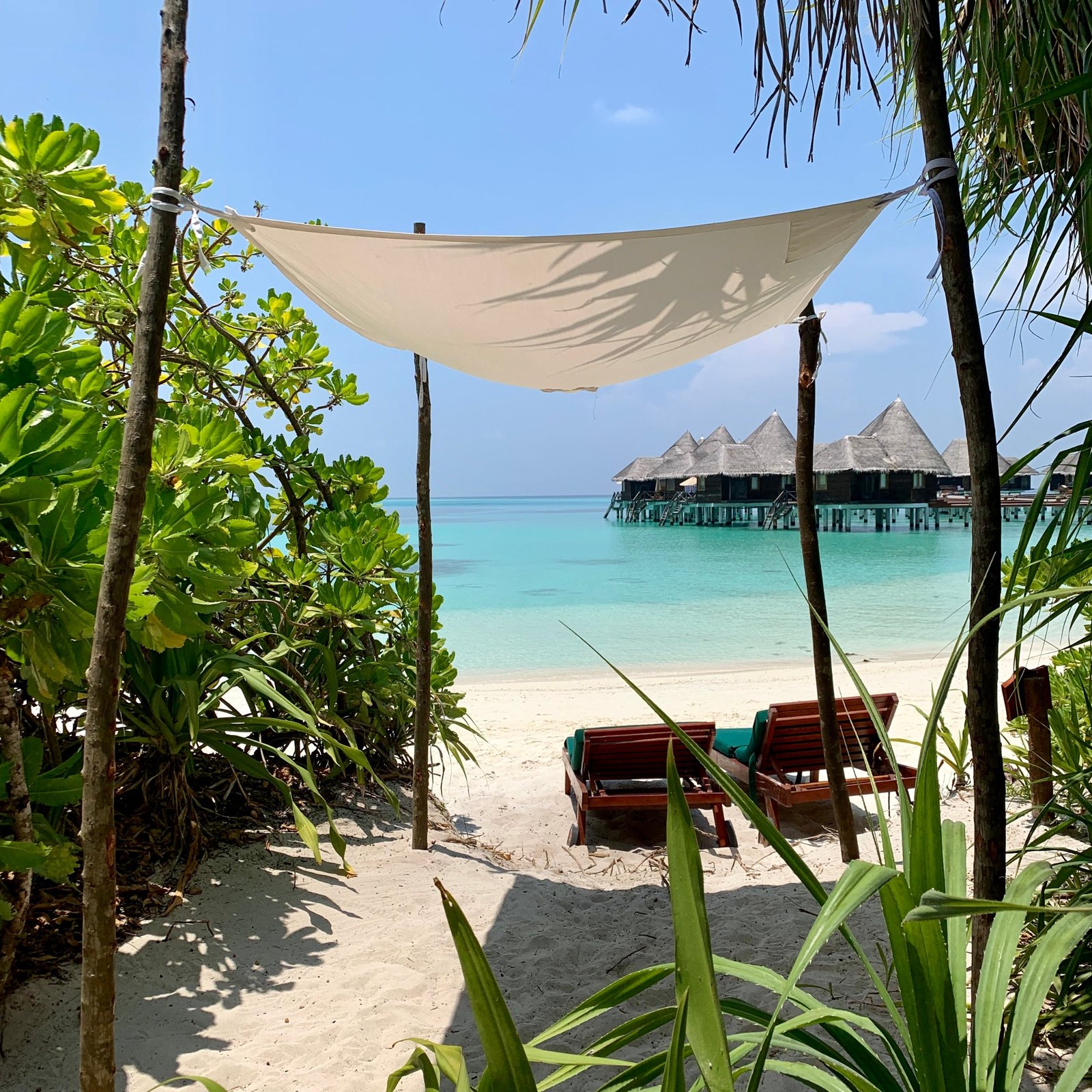
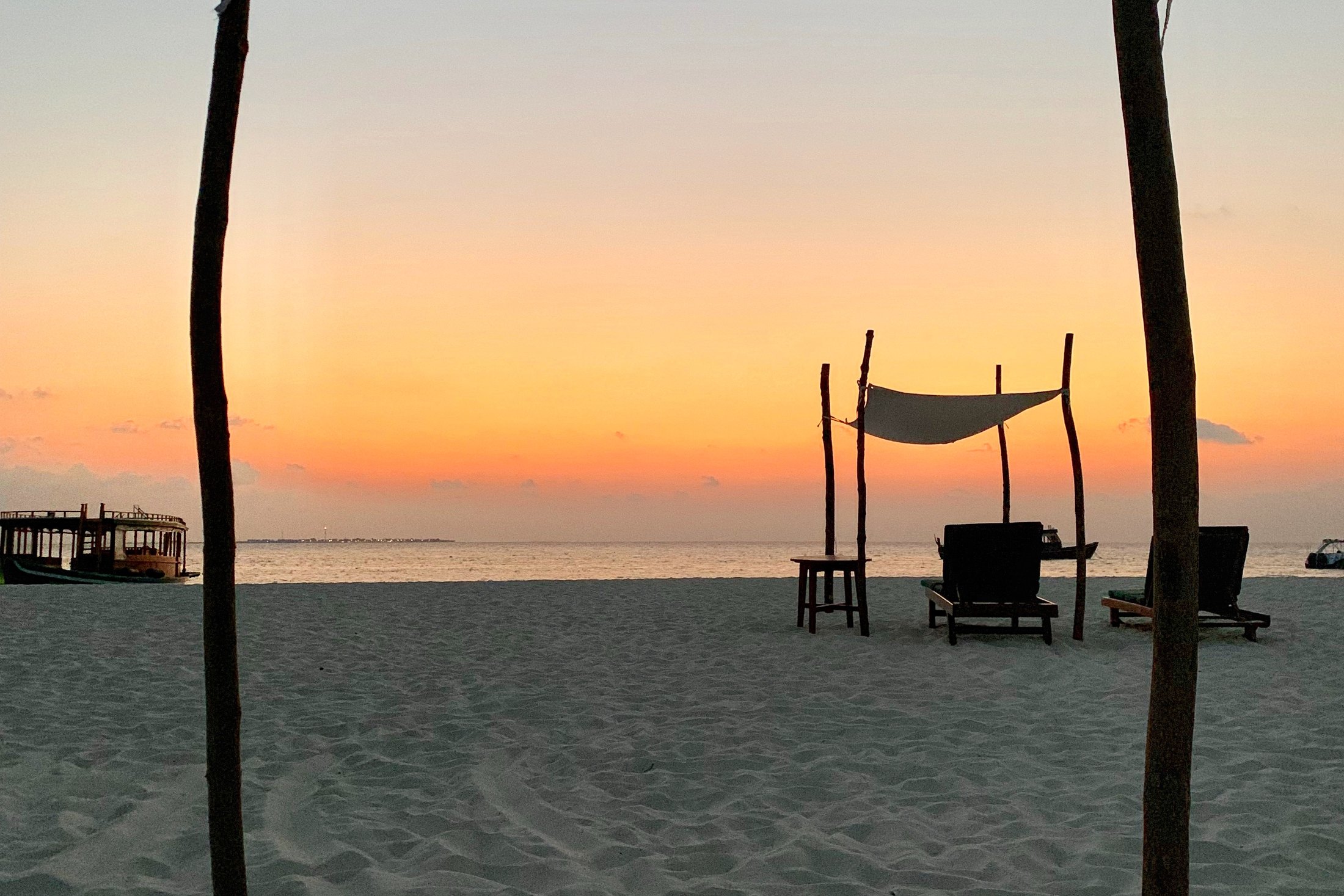
This is not the island for a thousand-euro bottle of Bordeaux or for caviar carried to the table with ceremony. Nothing here is shouted. No group's name stands over the door, no architect was flown in to leave a signature, and the most expensive-looking object on the beach is a square of white canvas held up by four poles. That restraint is the thing I now travel to find, and it is getting harder to find every year. The question I ask about an island is no longer how much can be installed on it. It is how much of the island is still standing once the installing is finished.
What the island is
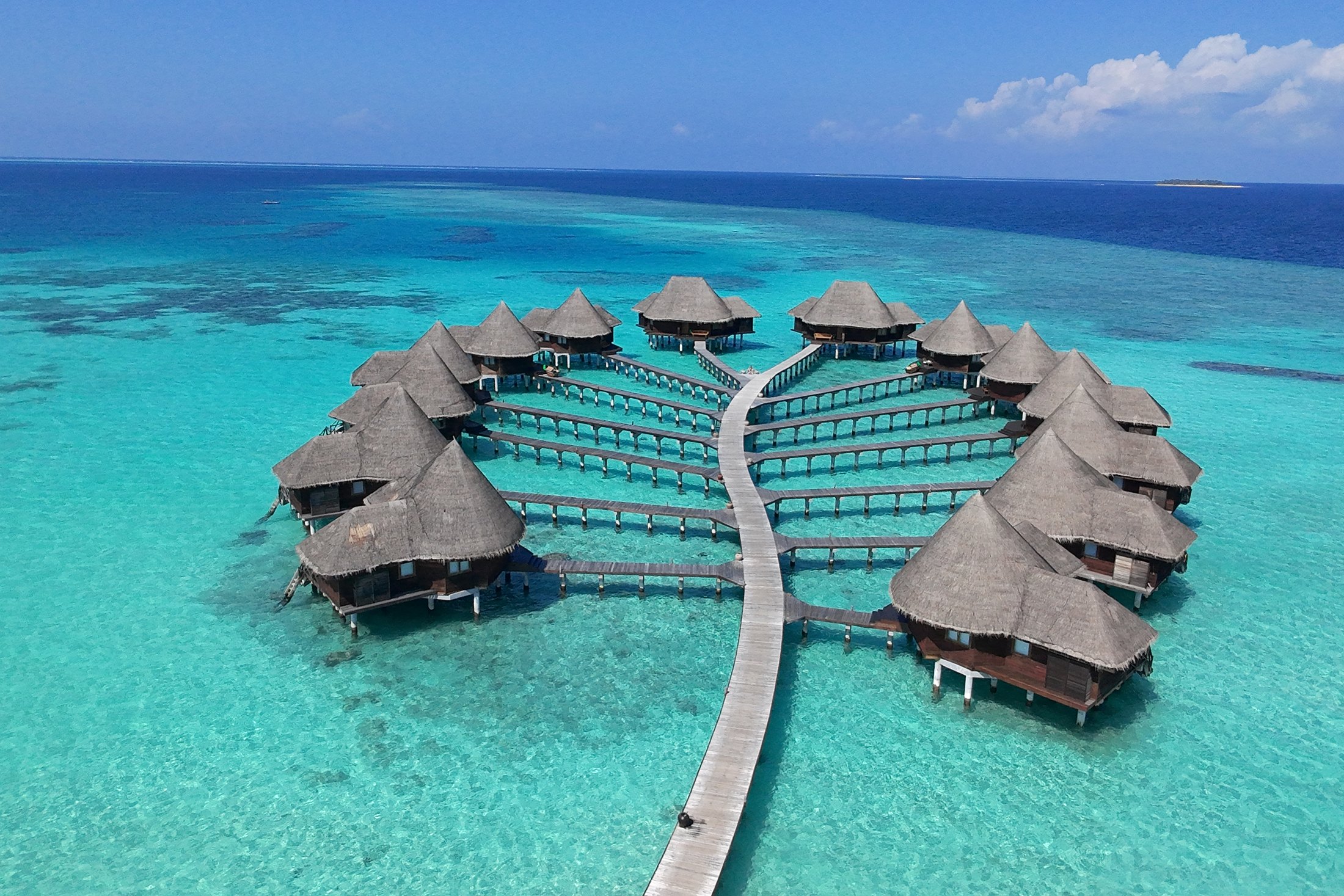
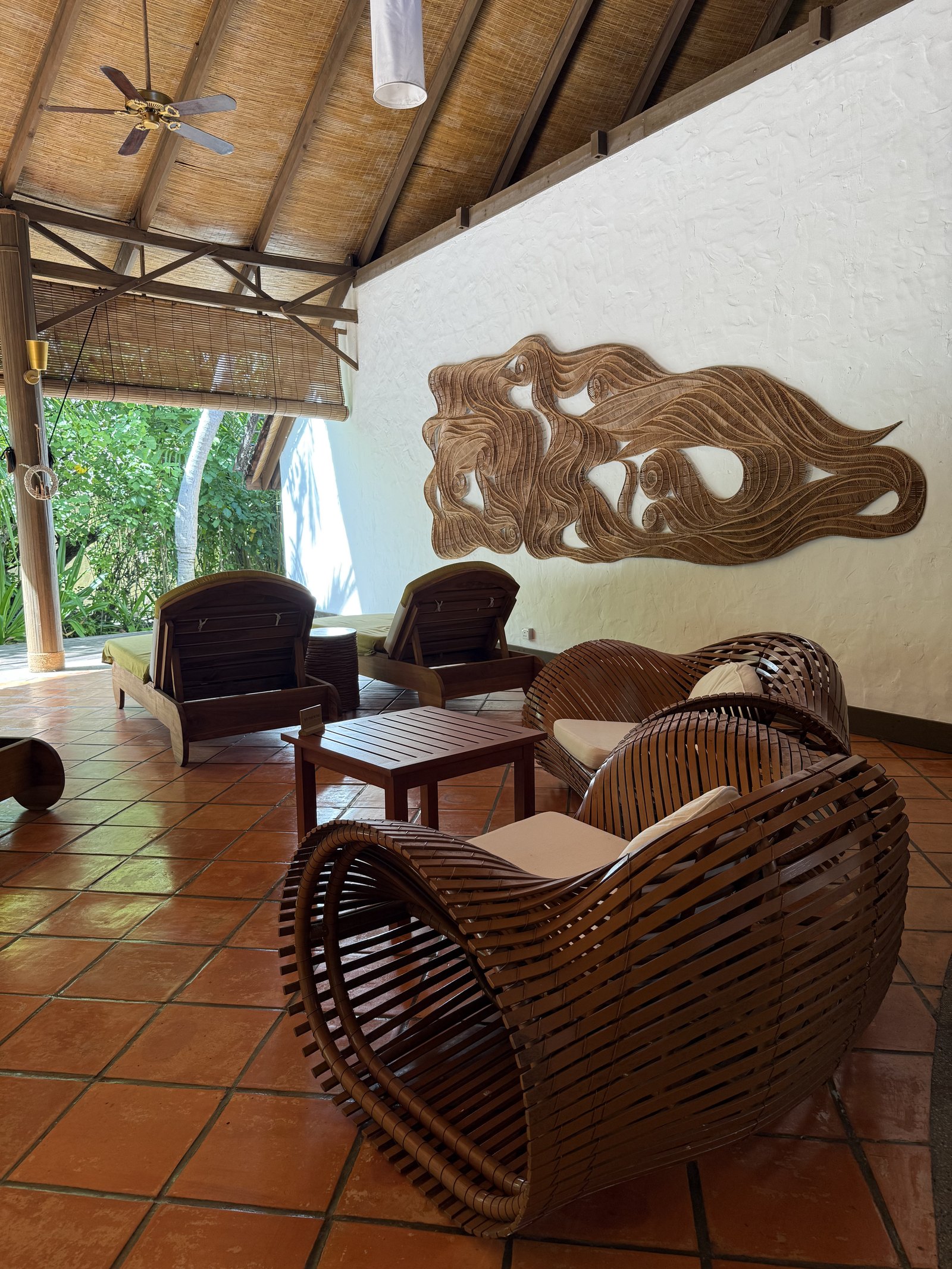
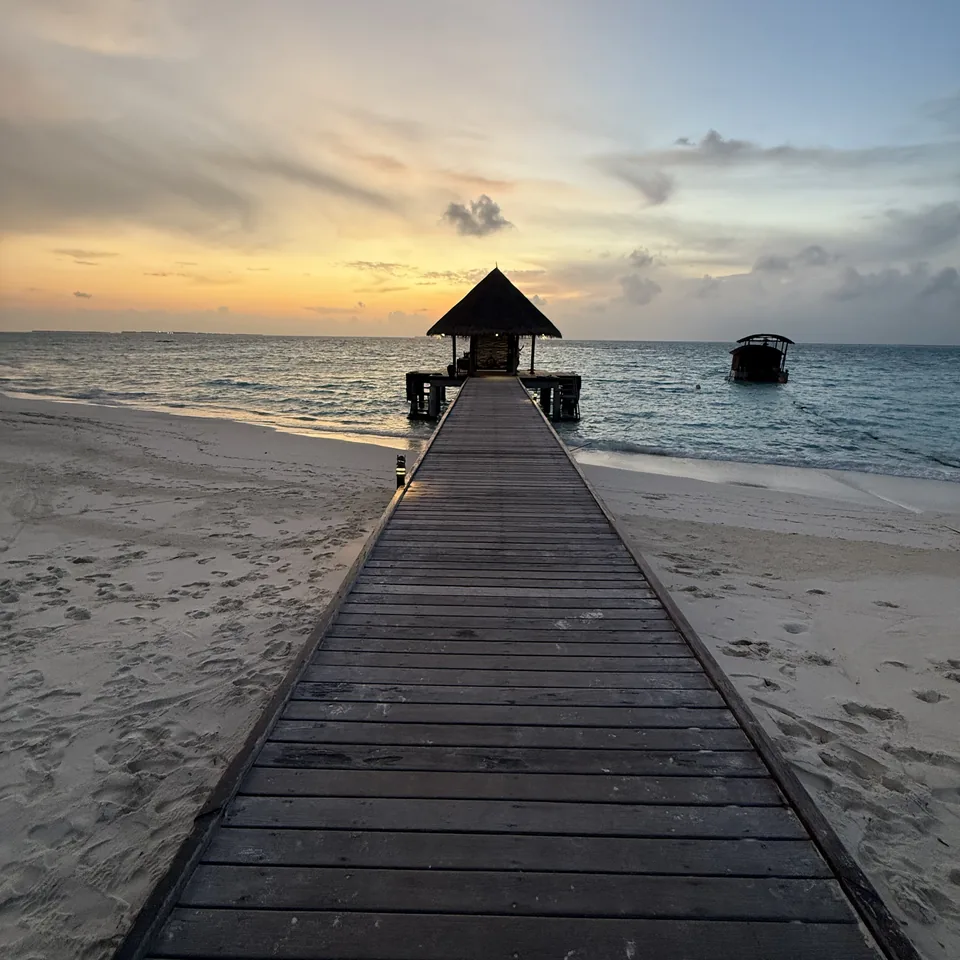
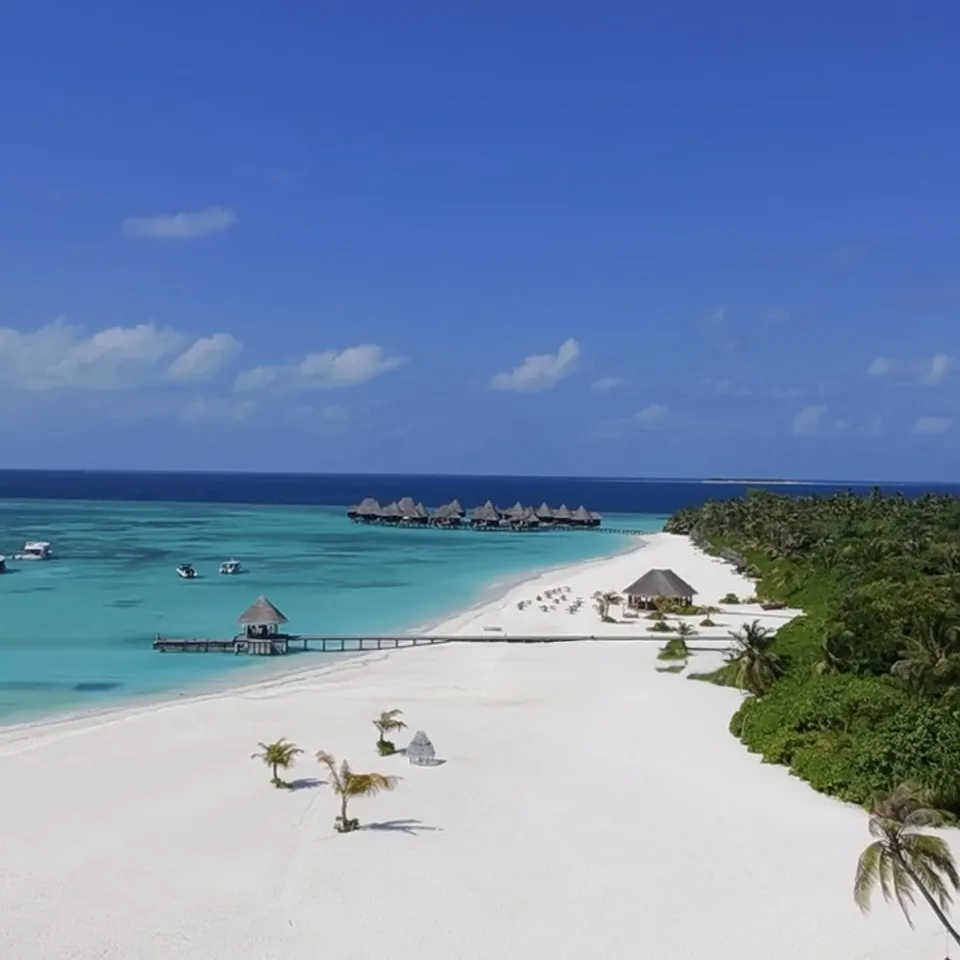
Coco Palm belongs to Coco Collection, which is Maldivian owned and runs one other island, Coco Bodu Hithi. This one opened on 7 December 1998, which makes it older than most of what you will be shown when you start looking at this country, and the age is the point. The trees were here first. The ninety-eight villas are set under them or out on stilts over the lagoon, the paths are sand, and the buildings are thatch and timber at a height the vegetation can still look over. The overwater villas are a single jetty of them. Everything else sits on the sand in its own pocket of green, which is why you can walk the length of the island and see almost none of it.
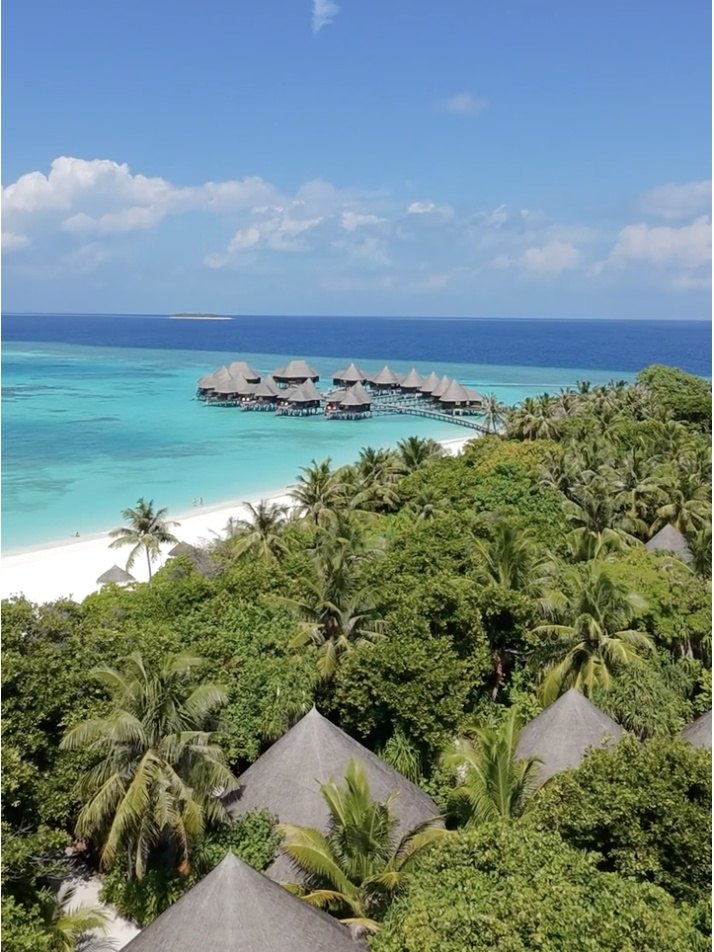
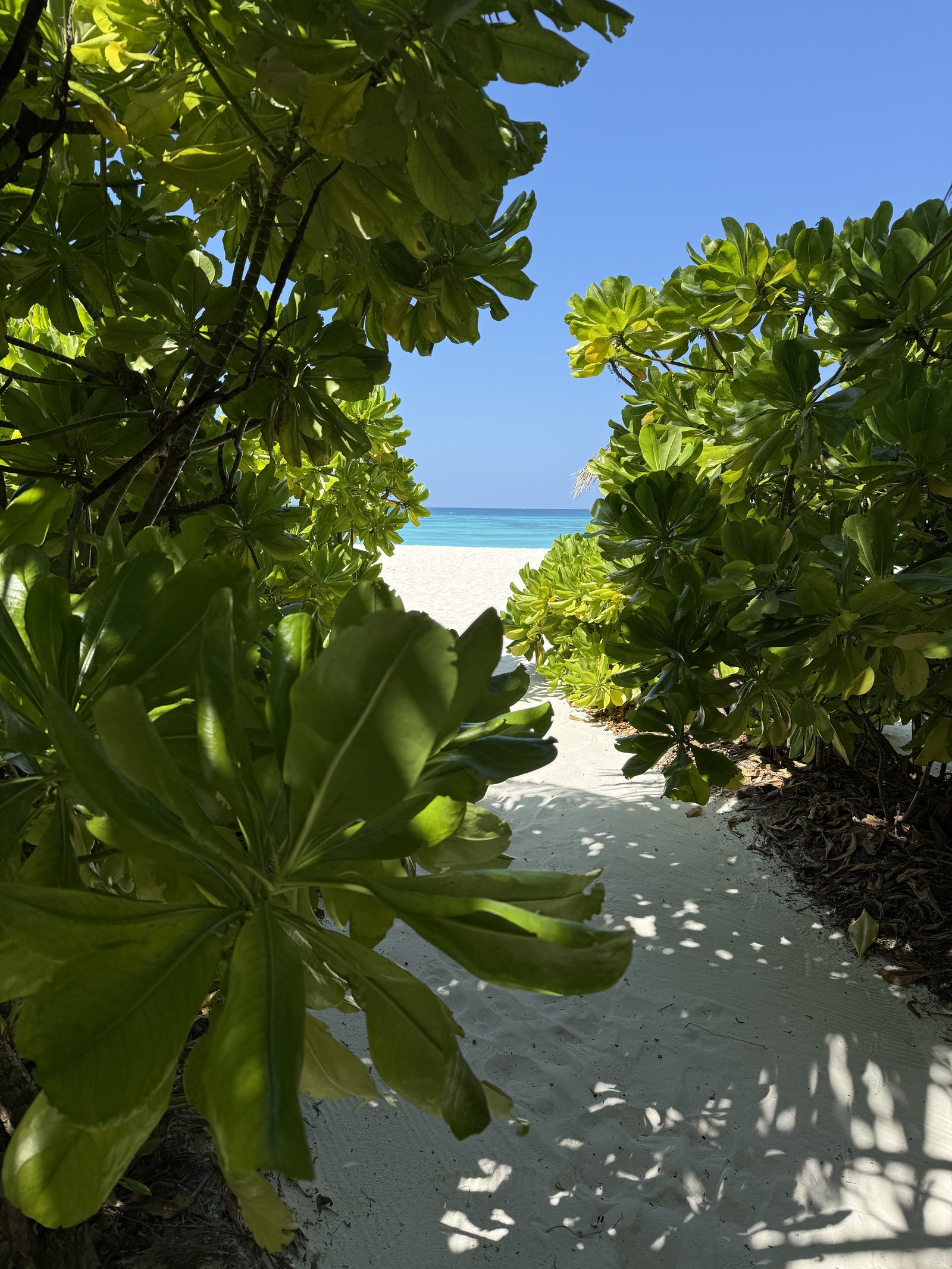
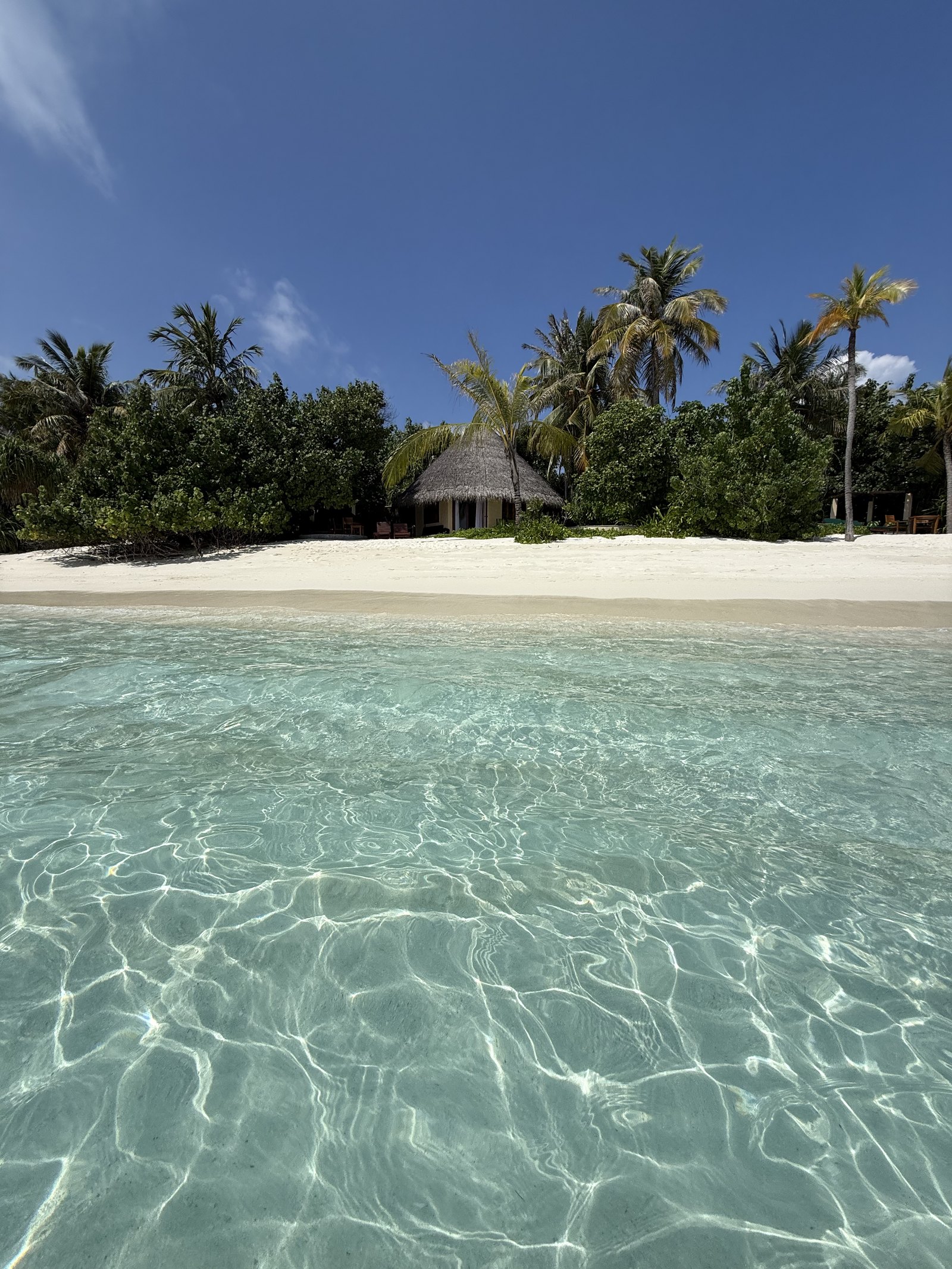
Choosing one of these islands takes more care than the photographs suggest, and the reason is that for a week the island is the entire holiday. The room, the food, the beach, the lagoon and the way the landscape is handled stop being separate items on a list and turn into one decision. Get the island wrong and there is nowhere else to go, which is a thing you can say about almost no other kind of hotel.
There is a version of the Maldives that arrives by knocking the island flat and installing a resort on the clean surface. This is the other version. It is a working resort with everything a working resort needs, and the experience is still about being on a Maldivian island, which sounds like it should be the minimum and is becoming the exception.
The two villas, and which one I would book
On one trip I had both: a Sunset Lagoon Villa out at the end of the jetty and a Sunset Beach Villa on the sand. The lagoon villas are the largest category here, with a separate sitting room, a bathroom facing the ocean and a plunge pool on the deck. They are the photograph everyone has in mind before they come to this country.
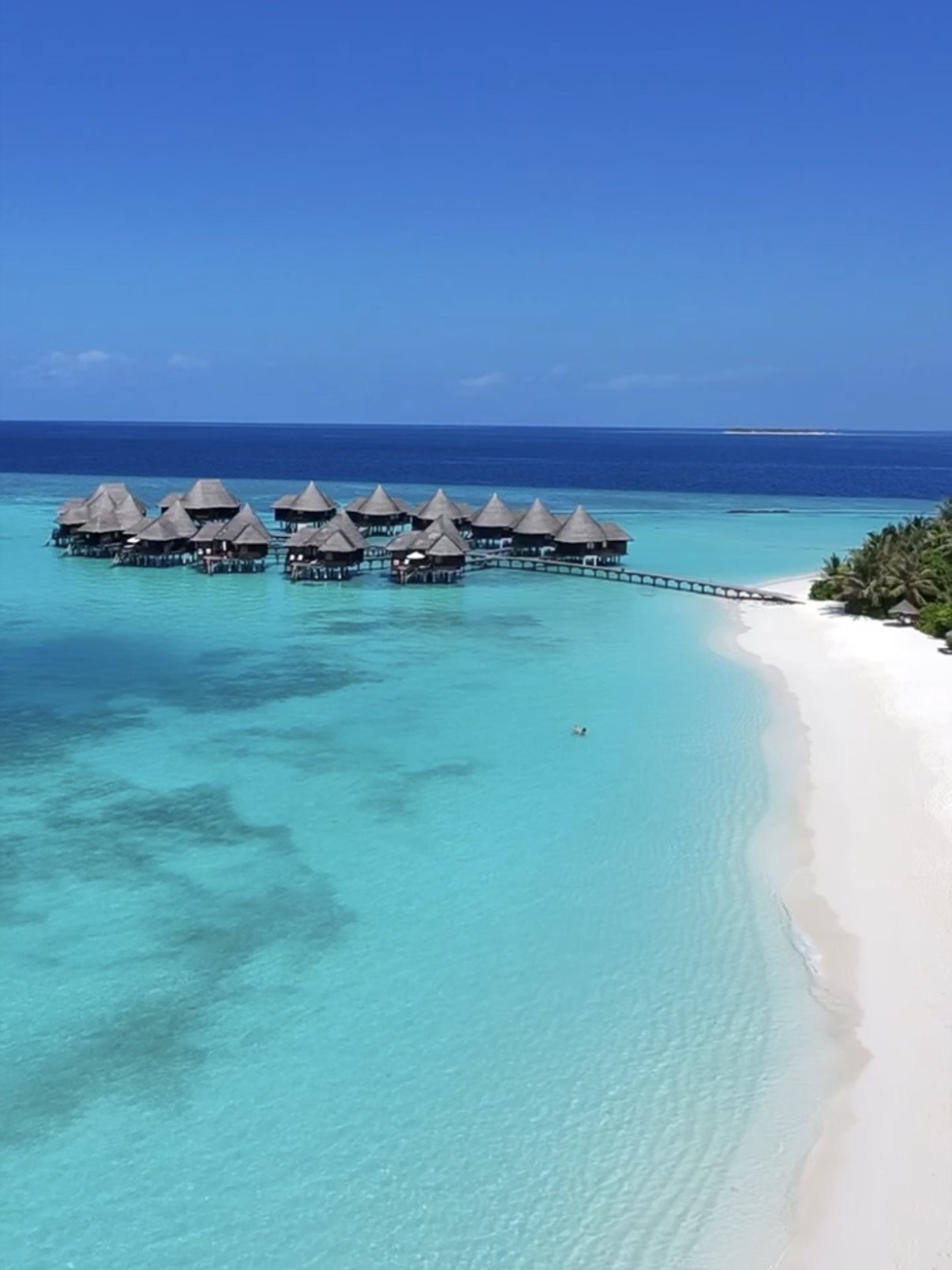
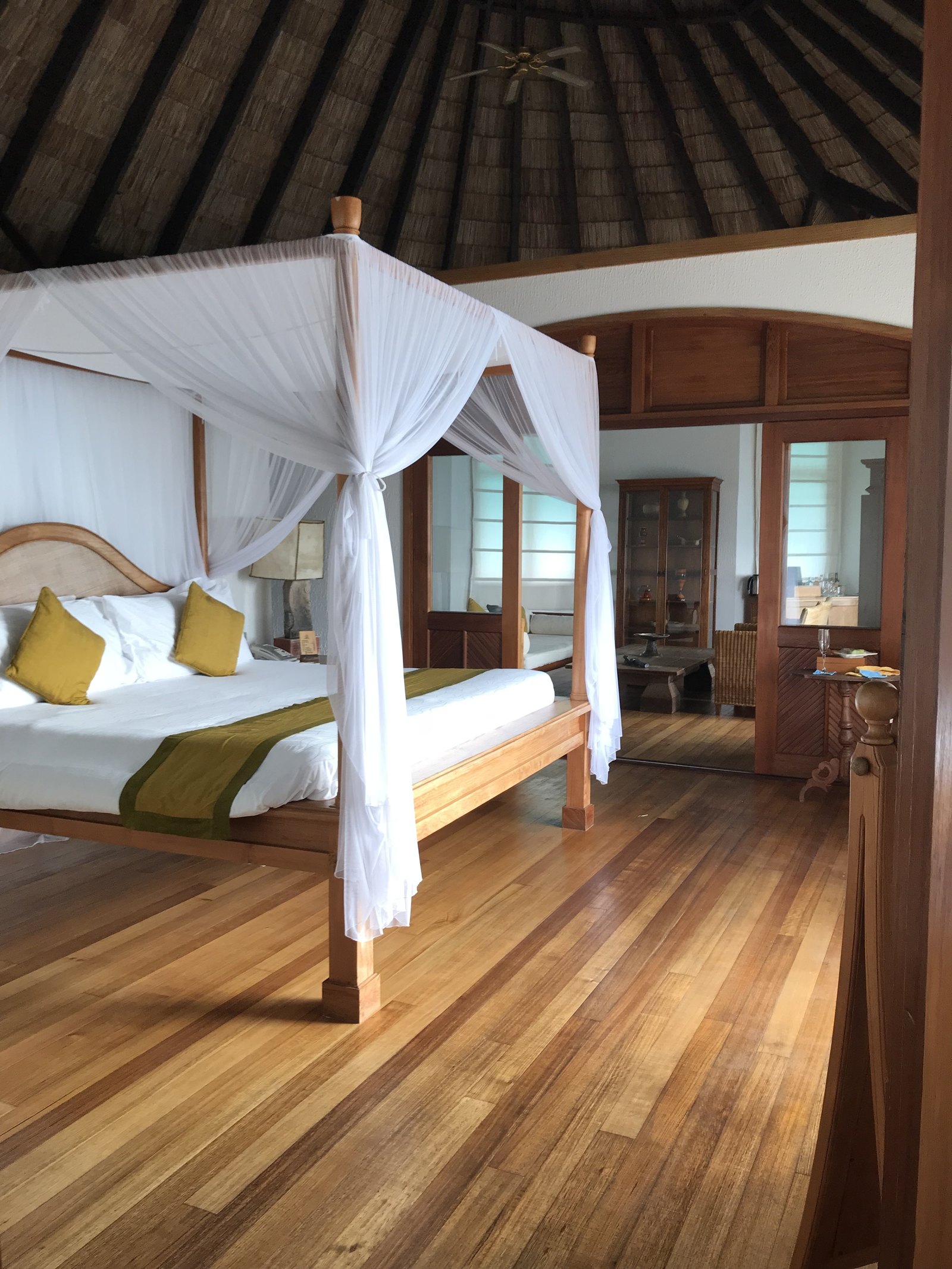
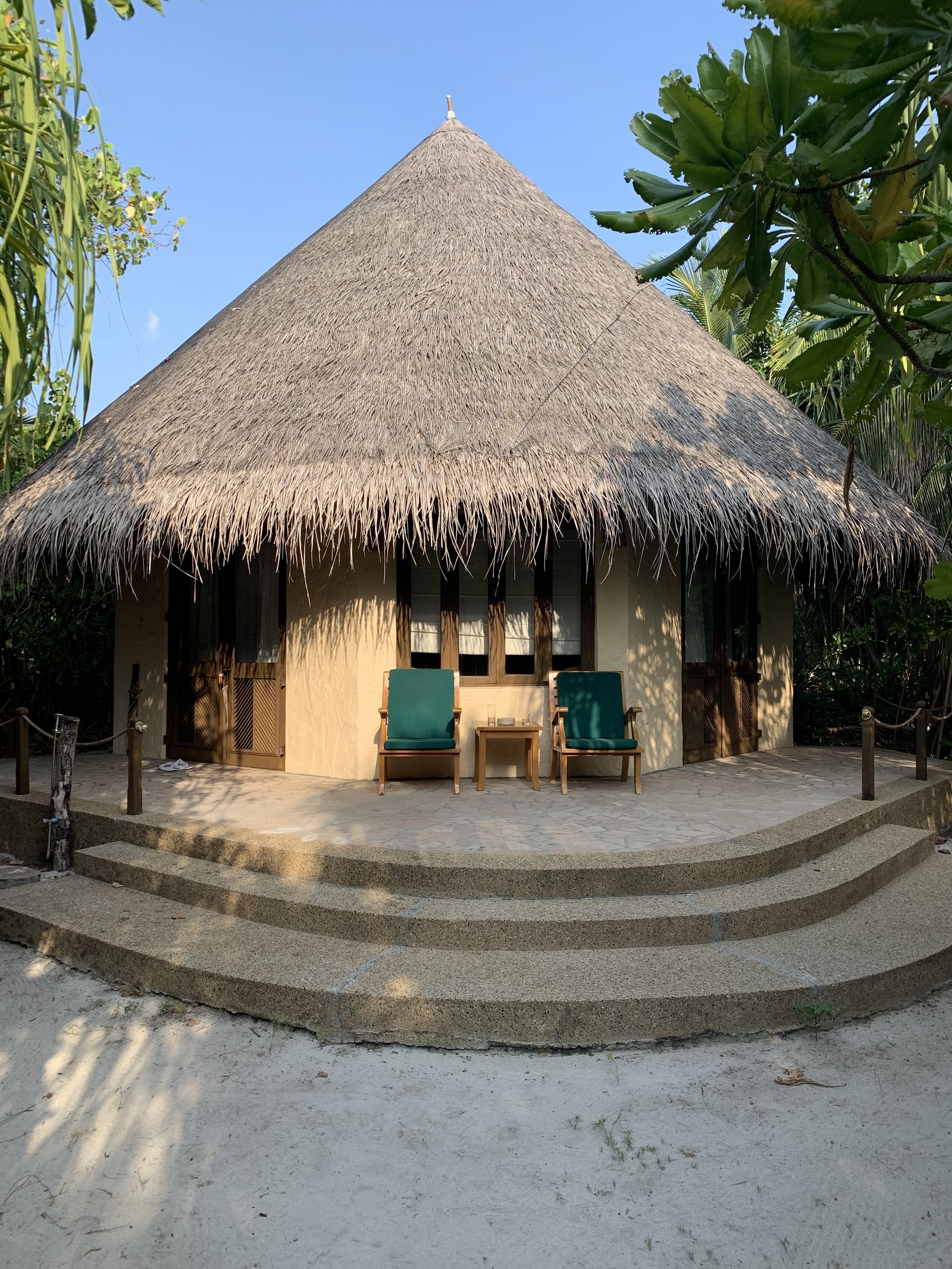
I would take the beach villa, and the reason is boring and practical. I used it more. You step off the terrace into shade, the sea is twenty paces away, and you go in and out of it all day without thinking about it. From the overwater villa the same day needs organising: the walk back, the towel, the four minutes each way. If sleeping over water is the reason you are coming, book it and enjoy it. If you are coming for the island, the island is on the sand.
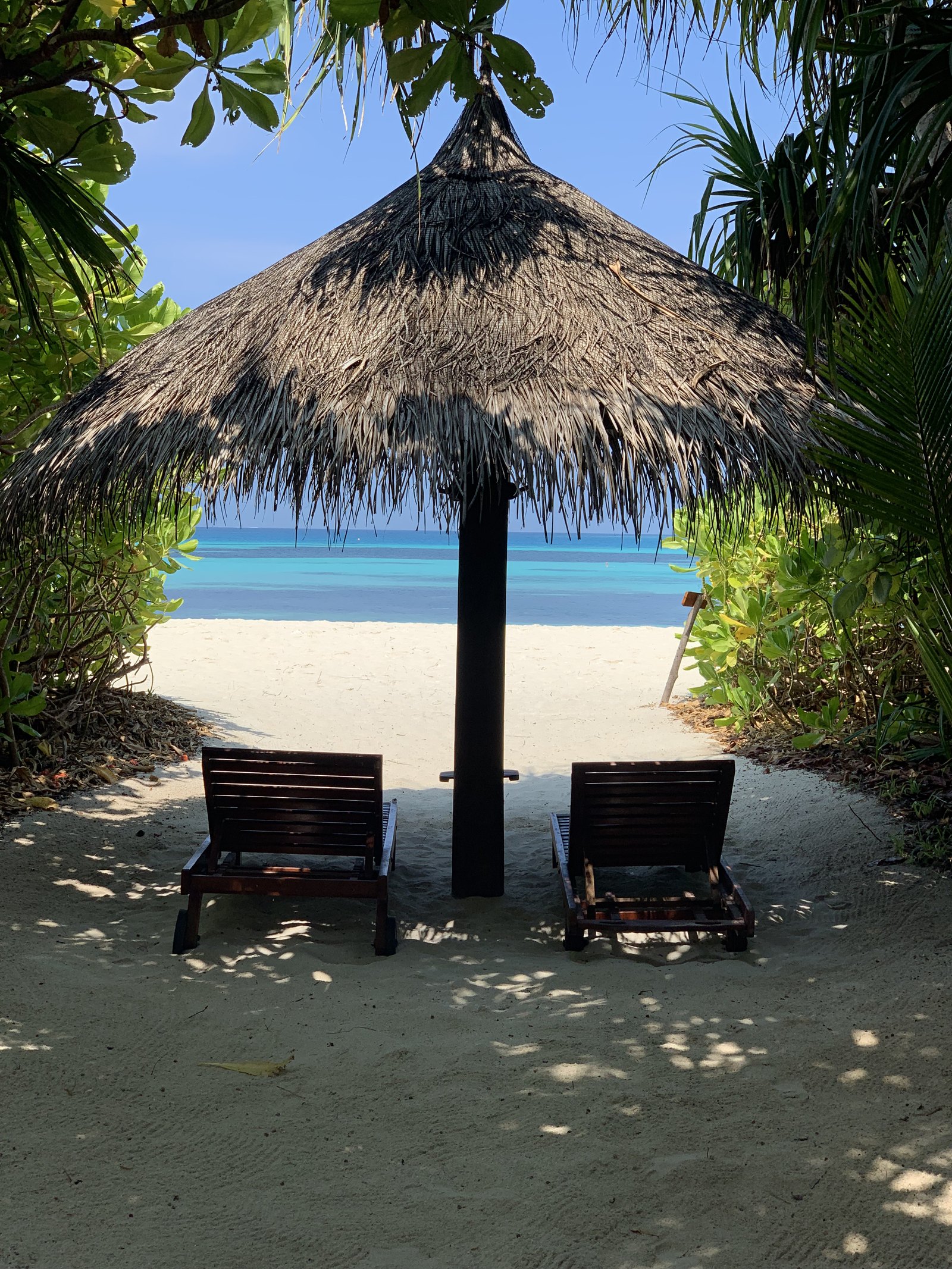
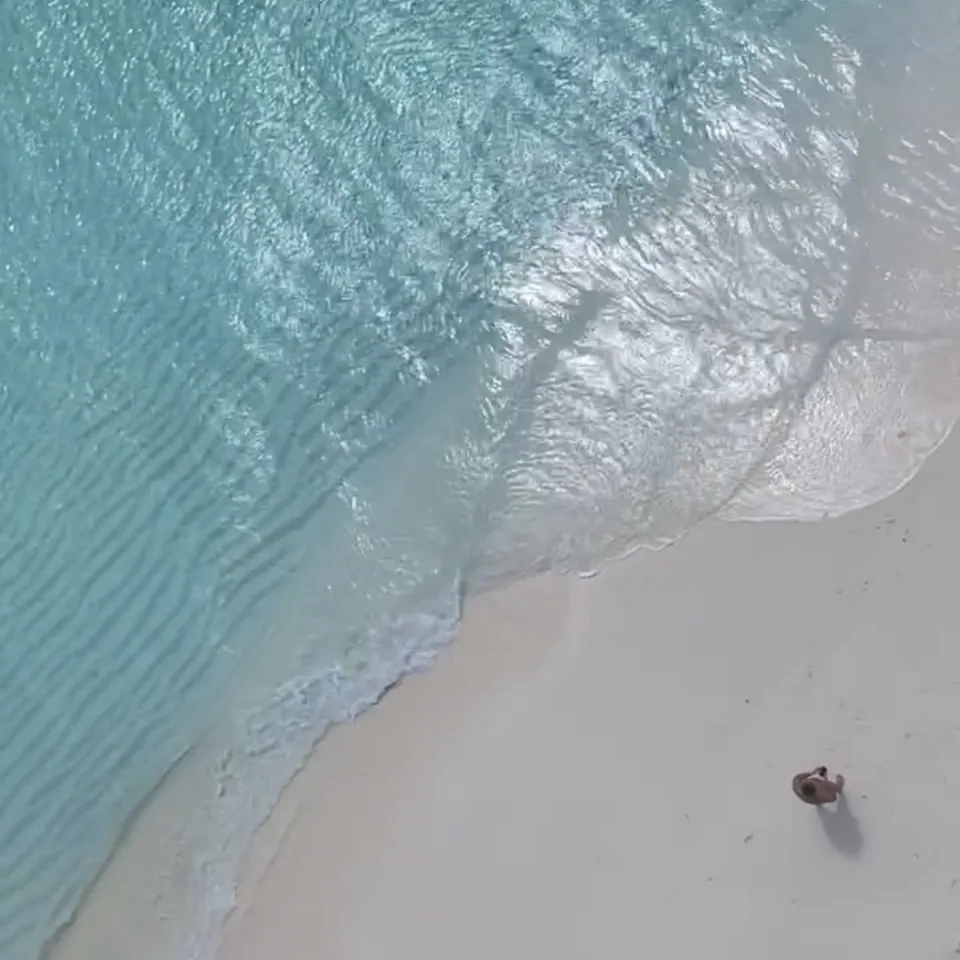
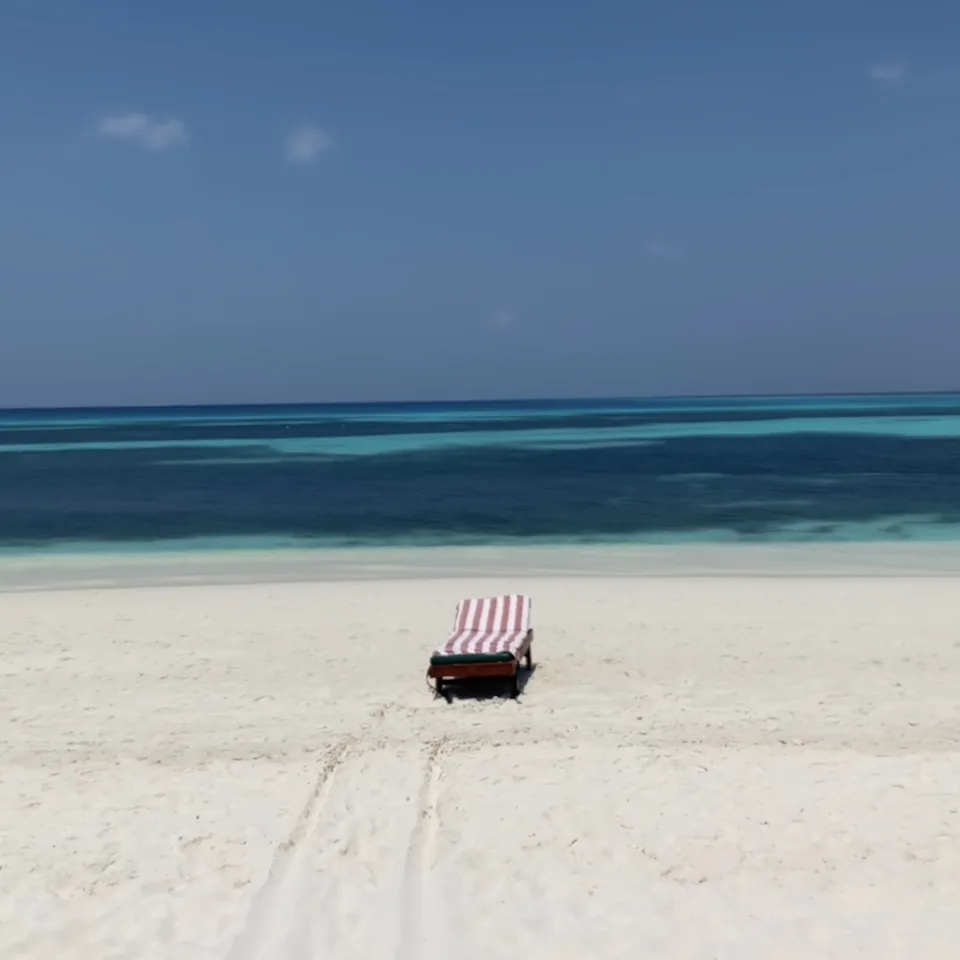
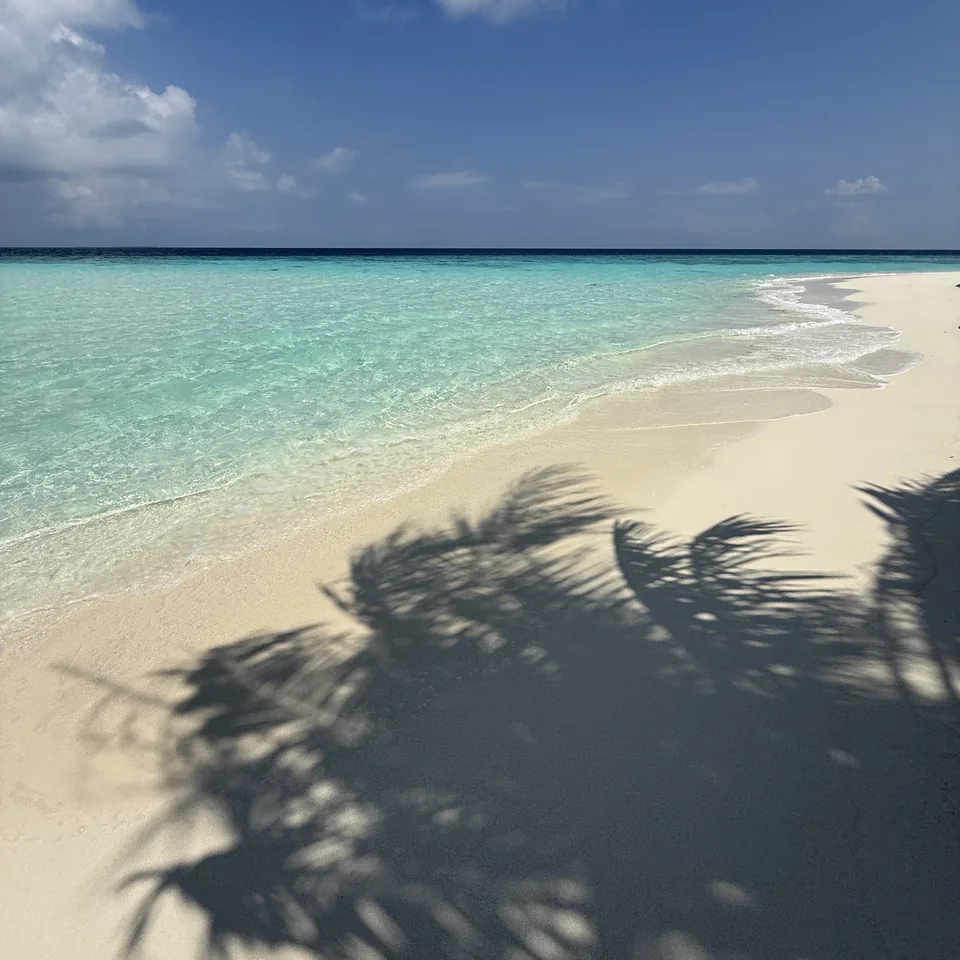
The beach in front of a beach villa is not private, and nobody here pretends it is. It reads as private because the vegetation closes behind you, because the thatched parasol on that stretch of sand and the two loungers under it belong to that villa and to no one else, and because on an island of ninety-eight villas there is simply enough beach to go round. That is as private as a beach needs to be, and it is a different thing from being told it is yours.
One thing to settle before you pay. The beach villas closest to the overwater jetty look straight down it. The thatch and the timber soften that and do not remove it, so ask for one further along, and ask by number and not by category.
Coming back
The second time I arrived there were leaves laid out on the bed spelling WELCOME BACK. Years later, on a visit after that, there they were again. I am aware this is a small thing and I am aware it is a trick that any resort could do. Most do not. It is the sort of detail that only happens where somebody is keeping a list and reading it, and on an island where you will see the same faces at breakfast for a week, that matters more than a turndown gift.
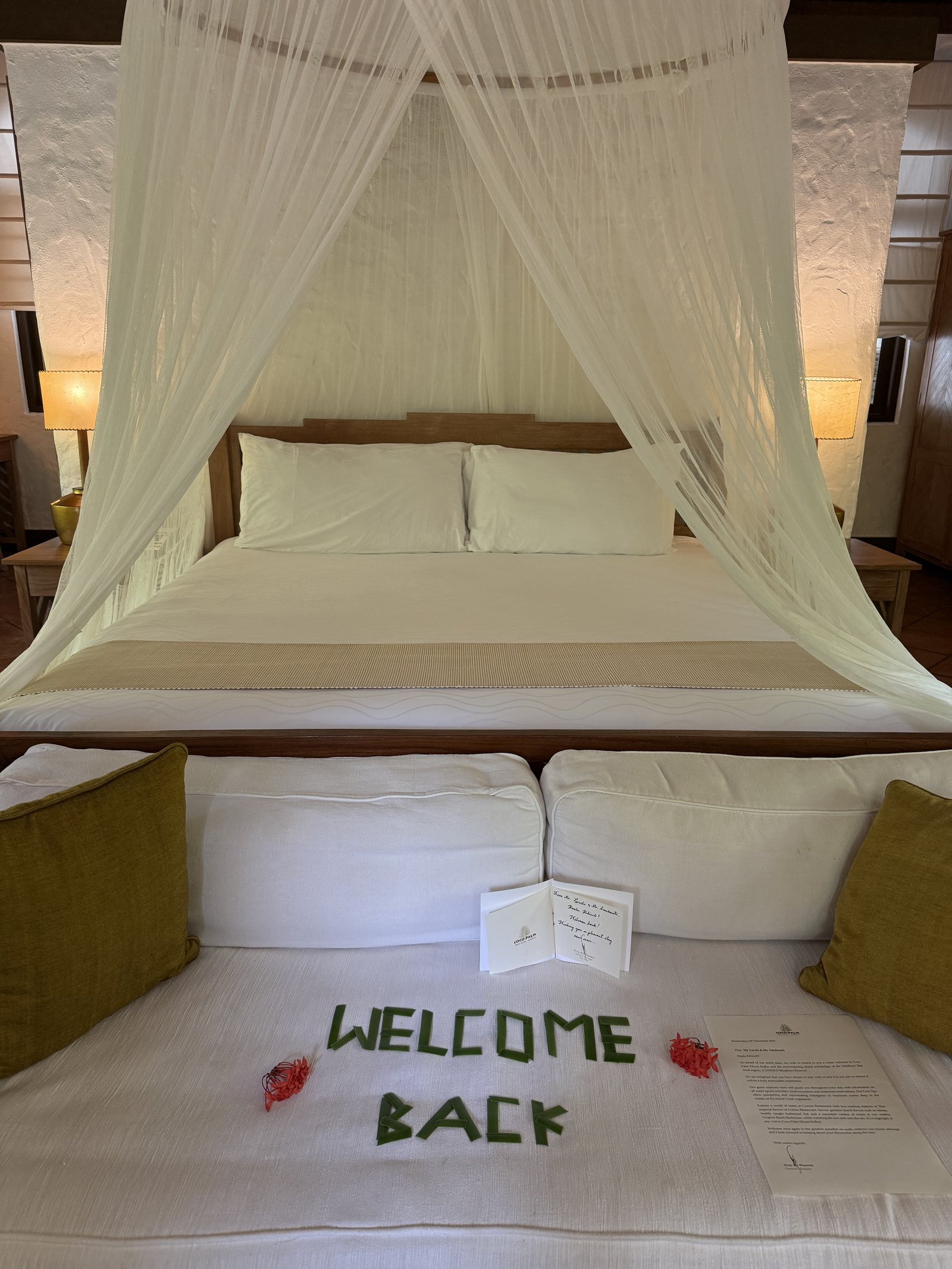
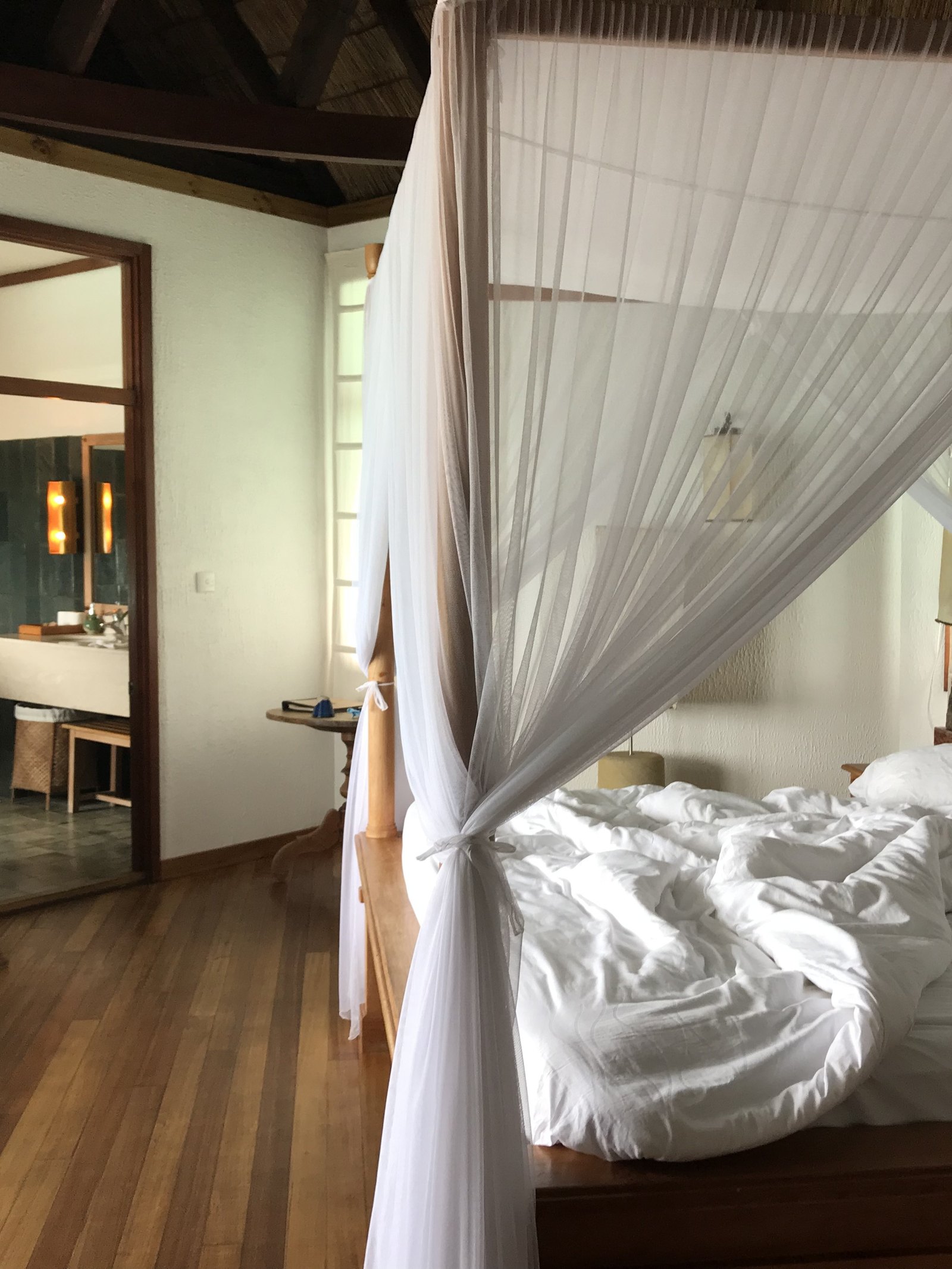
Which brings me to the thing that actually impressed me most, and it is the least photogenic thing on the island: upkeep. Coco Palm is not new and in places you can see that. Some of the fittings belong to the decade they were installed in. Age and neglect are two different conditions, and what you find here is the first without the second. Across four visits I have watched the thatch, the paths, the gardens and the public rooms being kept, and that is a decision somebody renews every year. An island hotel that is being looked after reads completely differently from one that is coasting on the view, and once you have seen both you cannot unsee it.
The food
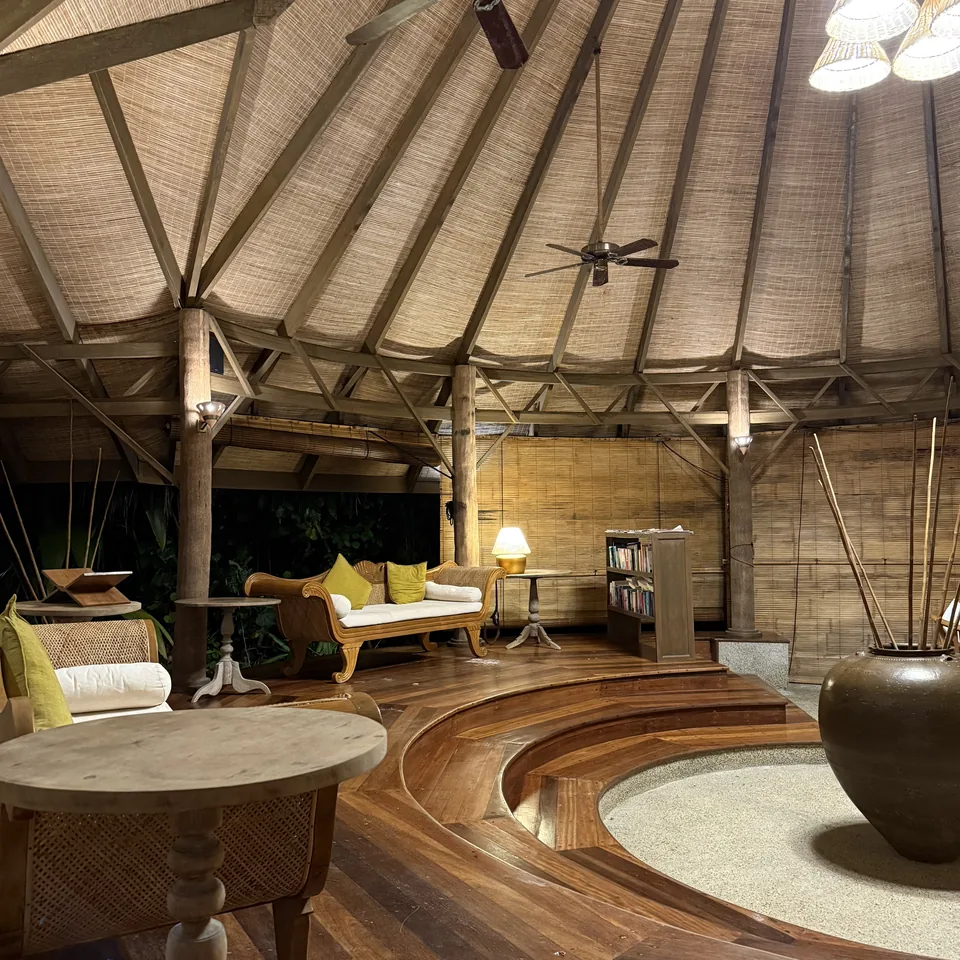
You eat in the same room for a week on an island like this, so the restaurant is not a detail. Cowrie is the main one, an open-sided pavilion under a high thatched roof, and it runs as a buffet with cooking done in front of you.
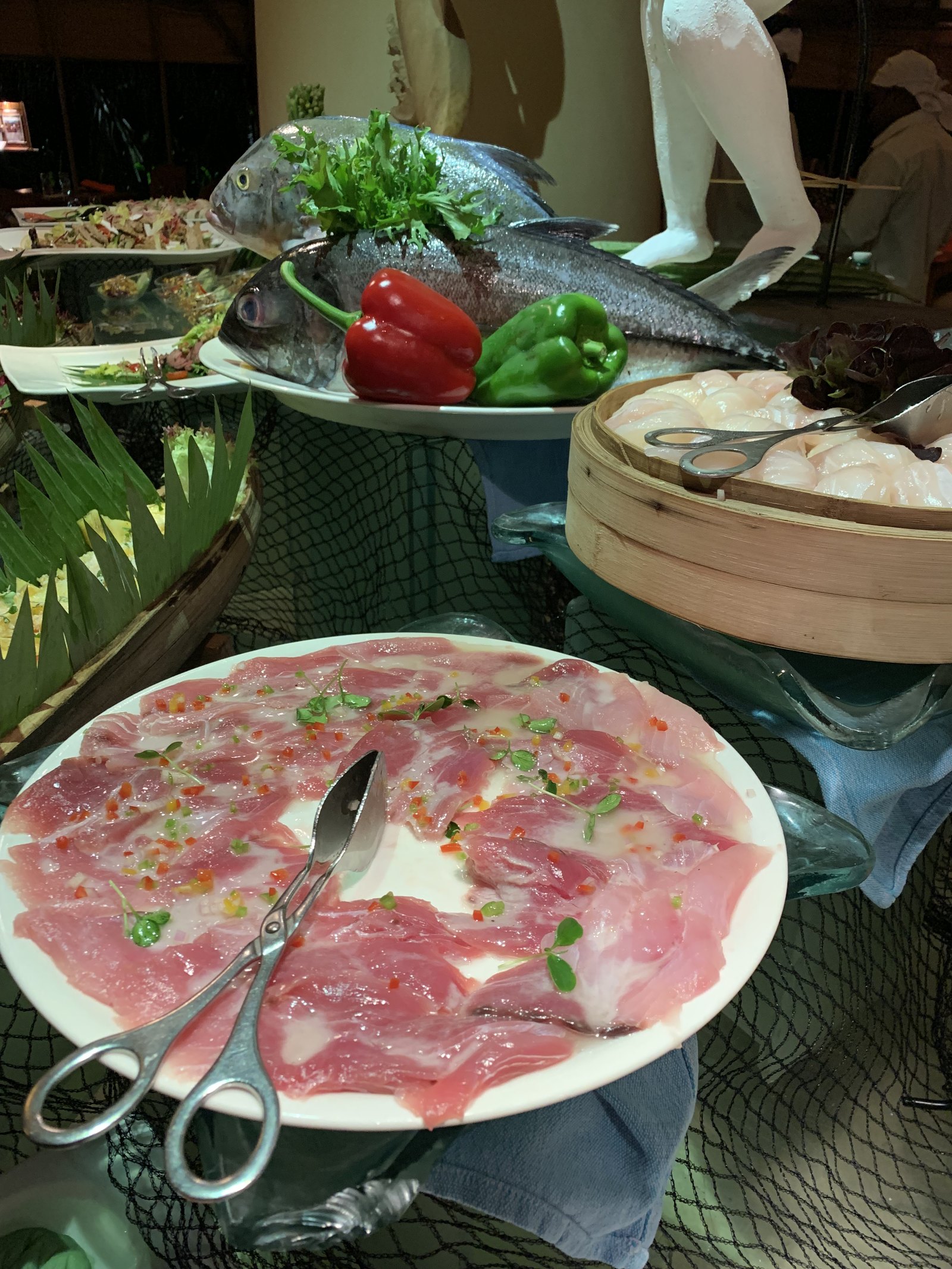
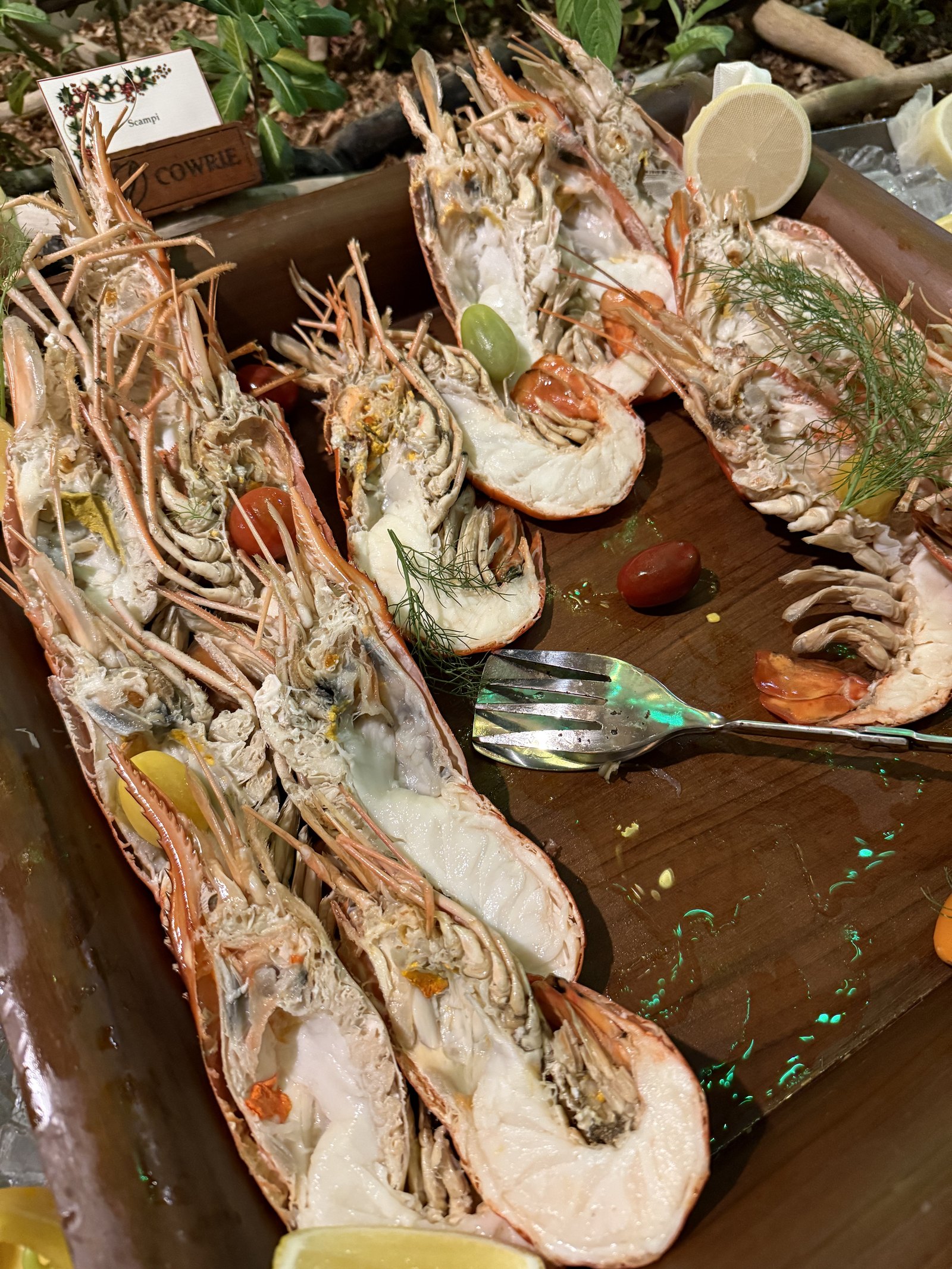
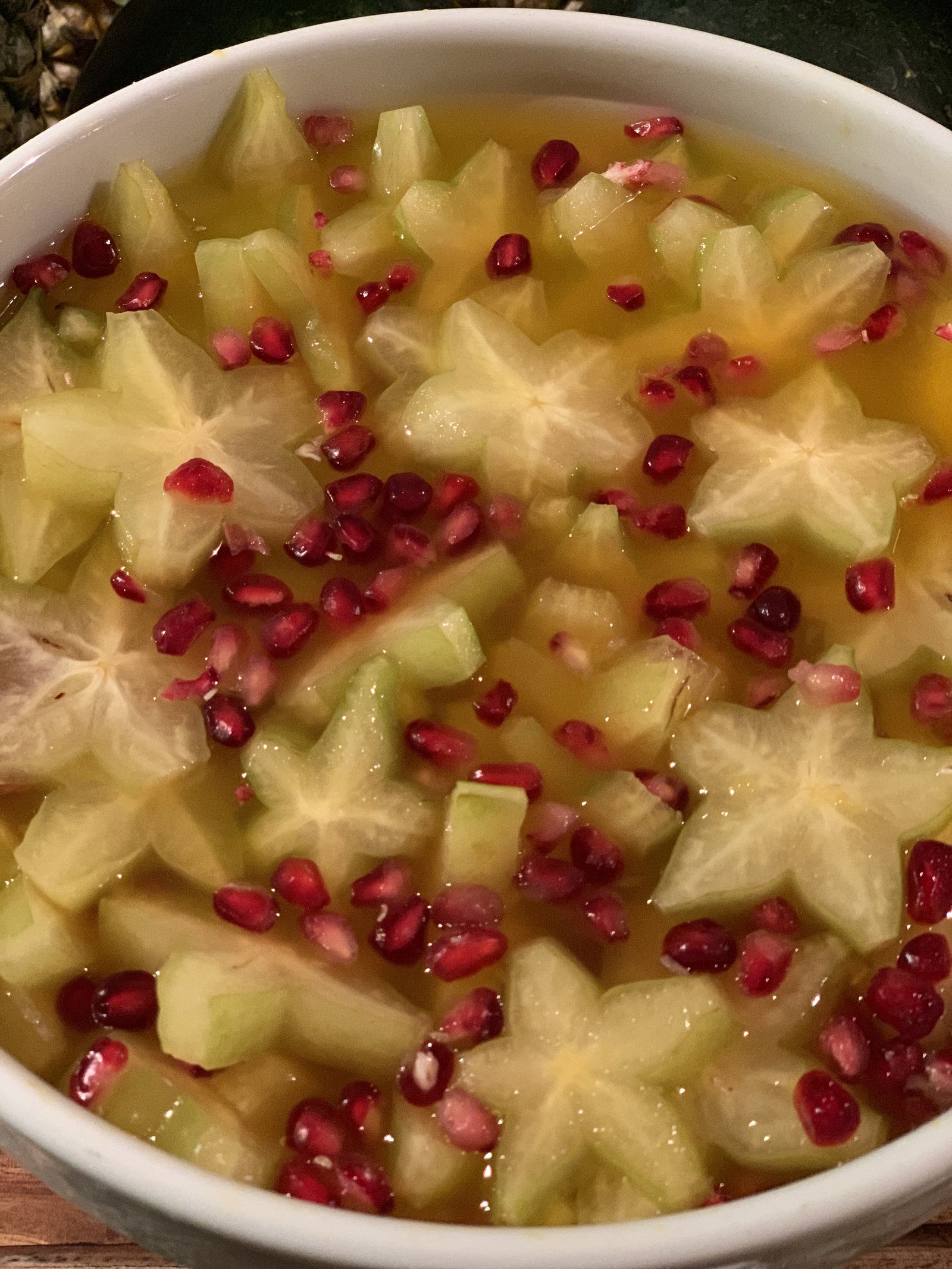
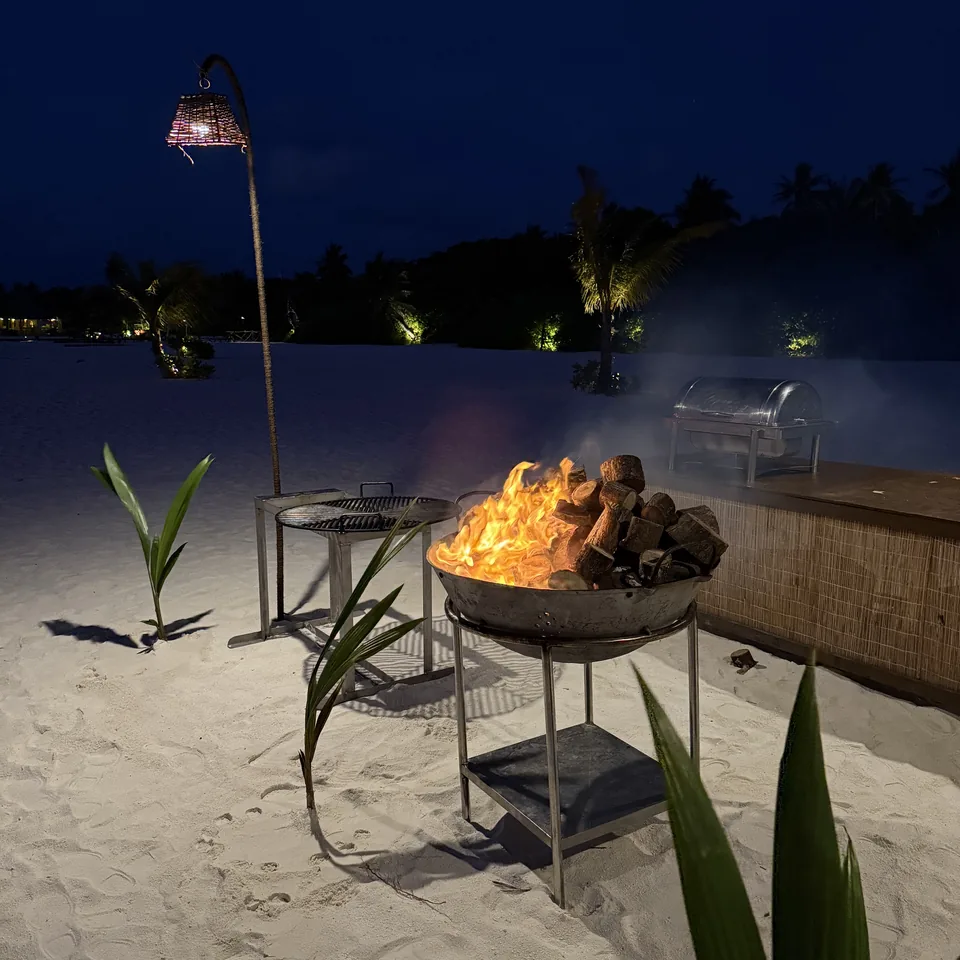
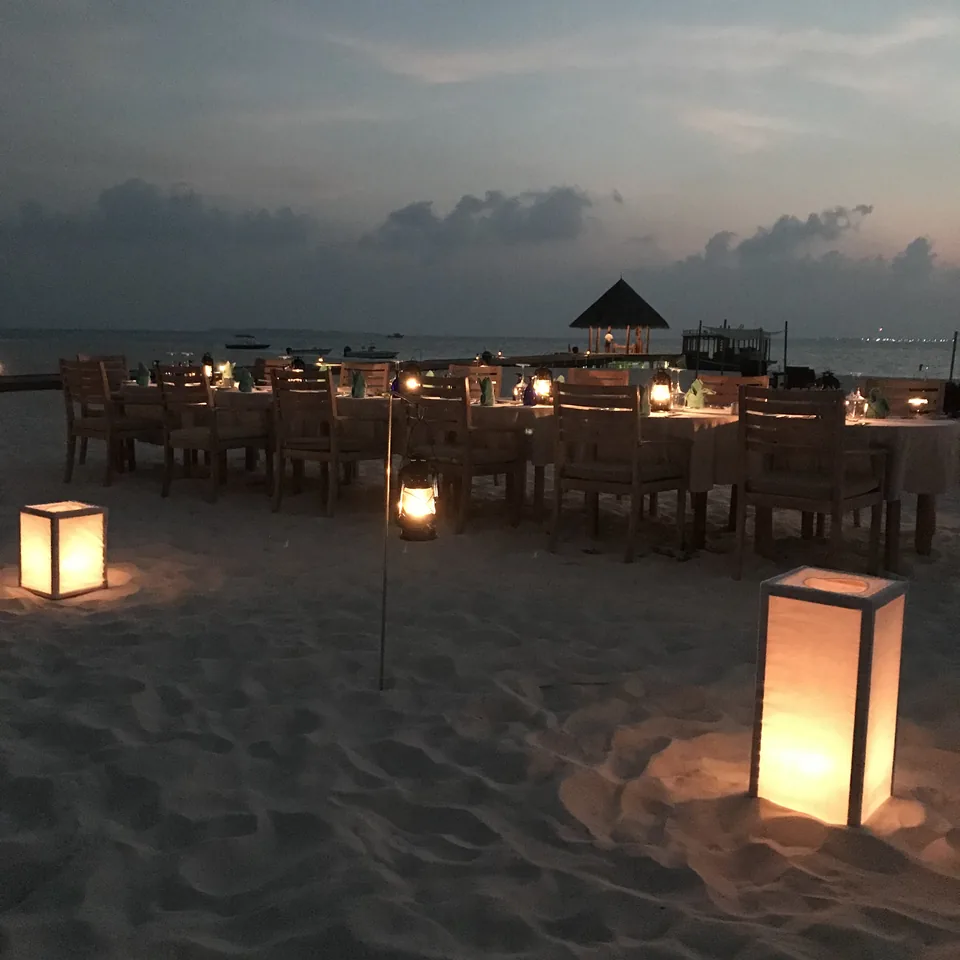
A good deal of it is cooked to order while you stand there, fish and meat both, and that is what stops a buffet turning into a holding operation by Wednesday. The second restaurant, Cornus, leans Asian and exists so that you can sit somewhere else when you want to. There is a bar at the Conch and another on the beach, and they will lay a table for two on the sand if you ask for one. What you are buying is not a theatrical dinner. It is eating well for seven days running in a place where you have no alternative, which is a harder thing to do and a more useful one.
The spa, and the quiet half of the island
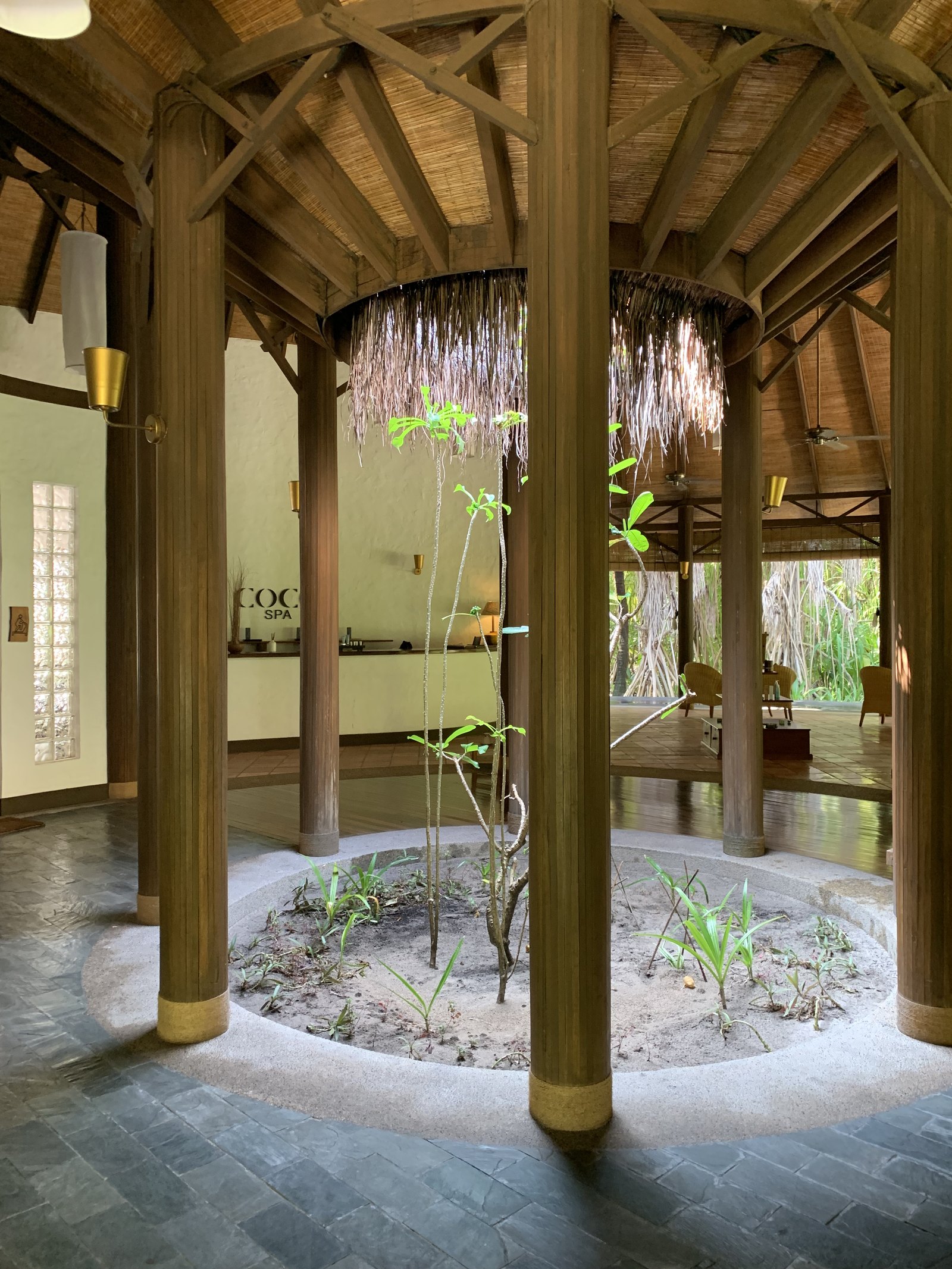
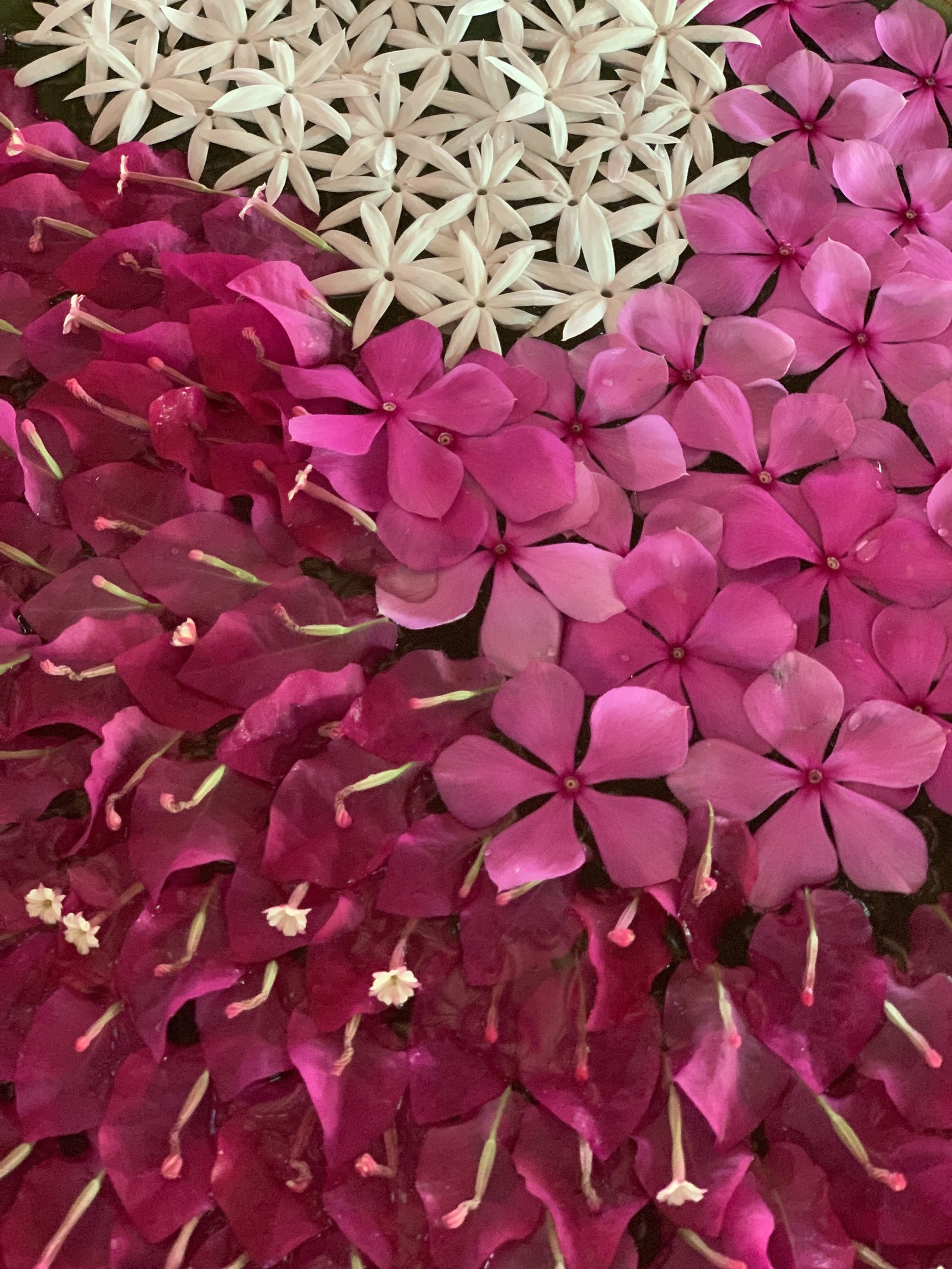
The spa sits back in the gardens with five treatment rooms and a programme that draws on Indonesian, Thai and Ayurvedic work, with a gym and a yoga pavilion beside it. I would make time for it, which is not a sentence I write often about resort spas.
What the island does when you leave it alone
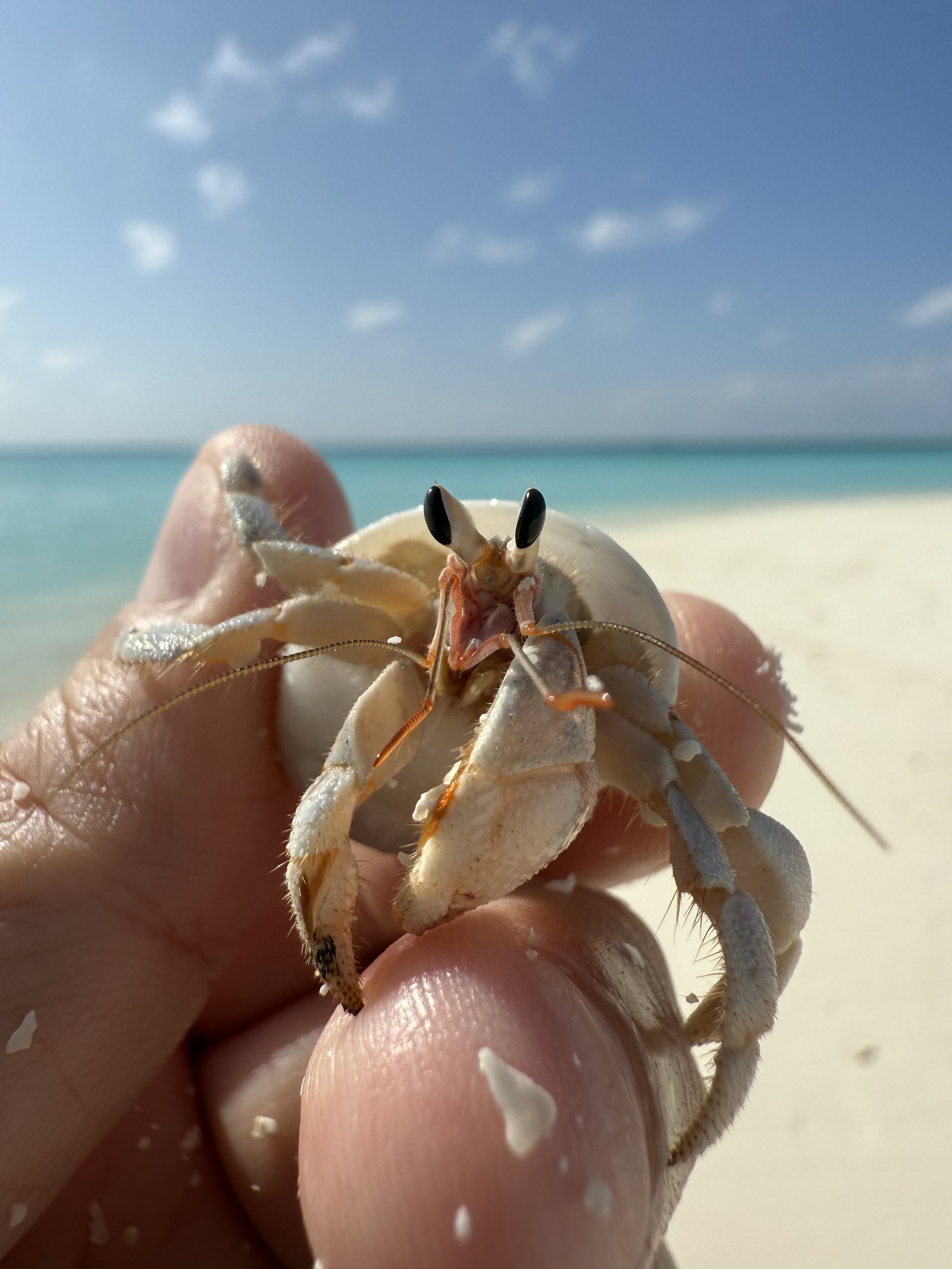
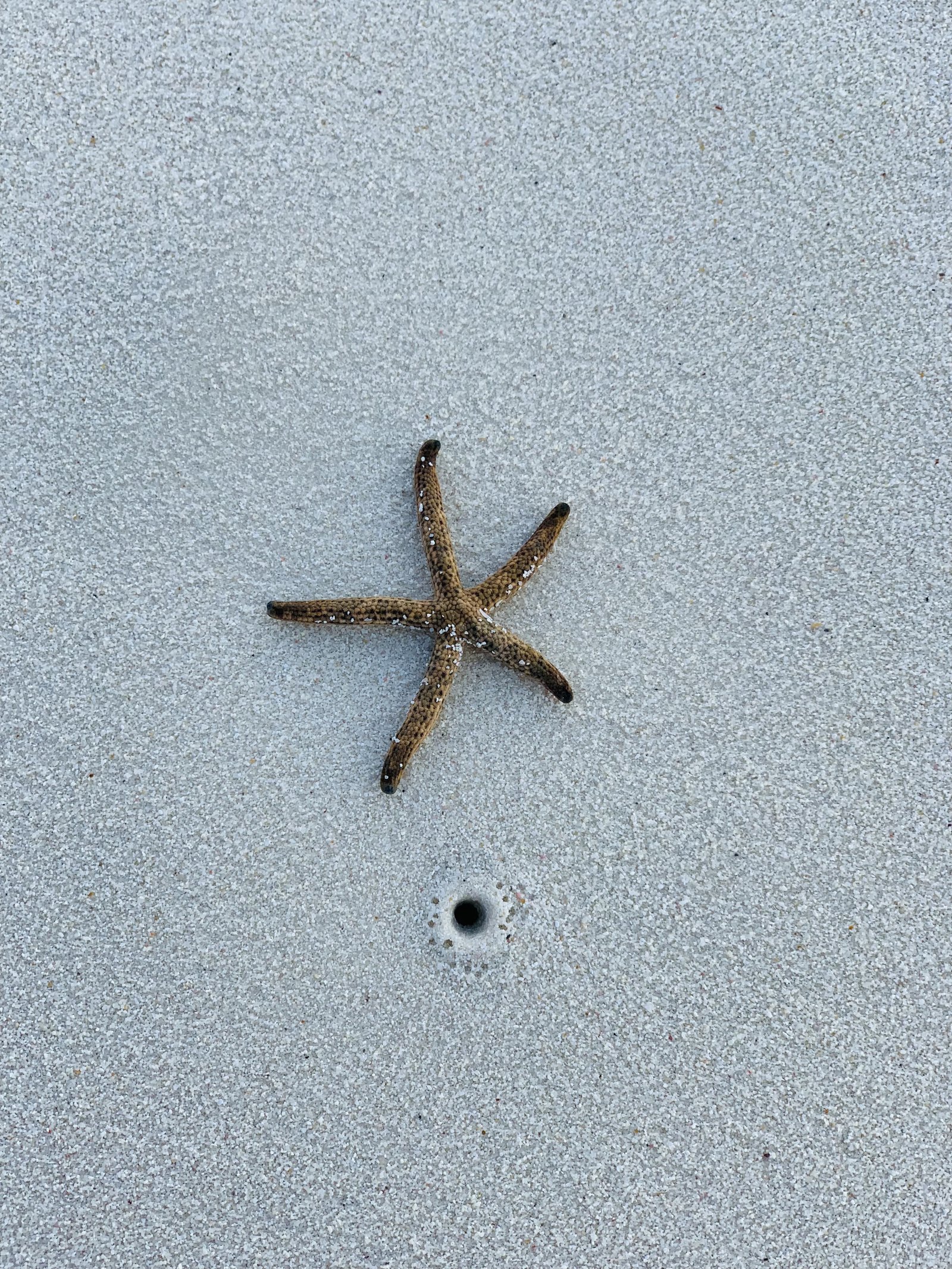
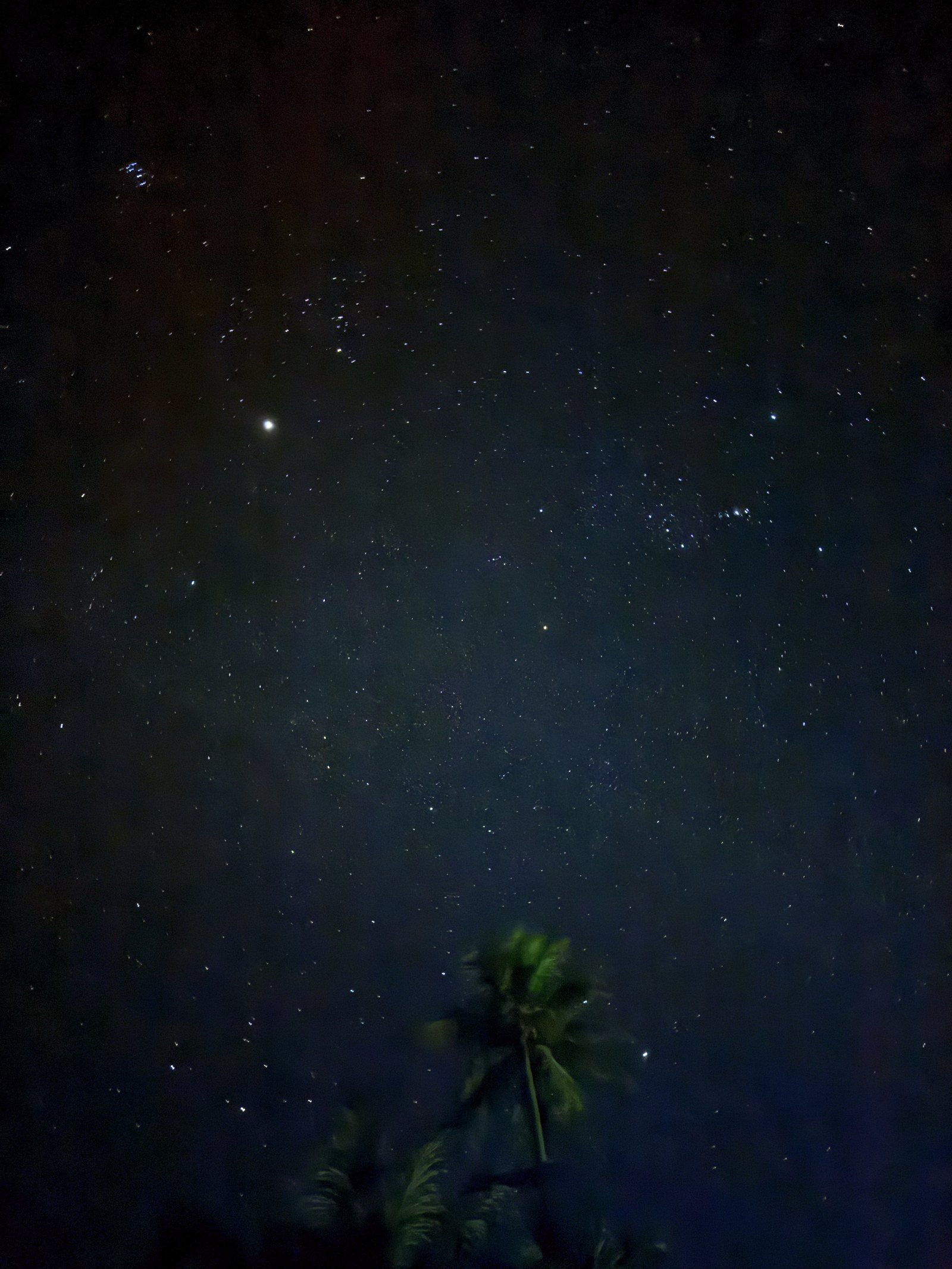
The other reason I keep coming back is that this is a functioning piece of the Baa Atoll, which is a UNESCO biosphere reserve, and the island behaves like one. There are hermit crabs on every path at dusk. There are starfish in the shallows. On a clear night the sky above the villa is genuinely dark, which almost nowhere is any more.
The serious version of this is the Marine Turtle Rescue Centre, which the Olive Ridley Project and Coco Collection opened on the island in February 2017. It was the first fully equipped, veterinary-surgeon-led turtle rescue centre in the Maldives, and it treats animals hurt mostly by entanglement in discarded fishing gear, with clinical and surgical facilities on site. By the project's own account in March 2026 they had treated two hundred and sixty-nine turtles there and returned a hundred and fifty-two to the sea. That does not make an island resort impact-free and I would distrust anybody who told you it did. It does mean the conservation line on this island has a building, a vet and a number behind it, which is more than most of them have.
The group also names seagrass protection, a careful line on what the island consumes, and a farm of its own, Coco Farm, which is where some of what you eat at breakfast is grown. Those are sentences on a page. The turtle centre is a building with a surgeon in it, and that is the difference I would hold on to when you are reading anybody's environmental section, this one included.
Advisor's perspective
Choose Coco Palm for the island and the way it is looked after. Do not choose it for the newest hardware, because that is not what it is and the brochure for the next place along will beat it on that every time.
Then there are five things to settle before you pay. Take a Sunset Beach Villa if getting in and out of the sea all day matters more to you than sleeping over water. Ask for the villa number and where it stands in relation to the overwater jetty, because the category on its own will not tell you. Ask for photographs of that stretch of beach taken this season, and ask what date they were taken. Read the meal plan down to which restaurants and which drinks it covers, since on an island with no other kitchen that one line moves the total more than the room does. And fix the seaplane before you book the long-haul flights, because it flies in daylight only and everything else has to arrange itself around that.
The most expensive category here is not automatically the one that gives you the better week. On this island I would put it more plainly: the largest villas are the ones over the water, and the holiday is on the sand.
It is not on Classic Travel, so there is no programme rate here and nothing to attach to the booking. It comes through me, and on an island where the villa number, the meal plan and the transfer all change the week, having someone ask those questions in writing before you commit is worth more than a tier.
Before you book
The questions people send me about Coco Palm.
- Where is it, and how do you get there?
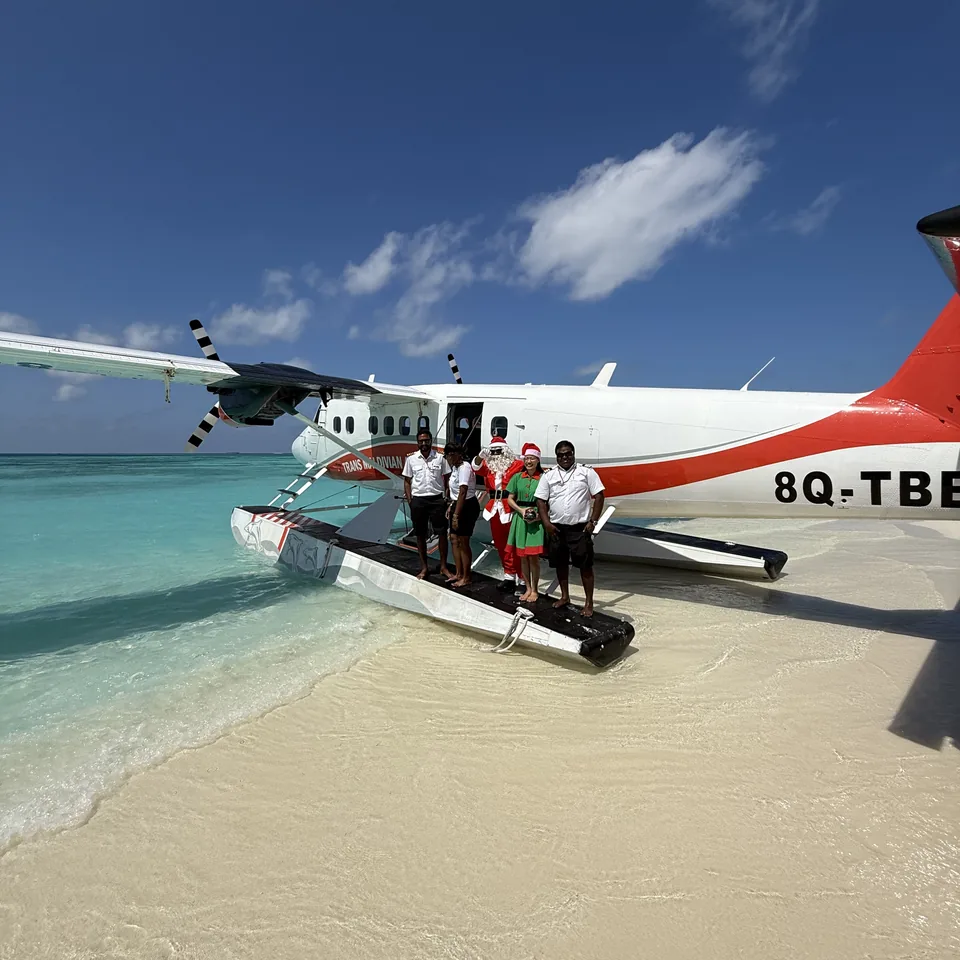
- Baa Atoll, which is a UNESCO biosphere reserve, about thirty minutes by seaplane from Velana International Airport at Male. The seaplane is the part to plan around: it flies in daylight only, so a late international arrival means a night in Male before you ever see the island, and the same in reverse on the way home. Book the long-haul flights and the seaplane as one decision, not two. I have done that transfer six times now and it is still the best half hour of the journey.
- Beach villa or overwater villa?
- Beach, unless sleeping over water is the point of the trip for you. I had both on the same stay and the beach villa is the one I lived in. It has a king bed under a net, a deep shaded terrace under the thatch and a private sandy path straight onto the beach, and that last part is what makes the difference: you are in and out of the sea all day without the day having to be organised around it. Every villa sits in its own pocket of vegetation with a thatched parasol and loungers of its own on the sand in front, so the beach never feels shared. Ask for the sunset side: that is where the sand is widest and it stays widest through the tides and through the seasons. The two Sunset Lagoon Villas are the largest category, at the far end of the overwater jetty, with a separate sitting room and a plunge pool on the deck. They are lovely and I used mine less.
- What is the erosion like, and should it put me off?
- It should inform where you book and it should not put you off. The island uses sandbags where the beach needs holding and no concrete walls above the water, which is the version of this problem I would choose. The resort's own guest information says the bags are there to reduce what the monsoon and the currents do, and names the reef as the first line of defence. Beaches here move with the season. The sunset side is the dependable one, with the widest sand through the tides and through the year, and that is the practical conclusion to draw from all of this. Ask for current photographs of the stretch in front of the category you are booking, and ask when they were taken.
- Is the food good enough for a week?
- Yes, which surprised me the first time. Cowrie is the main restaurant, an open-sided pavilion under a high thatched roof, and it works as a buffet with live cooking. The grill in the evening is the strength: the fish is local and the prawns and lobster come off the fire in front of you. Cornus gives you an Asian-leaning alternative when you want to sit somewhere else, and there is the Conch Bar and a beach bar. Check what your meal plan covers before you arrive, drinks included, because that is the line that moves the total most on an island with no other options.
- What is the turtle centre, and can you see it?
- The Olive Ridley Project and Coco Collection opened a Marine Turtle Rescue Centre on the island in February 2017, the first fully equipped centre in the Maldives with a veterinary surgeon running it. It treats turtles injured mostly by entanglement in discarded fishing gear, and it has clinical and surgical facilities on the island. By the project's own account in March 2026 the team had treated two hundred and sixty-nine turtles there and released a hundred and fifty-two. It is worth asking at reception when you can visit. None of this makes a resort island impact-free and nobody should claim it does, and it is a long way past the usual sentence about caring for the ocean.
- Can you book it through Classic Travel?
- No. The Maldives listing on the portal prints every property Classic Travel sells in the country on one page and Coco Palm is not on it, so there is no agent rate, no credit and no upgrade in the programme sense here. It books through me directly. I write to the island, name your dates, the villa category and the stretch of beach, and ask about the meal plan and the seaplane timings at the same time, and I come back to you with what they say before you commit to anything.
Something else you want to know? Write to me and I will answer it here.
Arranged by hand
The room, the dates, the rest of the list.
Write in English, Italian or Spanish. I answer personally, usually within a day.
Let Nik arrange it →