
Inspection · Livadia, Antiparos, Greece
The Rooster
Sixteen stone cottages up a valley above Livadia Bay, reached by a dirt road with one sign on it. The only house on this site I have been back to four summers.
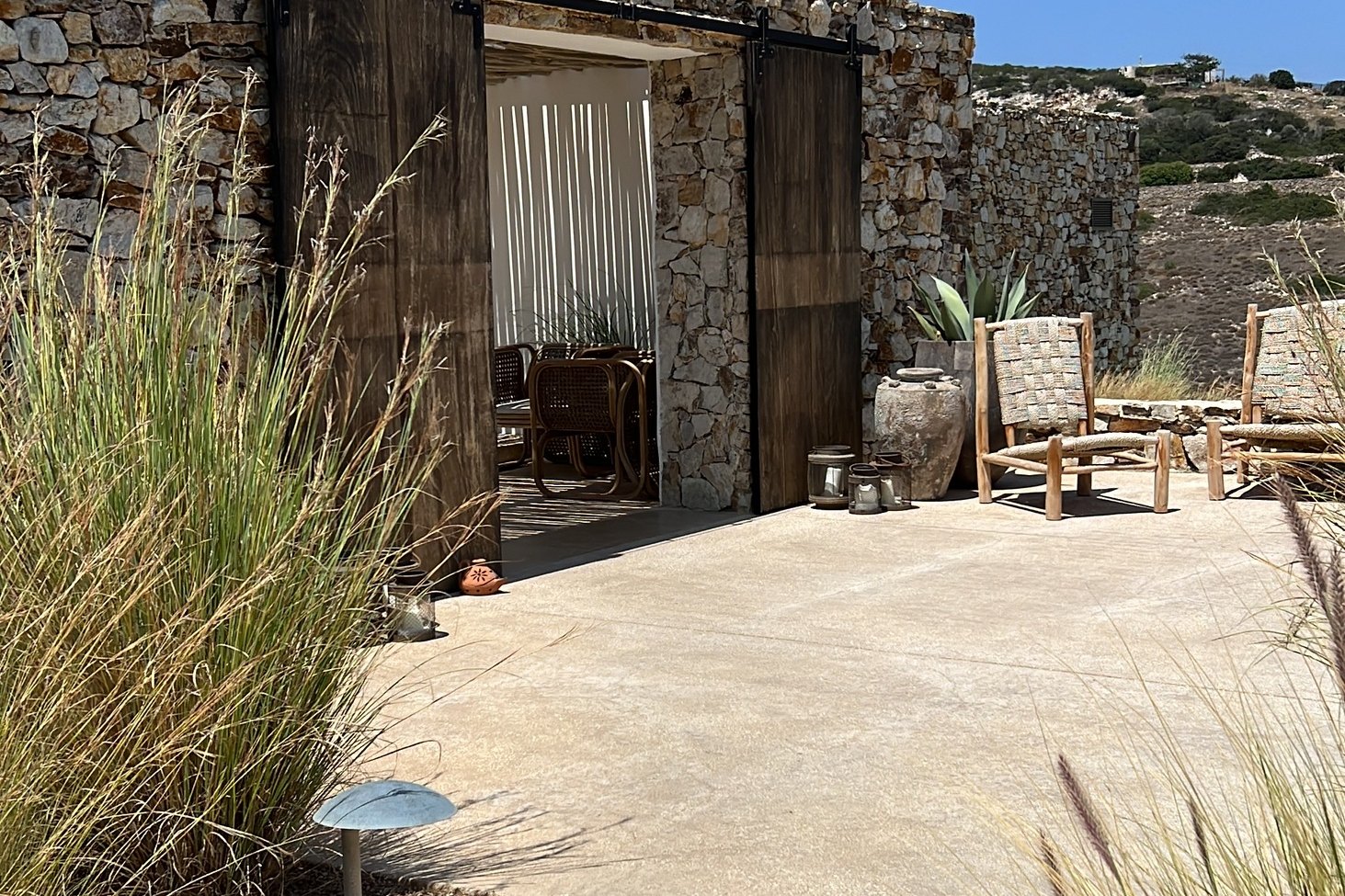
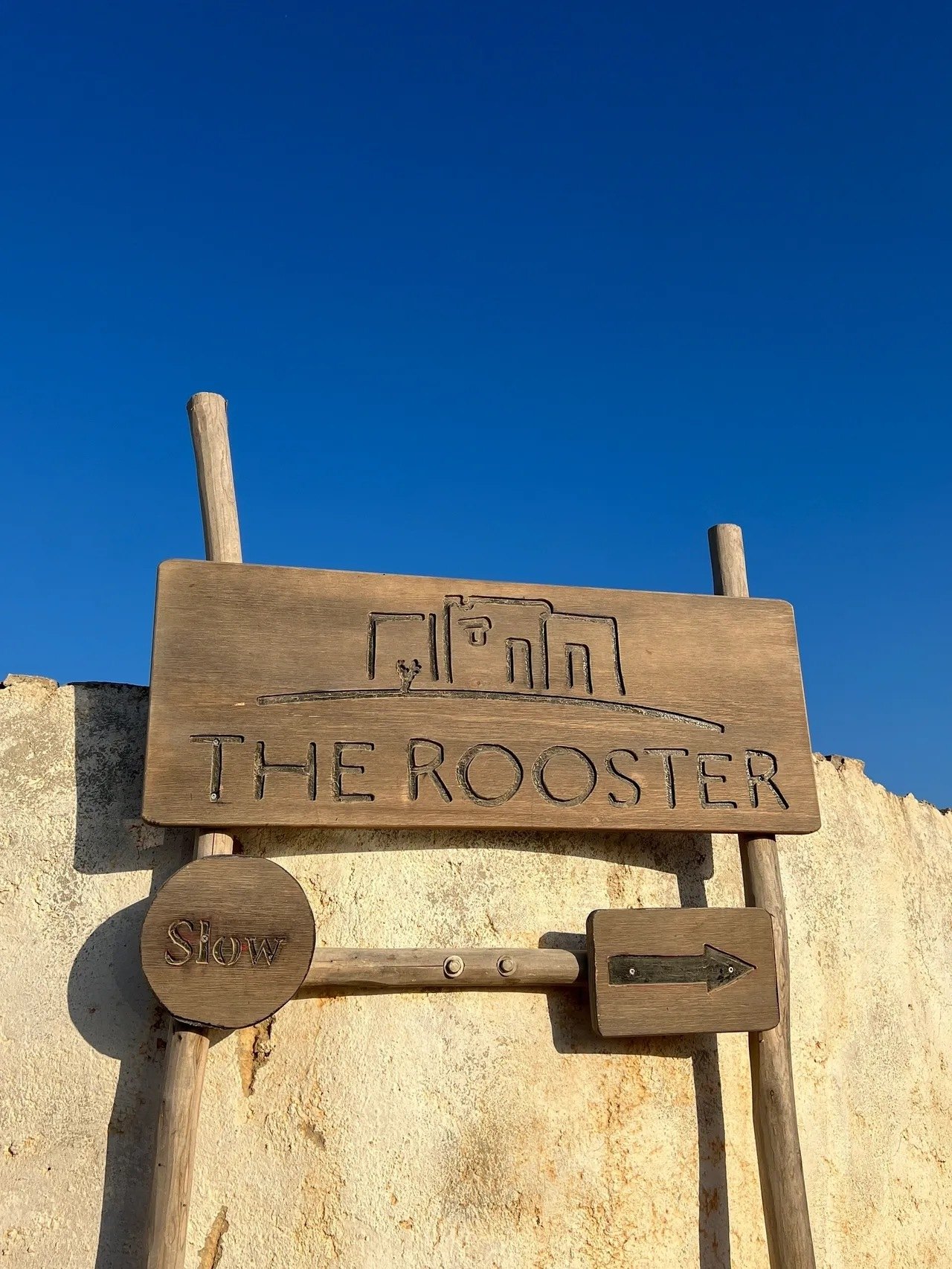
Book The Rooster with me Tell me the dates and who is travelling, and I arrange it with the house directly. In English, Italian or Spanish.Antiparos is the small one. You fly to Paros, drive to the southern tip of it and cross on the barge that carries the cars, and you land somewhere that has stayed out of the way of what happened to the rest of the Cyclades. That last crossing is the whole reason. The Rooster is on the far side of the island, above Livadia, and you reach it on a dirt road with a single wooden sign on it. The sign says the name and, underneath, the word Slow. I have now been four summers in a row, which is a thing I do not do.
Getting there, and what you find
For anyone who cannot spare the day, there is a second way in: helicopters run from Athens to the helipad on Antiparos, and The Rooster is a quarter of an hour by car from it. The hotel will also take the Paros leg off your hands and meet you at the barge. Either way you arrive on the same track.
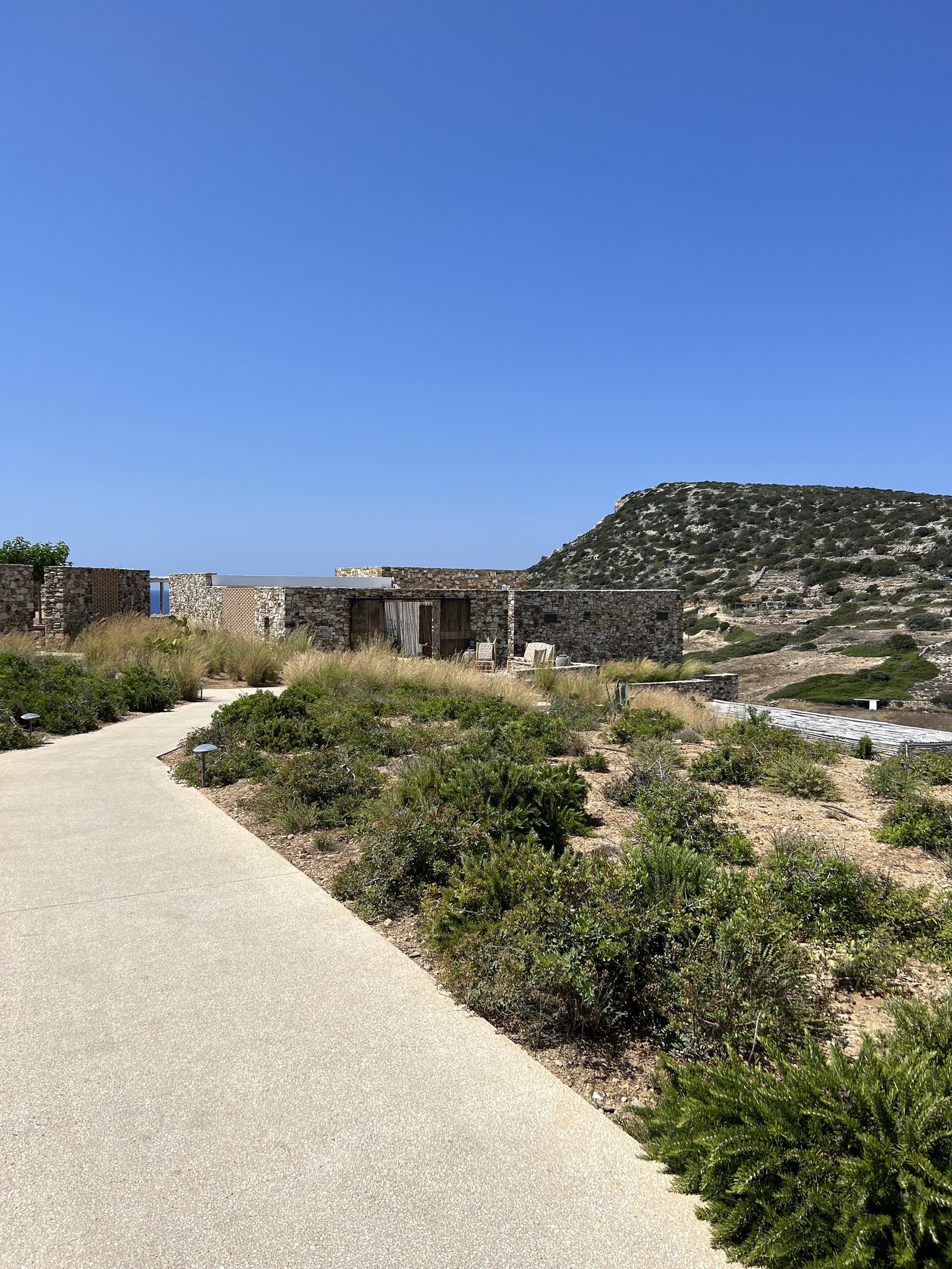
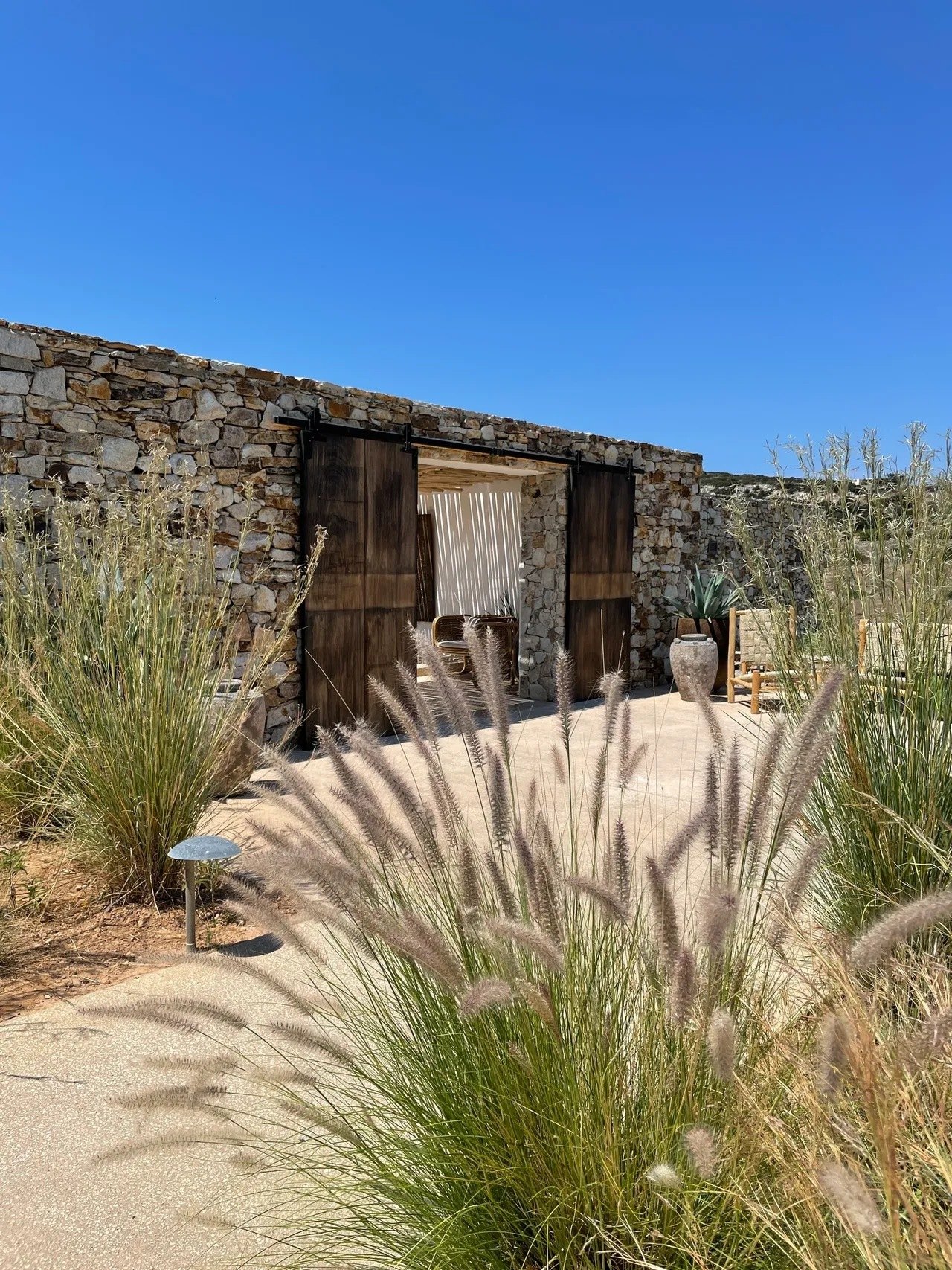
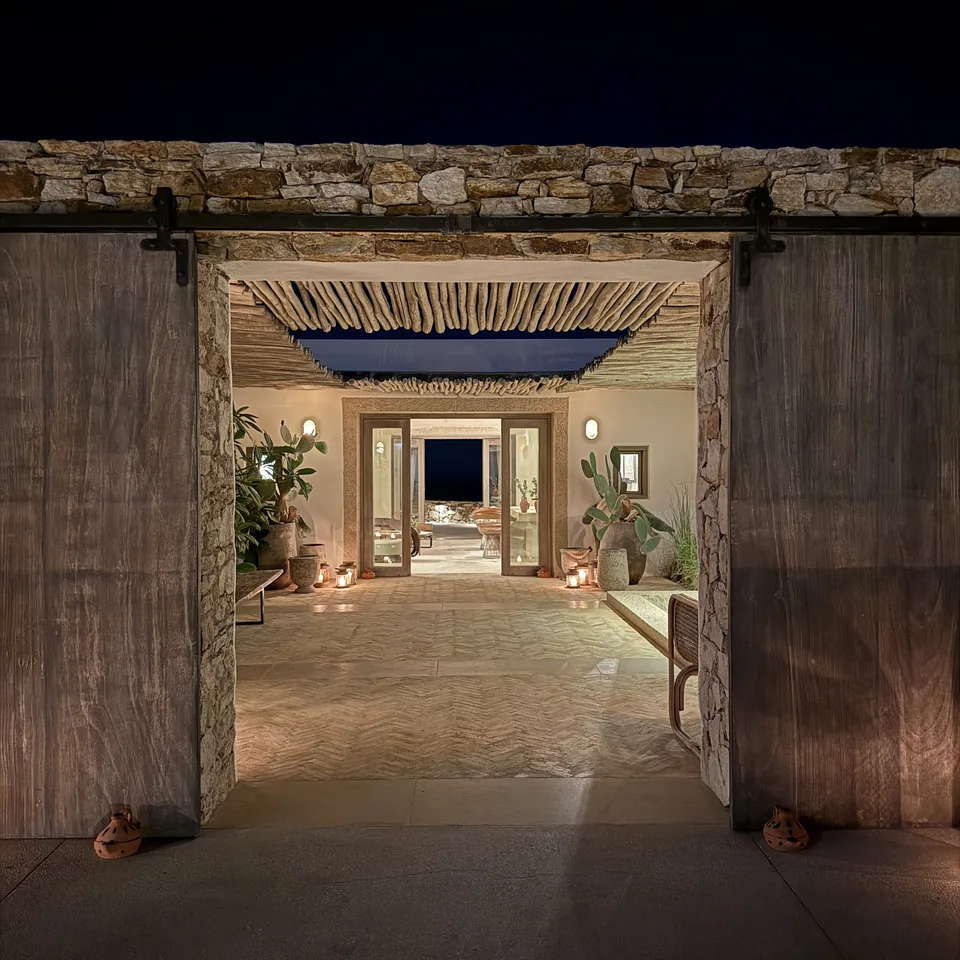
The buildings are scattered up a valley among ordinary houses and farm plots, which is the first surprise: the hotel does not sit apart from the place, it sits inside it. Sixteen separate stone houses in honey-coloured island stone, a main house with the bar and the dining room in it, and dry-stone walls and planting between them. Bougainvillea, bamboo, and tall grasses that make a sound in the wind all afternoon.
What there is almost none of is signage, reception desks, or the apparatus of arrival. You come up the track, somebody meets you, and that is the end of the formalities.
The main house
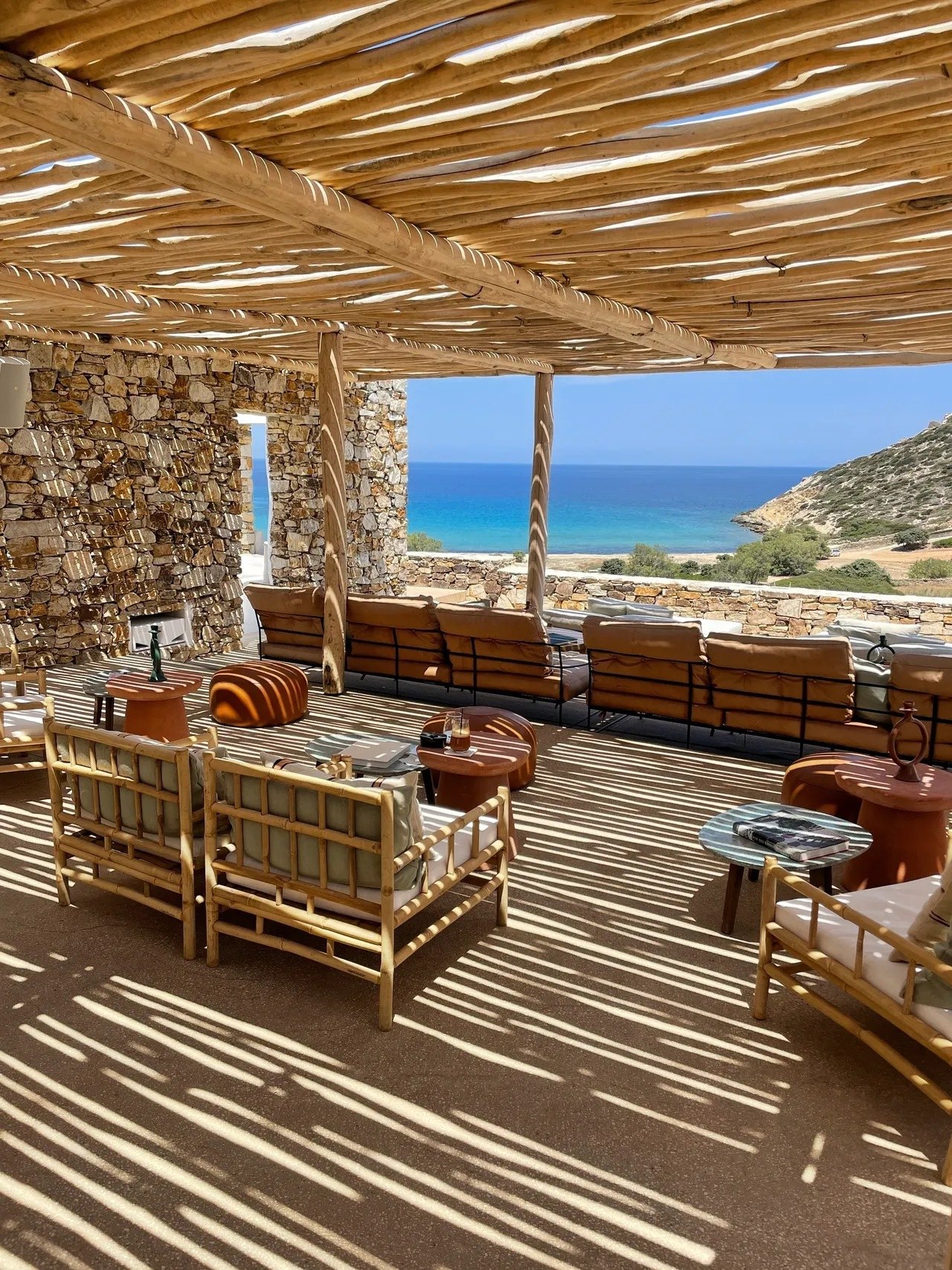
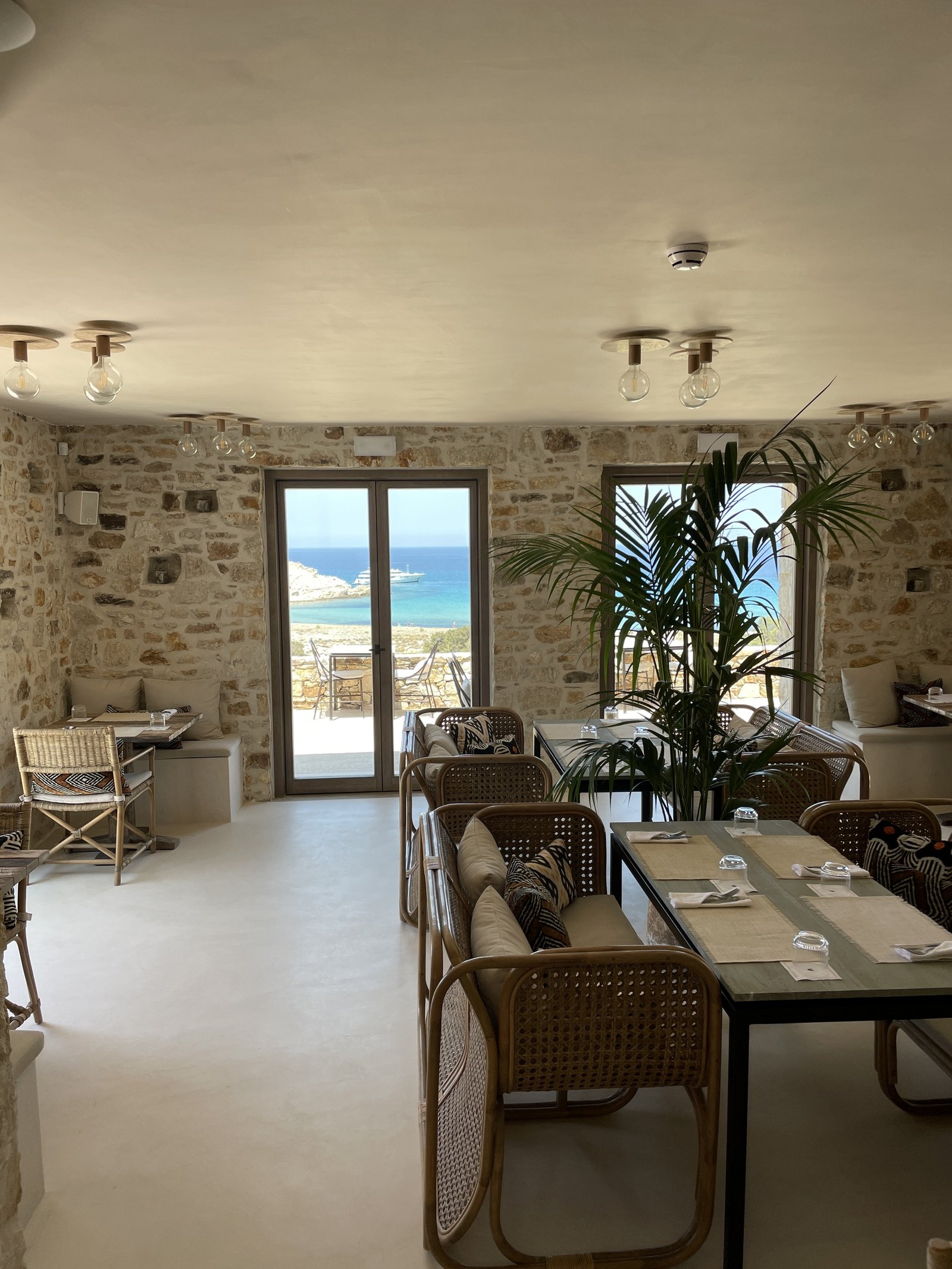
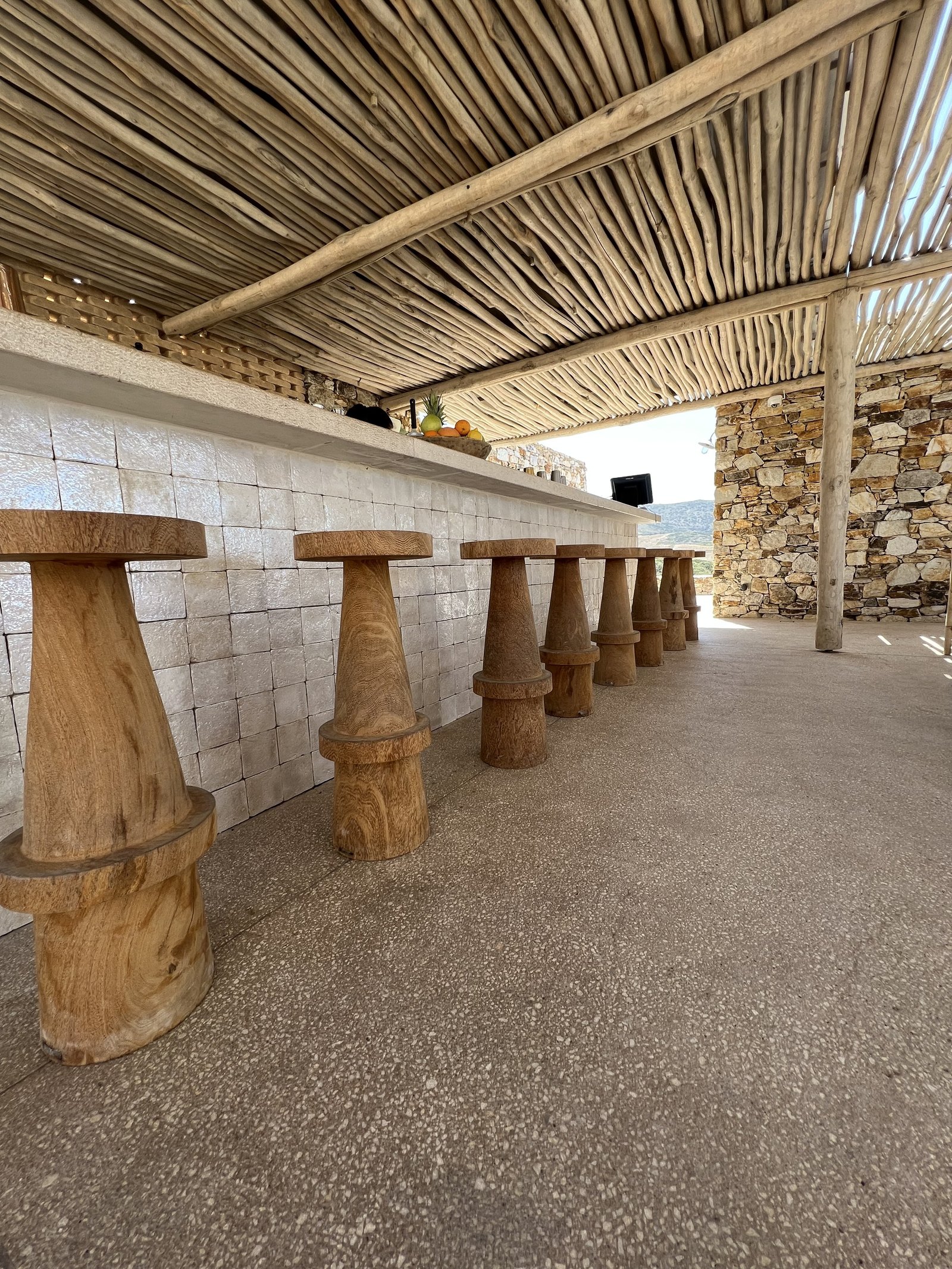
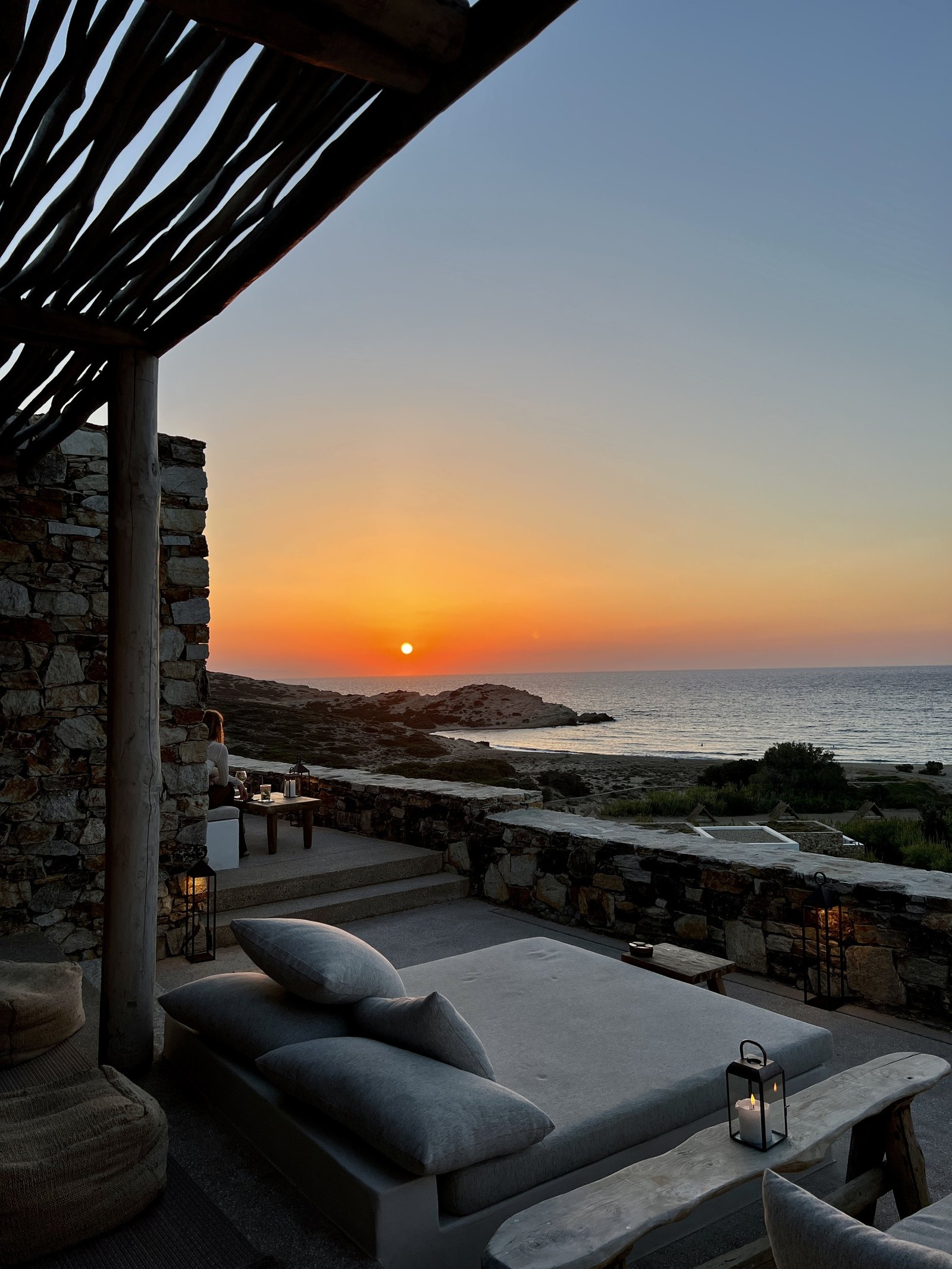
One long room with a stone wall on one side and the bay through the doors on the other, furnished in cane and timber, with a bar of pale stone and heavy turned stools. The whole middle of the day happens here if you want it to, and a reasonable number of people never leave their own cottage at all.
The restraint is consistent and it is the owner's. Athanasia Comninos chose what is in these rooms herself, and she was after something she had found travelling in the East, which is a kind of calm that does not announce itself. It is an unusual thing to feel in the Cyclades, where the going style is white and blue and photographed.
The house
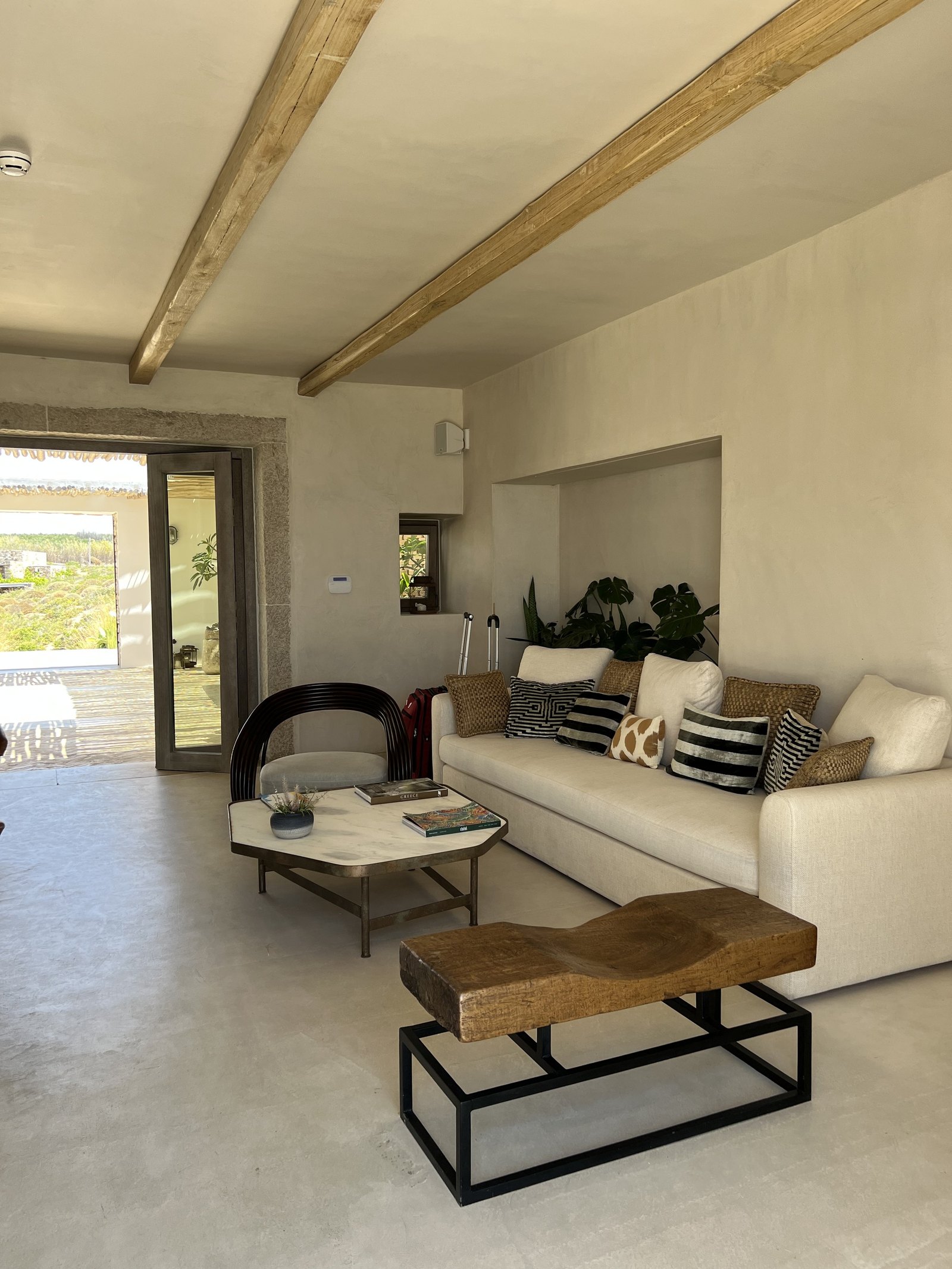
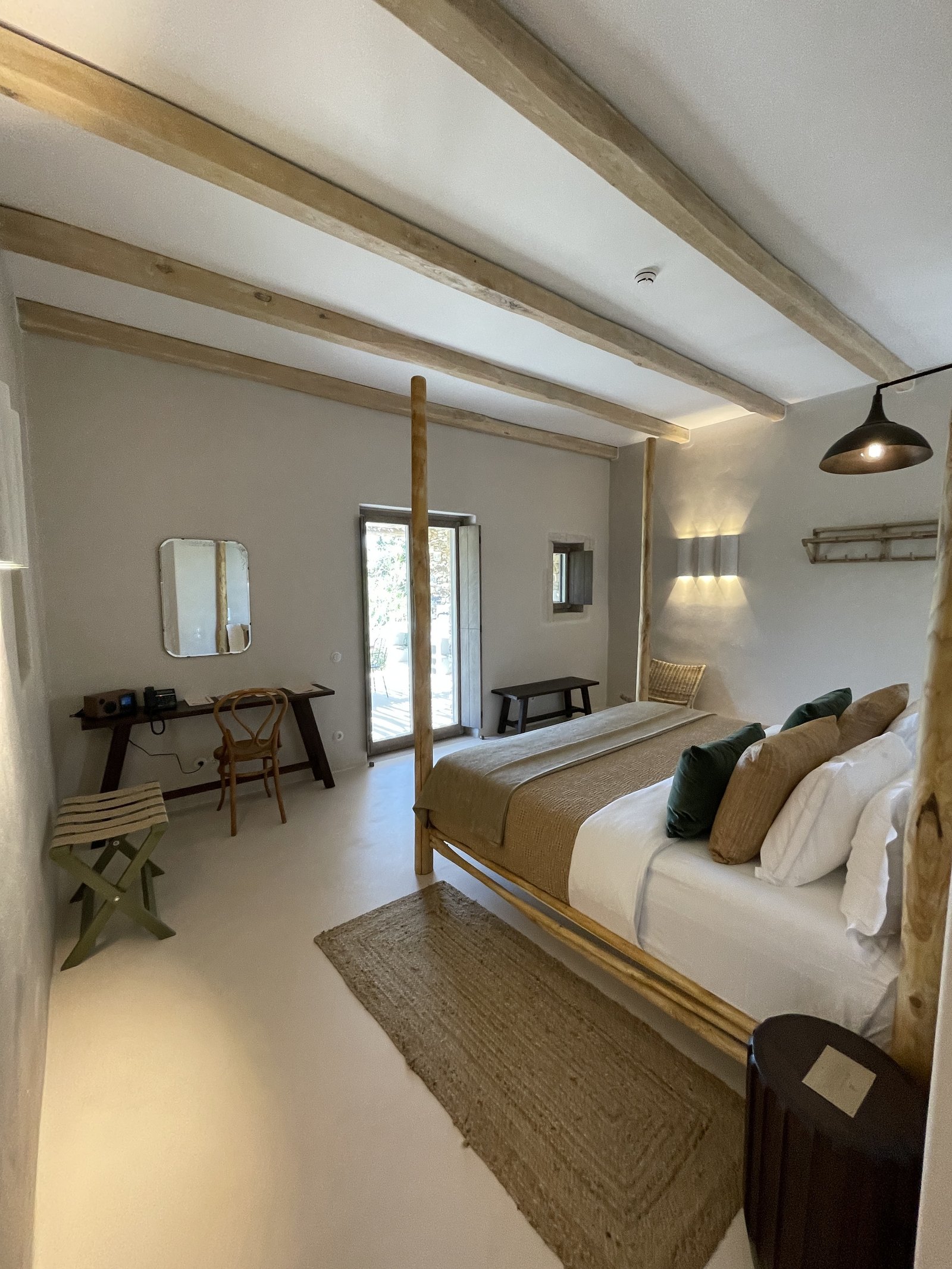
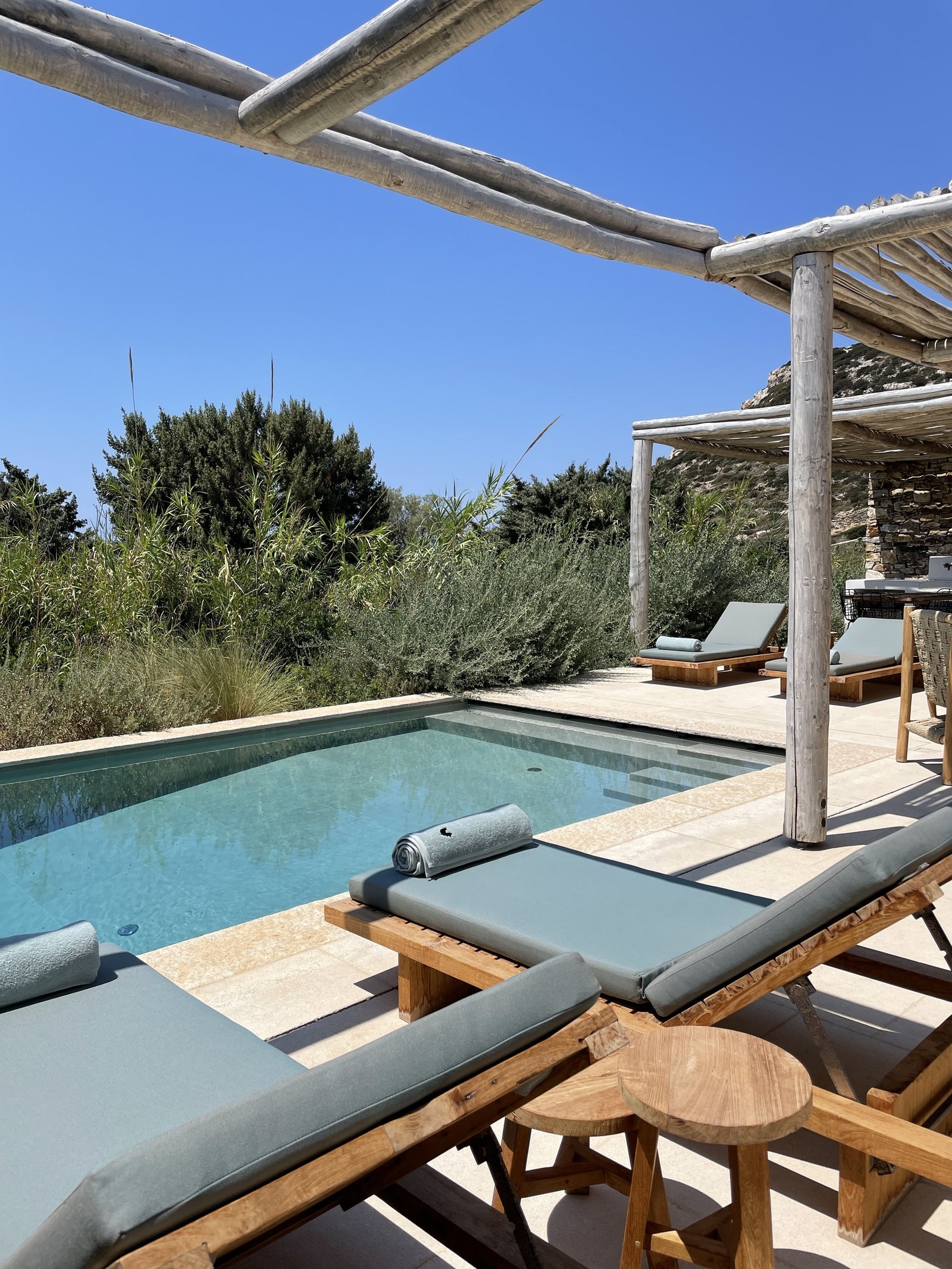
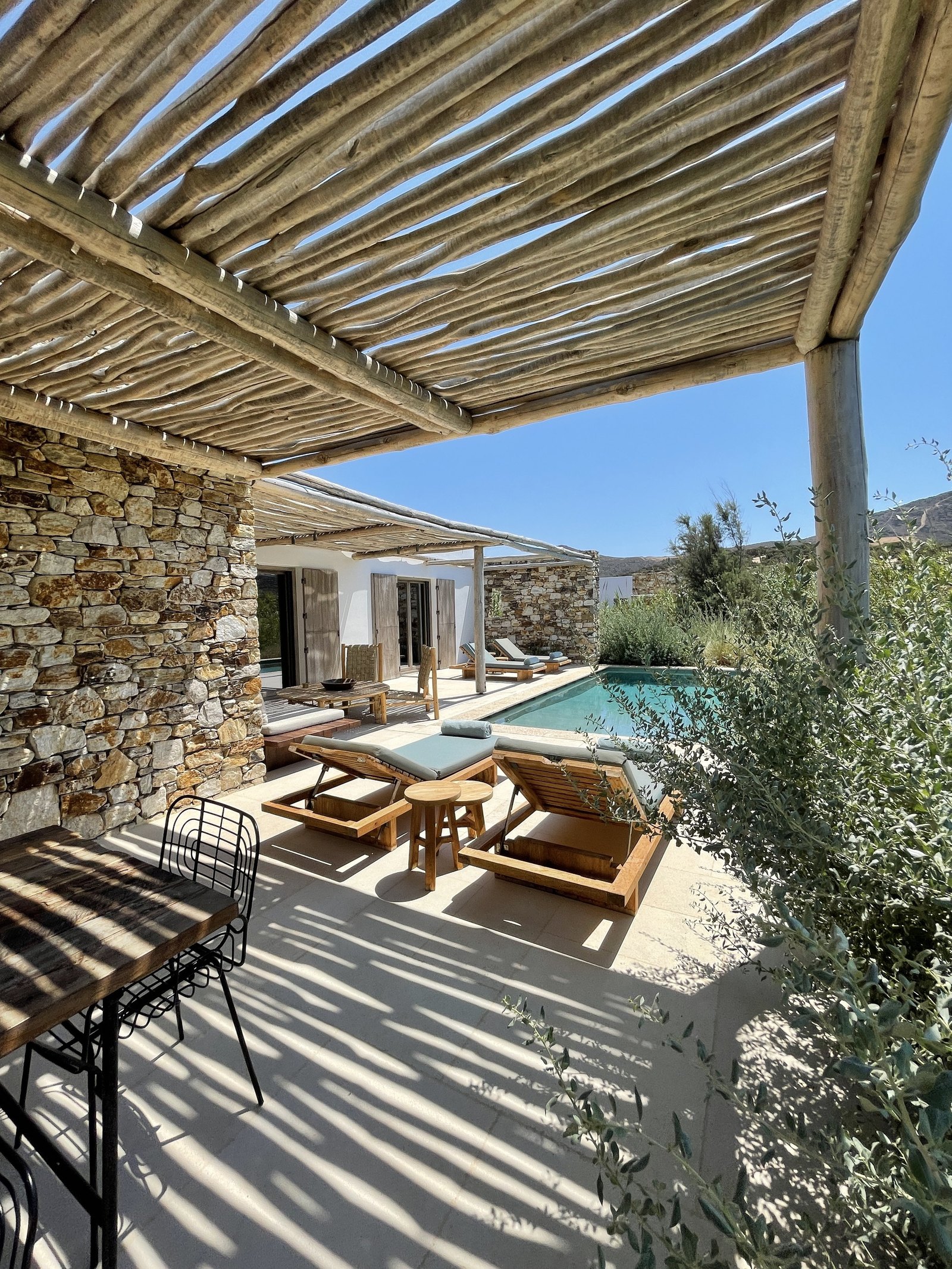
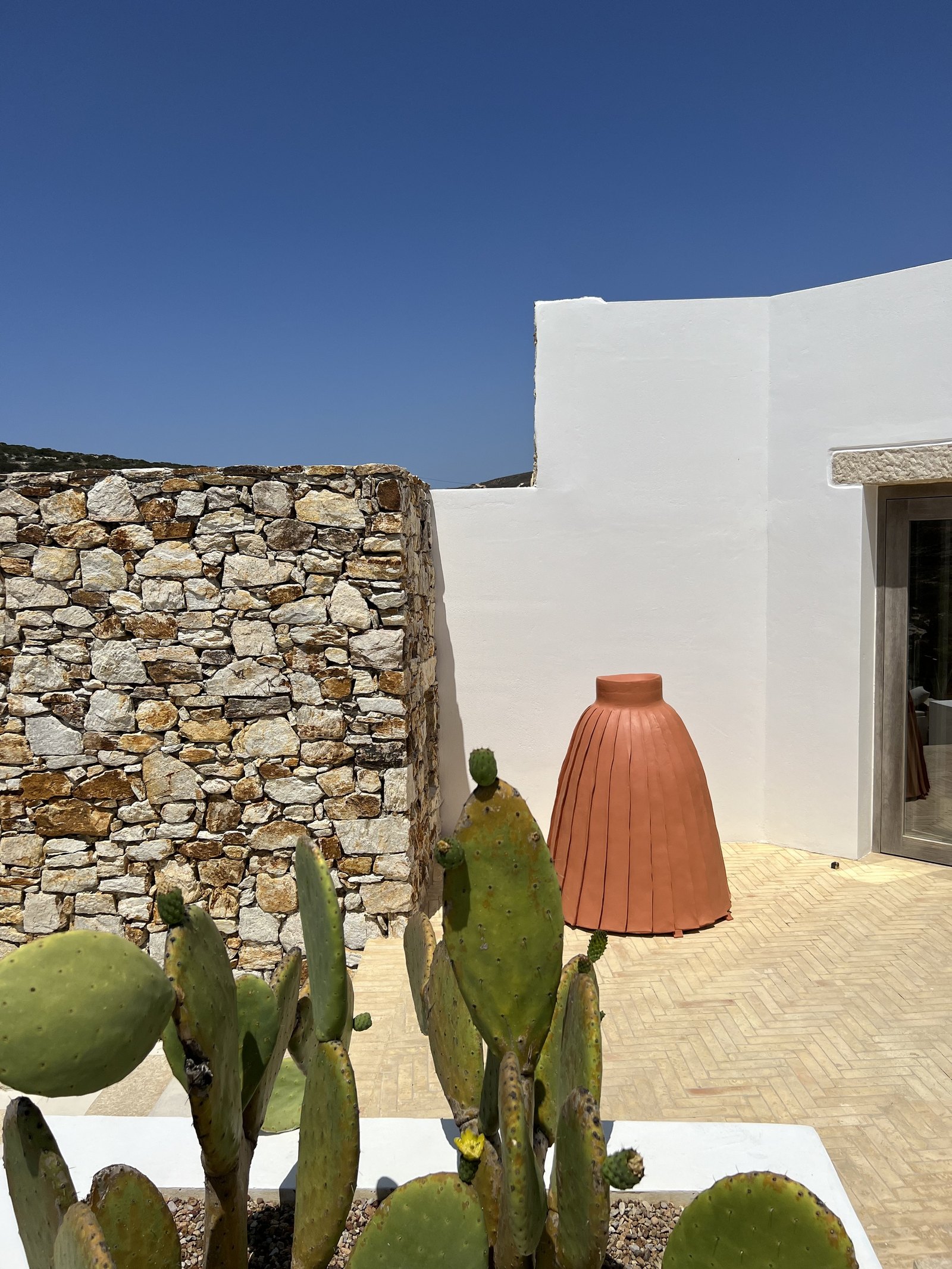
They are houses and not rooms. Separate one-bedroom buildings spread across the slope, some down by the beach and the spa, some well above with the long view, and a golf cart that comes to collect you from either end. Mine was one of the lower ones, a few minutes from the water on foot.
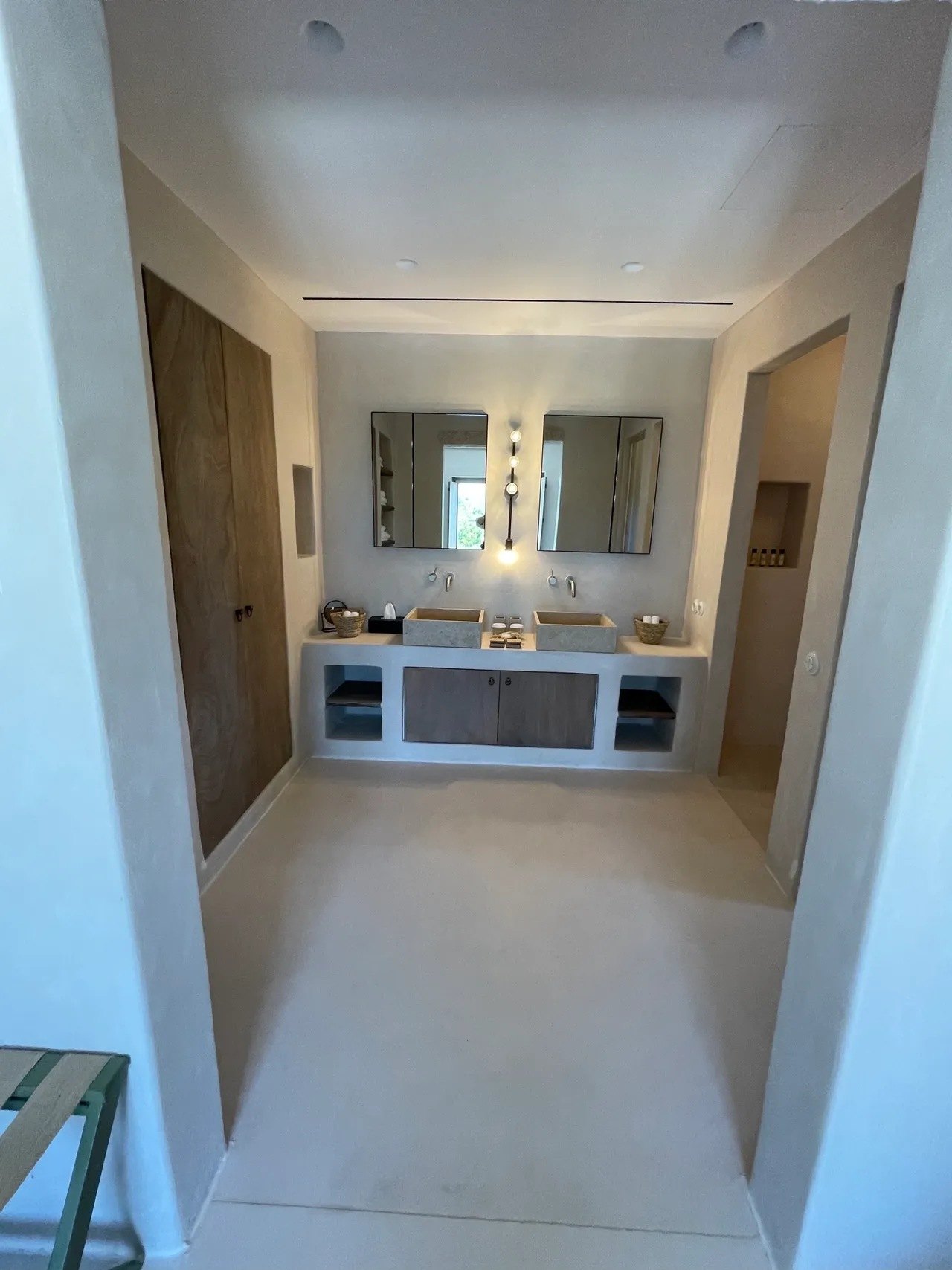
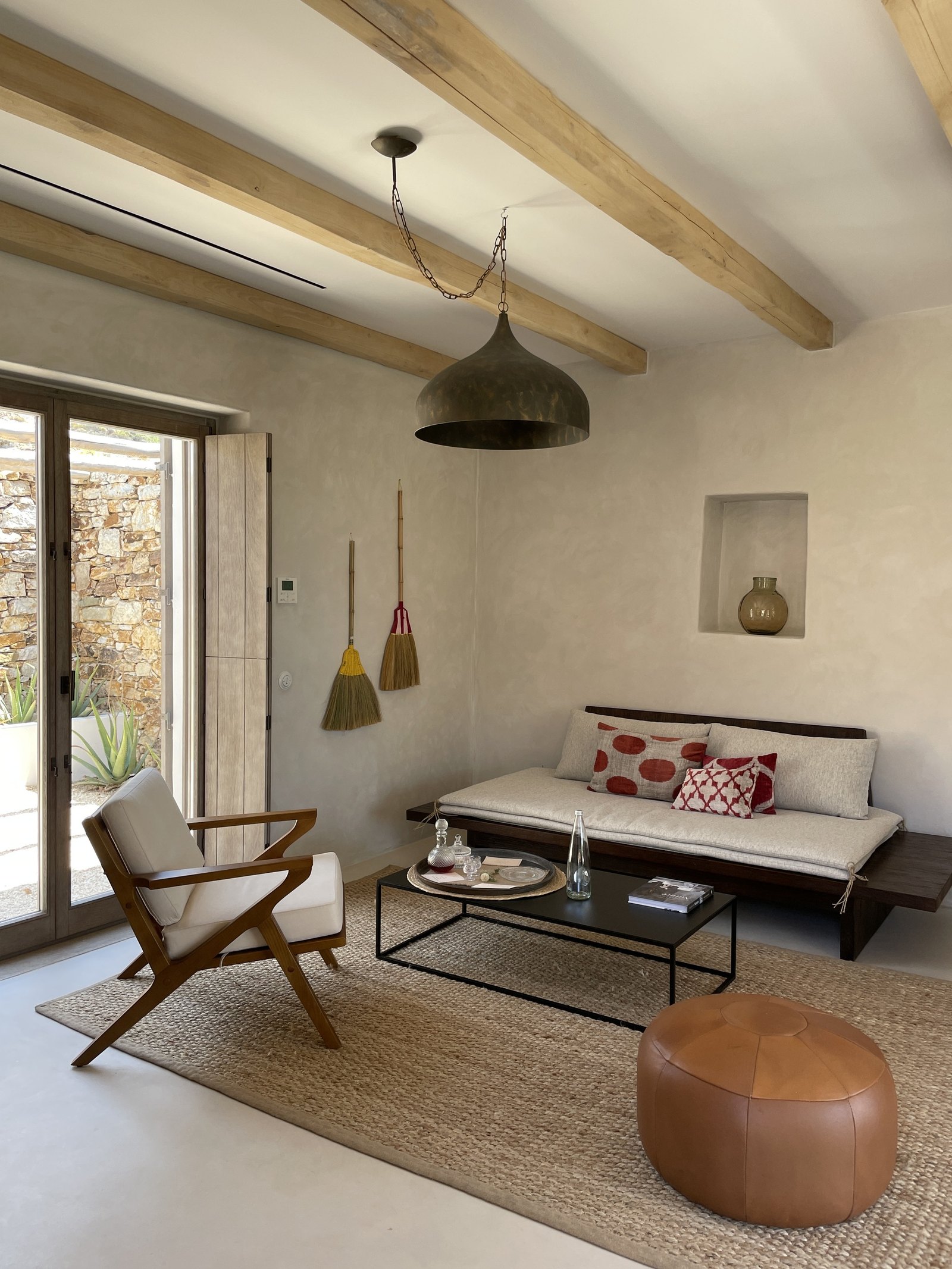
It had its own pool on the patio, an oak table, a bed made of driftwood, and a floor of the smooth plaster you find around this sea and across in Morocco. Open-plan bathroom, a rain shower outside, lighting kept low after dark. The description sounds like a hundred other houses written up the same way. The difference is that here nothing is a gesture: the urn is a working urn, the broom by the door is the broom they sweep with. What was waiting inside says the rest: two yoga mats, beach towels, books worth opening by the bed, a speaker, something to eat, and a cooler with good wine in it for six in the evening.
The pool is small. That matters, so I will say it plainly: there is no communal pool anywhere on the property, and the one on your patio is the one you get. It is for sitting in with a drink at the end of the afternoon. It is not for swimming.
The afternoon
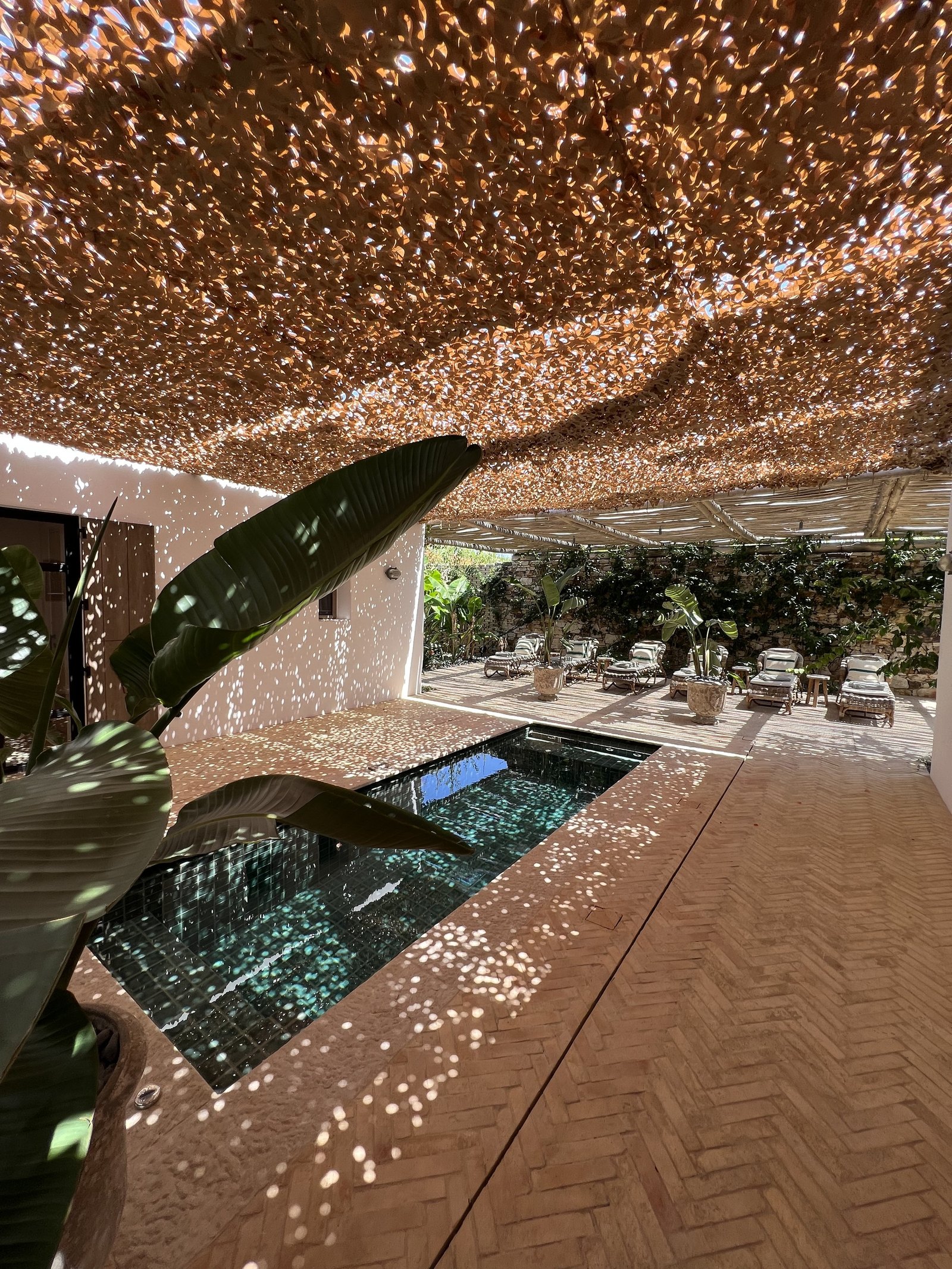
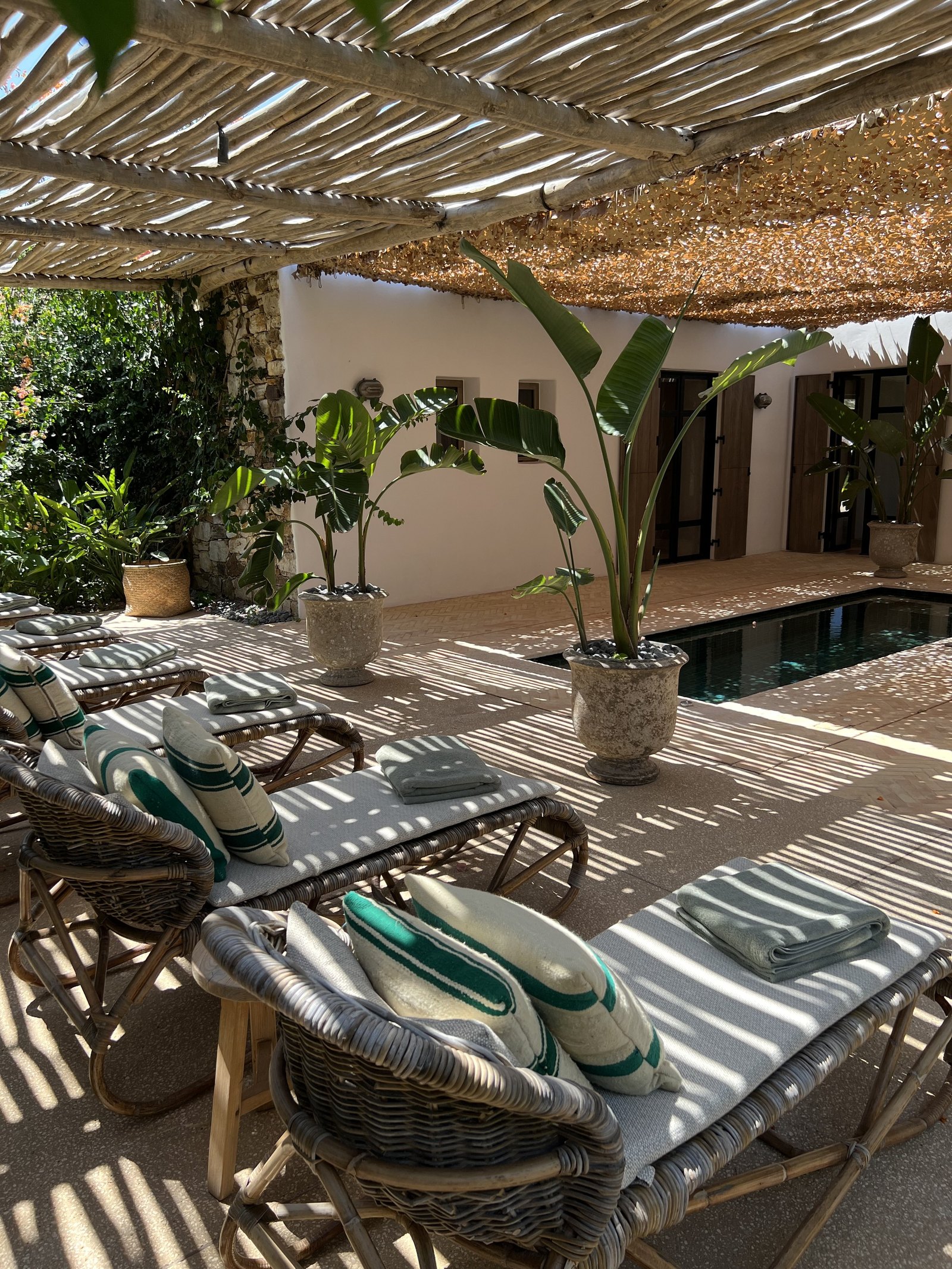
There is a second patio further down, paved in terracotta herringbone with a long narrow pool in it and a woven awning overhead that breaks the sun into spots. Loungers, towels, banana leaves. It is the one place on the property that feels designed to be photographed, and it still works.
Dinner
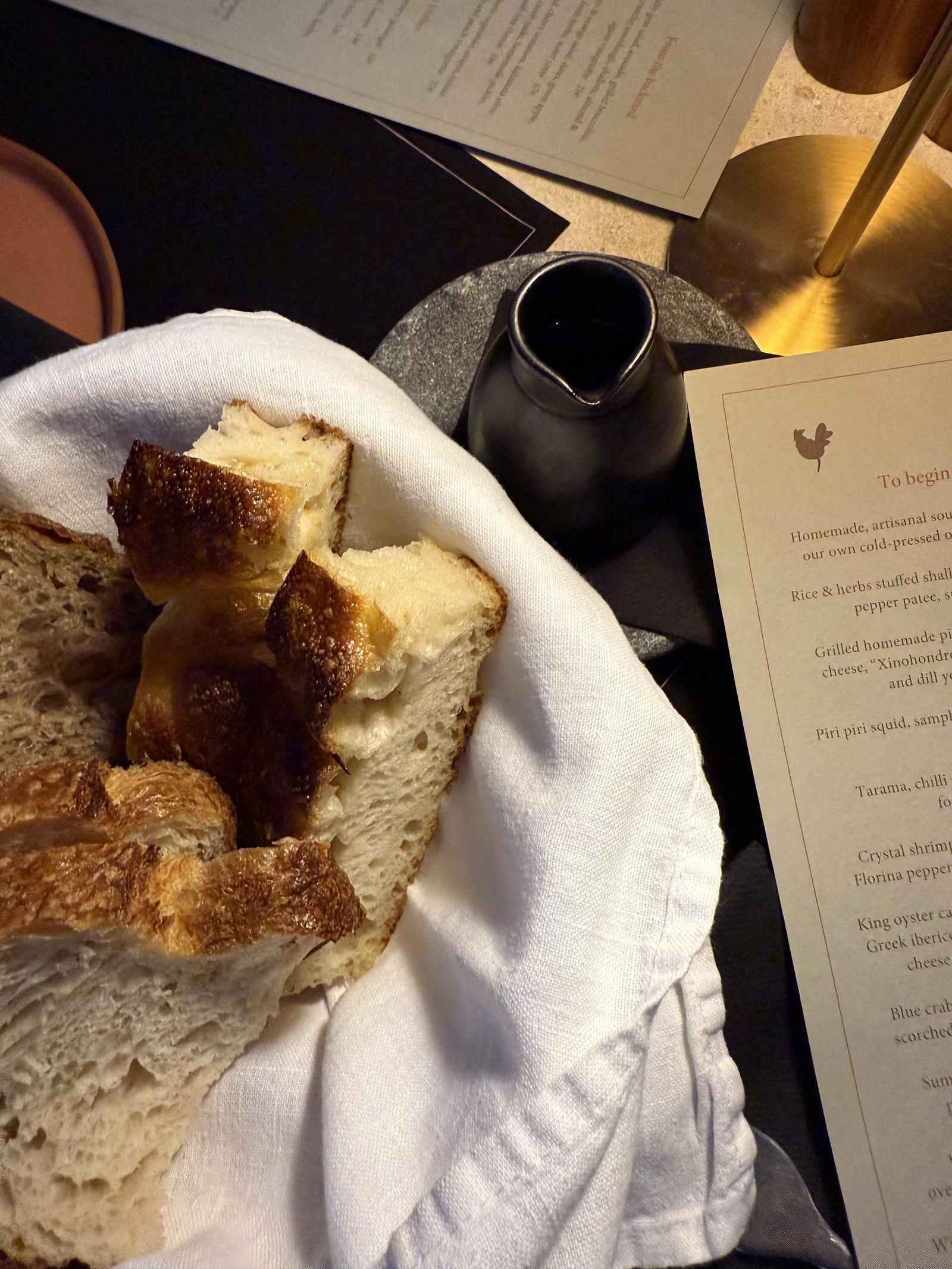
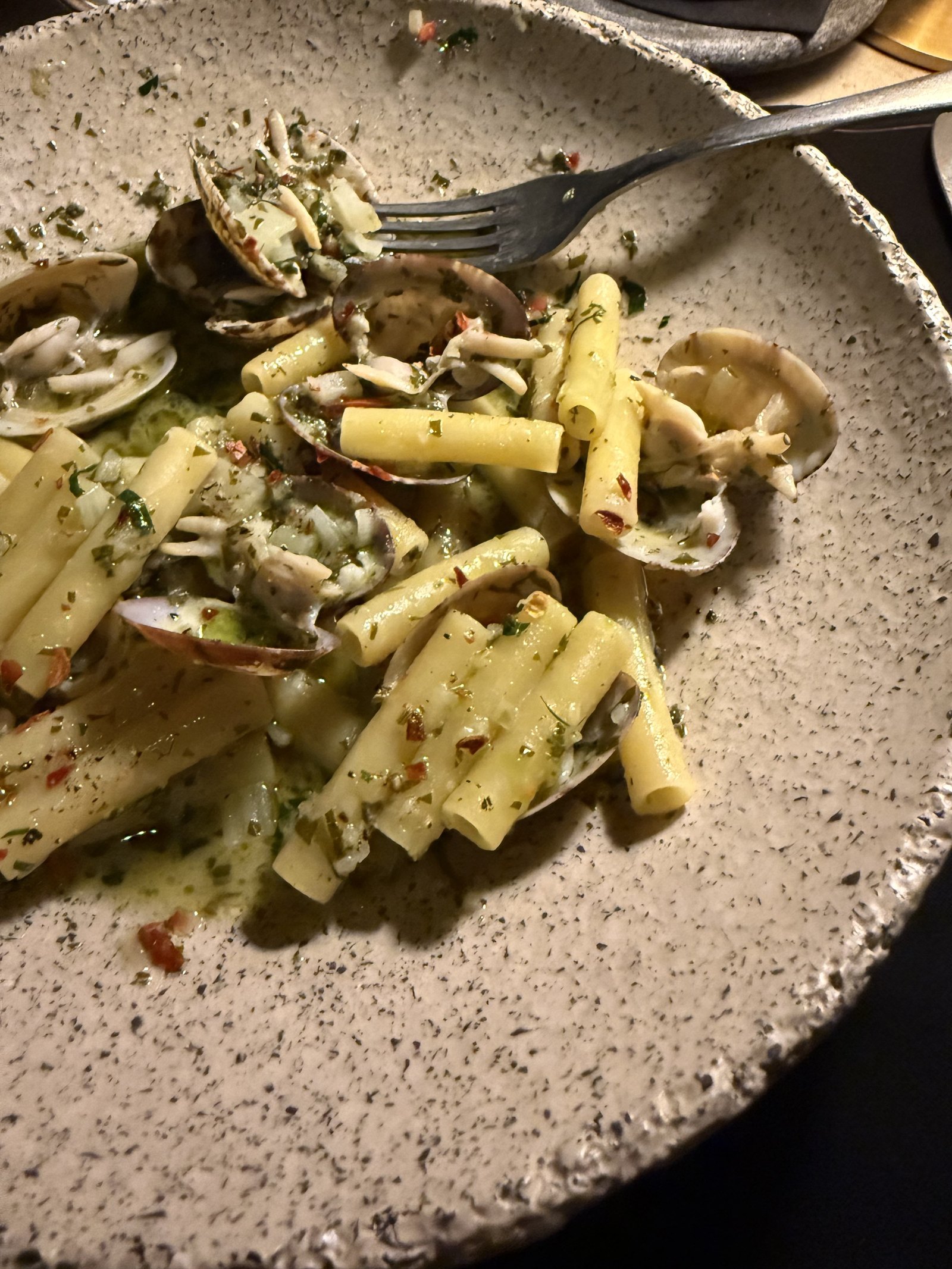
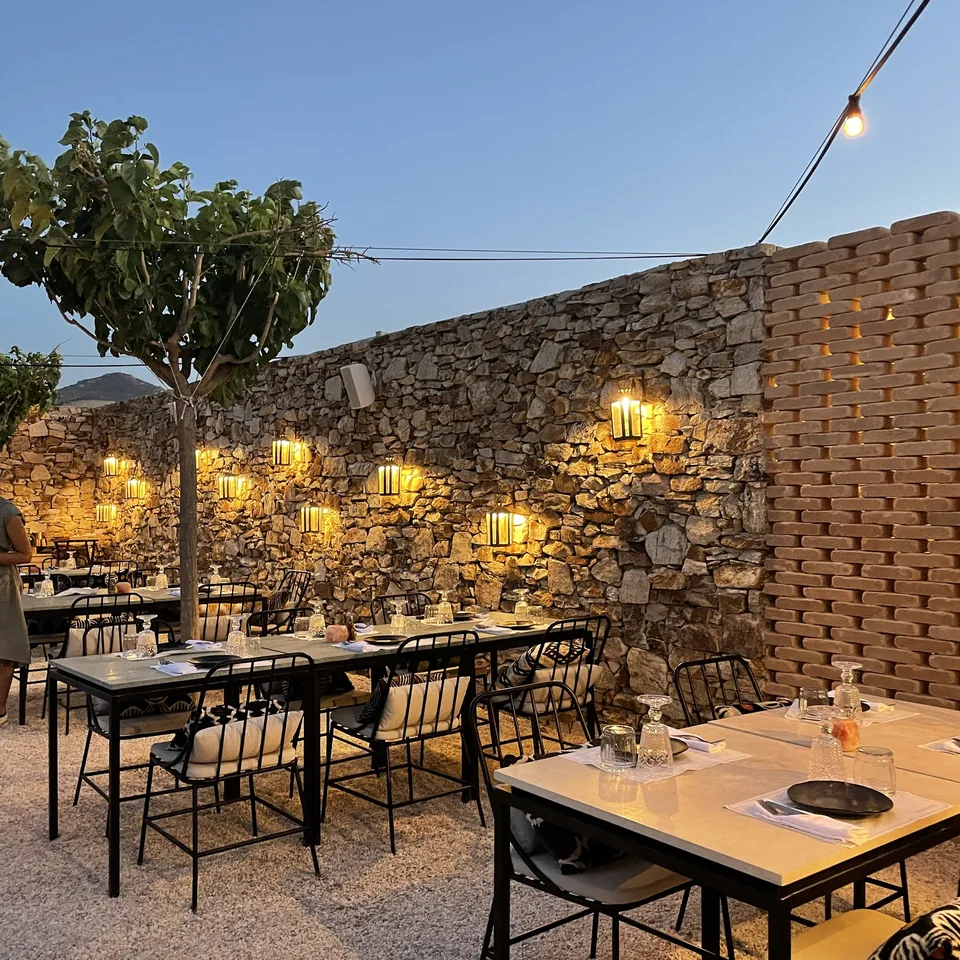
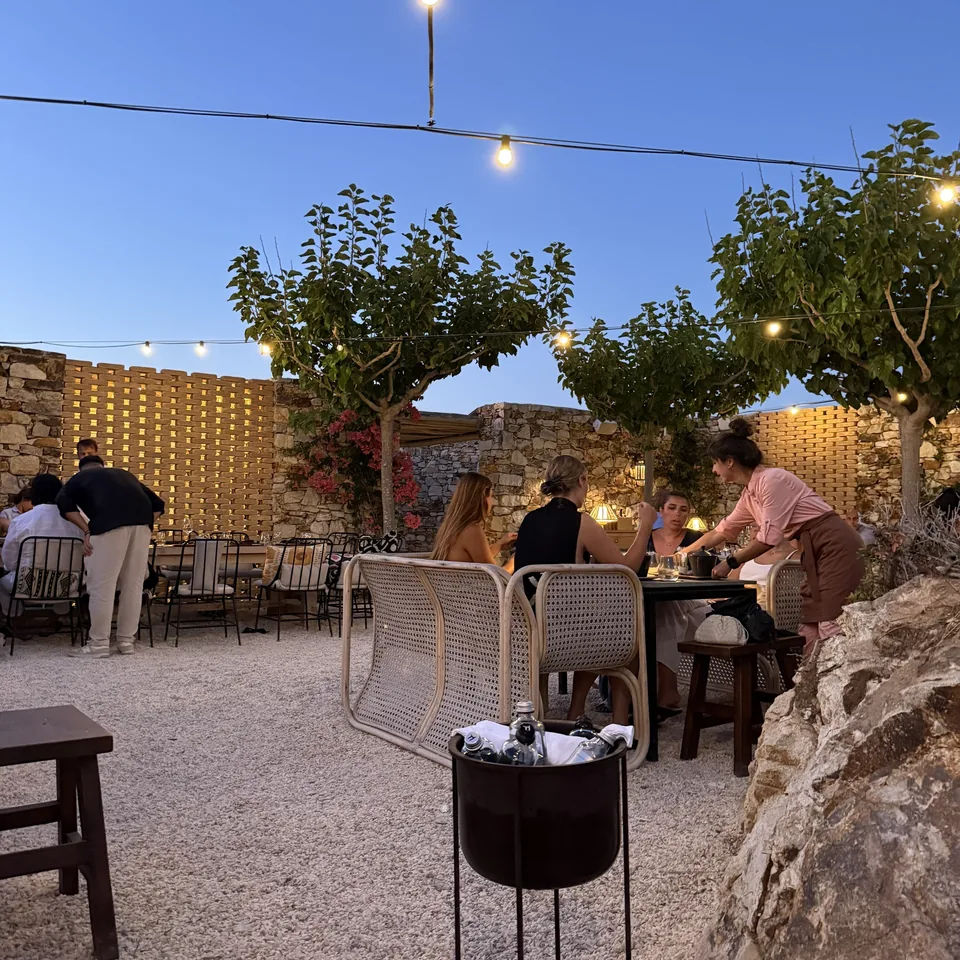
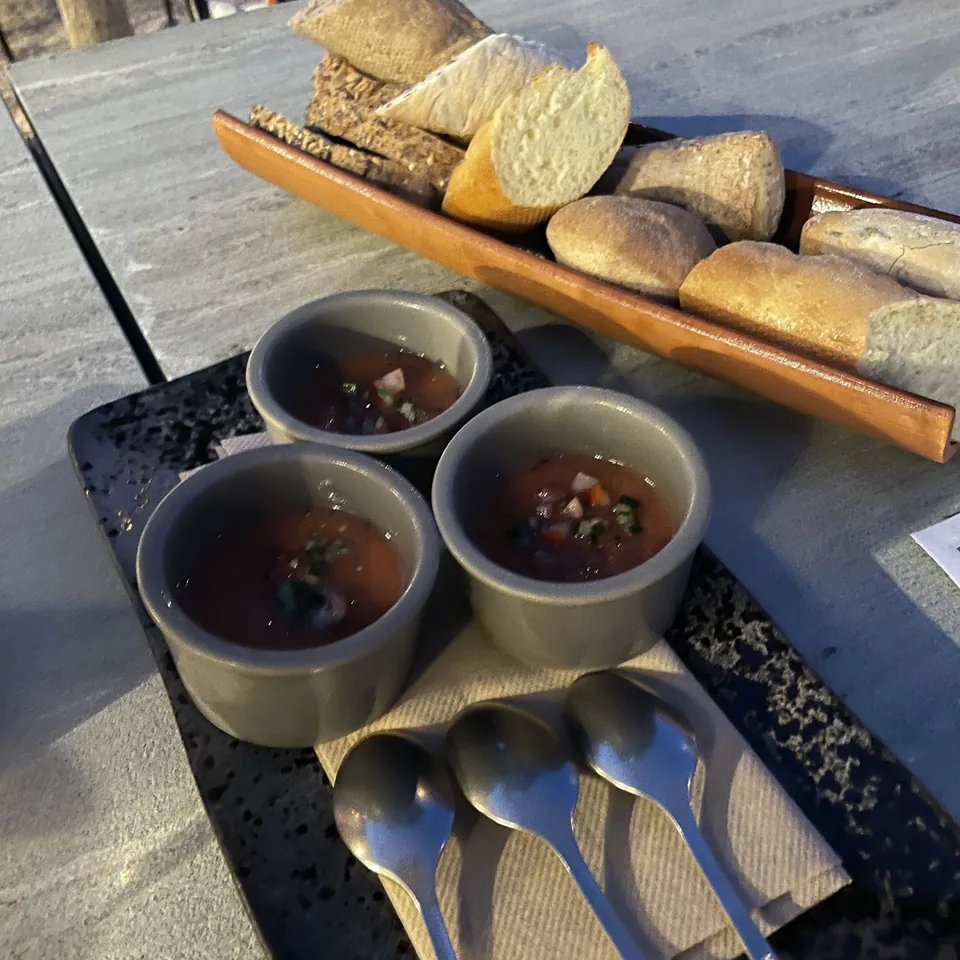
The restaurant is called the Secret Garden and it is behind a wall, on gravel, under a tree, with lights overhead. The kitchen is Mediterranean and works off the island and the sea, and the cooking is plain in the way that takes effort. The bread comes to the table wrapped in a cloth. The pasta with clams is the dish I have ordered on more than one of these summers.
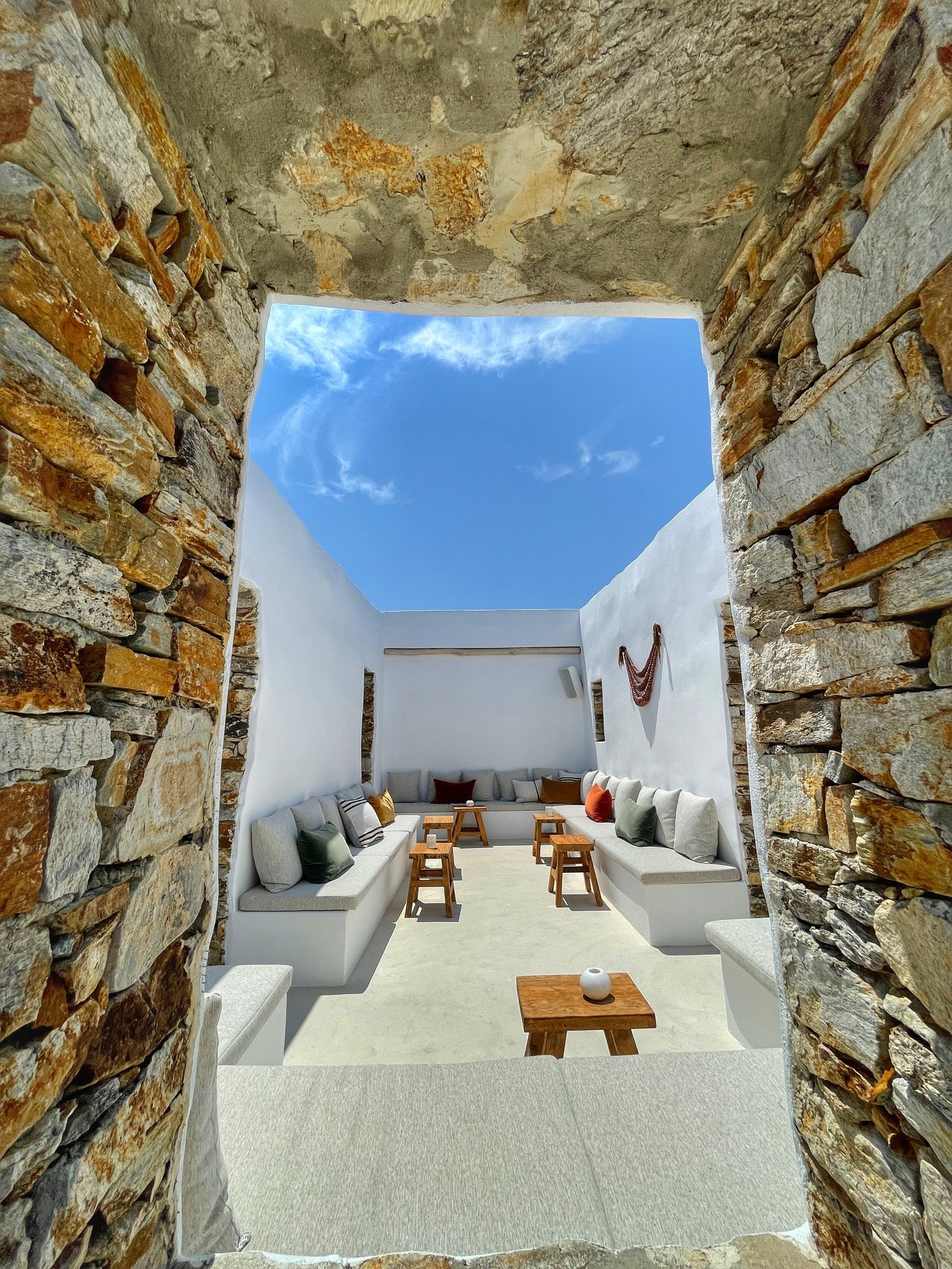
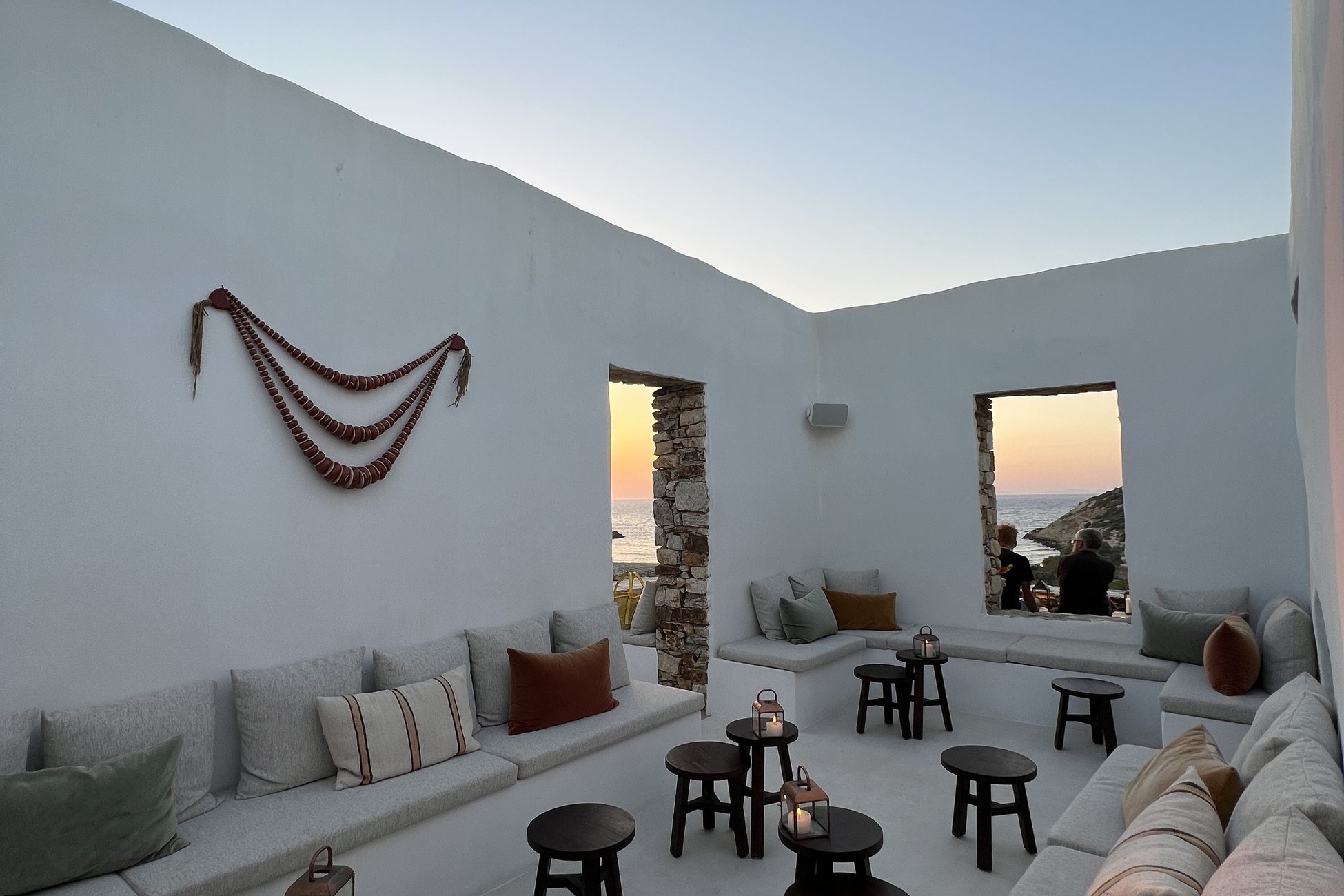
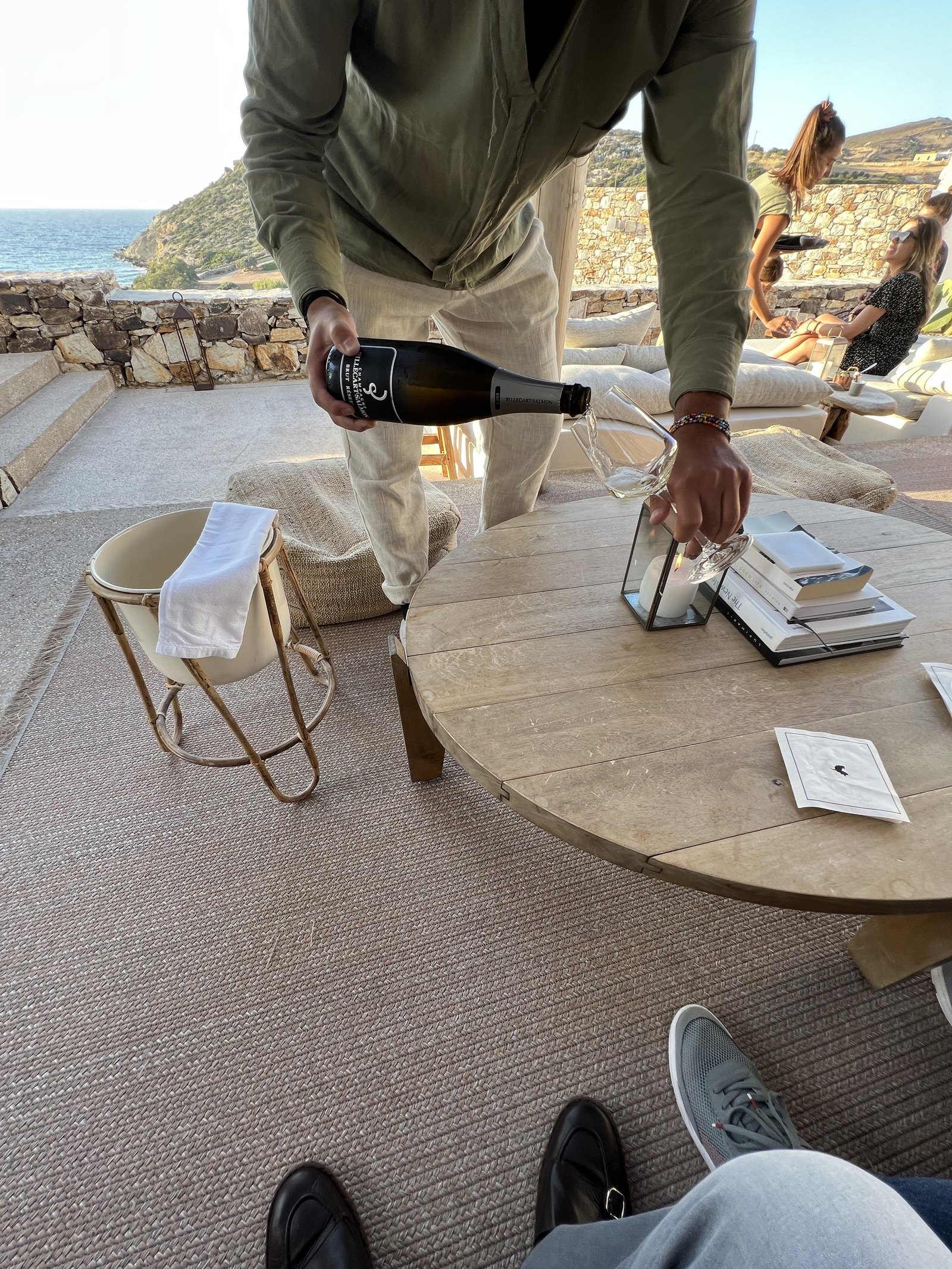
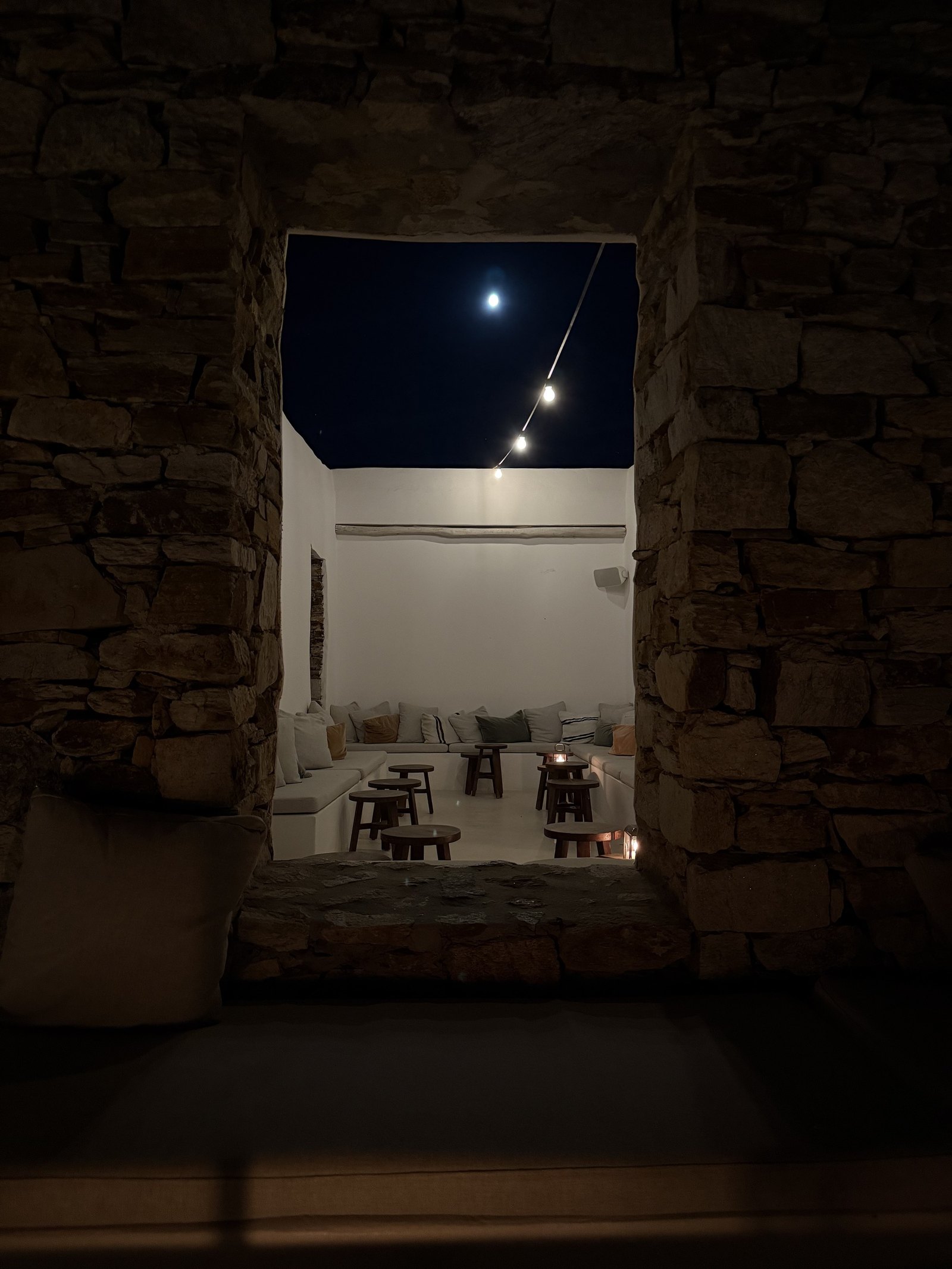
The bar runs before and after, and the sunken lounge fills up in between. The sequence takes care of itself and nobody manages you through it.
The House of Healing
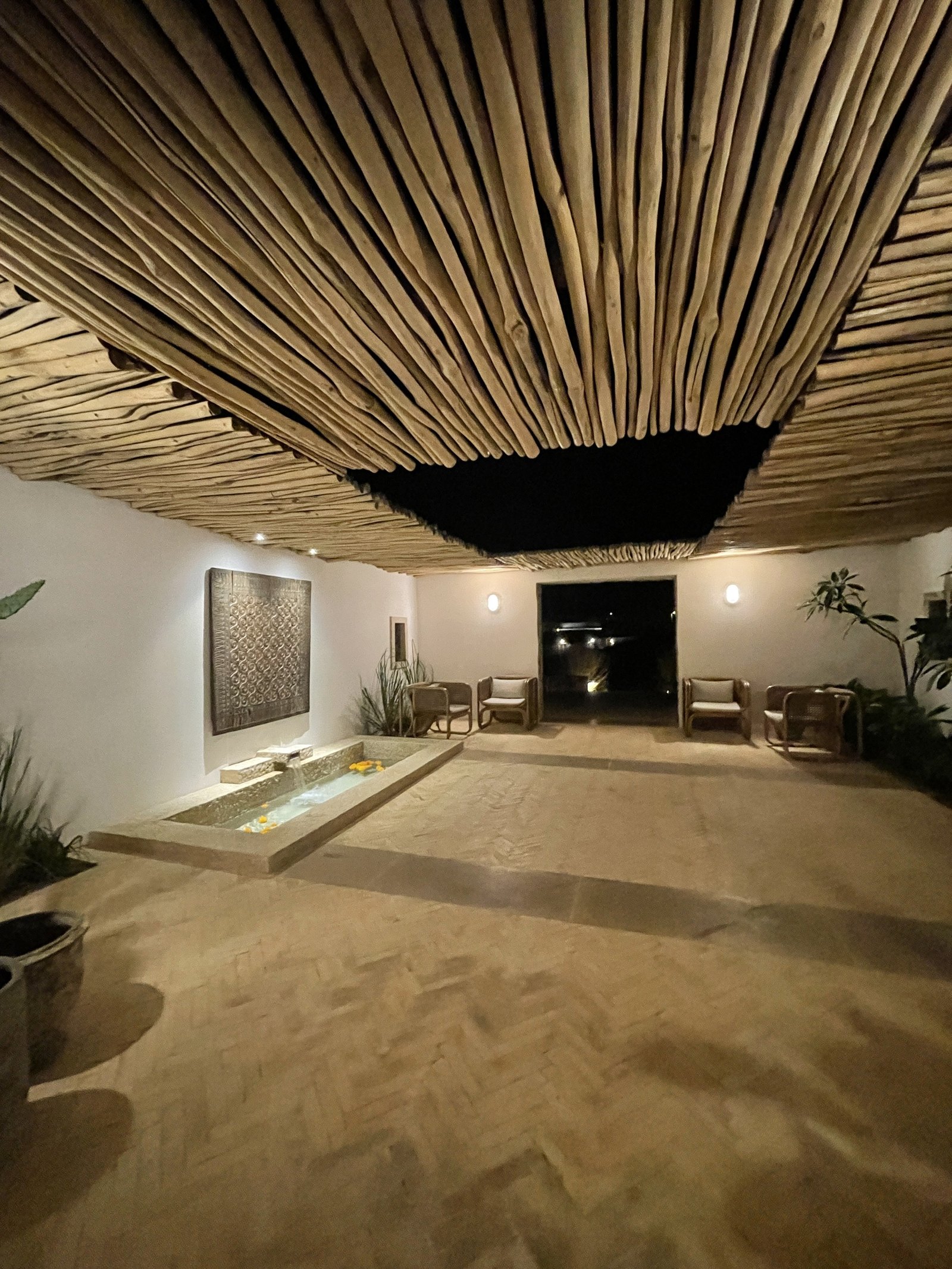
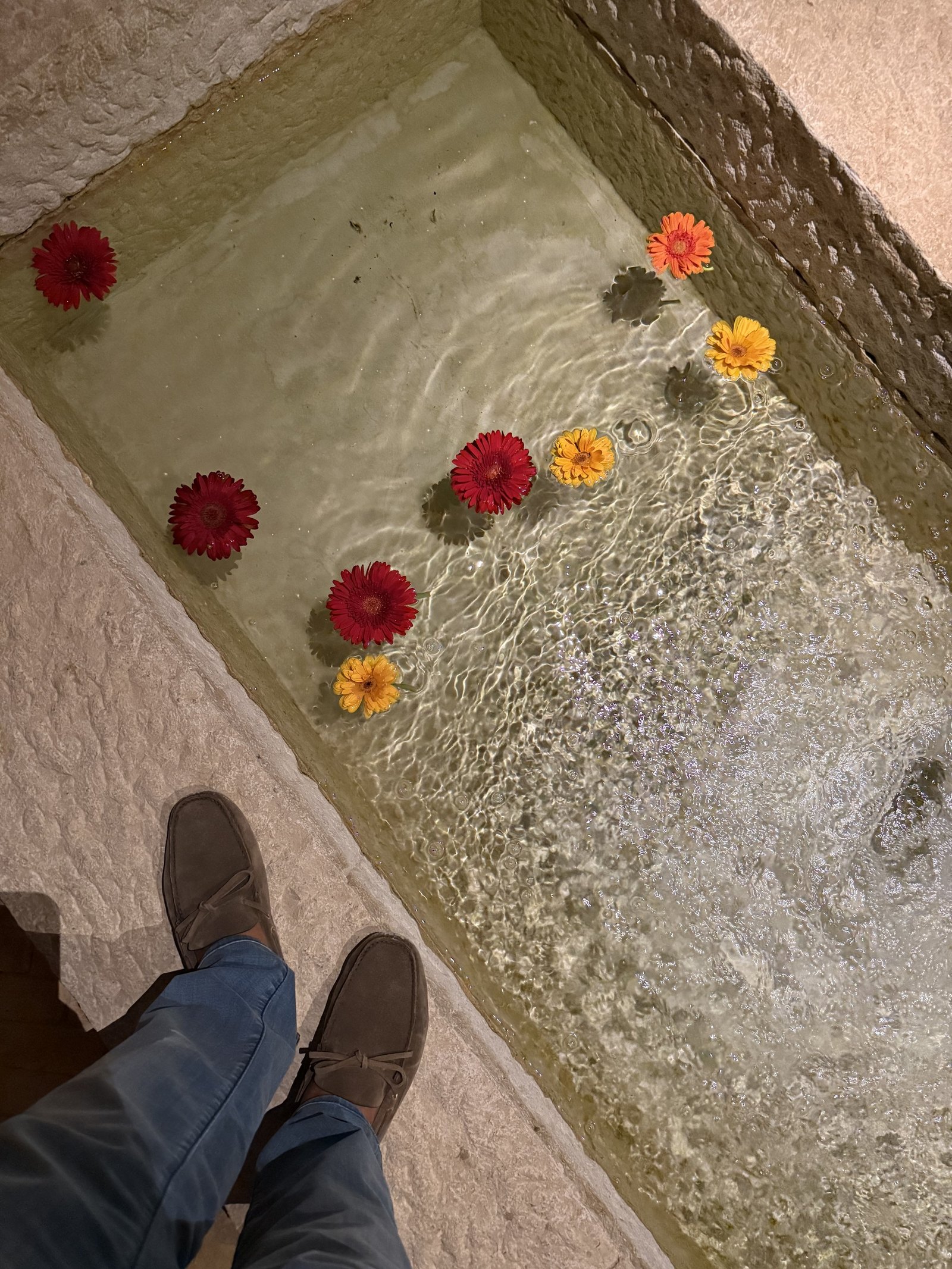
The spa has a name of its own, a building of its own, and a narrower idea than most: Ayurvedic treatments, reiki, Qi Gong. Whether that appeals is a matter of temperament. I had a treatment and the part I would come back for is what happens afterwards. There is a small pool that belongs to the spa alone, and you are left at the side of it for as long as you want. Most hotels hand you a herbal tea and a bill at that moment. Here nobody appears.
The building itself is the quietest on the property, stone and water and a woven ceiling, cool at any hour, with nothing in it to look at.
What it is, and who it is for
It is not a resort and it does not behave like one. There is no communal pool, no beach club, no programme. The island it sits on has stayed quiet because it is small and because the ferry puts off most people. What you are buying is a stone house with a pool on a hillside above a bay, a kitchen worth walking down to, and a week in which nothing is organised on your behalf.
I have come back four summers. I do not do that, and I have been to enough places on this sea to know what it means. The one thing I would change is the swimming, and the swimming is five minutes down the road.
Before you book
The questions people send me about The Rooster.
- How do you get to The Rooster on Antiparos?
- Paros has its own airport with daily flights from Athens, and that is the ordinary way in. From there you drive to the southern tip of Paros and cross to Antiparos on the car barge, which takes vehicles as well as people, and the hotel will organise that leg for you if you would rather not think about it. There is a second route for anyone short of time: helicopter transfers run from Athens and land on the helipad on Antiparos itself, and from there The Rooster is fifteen minutes by car. Neither one is complicated. The island being slightly awkward to reach is a large part of why it is still the way it is.
- What are the rooms like at The Rooster on Antiparos?
- They are separate one-bedroom houses of honey-coloured island stone, scattered across the hillside, each with its own pool and a large patio and a view of either the sea or the valley. Mine was one of the ones down near the beach and the spa. Inside they are kept in sand and beige and the materials do the work: an old oak table, a four-poster made from driftwood, terracotta urns, floors finished in the smooth plaster you see across this sea and in Morocco. The bathrooms are open-plan and large and there is a rain shower outdoors. What is waiting in the house when you arrive tells you what the place thinks you are here for: yoga mats and beach towels, books by the bed, a speaker, something decent to eat, and a cooler of good wine for the hour the sun goes down.
- Is there a beach at The Rooster, and can you swim there?
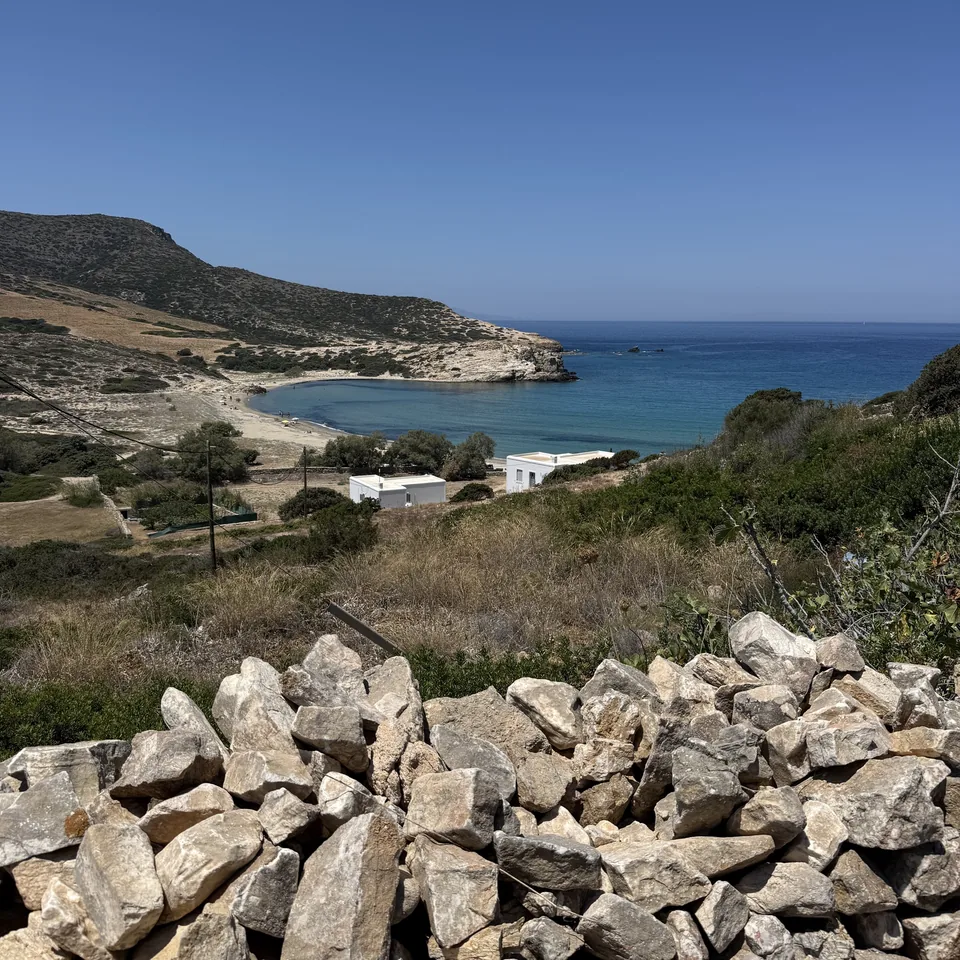
- The hotel stands above Livadia and the beach is right there, long and pale with dunes behind it. It is also one of the exposed beaches on this island, so it catches the wind, and with the wind come chop and, on some days, seagrass along the water line. On a still morning the colours down there are spectacular and I would not trade the view for a calmer bay. The hotel puts out parasols and low seating on the sand, which is a more modest arrangement than rows of loungers and suits the beach better. For proper swimming, drive five minutes to the sheltered coves on the other side; Soros is my own favourite and has been for several summers.
- Does The Rooster have a pool and a spa?
- Every house has its own pool on its patio. There is no shared pool anywhere on the property, which is deliberate: the place is built so you spend the day at your own door. The pools are small. The spa is called the House of Healing, it stands as a building of its own, and it works in Ayurvedic treatments, reiki and Qi Gong, which is a narrower and more serious offer than the menu of massages most hotels put in front of you. I had a treatment there. The room is bare and cool and made of natural materials, and afterwards you can sit by a small pool that belongs to the spa and to nobody else, which is where the hour after actually happens.
- Where do you eat at The Rooster, and what is the food?
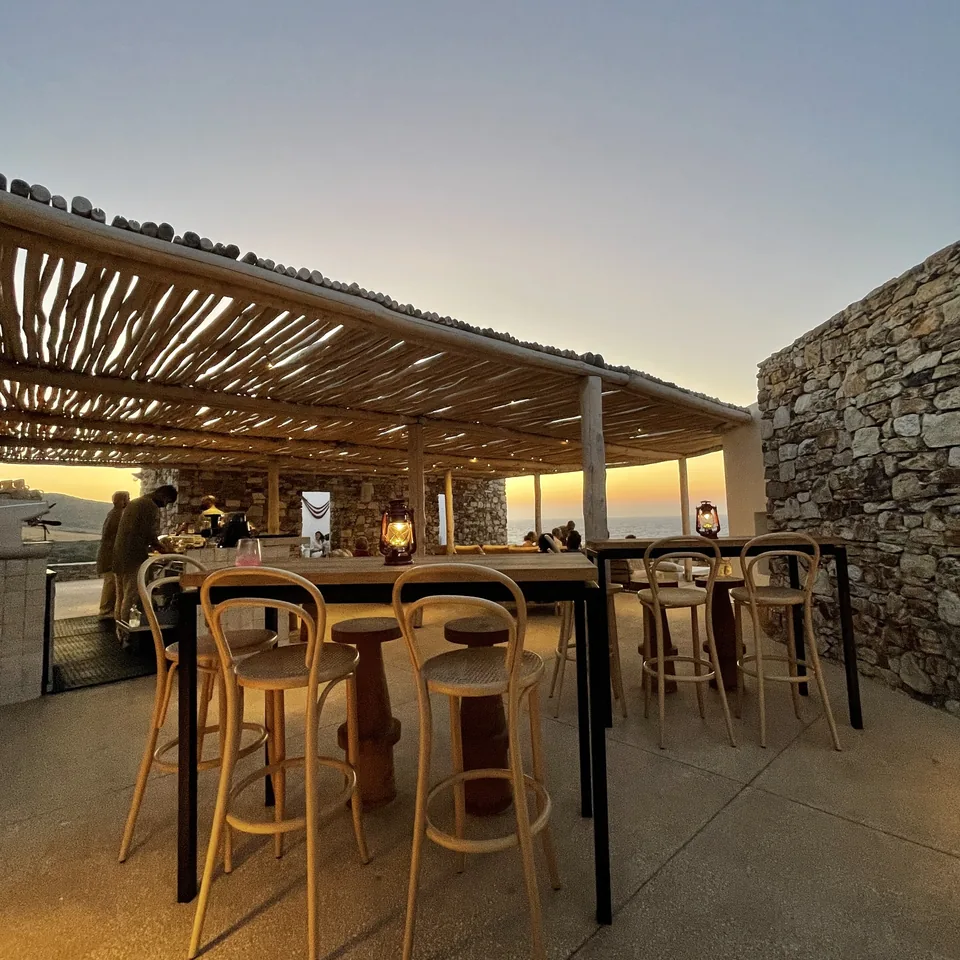
- There is an open-air bar built of pale stone with turned timber stools along it, where the day ends, and a restaurant called the Secret Garden in a gravel courtyard behind a wall, with a tree in the middle of it and lights strung overhead. The cooking is Mediterranean and built on what the island and the sea hand over. The bread comes to the table wrapped in a cloth and is better than it needs to be, and the pasta with clams is the dish I have ordered on more than one visit. Breakfast and the hours in between happen in the same main house, looking down at the bay.
- When is the best time to go to Antiparos?
- I have gone in the first week of July four different summers and that is the window I would give you. The weather is settled, the sea is warm enough and the island has not filled up. August on Antiparos is a different island with different prices and a different mood. If you can come in June or in the second half of September, the hotel and the place are quieter still, and quiet is what you are paying for here.
Something else you want to know? Write to me and I will answer it here.
Arranged by hand
The room, the dates, the rest of the list.
Write in English, Italian or Spanish. I answer personally, usually within a day.
Let Nik arrange it →