
Inspection · Peloponnese, Greece
Dexamenes Seaside Hotel
A 1920s wine factory on the Ionian coast, its concrete tanks turned into rooms and almost nothing tidied away. I have been three times, always in the last weeks of the season.
Book Dexamenes with me Tell me the dates and who is travelling, and I arrange it with the house directly. In English, Italian or Spanish.I have been to Dexamenes three times and every one of those visits has fallen in the last week of September or the first days of October. That was not a plan. It became one. There is a point at the end of a Greek summer when the water is still warm enough to swim before breakfast, the light has gone long and sideways, the beach has let go of August, and the people running a hotel have time to stand and talk to you. That is when I want to be on this coast, and Dexamenes is what I come to.
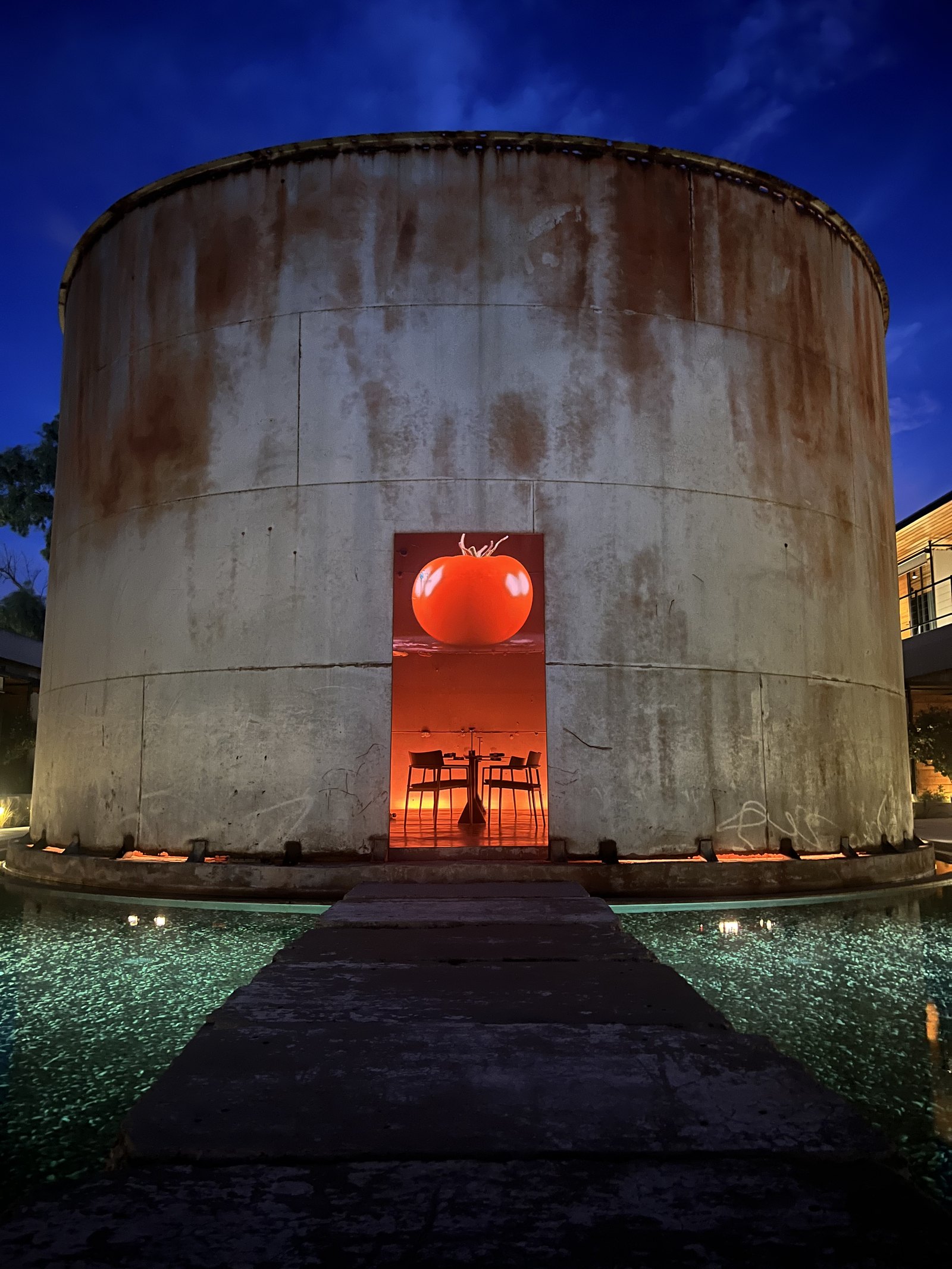
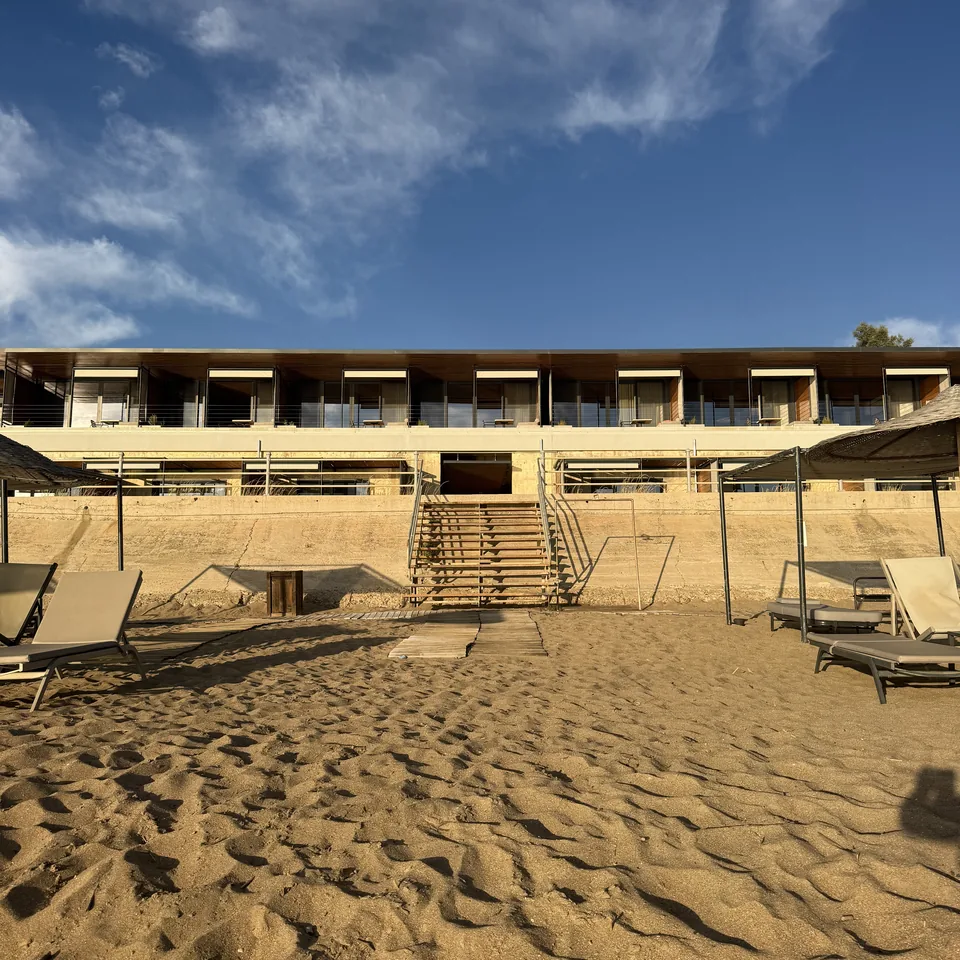
It is a wine factory. Not a hotel built to look like one: an actual factory from the late 1920s, on the sand at Kourouta on the western edge of the Peloponnese, with the Ionian in front of it and the concrete tanks still standing where they were poured.
What it was first
The story starts with currants. The western Peloponnese grew them for export and that market collapsed, which left a great deal of fruit with nowhere to go and an industry that had to find something else to do with it. Wine was the answer, and this factory was part of that answer. Its position on the water, which is the thing everybody photographs now, was a piece of working equipment: the wine went out of the tanks and down a pipe into ships standing offshore. The closeness to the sea was logistics before it was a view.
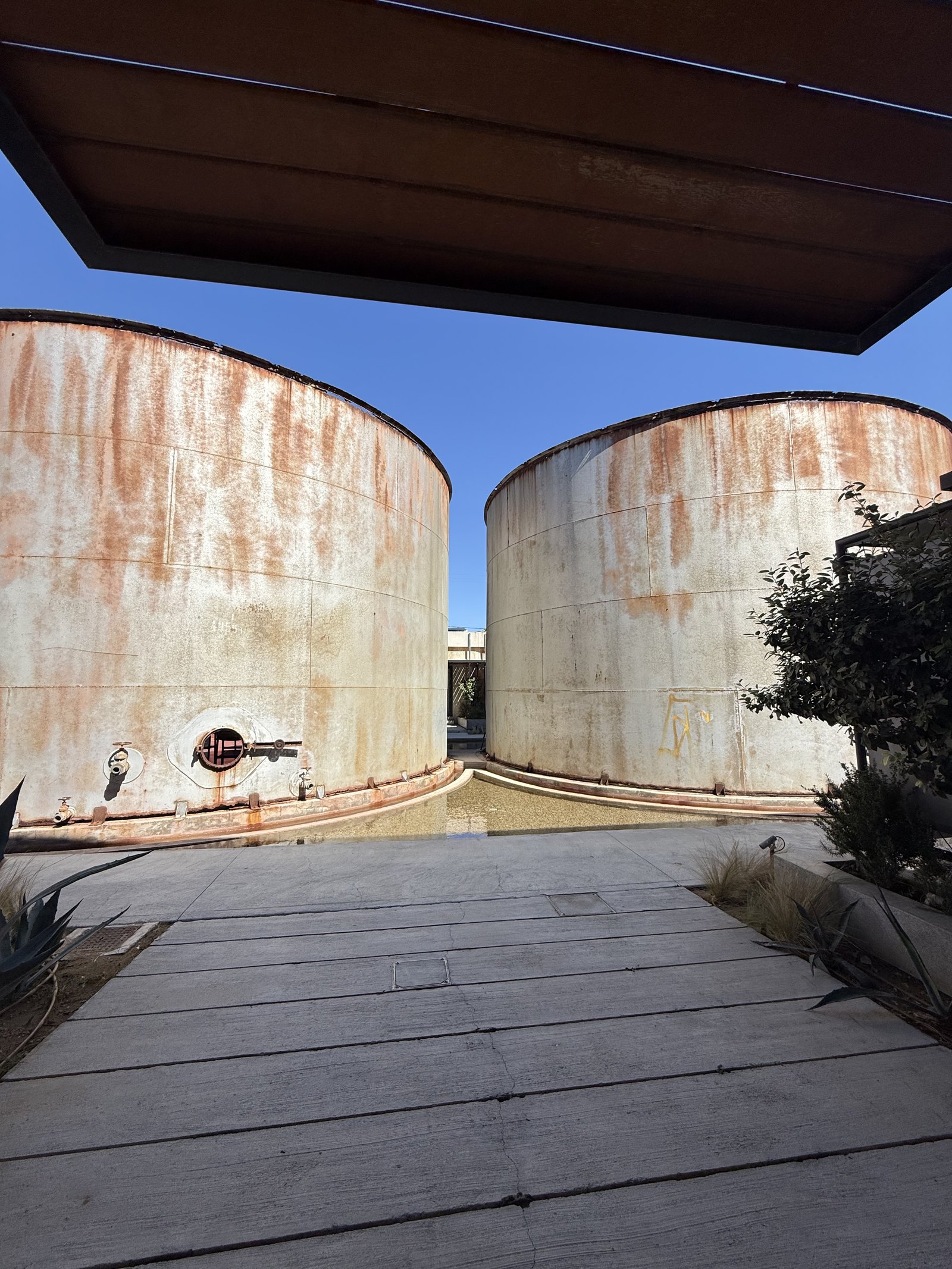
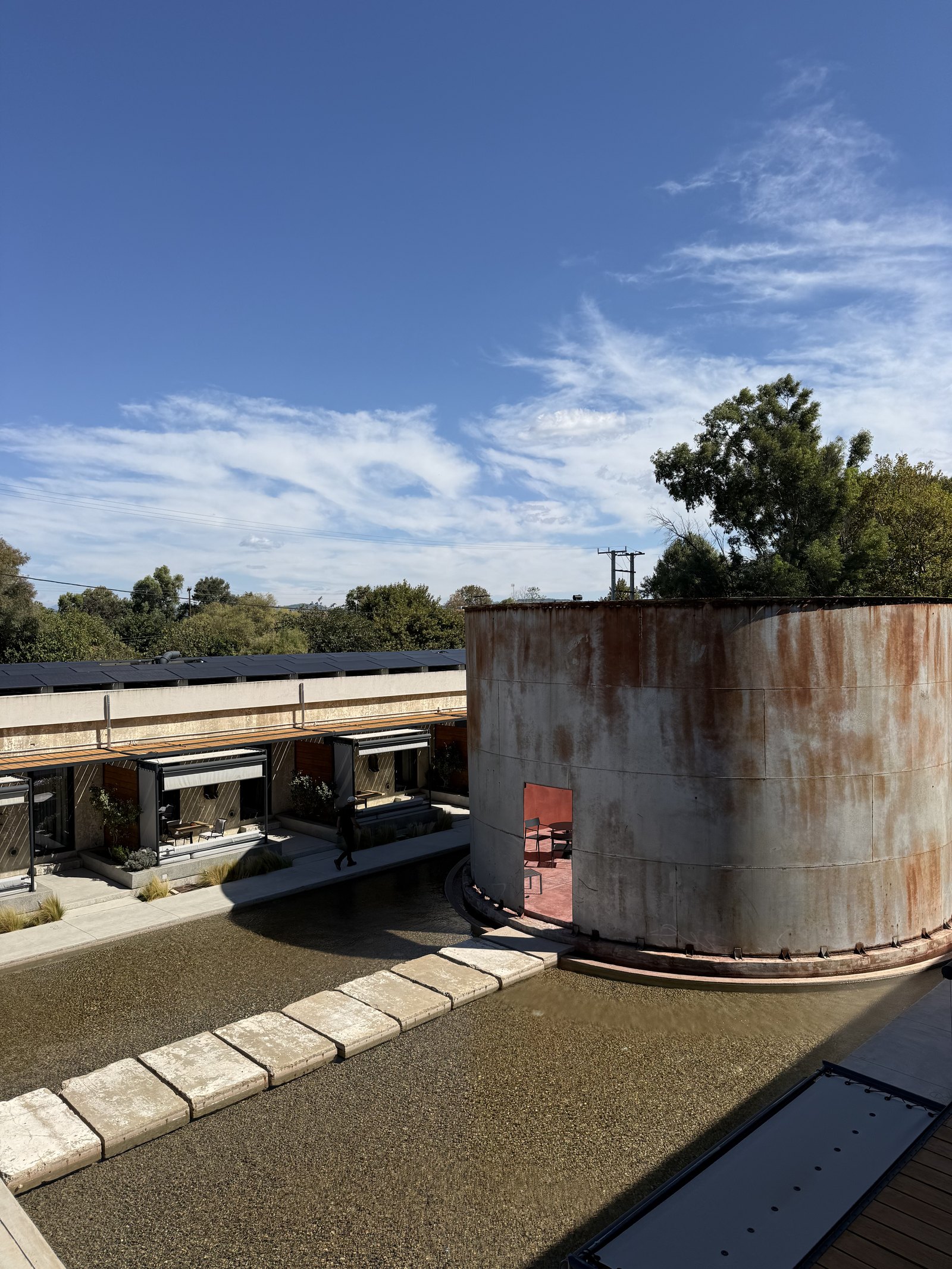
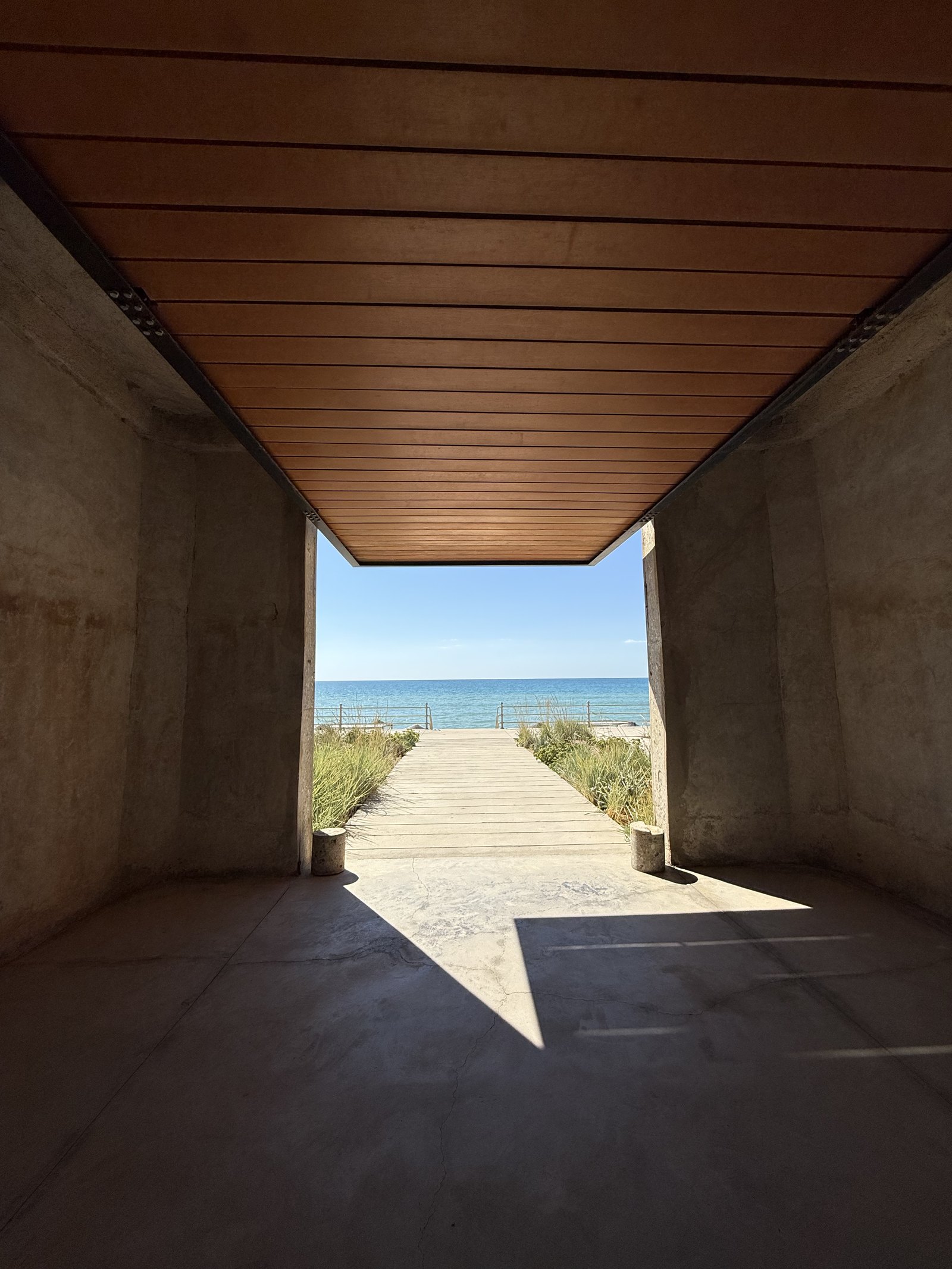
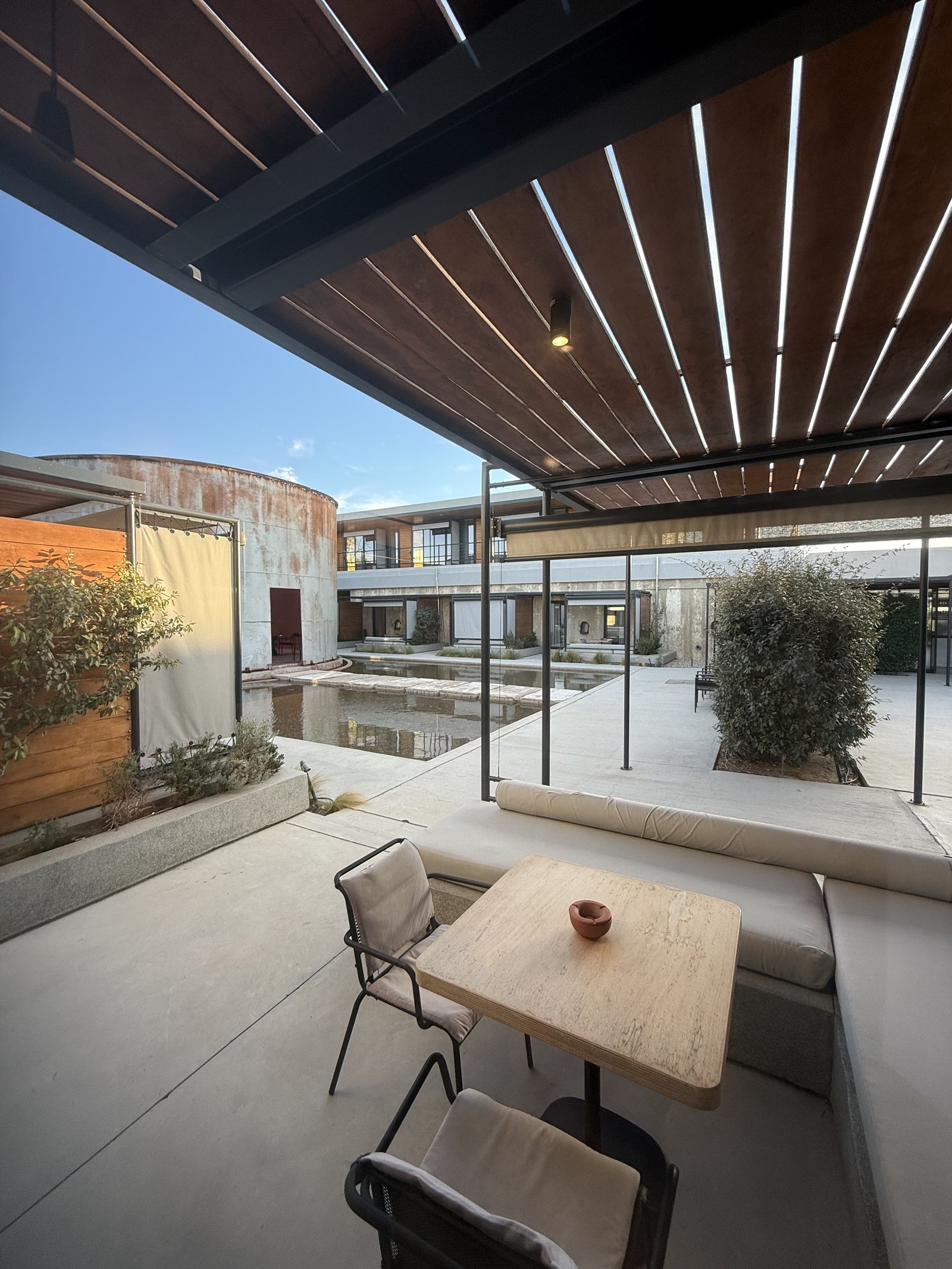
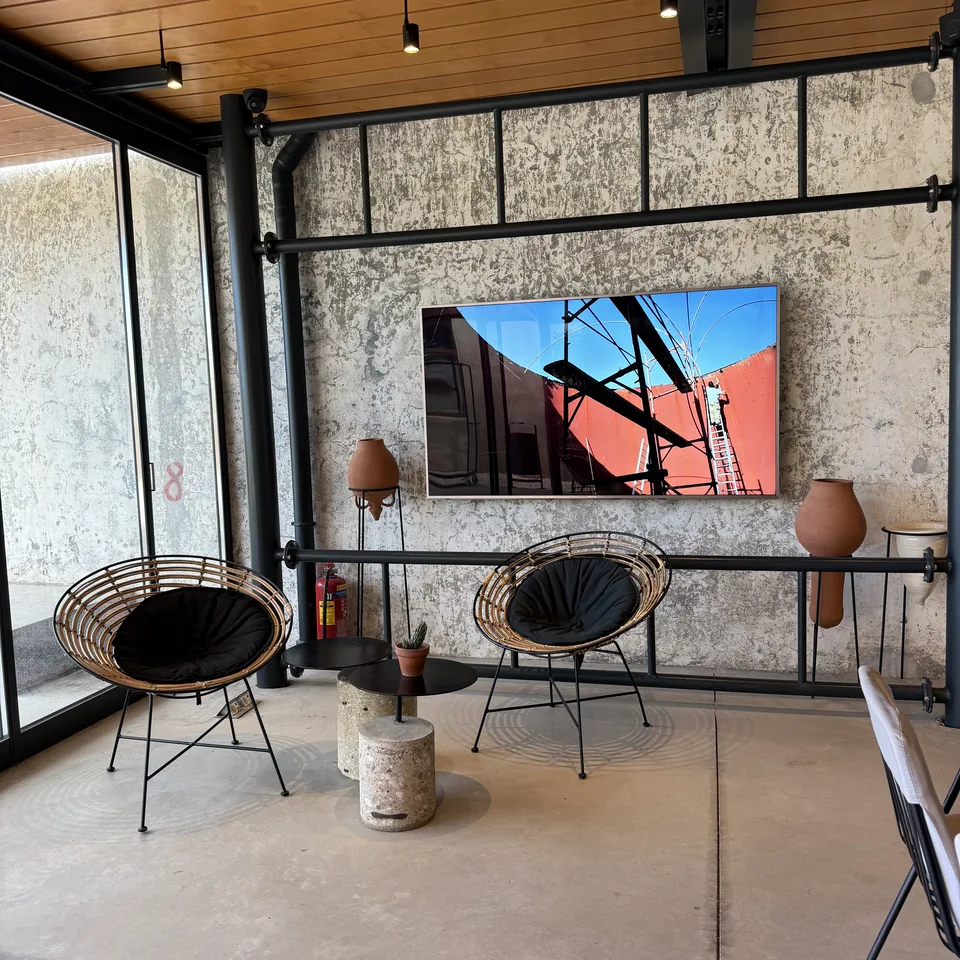
The site had been abandoned for years when Nikos Karaflos took it on, and he worked with K-Studio in Athens on what to do with it. The approach they took is visible in every part of the result and it is the reason the place works: leave the strength of what is standing, then add only what is needed to live in it. There is a version of this project where the concrete gets rendered, the rust gets ground off and the tanks become a motif in the brochure. That version exists in plenty of other places. This is the other one.
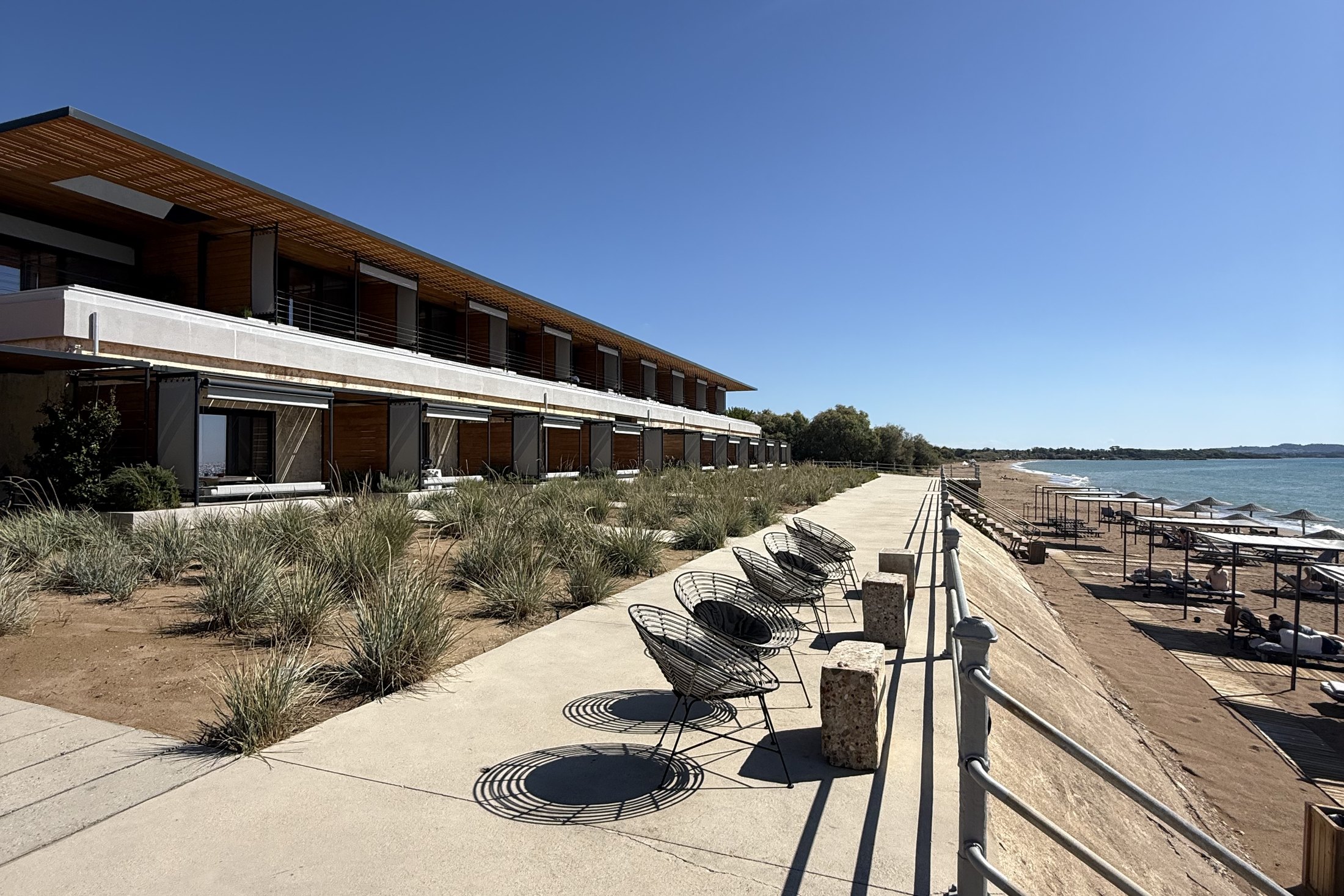
The tanks you sleep in
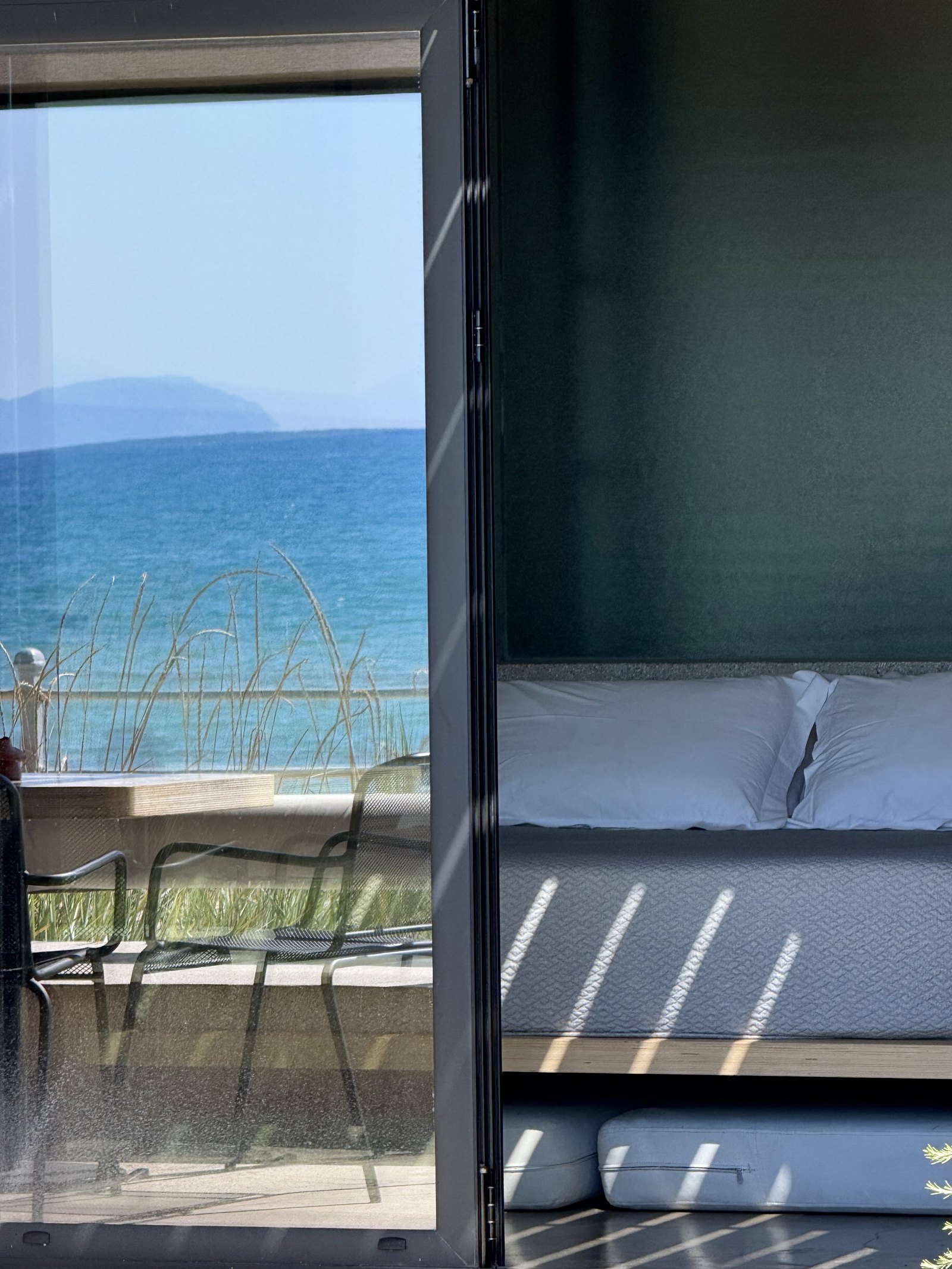
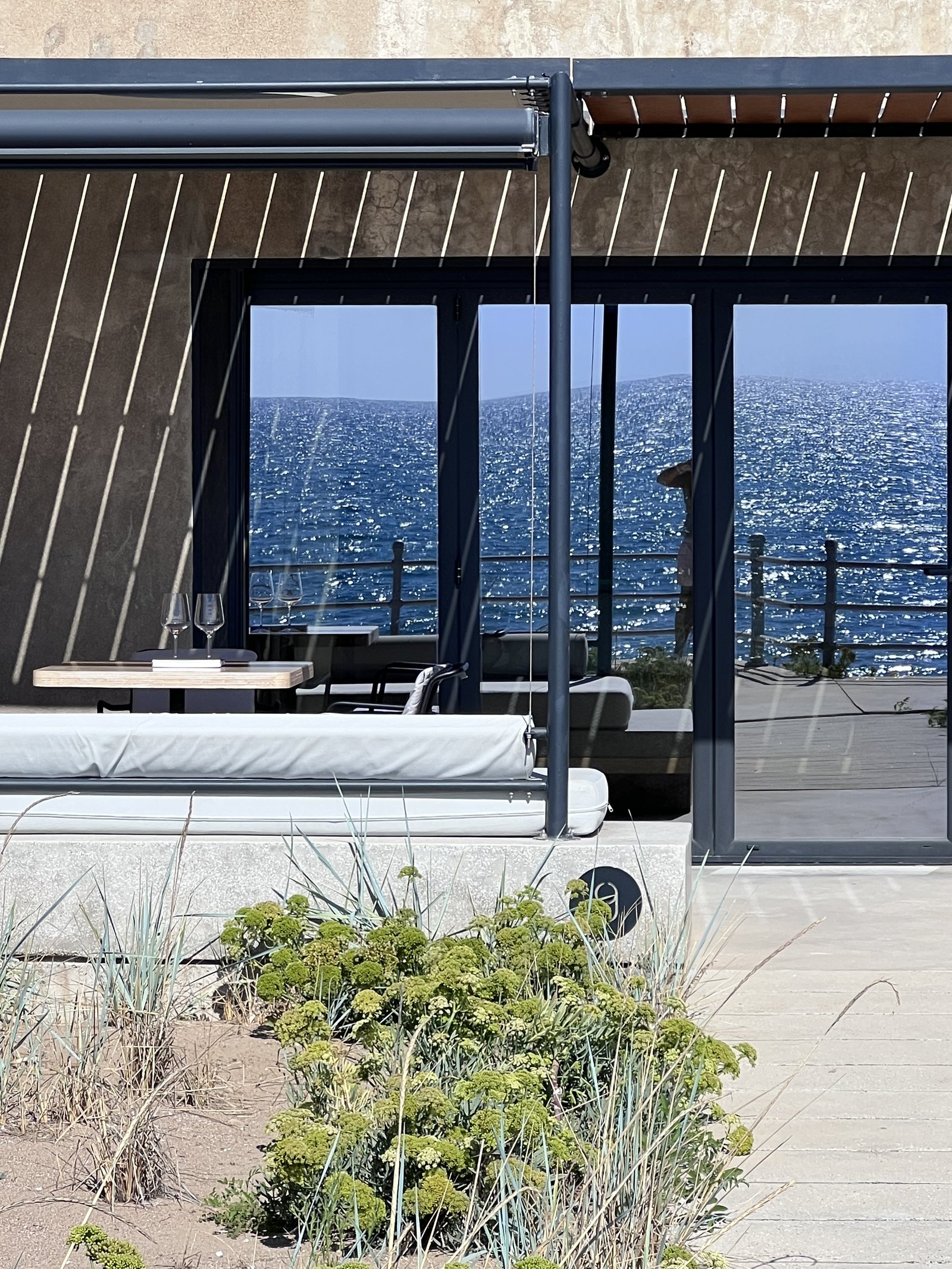
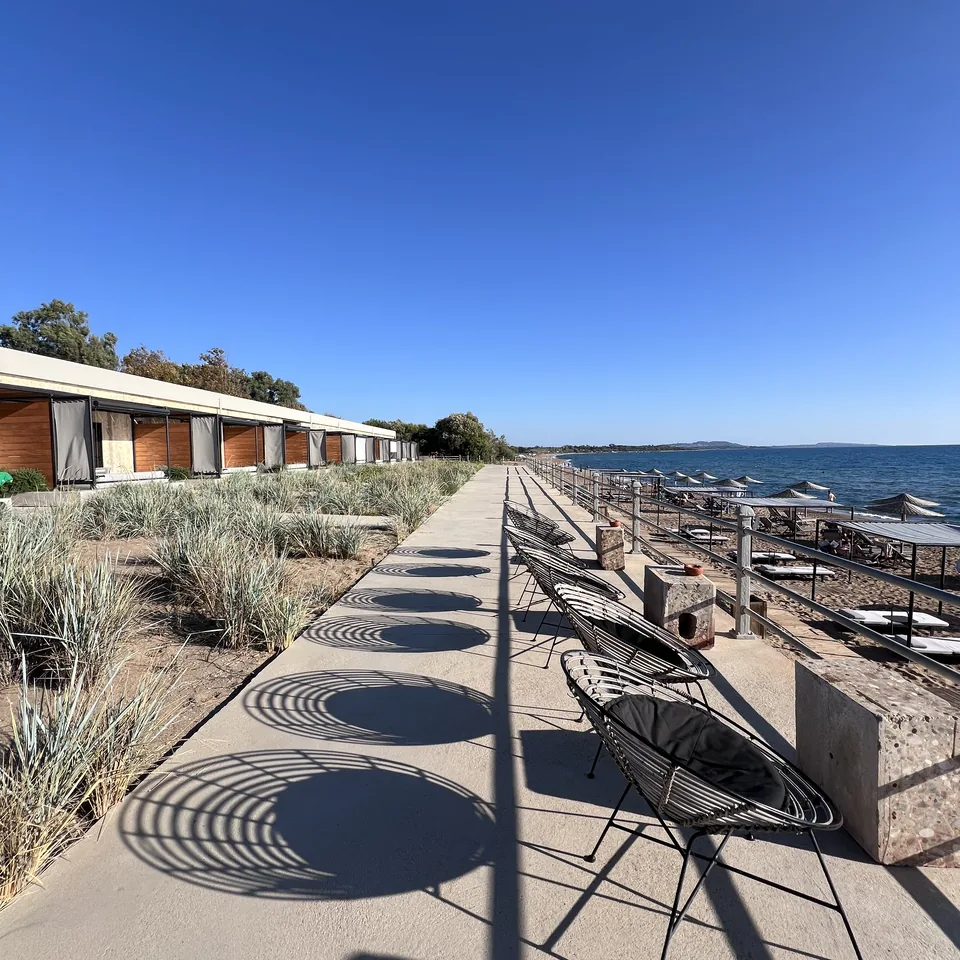
The rooms come out of 34 former wine tanks and two old chemistry laboratories. That sentence is the architectural concept and it is also where people stop reading, which is a mistake, because the categories are not variations on one room. Beachfront tanks face the sea almost directly. Courtyard tanks look into the internal landscape of the old works, which is a quieter and more inward stay and a genuinely good one. Backyard tanks are a third outlook. The Seaview ChemLab suites are converted laboratories and have nothing of the tank about them.
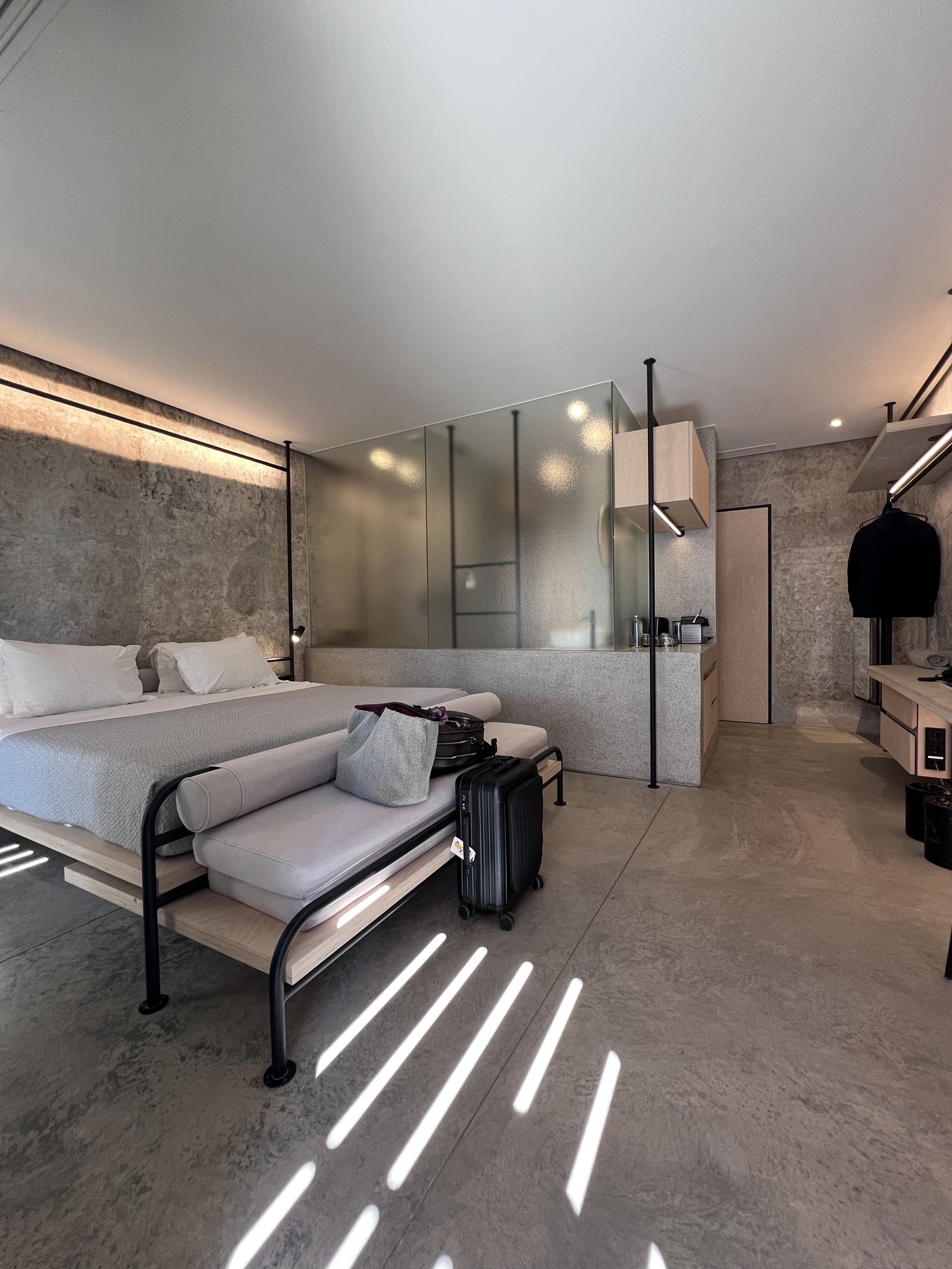
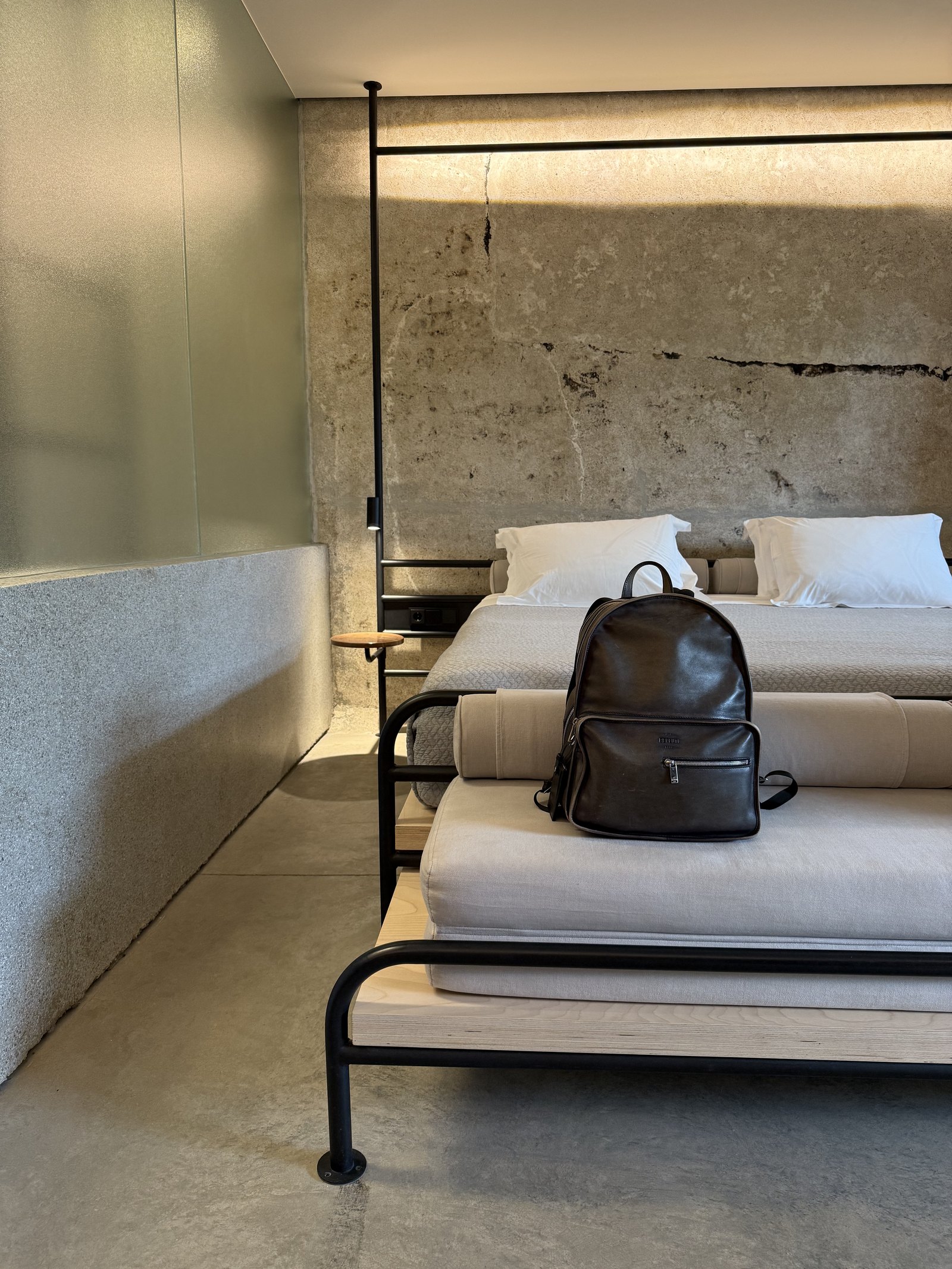
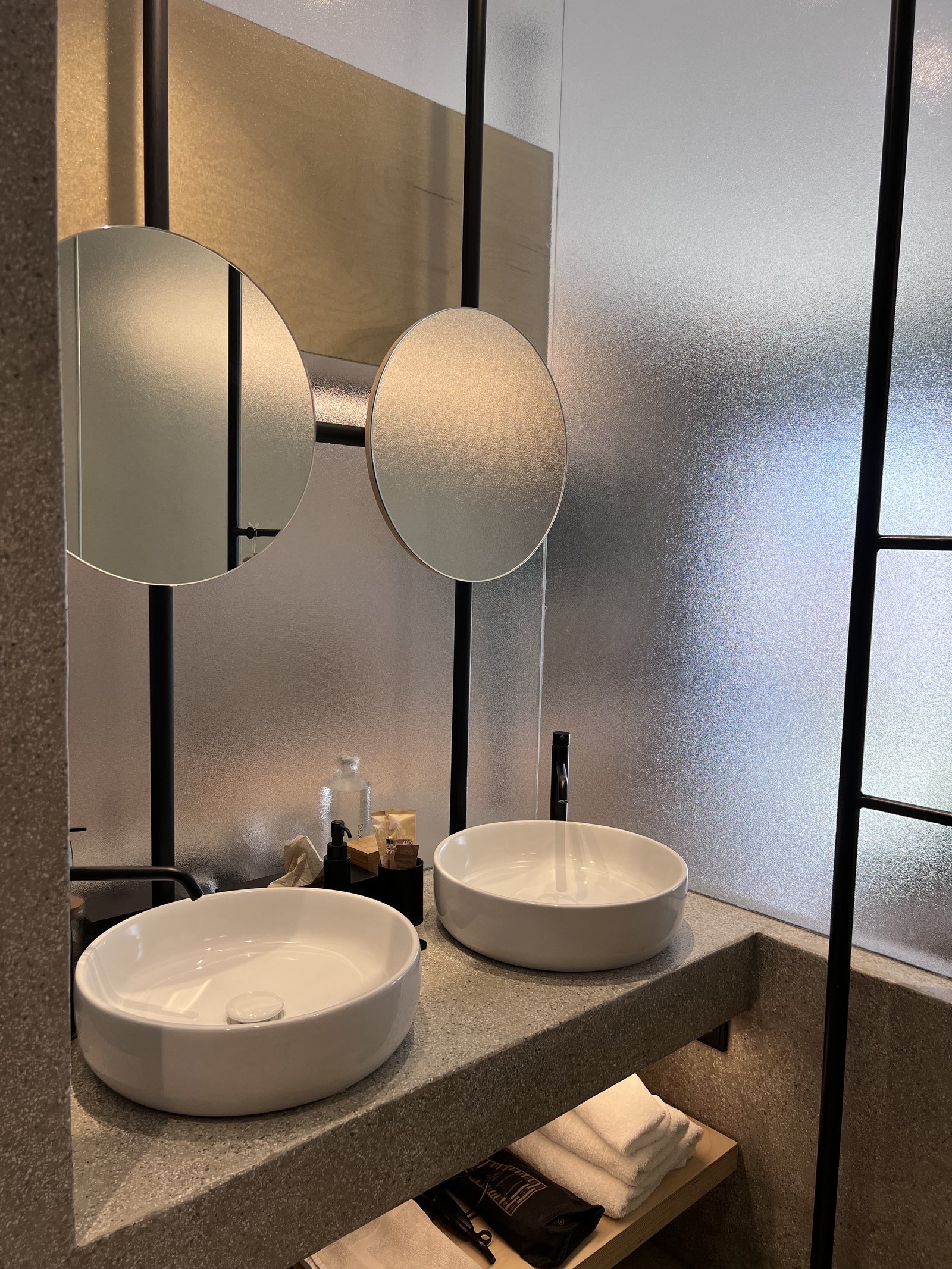
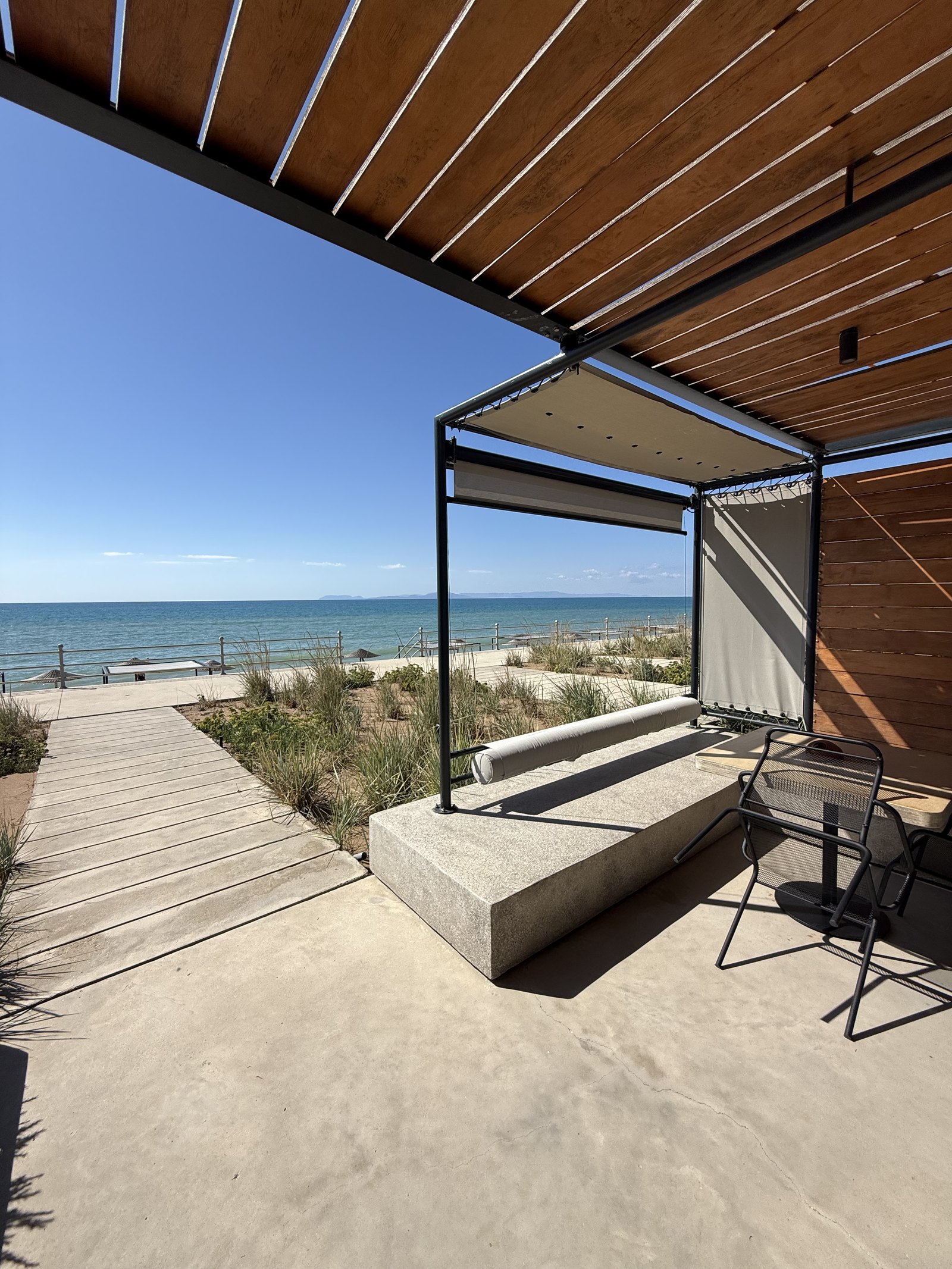
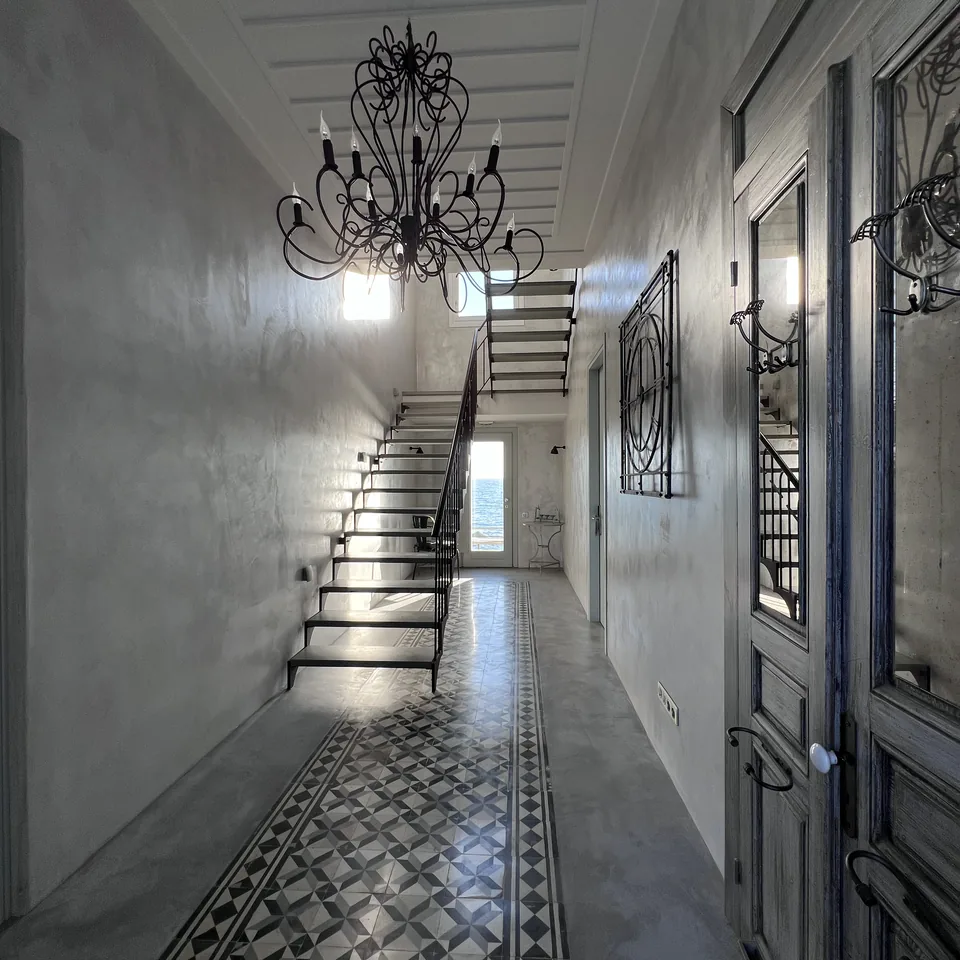
What saves it from being an architectural statement you have to live inside is the light and the openings. These were buildings for storing liquid in the dark. Large apertures were cut into them, sliding glass was put in, a timber screen was set in front, and the result is a room that is cool and dim at midday and full of long bars of sun by six. Comfort was added without the building being talked out of what it is.
The silo, which is the strangest room on the property
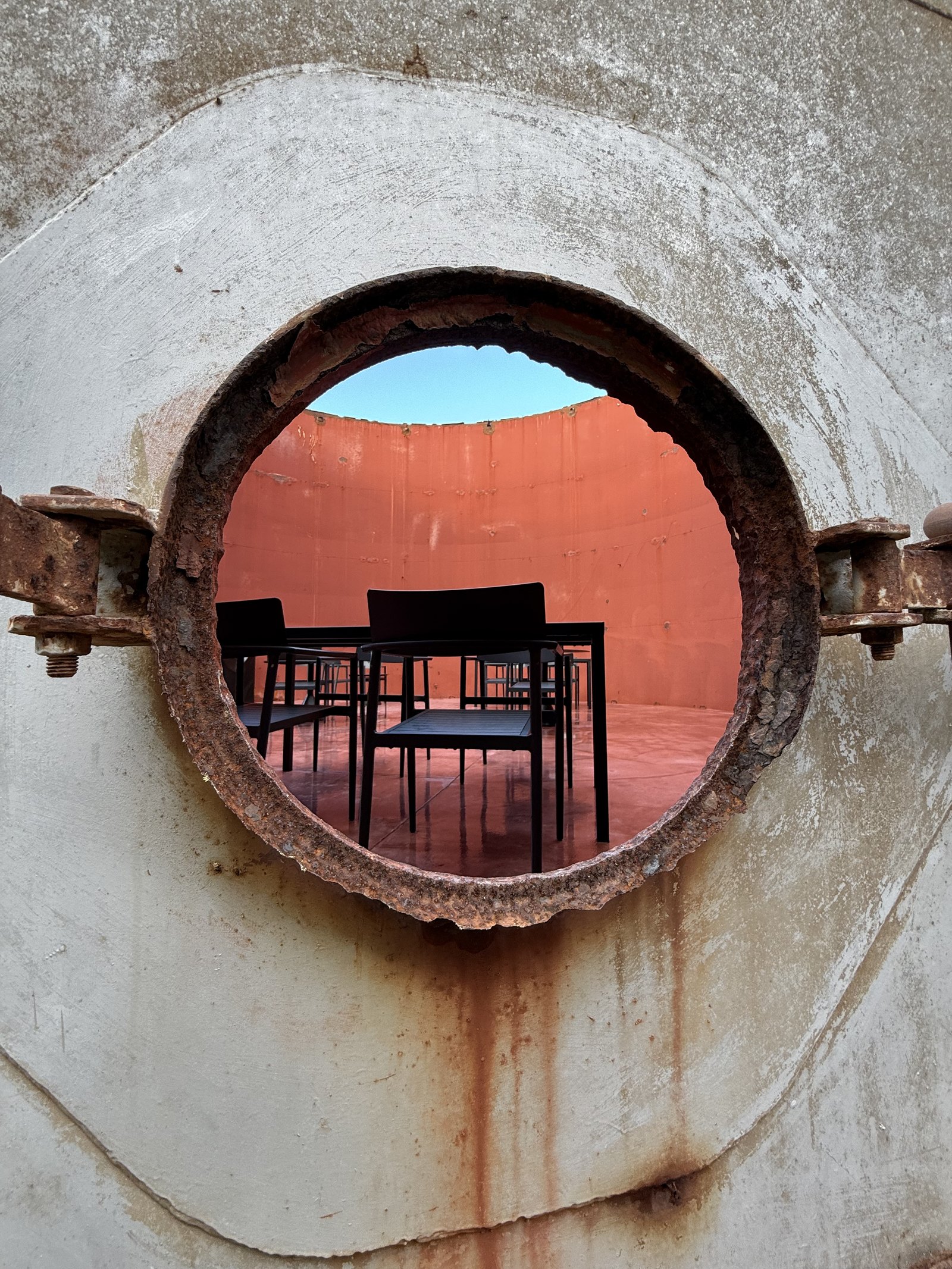
There is a steel silo on the site from the 1920s that held five thousand hectolitres. Half a million litres. It was a working fermentation structure and not a grain store borrowed for its looks, and today it houses dex.Silo.01.
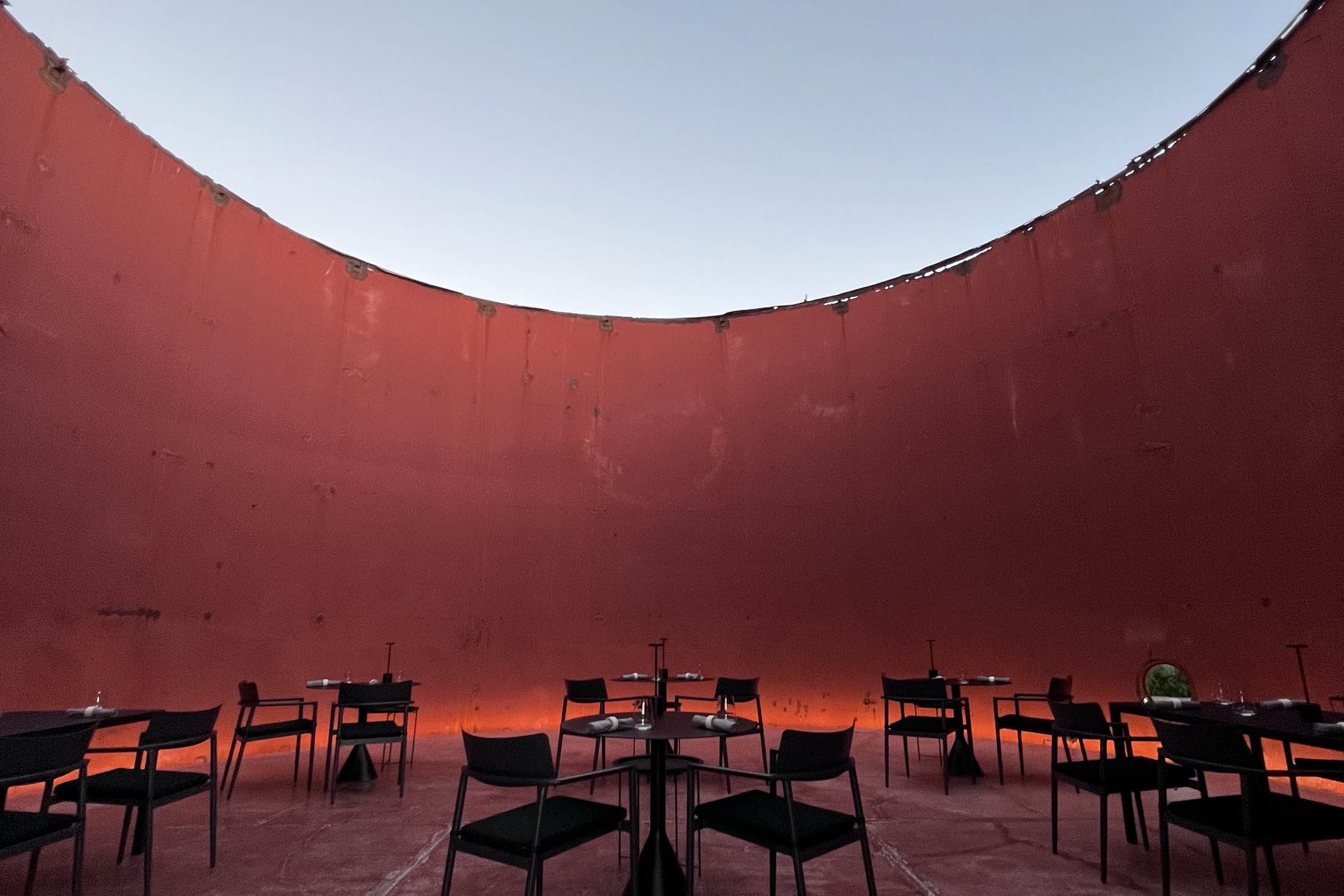
I want to be accurate about what this is, because the photographs do it a disservice in one specific way. It is not a restaurant with a menu that runs every night. It is a platform for events, built around food, wine, art, the region and whatever else is being worked on at the time. Concepts have included one built on fermentation and another that put a dinner together with moving image and a composed soundtrack. Those are examples and not a schedule. Look at the calendar before you choose your dates, and book it separately when you find something.
Under the pergola
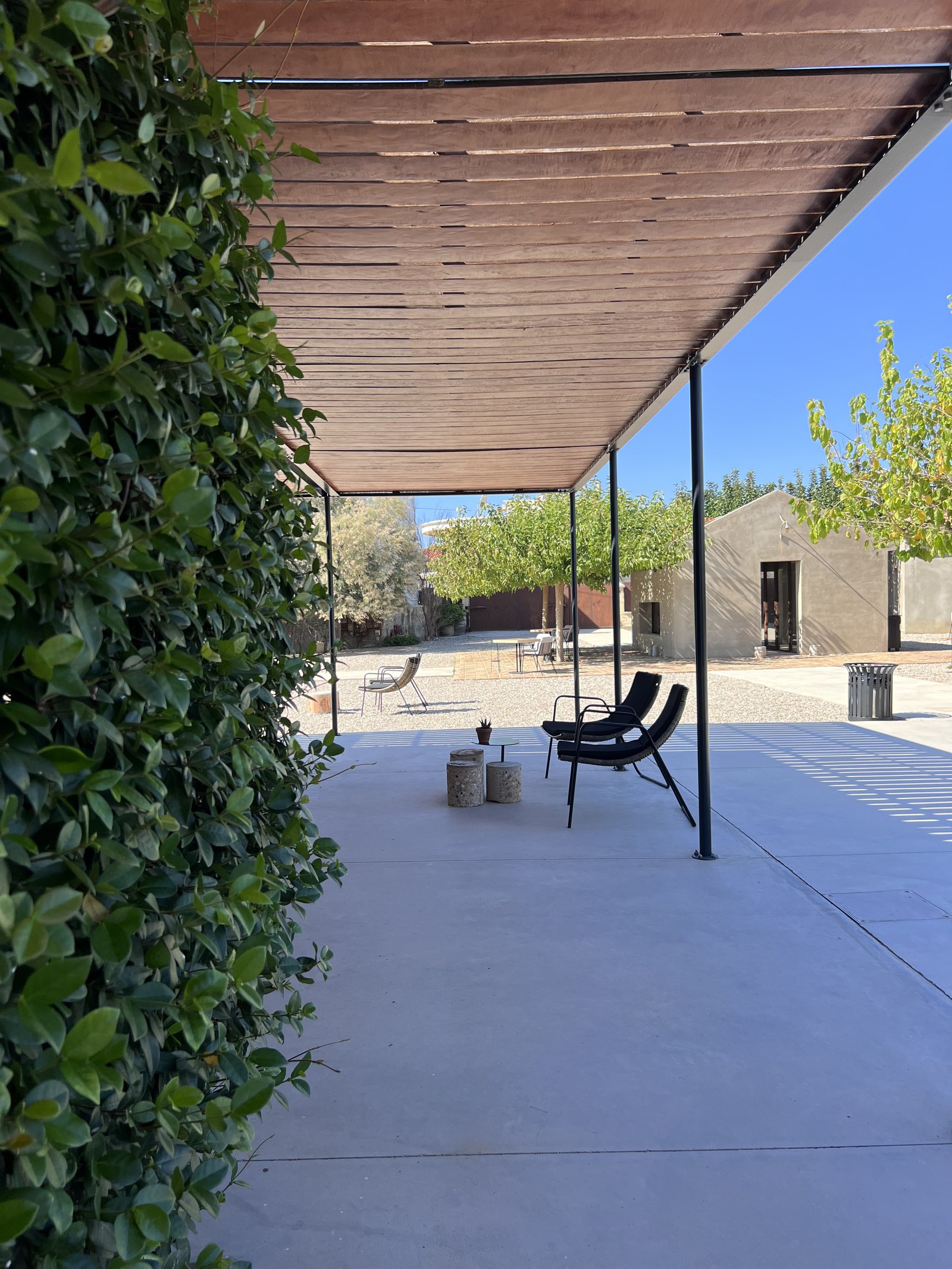
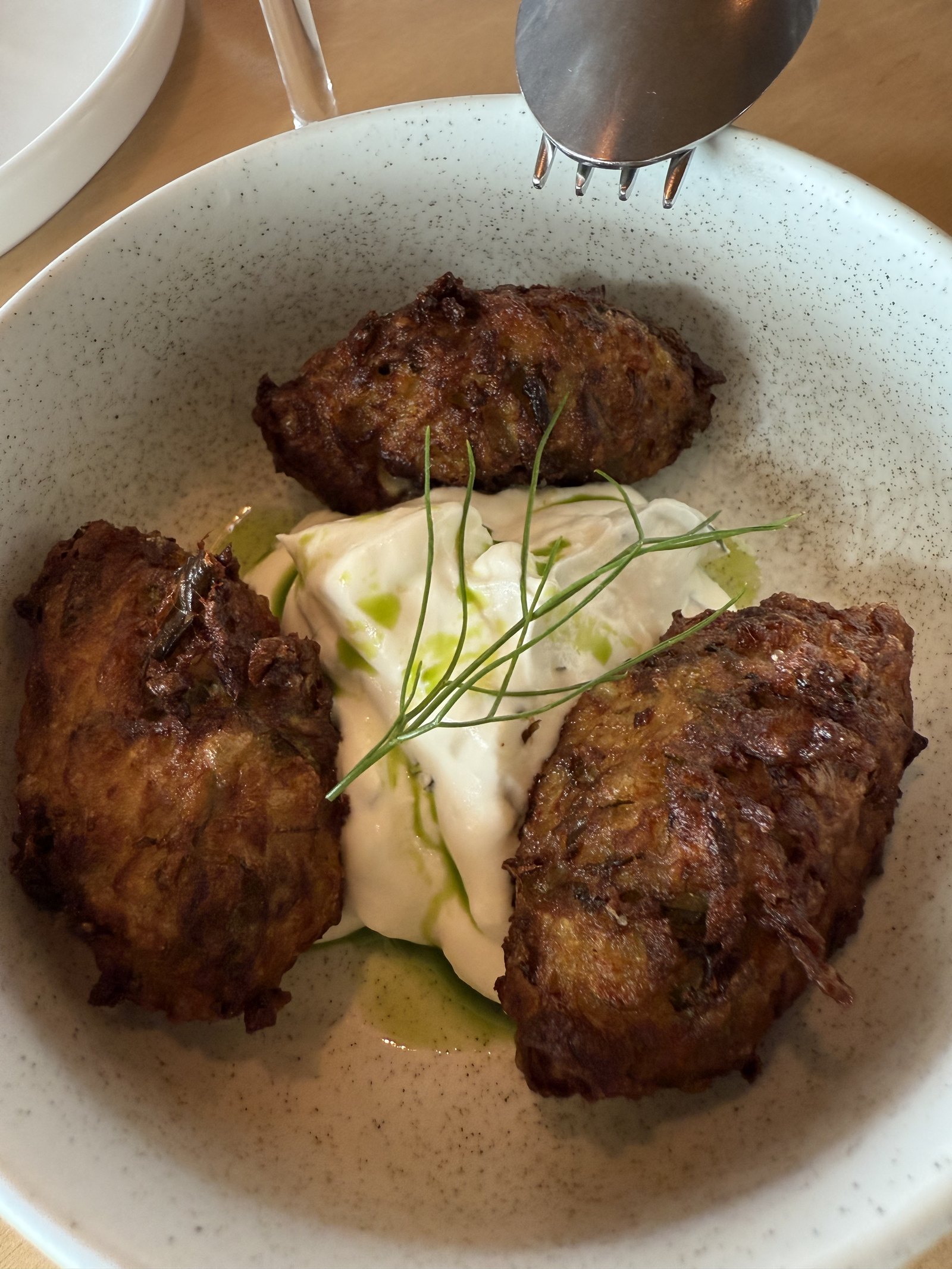
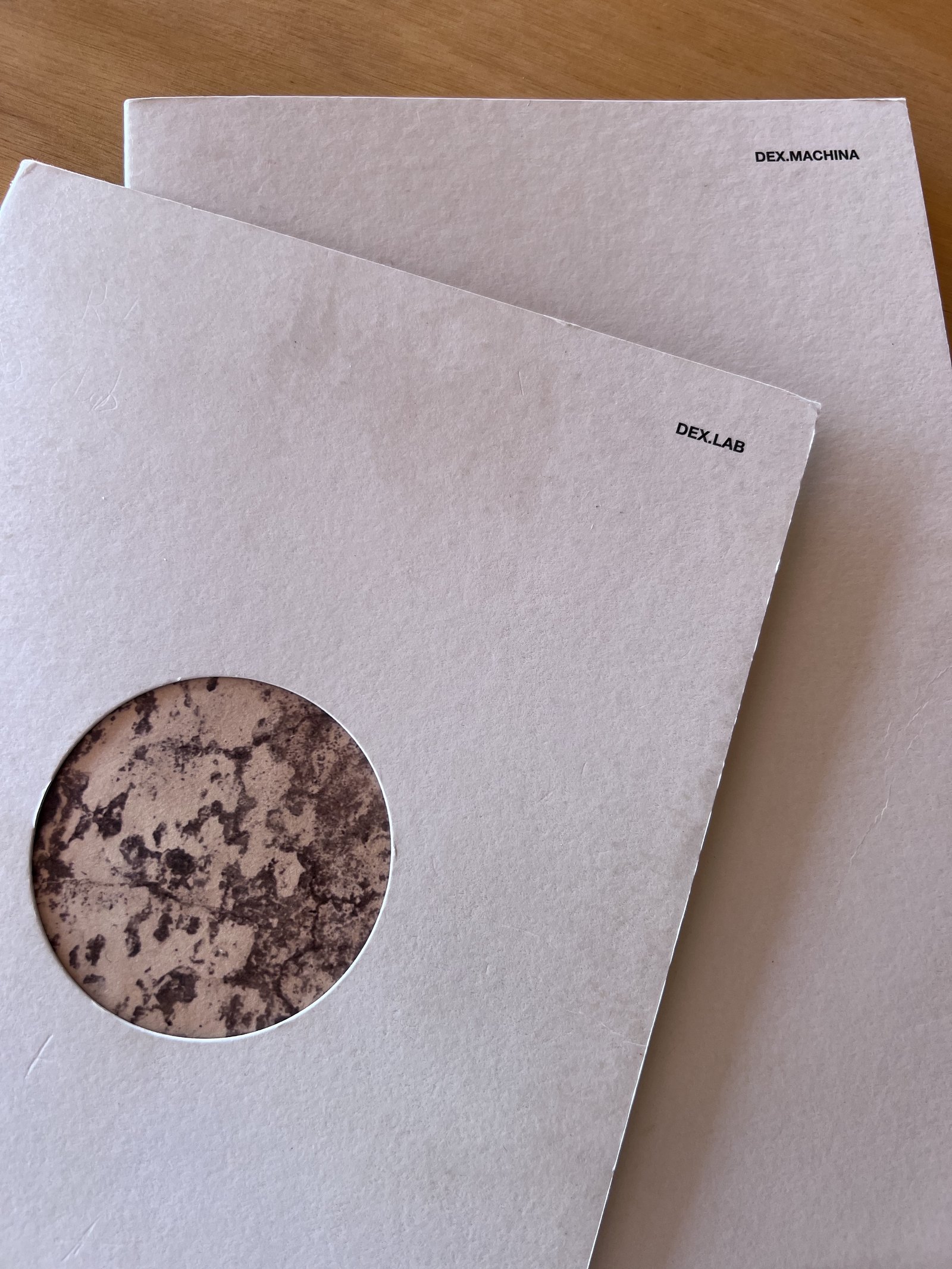
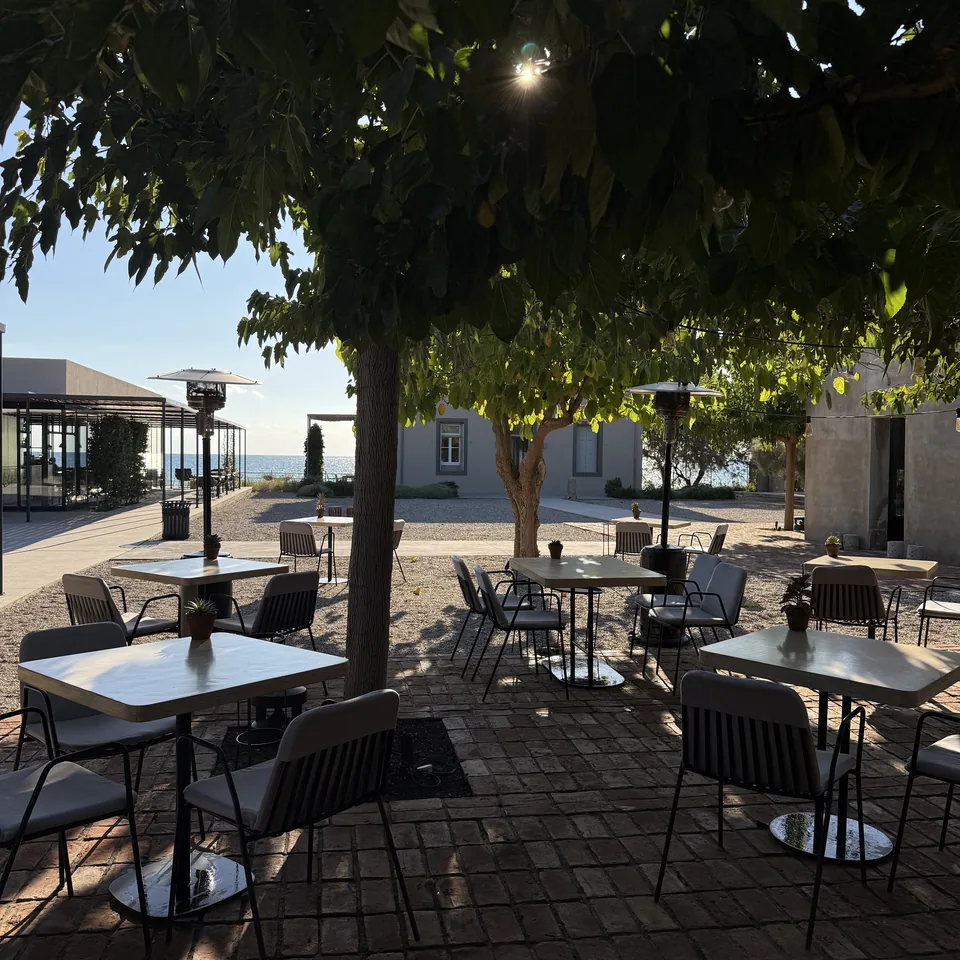
The main restaurant is now dex.Machina and it sits in the old engine room, running out from under the building into a long covered terrace. The hotel calls it a local wine gastro-tavern, which is a more honest description than it sounds: it is a tavern in the sense that matters, open at the sides, loud enough, and built around what is grown nearby. The outside tables stand under lit mulberry trees, which is a direct reference to the trees in the village squares all over this part of Greece.
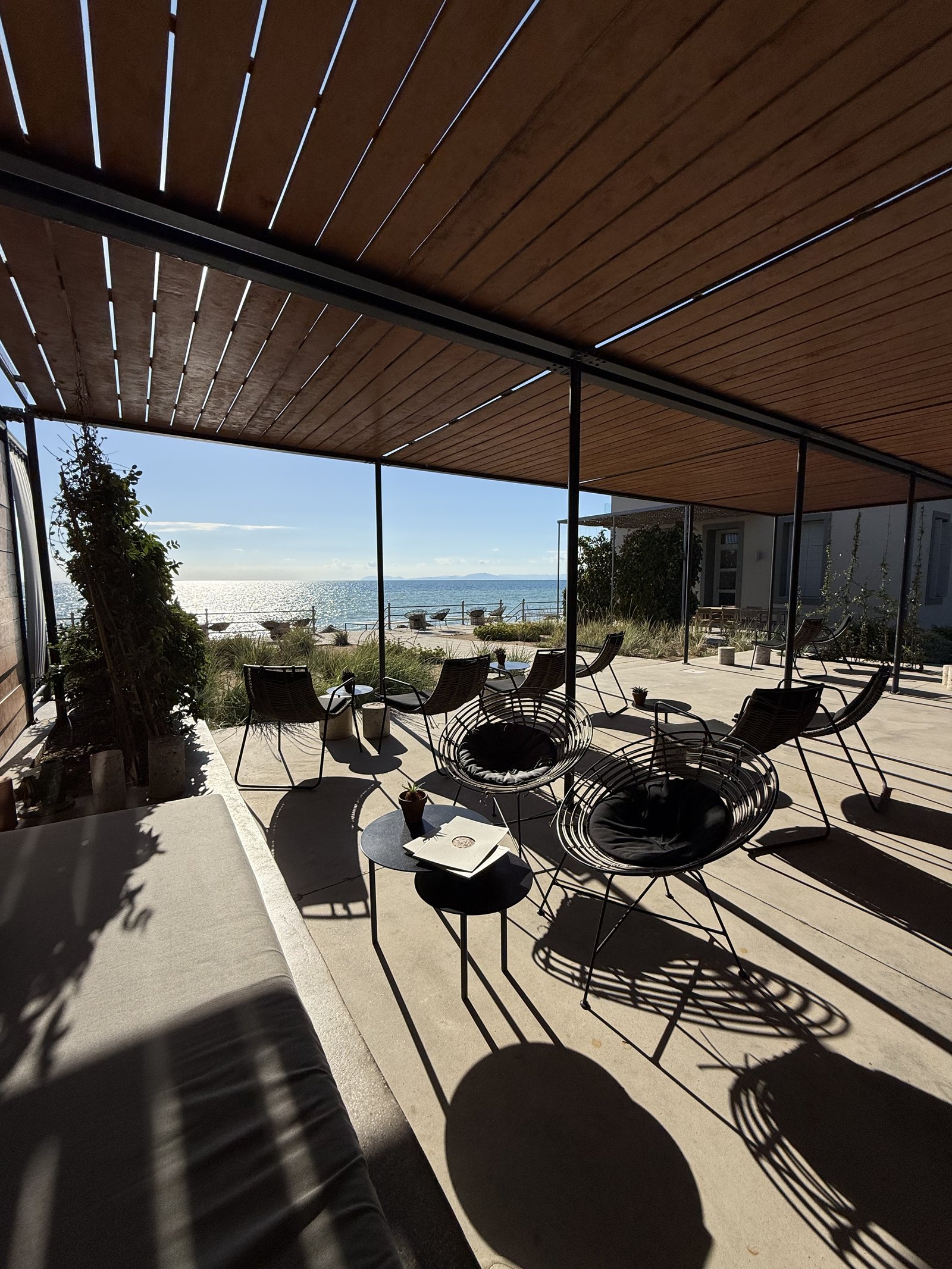
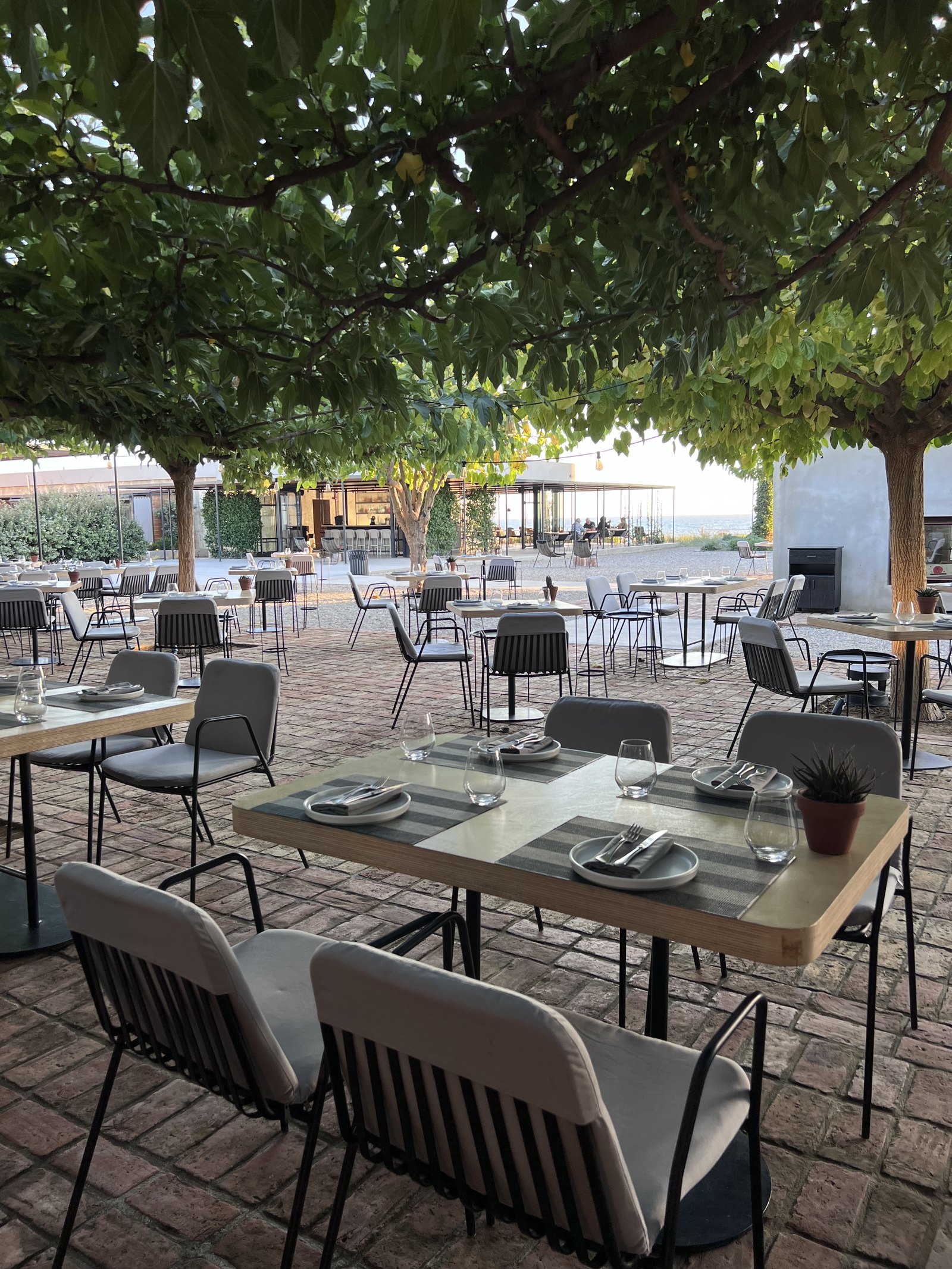
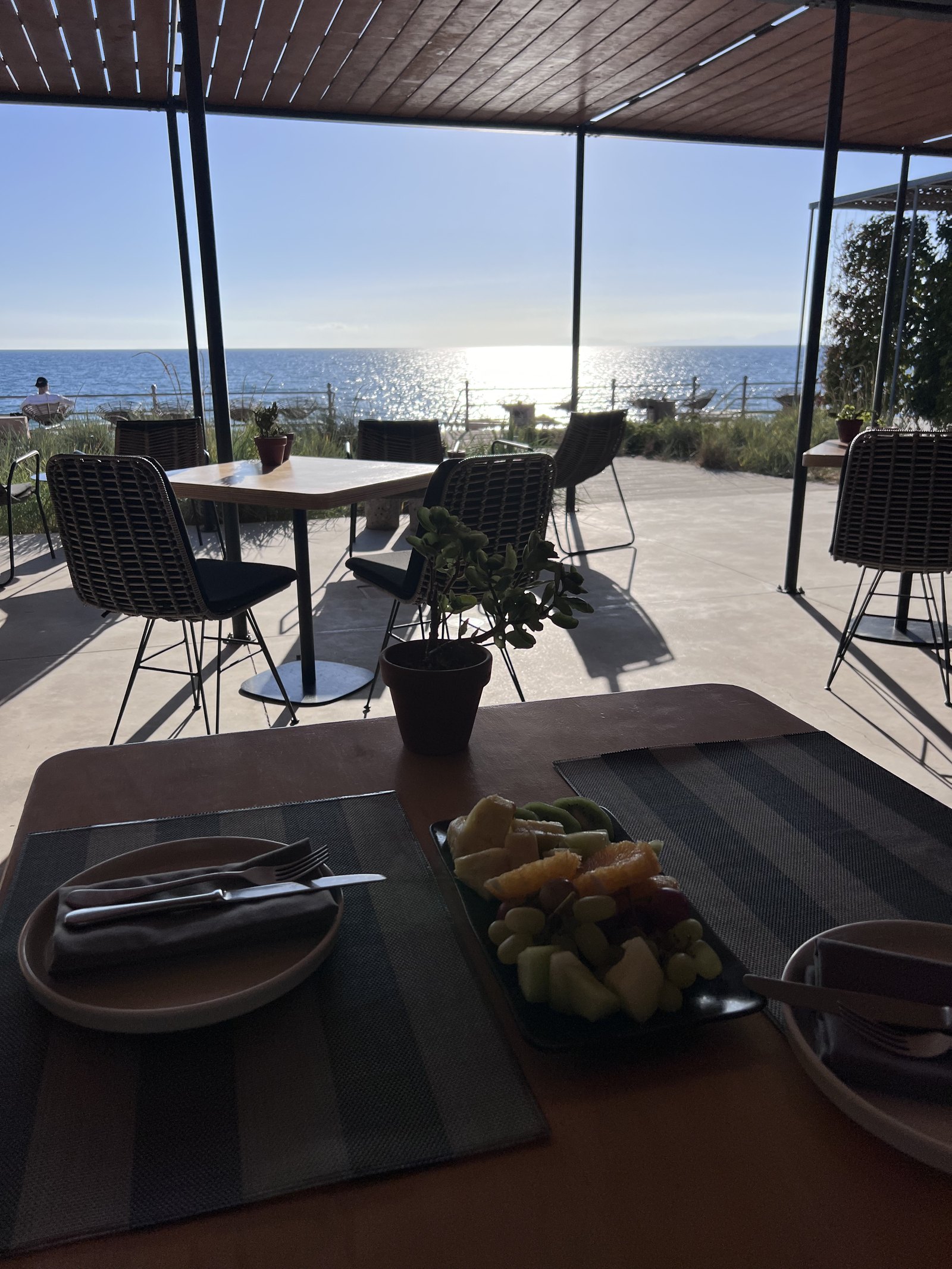
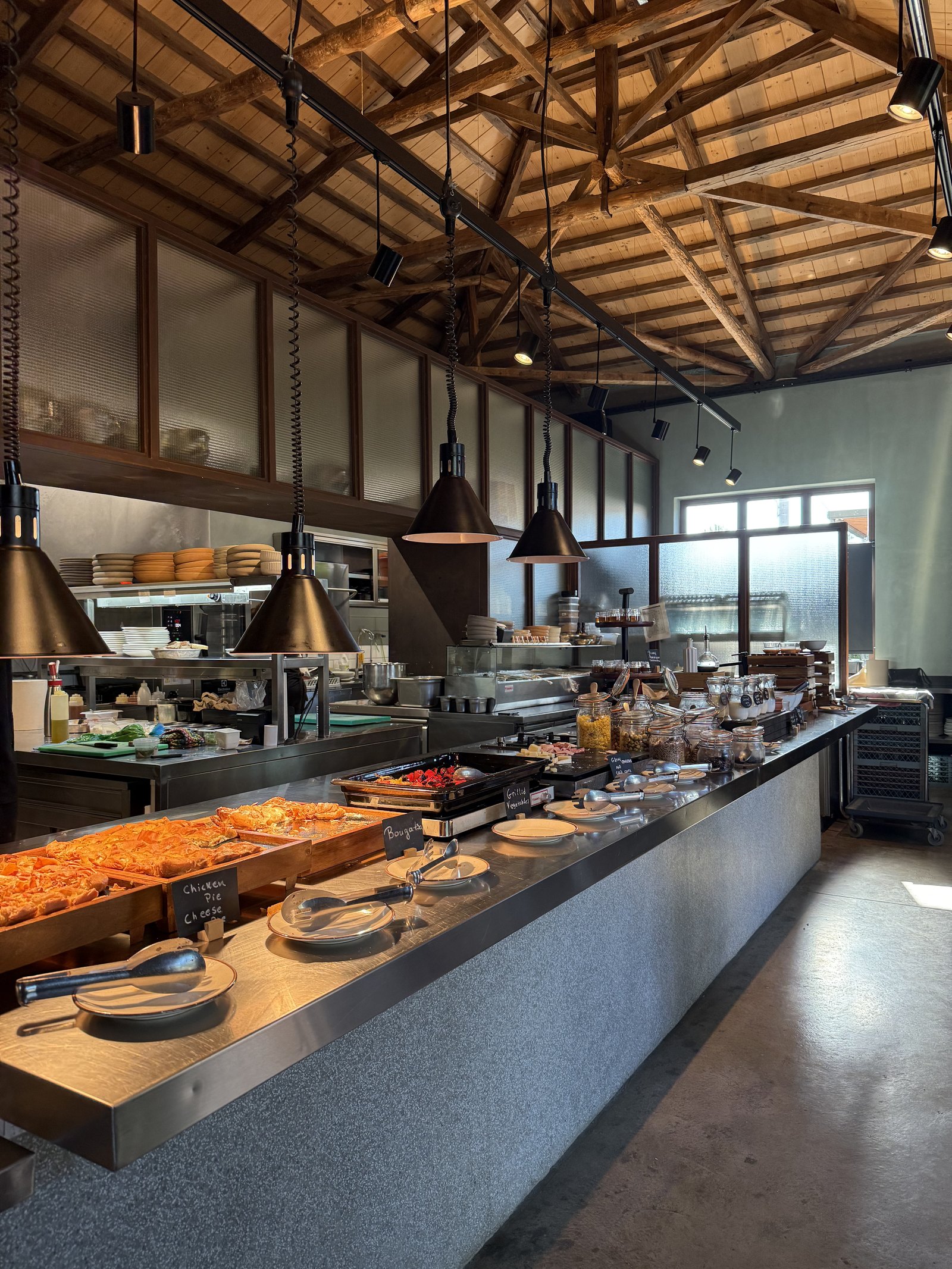
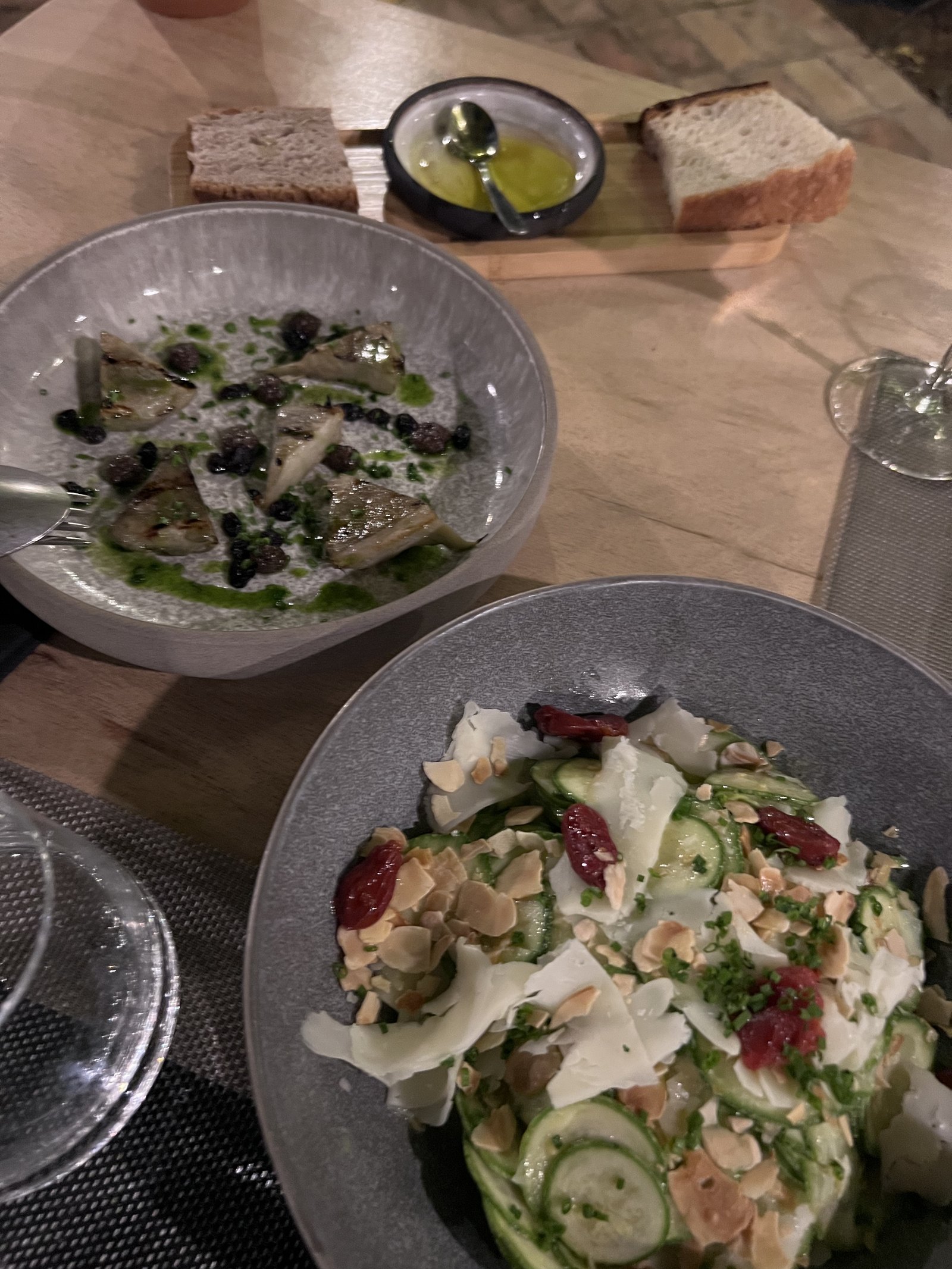
The kitchen works with growers and producers nearby and leans on what is in season, which in a region built on agriculture reads as coherent and never as decoration. The food and the wine here are not a lifestyle department bolted onto a design hotel. They are the same story the buildings are telling.
Why the end of the season
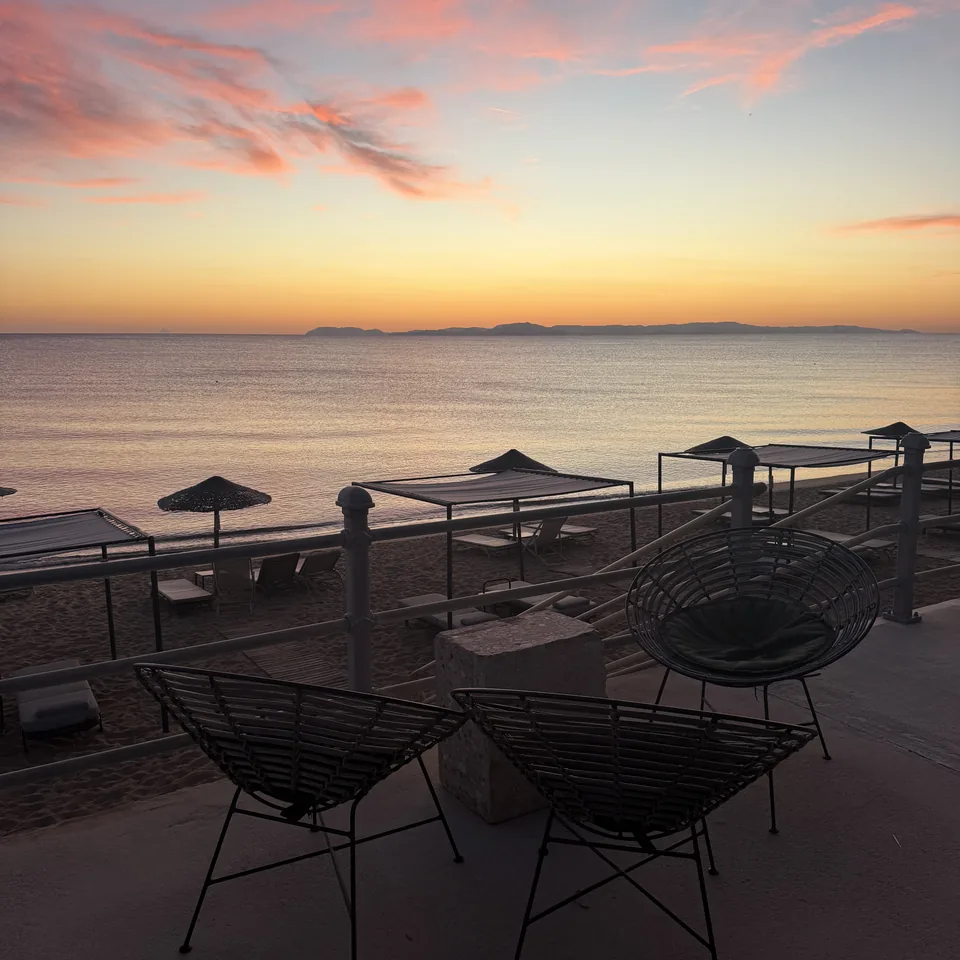
All three of my stays have landed in the same fortnight of the year and I have stopped treating that as coincidence. The building wants low light. Concrete and oxide and rust go flat under a vertical sun and come alive at five in the afternoon, and the circle of sky over the silo is a better colour in October than it is in July. The sea is still warm. The beach belongs to about nine people.
I would not sell you the weather and I would not promise that every part of the operation is running. It does close for the winter and the date moves, so that is a question for the hotel before anything else is decided. Ask what is open, ask what is on, and build the trip on the answers.
It holds One Michelin Key, which the guide gives for a very special stay, and the citation picks out exactly the thing worth picking out: that the conversion was done with a light hand and that the old storage tanks have become the rooms. The award is right and it is also narrower than the place. What is here is a decision to take a building with a strong identity and make it comfortable without removing the reasons it was interesting. That is also, incidentally, the most serious thing it does environmentally: a site that was already standing was kept standing, with reclaimed material and limited new construction, which is a real principle and still not a claim that a hotel has no impact.
Advisor's perspective
Come for the building and the sea in the same week, and come at the end of the season if you can.
Five things to settle before you pay. Fix the suite category and what it faces, in writing, if the sea matters to you. Check the closing date the moment you look at late September or October. Ask which restaurants and which beach services will be running on your dates. Reserve dex.Silo.01 separately if anything in the programme falls in your window. And book a beach gazebo, or any private dining, well ahead.
One more thing worth knowing: Ancient Olympia is about half an hour away. It is unusual to be able to put a morning in a site like that against an afternoon on a beach like this one, and it stops the hotel being a sealed destination you never leave.
Dexamenes is not on Classic Travel, so there is no programme rate here and nothing to attach to a booking. It comes through me. I write to the hotel, name your dates, the category and the outlook, ask what is open and whether anything is happening in the silo, and come back to you with the answers before anything is confirmed.
Before you book
The questions people send me about Dexamenes.
- Where is it, and how do you get there?
- On Kourouta Beach, on the western coast of the Peloponnese, facing the Ionian. It is a drive: roughly three and a half to four hours from Athens airport on the motorway, and much less from Patras if you are coming off a ferry from Italy. There is no shortcut and the drive is a pleasant one. I would hire a car whatever you plan to do, because the hotel sits on a working stretch of coast and you will want to get out of it at least once.
- Which suite should I book?
- Decide by outlook before you decide by size. The beachfront WineTank Suites put you closest to the sea and that is what most people come for. The courtyard ones face the internal landscape of the old factory, which is genuinely beautiful and is a quieter, more inward stay. Backyard is a third thing again, and the Seaview ChemLab suites are converted laboratories and not tanks. Every category gets you the concrete, the timber screen and the sliding glass. Only some of them get you the sea. Ask for the number, ask what it faces, and get the answer in writing.
- Can you actually eat inside the silo?
- Sometimes. dex.Silo.01 is a pop-up platform and not a nightly restaurant, and its programme has run concepts built around fermentation, and others that put a meal together with moving image and a composed soundtrack. Those are examples of what has happened there and not a schedule. So the honest answer is that you should look at the calendar before you choose your dates, and book the silo separately once you know. If nothing is running, the silo is still worth walking into, and you can usually stand in it.
- Is this an architecture hotel or a beach hotel?
- Both, and that is the point of it. Kourouta's sand is directly in front of the property, with umbrellas, sunbeds and gazebos, light food and drinks served down there, and a beach bar built in the same language as the rest. The gazebos need reserving. The sea is not an excursion and there is no shuttle to anywhere. On my visits it has been the combination that made the stay: either half would be interesting on its own, and together they give the place an identity nothing else on this coast has.
- When does it close, and is late season a good idea?
- Check the closing date with the hotel the moment you start planning anything in late September or October, because it does close for the winter and the exact date moves. Late season is the time I choose, for the light and the emptiness and the warmth still in the water. The trade is that not everything runs. Ask specifically which restaurants are open, what is happening on the beach, and whether anything is scheduled in the silo, so your week is built on what will actually be there.
- Can you book it through Classic Travel?
- No. The Greek listing on the portal prints every property Classic Travel sells in the country on one page, 104 of them, and Dexamenes is not on it. There is no agent rate here, no credit and no upgrade in the programme sense. It books through me directly: I write to the hotel, name your dates, the suite category and the outlook, ask what is running and whether the silo has anything on, and come back to you with the answers before anything is confirmed.
Something else you want to know? Write to me and I will answer it here.
Arranged by hand
The room, the dates, the rest of the list.
Write in English, Italian or Spanish. I answer personally, usually within a day.
Let Nik arrange it →