
Inspection · Kasbah, Marrakech, Morocco
La Sultana Marrakech
Four riads joined into one house inside the walls of the Kasbah, two minutes from the Saadian Tombs, where the day outside is loud and the day inside is not.
Book La Sultana with me, through Classic Travel Register first, free of charge, and the rates and partner benefits open up, with the account linked to Wheresnik. Tell me your dates before you book and I will say which room to ask for here, and which week I would avoid.Marrakech does not do calm. The city is a negotiation from the moment you are inside the walls, and that is most of why people come. La Sultana sits in the Kasbah, which is the quiet quarter, and what it offers is the other half of that bargain: four riads joined into a single house of twenty-eight rooms, with a door that closes behind you and courtyards on the far side of it. The hotel holds one Michelin Key. What it holds for a guest is the thing no plaque measures, which is the drop in volume between the lane and the first fountain.
The Kasbah, and getting in
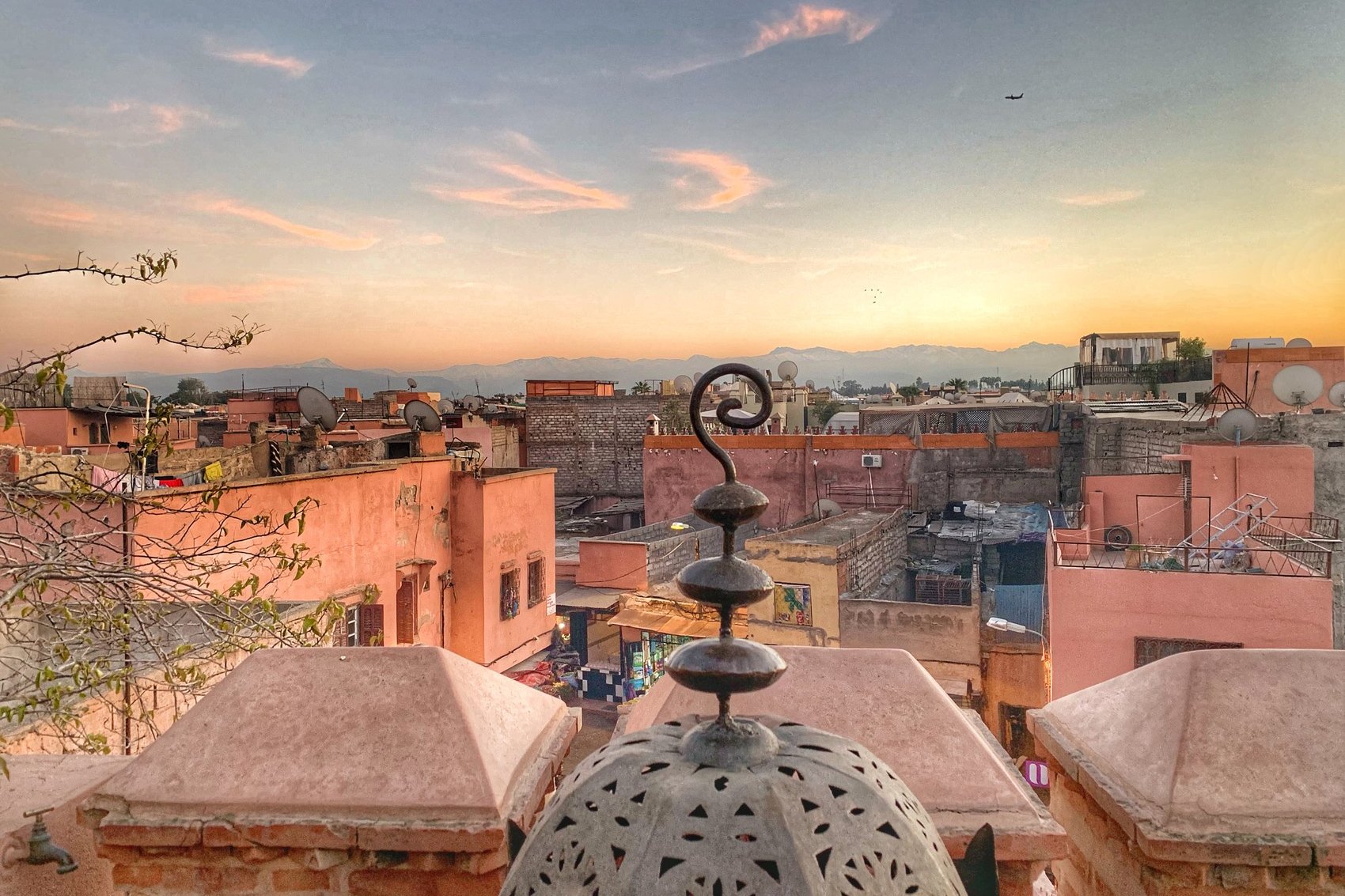
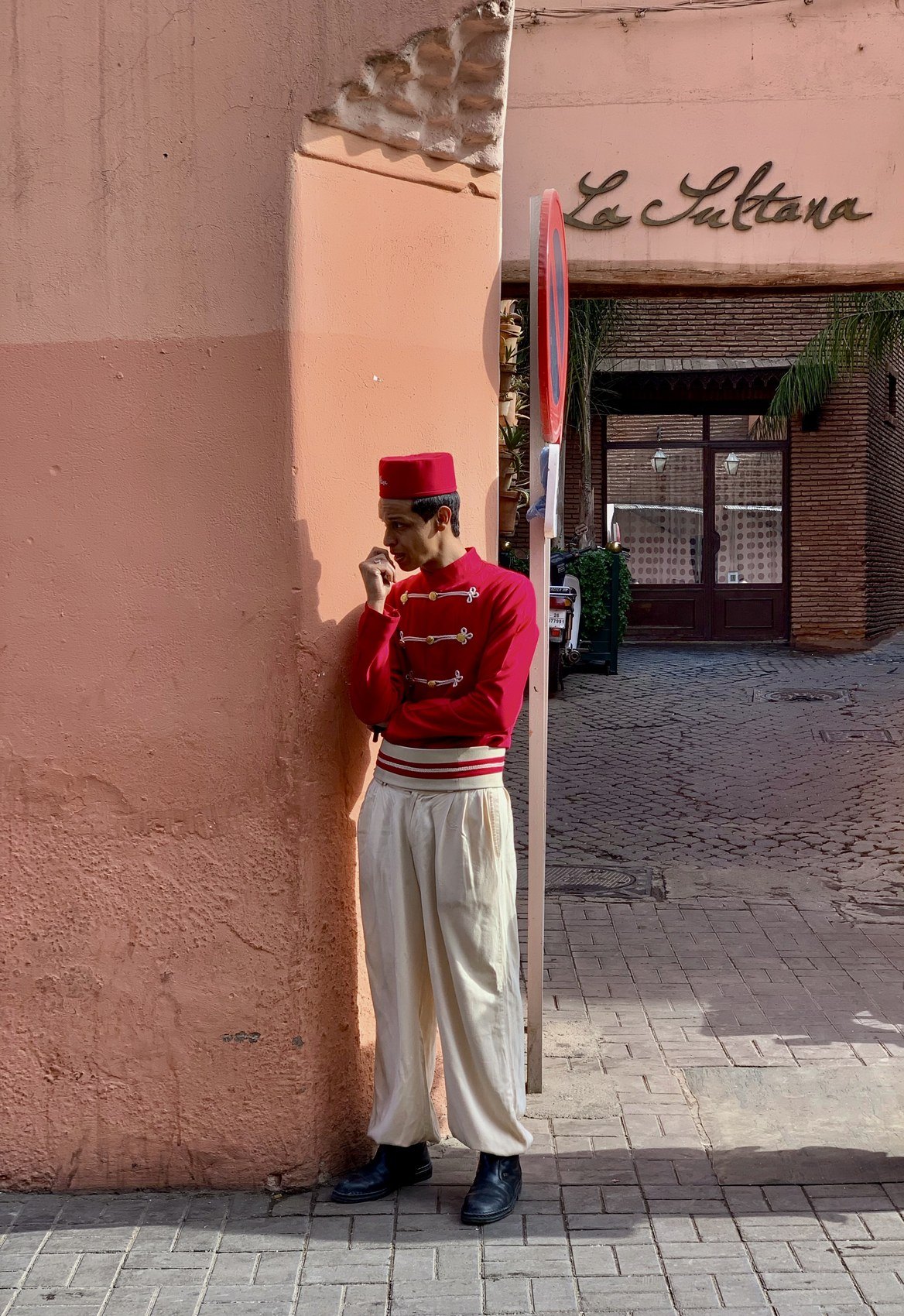
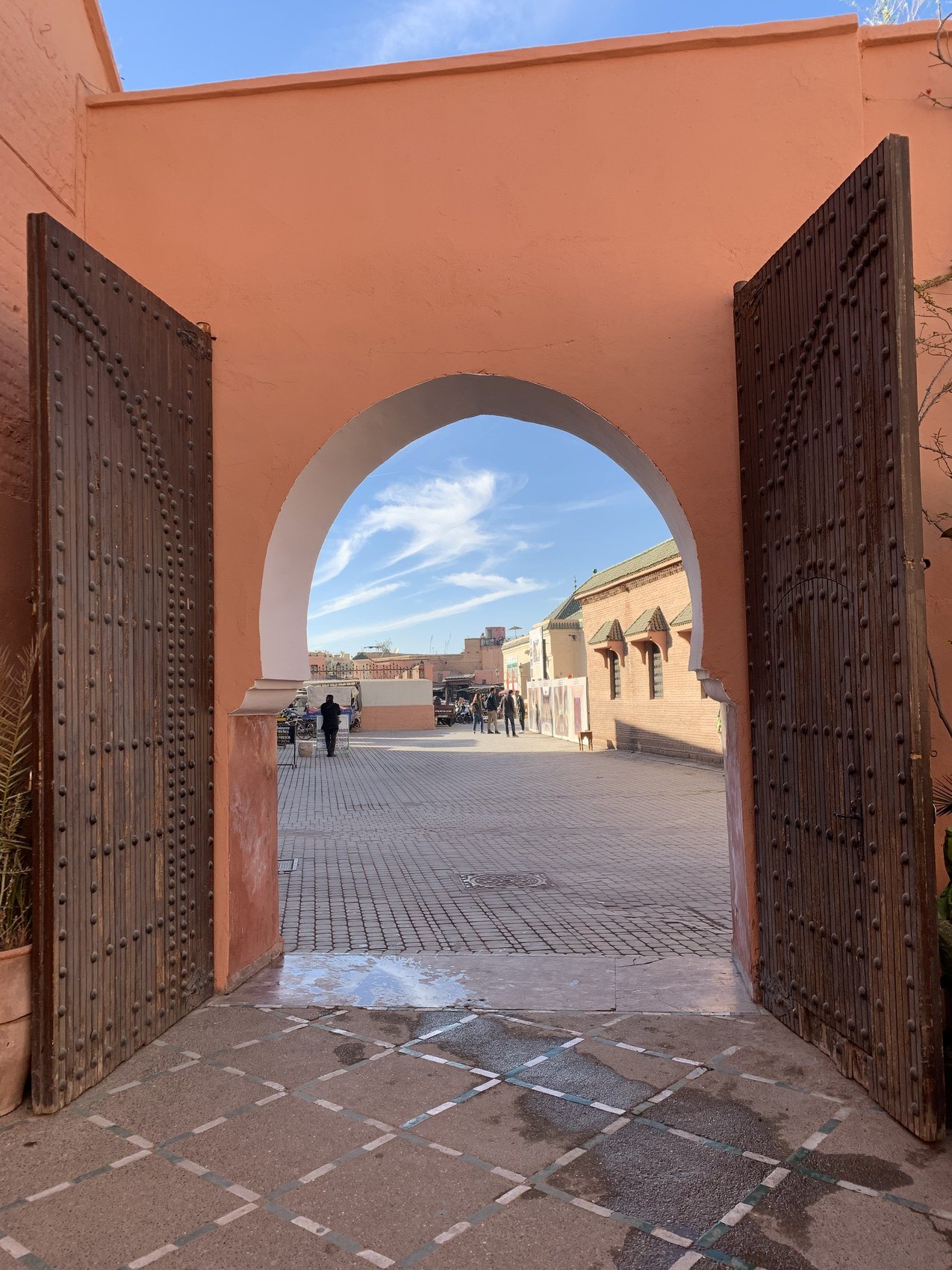
The Kasbah is inside the medina walls, a couple of minutes from the Saadian Tombs, within reach of the Royal Palace and the Bahia Palace, and about ten minutes on foot from Jemaa el-Fna. The hotel runs an airport transfer and on the first day I would take it. The lanes tighten as you approach and knowing which gate to stop at is worth something.
Then there is the question I am asked more than any other about this city, usually by Americans and usually first: is it safe. In the Kasbah, in my experience, yes. I walked back after dark on every evening of the stay and thought about it on none of them. The quarter is residential and quiet and the hotel sits in the middle of it.
Four riads, one house
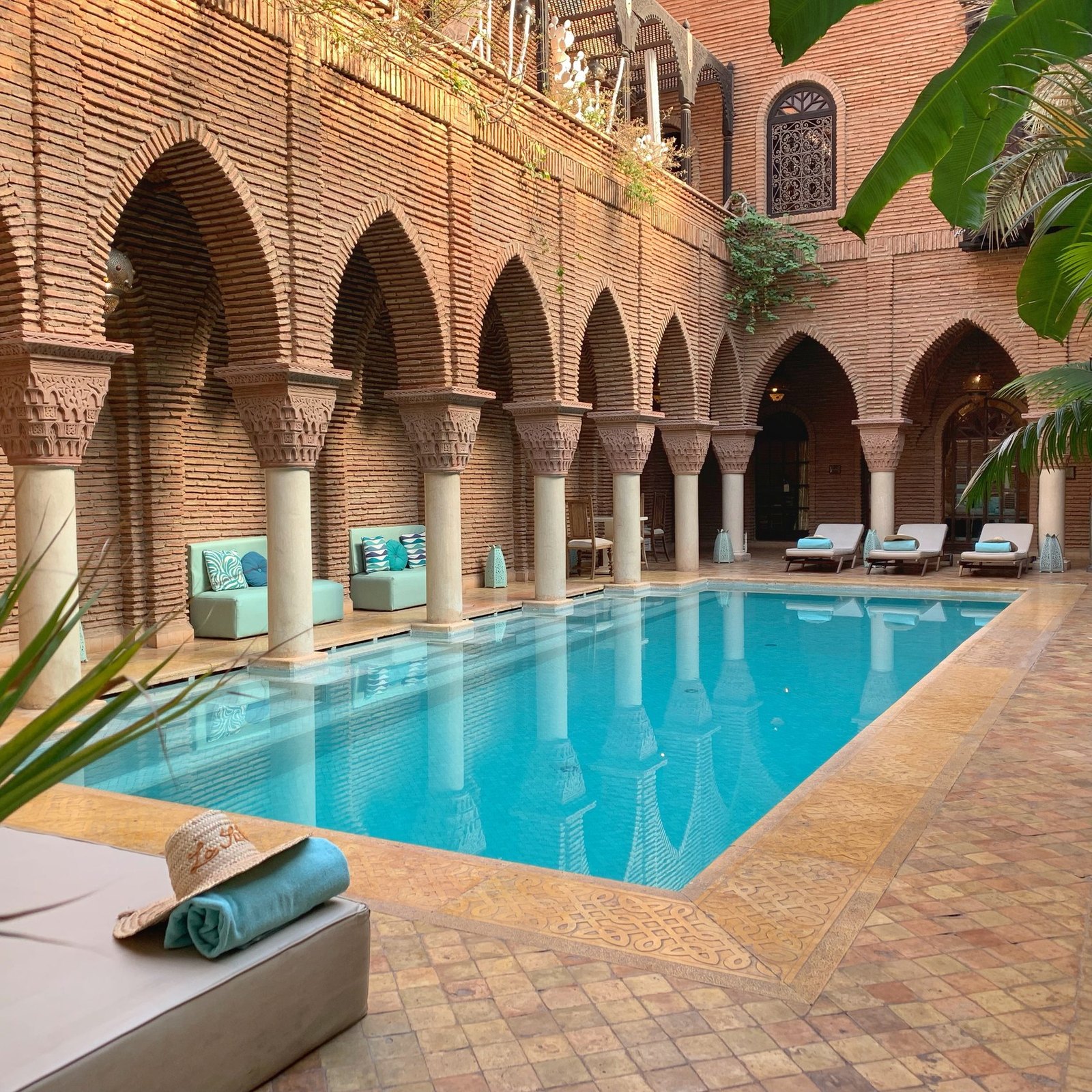
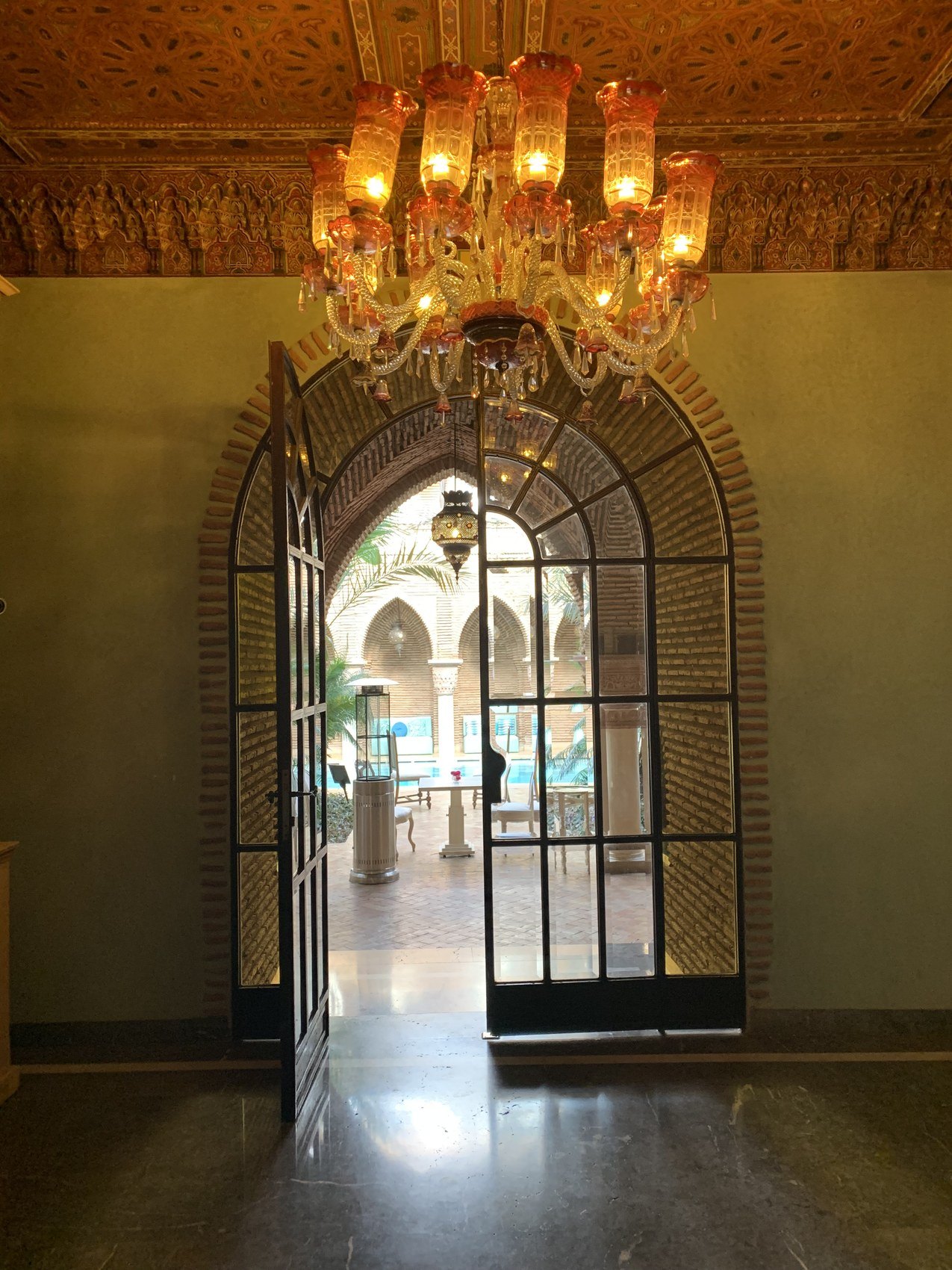
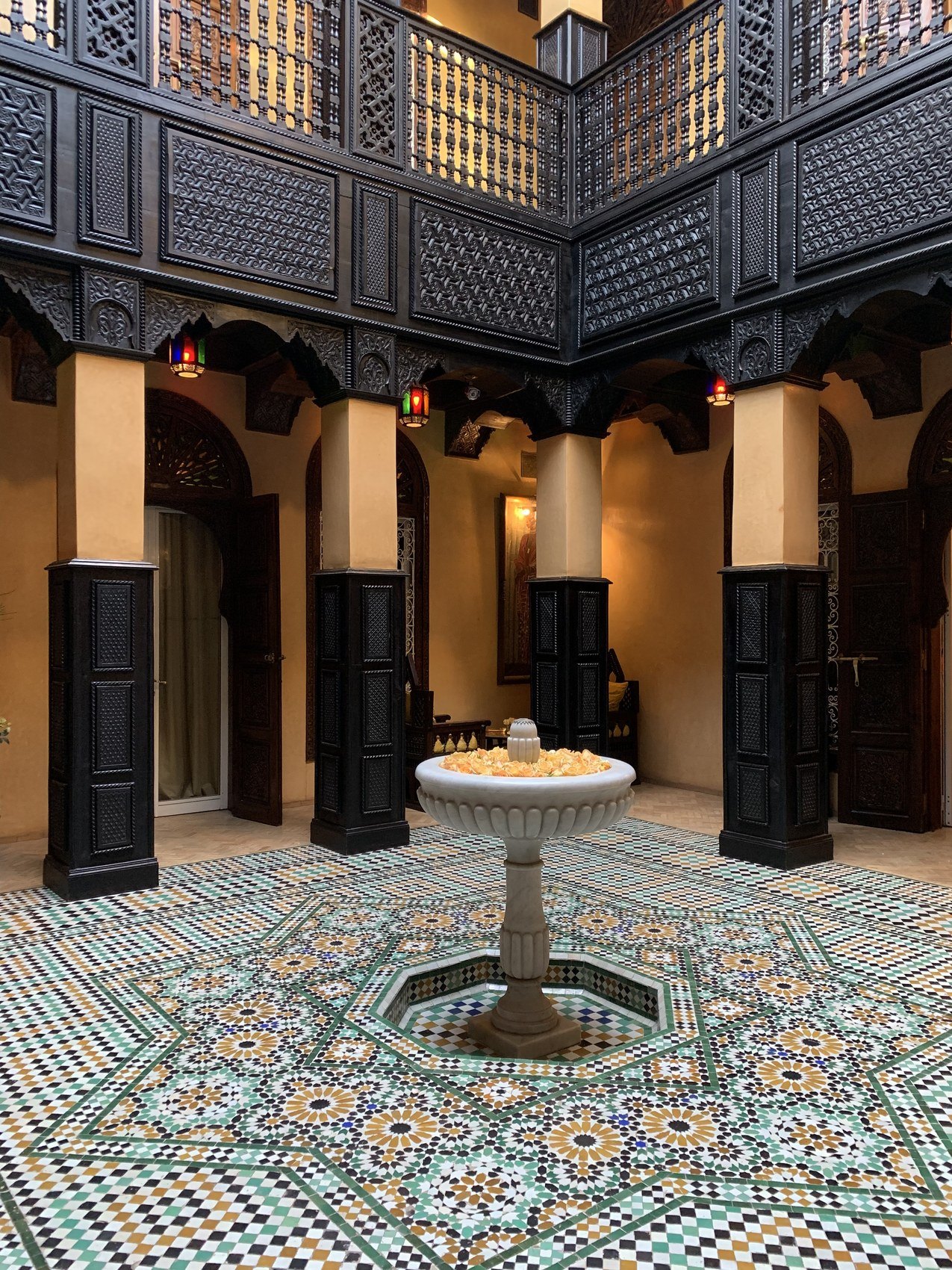
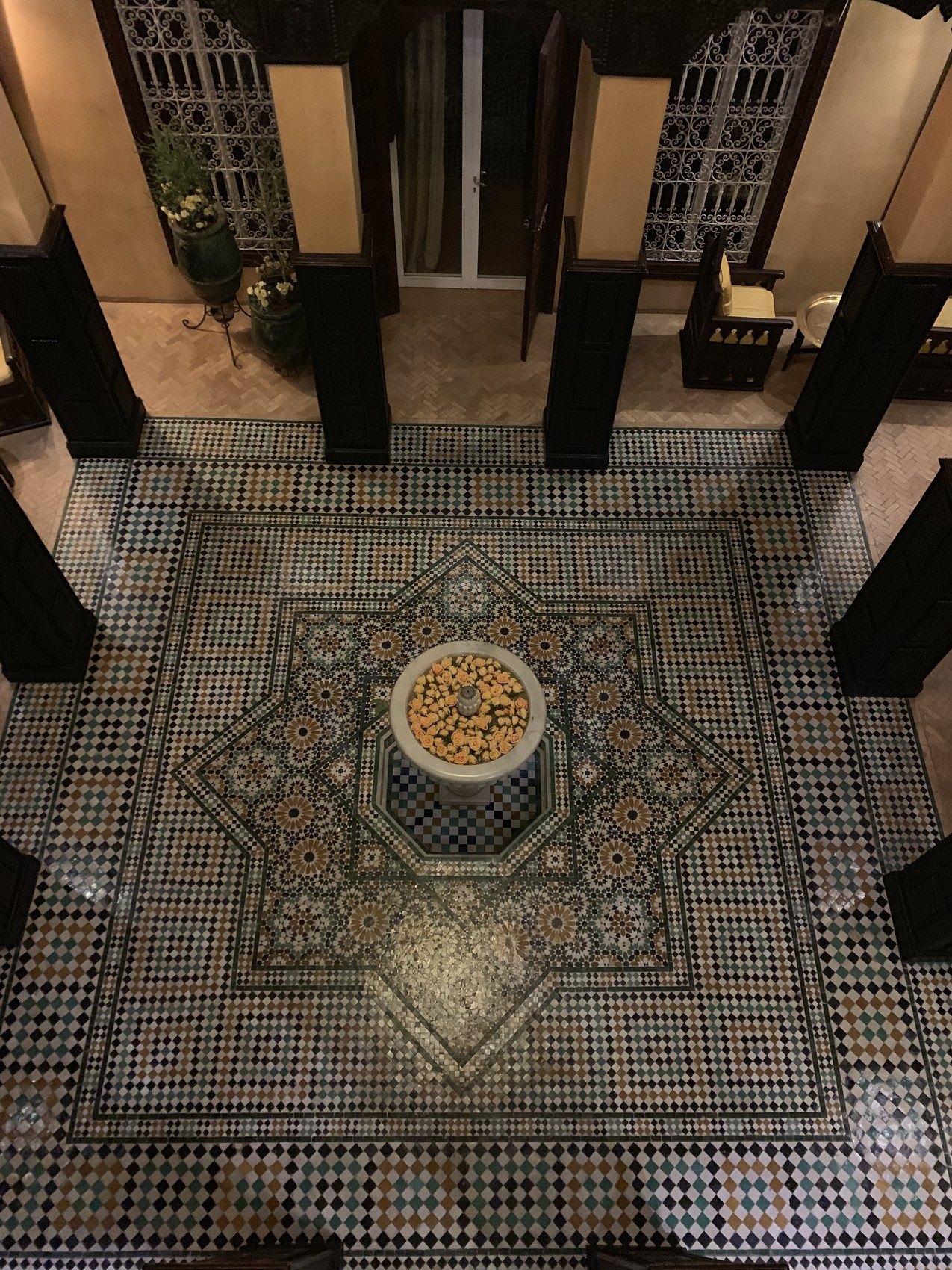
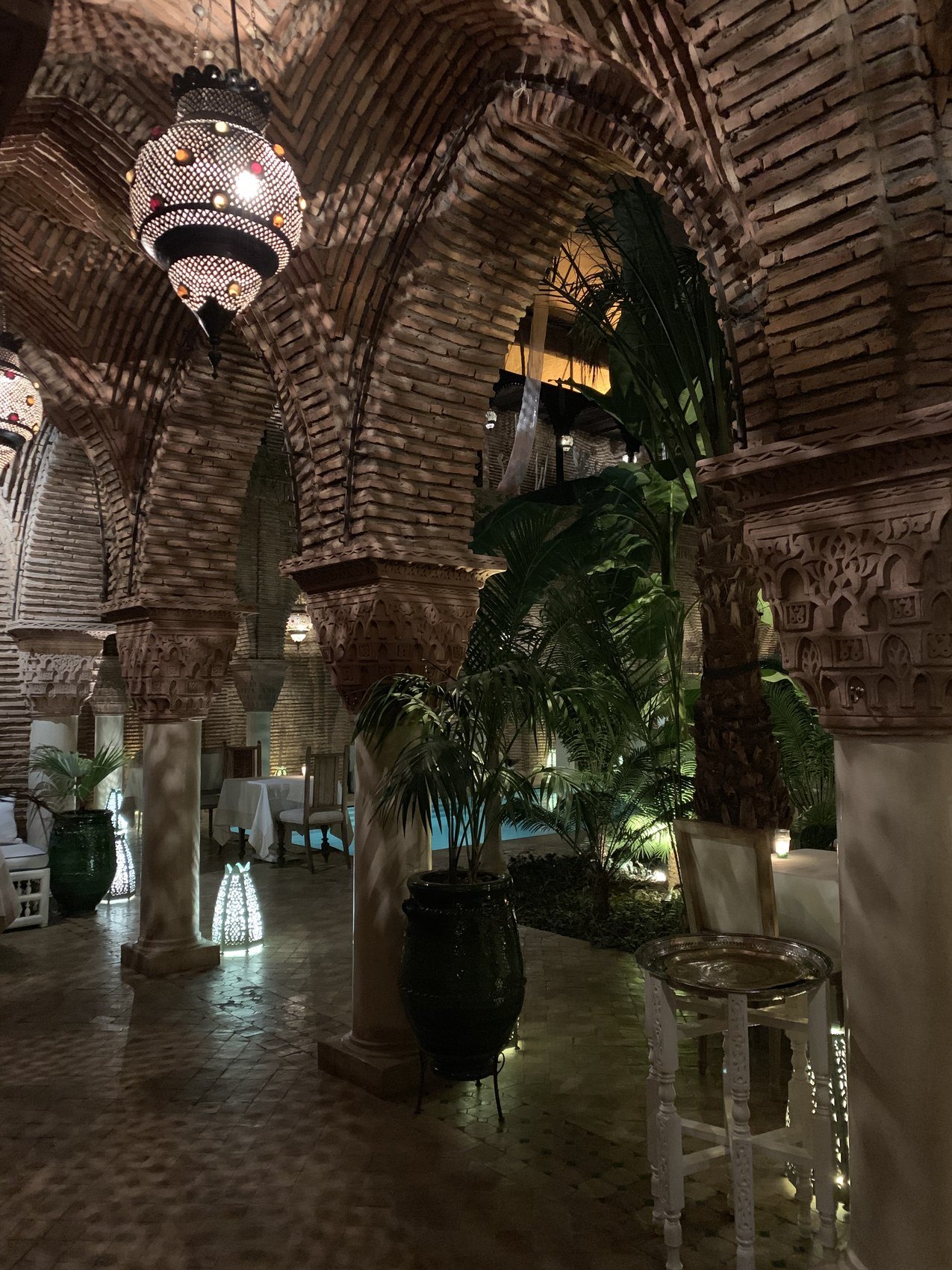
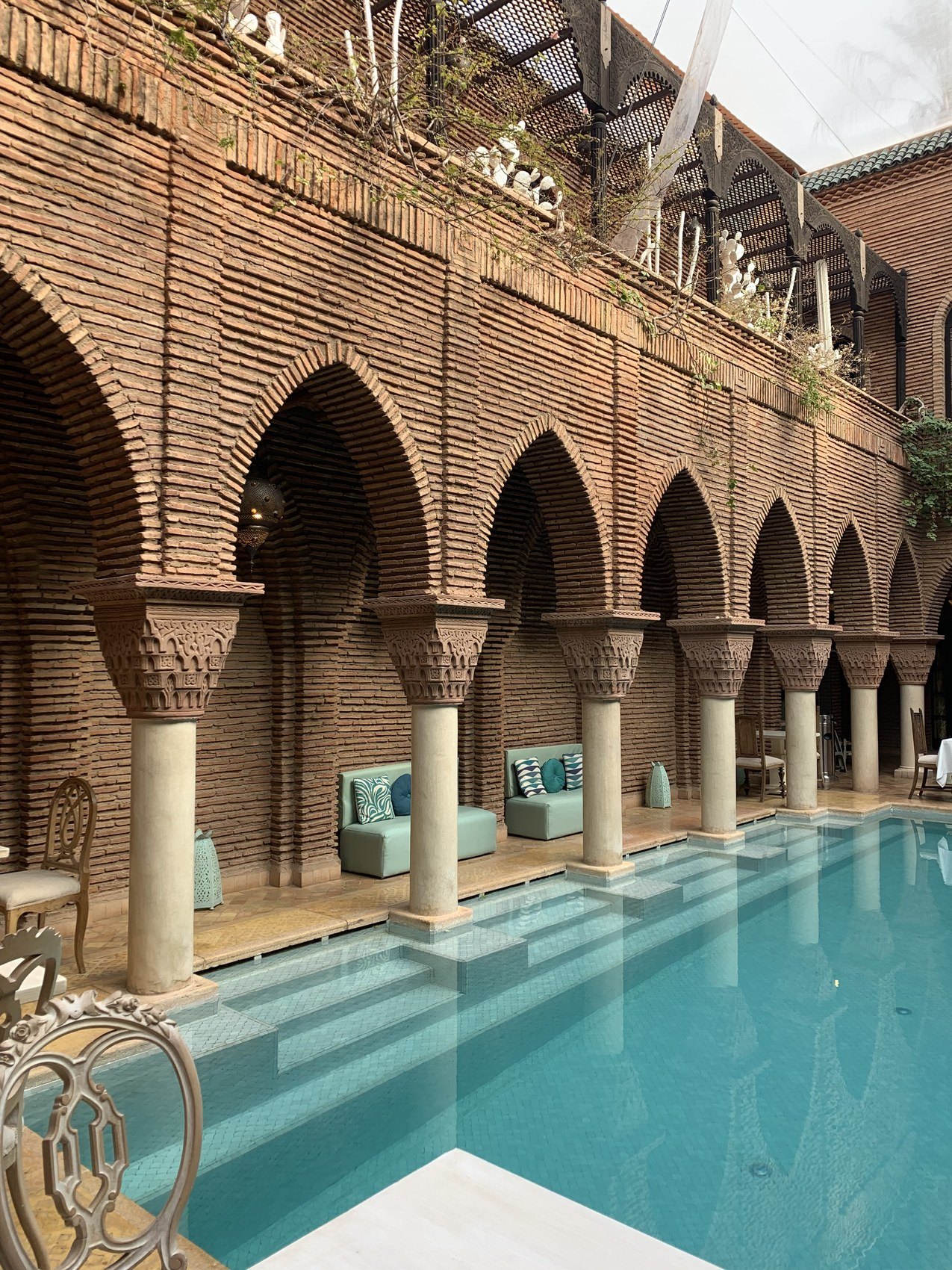
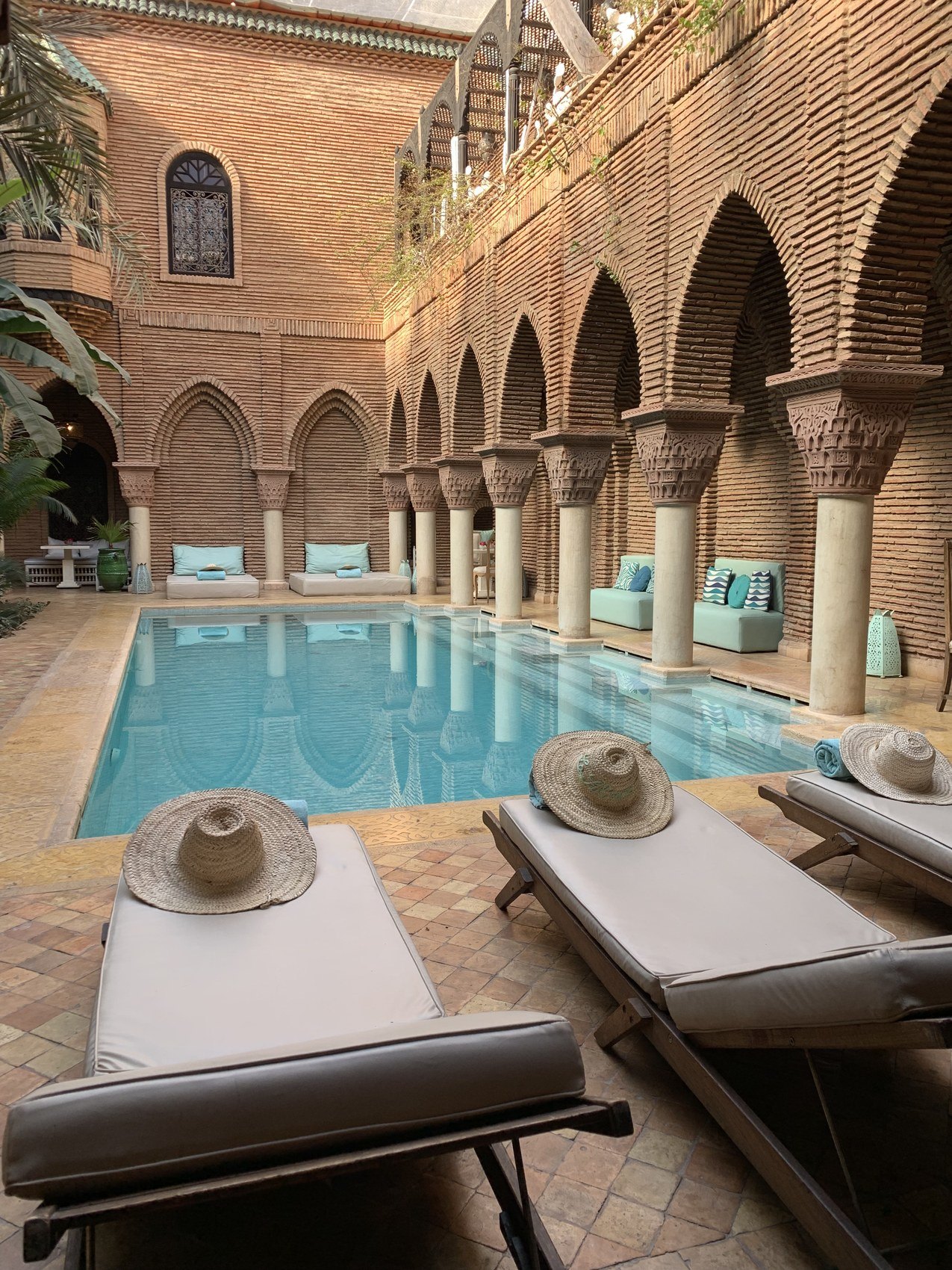
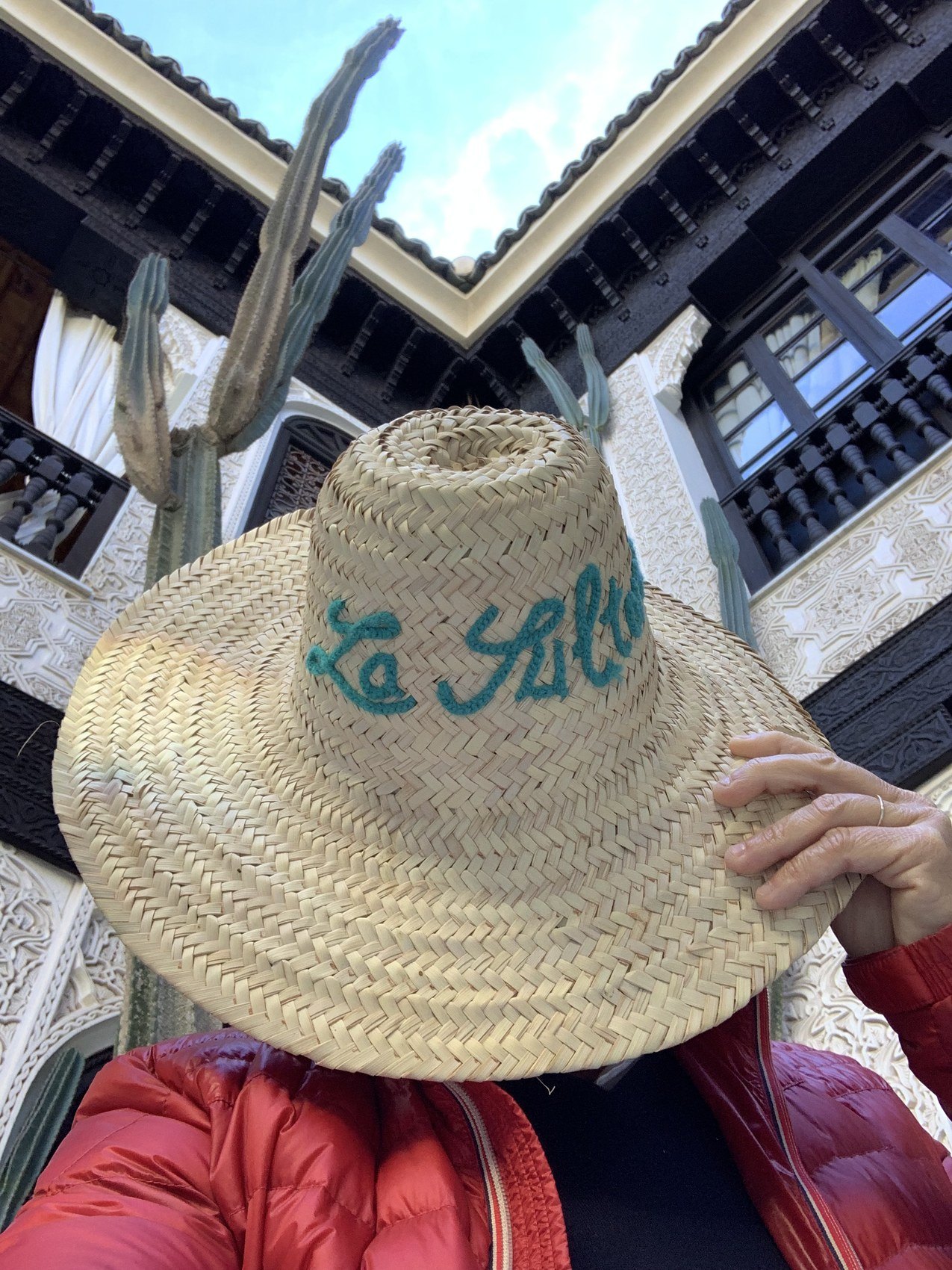
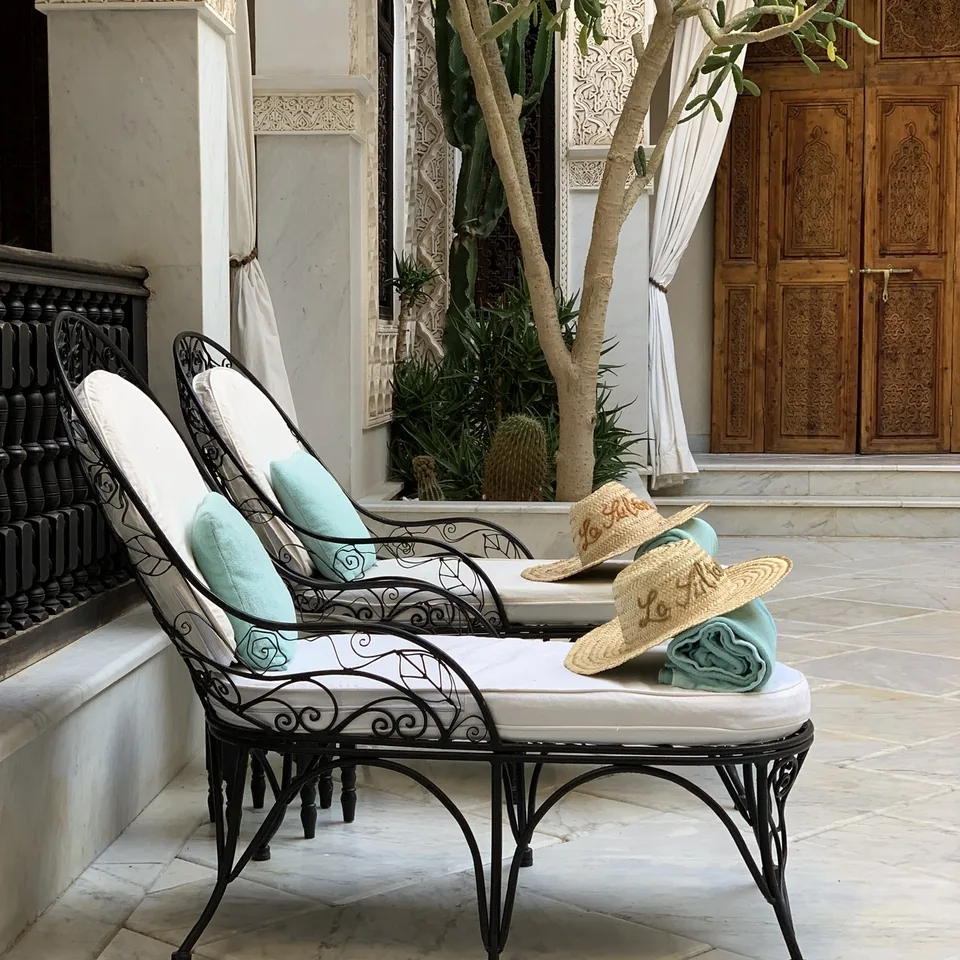
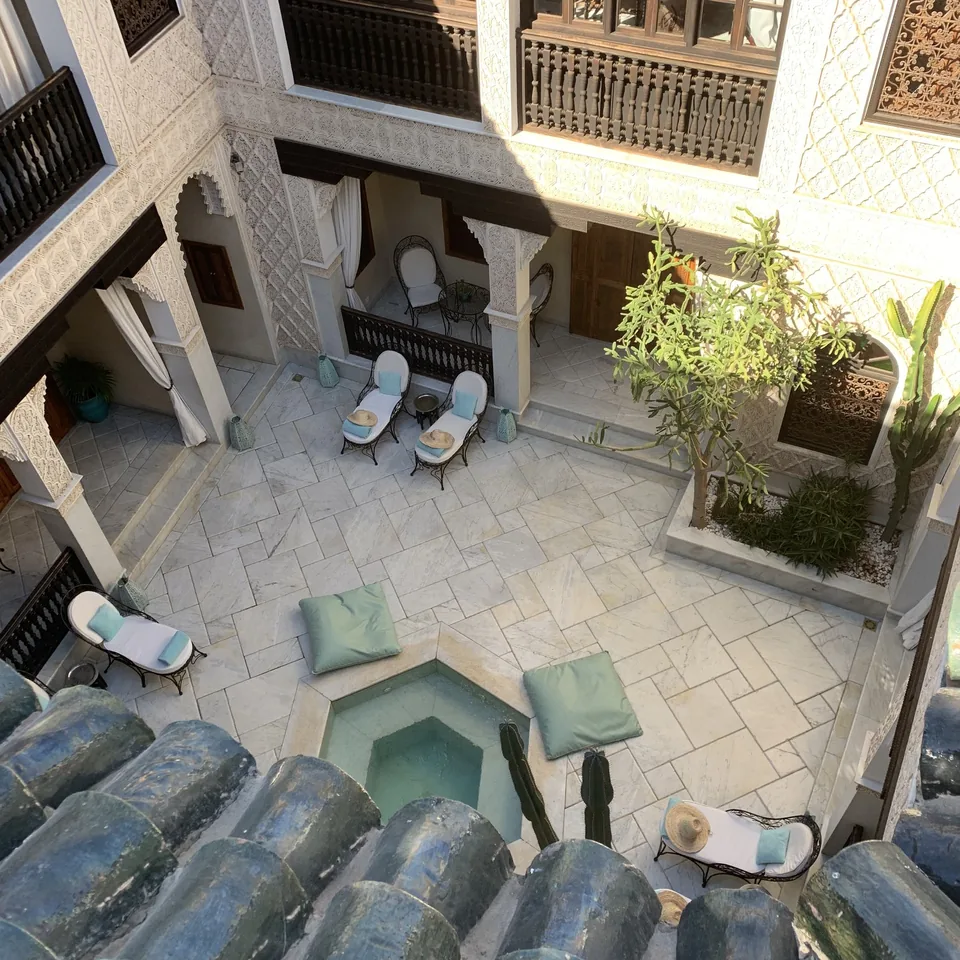
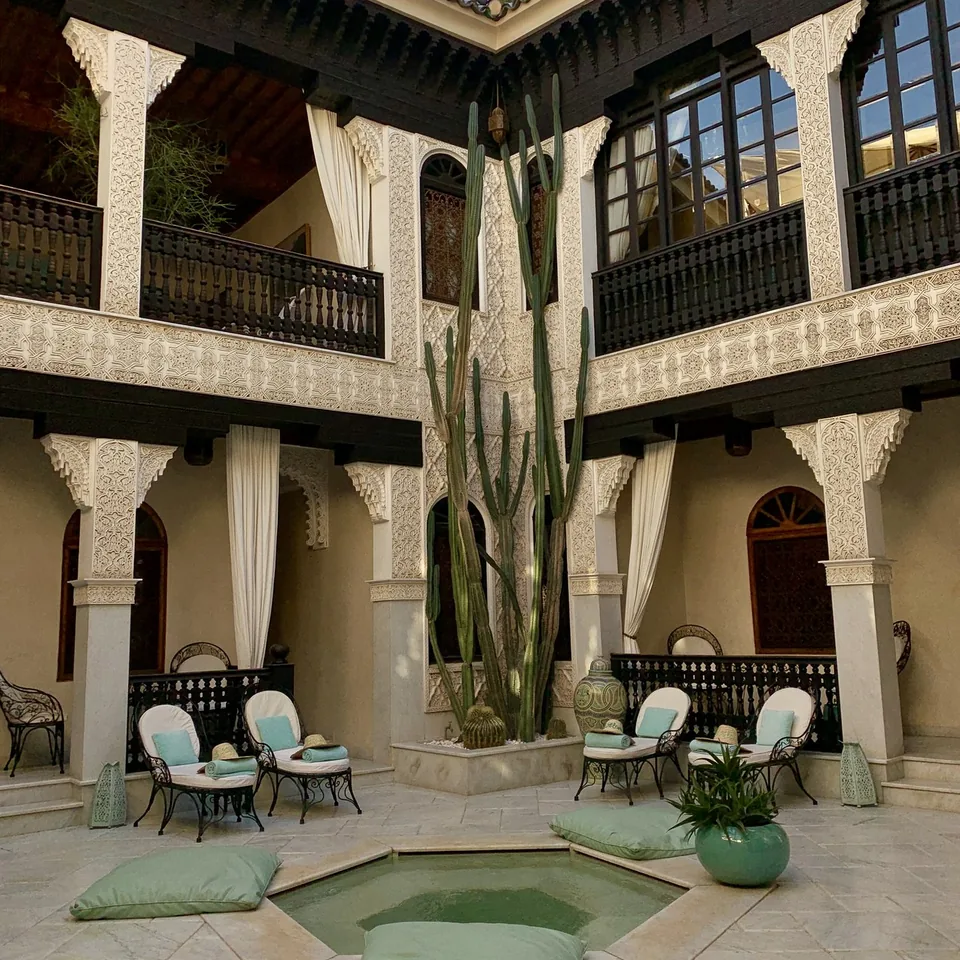
The building is four riads knocked together, so you move between courtyards and there are almost no corridors in it. Each one has been given its own temperature: brick arcades and carved capitals around the pool, zellige underfoot in another, carved timber galleries and a cactus in a third. Twenty-eight rooms and suites, no two of them the same, which makes the question of which room you are getting a real one.
The suite
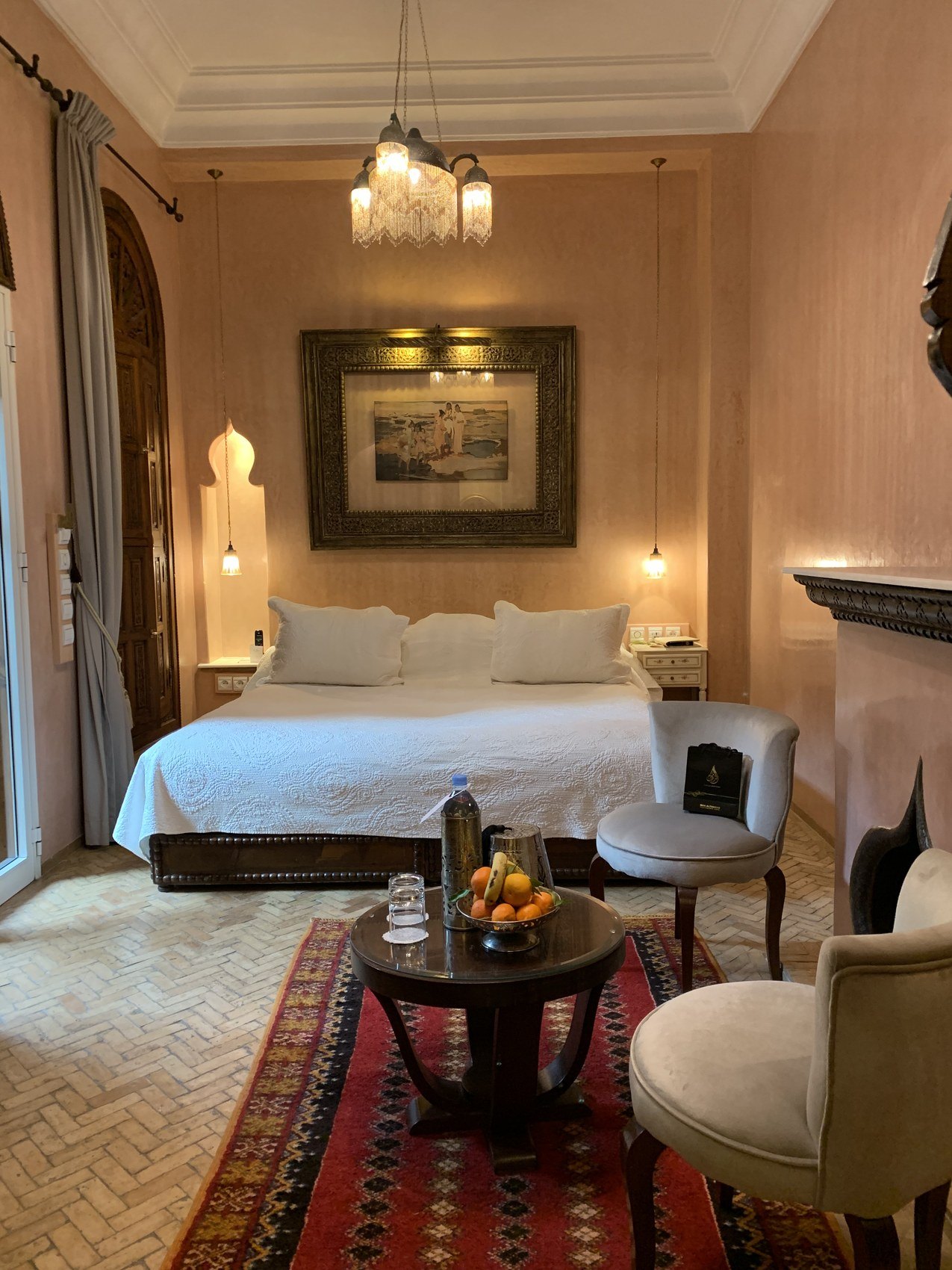
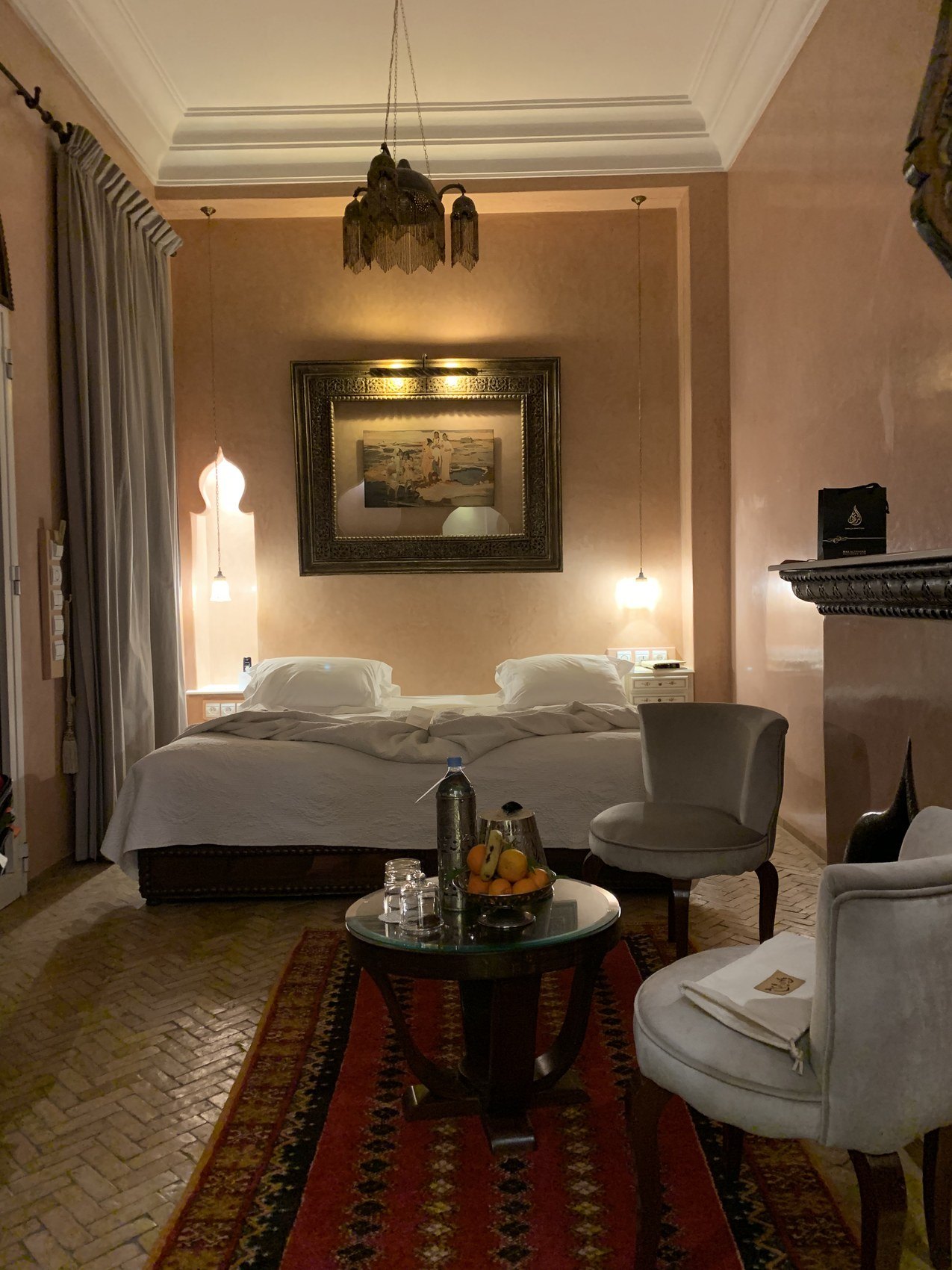
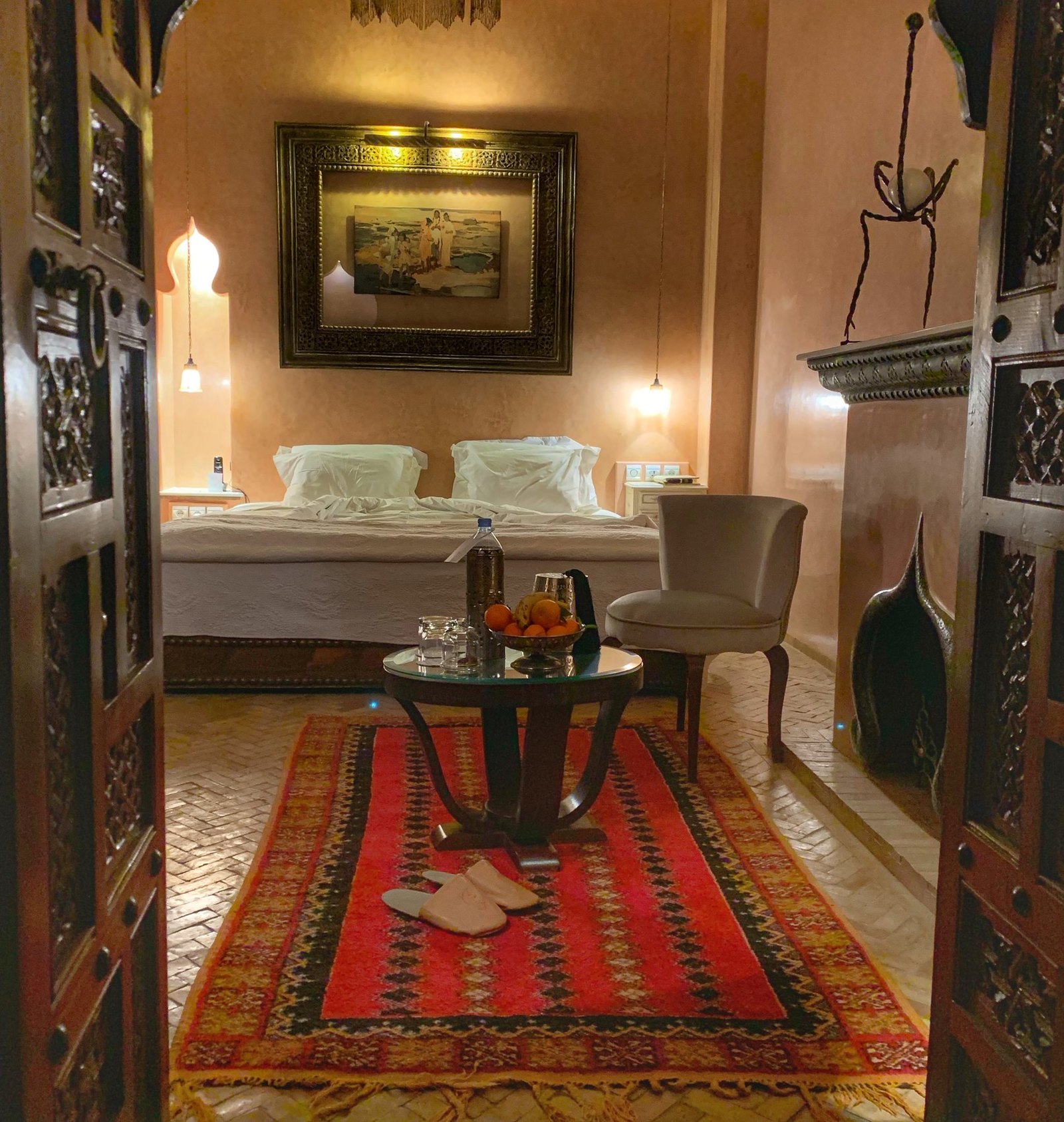
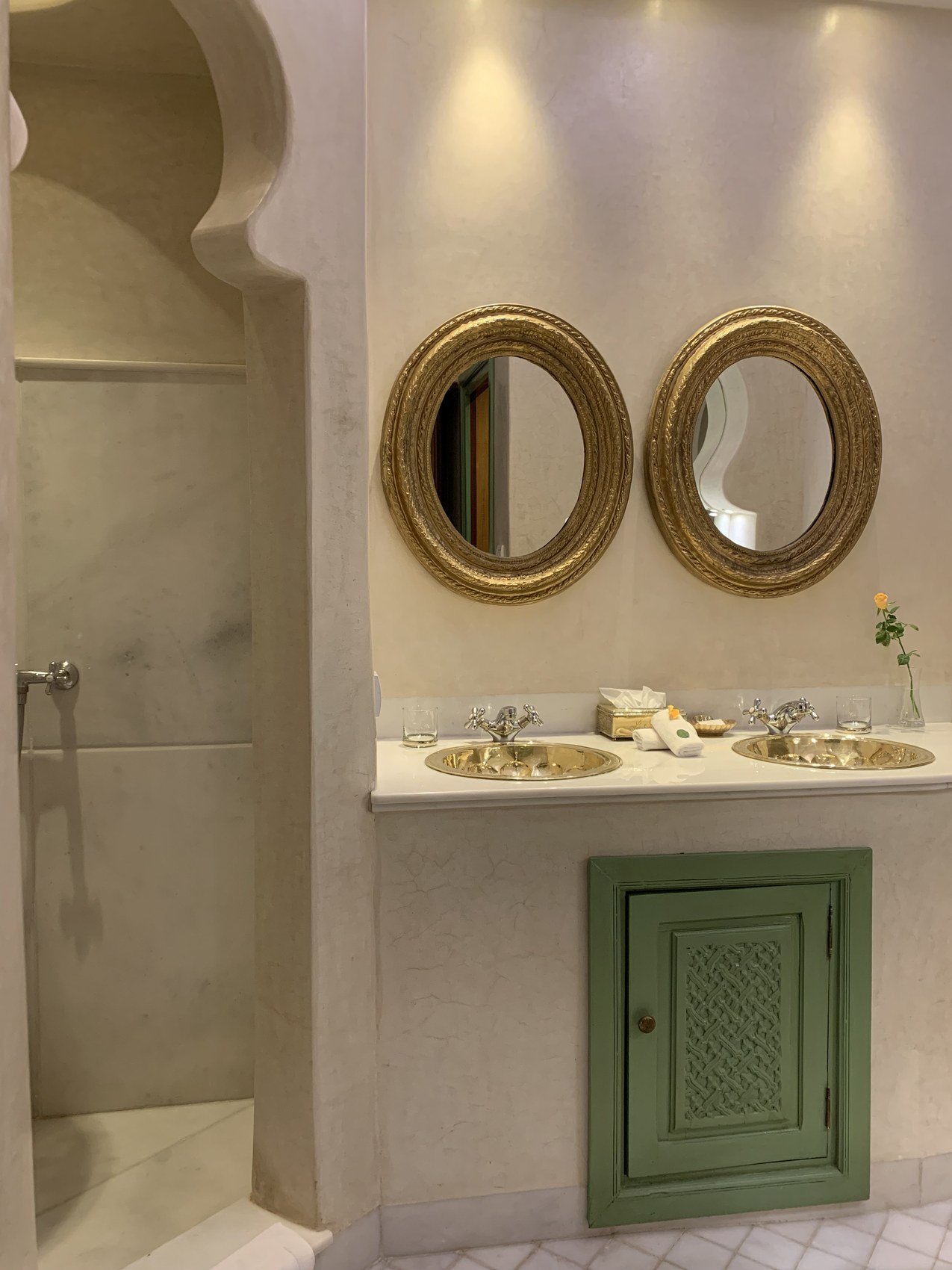
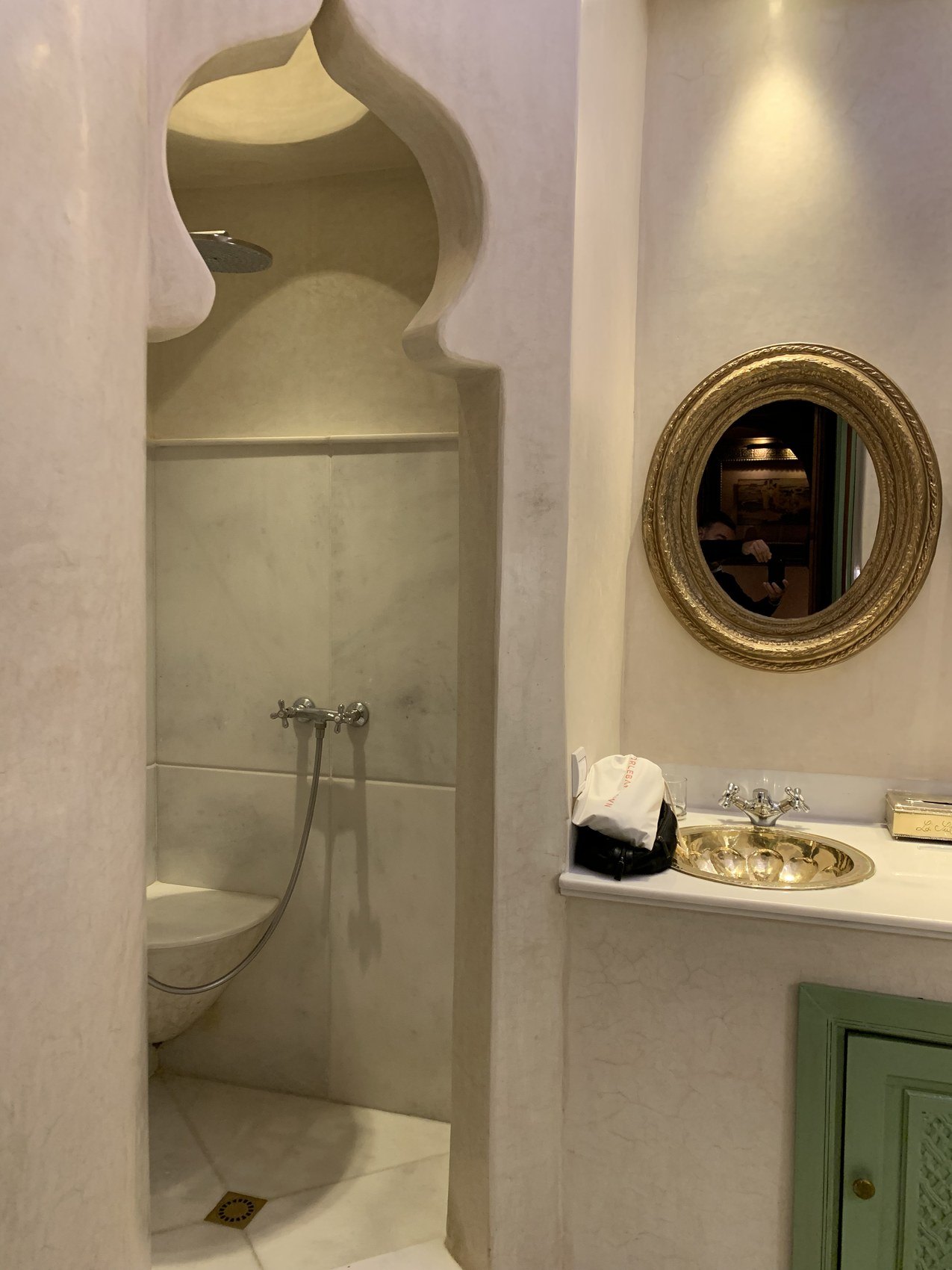
I had a suite in Riad Bahia. Plaster the colour of the city, a fireplace, carved screens standing between the bed and the sitting end, lanterns hung low, and a red rug that stops the room from being polite. The bathroom is the part I would photograph again: two gilt mirrors over a stone basin, a shower set into its own horseshoe niche, and nothing on the shelf that has not earned its place.
The morning
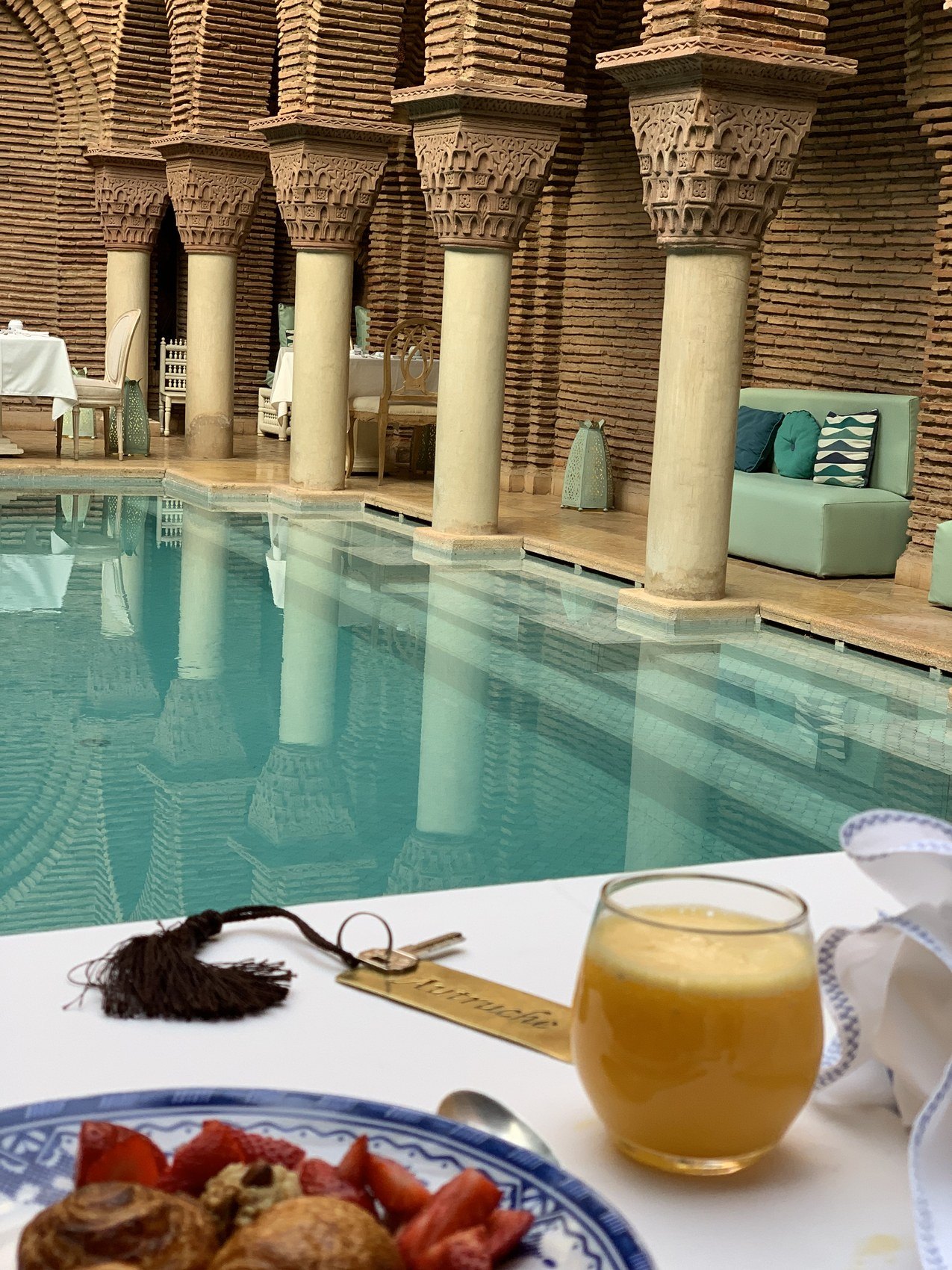
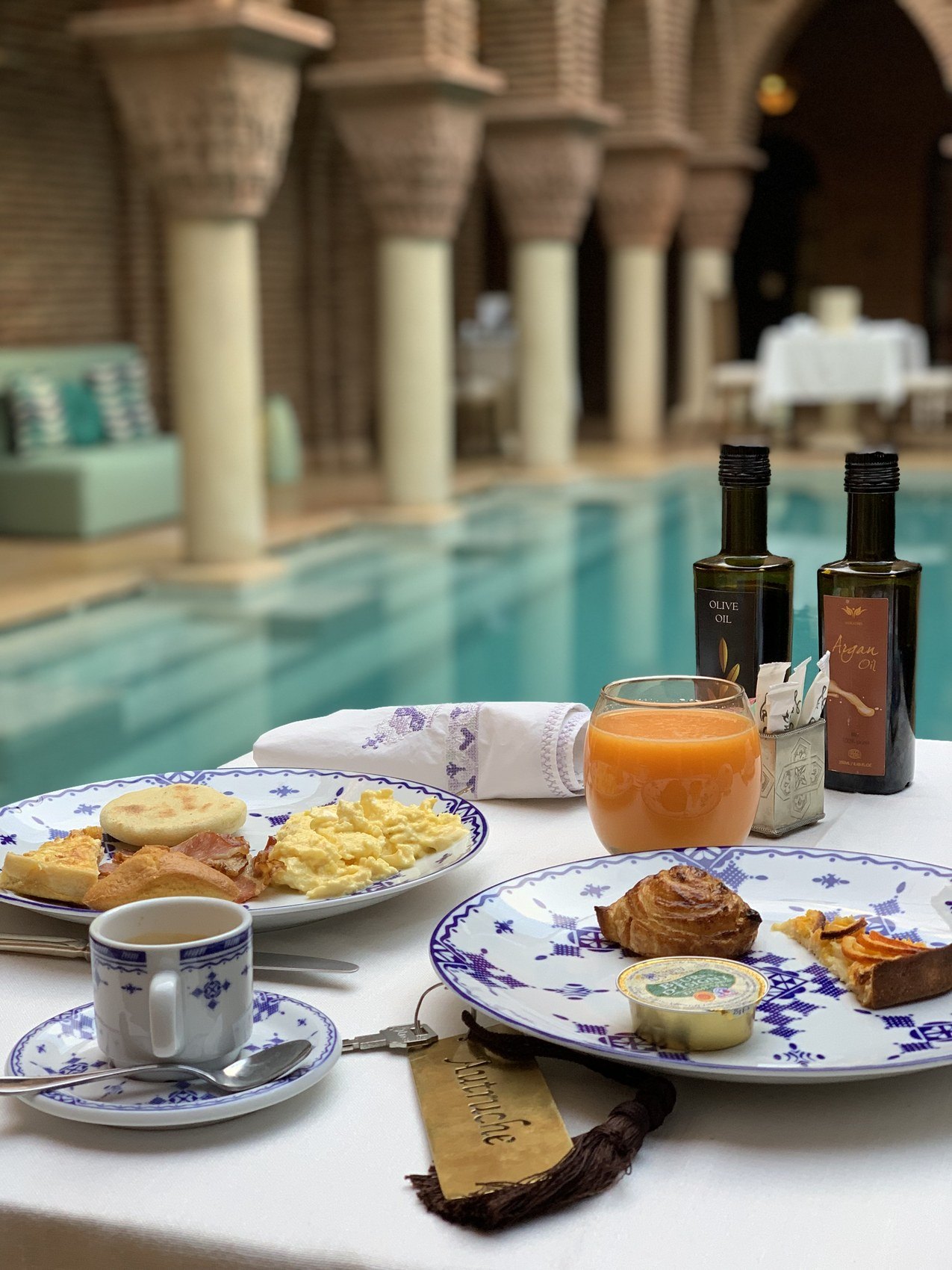
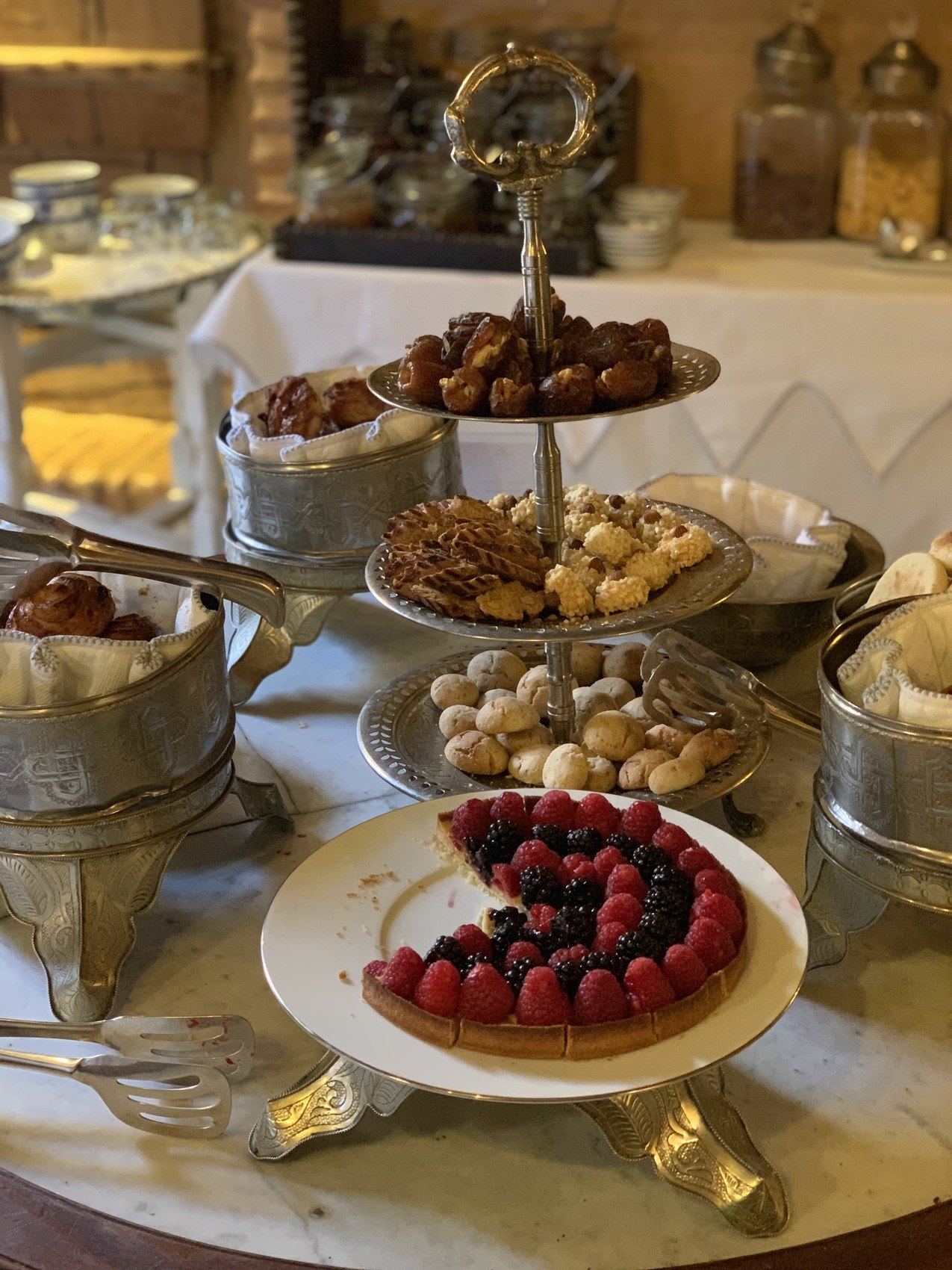
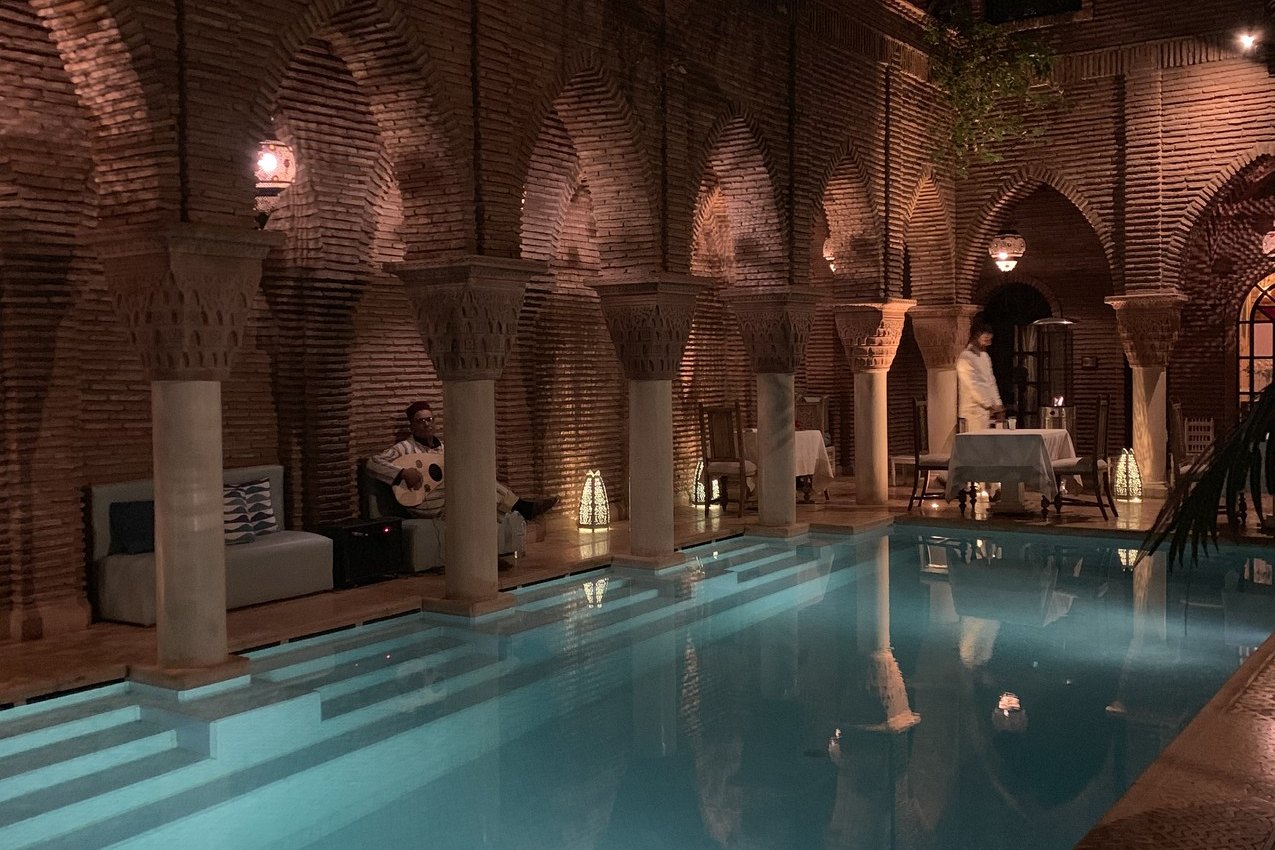
Breakfast happens in the part of the house that holds the pool, under the arcade beside the water, and that arrangement decides the shape of the first hour. You come down into a courtyard with brick going up on three sides, the light moving across it, and nobody hurrying you. It runs long. The pool is heated and in January it is a real option from the middle of the morning.
The hammam
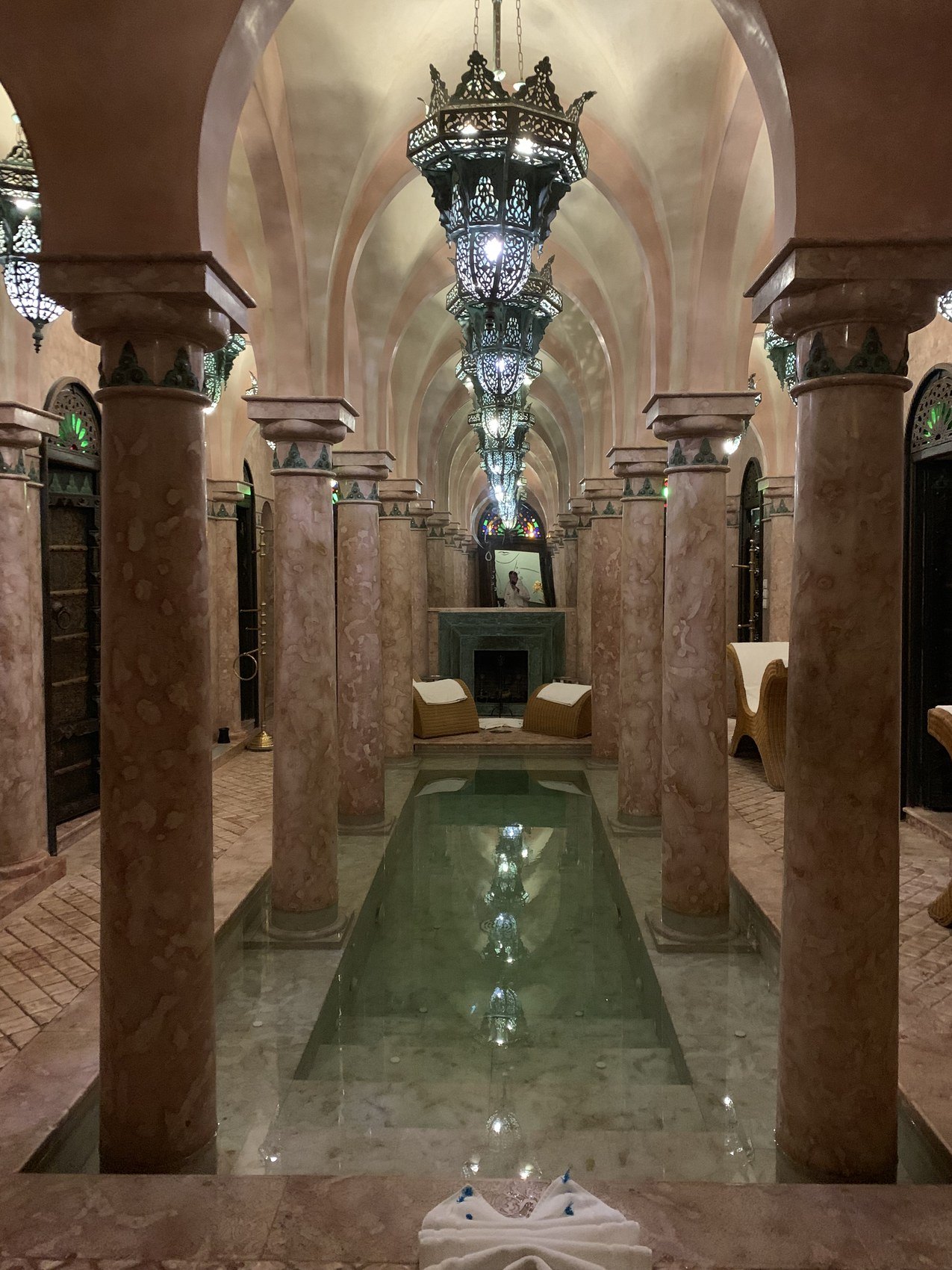
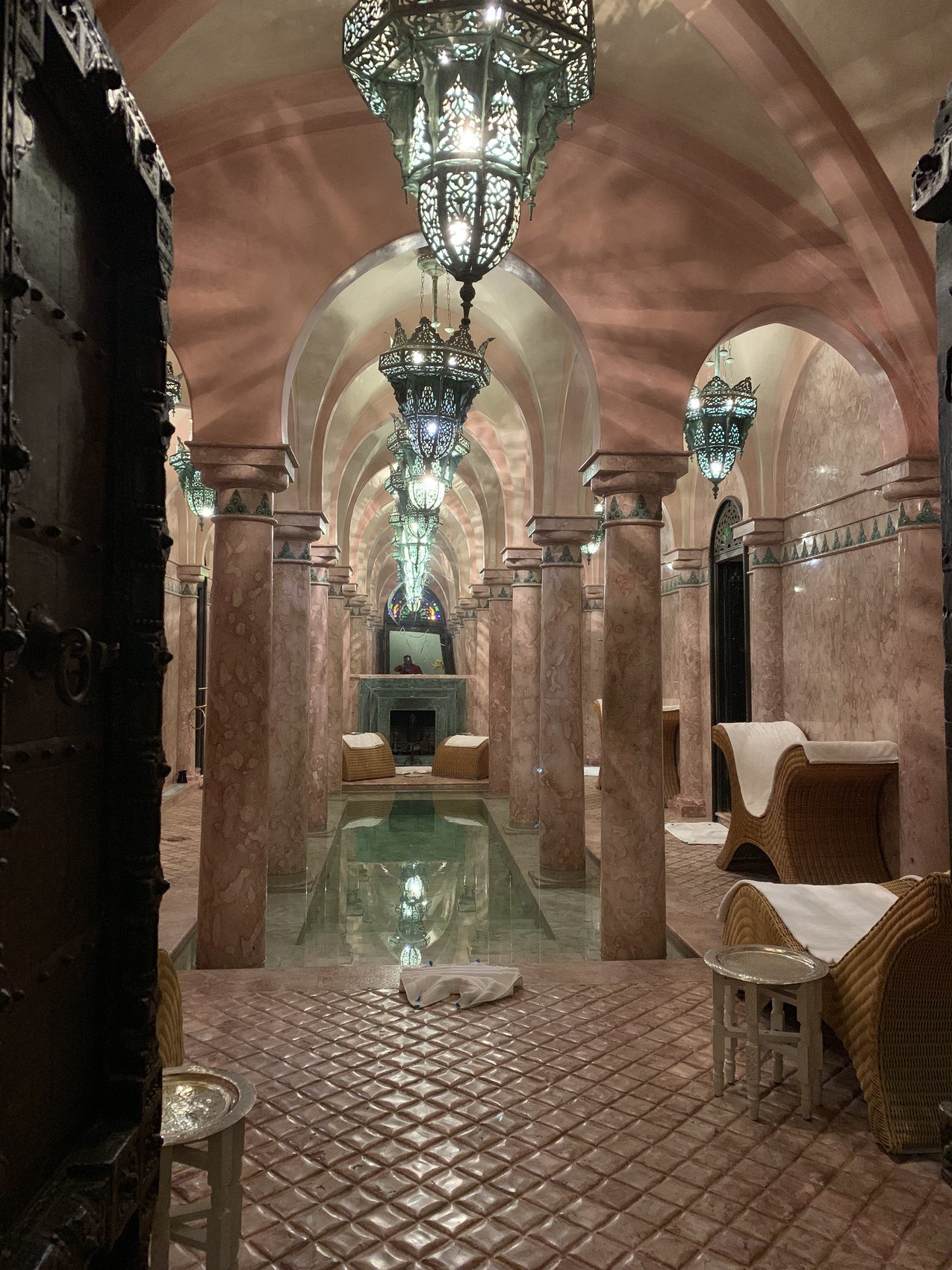
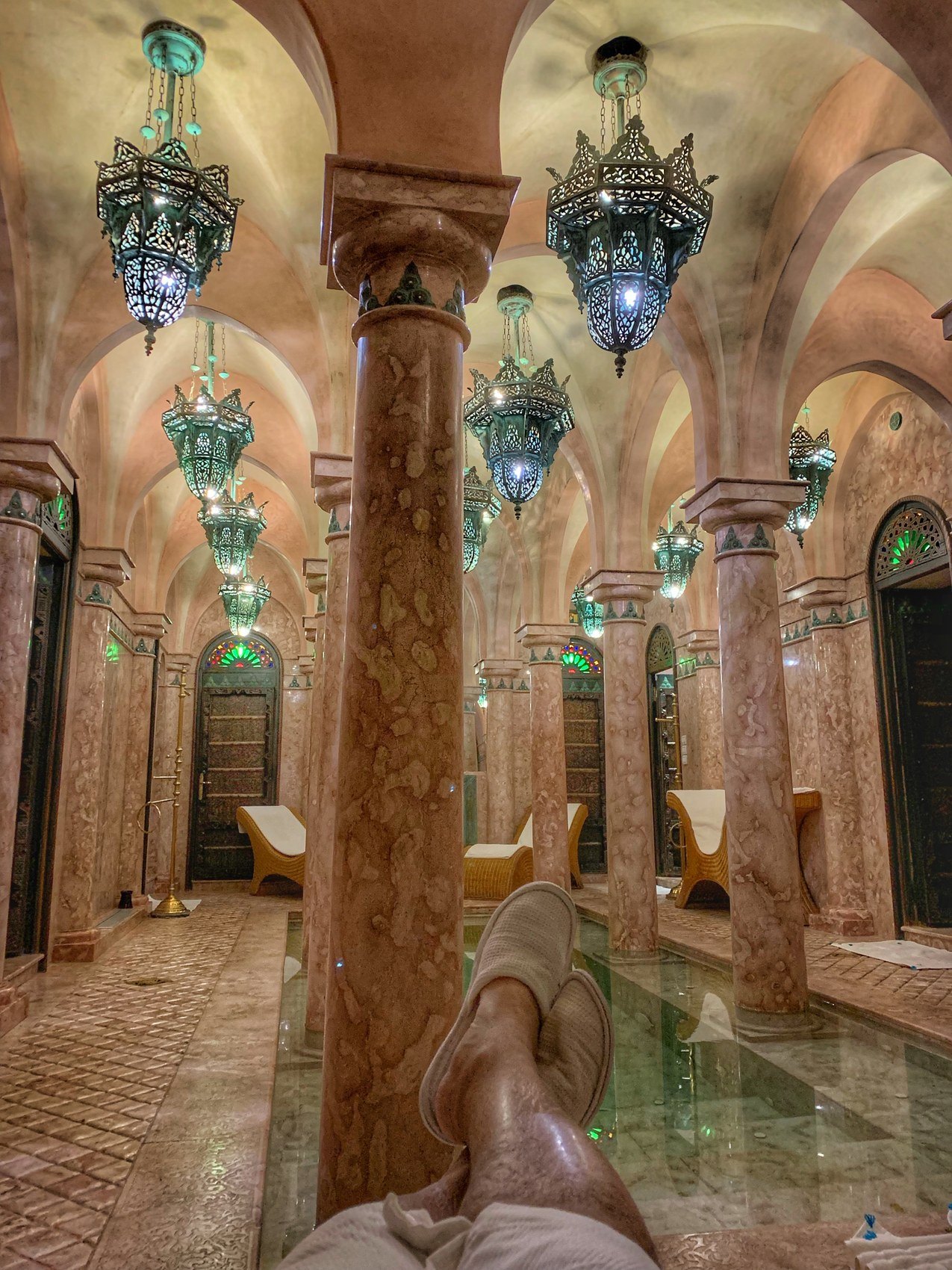
Below the house there are vaulted rooms with a long narrow pool running down the middle of them, lit by lanterns, and this is the quietest part of the building. I did the Royal Hammam and then the argan oil massage, in that order, and the order is the point: the hammam takes the day off you and the massage arrives on a body that has already stopped arguing. Do it on the afternoon of a day you have spent in the souks.
The roof, and the hour before dinner
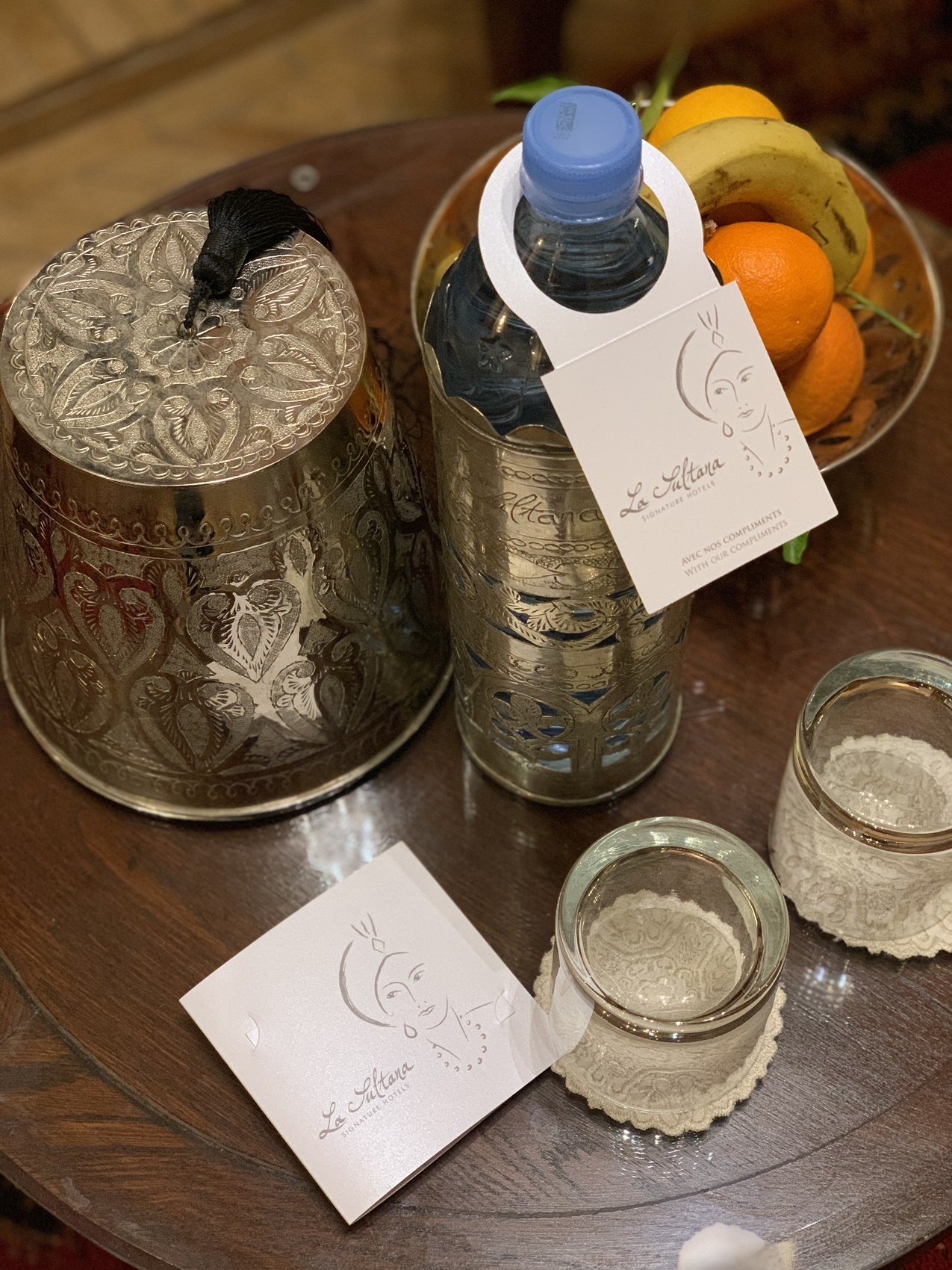
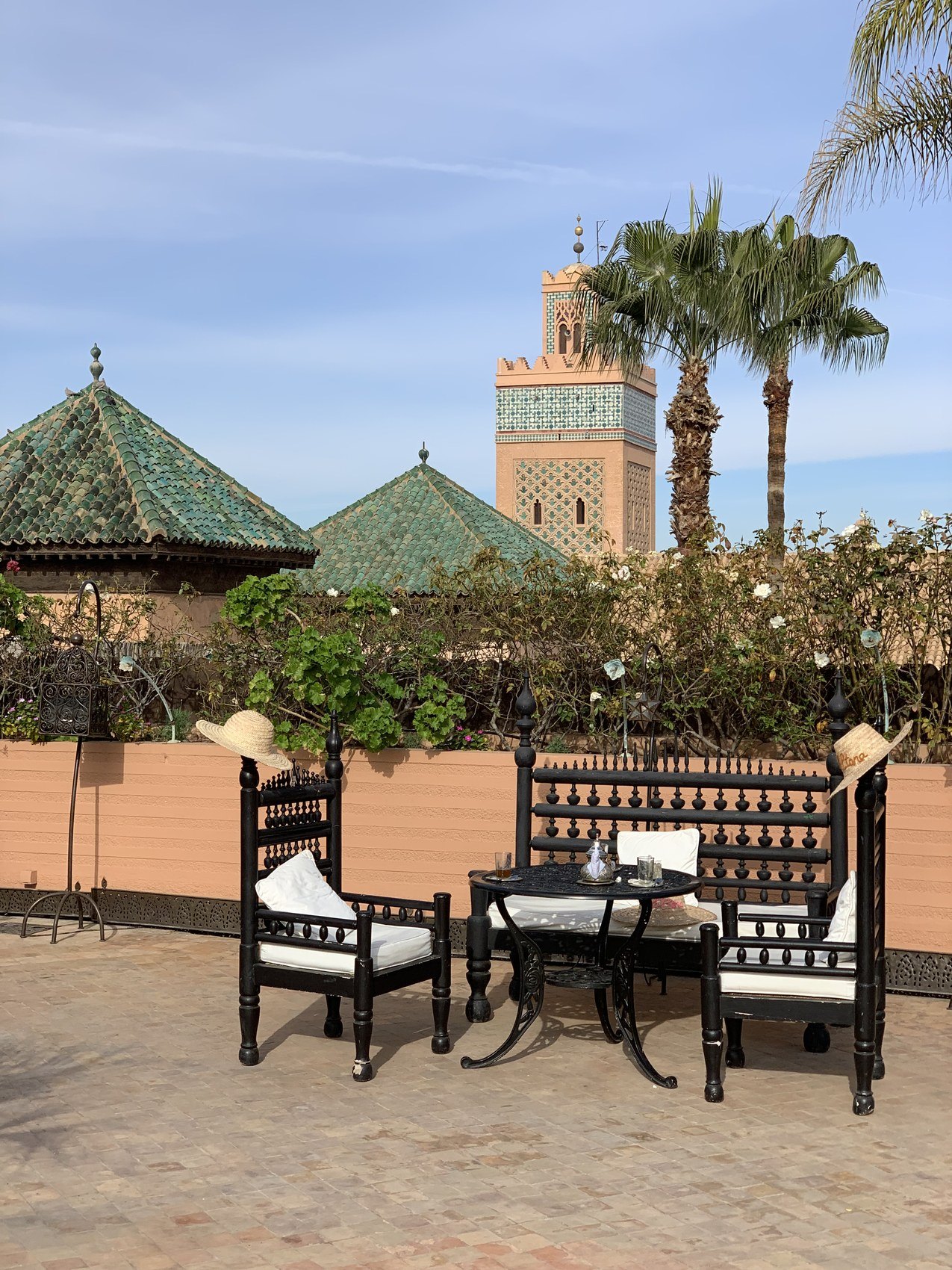
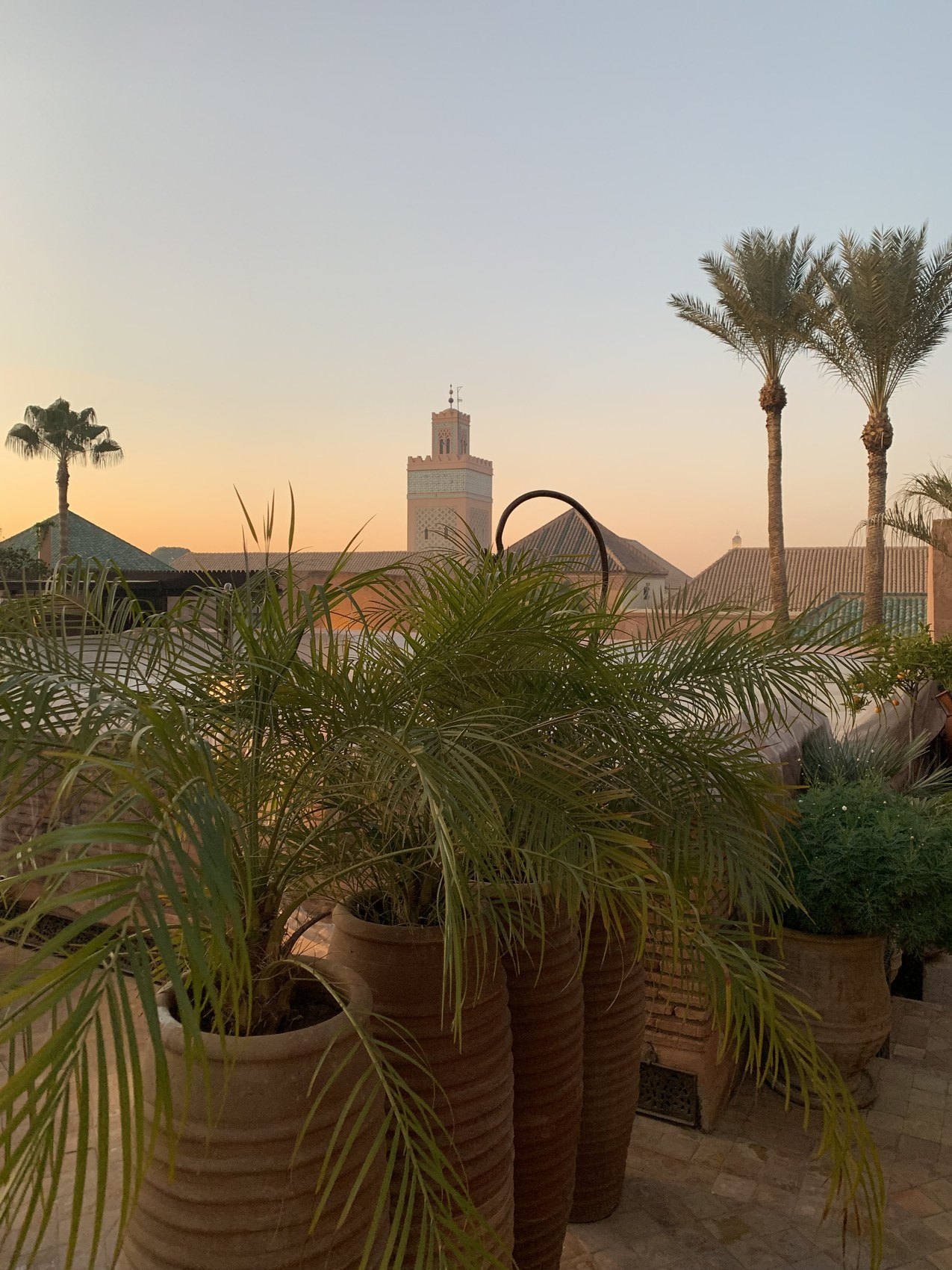
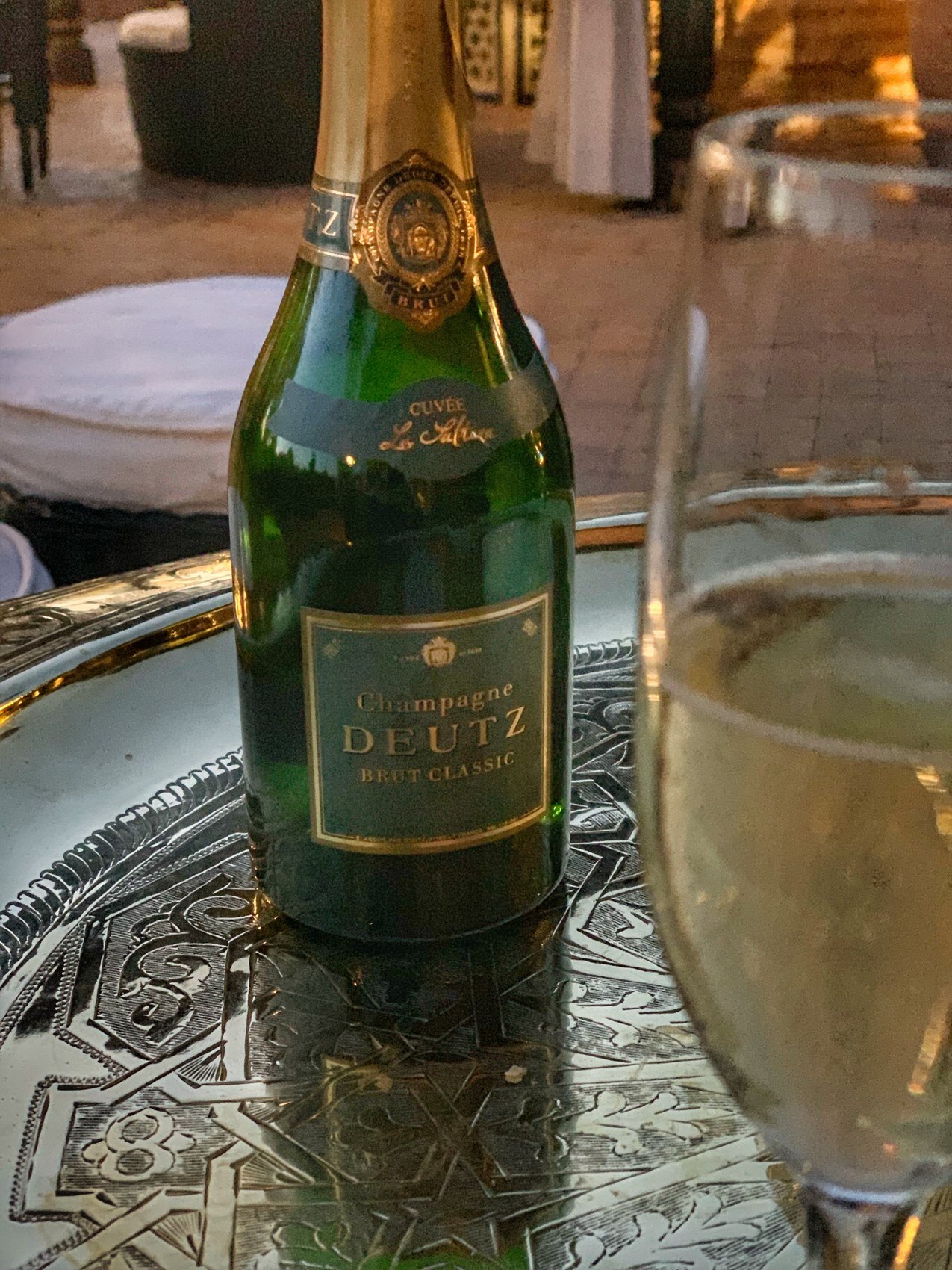
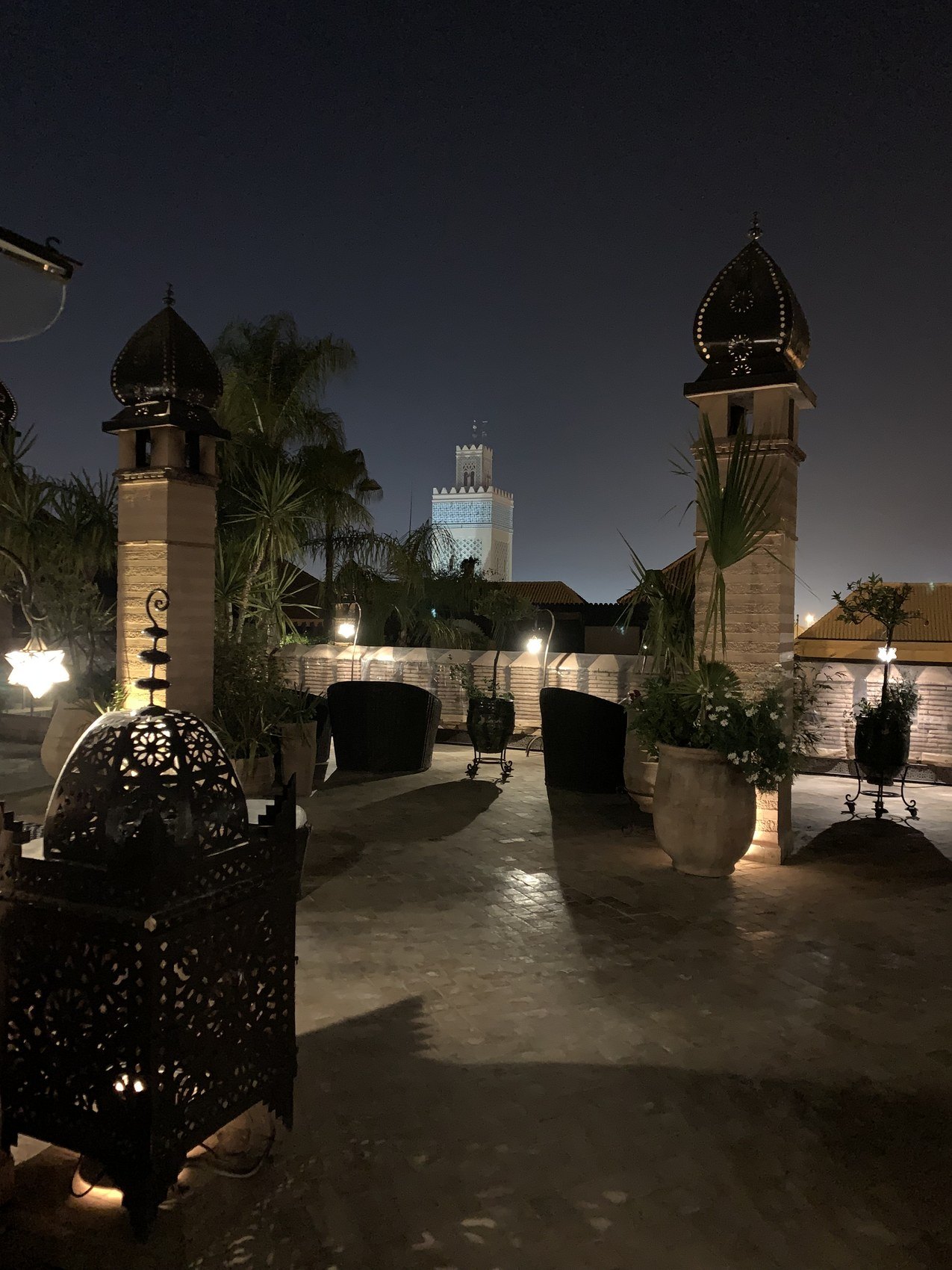
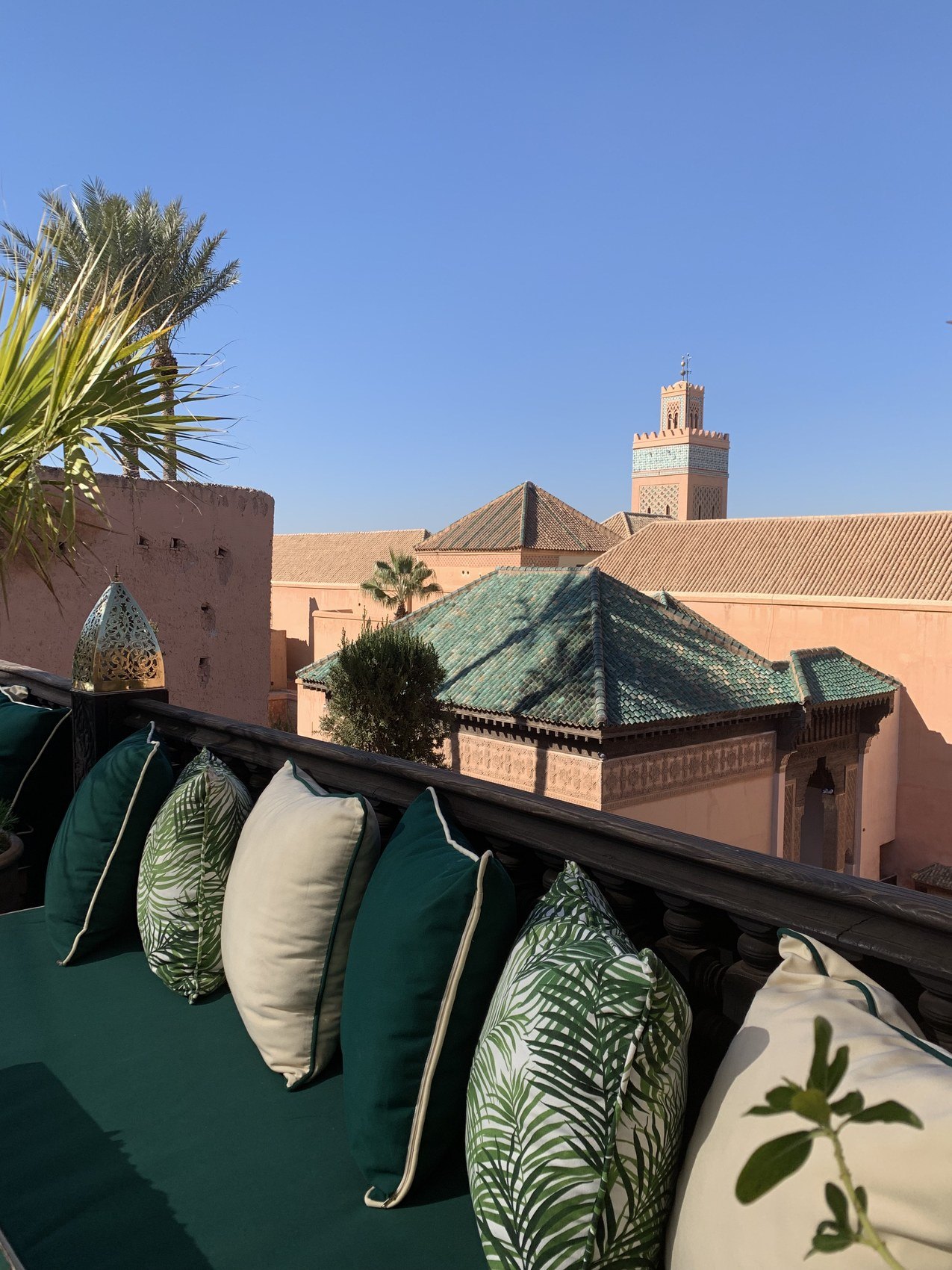
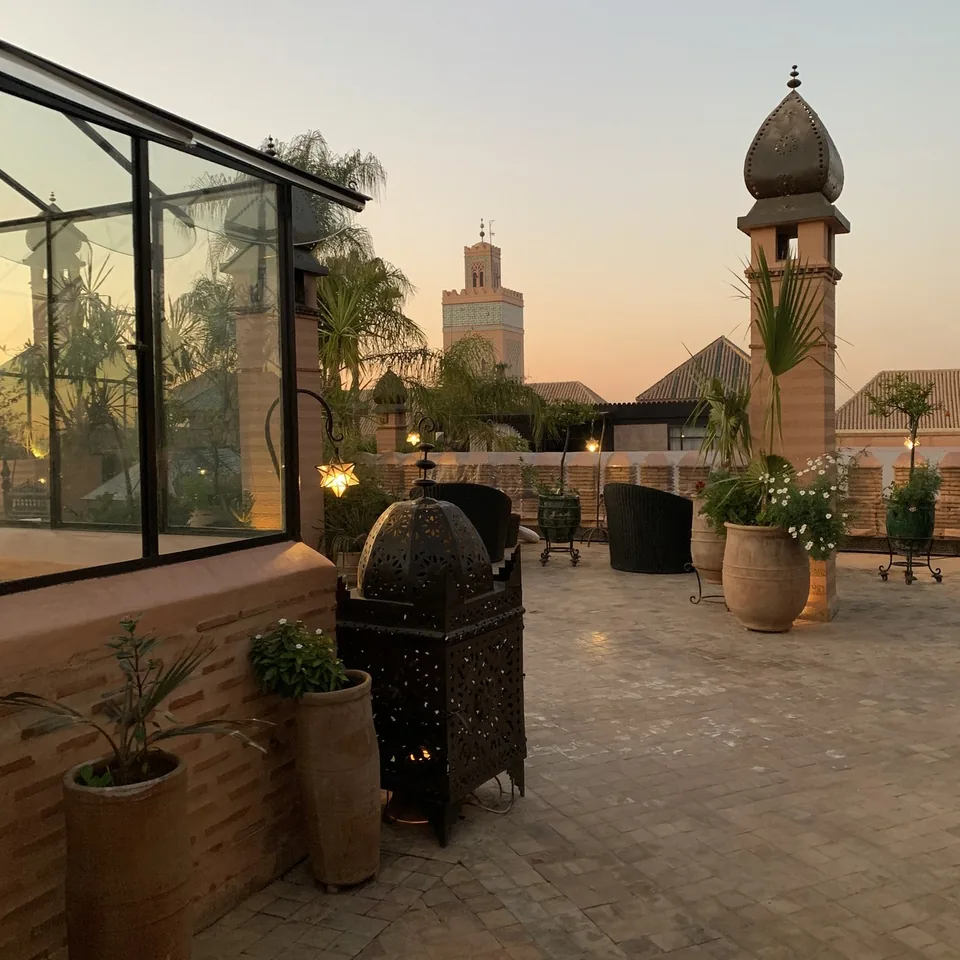
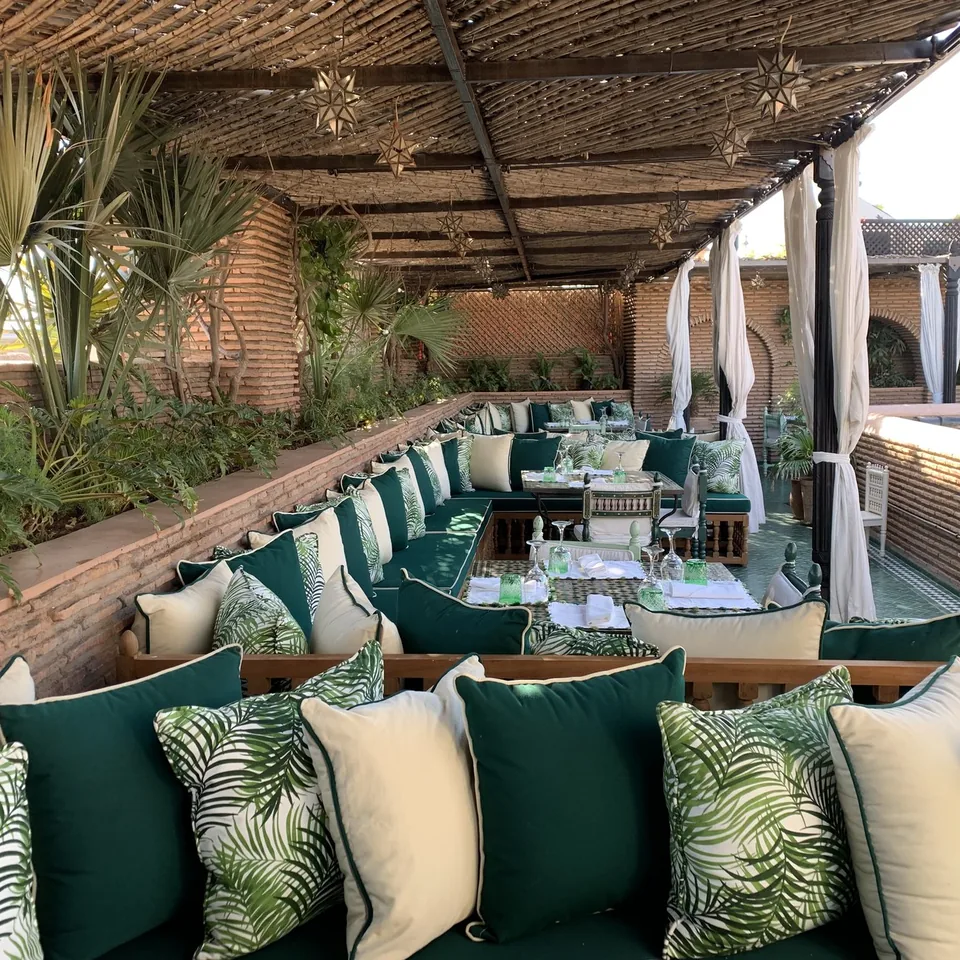
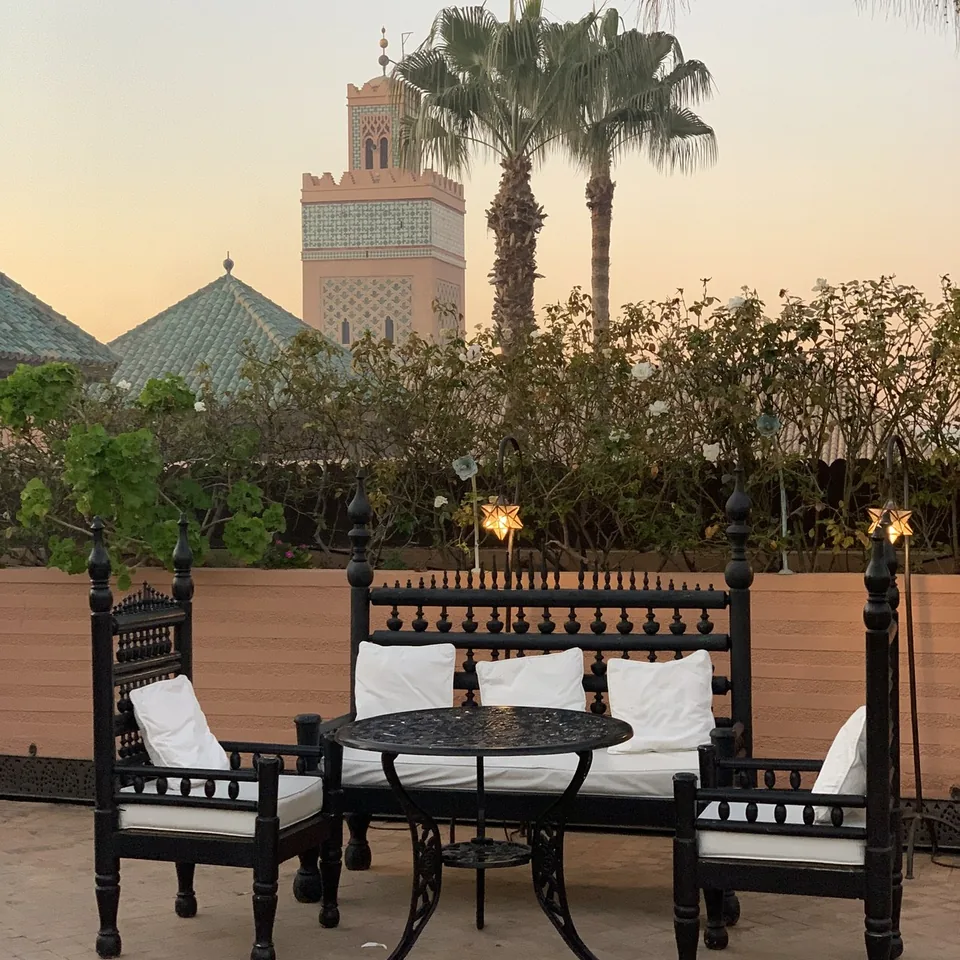
The terrace runs across the top of the house, two thousand square metres of it, and looks over the Koutoubia minaret with the Atlas behind on a clear evening. I took my aperitivo up there on each of the evenings. The bottle that came up was a Deutz Brut Classic with the house's own collar on the neck, which is a small vanity and a good one: somebody decided the hotel should have a cuvée and then went and had it made.
The house after dark
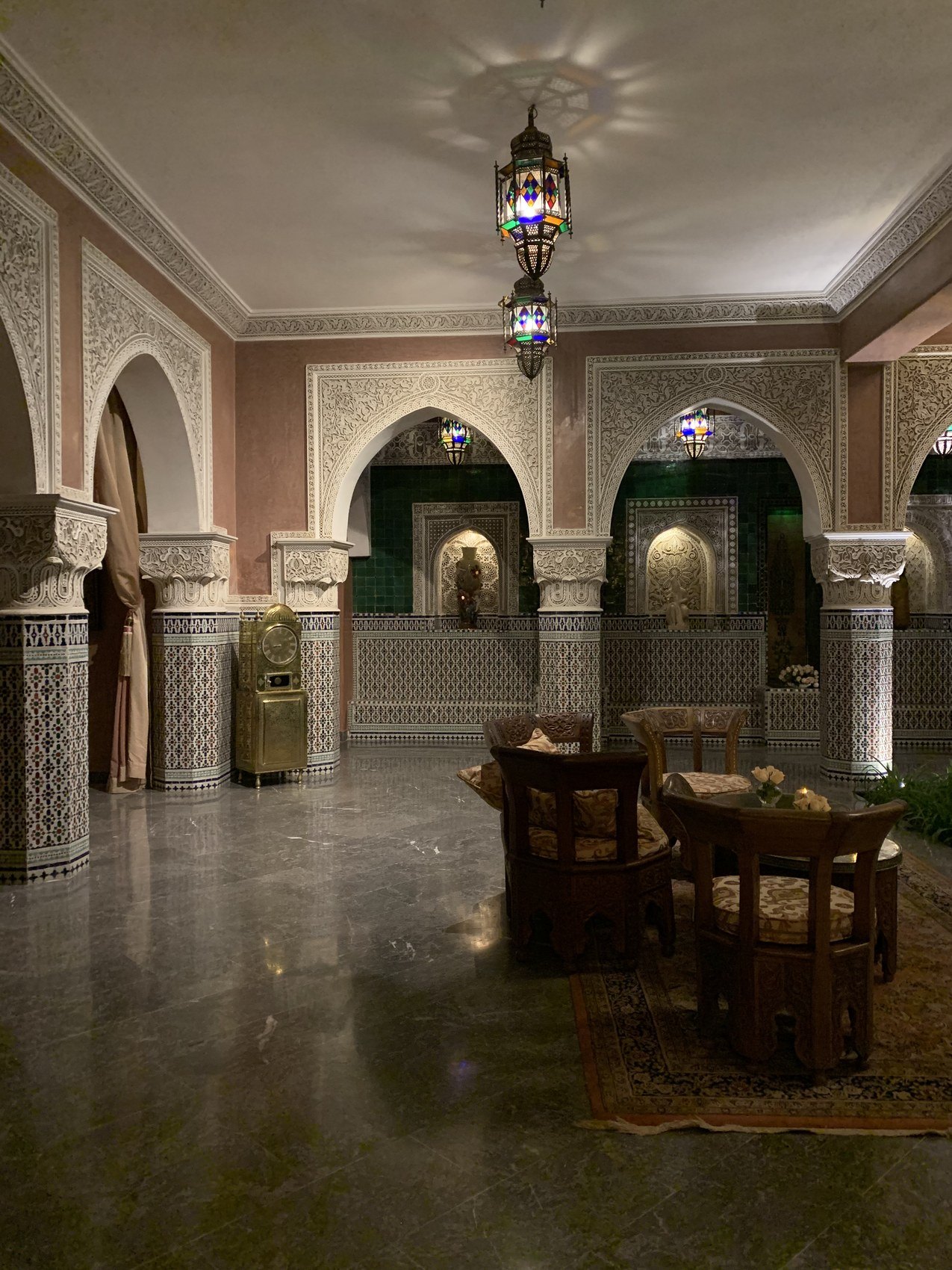
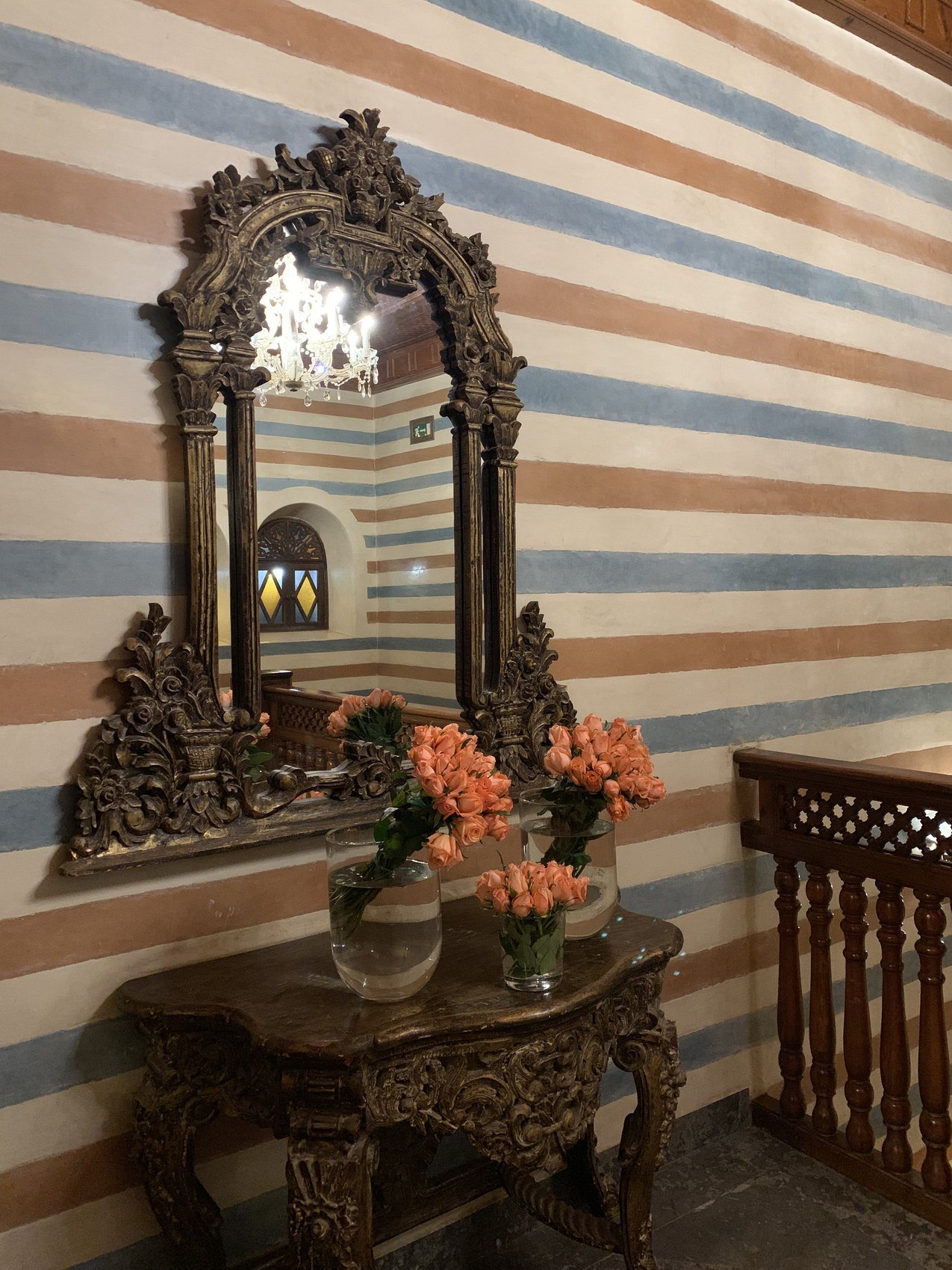
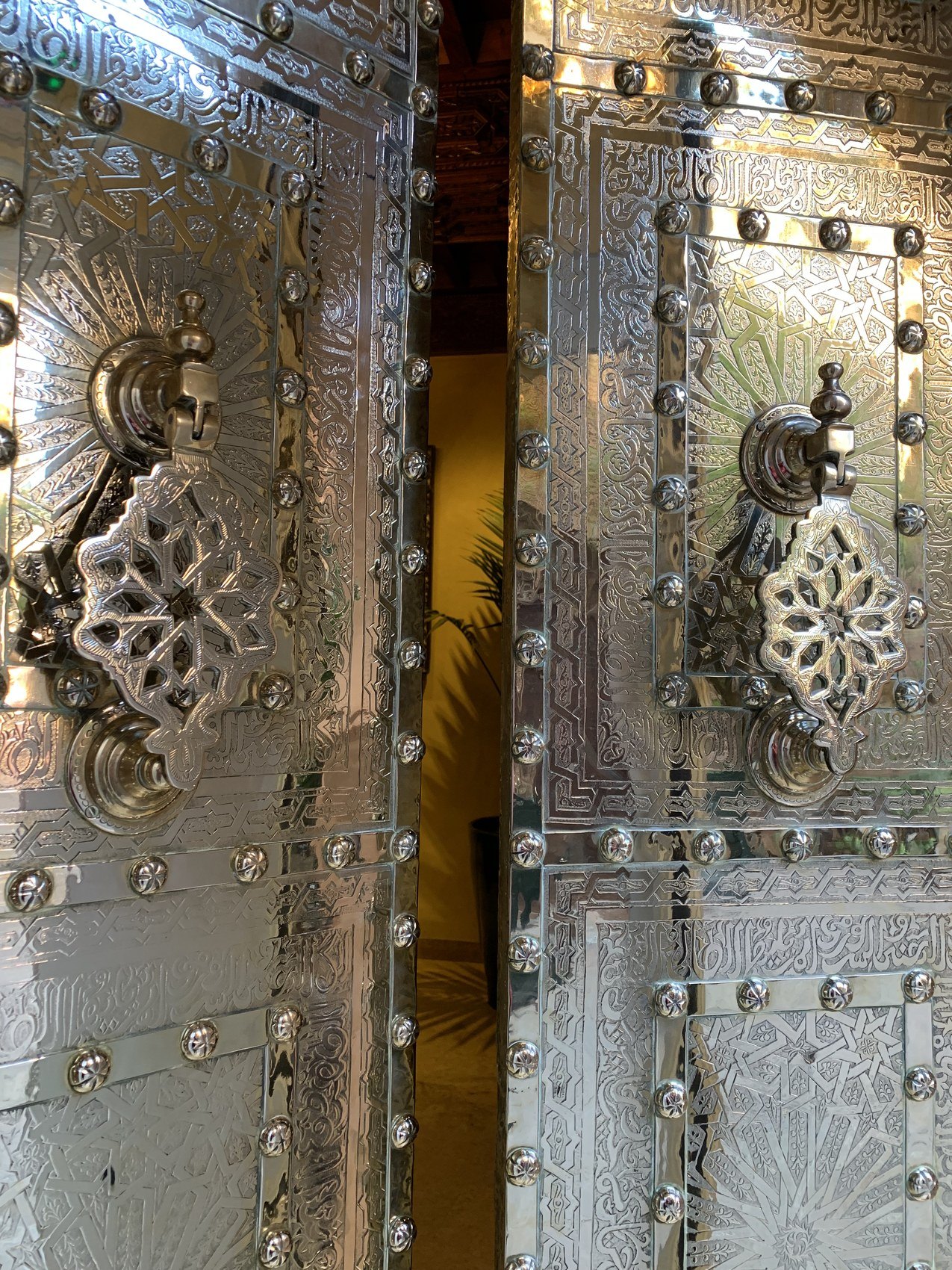
The lamps go on at dusk and the building changes register completely. Lanterns in every arcade, candles on the low tables, the striped plaster in the stairwells catching the light sideways, and silver doors that nobody has got around to describing because they are standing open most of the time.
Coming back from the souks
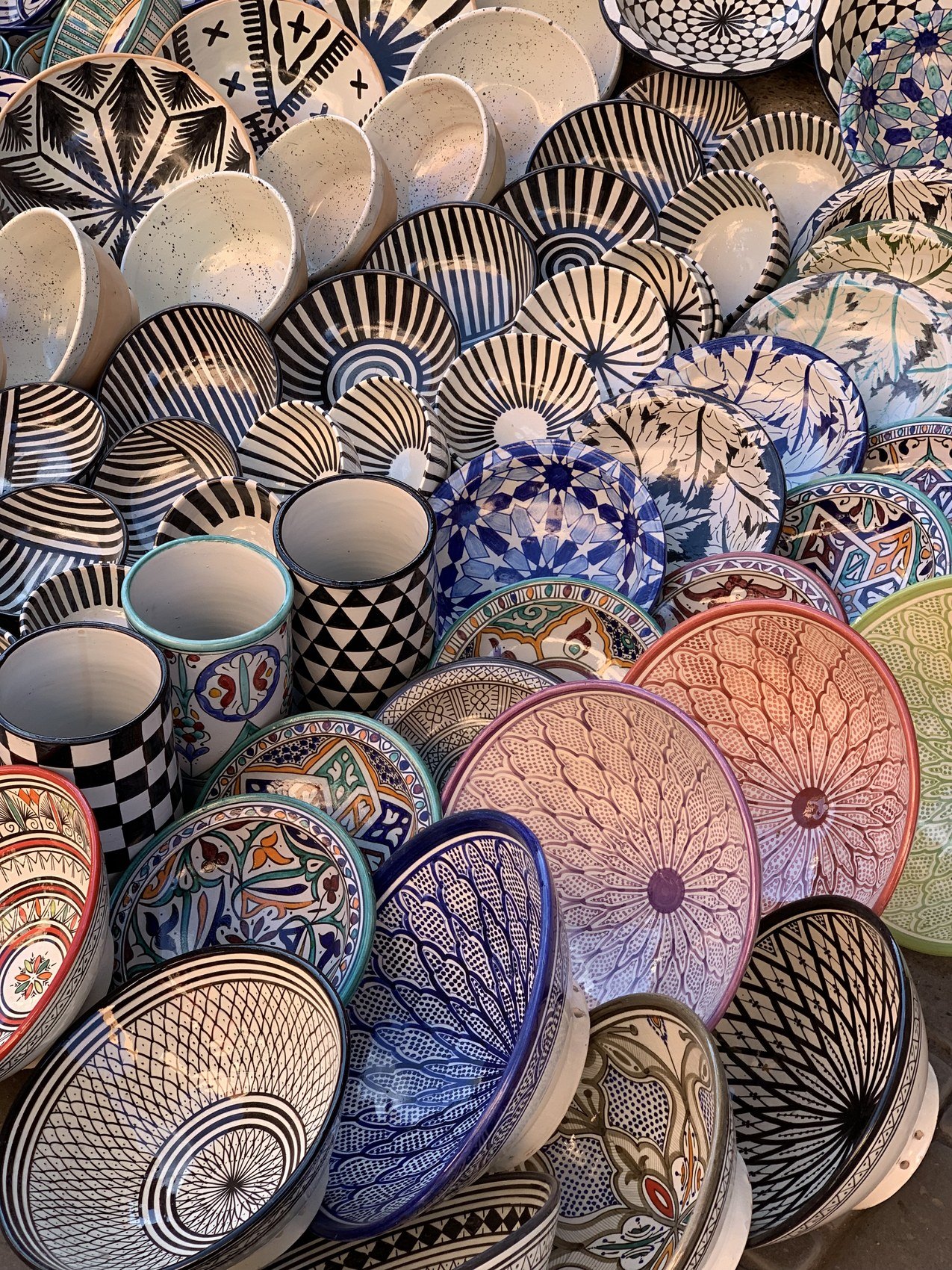
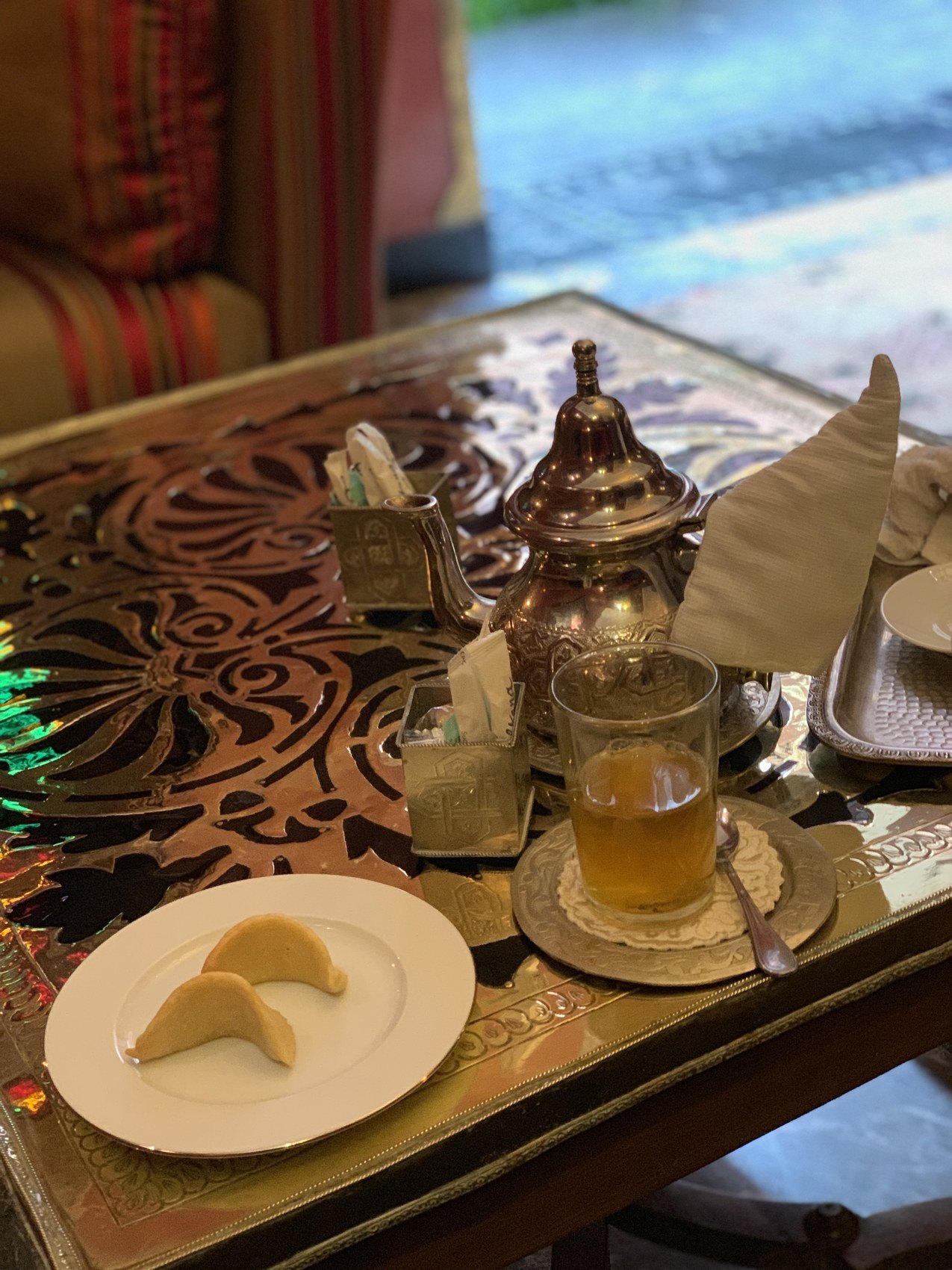
Marrakech outside the walls of this house is a contest, and the souks are the part of it that takes everything you have. You will spend an afternoon haggling and you will come back having bought something you cannot carry. This is where the hotel earns its keep. You come through the door, somebody brings mint tea, the noise stops, and the thing you bought looks better on a courtyard table than it did on the stall.
Advisor's perspective
This is the house for somebody who wants Marrakech at full volume and a door to close against it. Two people with four or five days will do very well: the medina in the morning, the hammam in the afternoon, the roof at six. It suits a first visit to the city better than almost anything else I know, because the location does the work and the Kasbah is calm in a way the rest of the medina is not.
It is not a resort and it does not pretend to be. There is a pool and a spa and a roof, and the rest of the day is outside. Anybody who wants to arrive and never leave the property should be in the Palmeraie and will be happier there.
What I would protect: the transfer on the first day, the hammam on the right afternoon, and the hour on the roof before dinner. Everything else arranges itself.
Before you book
The questions people send me about La Sultana.
- Where exactly is La Sultana, and is the area safe at night?
- It is on Rue de la Kasbah, inside the walls of the medina, a couple of minutes on foot from the Saadian Tombs and close to the Royal Palace and the Bahia Palace. Jemaa el-Fna is about ten minutes away walking. The Kasbah is the quiet quarter and I walked back to the hotel after dark without a second thought on any evening. I am aware that this is the question many American travellers ask first, so I will answer it plainly: of the places I have stayed in this city, this is the one I would send somebody nervous about the medina.
- How is the hotel laid out?
- Four riads joined together into one house of twenty-eight rooms and suites, so you move between courtyards and there are almost no corridors in it. Each courtyard has its own character, its own planting and its own light, and the pool sits in the arcaded one. I had a suite in Riad Bahia. It is worth understanding this before you book: the room you get decides which courtyard you wake up in.
- Where is breakfast, and is there a pool?
- There is a pool, and breakfast is served in the same part of the house, under the arcade beside it. That arrangement is better than it sounds, because you come down in the morning to a courtyard with water in it and the light coming over the brick, and the first hour of the day happens there. The pool is heated.
- Is there a spa, and what should I book?
- There is, and I would book two things: the Royal Hammam and the argan oil massage. I did both and the sequence is the point. The spa sits below the house in vaulted rooms with a long narrow pool, lit by lanterns, and it is the quietest place in the building.
- What should I see in Marrakech from here?
- I did the classics and they are classics for a reason: the Jardin Majorelle, Jemaa el-Fna in the evening when it fills up, and the Bahia Palace. From the Kasbah you can walk to the Saadian Tombs in minutes and to Jemaa el-Fna in ten, which makes the hotel a real base and not somewhere you drive back to. Leave an afternoon for the souks and leave your patience at full charge.
Something else you want to know? Write to me and I will answer it here.
Book online
Via Classic Travel, with the benefits attached.
The hotel's own rate, booked through a Virtuoso preferred-partner agency. Register once; the account stays linked to Wheresnik.
Check rates at La Sultana →Or let me arrange it
The room, the dates, the rest of the list.
Write in English, Italian or Spanish. I answer personally, usually within a day.
Let Nik arrange it →