
Inspection · Ashar Valley, AlUla, Saudi Arabia
Habitas AlUla
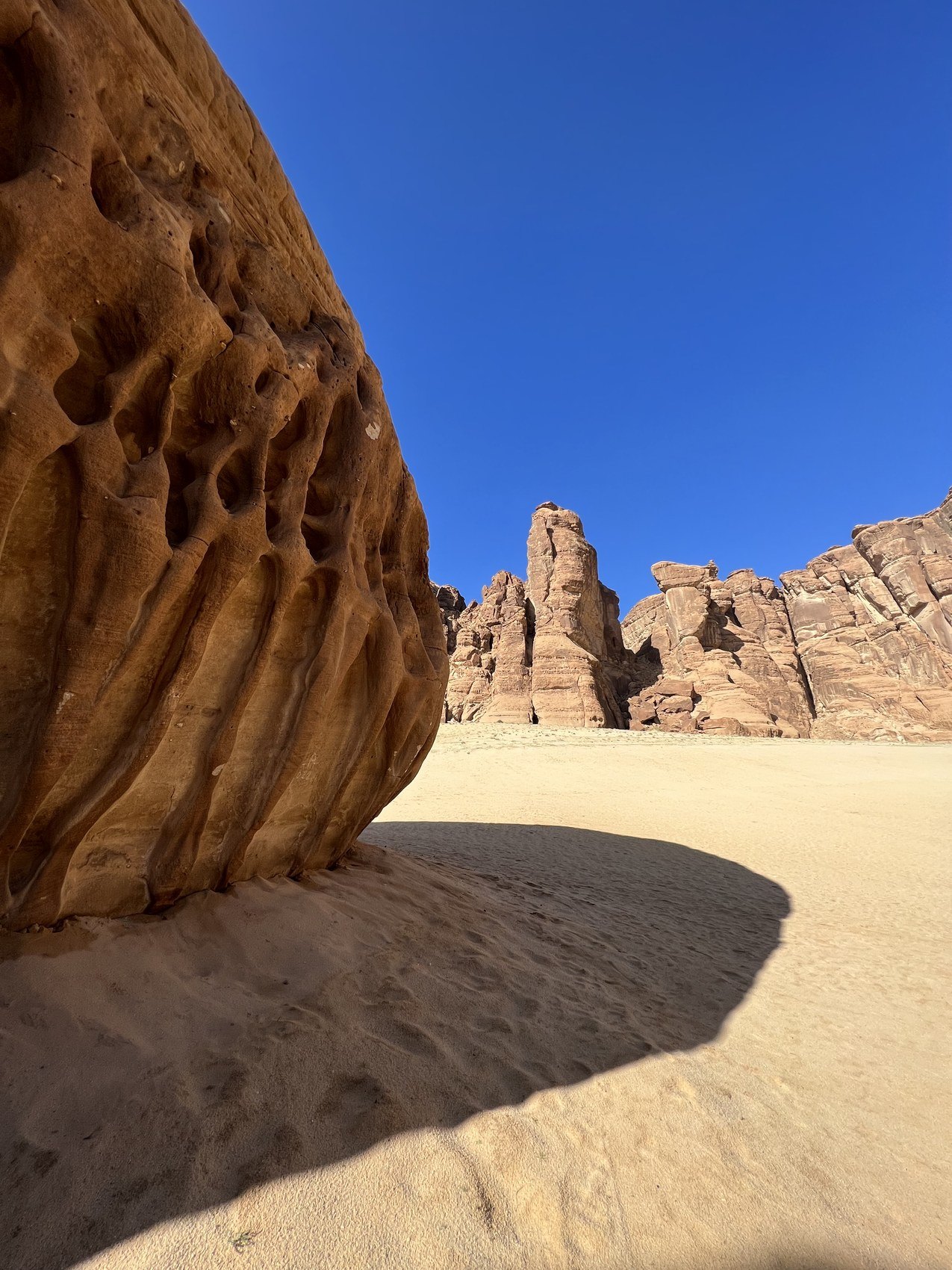
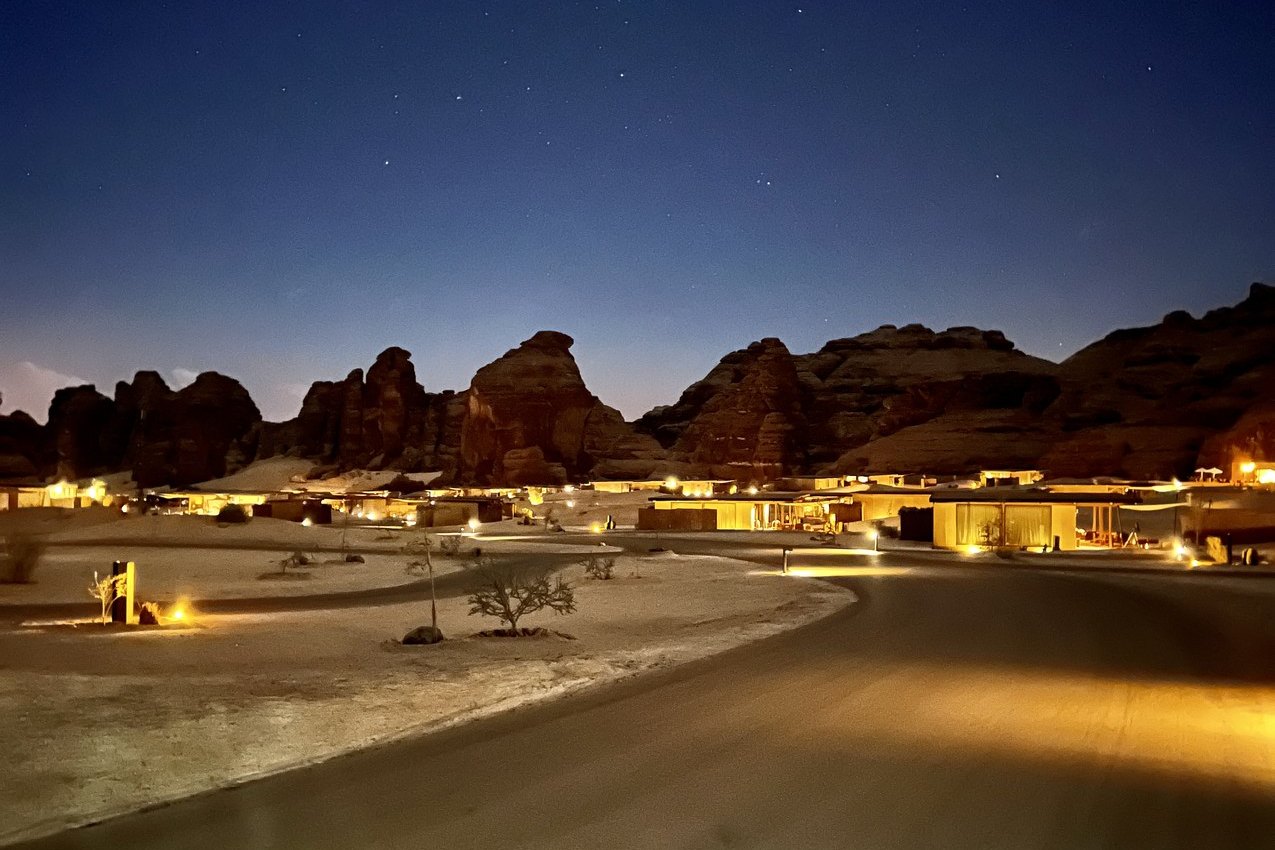
A camp of tented villas on the floor of a sandstone canyon in the north west of Saudi Arabia, where the rock does most of the work and the house has the sense to let it.
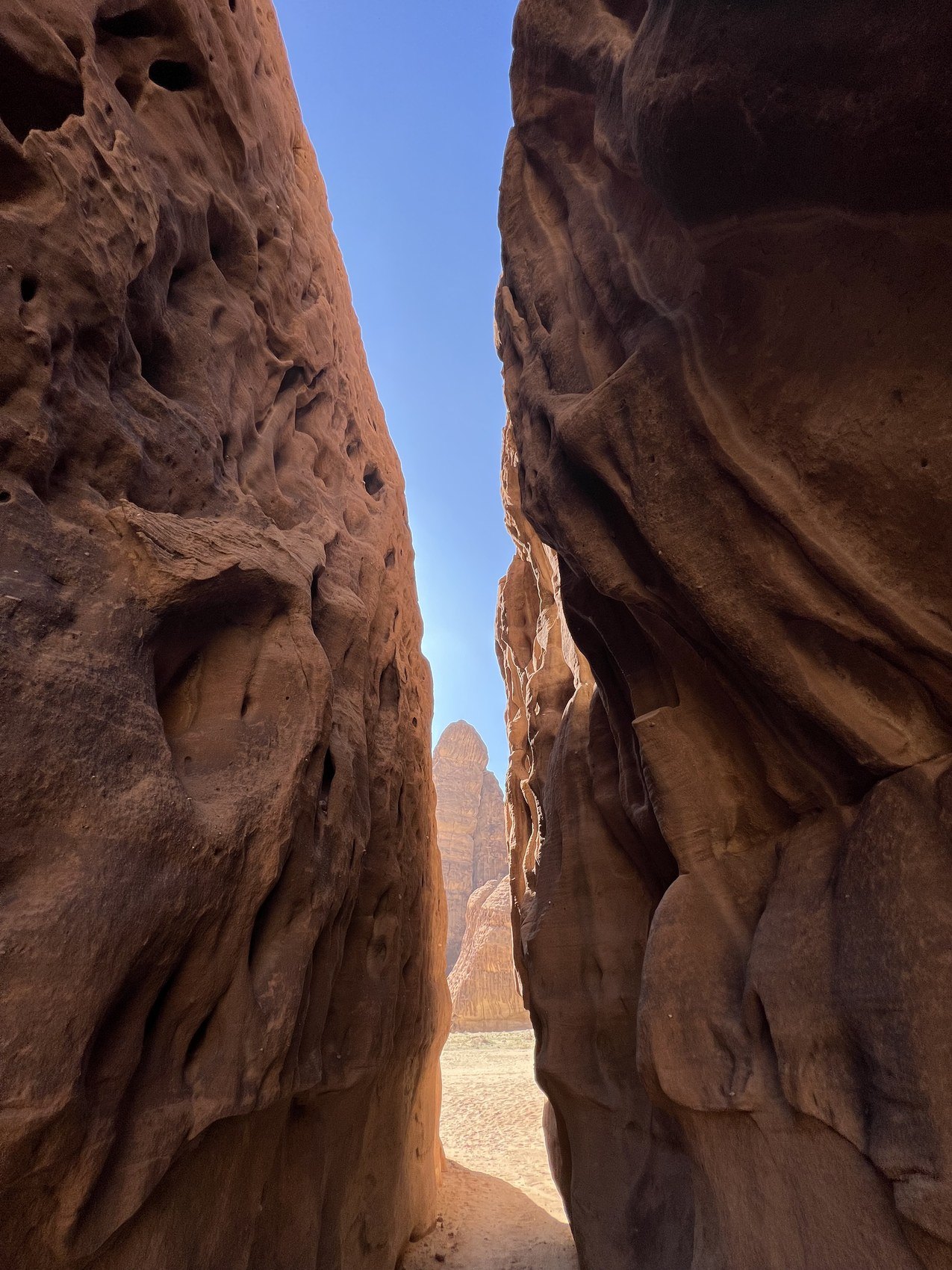
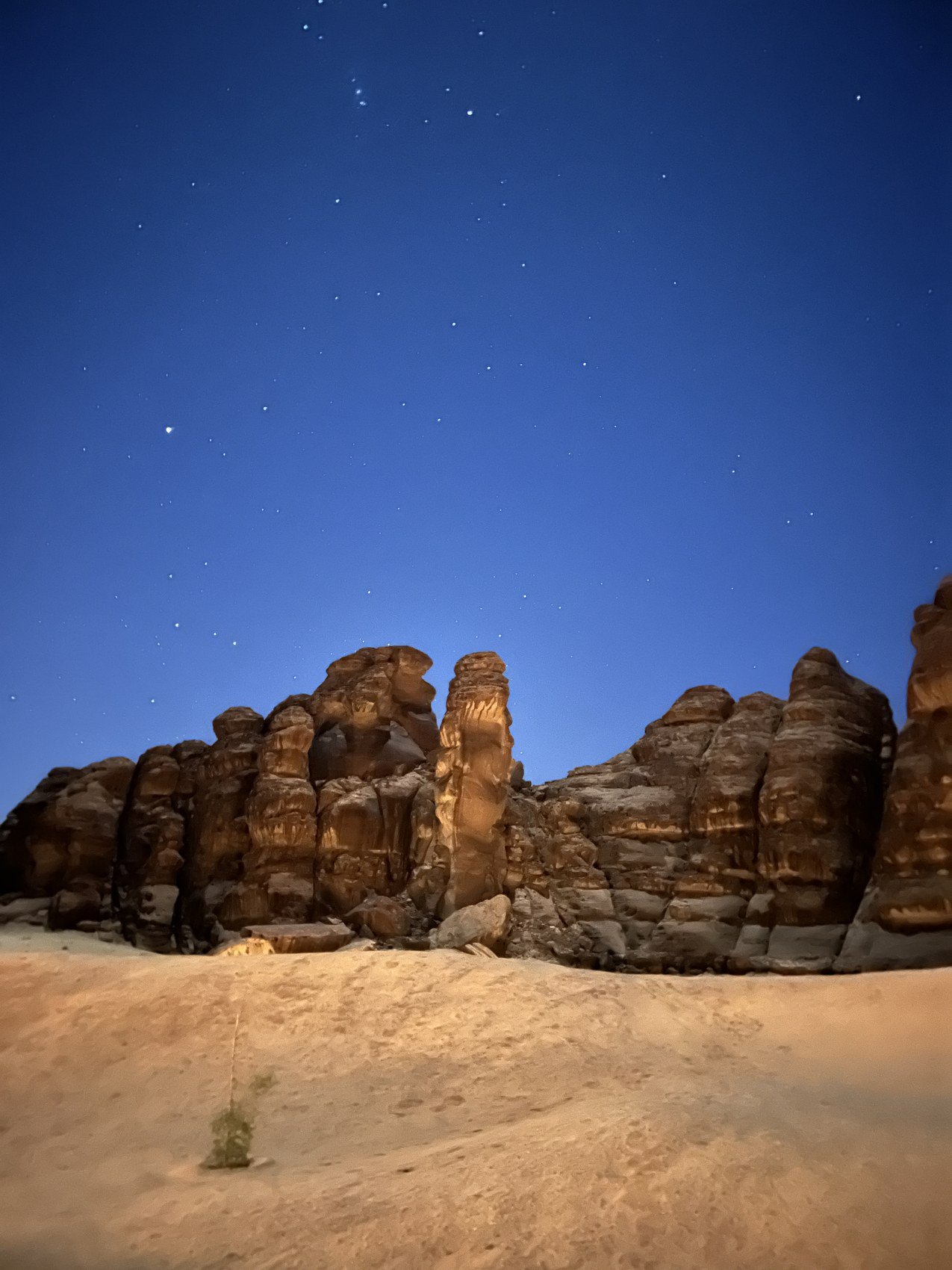
Book Habitas AlUla with me The stay sits inside Virtuoso, so the partner benefits come with it. This house takes no online bookings, so I make the reservation myself.The camp sits on the floor of Ashar Valley, in the north west of Saudi Arabia, and the first thing to understand is that the architecture has agreed to come second. Sandstone walls go up two hundred metres on either side and change colour through the day, and what has been put down between them is canvas, timber and glass, low to the ground, painted nothing in particular. I have stayed in places that fight their landscape. This one has read the room.
Getting there, and when to come
I came through Dubai. That is no longer the only sensible way in: Jeddah and Riyadh both work comfortably now, and the new Red Sea airport makes it possible to carry on to the coast when you are done here, which is the trip I would build today. AlUla has its own airport and the drive from it into the valley is short enough that you arrive without feeling you have travelled.
Go in the cool months. I was there at the beginning of January and the balance was exactly right: fresh in the evening, which is what the fires are for, and warm enough in the afternoon that the pool was a real option and not a photograph. The summer here is a different country.
The villa
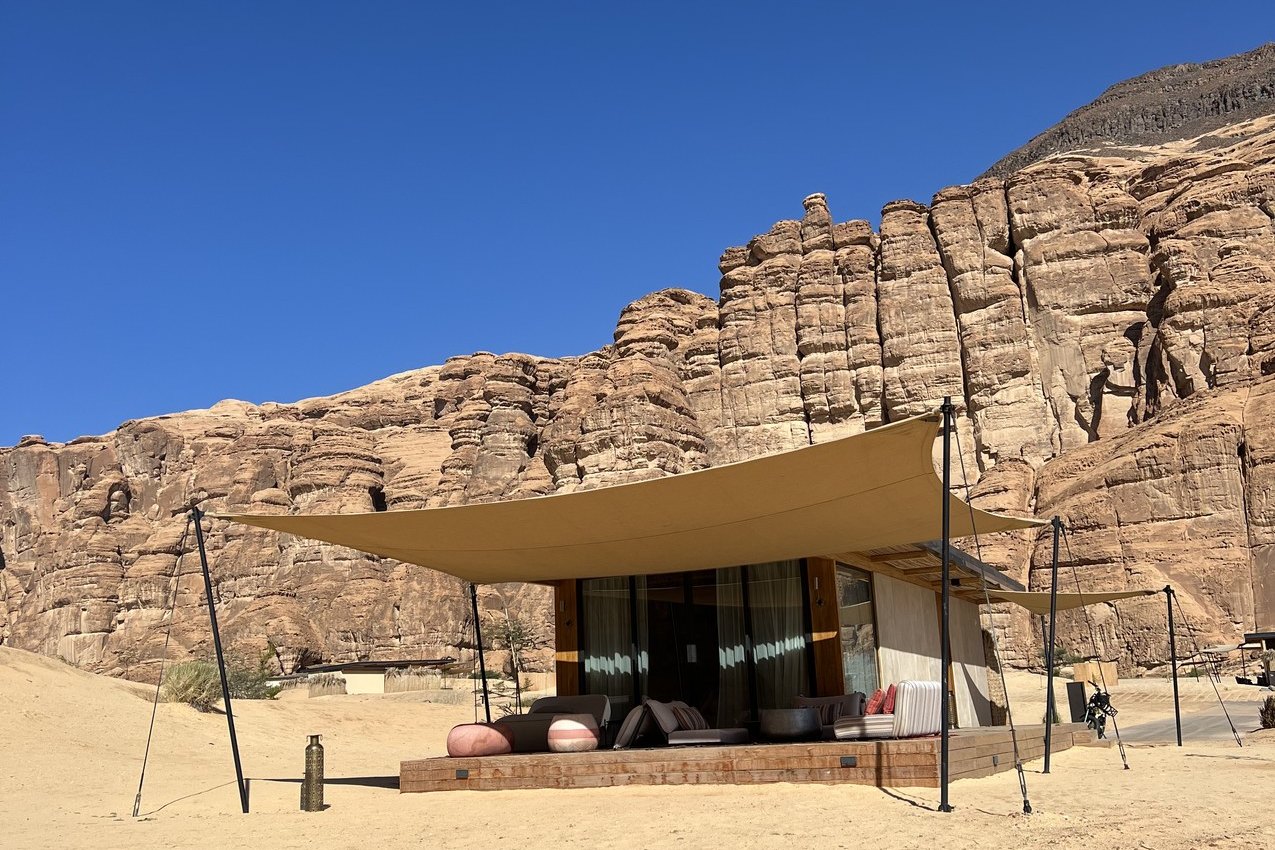
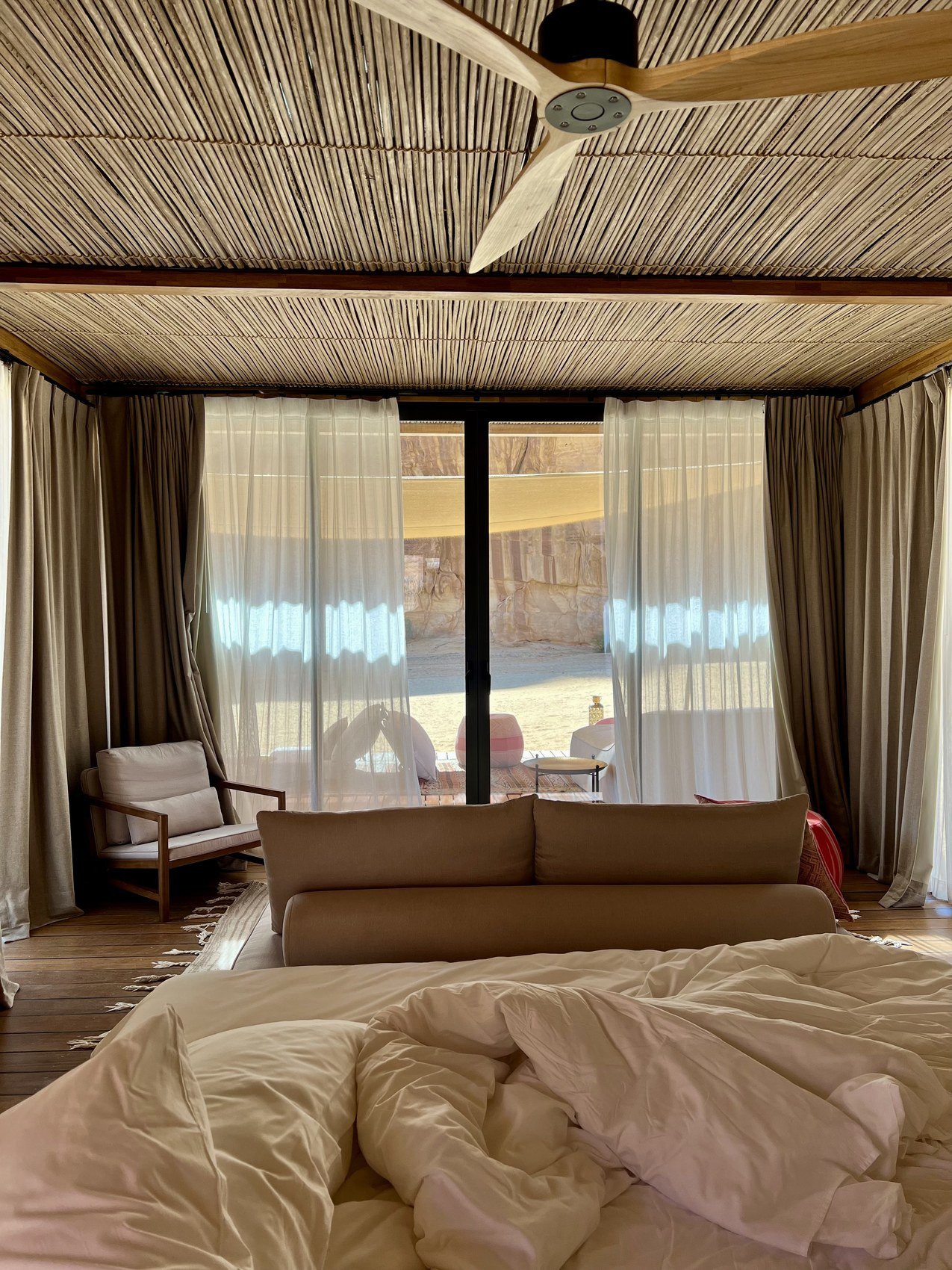
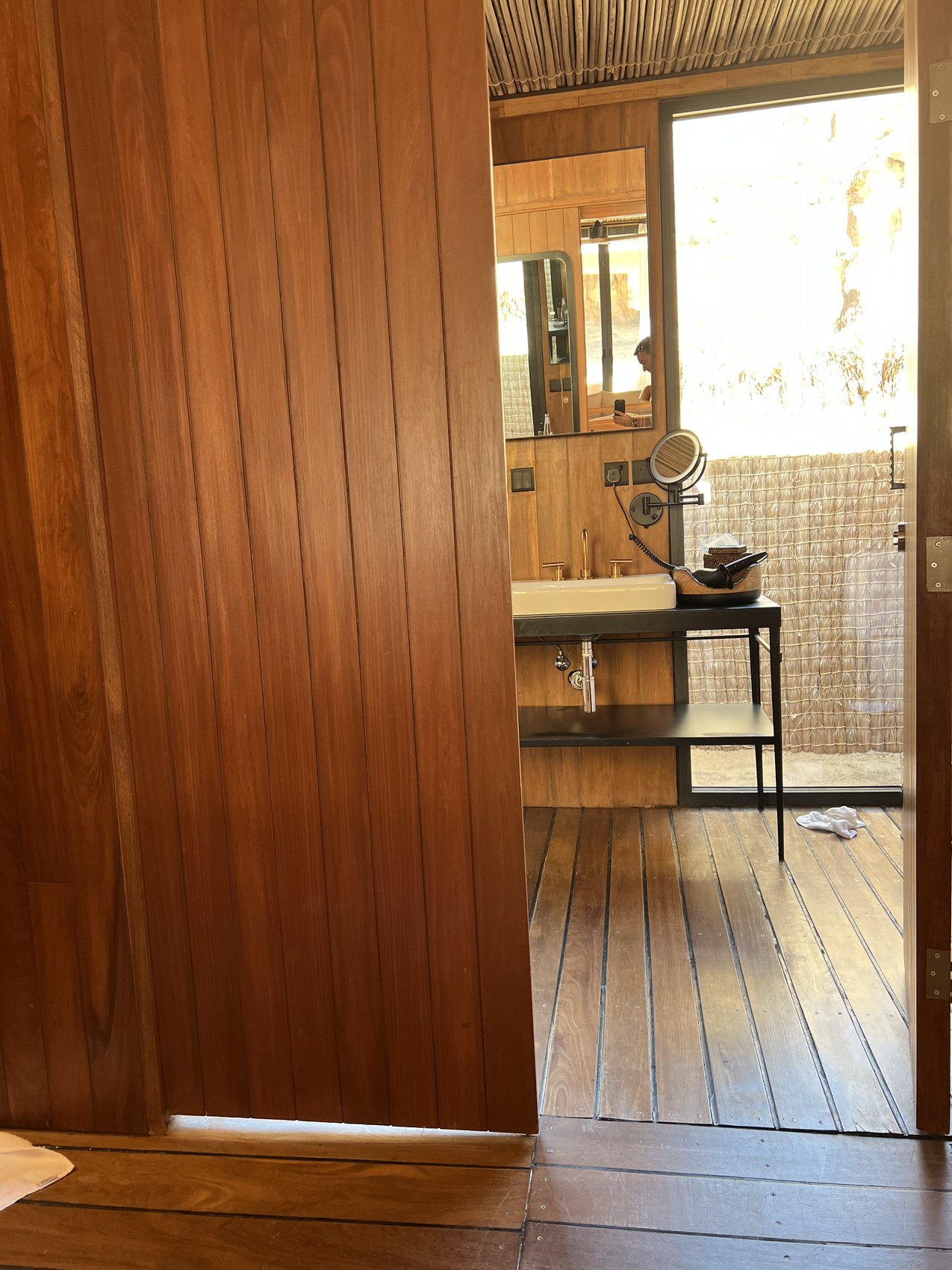
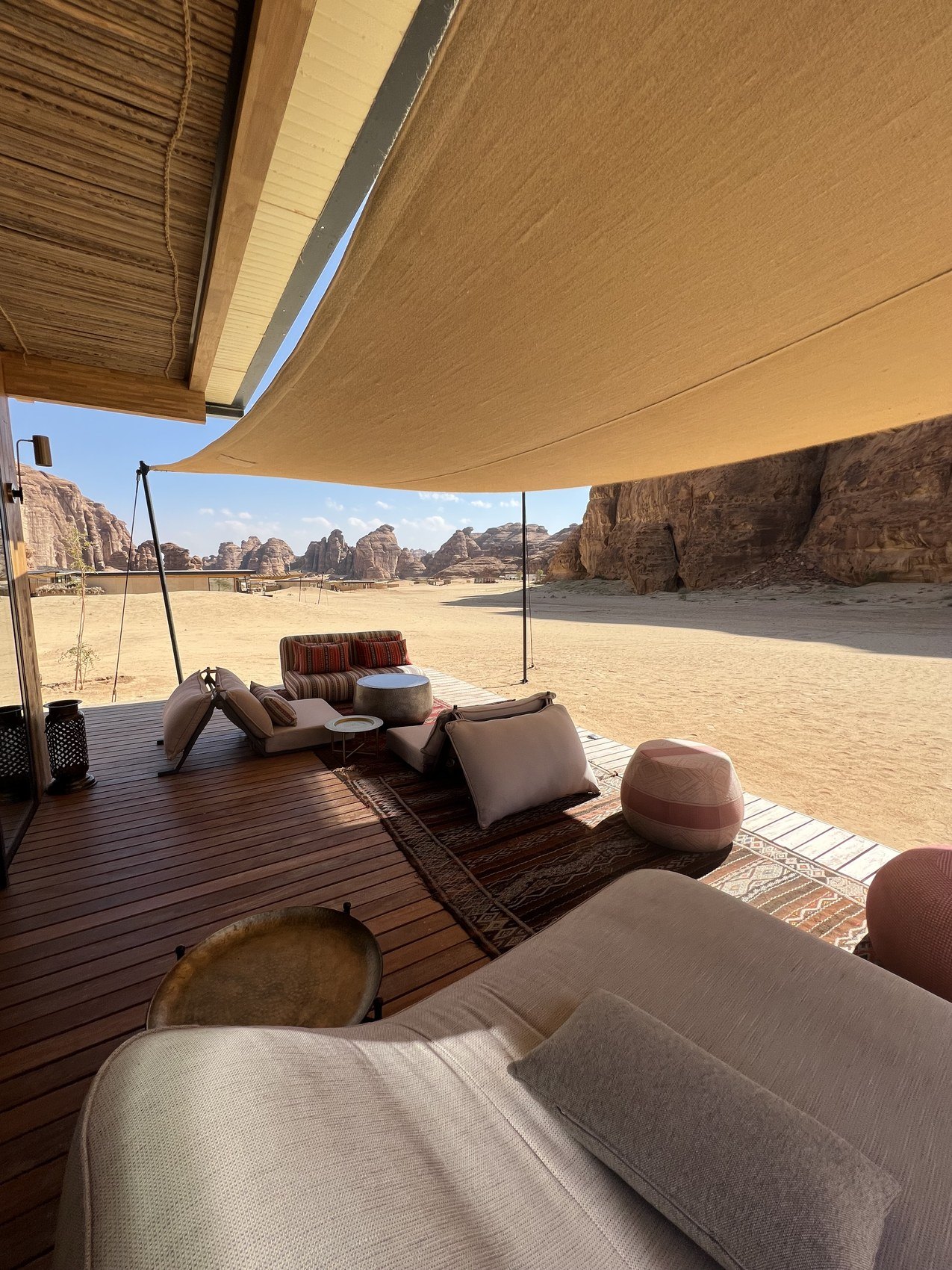
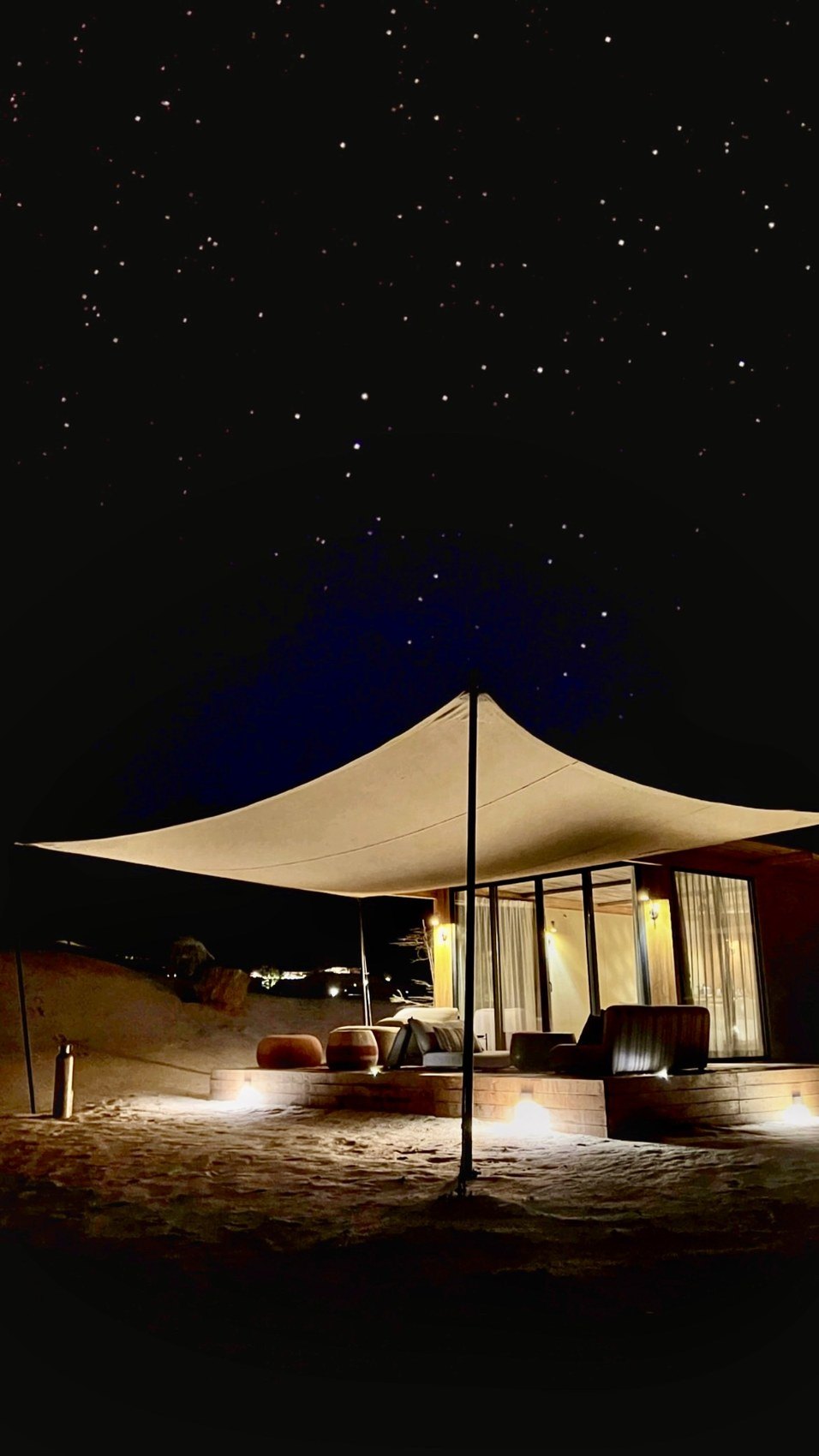
Mine was an Alcove Villa, which is the category pushed in close against the cliff, so the canyon wall is what you see from the bed and from the terrace and the first thing you meet in the morning. Canvas stretched over timber, a floor you can walk on barefoot, and a glass wall in the bathroom that puts the rock about where a mirror would normally be.
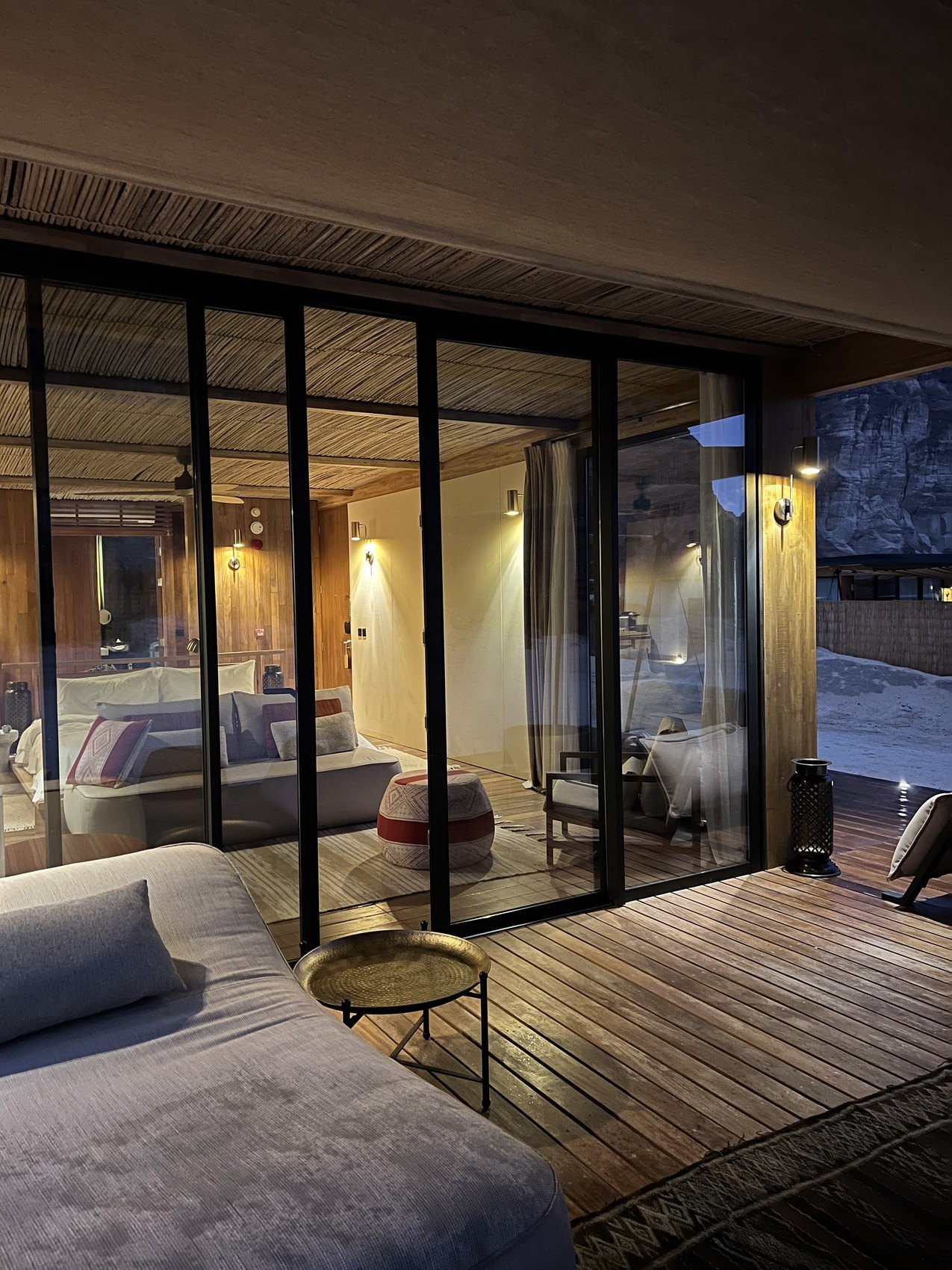
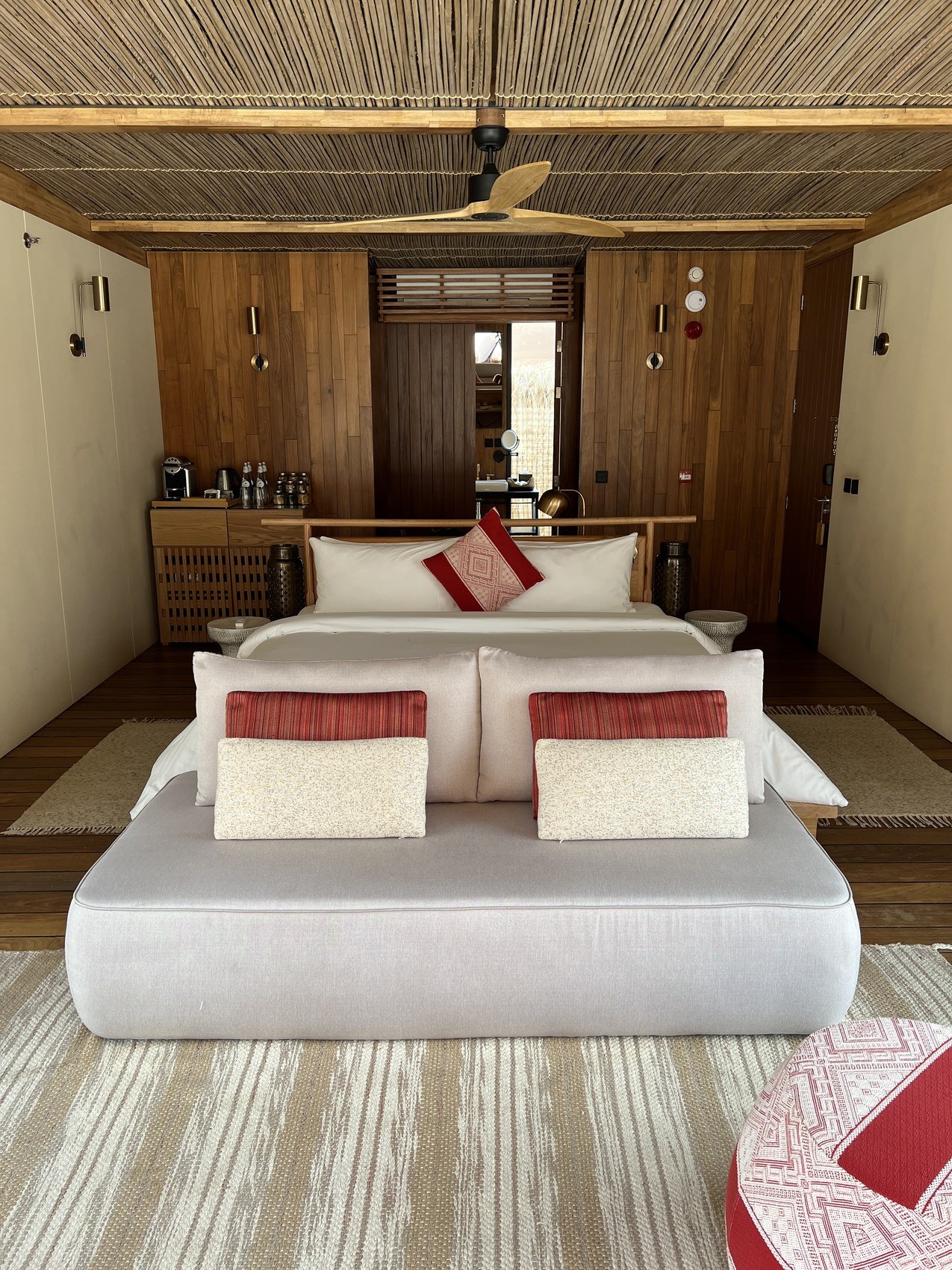
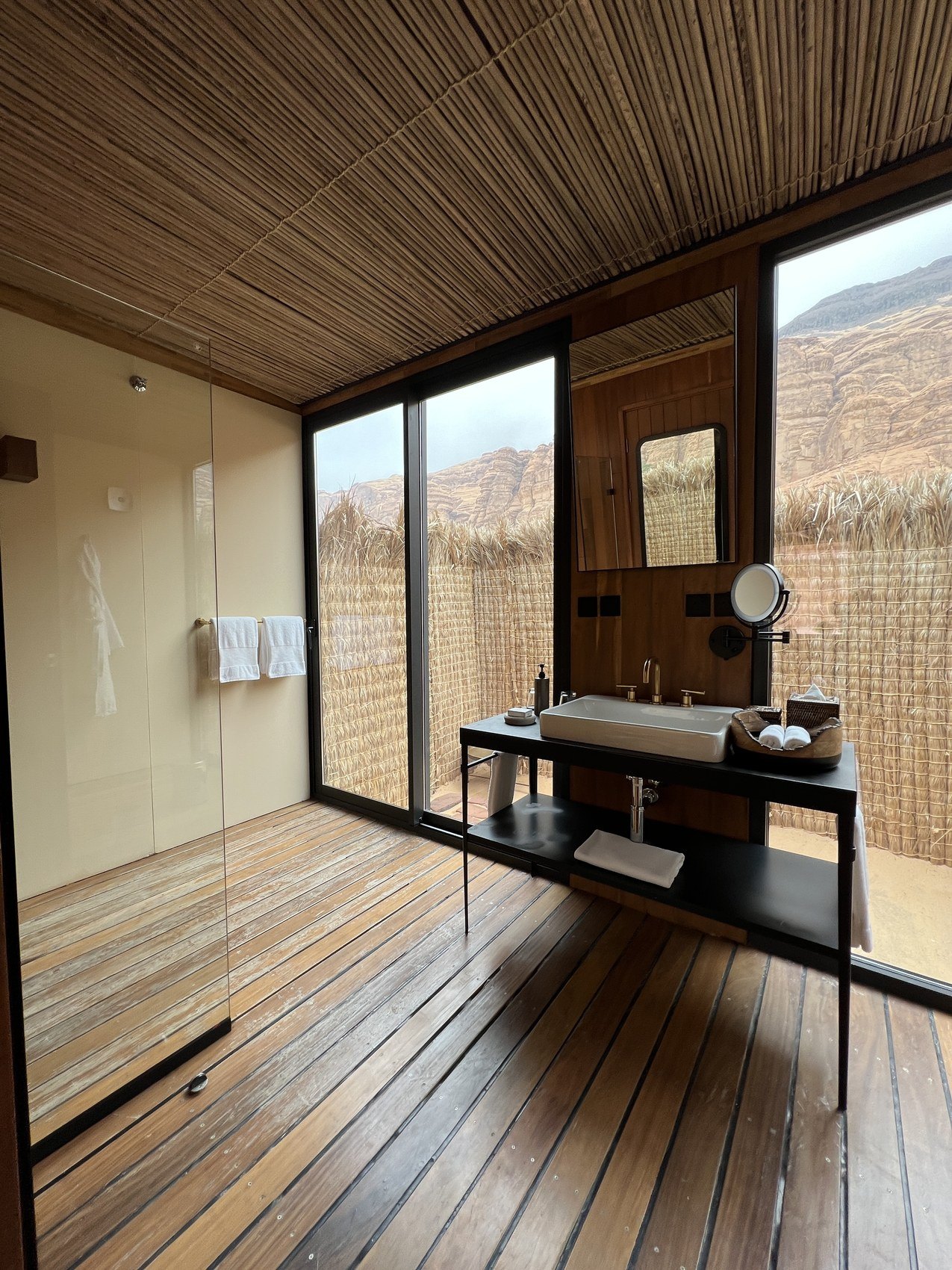
There is no television, which by now I take as a good sign anywhere. What there is: the terrace, the wall of rock, and a quiet that arrives about an hour after dinner and stays. I have slept badly in better known hotels.
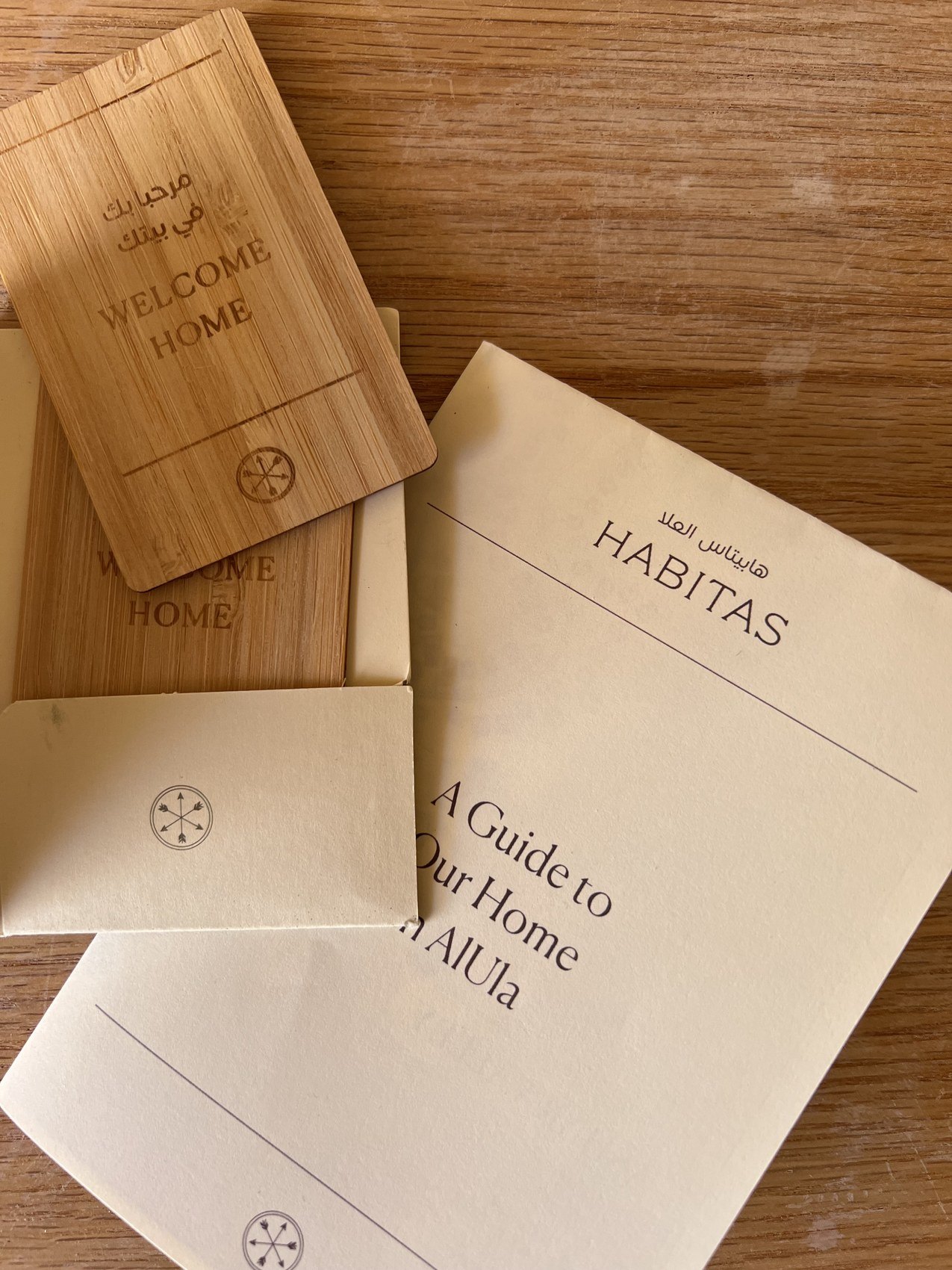
The arrival is handled with a wooden card and a folder that tells you what the place thinks it is. I am usually impatient with this sort of thing. Here the writing is short and the tone is right, and somebody has thought about what a person actually wants to know in the first ten minutes.
The camp
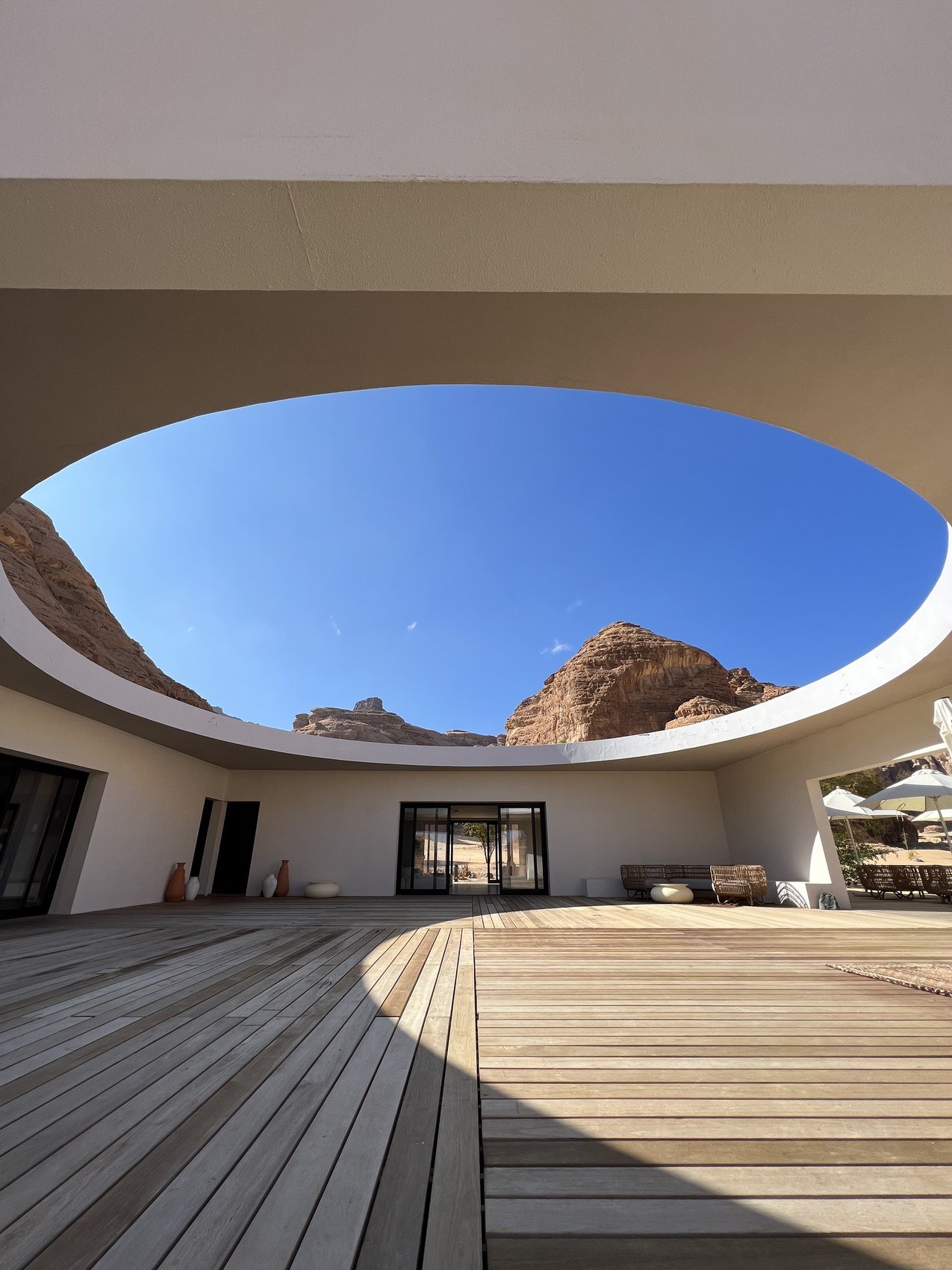
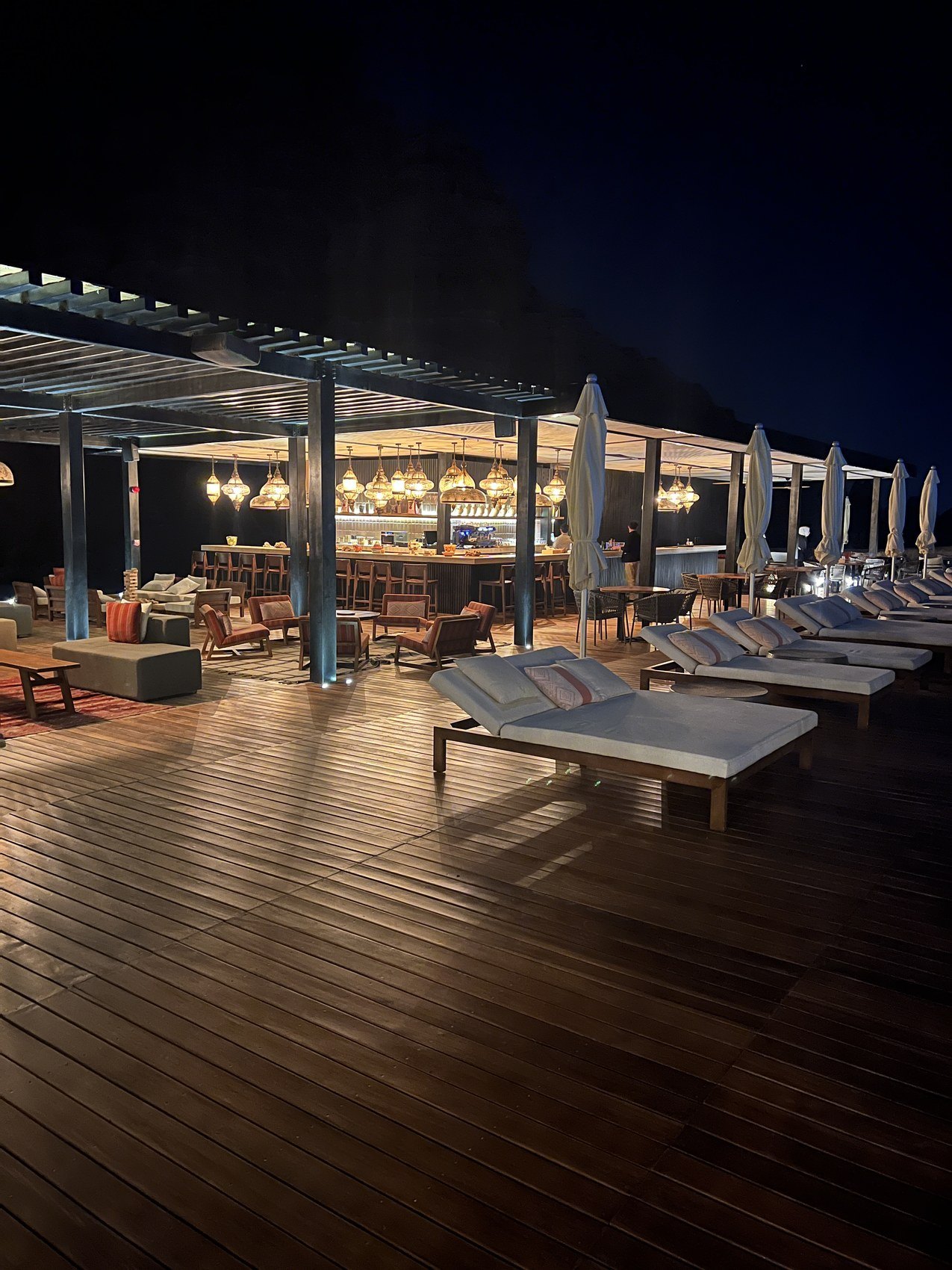
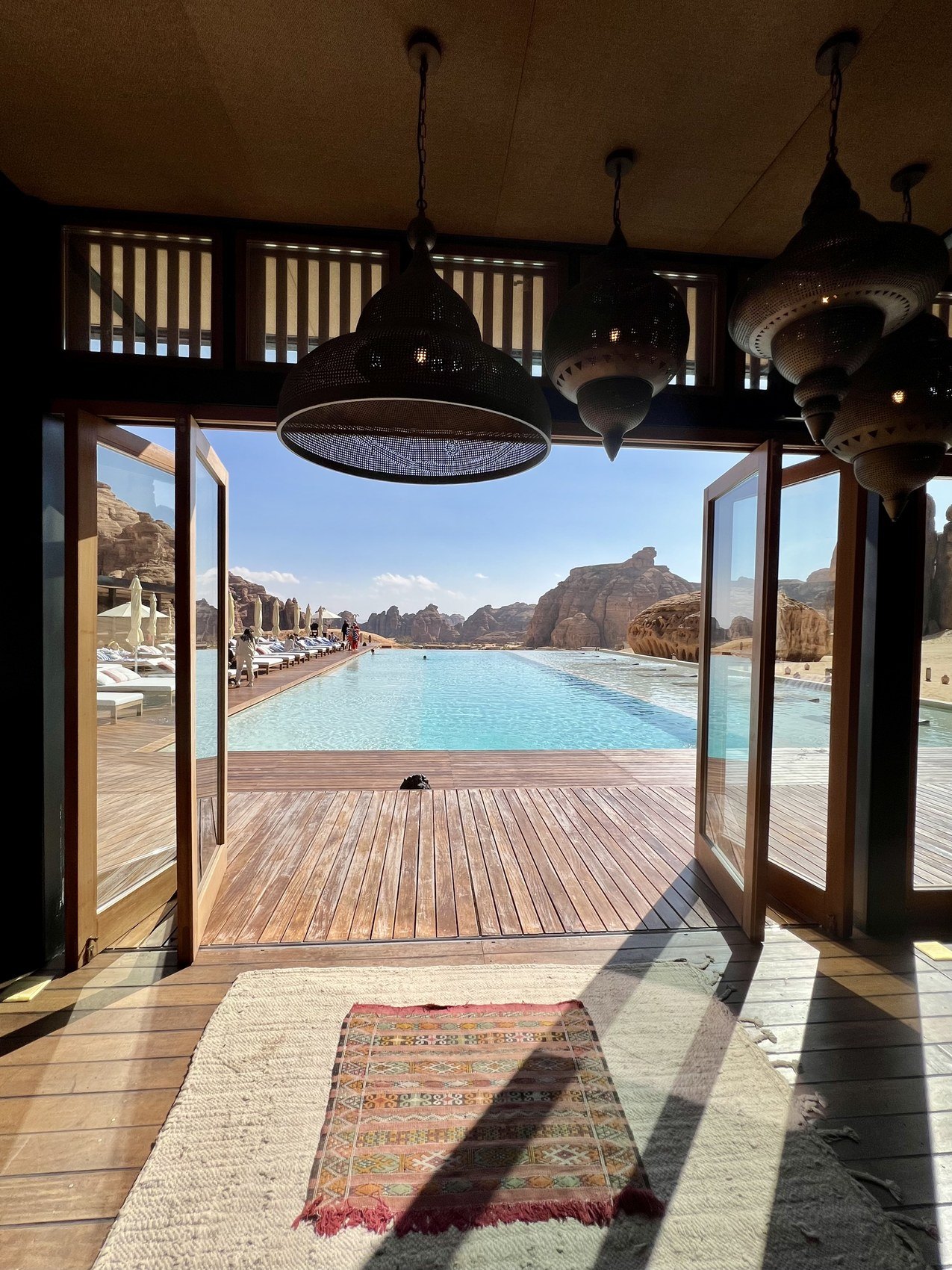
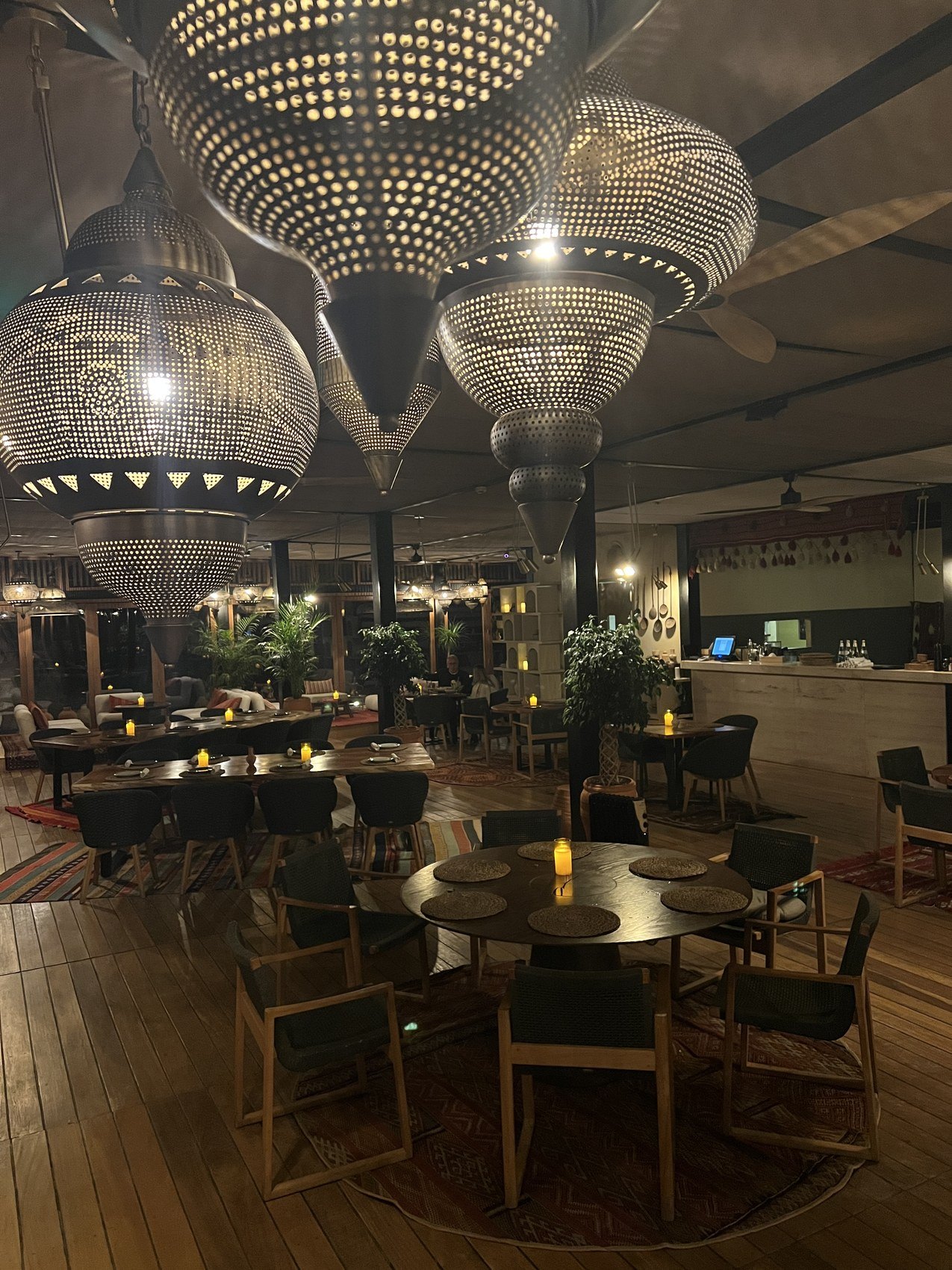
The common parts are built the same way as the villas and arranged so you can be among people or away from them without anyone having to manage it. A lounge under a round opening cut in the roof, so a disc of sky sits over the room and moves across the floor through the afternoon. Brass lamps the size of a child hanging over the deck. Reed, rope, canvas, and very little that shines.
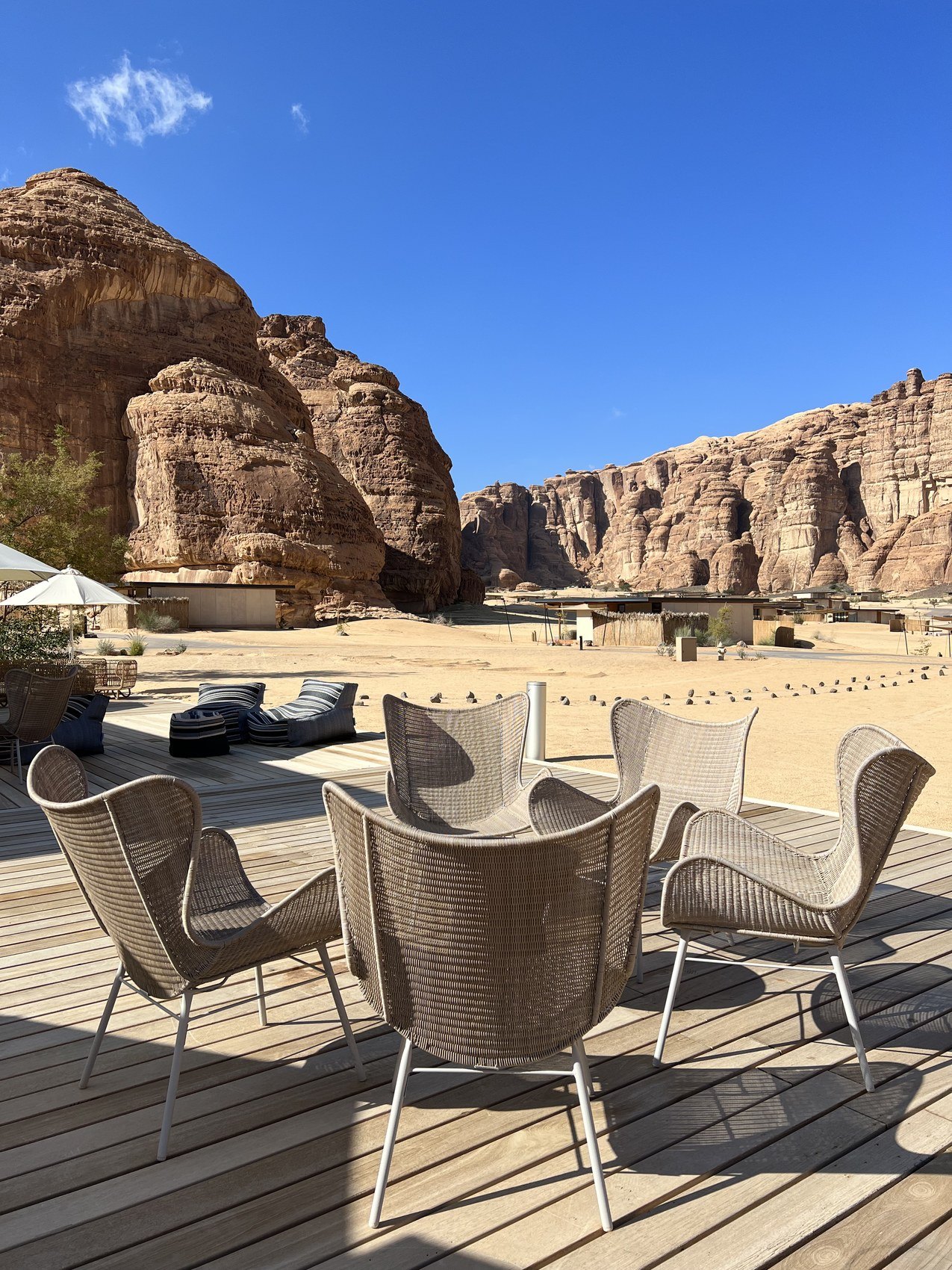
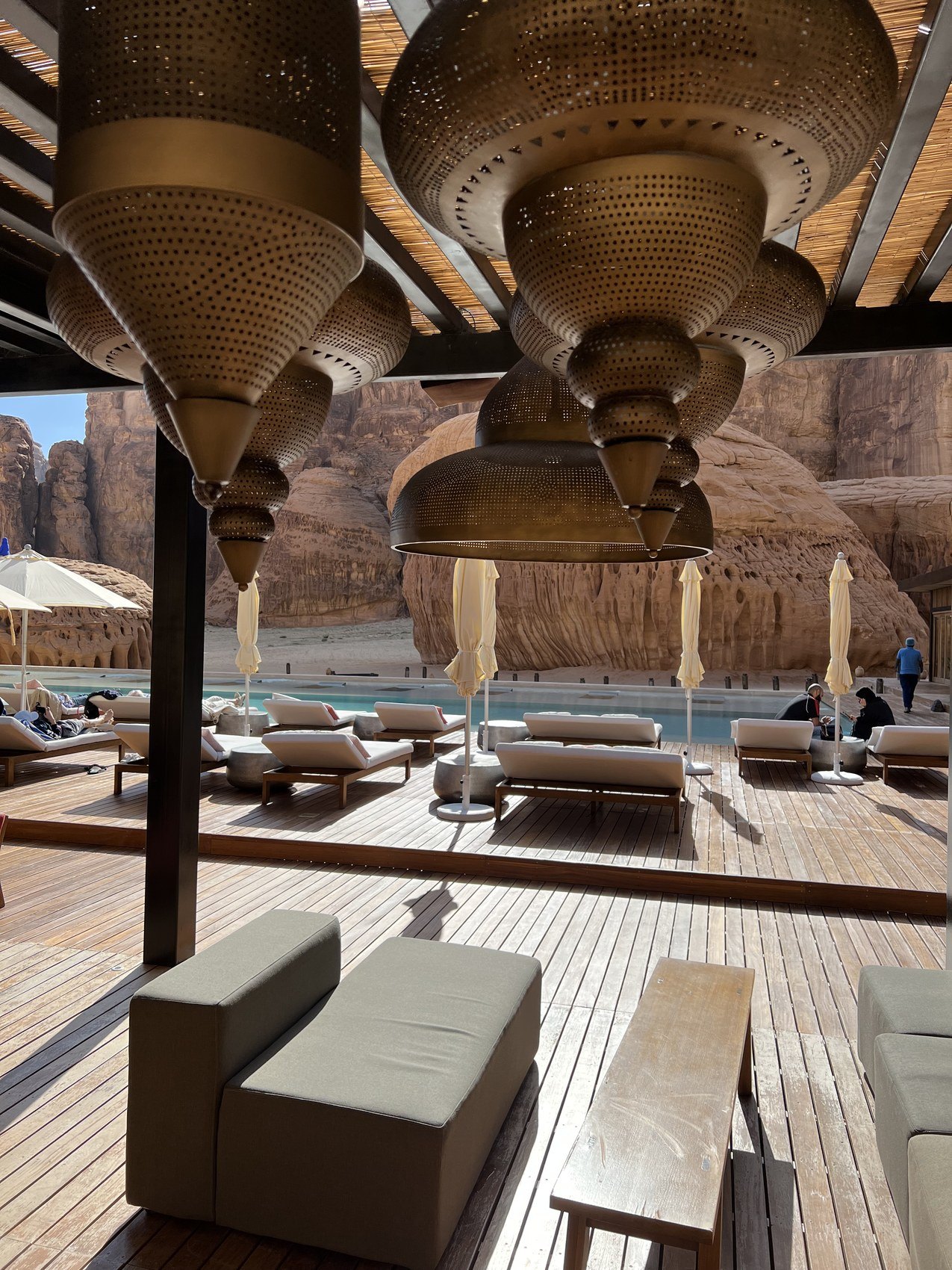
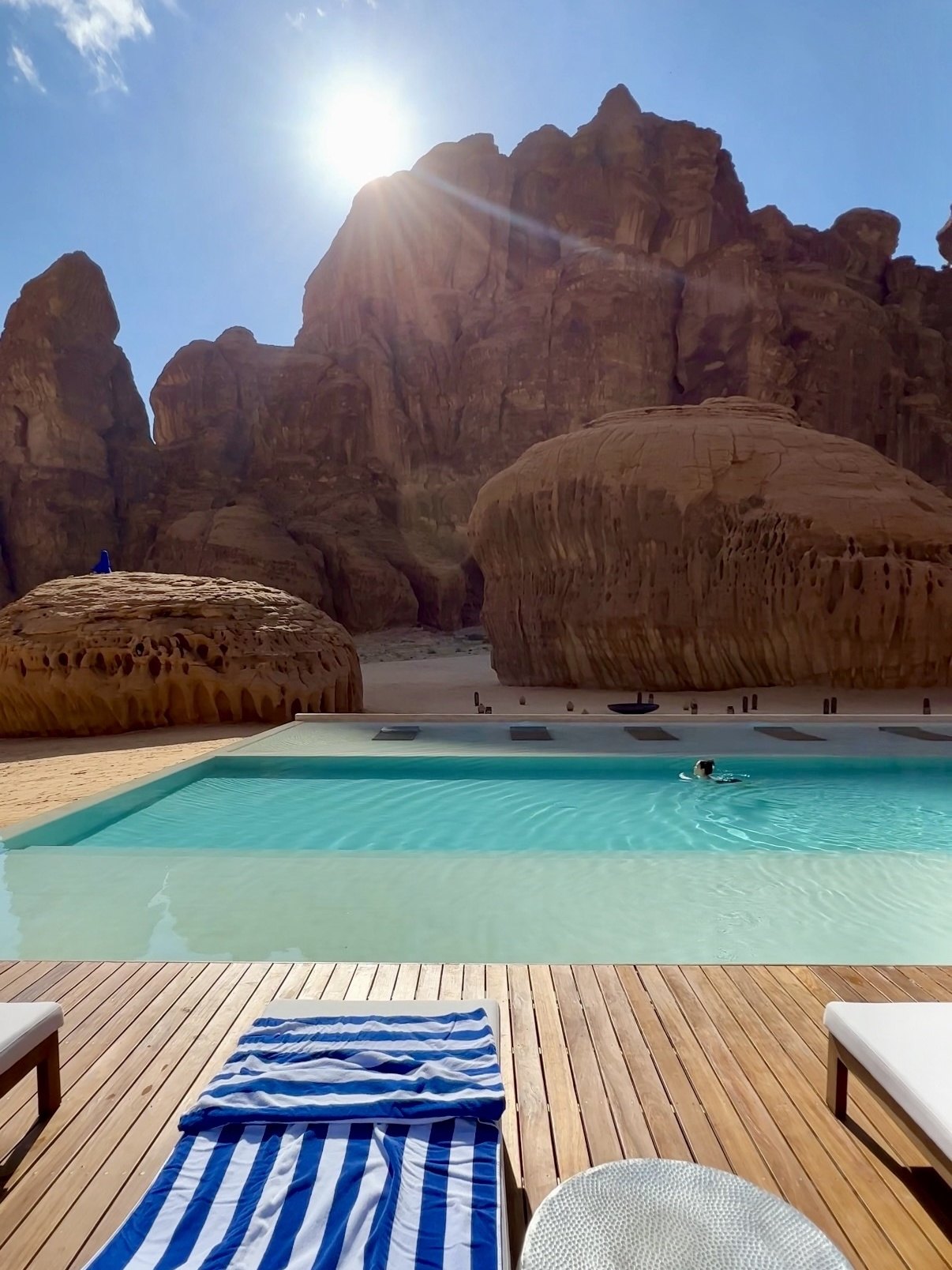
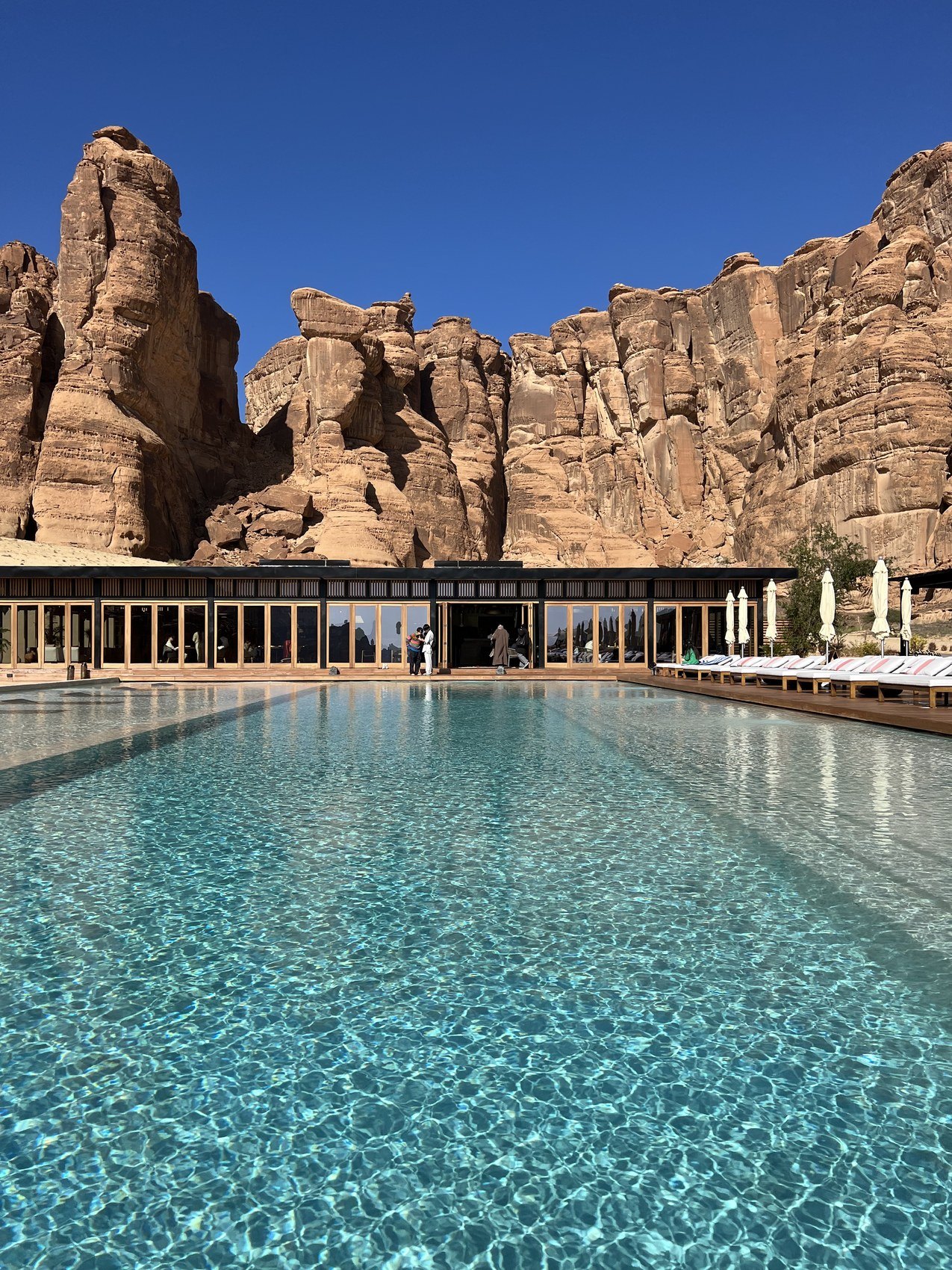
The pool is the piece of engineering I did not expect. It is long, it is properly cold, it runs along the deck with the colonnade of the restaurant at one end, and behind it the rock goes straight up. In January I had it to myself most afternoons.
Eating, and what there is to drink
The main room is Tama, which takes its name from the Aramaic for here and now, and it does breakfast as well as the evening. The cooking sets international dishes beside Middle Eastern ones and leans hard on vegetables and spices grown on the farms around AlUla, which in a valley of sandstone is a better trick than it sounds. Breakfast runs with the glass open and the canyon doing the decorating.
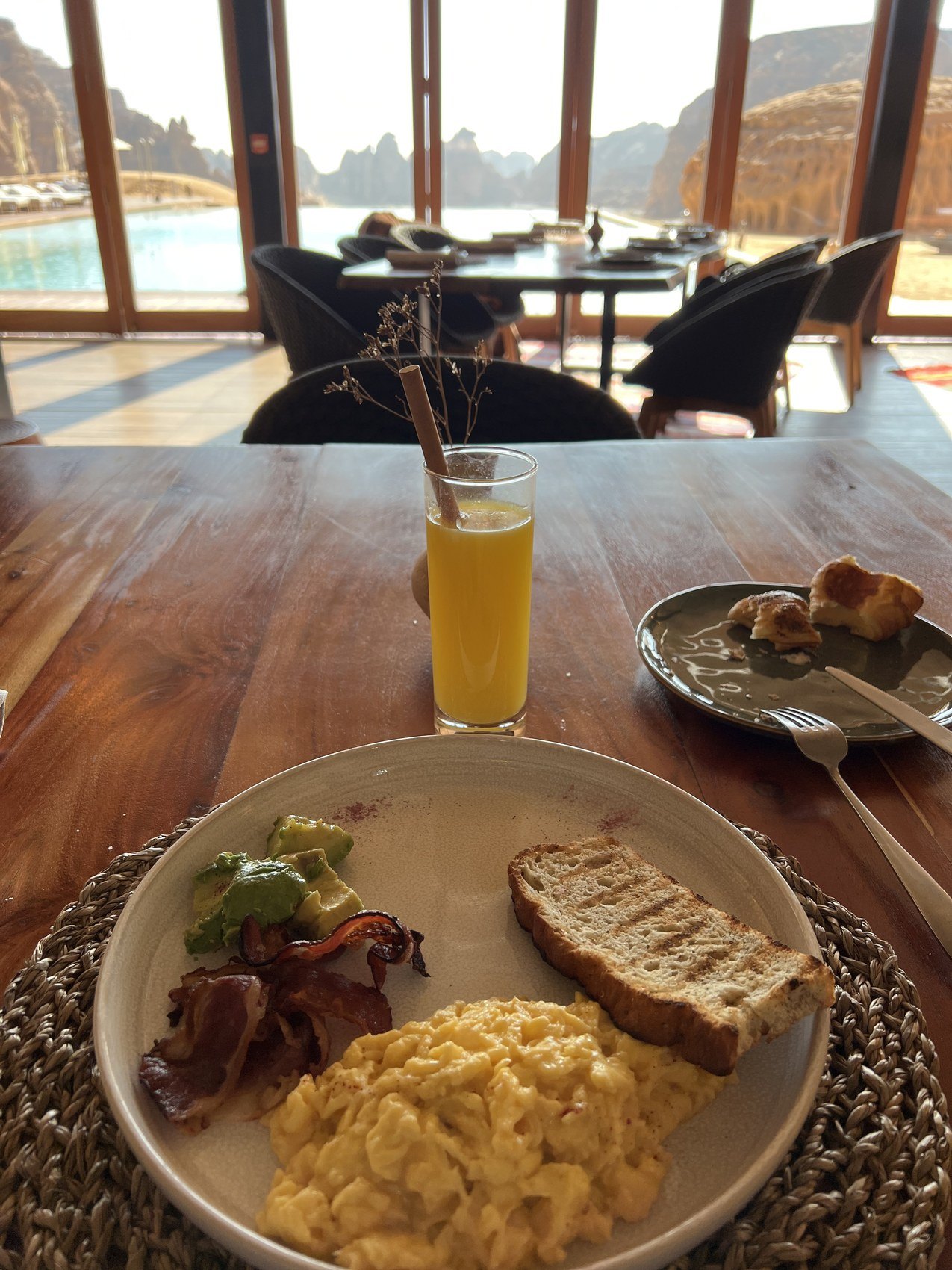
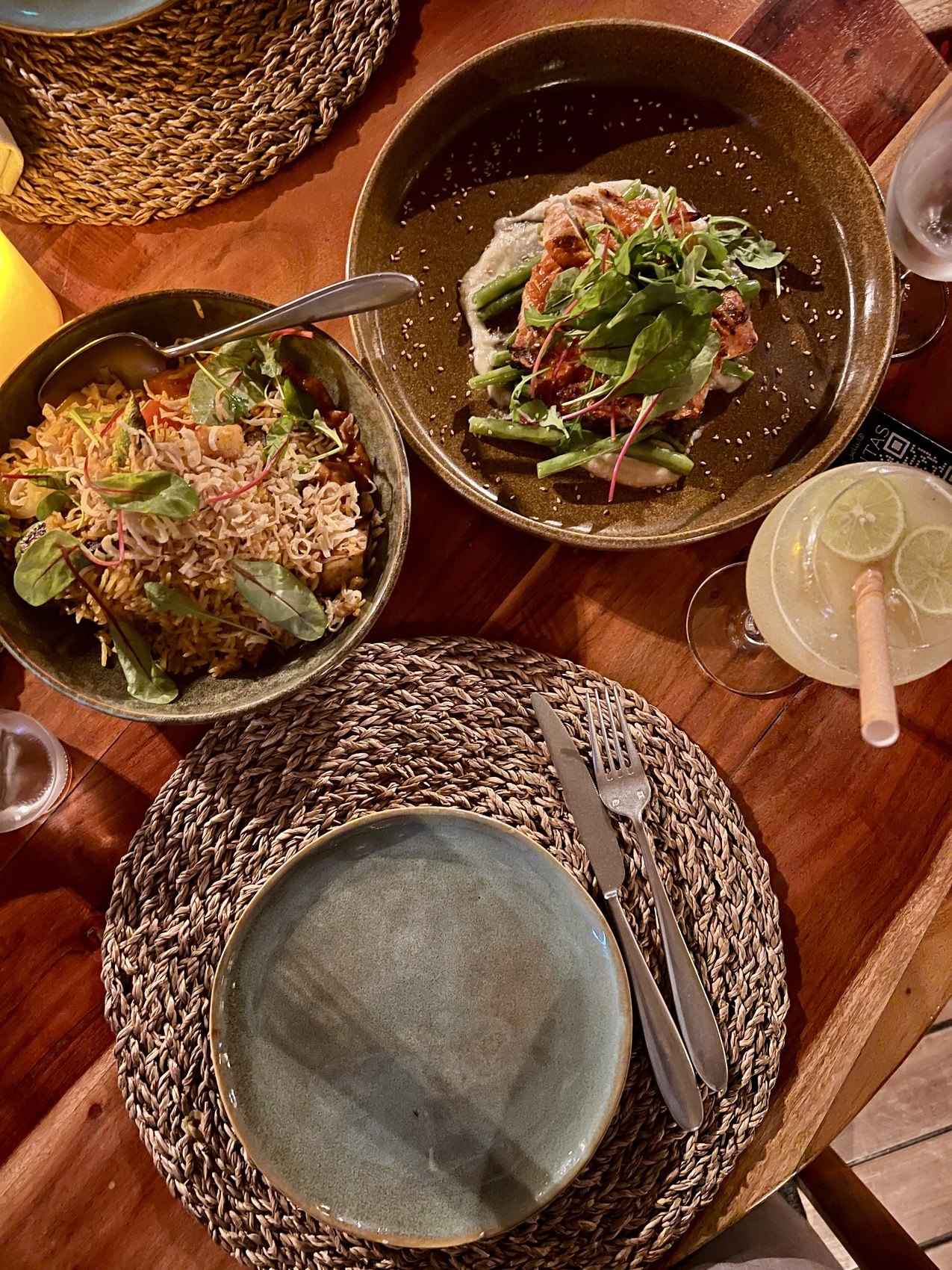
Now the part that has to be said straight. There is no alcohol. Saudi Arabia is dry and the camp is no exception, and a person who finds this out on the first evening will feel it. What is put in its place is better than the usual apology: the juices are pressed from fruit, nothing from concentrate and nothing sweetened, and I went through an improbable quantity of watermelon in four days. The infusions and the mixed non alcoholic drinks are taken seriously by somebody who clearly enjoys the problem.
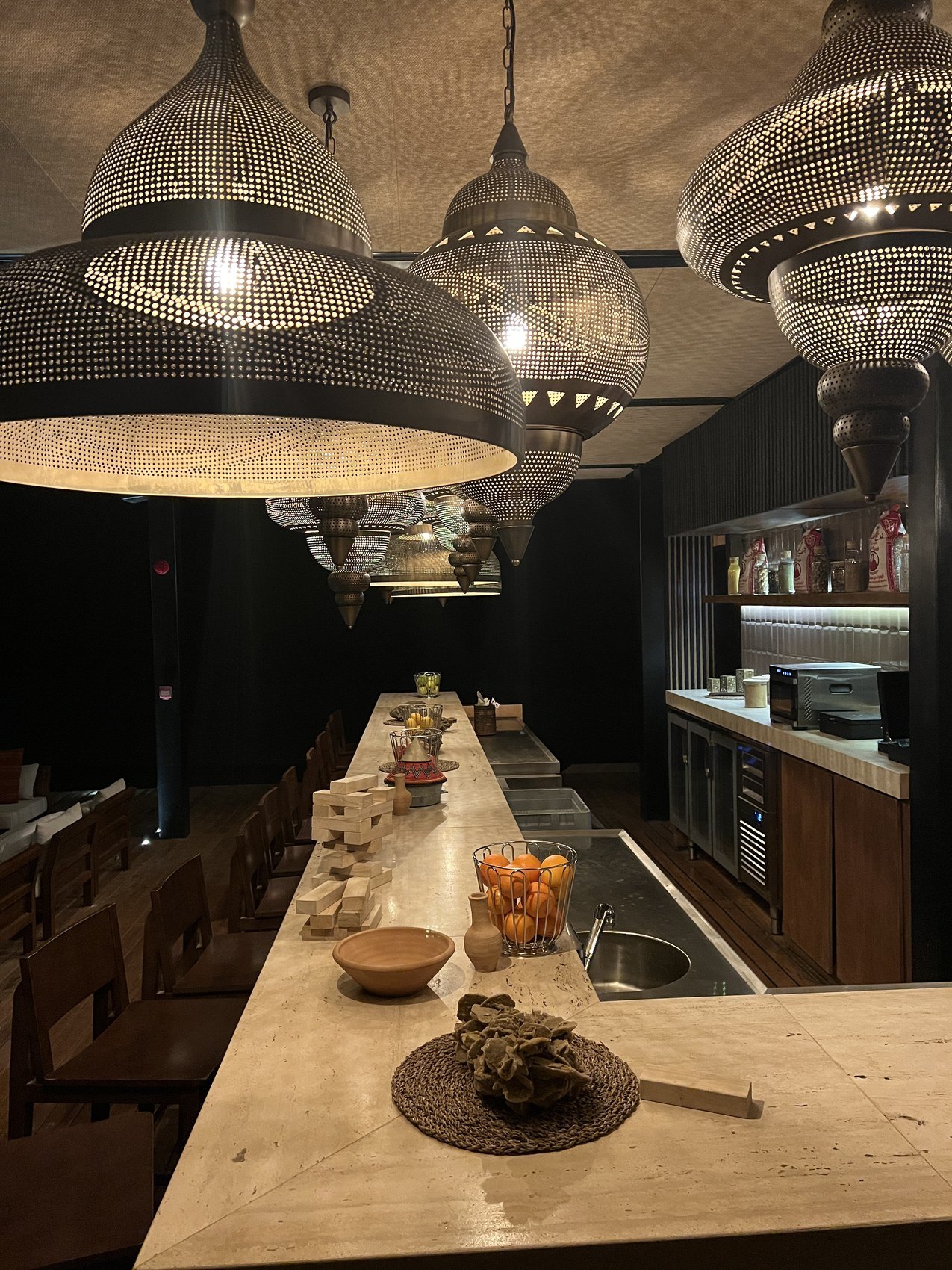
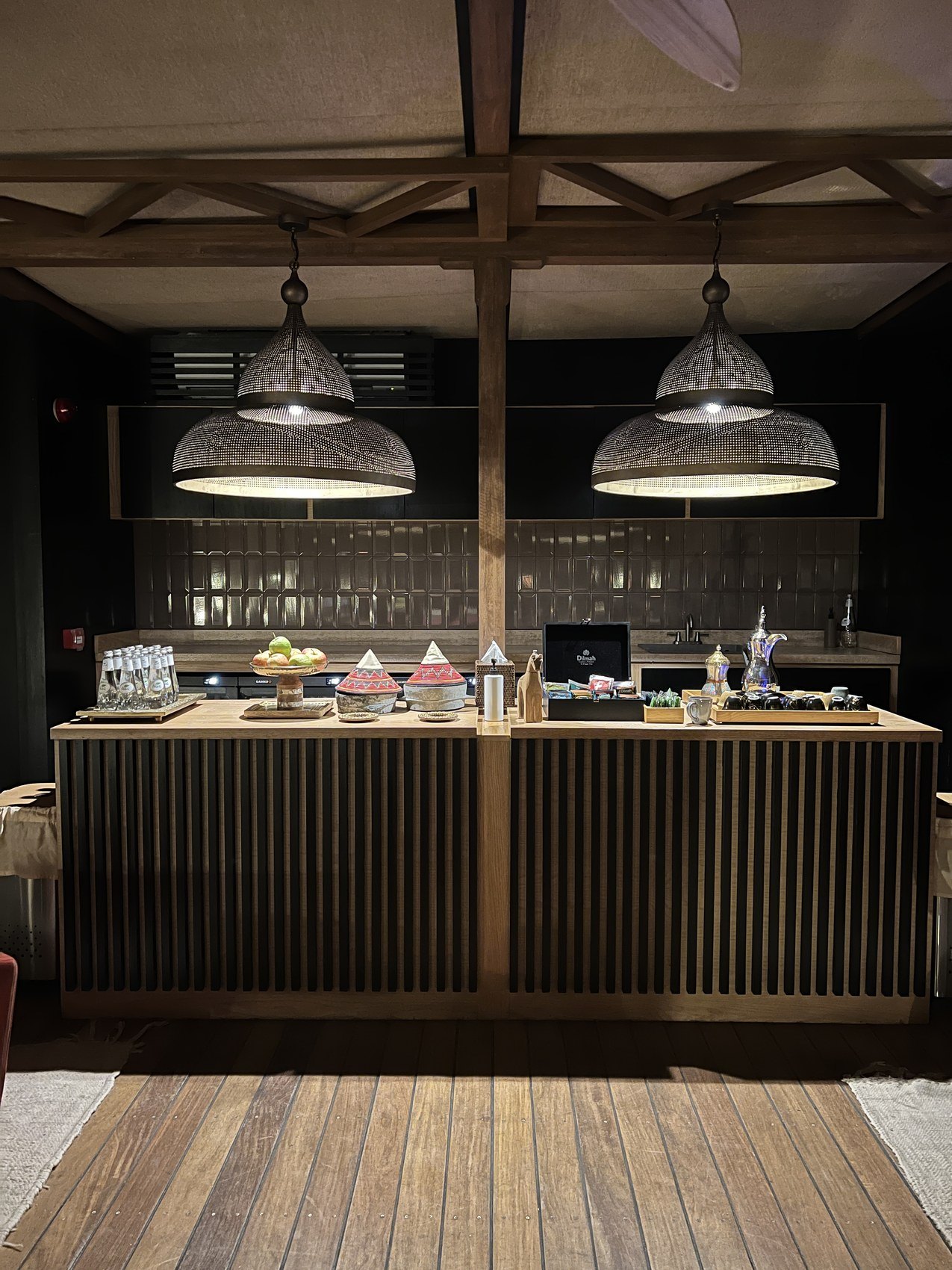
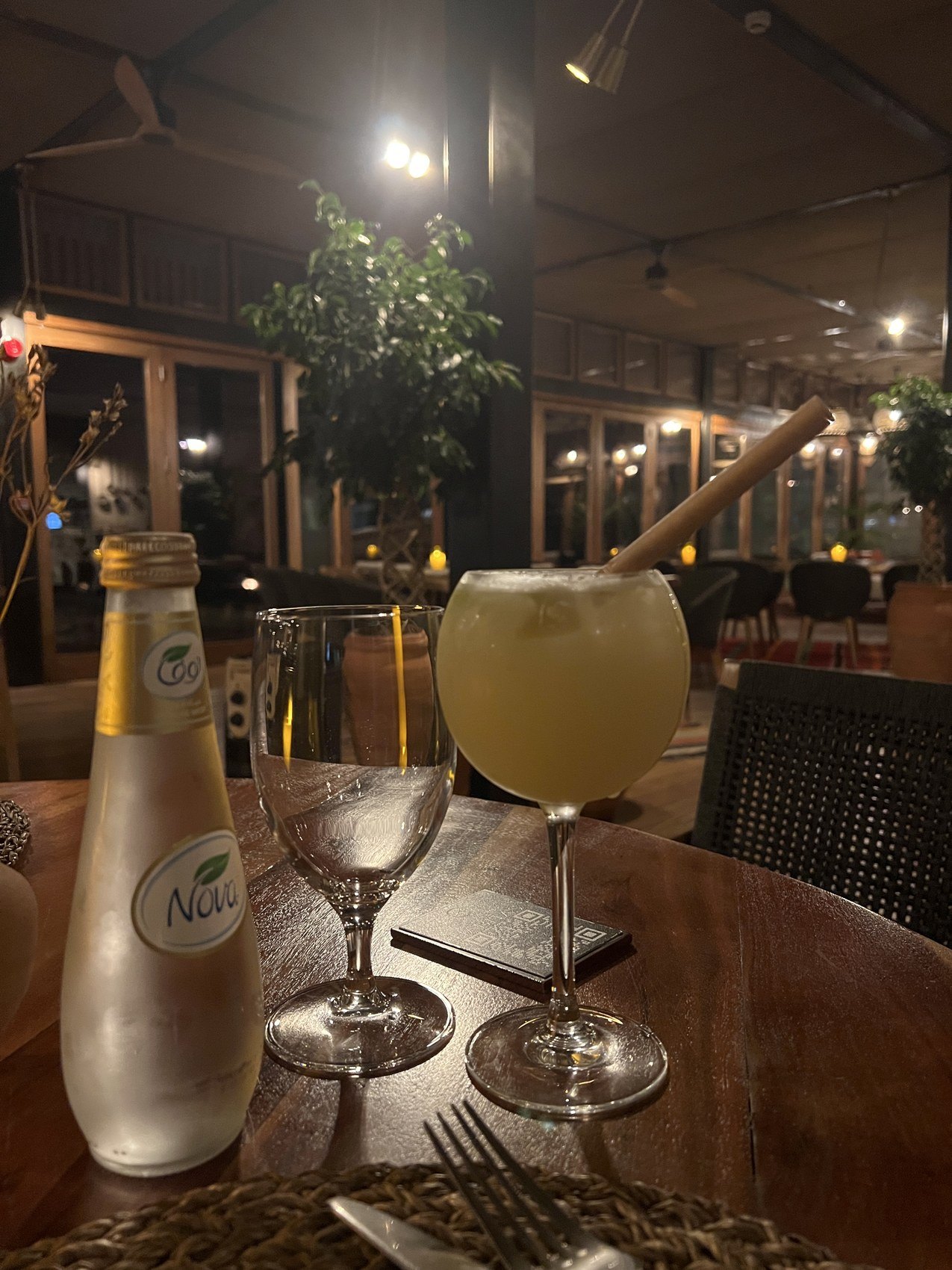
Over at Caravan the arrangement is looser and I liked it enormously. Food trucks parked permanently on the sand, communal tables, fires, cushions. A mirrored vintage truck turns out wood fired pizza. A pink one does ice cream. A third handles coffee, fresh juice, acai bowls and shakshuka in the morning. It is the same company with its collar off, and after three nights of Tama it lands exactly right.
The bicycle, the swing, and the nets
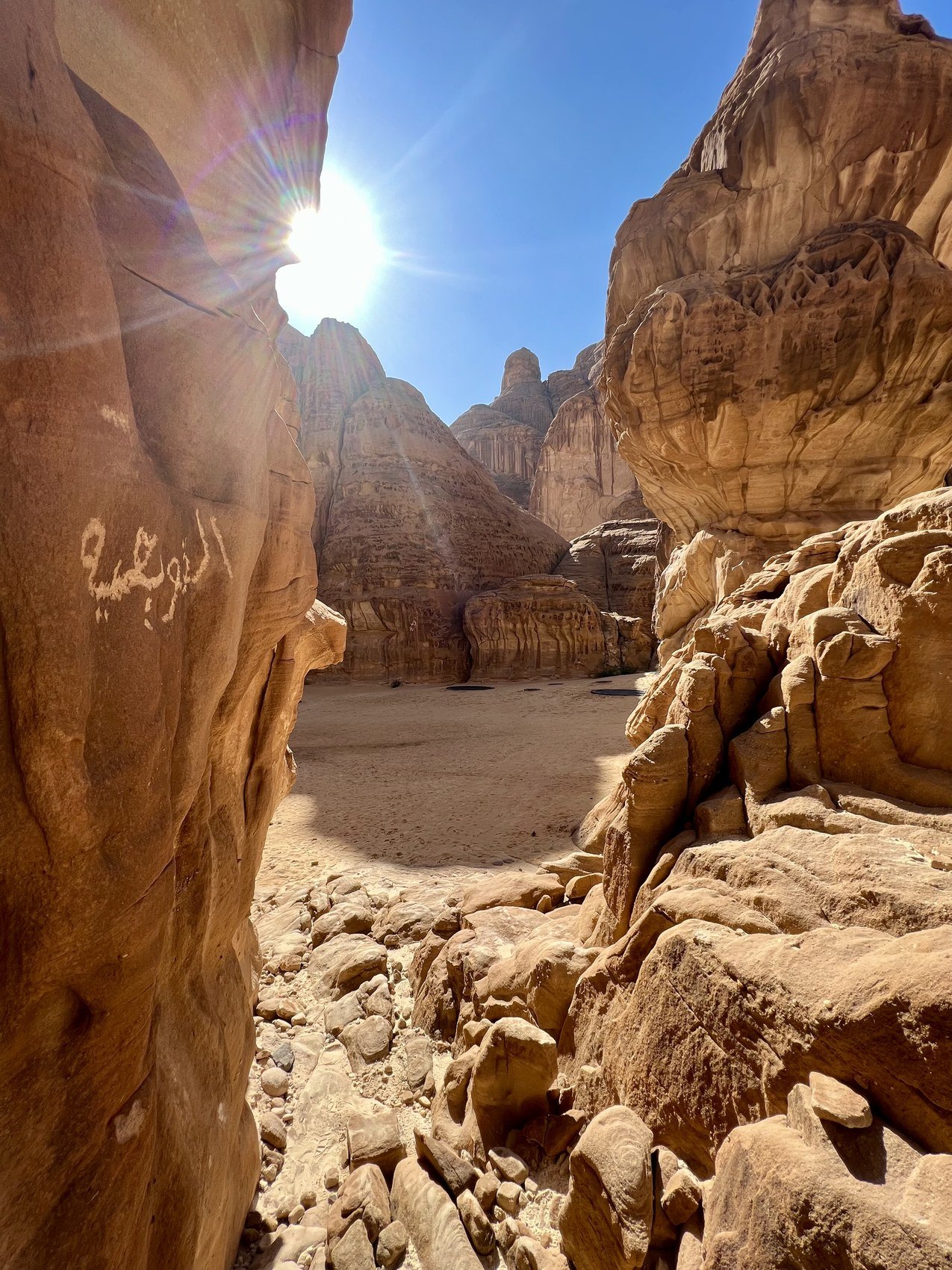
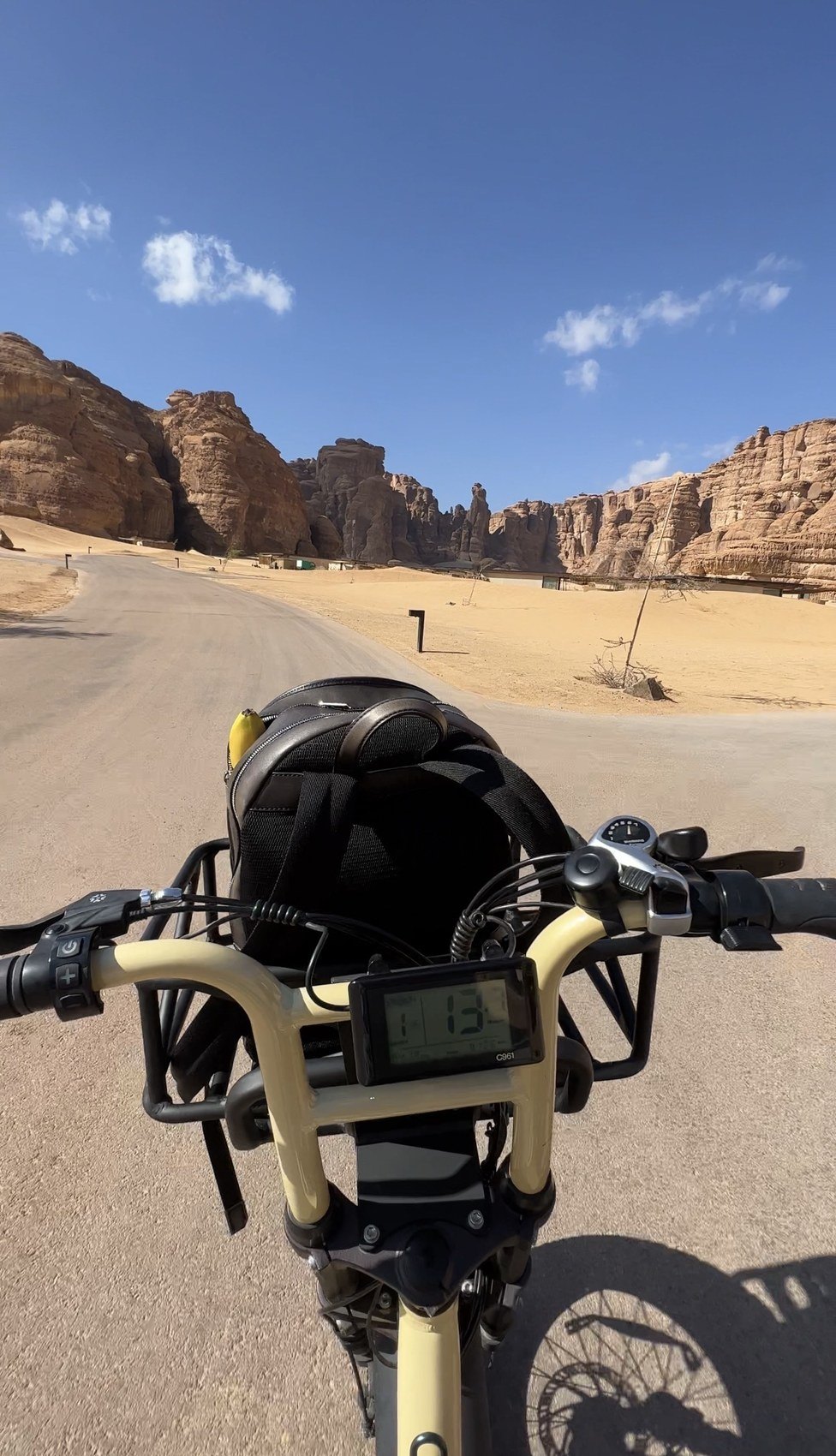
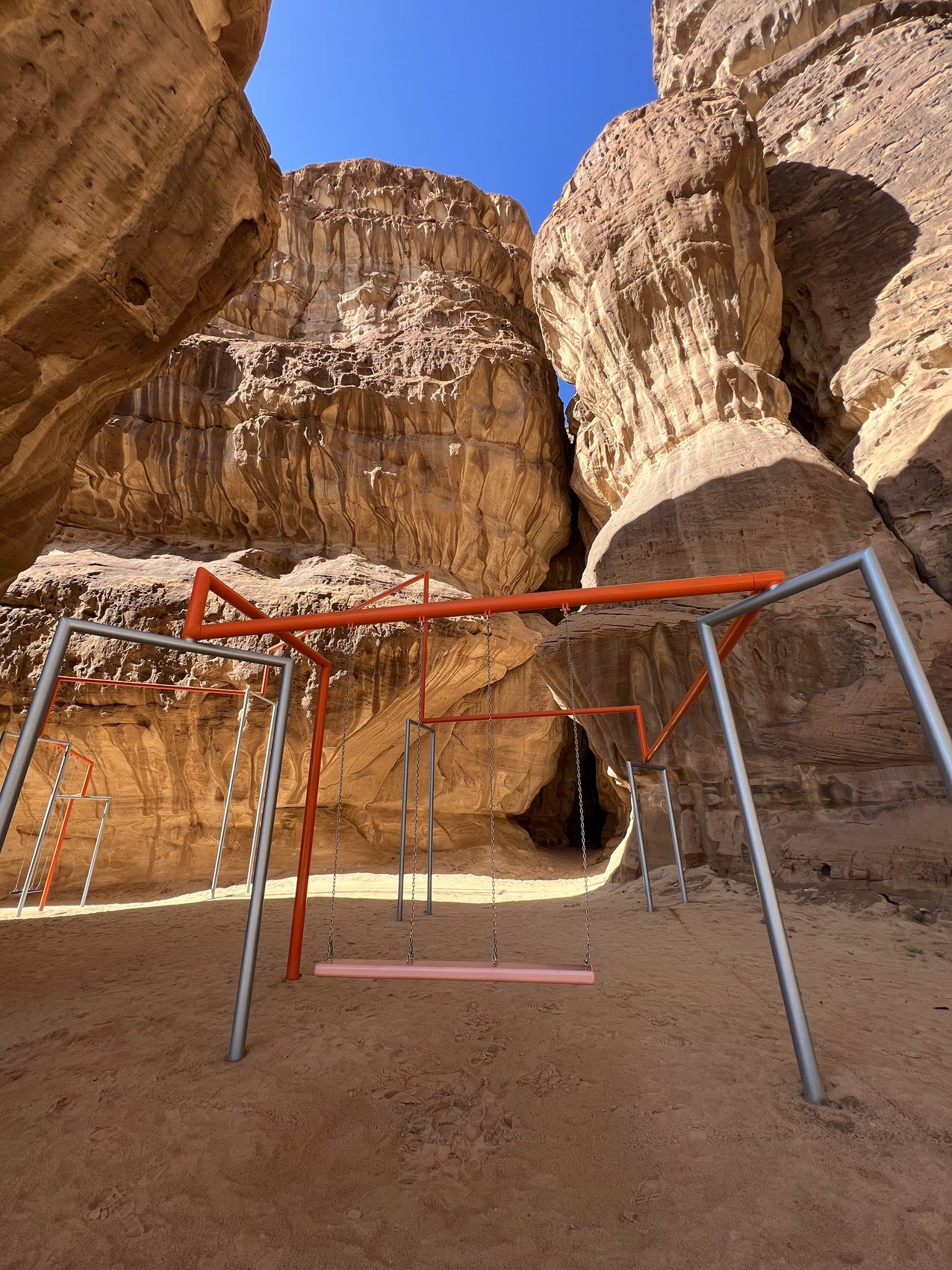
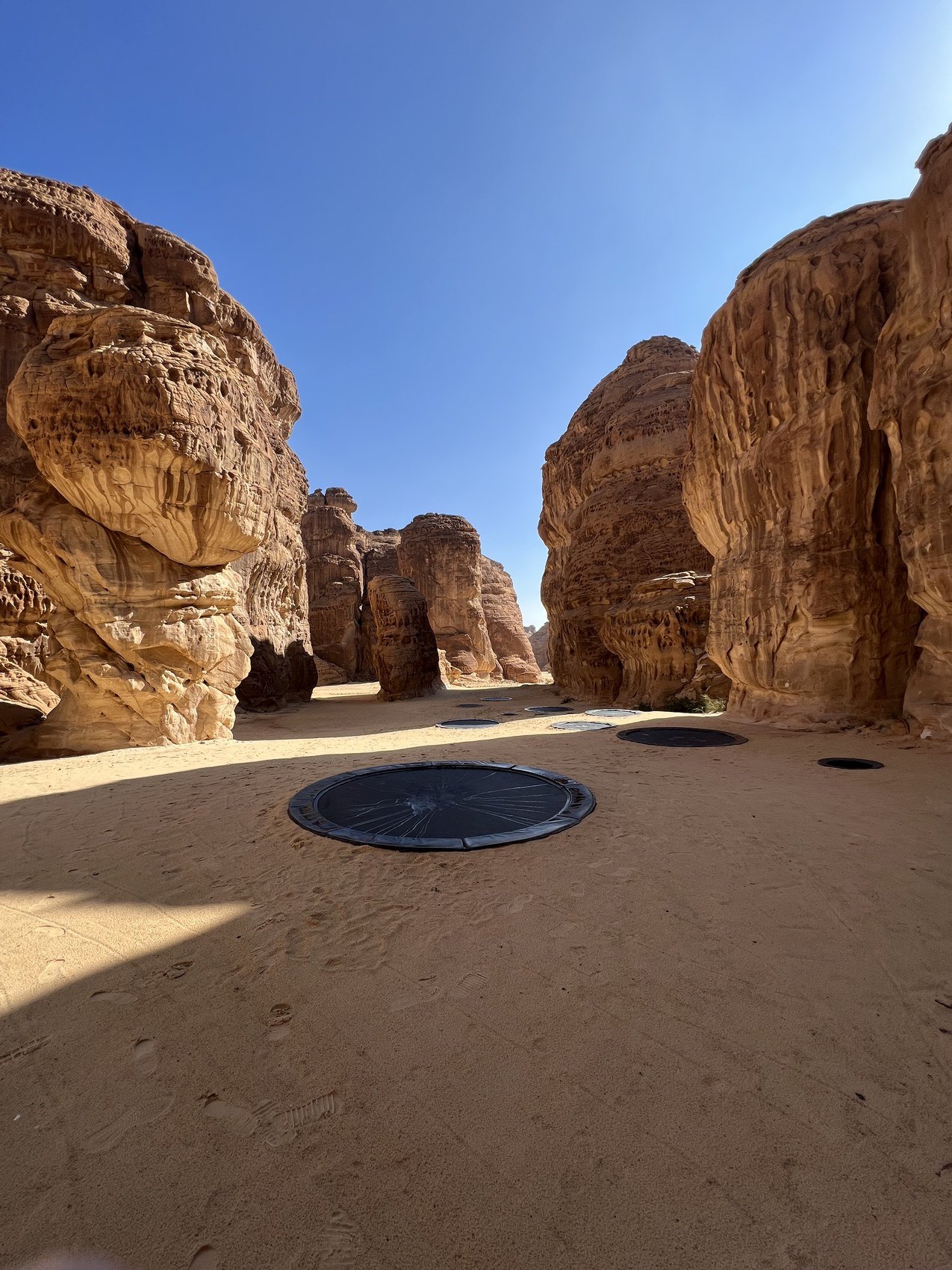
Every guest is given an electric bicycle. In a valley this size that is transport, and it changes the stay: the camp stops being somewhere you sit and becomes somewhere you leave and come back to. Things have been placed out in the landscape for people who go looking. A swing hung where the ground drops, so that at the top of the arc you are out over the canyon with nothing underneath. Elastic nets strung inside a natural amphitheatre of rock, which is a strange and very good thing to find at the end of a track.
The evening
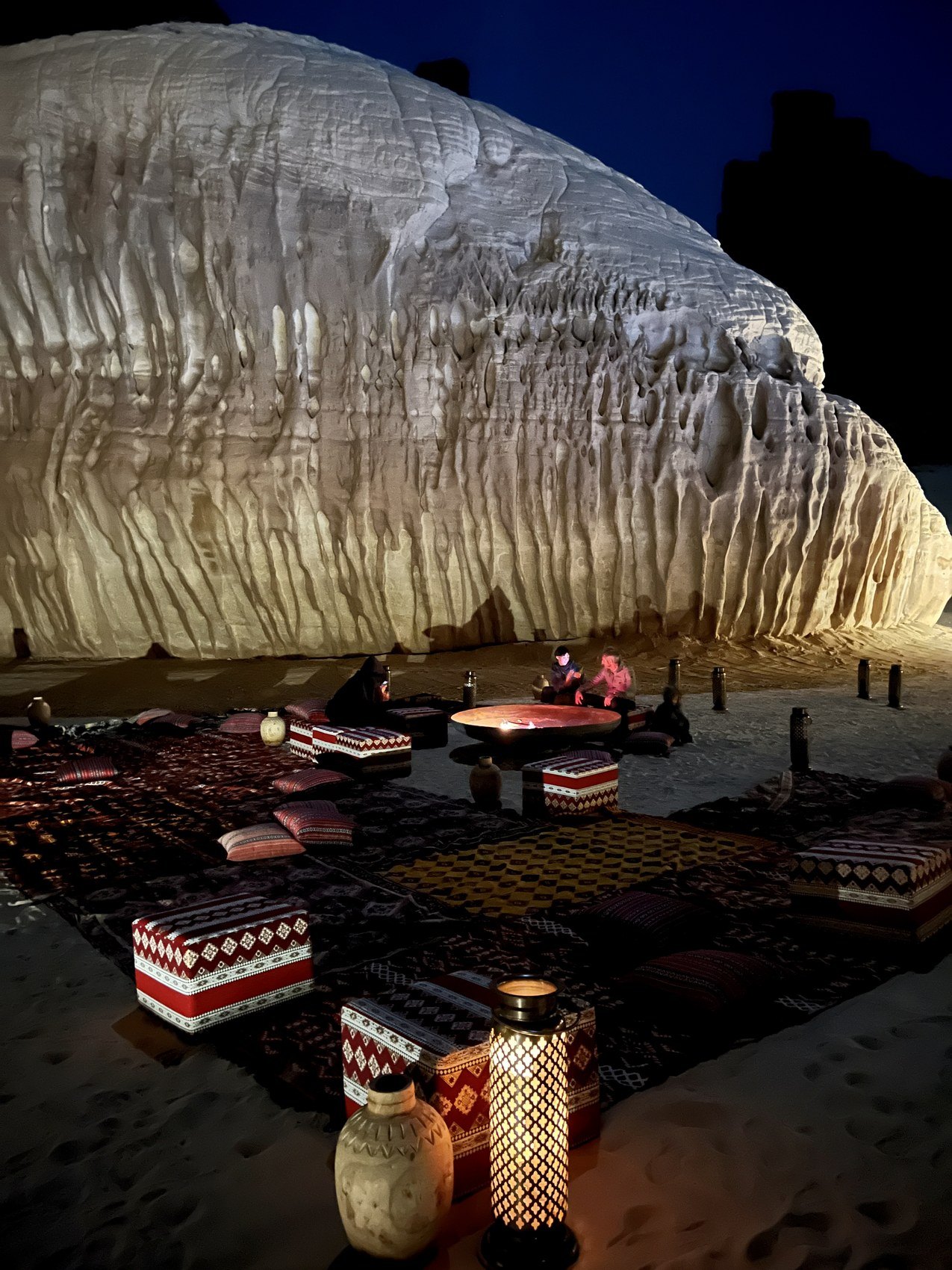
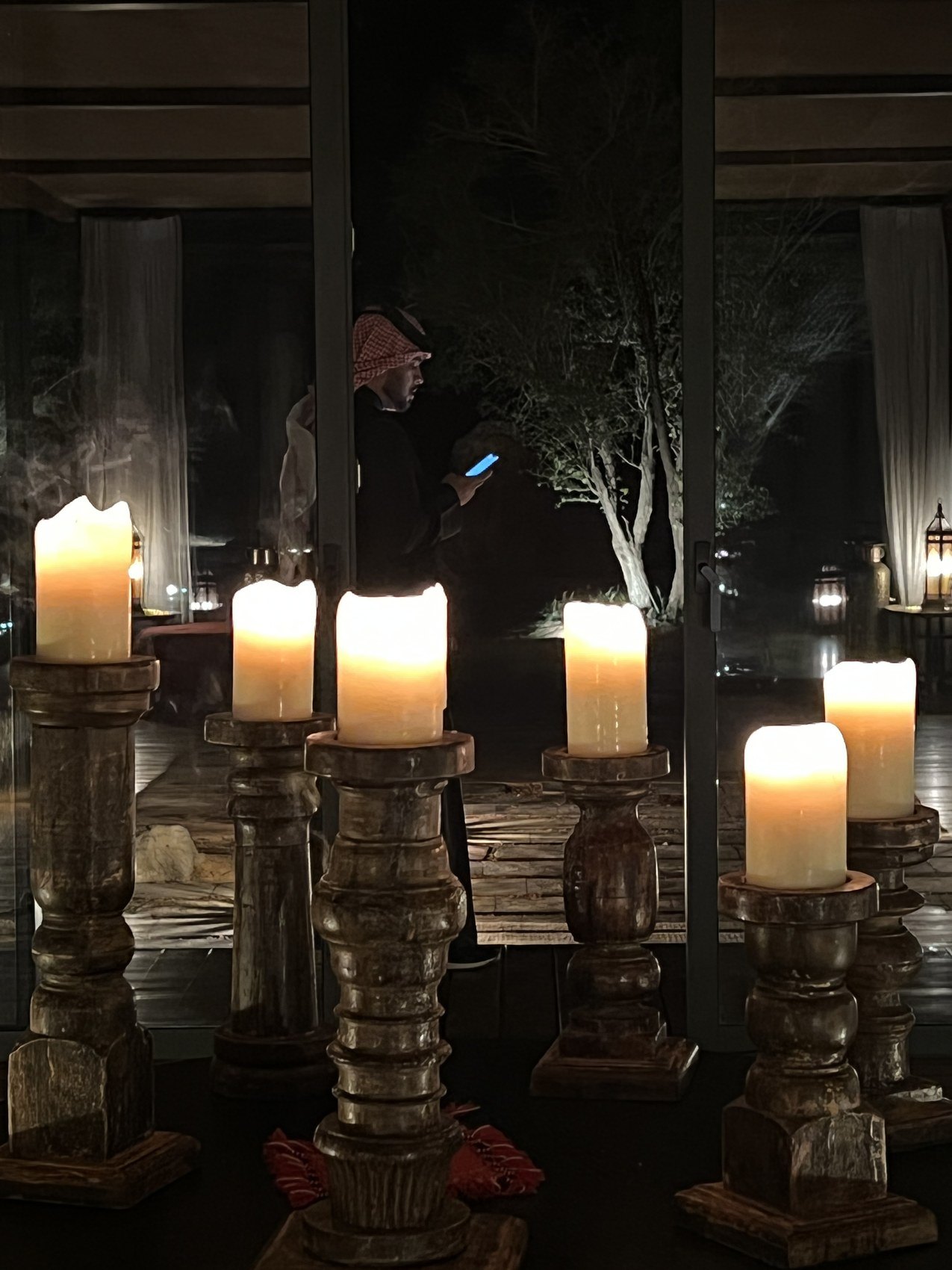
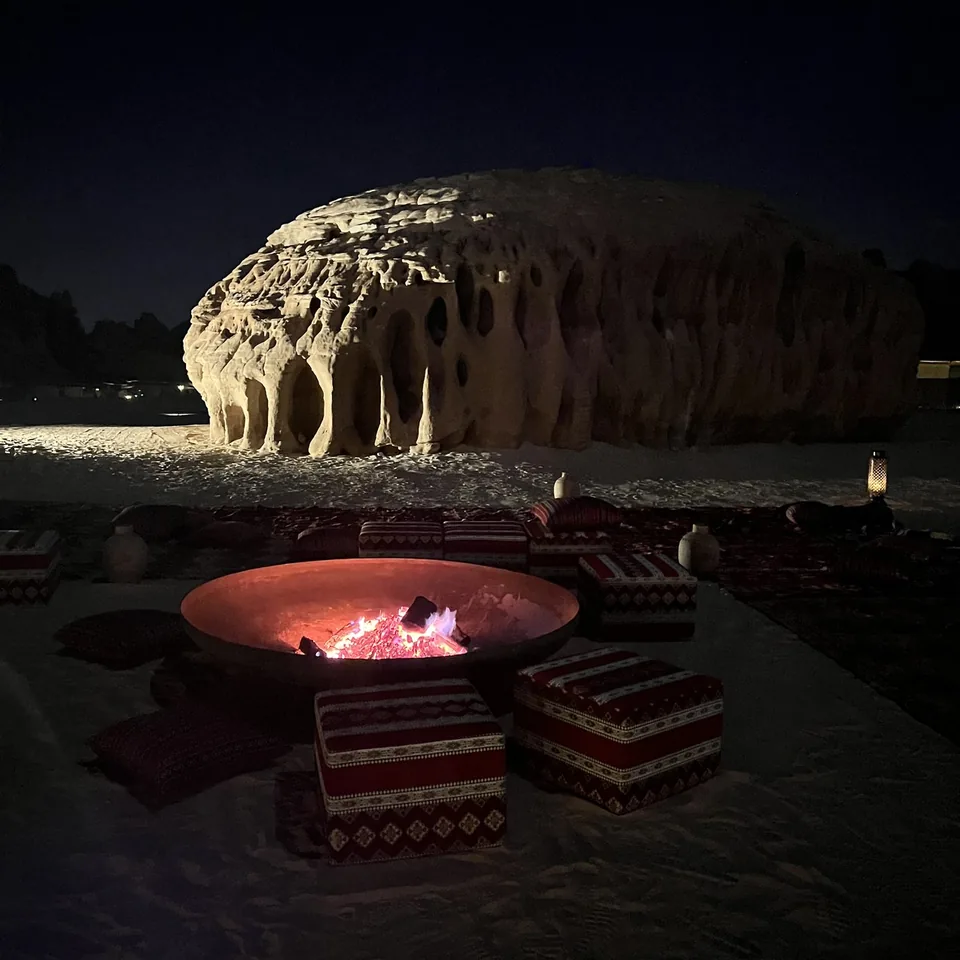
The evening is the thing I would come back for. Fires are lit on the sand, kilims and cushions go down, candles go onto carved stands, and somebody walks through with incense before dinner. None of it is a performance put on at a fixed hour for people with cameras. It is what the camp does because the temperature drops and that is what you do about it.
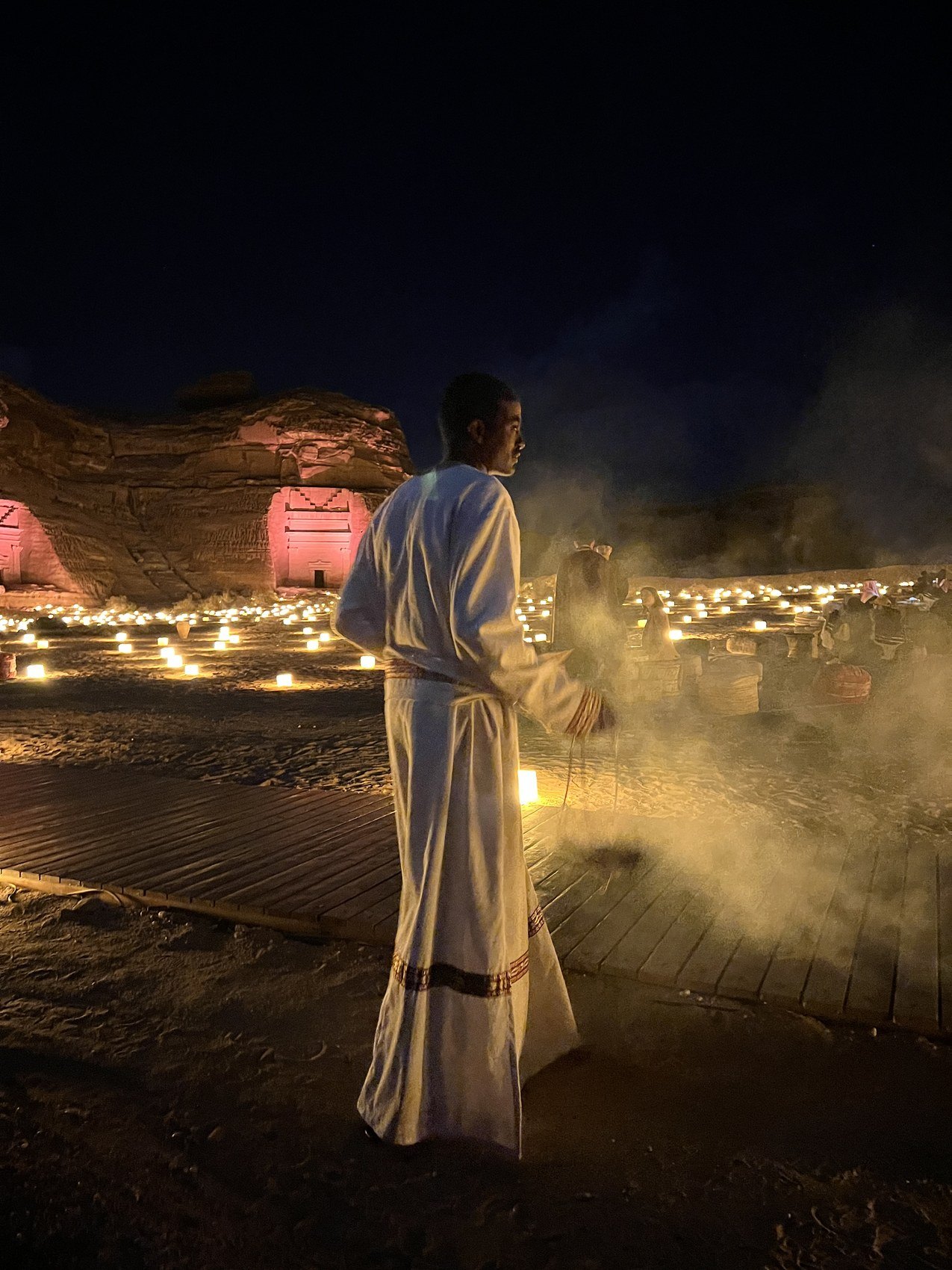
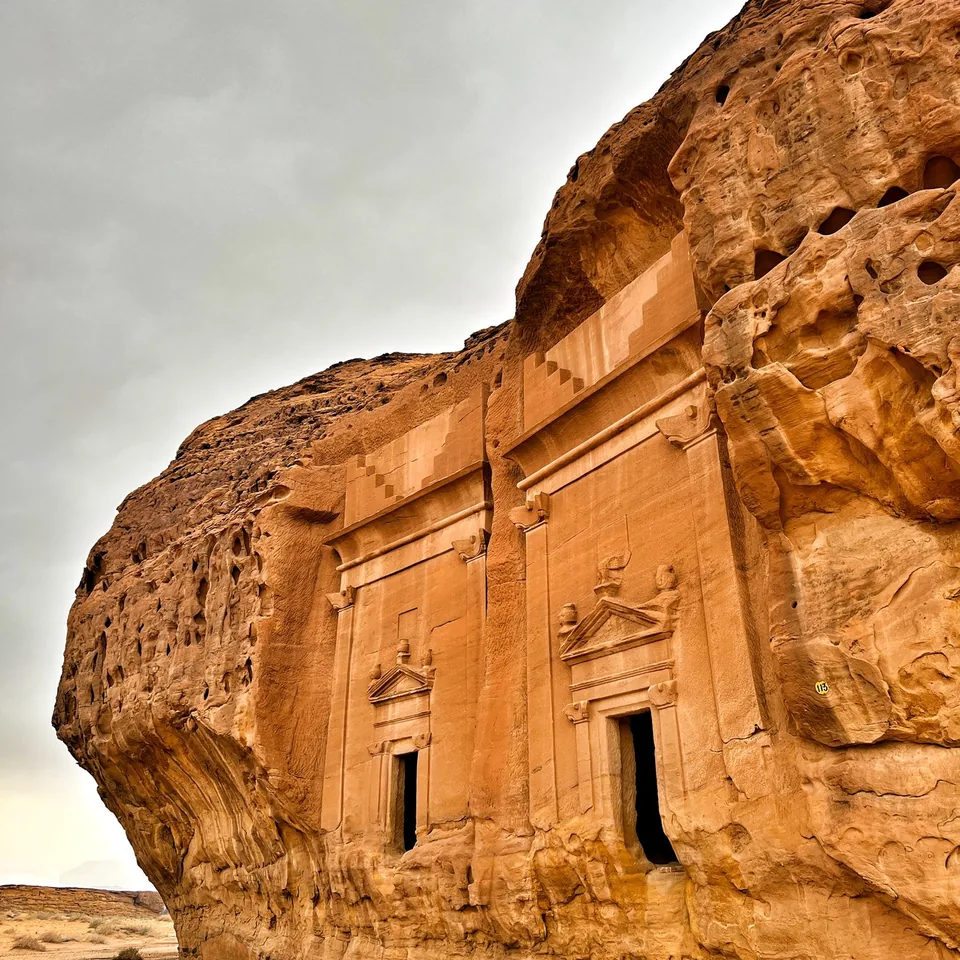
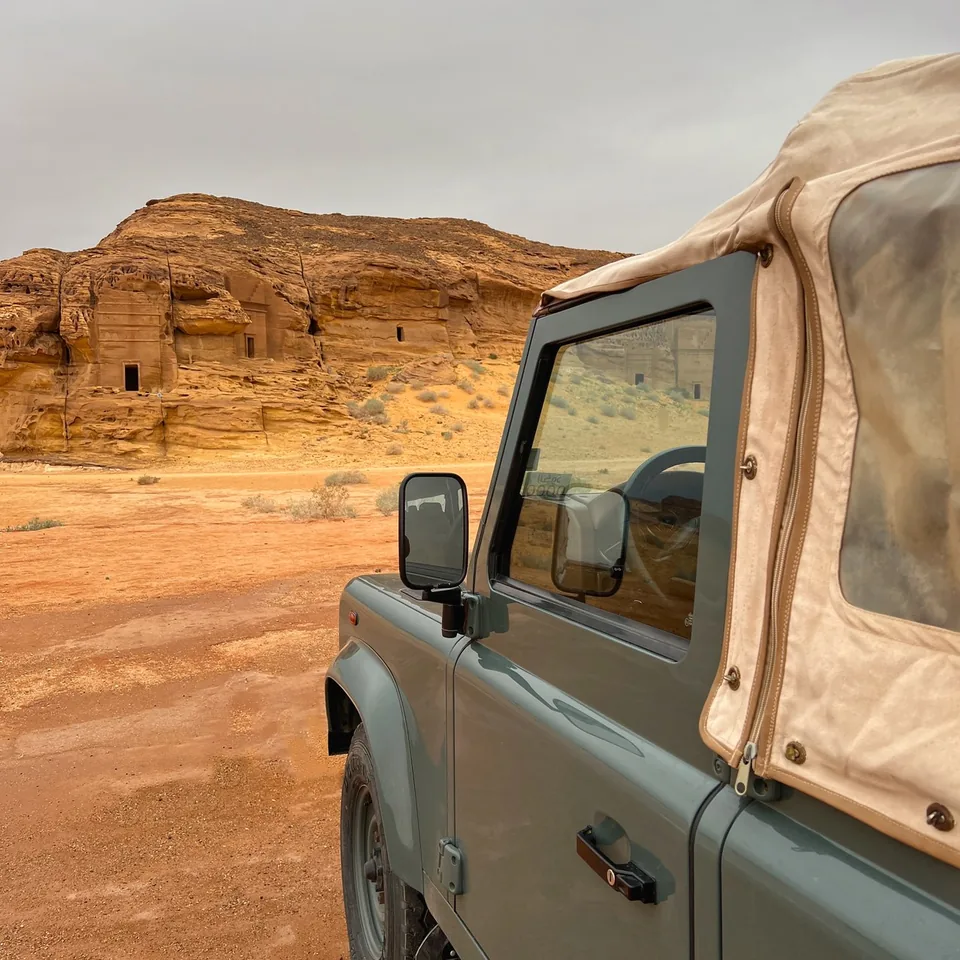
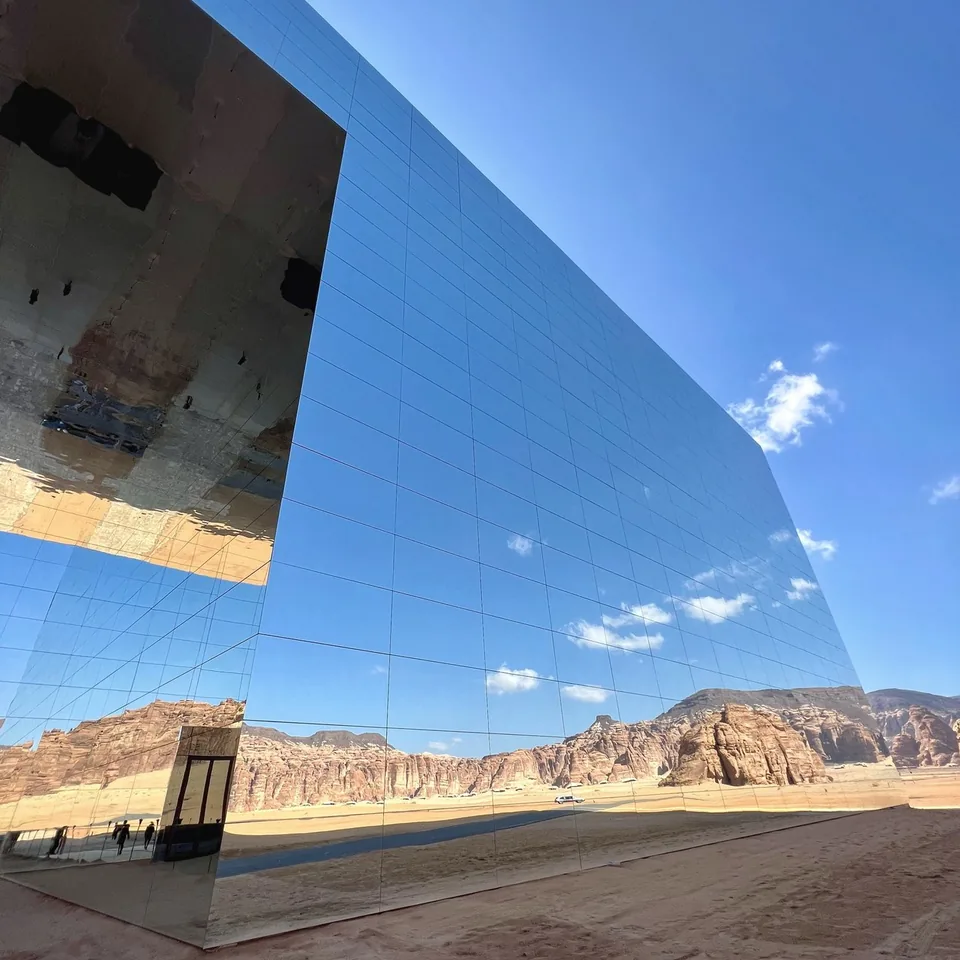
Hegra is the reason many people come and it earns it. The day tour runs in a vintage Land Rover through the Nabataean tombs, cut into the outcrops between the first century BCE and the first century AD, and it was Saudi Arabia's first UNESCO World Heritage Site. Go back in the evening as well. The rock is lit, the air has cooled, the coaches have gone, and the place stops being a monument for a while. Maraya is the other outing: a concert hall clad entirely in mirror, standing in the desert and doing its best to disappear into it, and the tour takes you behind the curtain of a stage that has had some serious people on it.
Advisor's perspective
This is a desert camp with the comfort of a house and the manners of a small hotel, and it suits a traveller who wants a landscape to be the main event. Two people with four days, a bicycle each and no fixed plan will do very well. So will anyone who has done the European winter twice too often and wants somewhere that looks like nothing else.
The restrictions are real and you should hear them from me. No alcohol, anywhere. Modest dress in public places outside the camp. A country that has been open to this kind of travel for a short time and is still assembling the apparatus. None of that spoiled a day of my stay, and all of it is worth knowing before you book.
Three nights here and one at Caravan. That is the shape of it, and I would not shorten either end.
Before you book
The questions people send me about Habitas AlUla.
- How do I get to AlUla?
- I came through Dubai, which at the time was the sensible route. It has become easier since: there are comfortable connections through Jeddah and Riyadh, and the new Red Sea airport has opened the option of carrying on to the coast afterwards, which is what I would do now. AlUla has its own airport and the transfer from it to the valley is short. This is no longer a complicated journey to put together, and that is a recent change worth knowing about.
- Is three nights really the minimum?
- For doing AlUla without hurrying, yes. Hegra takes a morning and deserves an evening as well. Maraya is its own outing. The valley with a bicycle in it is a day on its own if you let it be. Add one afternoon doing nothing by the pool, which the place is built for, and three nights is already full. I had three at Habitas and a fourth at Caravan and I did not feel I had wasted an hour of it.
- What is the difference between Habitas AlUla and Caravan by Habitas?
- They are two camps a few minutes apart in the same valley, run by the same company, with a courtesy car running between them. Habitas is the villas: canvas and timber, private terraces, the pool, the main restaurant. Caravan is Airstreams on the sand with communal tables, fire pits, cushions and a line of food trucks. One is a house and the other is a camp, the prices follow that, and staying in both is a better holiday than choosing.
- What is the food like, and where do you eat?
- The main room is Tama, whose name comes from the Aramaic for here and now, and it does breakfast as well as dinner. The cooking puts international dishes alongside Middle Eastern ones and leans on vegetables and spices from the farms around AlUla, which in this landscape is less obvious than it sounds. There is also Noosha, a shaded lounge inside the camp with proper coffee, dates and small things in the afternoon. Over at Caravan it is food trucks: a mirrored vintage truck turning out wood fired pizza, a pink one doing ice cream, and a third with coffee, fresh juices, acai bowls and shakshuka for breakfast.
- What was the villa like?
- I had an Alcove Villa, which is the category set close in against the sandstone so the canyon wall is the view from the bed and from the terrace. Canvas over timber, a bathroom with a glass wall onto the rock, and a private deck where the evening happens. There is no television and there does not need to be. The thing nobody tells you is how quiet it is once the camp settles, and how much sky there is over the terrace.
Something else you want to know? Write to me and I will answer it here.
Inside Virtuoso
The benefits apply, the reservation is made by hand.
The house is listed with a preferred-partner agency and takes no online bookings, which is simply how this one works. An upgrade on arrival, breakfast for two, a food and beverage credit, and early check-in and late check-out, all subject to availability, and none of them something you have to ask for.
See it on Classic Travel →Arranged by hand
The room, the dates, the rest of the list.
Write in English, Italian or Spanish. I answer personally, usually within a day.
Let Nik arrange it →