
Inspection · Munich, Germany
Rosewood Munich
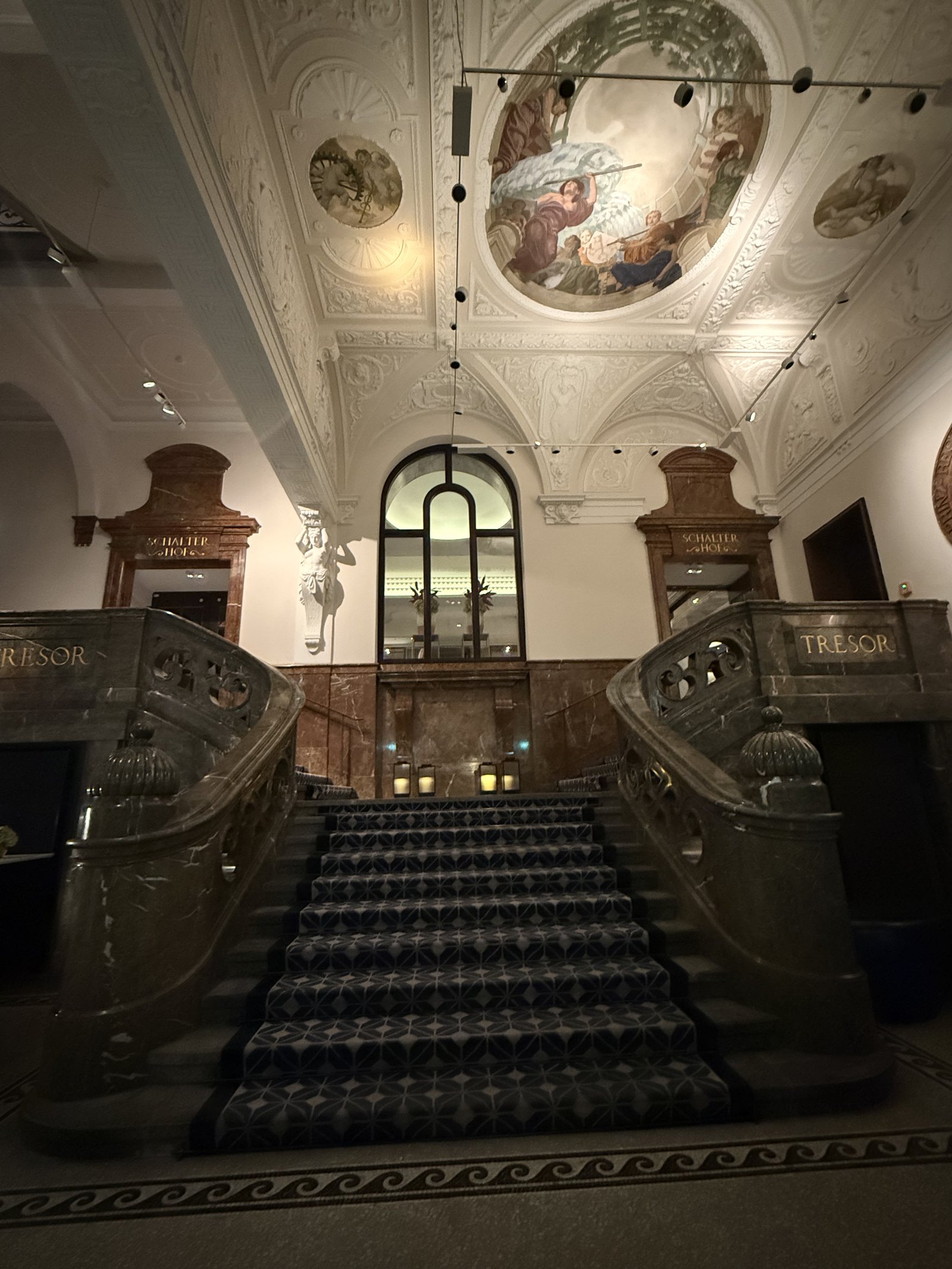
The old Bavarian State Bank and the Palais Neuhaus-Preysing, joined and opened in 2023 as Rosewood's first house in Germany. The word TRESOR is still cut into the stone at the foot of the stairs, and nobody has tried to hide it.
Book Rosewood Munich with me, through Classic Travel Register first, free of charge, and the rates and partner benefits open up, with the account linked to Wheresnik. Tell me your dates before you book and I will say which room to ask for here, and which week I would avoid.
 what it carries
- Breakfast for two
- Upgrade at check-in
- A credit in the house
- Early in, late out
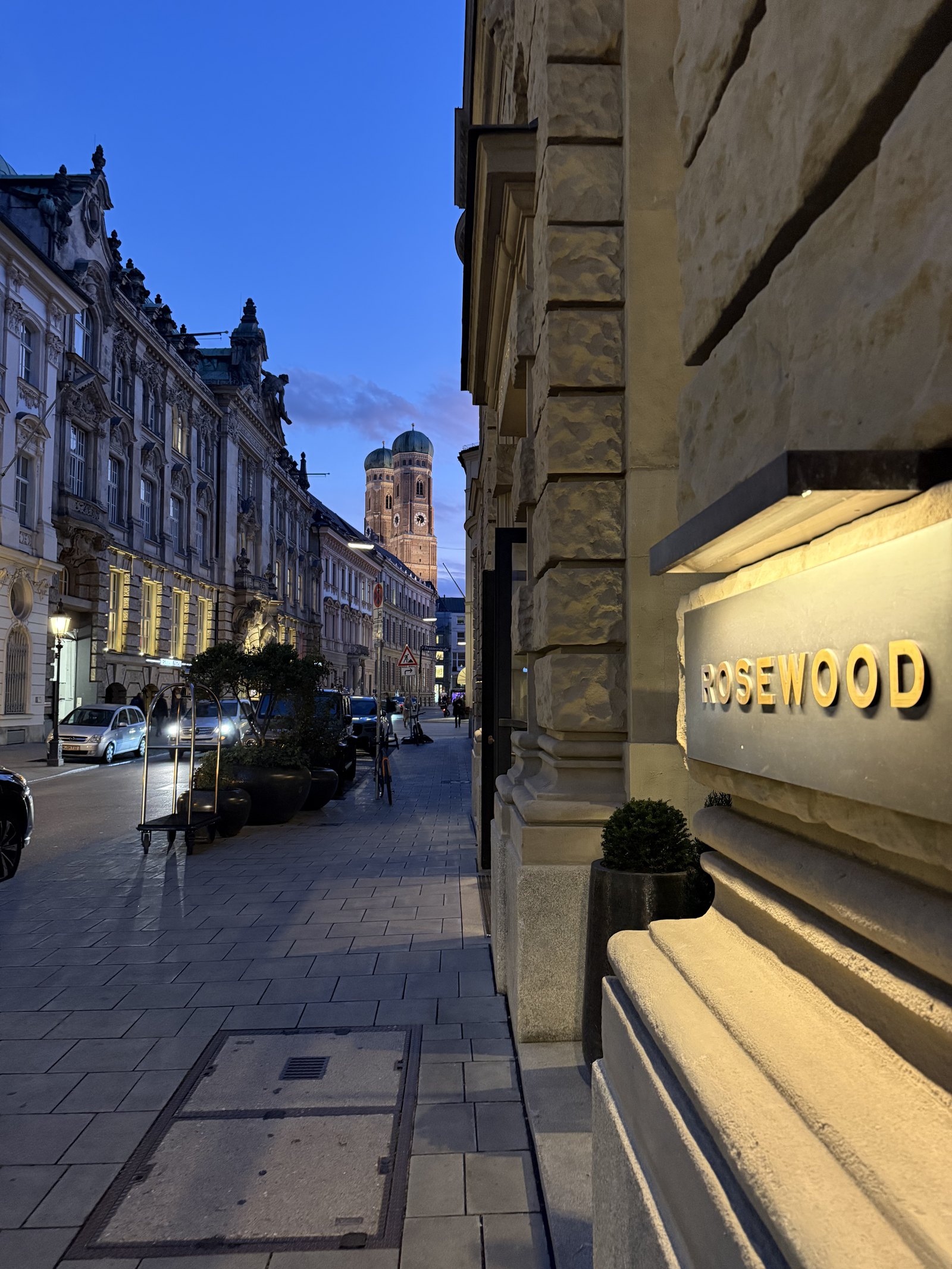
The entrance gives nothing away. Kardinal-Faulhaber-Straße is a street of banks, and at seven in the evening in October it is as quiet as a street can be five minutes from Marienplatz. The brass letters by the door are small. Then you are inside, and the floor opens into a banking hall with a painted ceiling, and the word TRESOR is cut into the marble on both sides of the staircase in letters a foot high.
That carving is the whole argument of the building. This was the headquarters of the Bayerische Staatsbank, and beside it stands the Palais Neuhaus-Preysing, a city palace of a different century. Rosewood took both, restored them, joined them, and opened in 2023 as the group's first house in Germany. The easy version of that project would have been to strip out the institutional vocabulary and leave a pretty shell. They kept it. SCHALTER HOF, the counter hall, is still lettered over the stone doorcases. The vault is still announced at the foot of the stairs. You are staying in a bank and the bank is not embarrassed about it.
The staircase, which you should walk twice
I had one night here, in the middle of October, which is not enough to take a hotel apart. It is enough to know whether a building has been thought about, and the staircase answers that in the first two minutes.
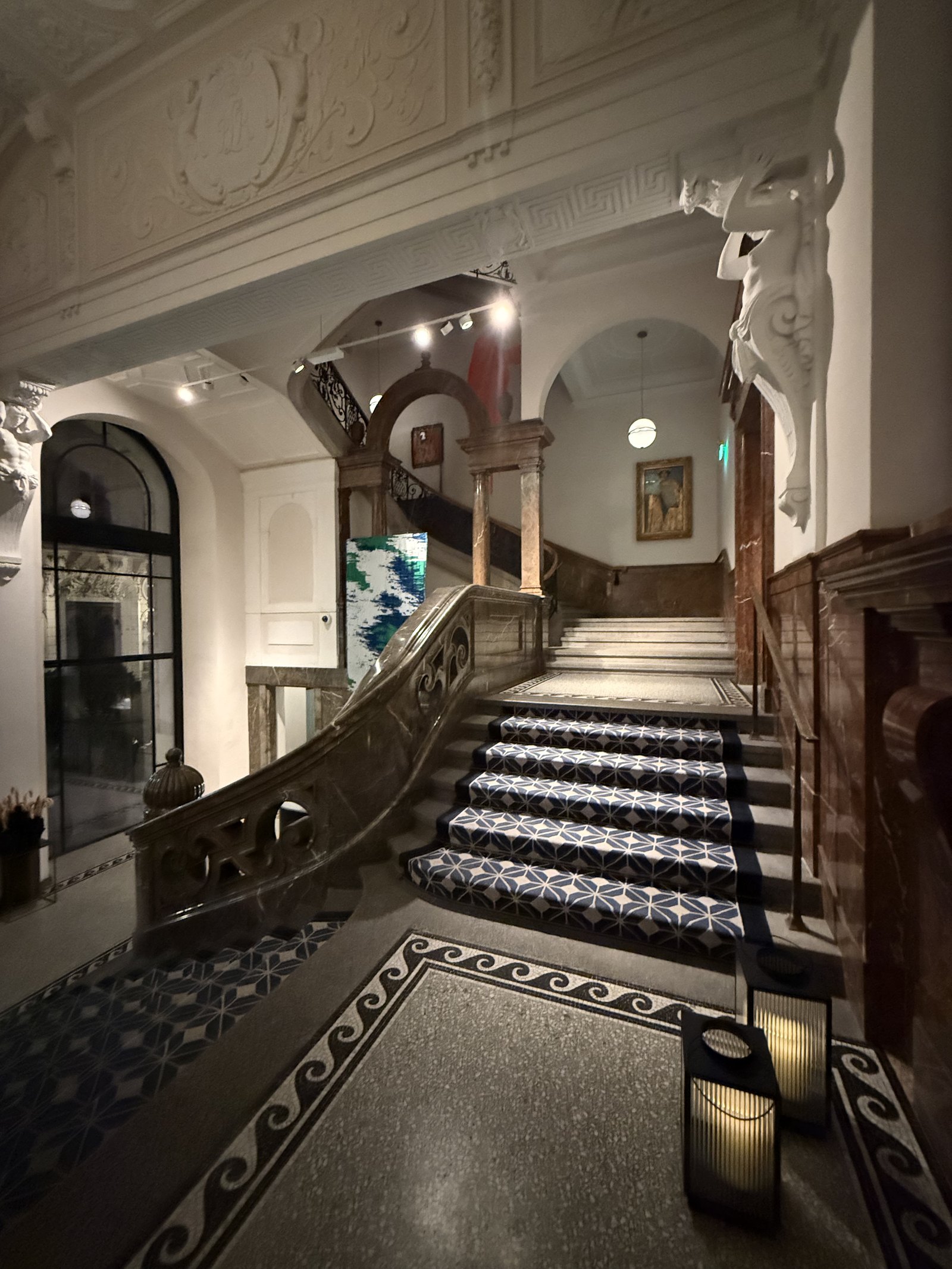
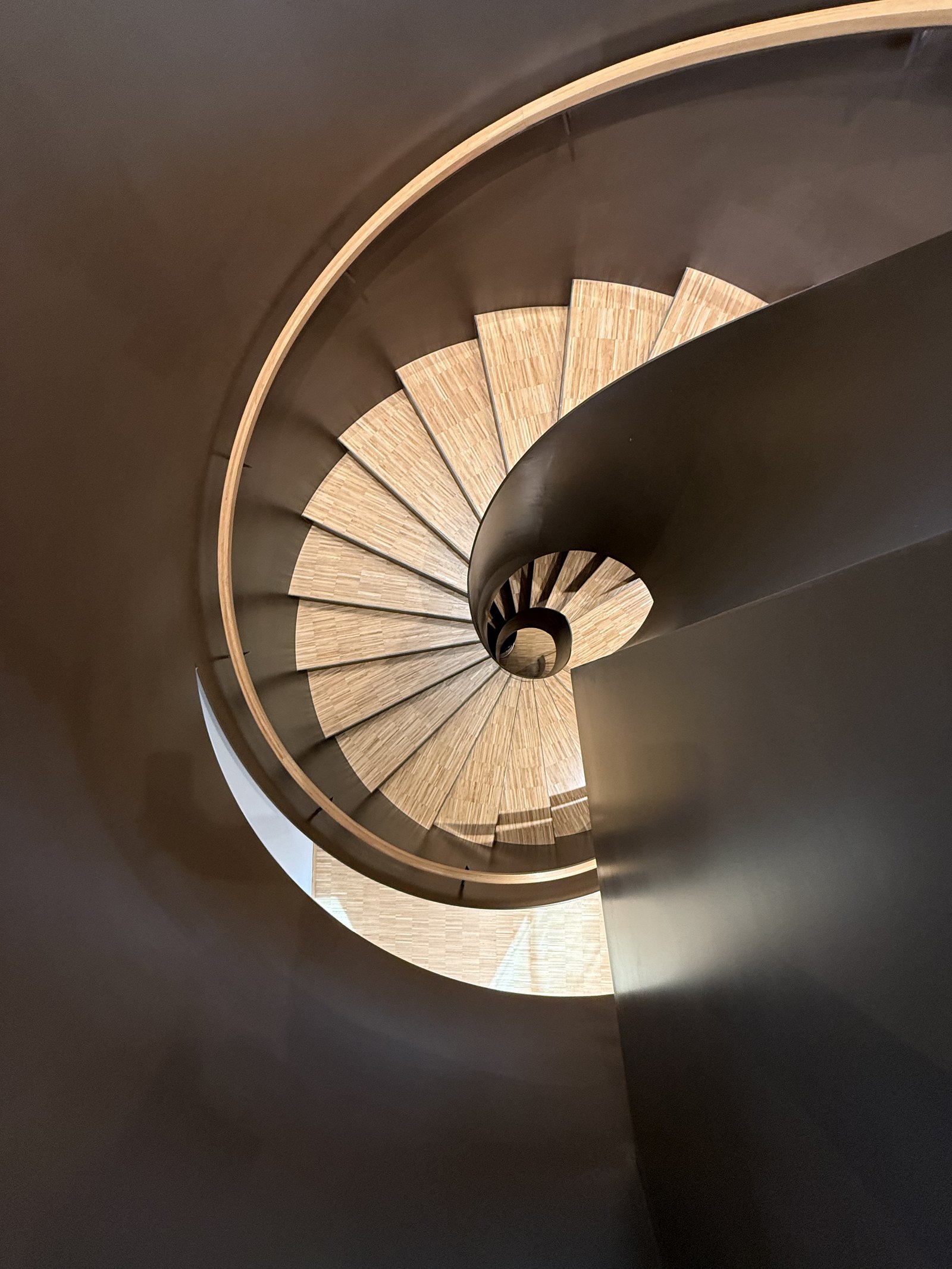
The stone figures carrying the upper landing are original. The blue and white runner climbing the steps under them is not, and Tara Bernerd put it there. That pairing is the method of the whole hotel: leave the old thing at full volume, lay one modern pattern across it, stop. Nothing is pastiche and nothing has been scraped back to a white box. A lesser conversion would have done one or the other.
Terrazzo on the lower floor, with a Greek key border running around the edge of it. Lanterns standing on the ground beside the bottom step, so the light comes from below and the ceiling is left dark. I walked it twice on the way to dinner and once more on the way back up, and I would do it again.
Downstairs, and the rooms the public can sit in
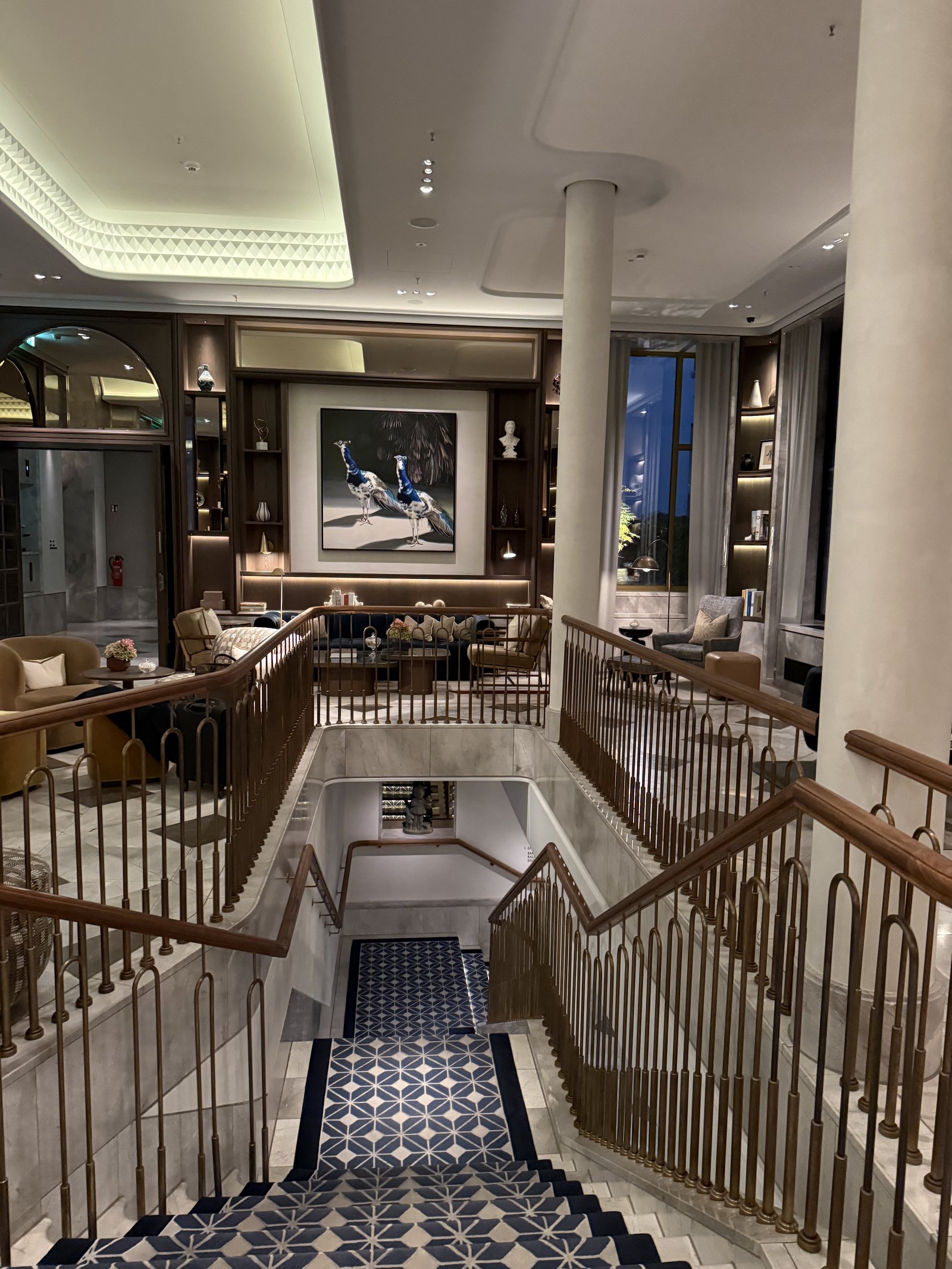
The ground floor is generous in a way that hotels of this size usually cannot afford to be. There are three or four separate places to sit before you reach a restaurant, which means you can come down without committing to anything.
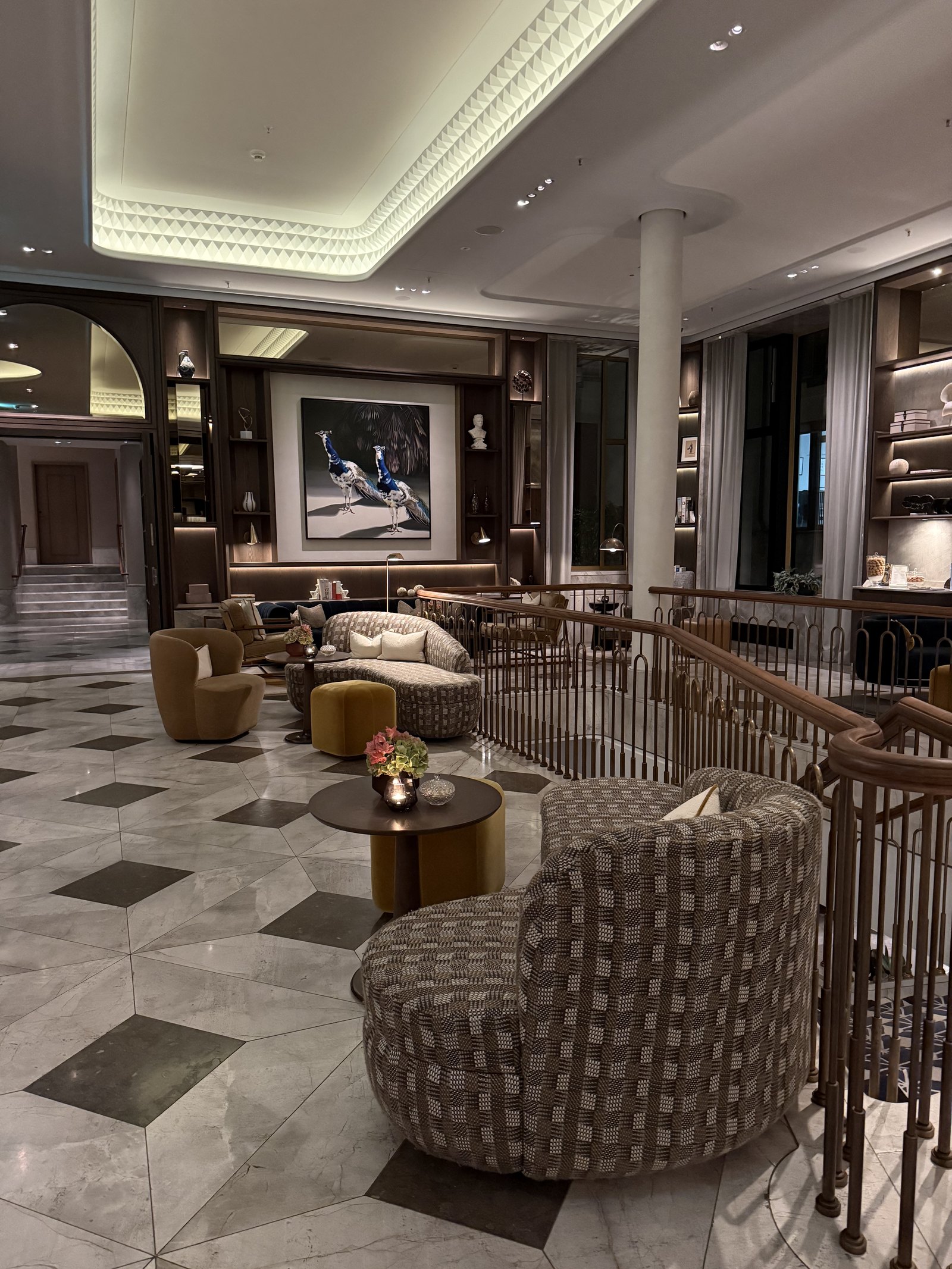
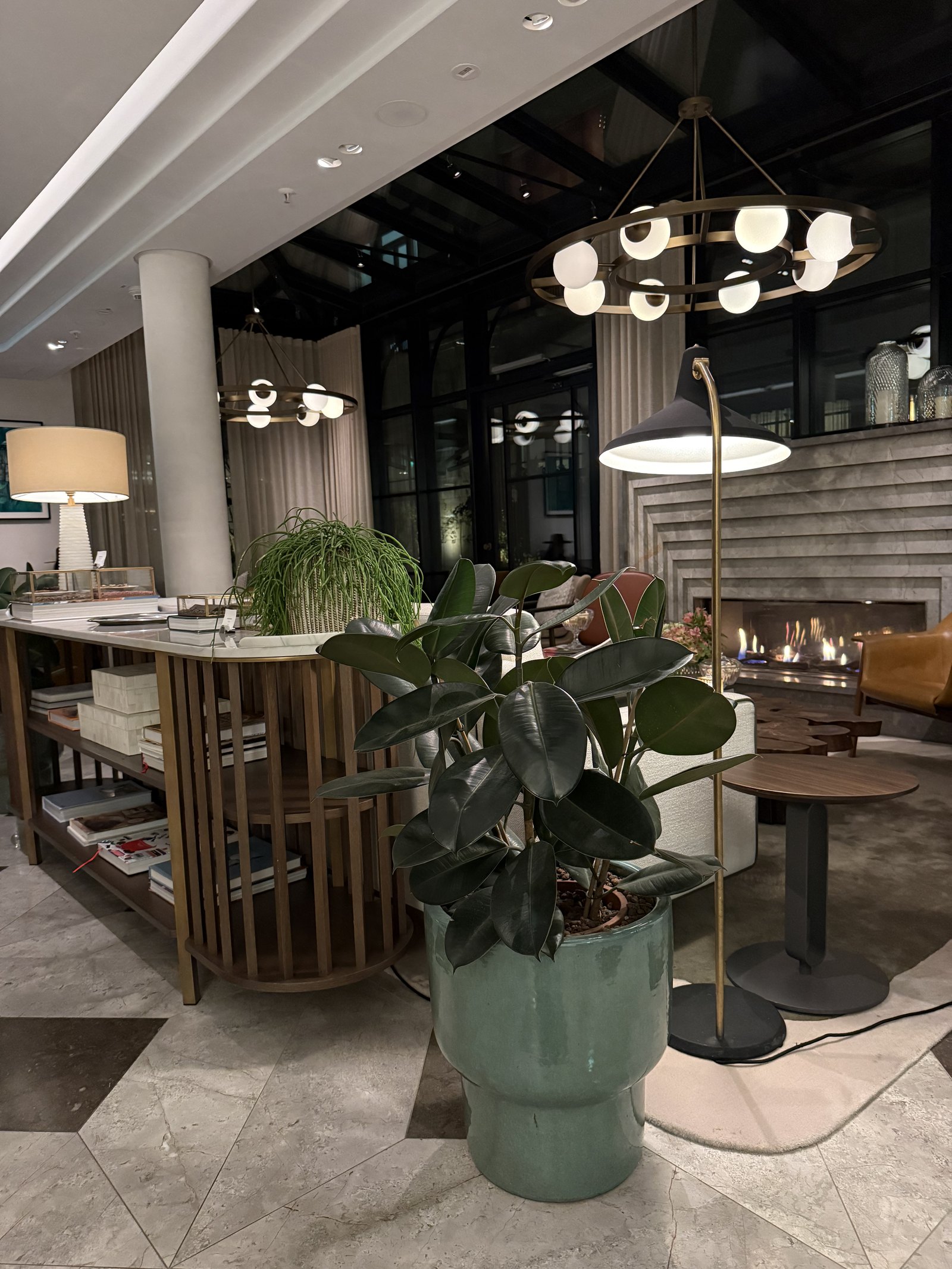
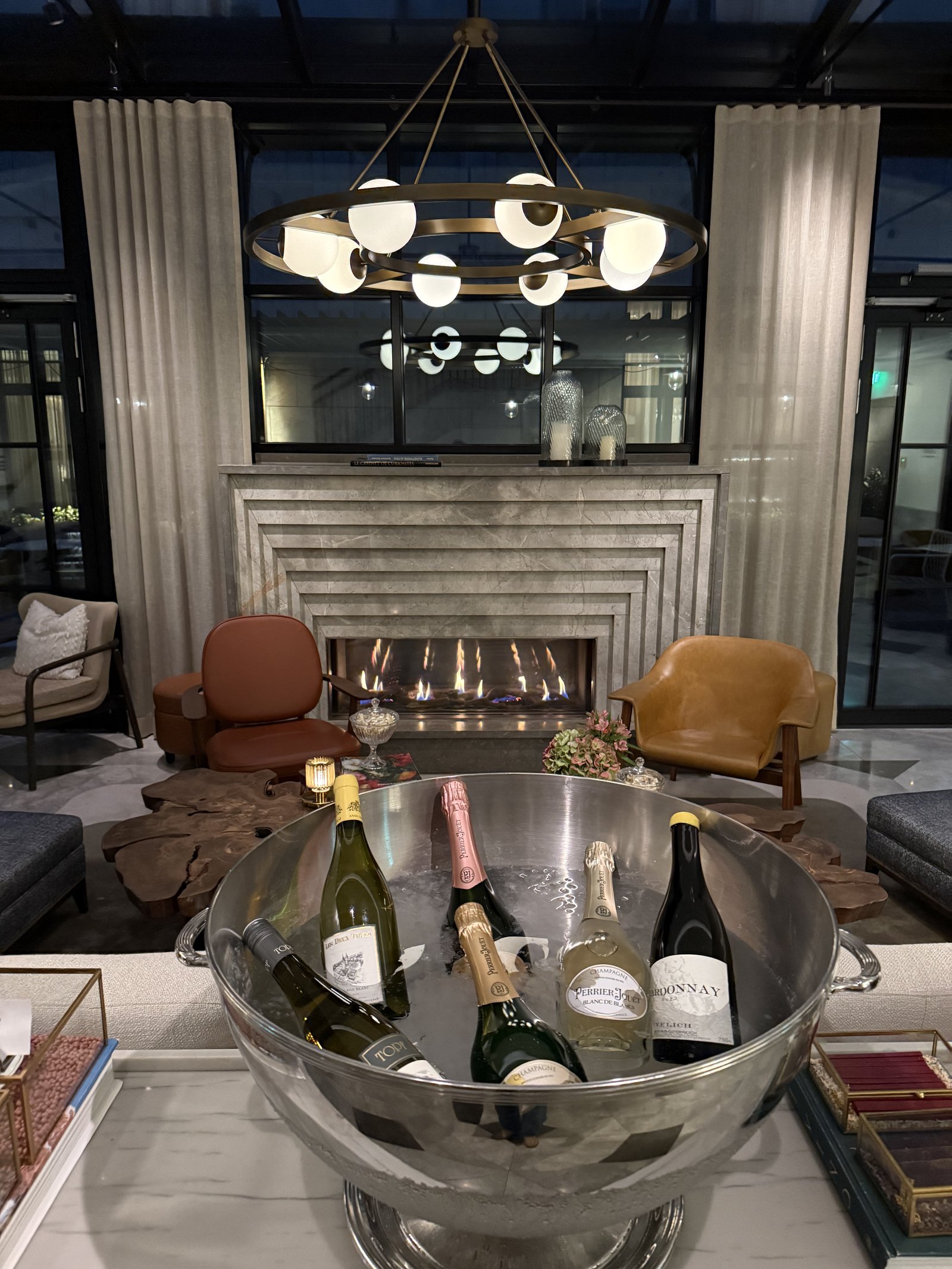
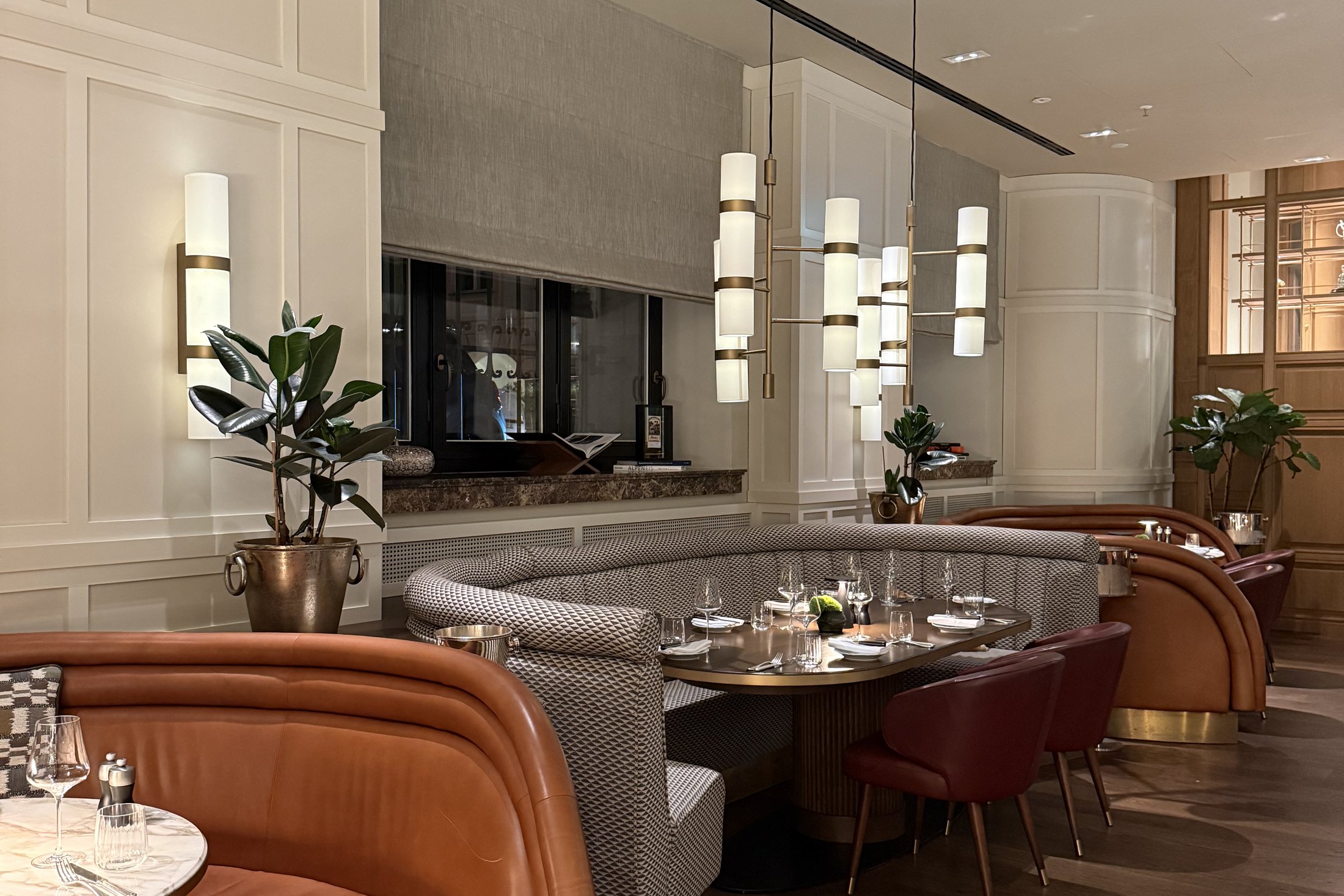
The palette is restrained to the point of being austere: stone, brown leather, grey velvet, brass. Then one orange banquette, or one green pot, and the room comes alive. Bernerd does this deliberately and it works better in person than it does in photographs, because the colour arrives in your peripheral vision and the camera flattens it.
The art is worth slowing down for. It is modern, somebody chose each piece, and a good deal of it is Bavarian in subject and contemporary in handling, which is the same move the building makes.
The room
A Junior Suite, on one night, which I want to be straight about. I can tell you how the room works on arrival and in the morning. I cannot tell you what it is like to live in for a week, and anyone who tells you otherwise after one night is guessing.
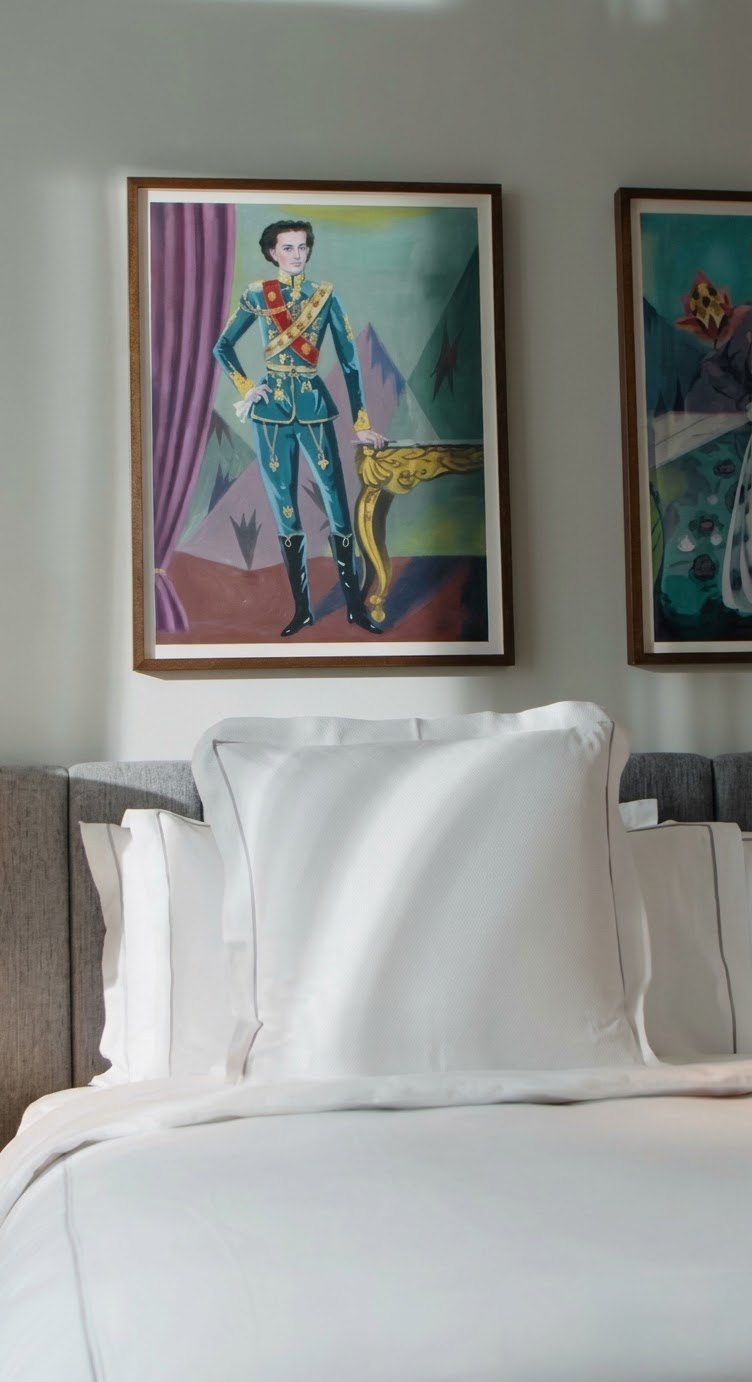
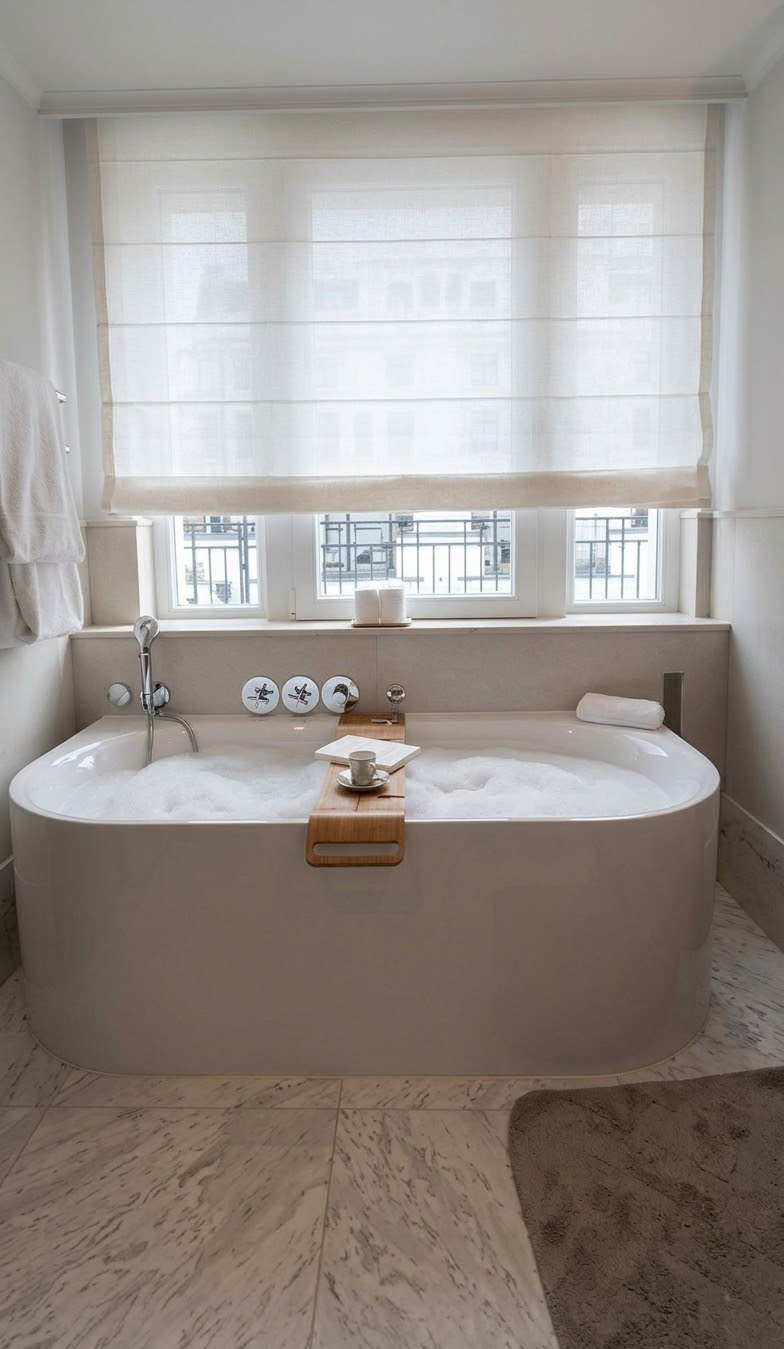
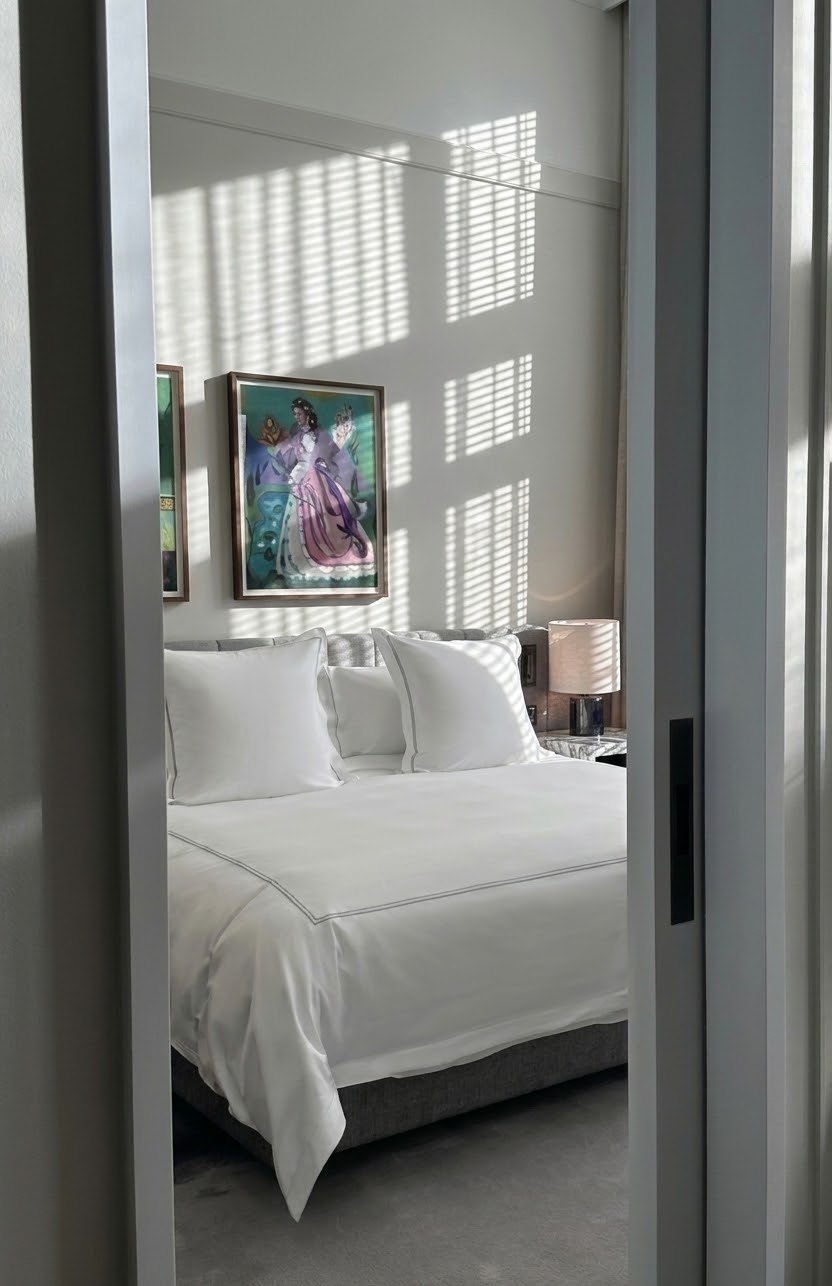
What I can report: the bed is excellent, the shutters block a city street properly, the sitting area is a real room and not a chair in a corner, and the bathroom has a free-standing tub set under the window with a tray laid across it. The marble is generous. The painting over the bed was a figure in Bavarian uniform rendered in flat modern colour, and it made me laugh, which is more than most hotel art manages.
Of the 132 rooms, 59 are suites, and there are five private Houses on top of that, König Maximilian and Prinzregent Luitpold among them. That is an unusually high proportion of suites for a city hotel, and it tells you who the house is built for.
Dinner, and the bar after it
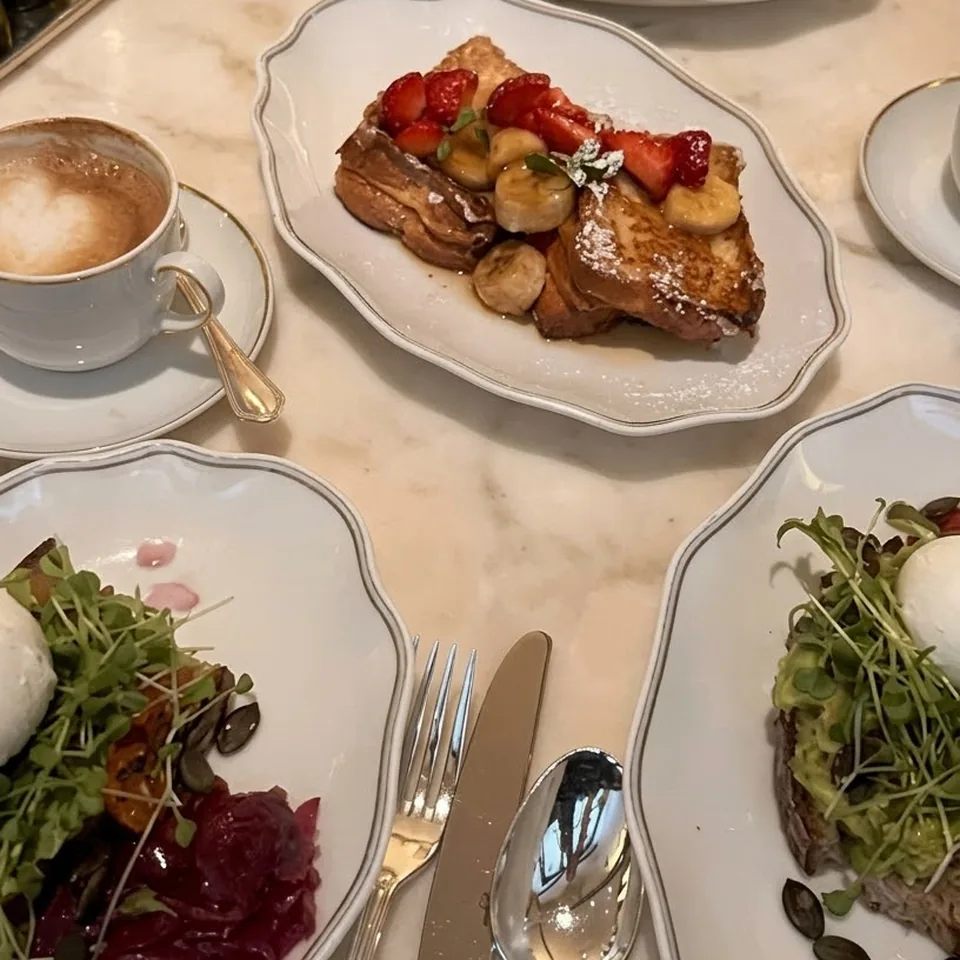
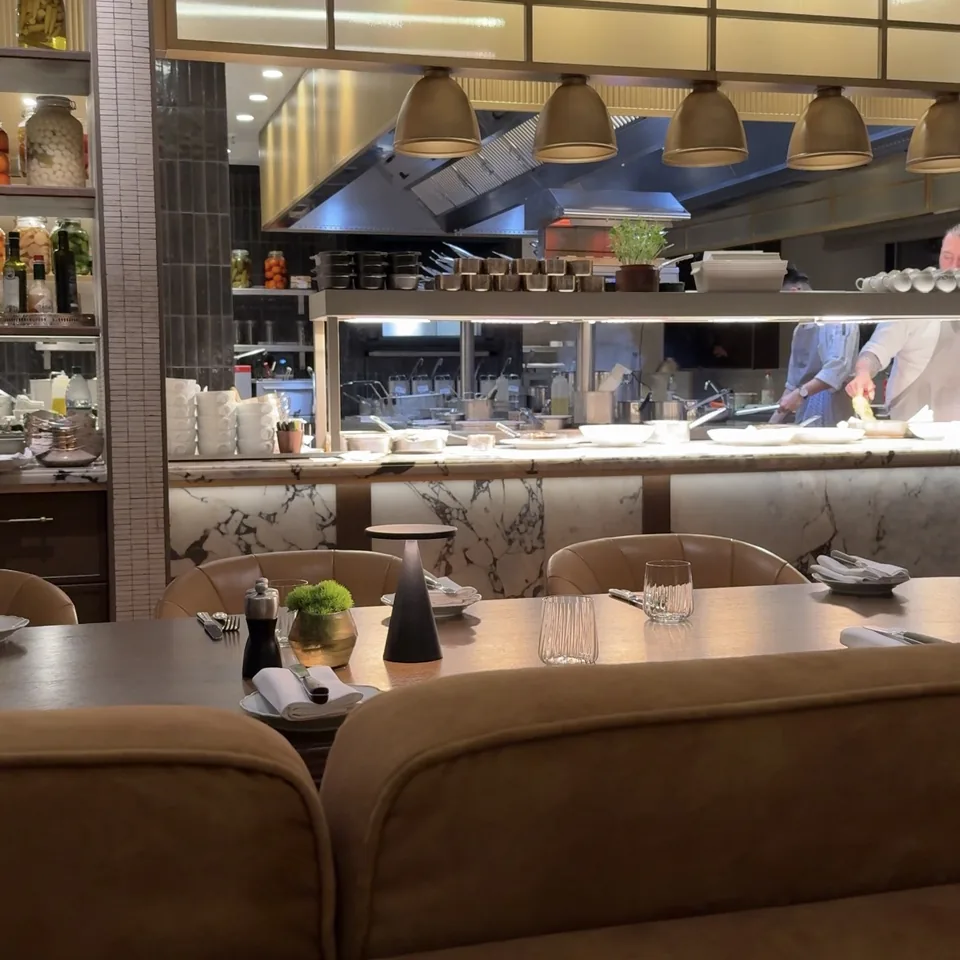
Brasserie Cuvilliés is the main room, and it is a brasserie in the honest sense: a long menu, proper service, and food that is cooked and then put on a plate. I had the schnitzel, because in Munich that is the correct test and because a kitchen that cannot do one has a problem it cannot hide.
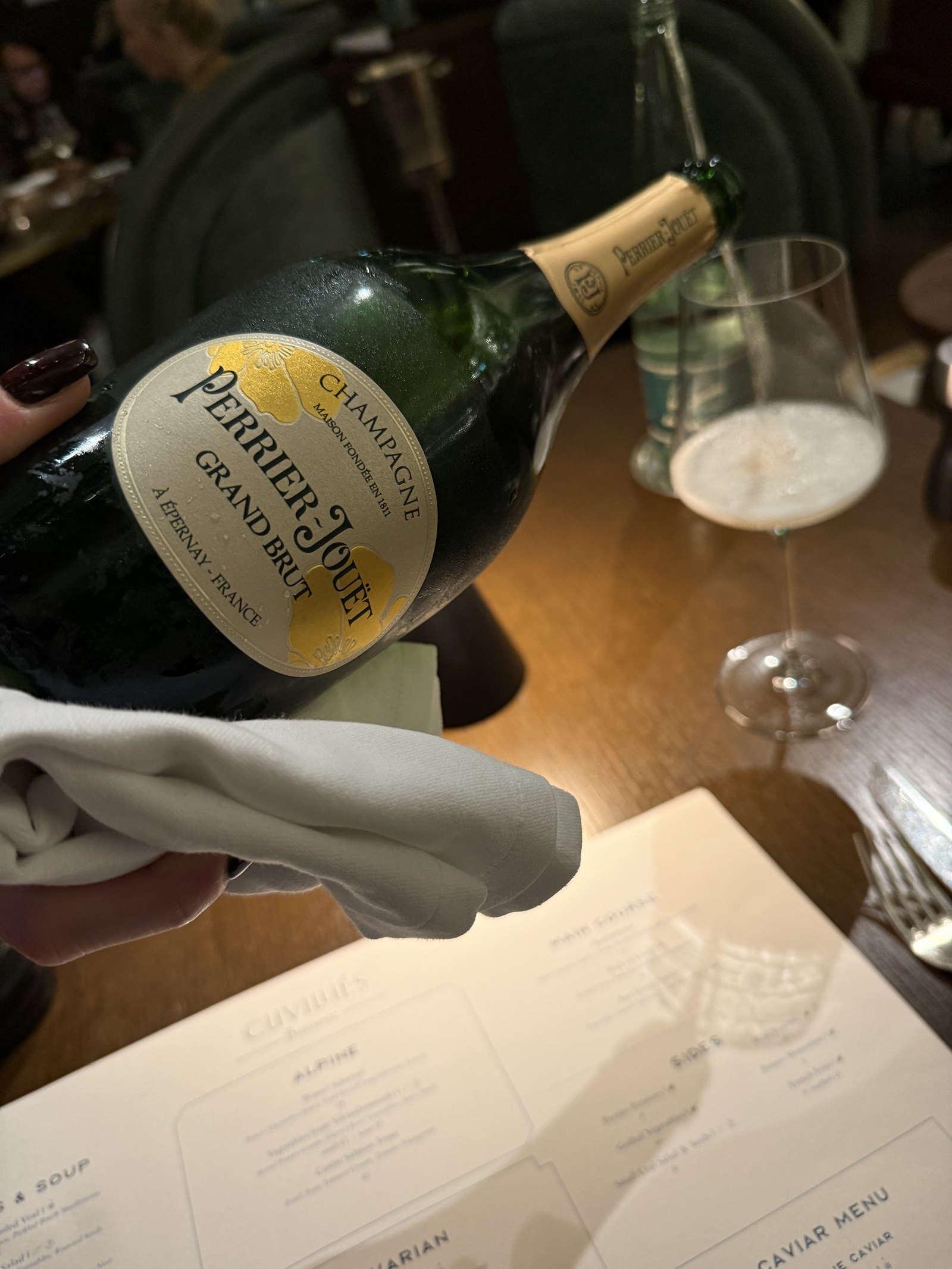
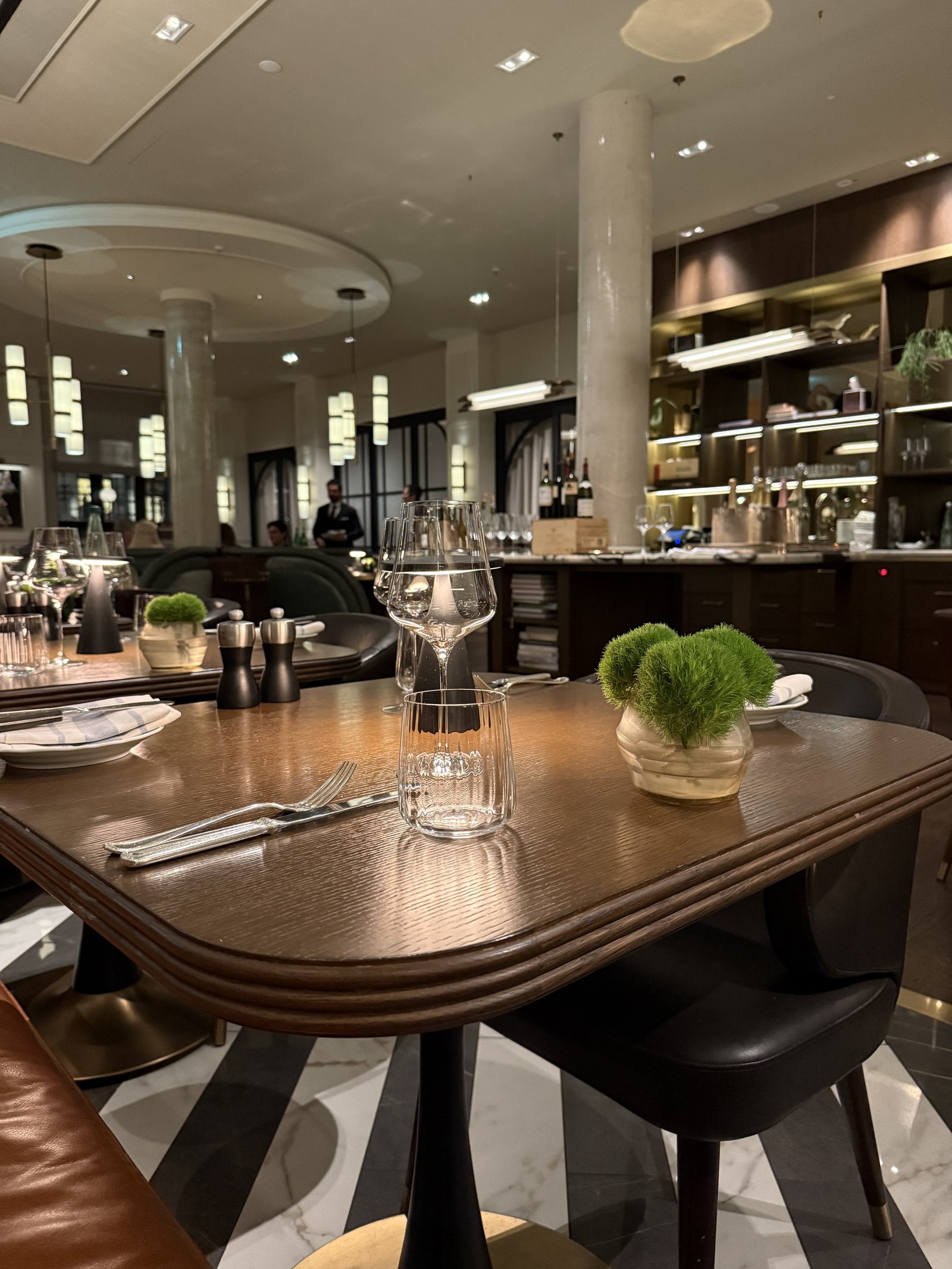
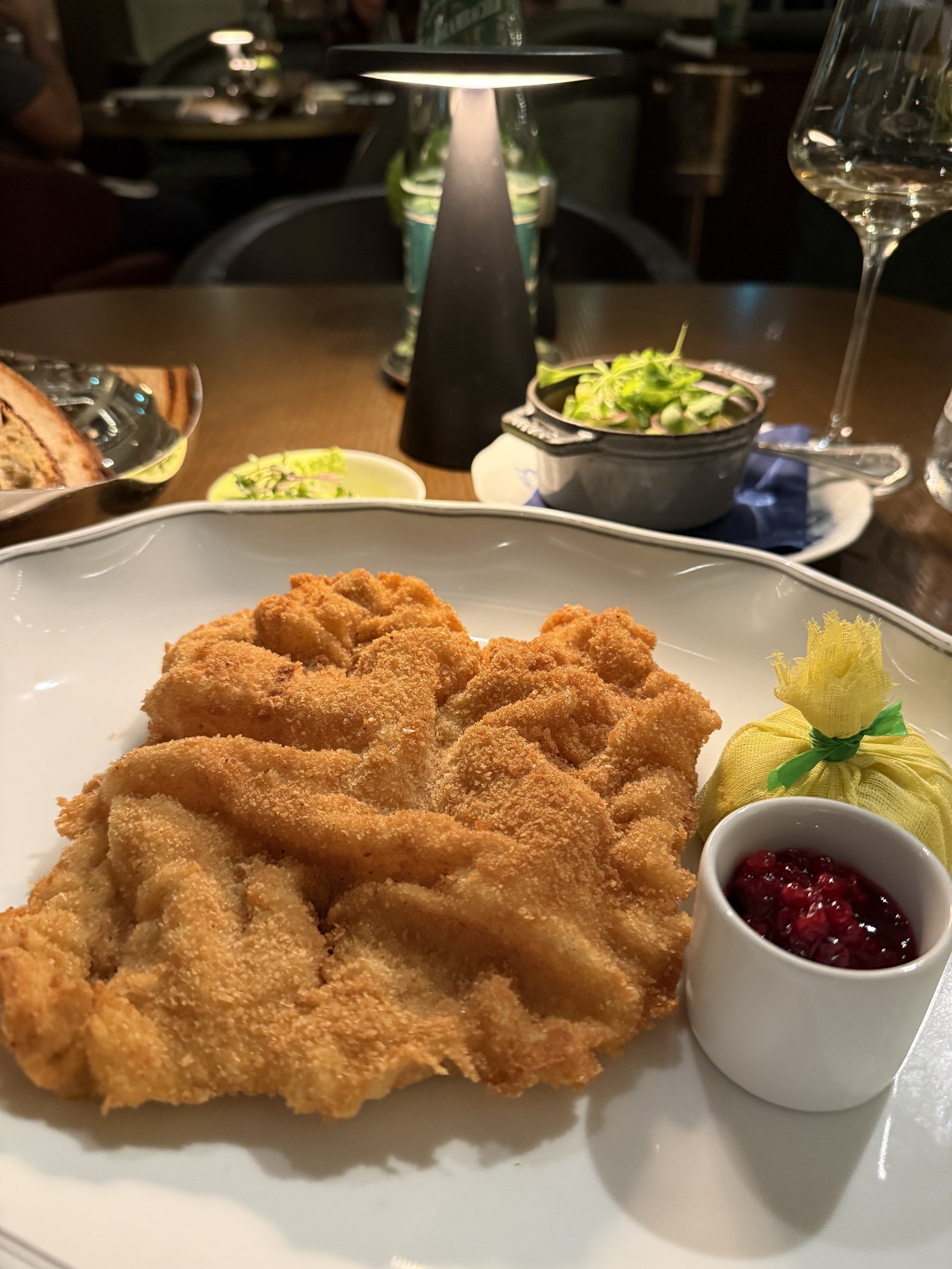
It was good. It was also correct, by which I mean the kitchen is confident enough to serve a classic without decorating it. The cranberry came in its own dish, the lemon came wrapped, the crumb was loose and blistered the way it should be. There is a caviar list beside the main menu for anyone who wants the evening to go in that direction.
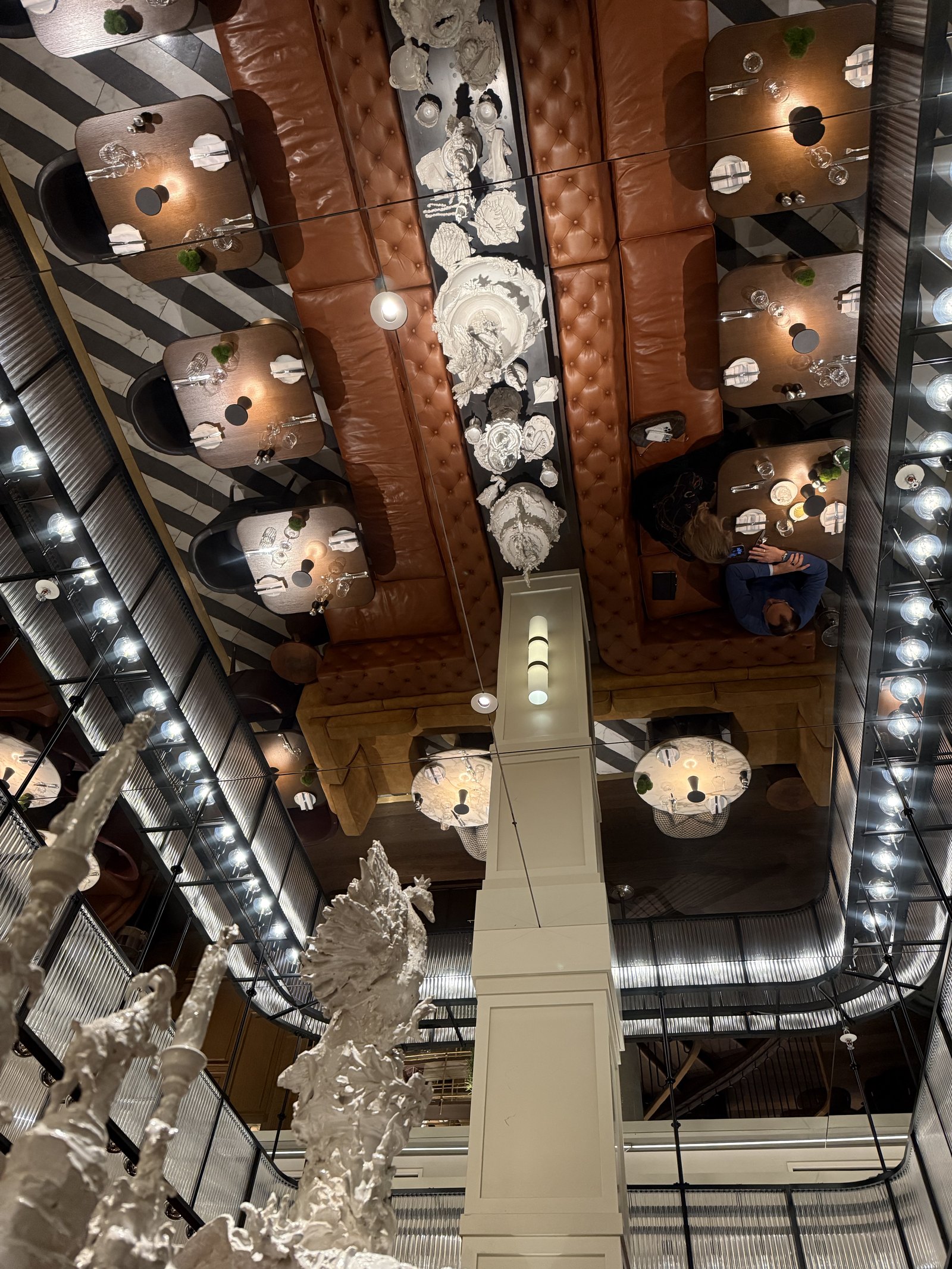
Look up before you leave the table.
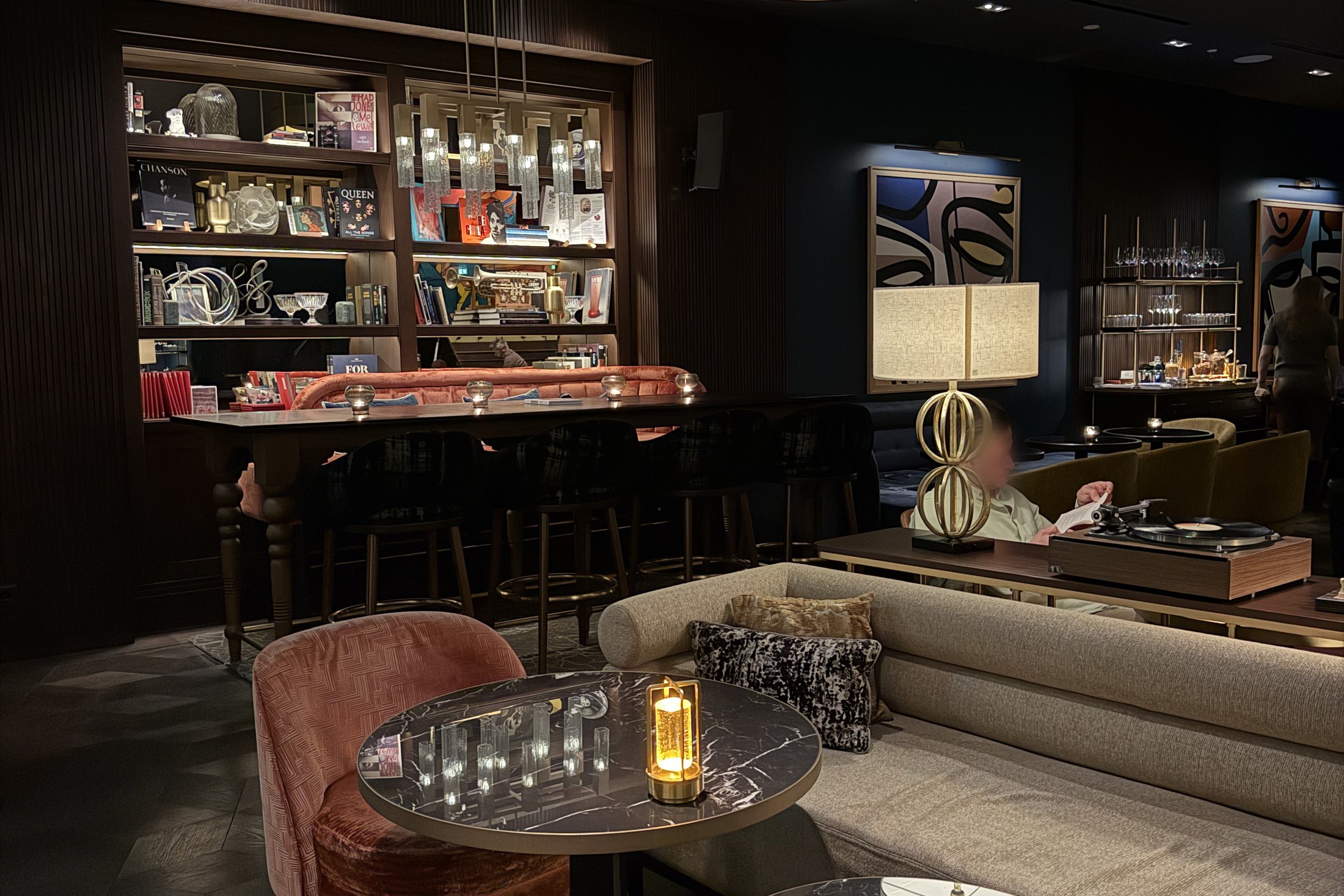
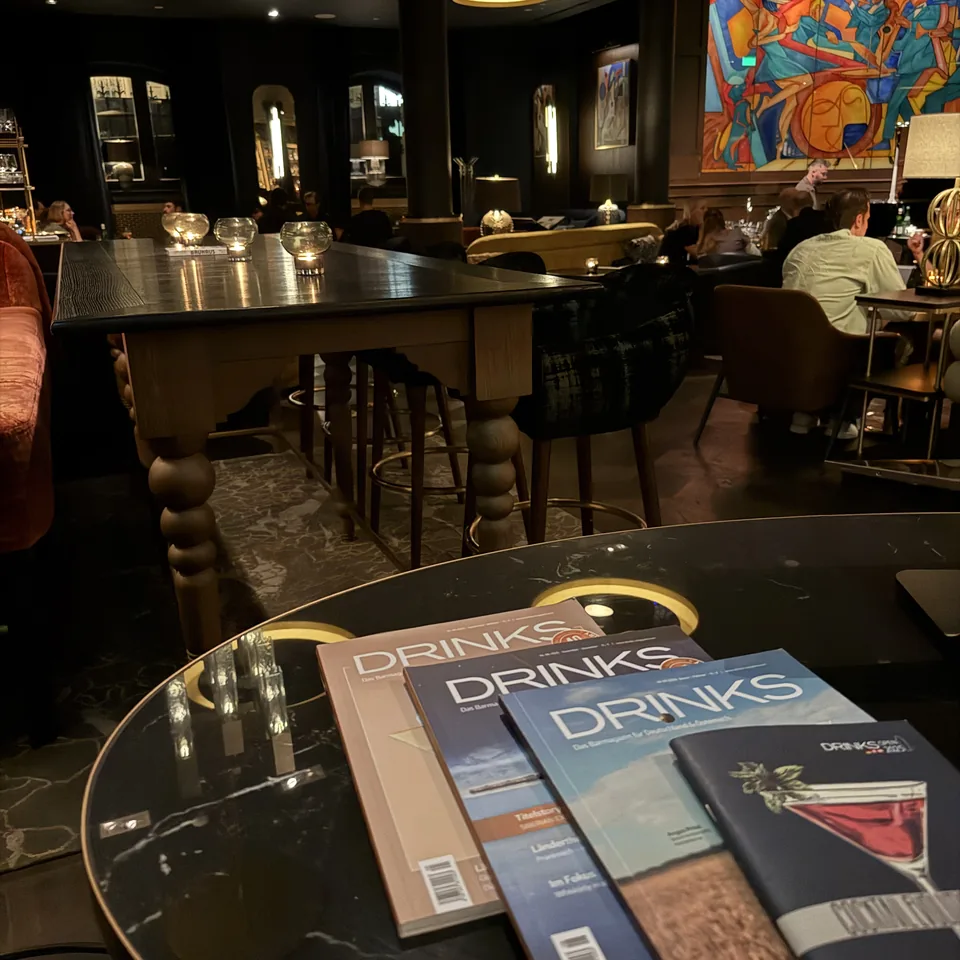
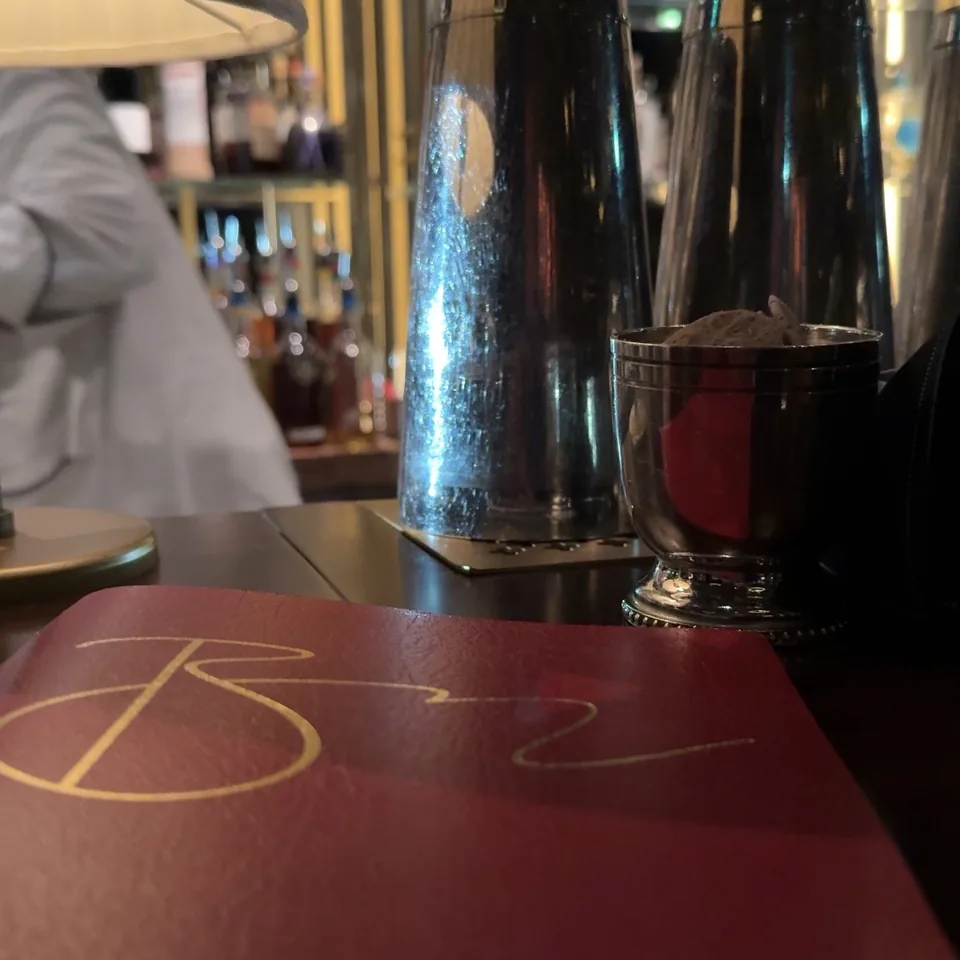
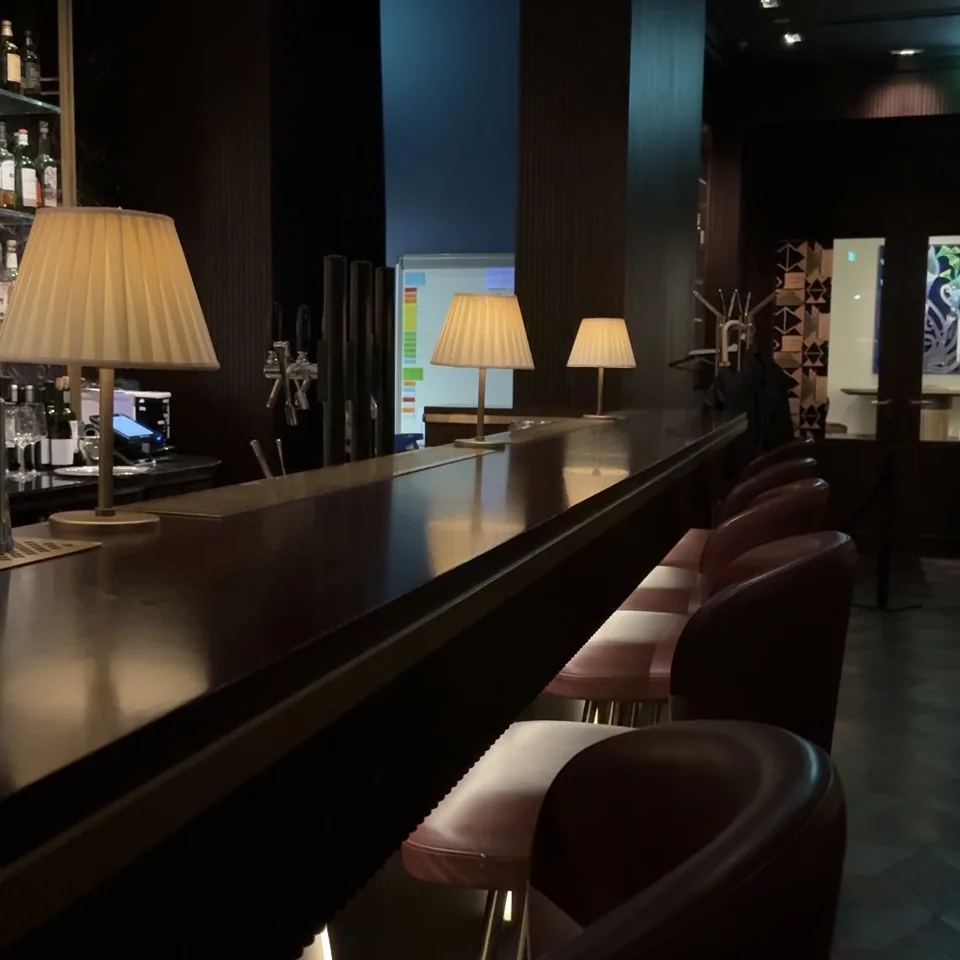
Afterwards, Bar Montez. This is the room I would come back to without staying in the hotel at all.
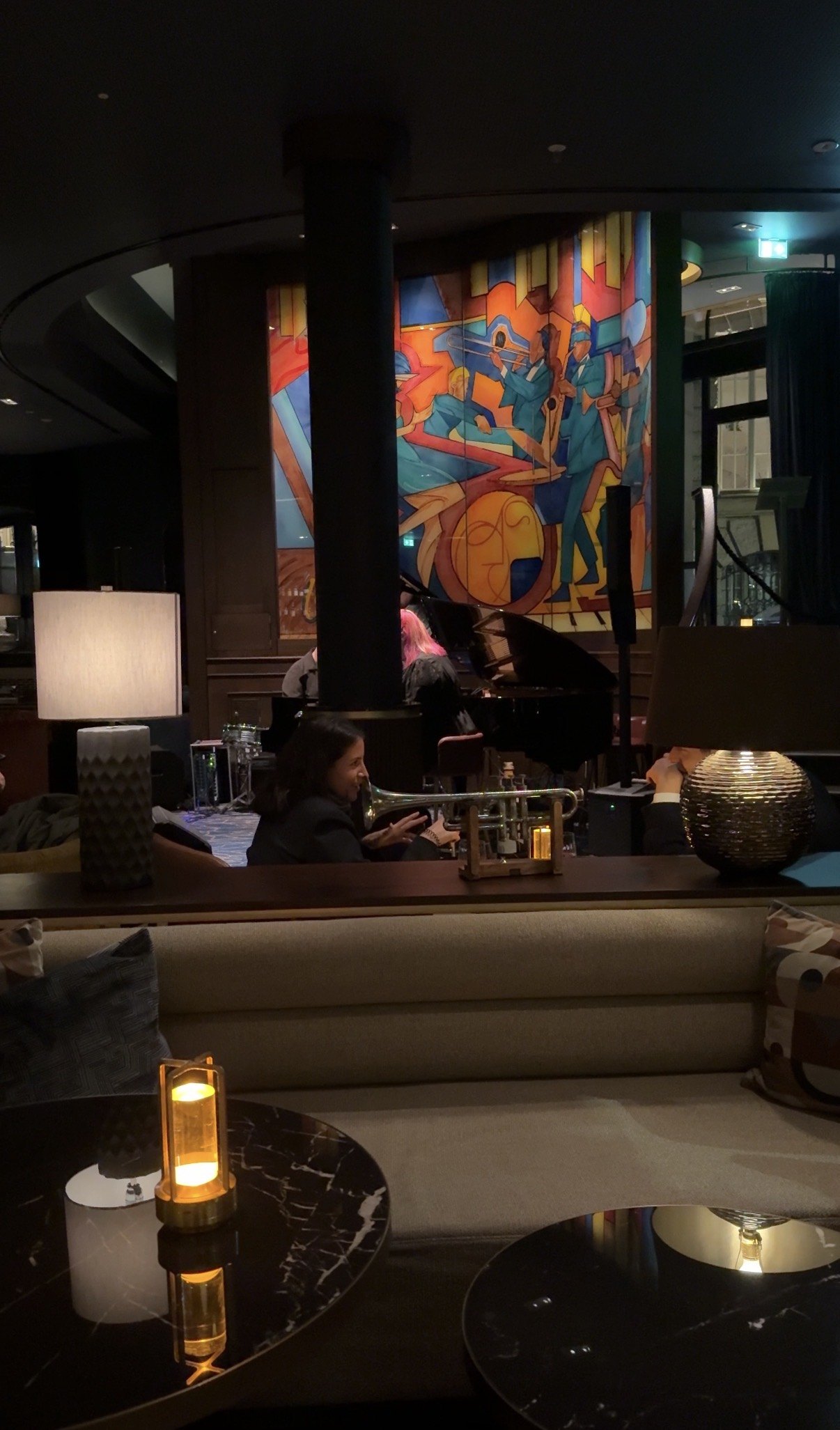
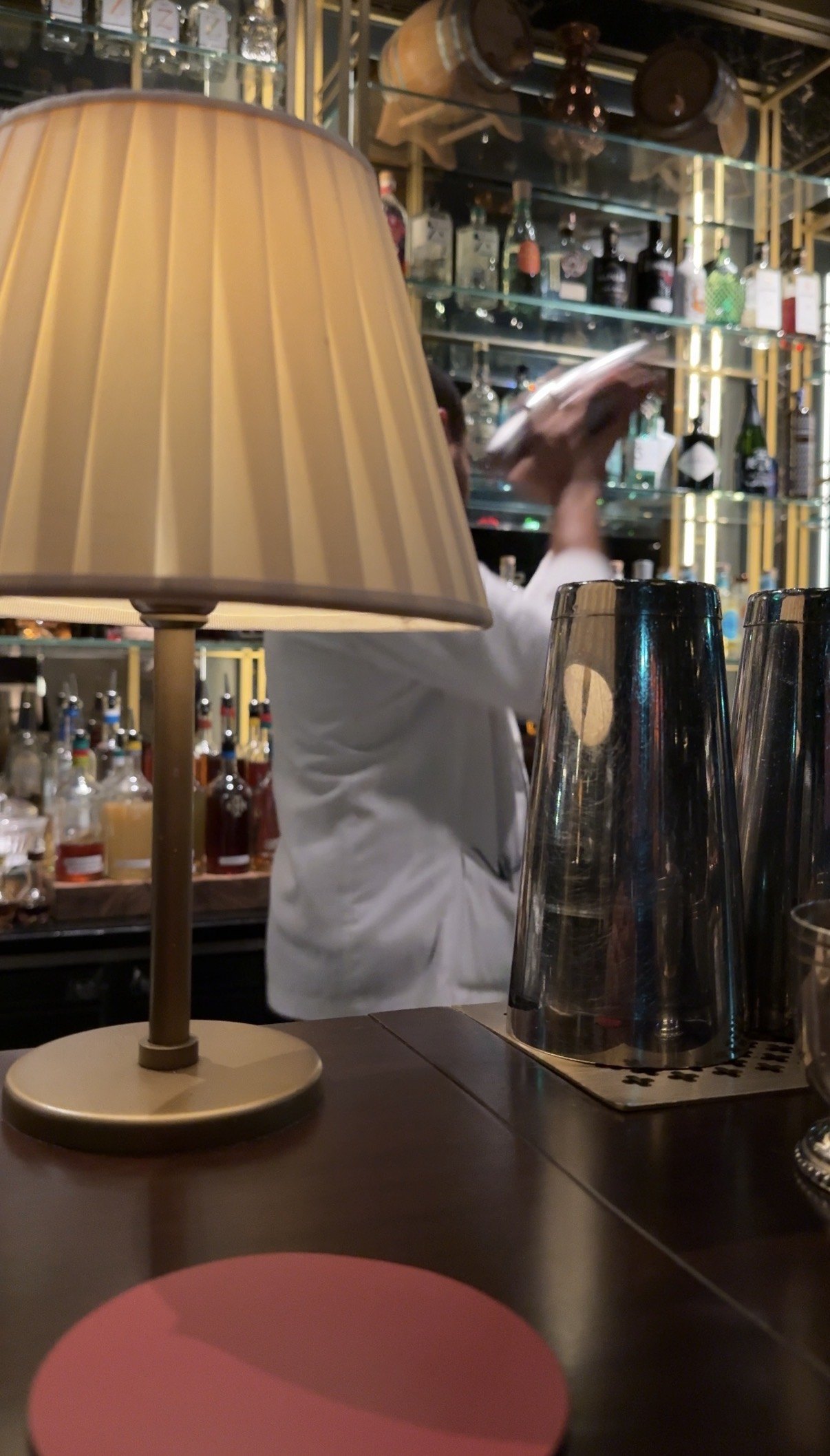
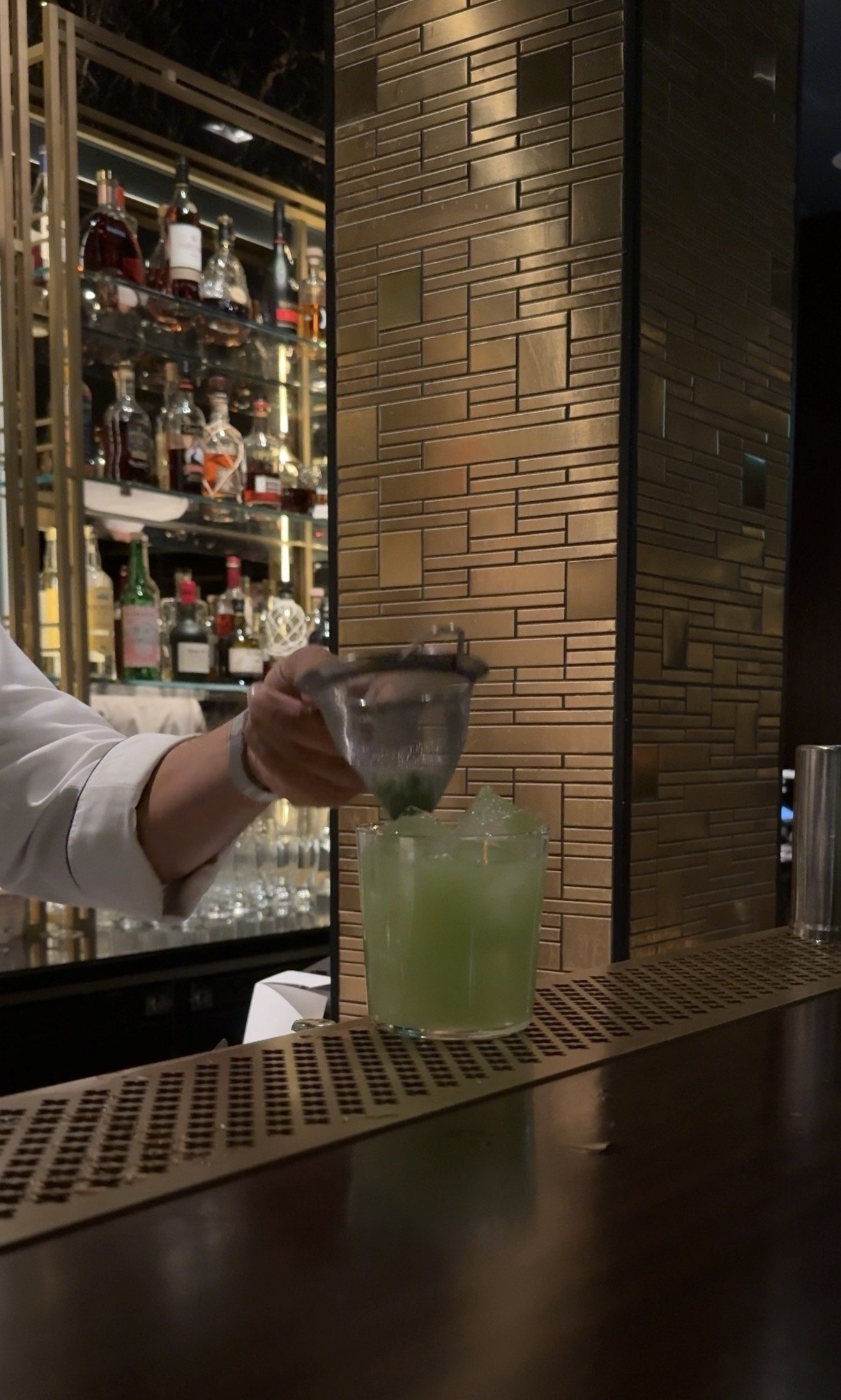
The mural is enormous and loud, the piano is used, and the room fills with people who are not staying upstairs. That last part matters more than anything on the drinks list. A hotel bar that only serves its own guests is a waiting room with bottles. This one is a Munich bar that happens to be inside a hotel, and the difference is audible the moment you walk in.
The spa, and what I did not do
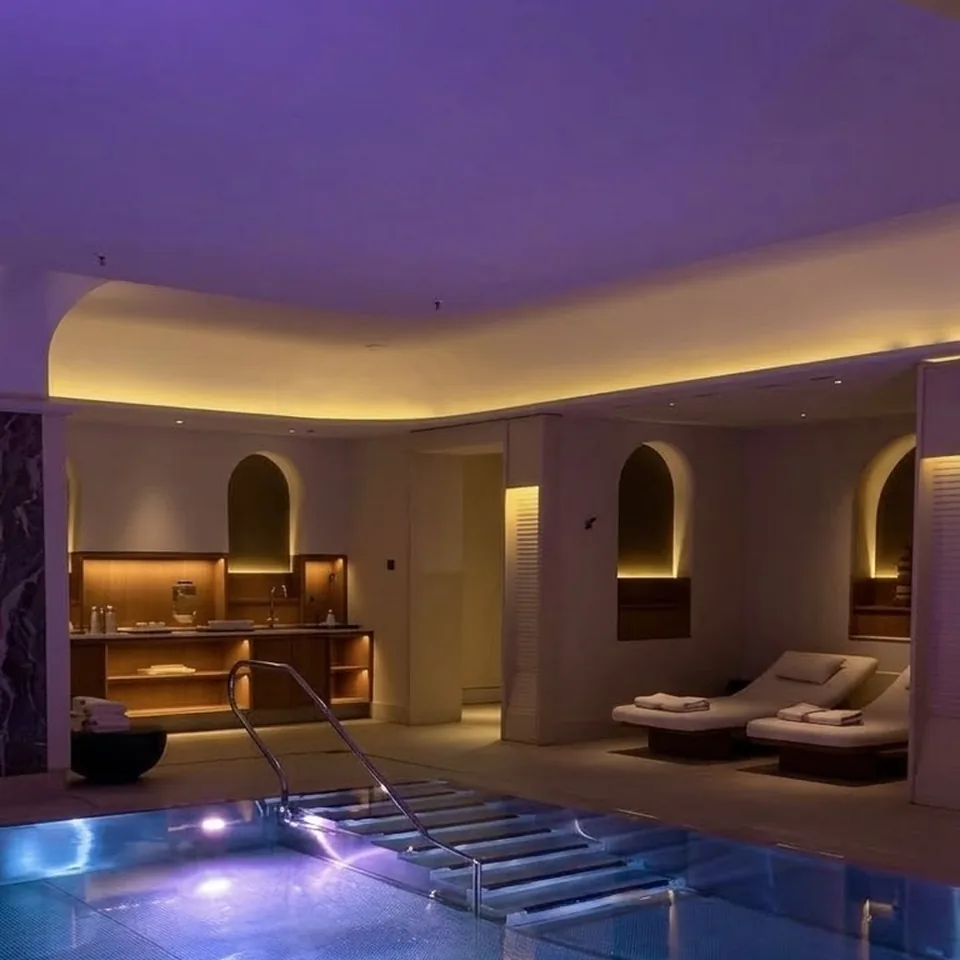
Asaya runs over about 1,300 square metres downstairs: an indoor pool, two saunas, a herbal steam room and six treatment rooms. I went down and looked at it. I did not swim and I did not book a treatment, because one night does not stretch that far.
So take what follows as a description and not as a report. The pool is handsome, and it is lit to a degree that will divide people; there is a photograph of it at the foot of this page and you can judge for yourself. The arched alcoves along one side are the good idea in the room. There is also a gym open around the clock, which on a one-night stay is the facility you are most likely to actually use.
What I would tell you before you book
Come for the building. The staircase, the banking hall and the way the two landmarks have been handled are the reason to choose this over the other good hotels in Munich, and they are available to you from the moment you walk in, whatever the season and whatever the weather is doing to the roof.
Do not plan the trip around the terrace unless you are coming in summer, and if you are, write to me and I will find out what is open on your dates before you commit. Ask which building you are sleeping in. Eat downstairs at least once, go to the bar afterwards, and give the stairs the five minutes they are owed.
One night was enough to be sure of the house and short of a verdict on living in it. I will go back for longer, and when I do this page gets longer with me.
Where it is
Kardinal-Faulhaber-Straße 1, Altstadt-Lehel, three minutes from Odeonsplatz and five from Marienplatz. Booked through Classic Travel, where the house carries both Rosewood Elite and Virtuoso. At a Rosewood property the Elite rate is the one to take: breakfast for two, a property credit, early arrival and late departure when the day allows, a welcome amenity, and recognition by a management team told in advance that you are coming. What this house adds on top of the programme is the part to know about. The Elite upgrade is normally priority at check-in; here it is guaranteed at the moment of booking, and the quoted price already shows the better room, with a credit in the house and a second credit on suites and the Houses. That changes how you read the number on the screen. Tell me your dates and I will put both programmes in front of you.
Before you book
The questions people send me about Rosewood Munich.
- Where is it, and how far is the old town on foot?
- Kardinal-Faulhaber-Straße 1, in Altstadt-Lehel, which is the old town. Odeonsplatz is about three minutes on foot and Marienplatz about five, so the Residenz, the Hofgarten and the Frauenkirche are all within a short walk and you will not need a taxi inside the centre. The street itself is quiet, which is unusual this close to Marienplatz, because it is a street of banks and offices and it empties in the evening.
- What are the two buildings, and does it matter which one you are in?
- The house is two restored landmarks joined together: the former headquarters of the Bayerische Staatsbank and the Palais Neuhaus-Preysing, opened as a hotel in 2023. It matters because they have different proportions. The bank side gives you the civic rooms, the staircase, the tall windows and the stone. The Palais side is domestic in scale and heavier in ornament. There are 132 rooms in total, of which 59 are suites, and five private Houses including König Maximilian and Prinzregent Luitpold. Tell me which character you want and I will ask the hotel to place you.
- What is the Junior Suite like?
- That is the category I had. A proper sitting area off the bedroom, Tara Bernerd's scheme throughout, which reads as baroque bones with modern velvet laid into them, geometric rugs on the floor and a large modern painting over the bed. Mine was a figure in Bavarian dress done in flat graphic colour, which is the sort of joke this hotel makes well. The bathroom has a free-standing tub under the window with a tray across it, and the marble runs up the walls. I had one night, so I can tell you how the room works and I cannot tell you how it wears over a week.
- Is the rooftop terrace worth planning a trip around?
- In summer, probably. It looks straight at the towers of the Frauenkirche and it is the image the hotel is known for. I was there in the middle of October and it was out of season, so I can describe the view and I cannot tell you what an evening up there is actually like. If that terrace is the reason you want this hotel, ask me before you book and I will check what is open on your dates. I would rather tell you it is shut than have you find out on arrival.
- Does it work for Oktoberfest, and does it work for business?
- For Oktoberfest it is a serious base, because the Wiesn is a long day and what you want afterwards is a spa, a dark bar and a quiet street. This house has all three, and it is far enough from the tents that the noise stops at the door. For work it is equally straightforward: you are among the banks and the offices, the rooms are quiet, and Bar Montez is a room you can take someone to without it becoming an evening. The two uses sit together better here than they do in most city hotels.
- It carries two programmes. Which one should I book?
- Rosewood Munich sits on Classic Travel under both Rosewood Elite and Virtuoso, and at a Rosewood house the Elite rate is the one to take, because the benefits are built for the group. Elite brings breakfast for two, a property credit, priority for an upgrade at check-in, early arrival and late departure when the day allows, a welcome amenity, and recognition by a management team that has been told you are coming. This house then goes further than the programme asks, and it is the detail worth pausing on: at Rosewood Munich the upgrade is guaranteed at the moment of booking, with the quoted price already showing the better room, and there is a credit to spend in the house with a second credit on suites and the private Houses. Elsewhere in the group the upgrade is priority at the desk, which means it may not happen. Here it is settled before you travel, which also makes the rate hard to compare on a screen, since you are reading the price of a room you would otherwise pay more for. Send me your dates and I will show you both programmes.
Something else you want to know? Write to me and I will answer it here.
Book online
Via Classic Travel, with the benefits attached.
The hotel's own rate, booked through a Virtuoso preferred-partner agency. Register once; the account stays linked to Wheresnik.
Check rates at Rosewood Munich →Or let me arrange it
The room, the dates, the rest of the list.
Write in English, Italian or Spanish. I answer personally, usually within a day.
Let Nik arrange it →