
Inspection · St. Moritz, Engadine, Switzerland
Grace La Margna St. Moritz
A house of 1906 that spent years shut and came back open all year, in a town where most of the famous addresses close between seasons. Two nights in a Deluxe Junior Suite in the old wing, with the railway directly under the window. Almost everything good here follows from that window.
Book Grace La Margna with me, through Classic Travel Register first, free of charge, and the rates and partner benefits open up, with the account linked to Wheresnik. Tell me your dates before you book and I will say which room to ask for here, and which week I would avoid.
 what it carries
- Breakfast for two
- A credit at the house
- Upgrade when one is free
- Early in, late out
Also on

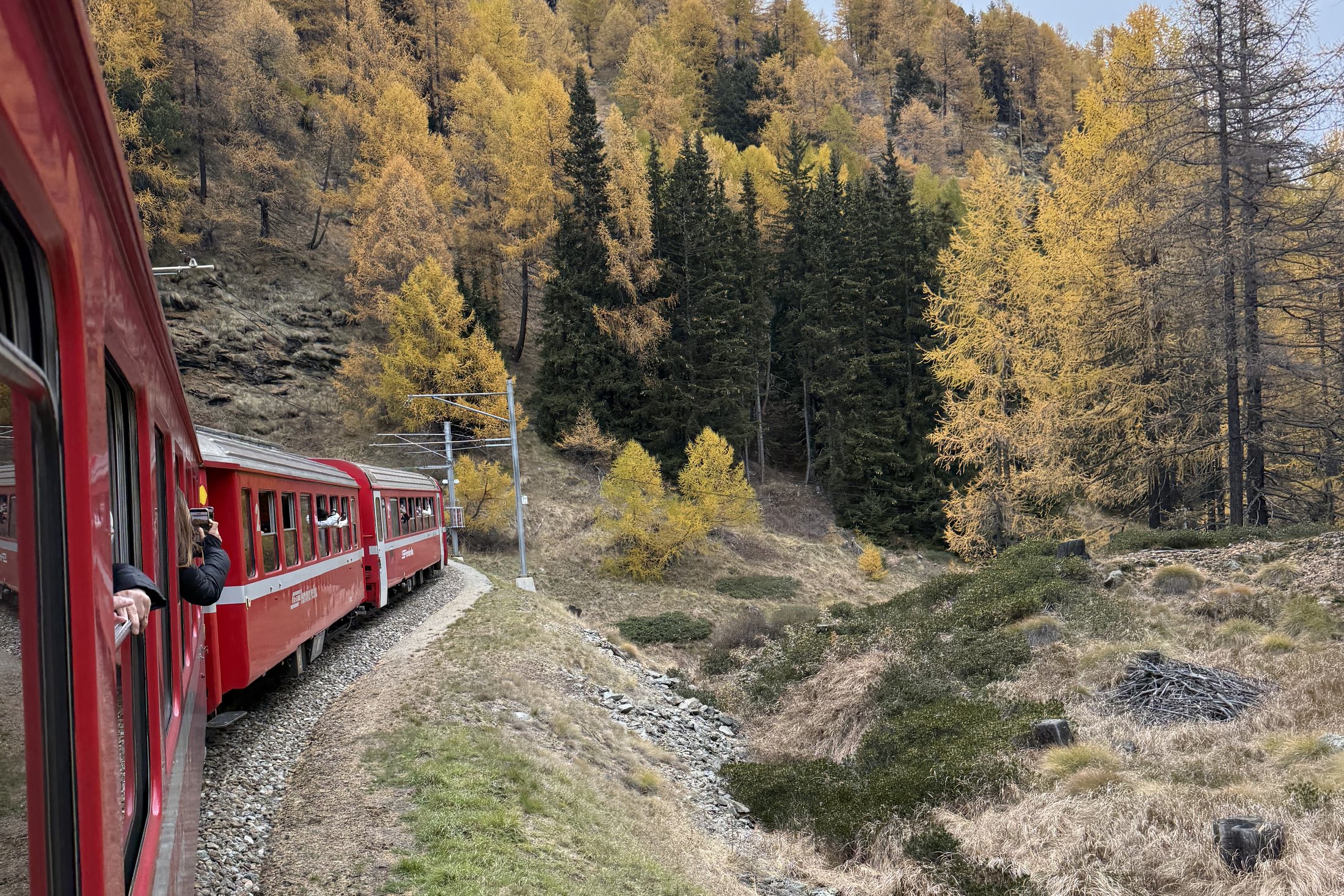
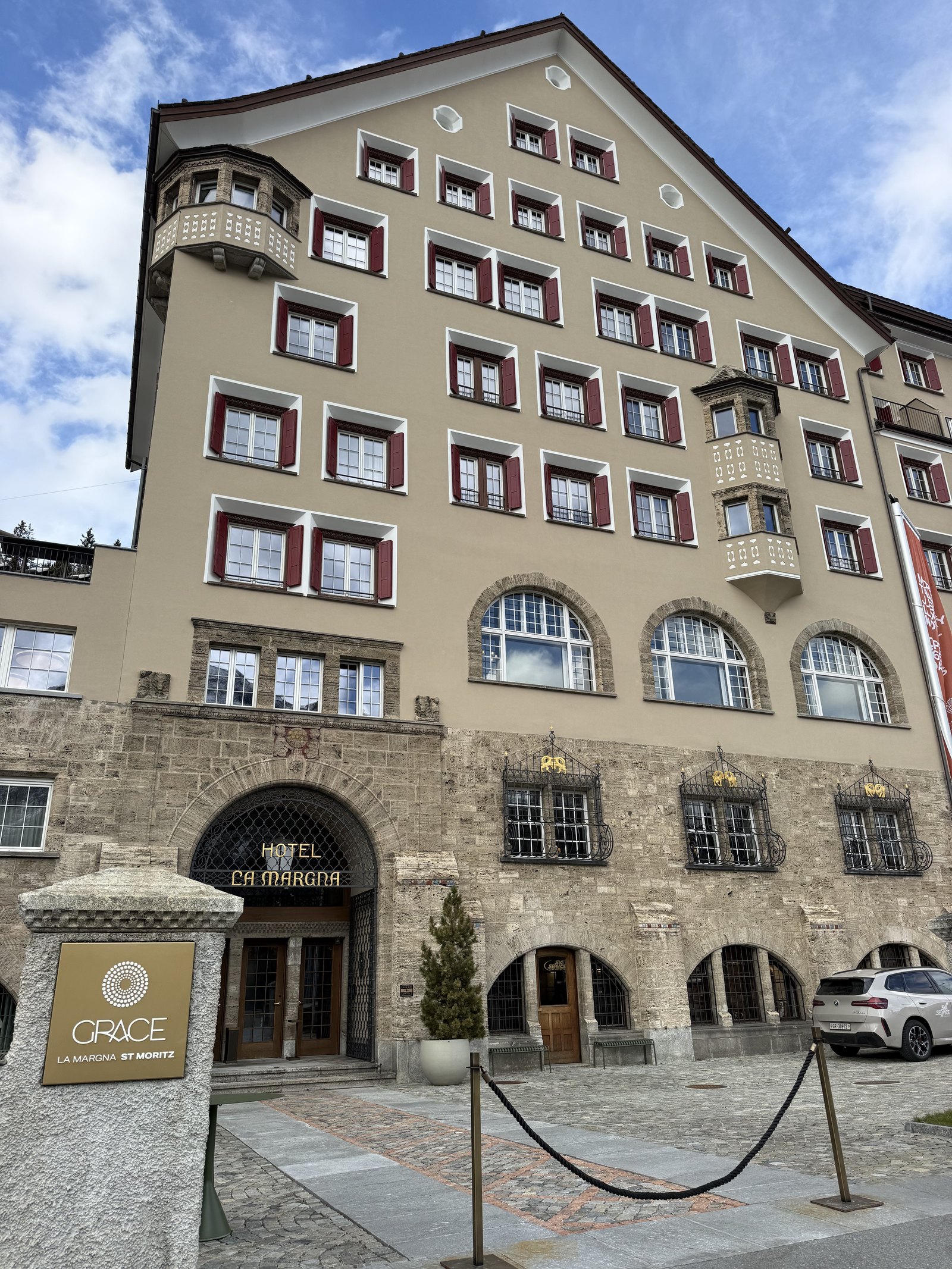
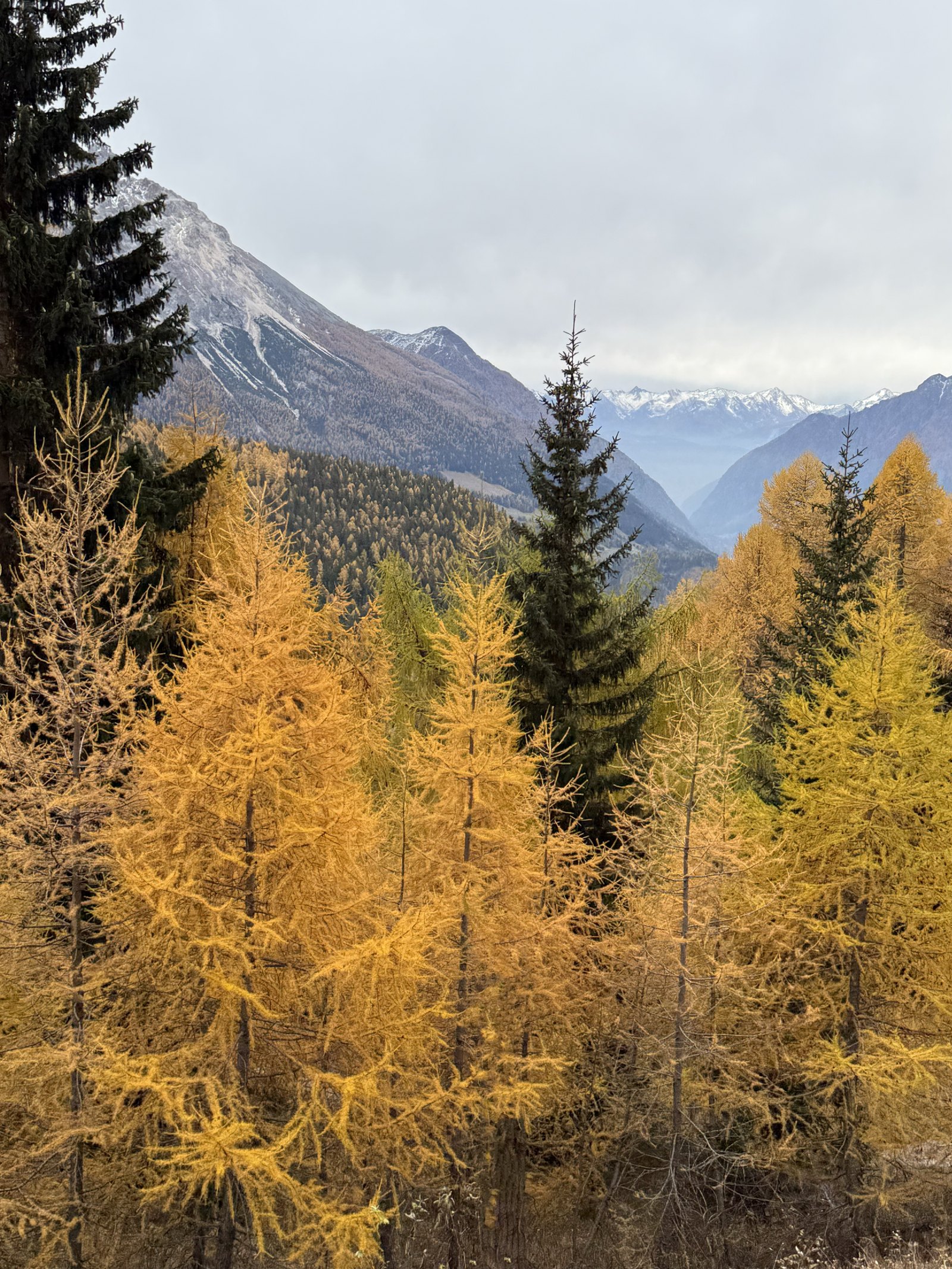
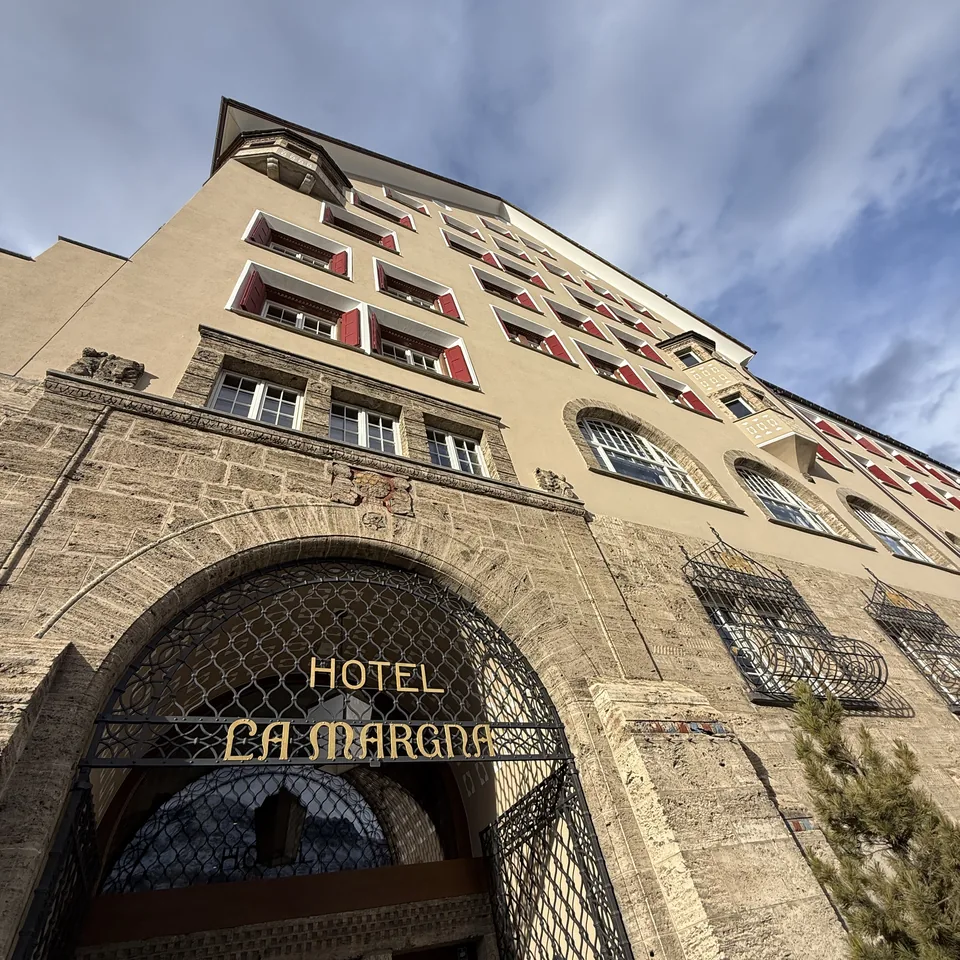
I came up to St. Moritz on the red train, through larches that had turned the colour of a brass instrument, and I went back down the same way two days later. That is worth putting first because the Grace La Margna is built on top of the station, and the hotel and the railway explain each other. Arrive by car and the house reads as a six-storey block of 1906 standing in an awkward spot below the village. Arrive on the rails and you walk out of the terminus and into the lobby, and the awkward spot turns out to be the best-placed building in town.
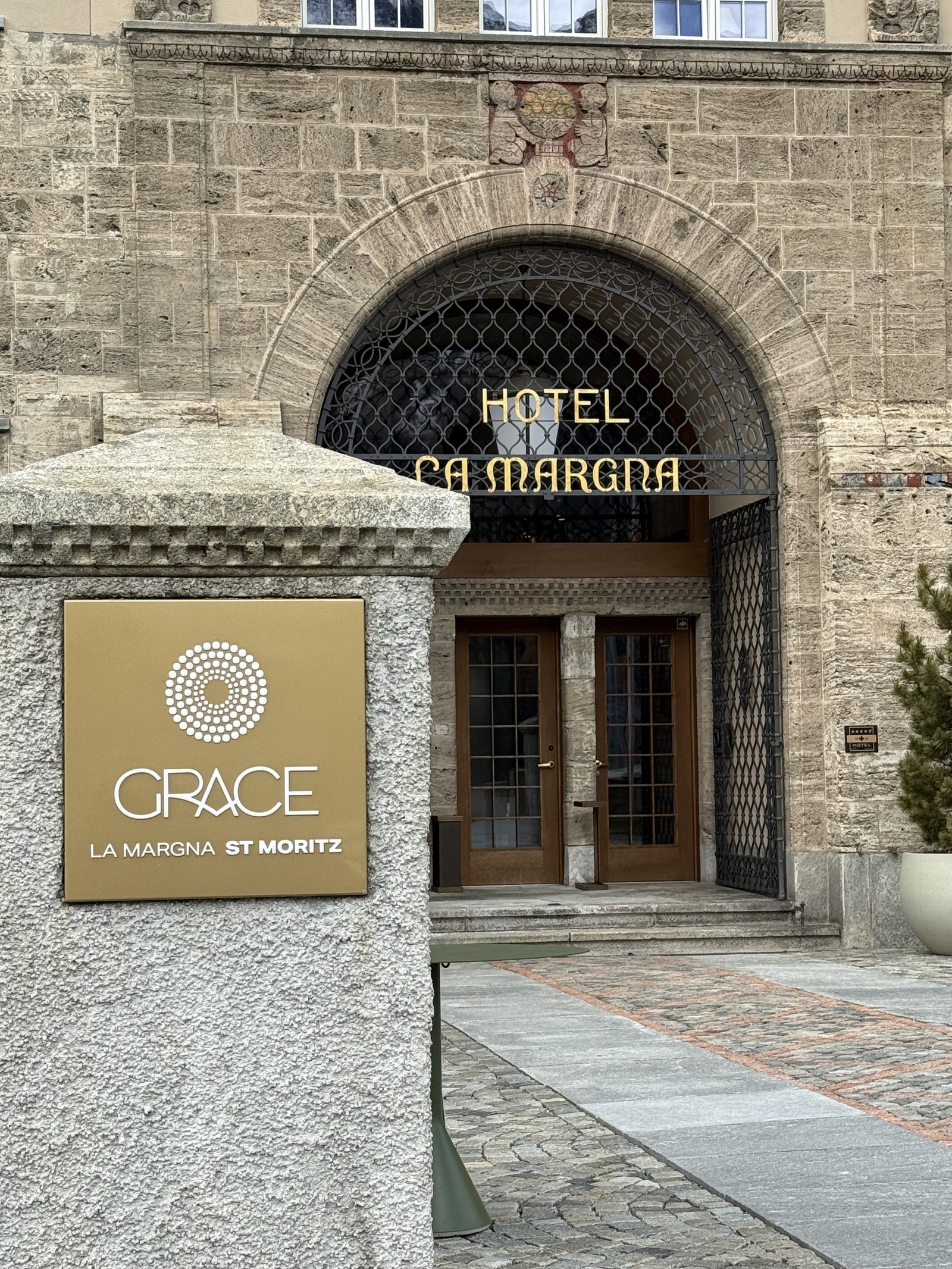
The house was drawn in 1906 by Nicolaus Hartmann, an Engadine architect, and it was the Hotel La Margna for most of a century. The name is still cut into the arch over the door, in wrought iron and gilt, above a new brass plaque that says Grace. I like that they left it. The restoration, by Divercity Architects of London with the interior designer Carole Topin, kept the Liberty engadinese facade, the granite columns, the stucco, the period panelling and even the Val Fex slate on the roof, and put a second hotel behind it.
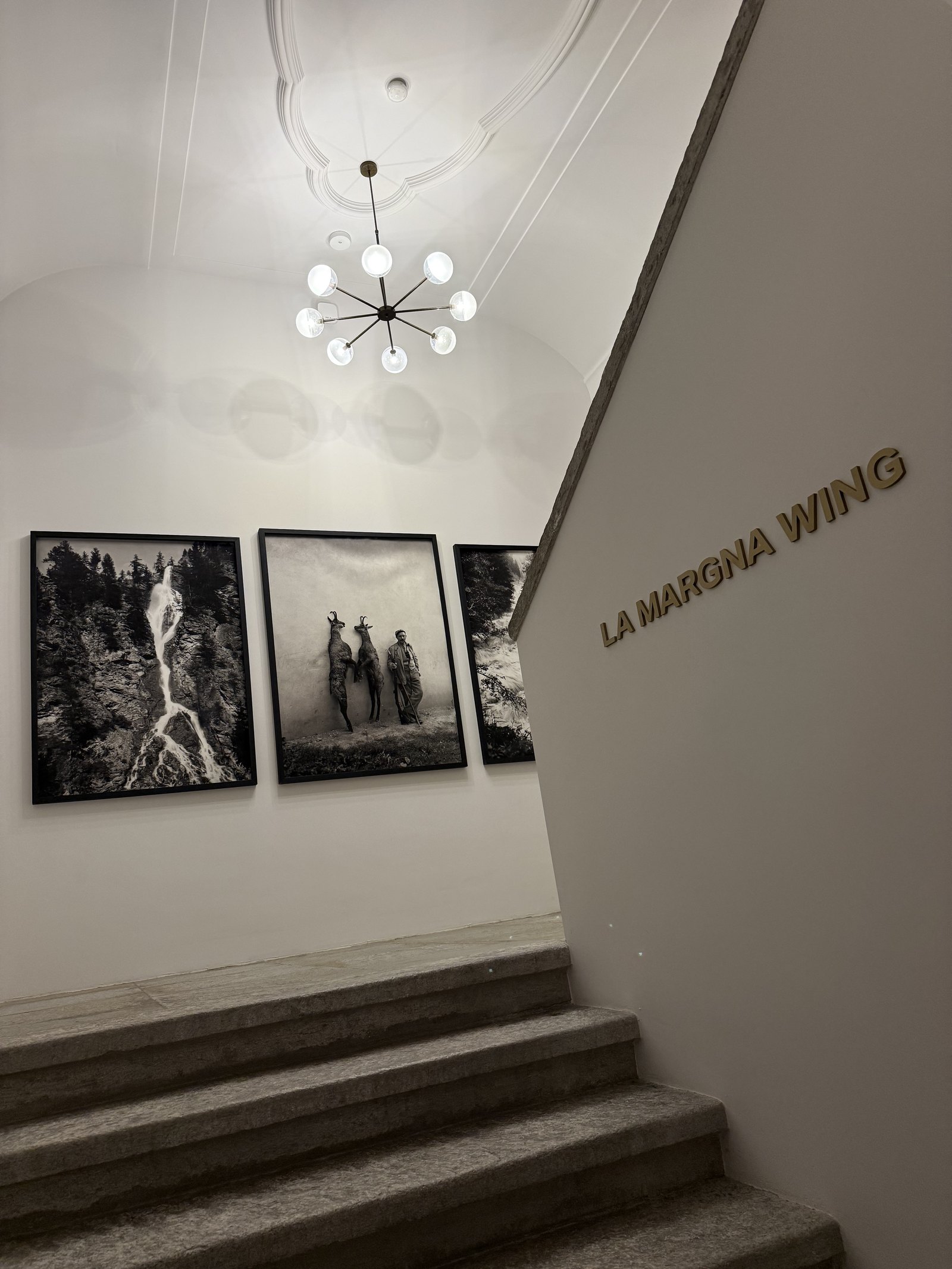
Two hotels in one shell
Seventy-four units in all, forty-two rooms and thirty-two suites, and they are split across the two wings in a way the category names do not advertise. The La Margna Wing is the historic building: forty-seven rooms and suites, from about thirty-five square metres up to a three-bedroom suite of a hundred and thirty. The Grace Wing is new construction behind it: twenty-seven, larger, ending in a penthouse of two hundred and fifteen square metres with its own terrace and a Jacuzzi on it.
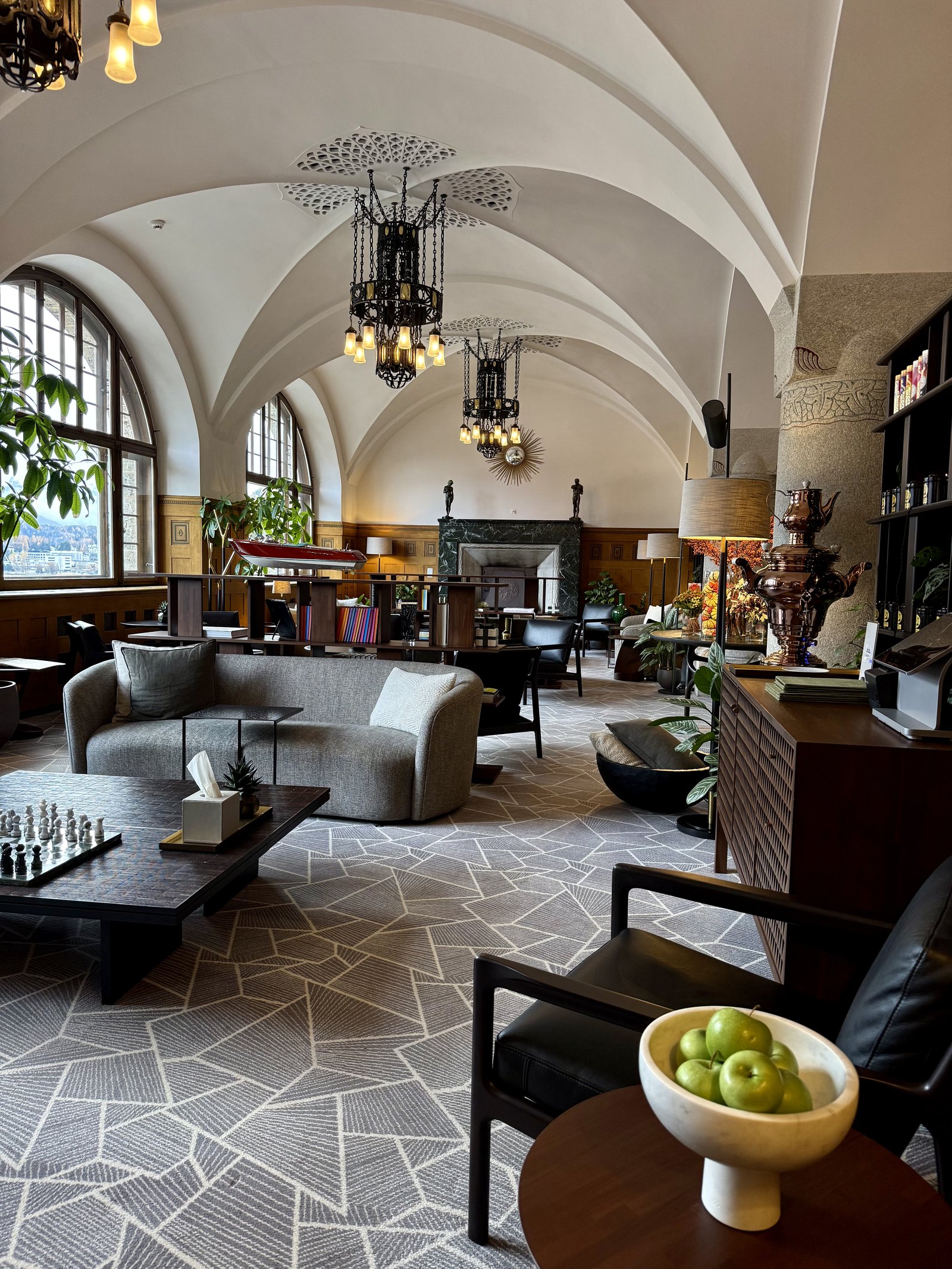
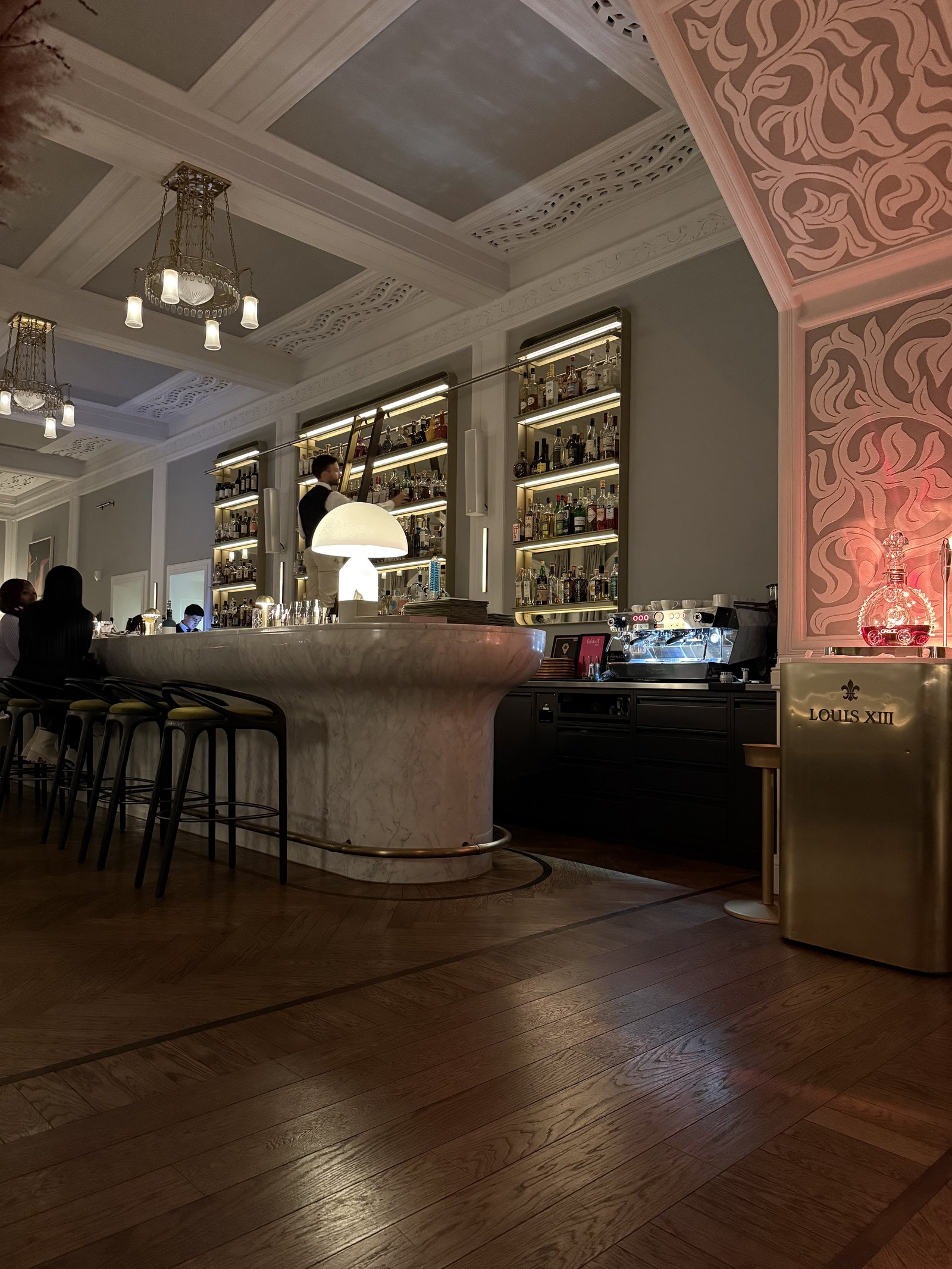
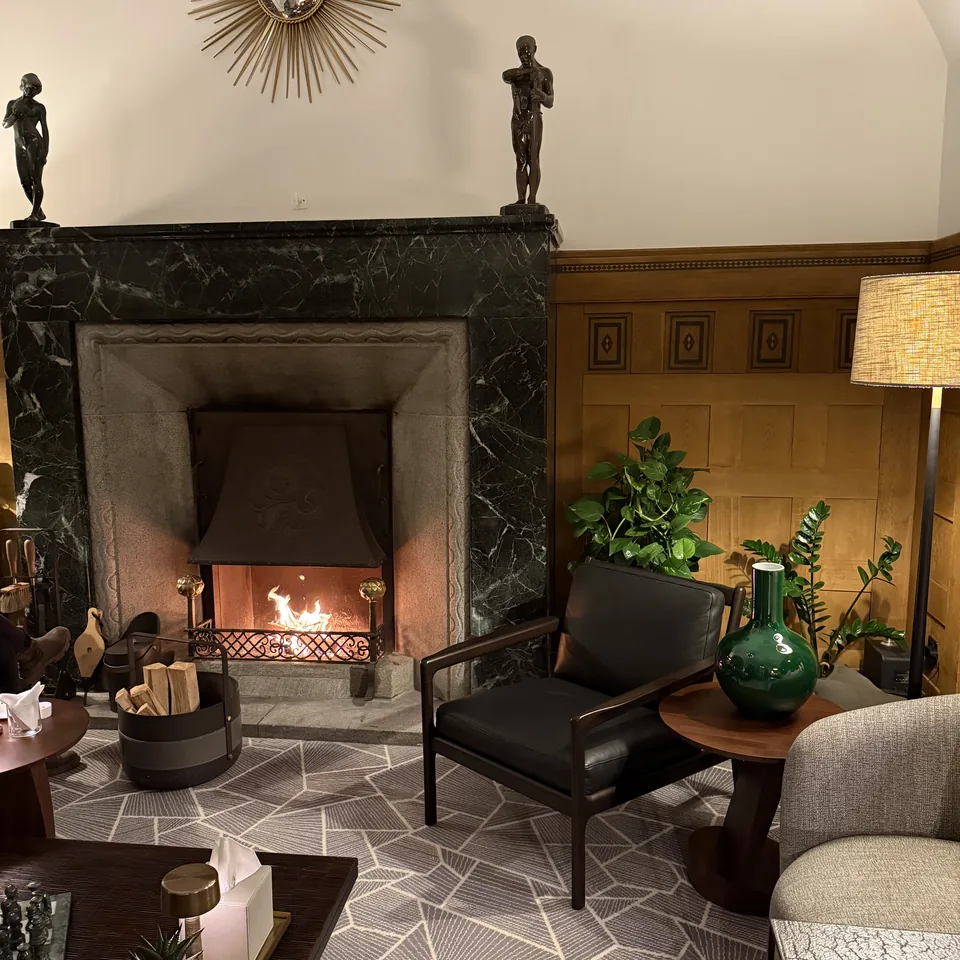
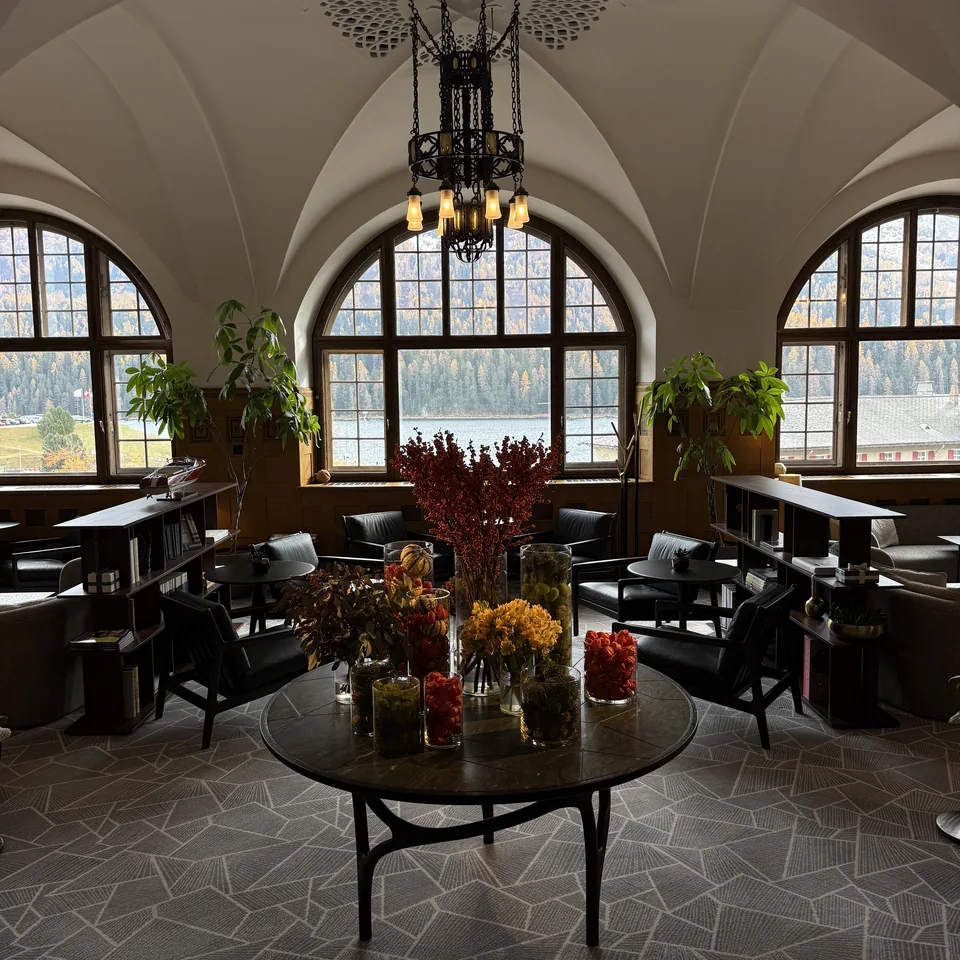
The hinge between them is the Lobby Lounge, which is the protected room of the original house and now holds the bar. It is the best room in the building and I spent more time in it than I planned to: a low white vault on granite columns, a black iron chandelier, a fireplace with a sunburst mirror over it, and a long counter of pale stone along one side. The reception is somewhere else entirely, a raw block of granite with a brass top, with two Tony Kelly photographs behind it, a red Testarossa and a snowboarder. That pairing tells you what the house thinks it is, and it is a more honest statement of intent than any brochure.
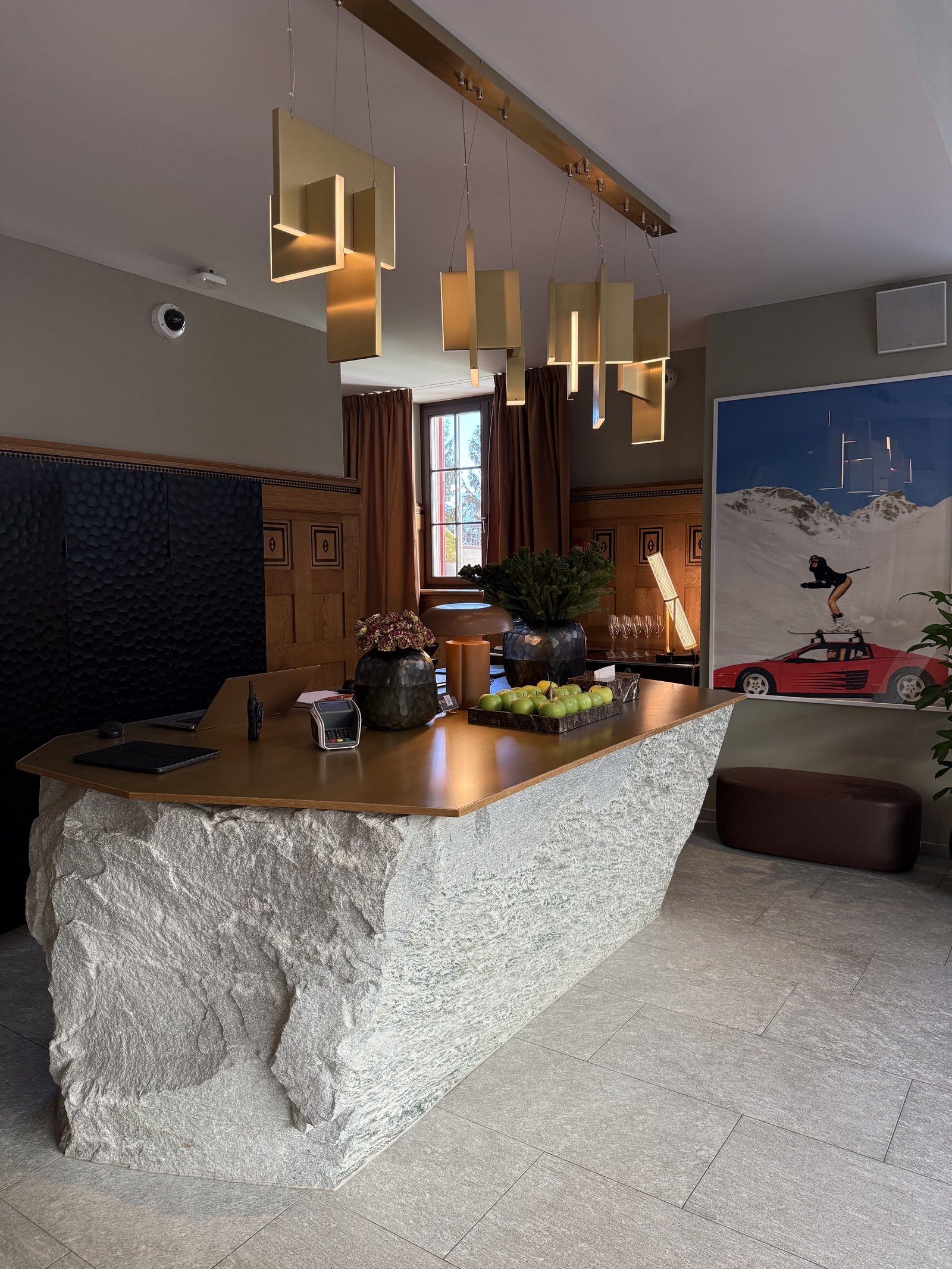
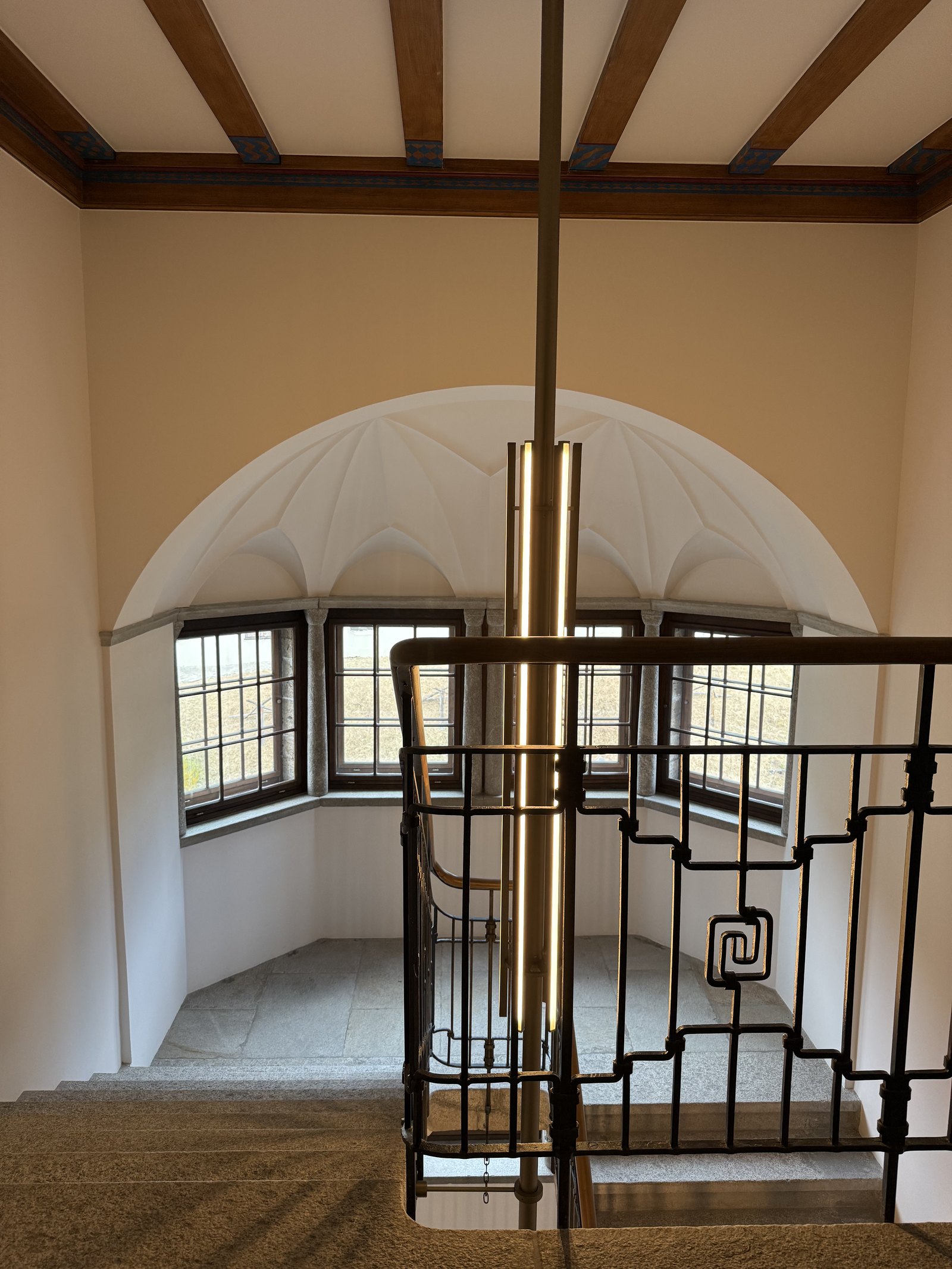
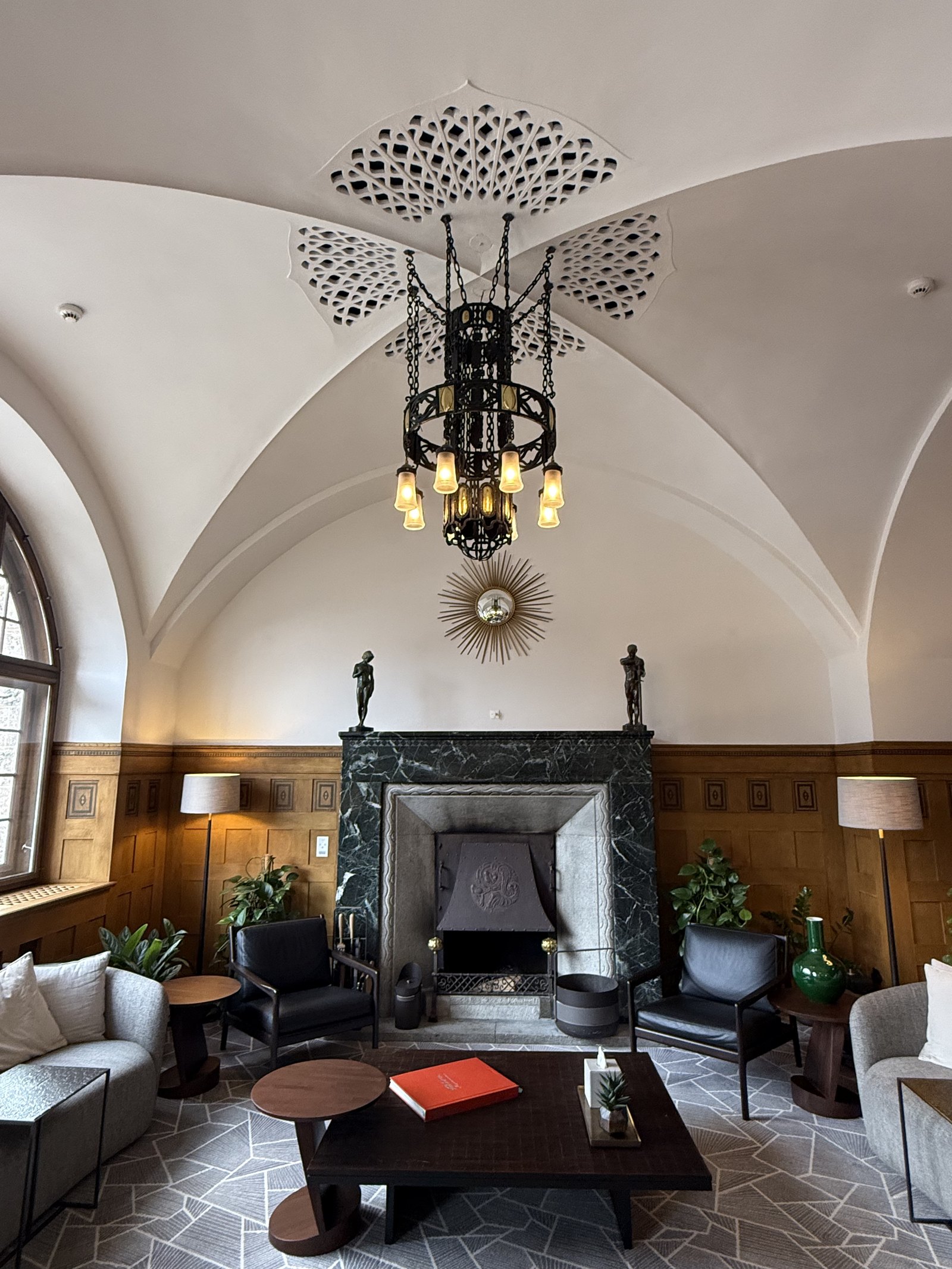
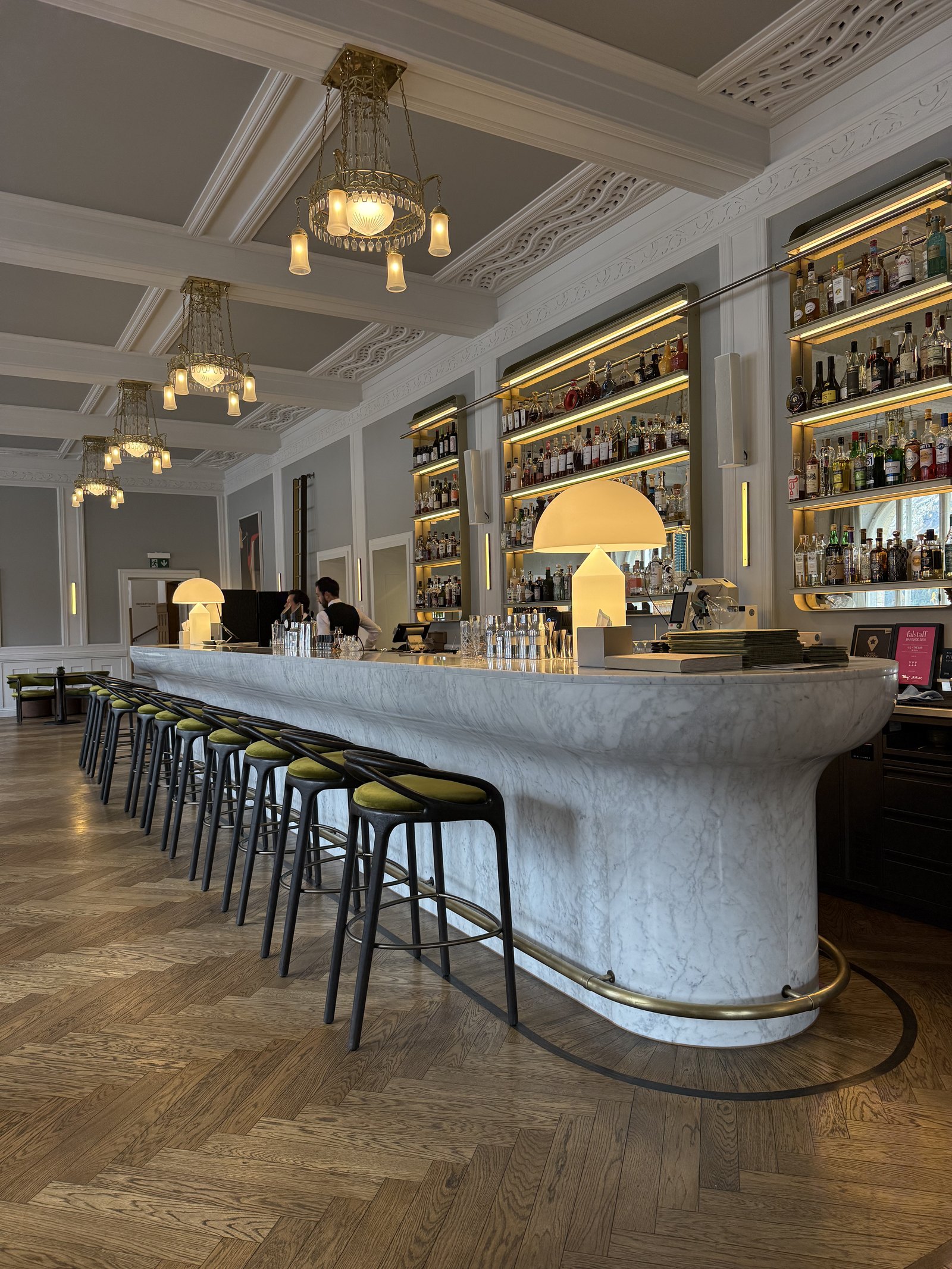
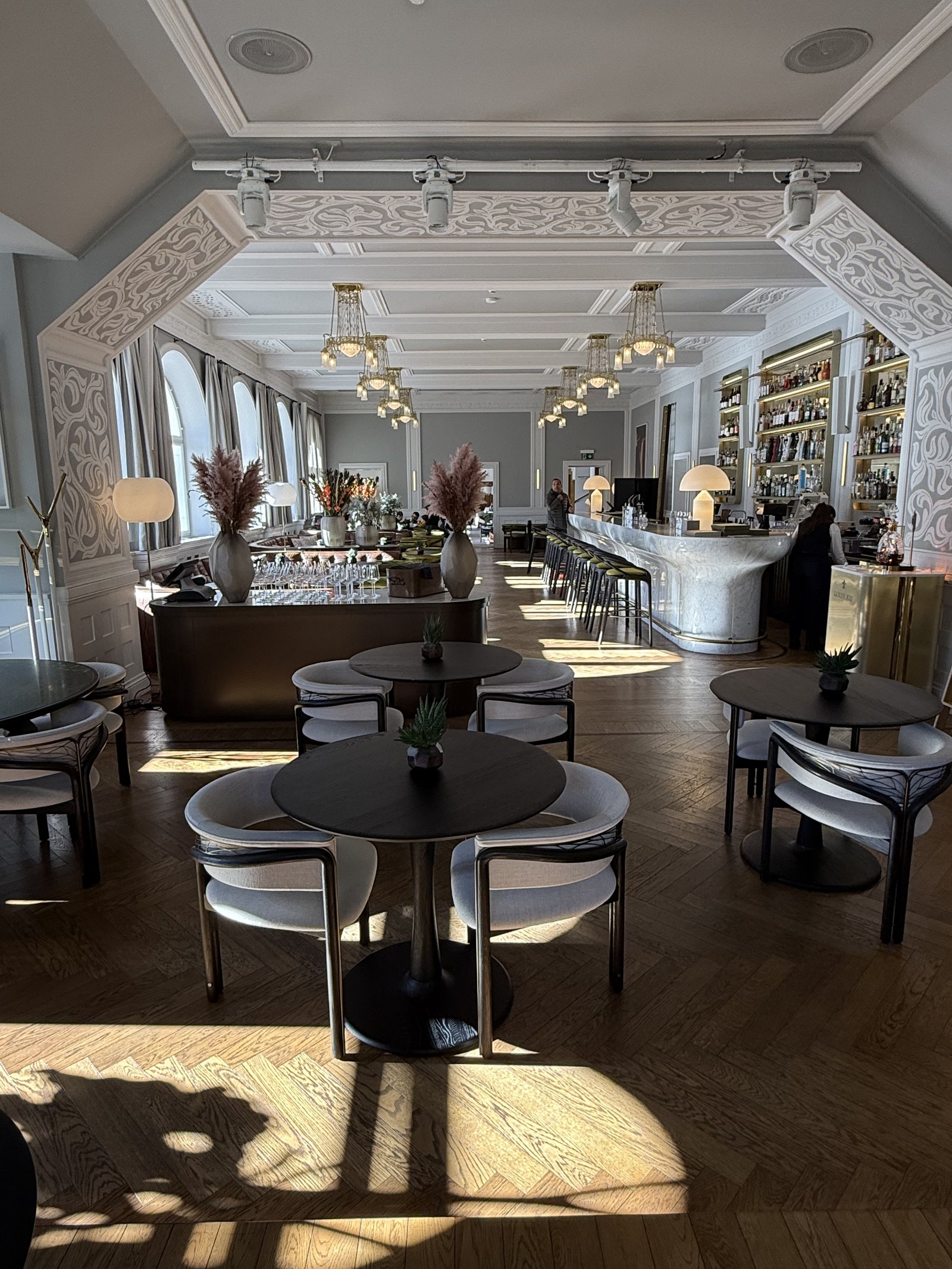
The whole of that floor is one long room that changes its mind three times between the windows and the bar, and the light moves through it all day. In the morning the sun comes in low off the lake and lies in slabs across the parquet. At six it has gone and the lamps take over. It seats a lot of people without ever feeling like a lobby, which is harder than it looks and is mostly down to the vault.
The room, and the window
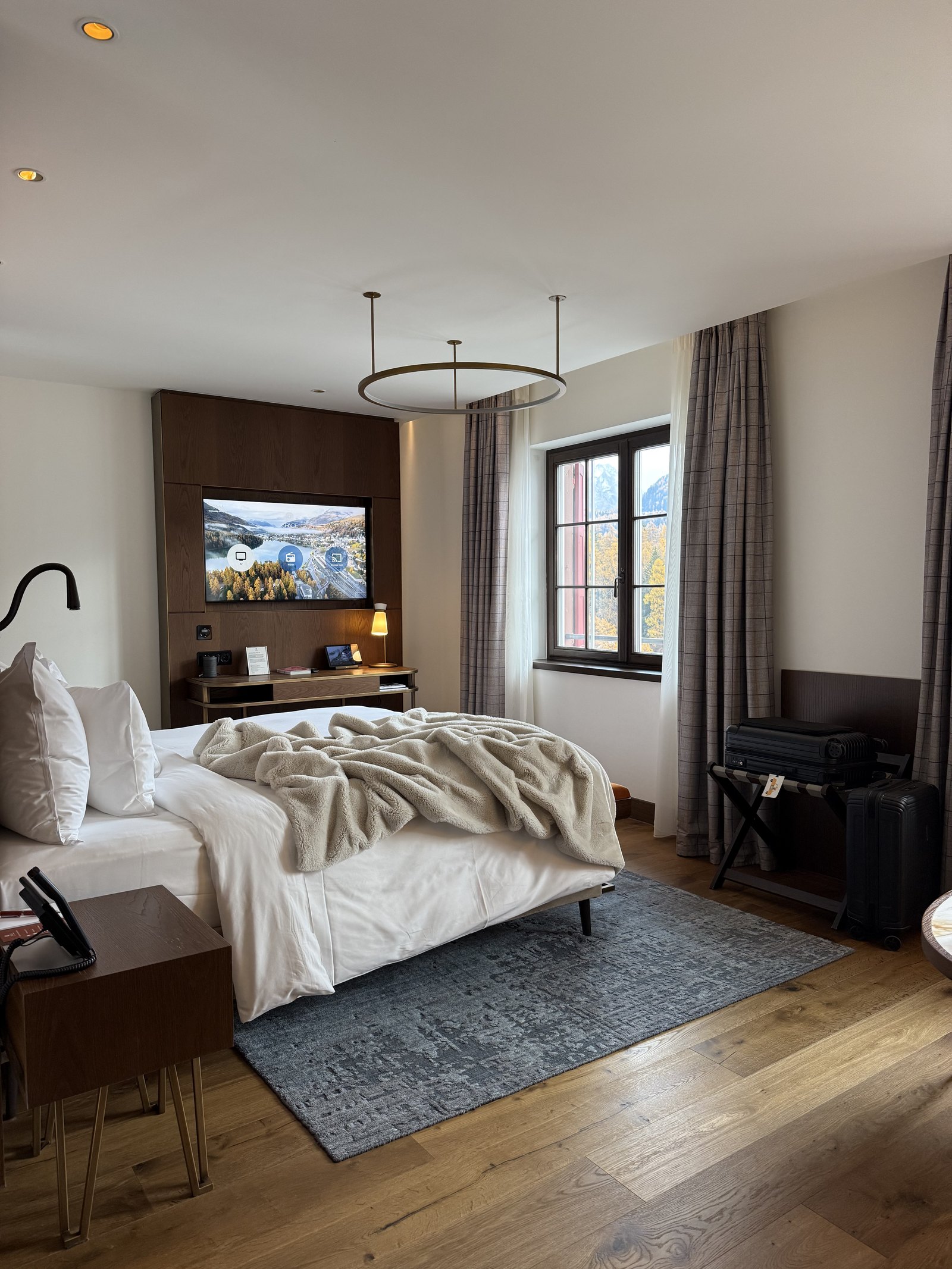
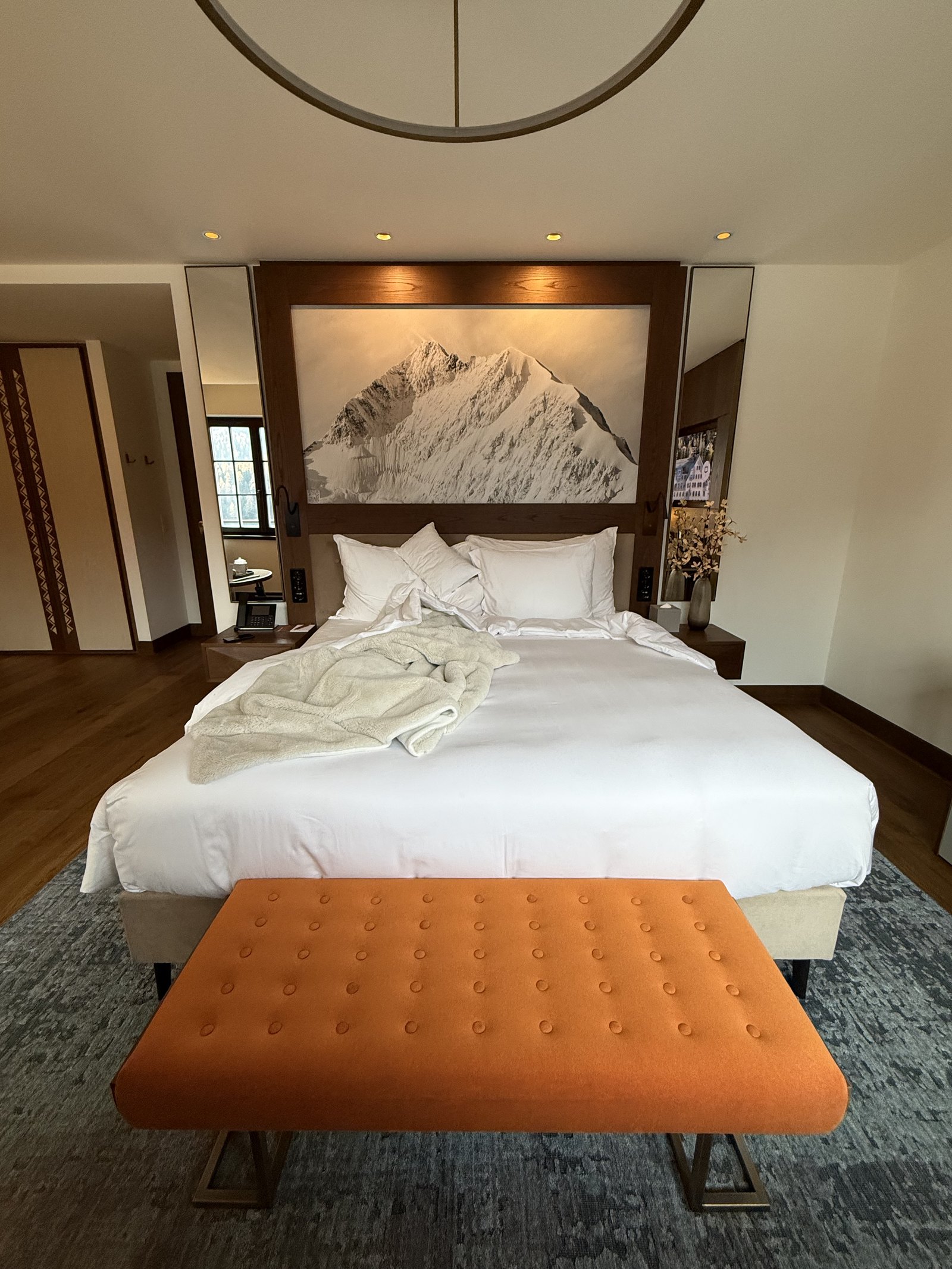
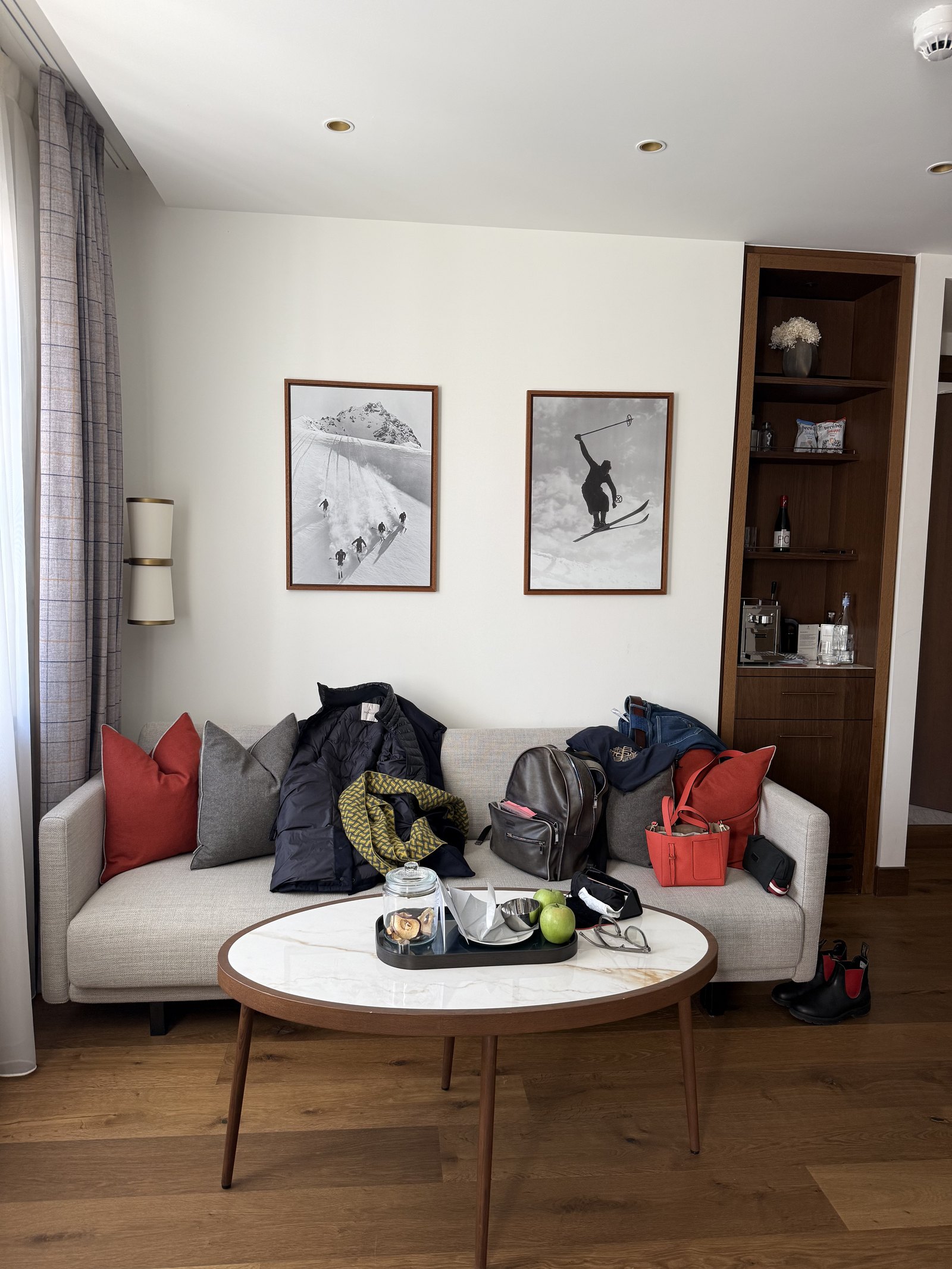
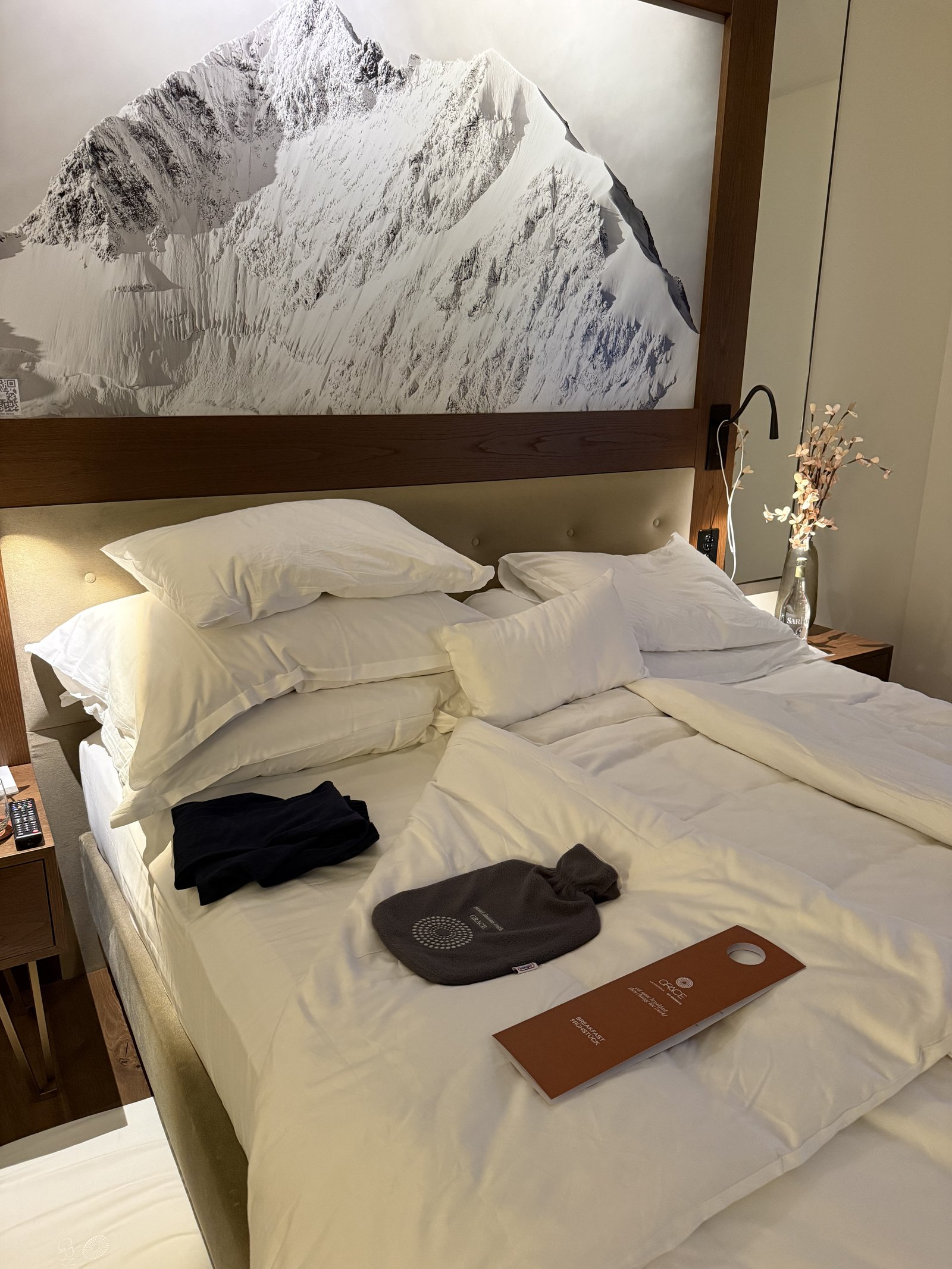
I had a Deluxe Junior Suite in the old wing, which means thick walls, a deep reveal around the window, and a photograph of a mountain the size of the bedhead above the bed. It is a good room and an unfussy one. The sitting half has two ski photographs, a cupboard with the drinks in it and a sofa, and by the second afternoon the sofa had my coat and my bag and my boots on it, which is the condition most hotel rooms are actually in and almost never photographed in.
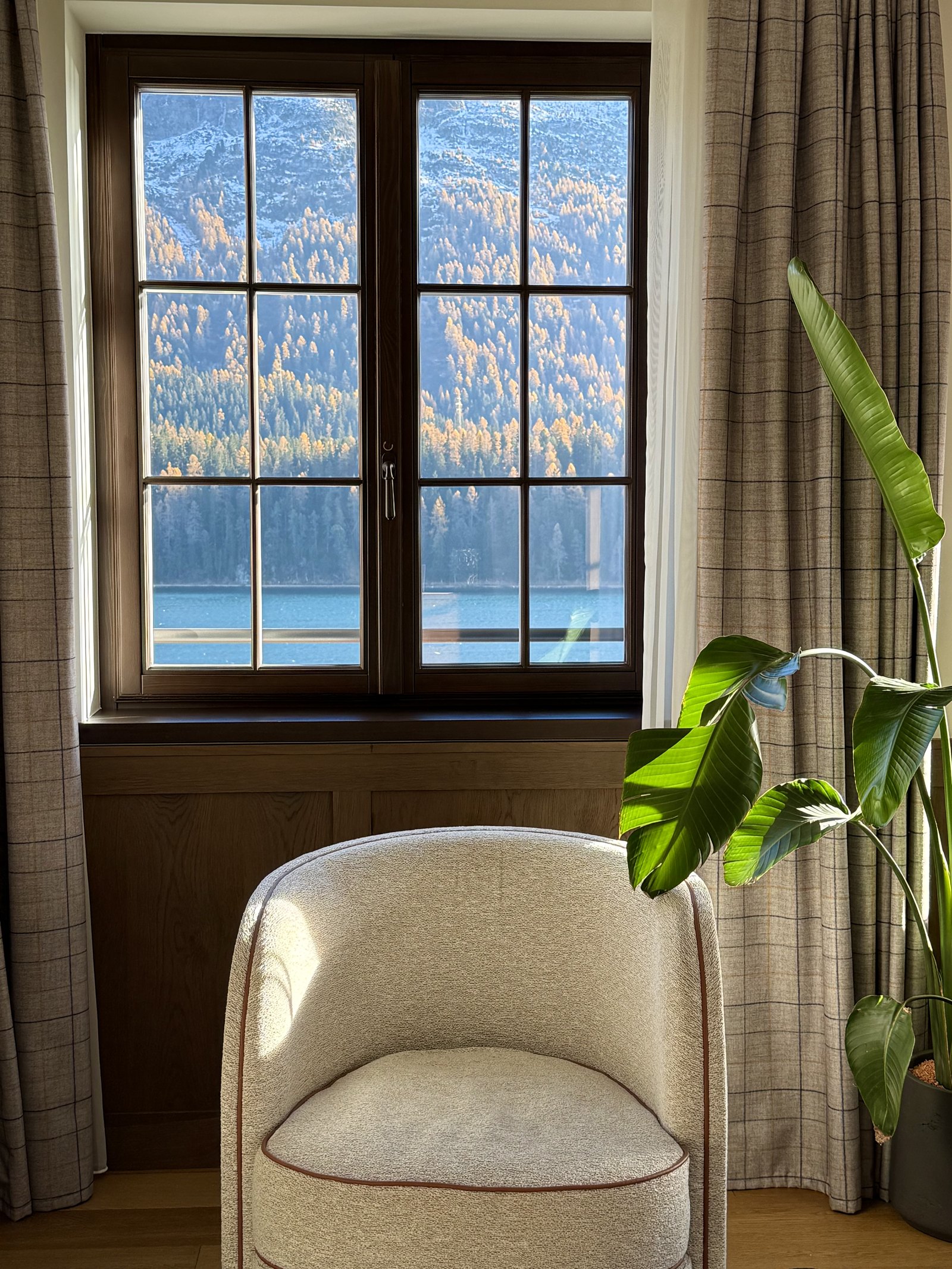
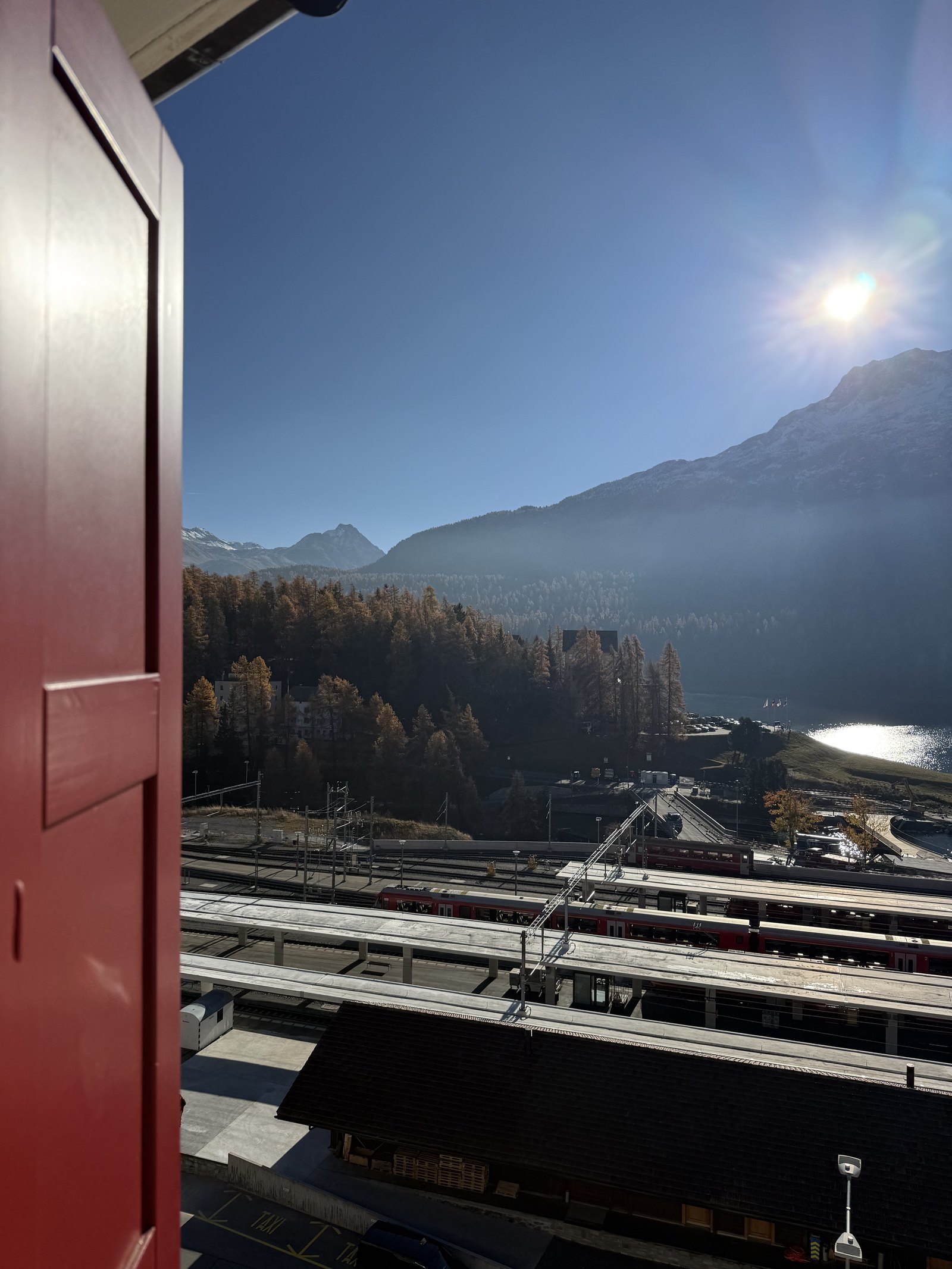
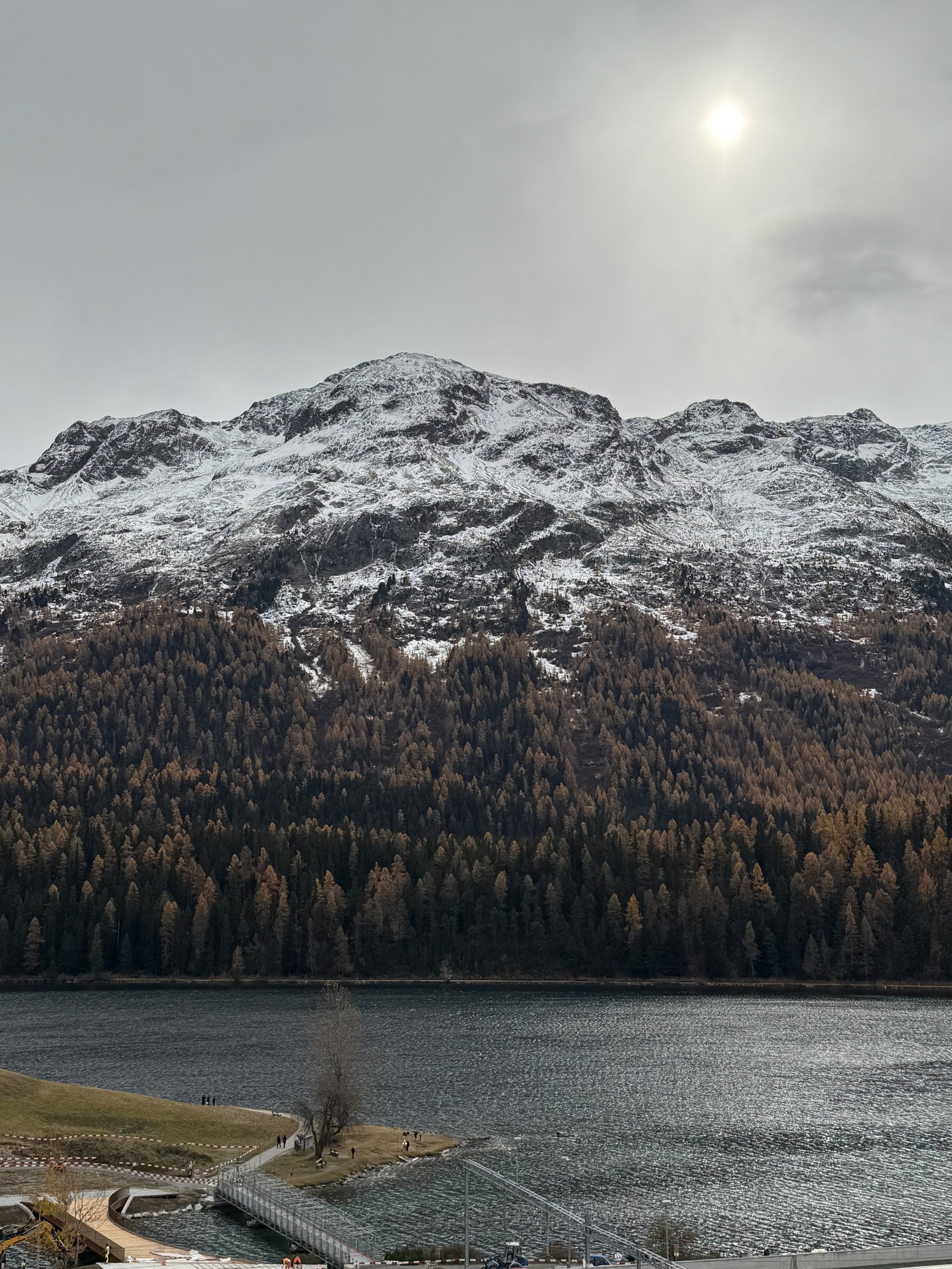
Then there is the window. It gives you the platforms of St. Moritz station in the foreground, the lake behind them, and the wooded slope behind that, and in the first ten minutes your eye goes to the tracks and after an hour it stops noticing them. I listened for noise on both nights and there was nothing to report. This is a terminus, the trains are a daytime business, and the night is silent. Both wings of the hotel look this way, so there is no quieter side to request and nothing to negotiate.
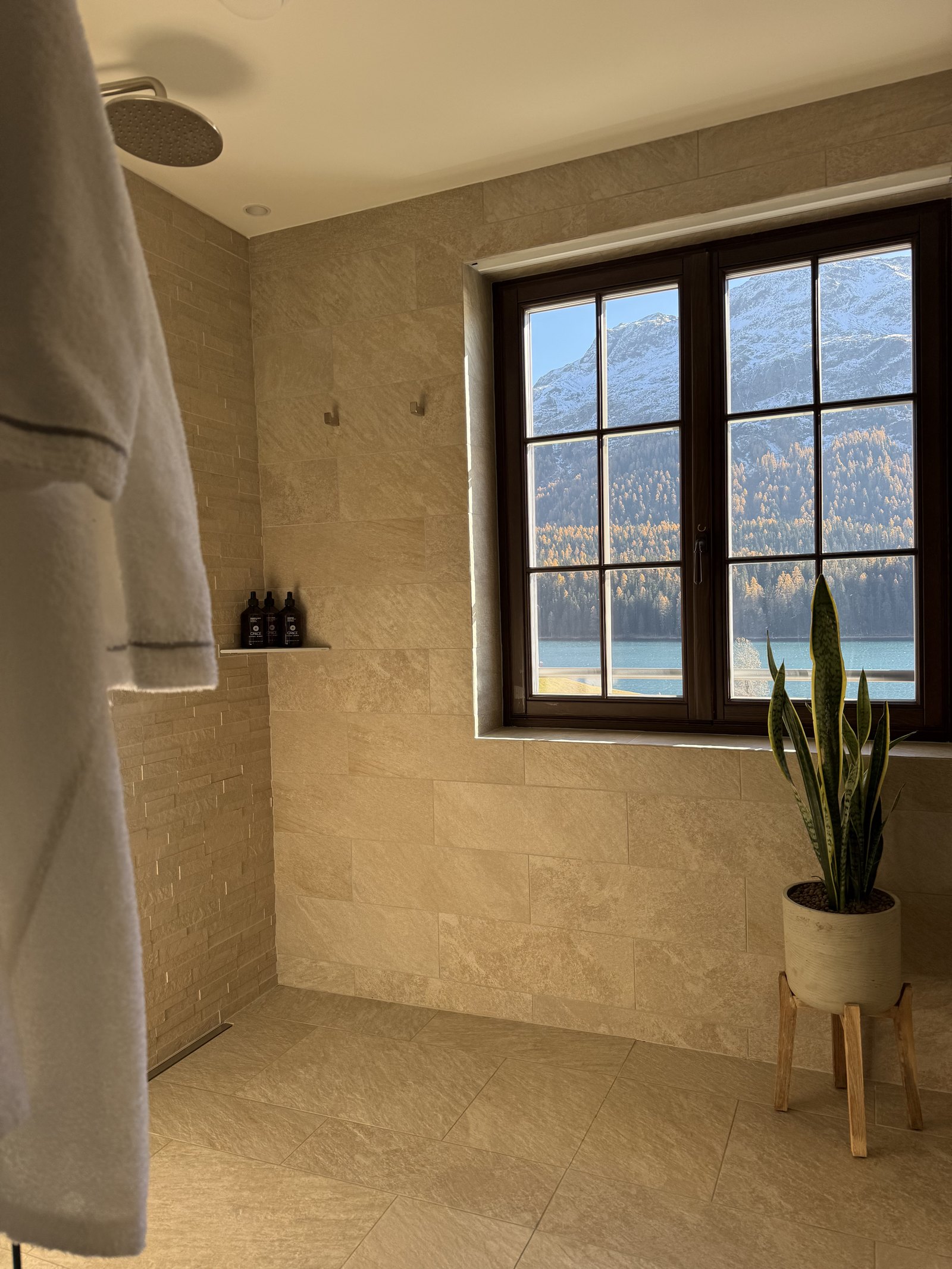
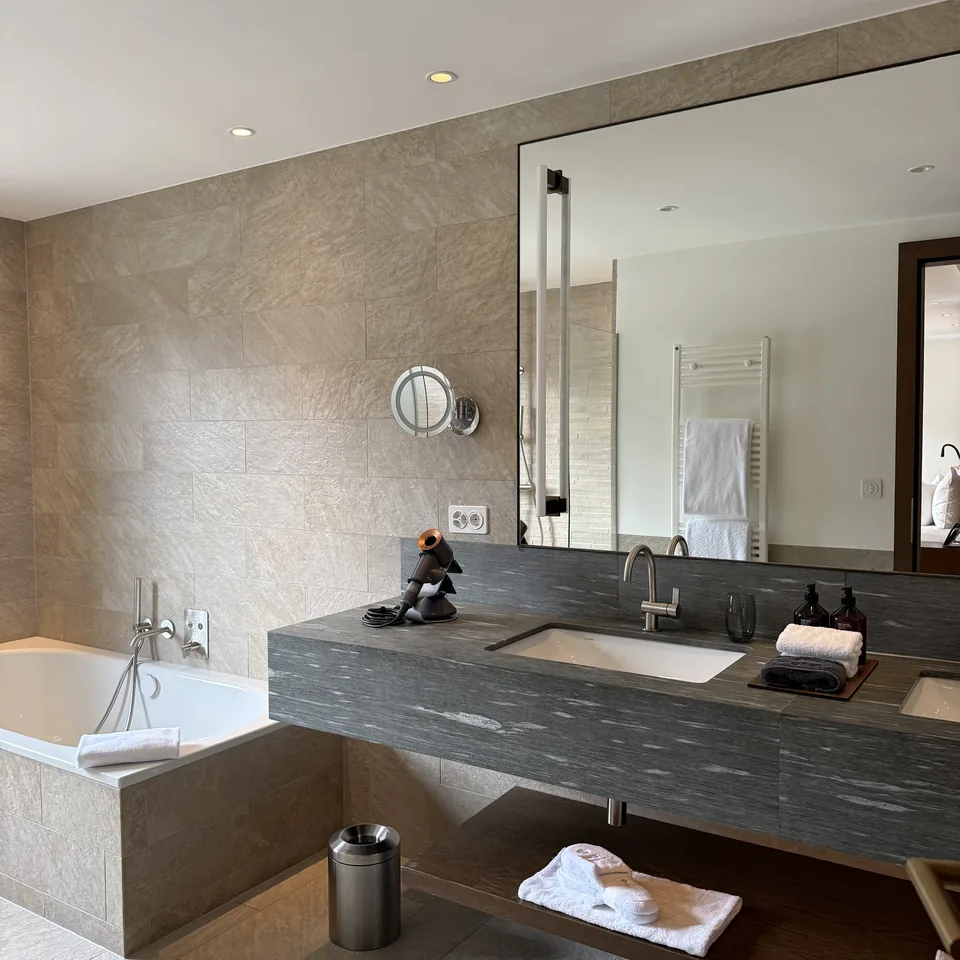
The bathroom is the other surprise of the old wing. It is lined in a warm sandstone, the shower has no door and no step, and there is a casement window at the end of it that gives you the same lake and the same larches the bedroom does. Washing in front of a view is a thing hotels usually reserve for the top suites.
The other wing
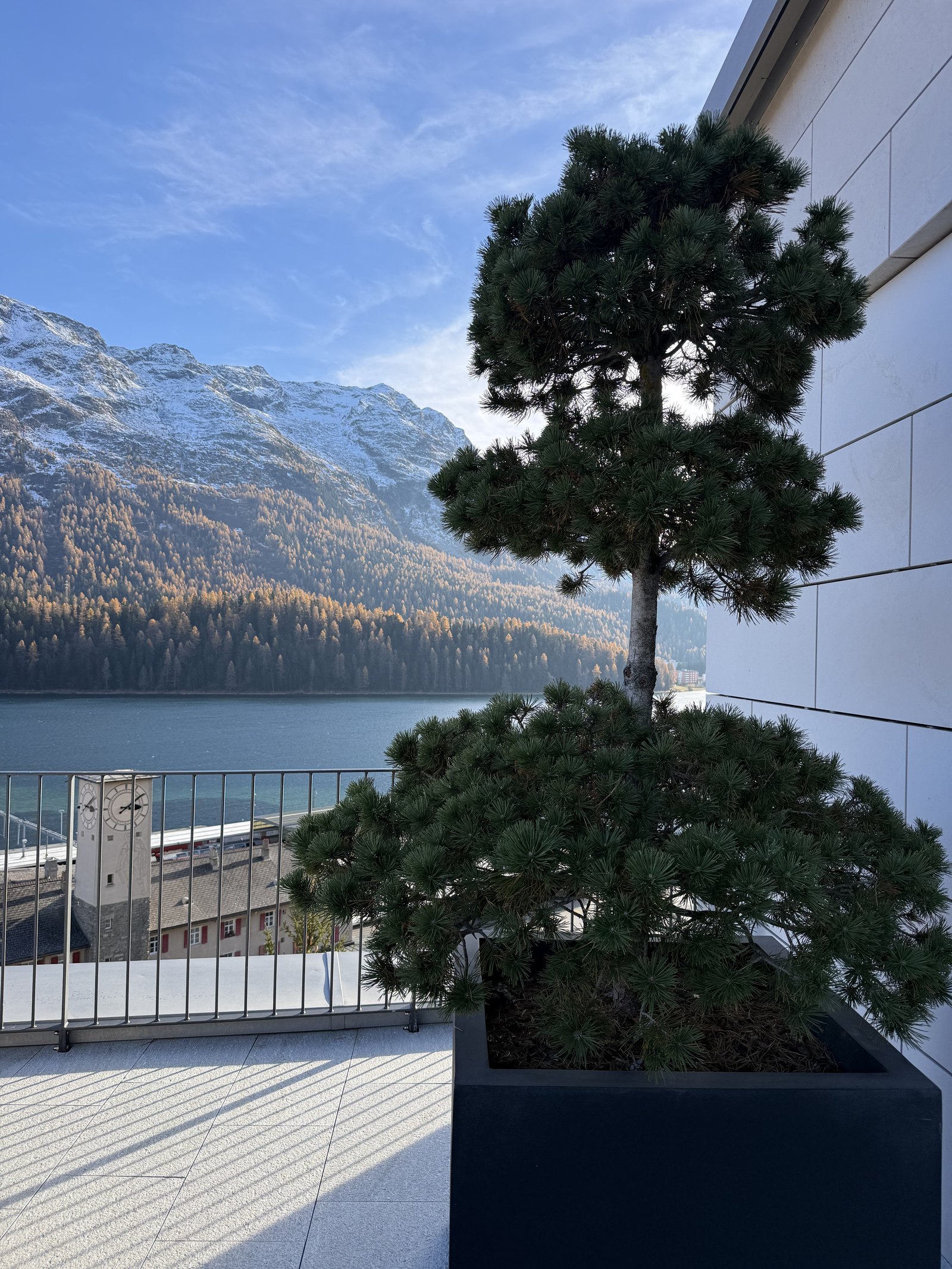
I went through the Grace Wing properly, because a reader deciding between the two deserves more than a floor plan. It is a different building and it behaves like one. The glass goes from the floor to the ceiling and takes the lake in a single pane, the rooms are wider, the timber is new and warm, and the terraces are real terraces with pines in planters on them. What it does not have is the 1906 house. If what brings you to a hotel of this age is the age, book the old wing and accept smaller windows. If you want to sit on a sofa and have the Engadine arrive uninterrupted, book the new one.
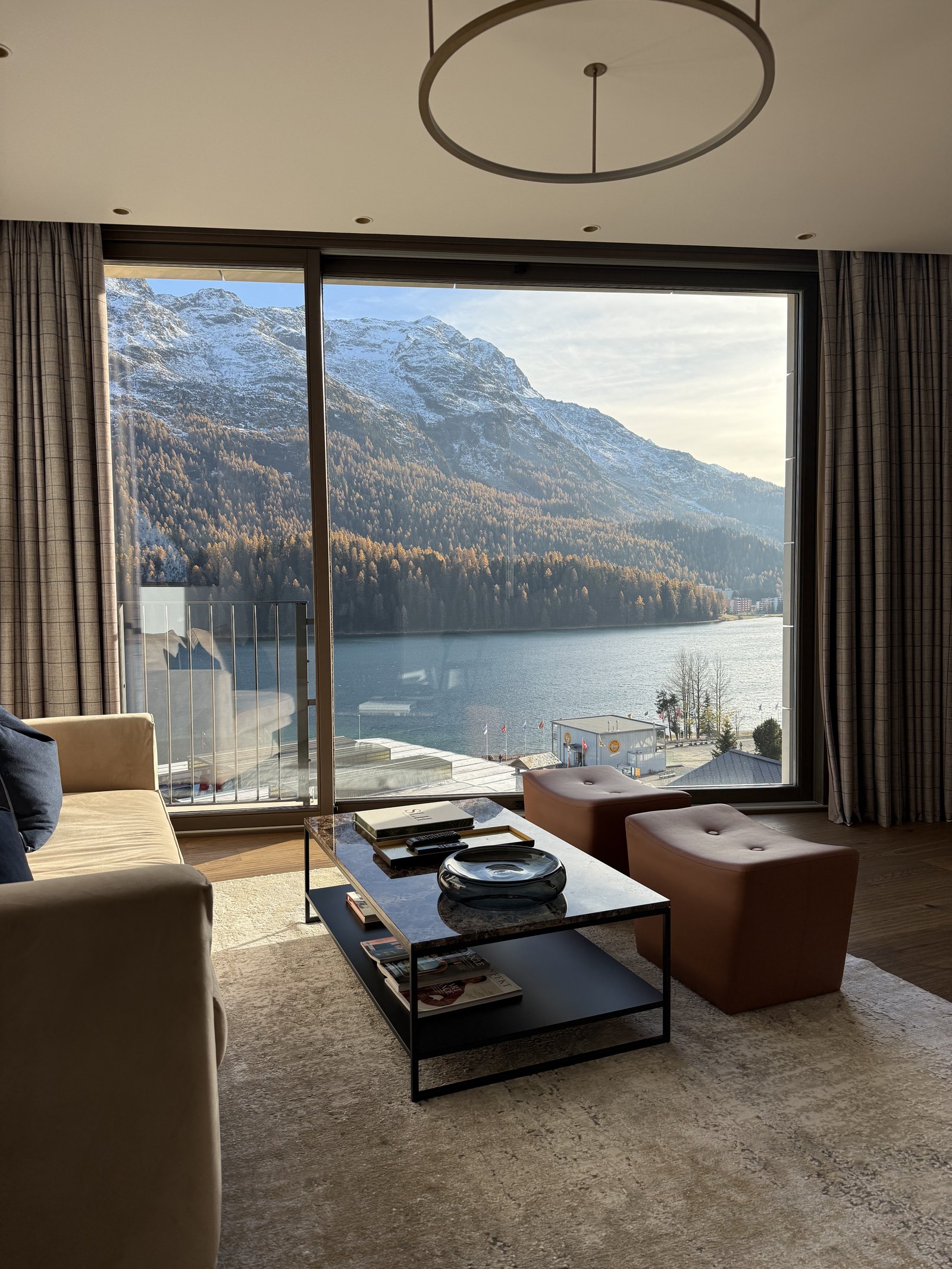
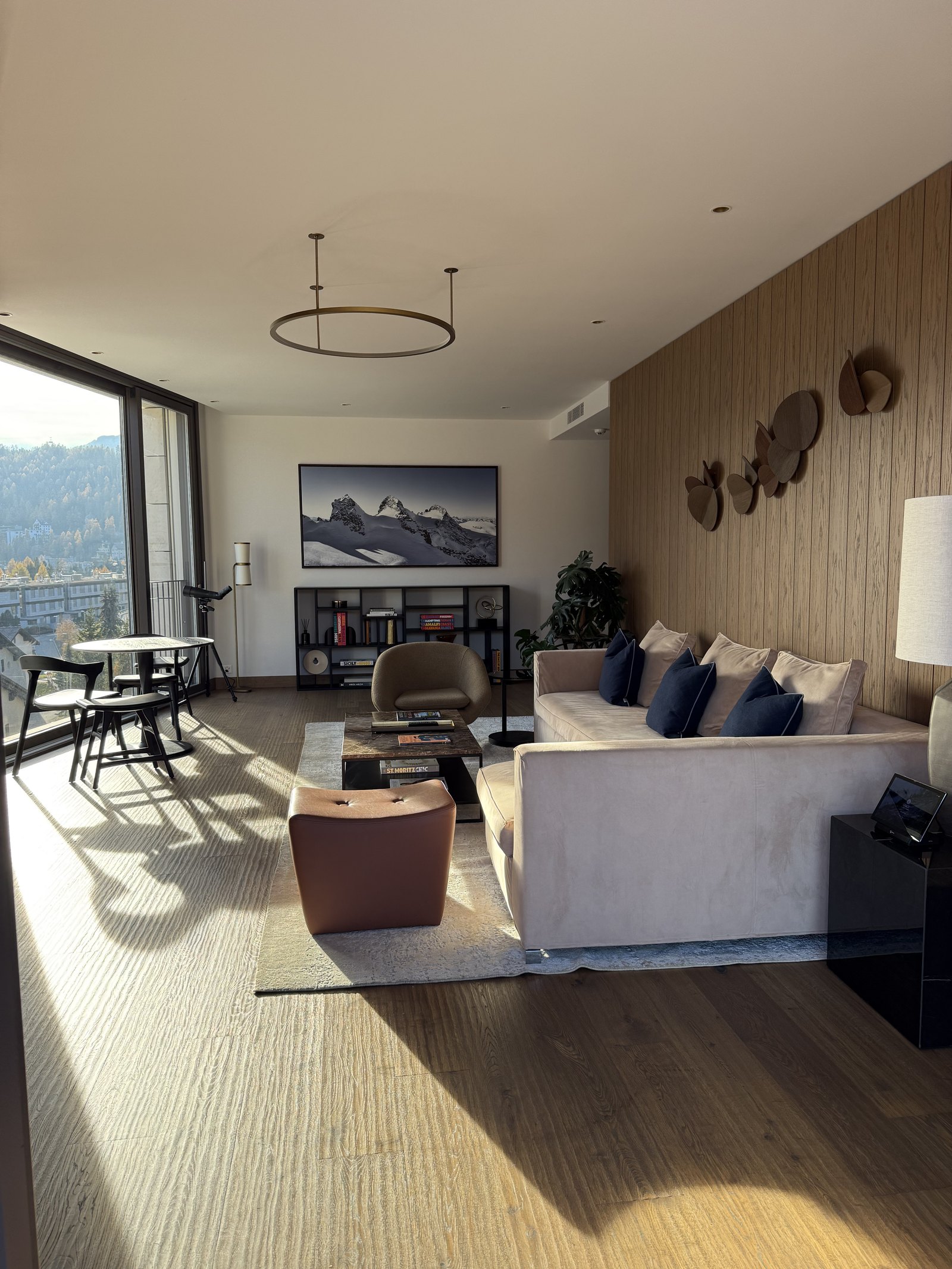
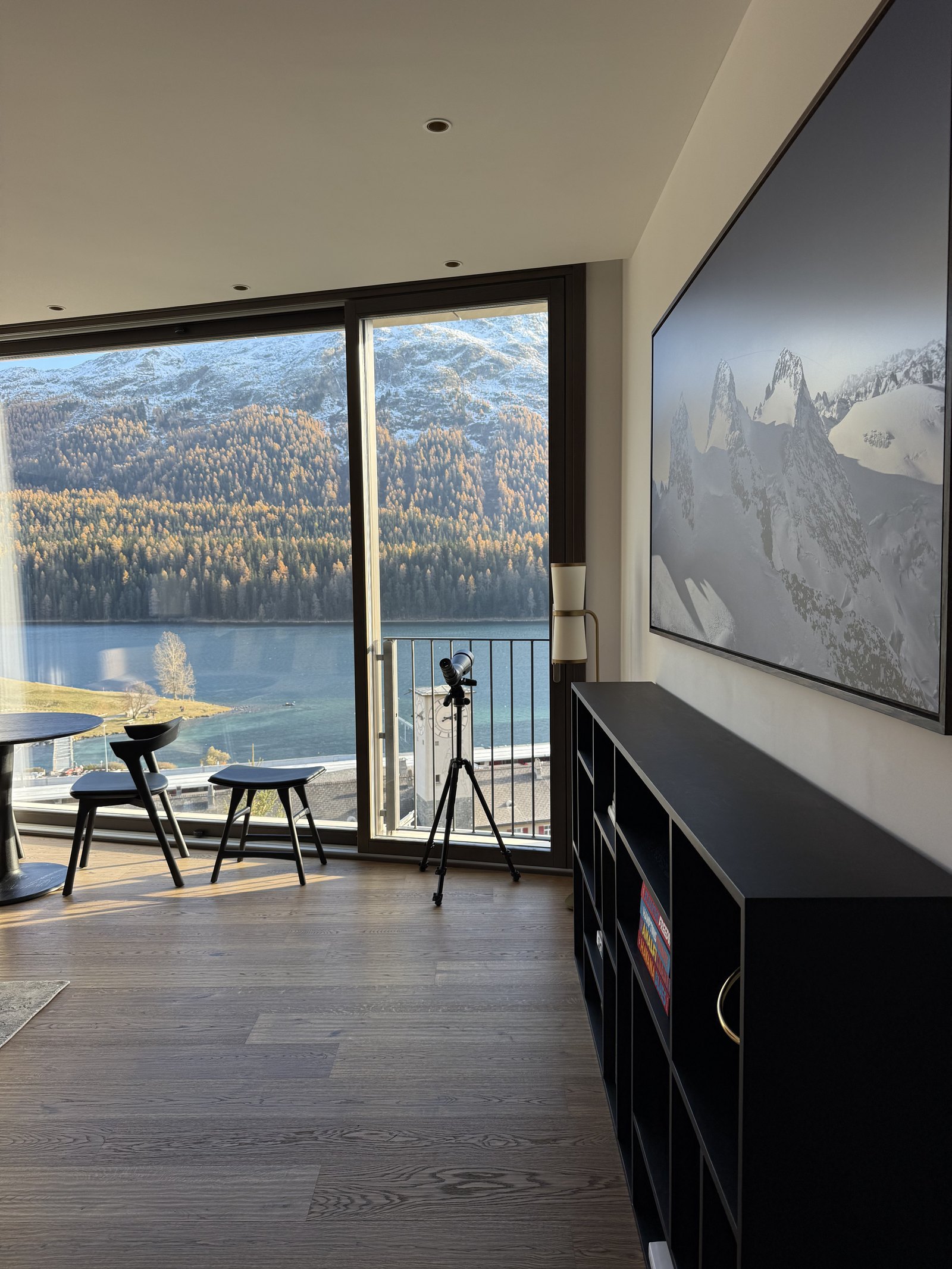
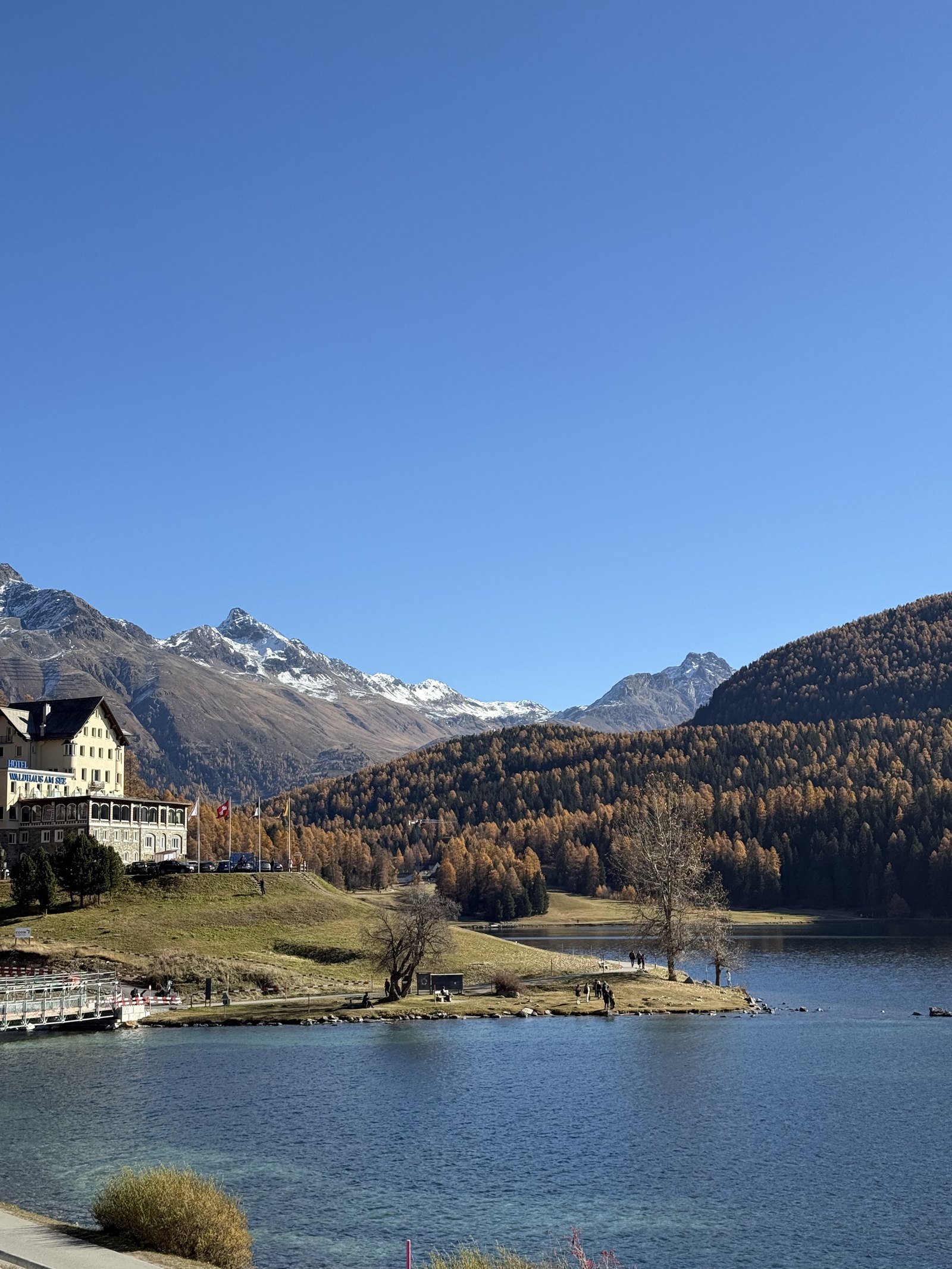
The upper floors of that wing give you the one thing the old building cannot, which is height over the water. From there the lake stops being something at the end of the street and becomes the subject. The village of hotels along the far shore is suddenly readable, and so is how much of this valley is still trees.
Eating, which is four different ideas
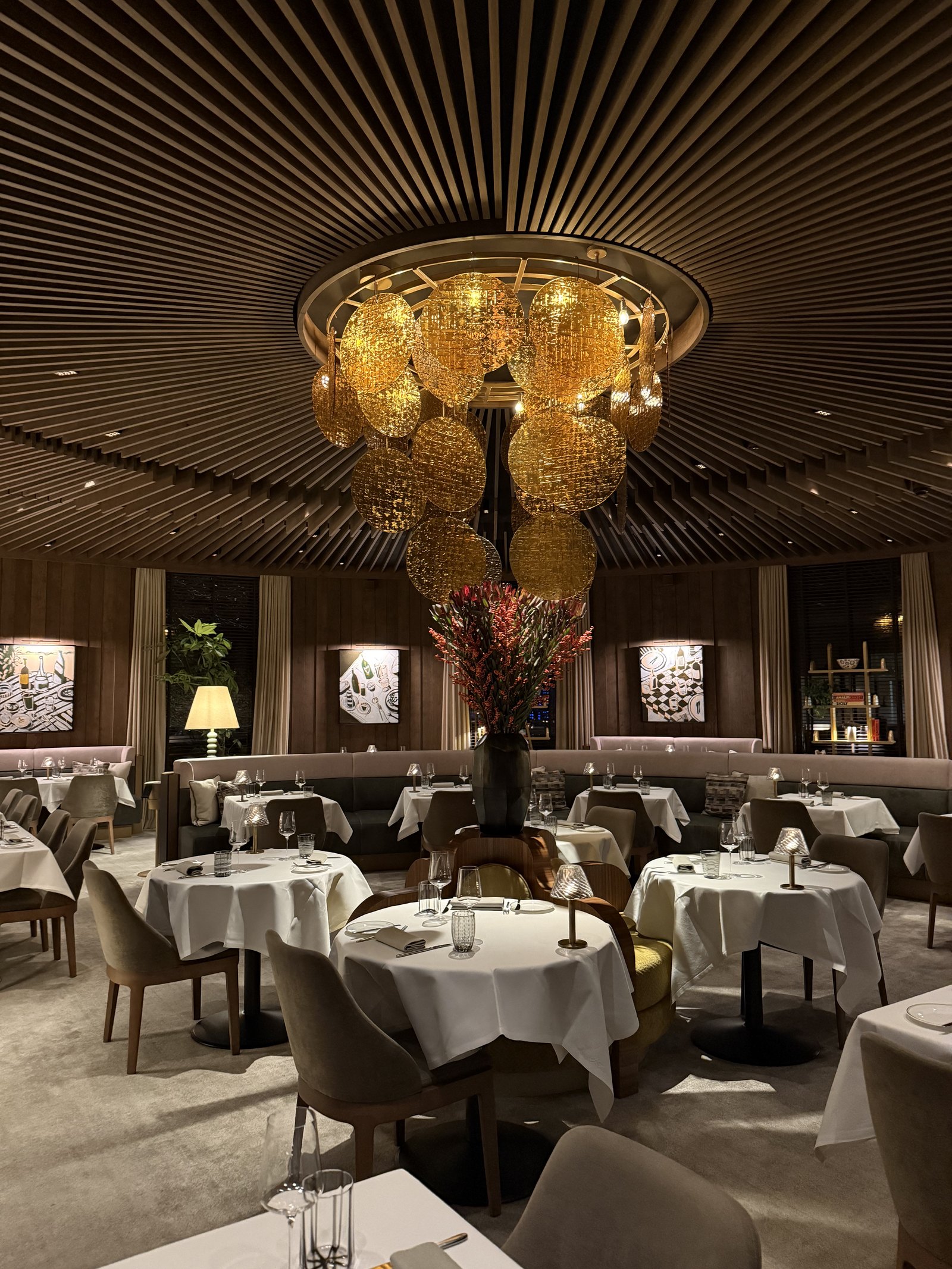
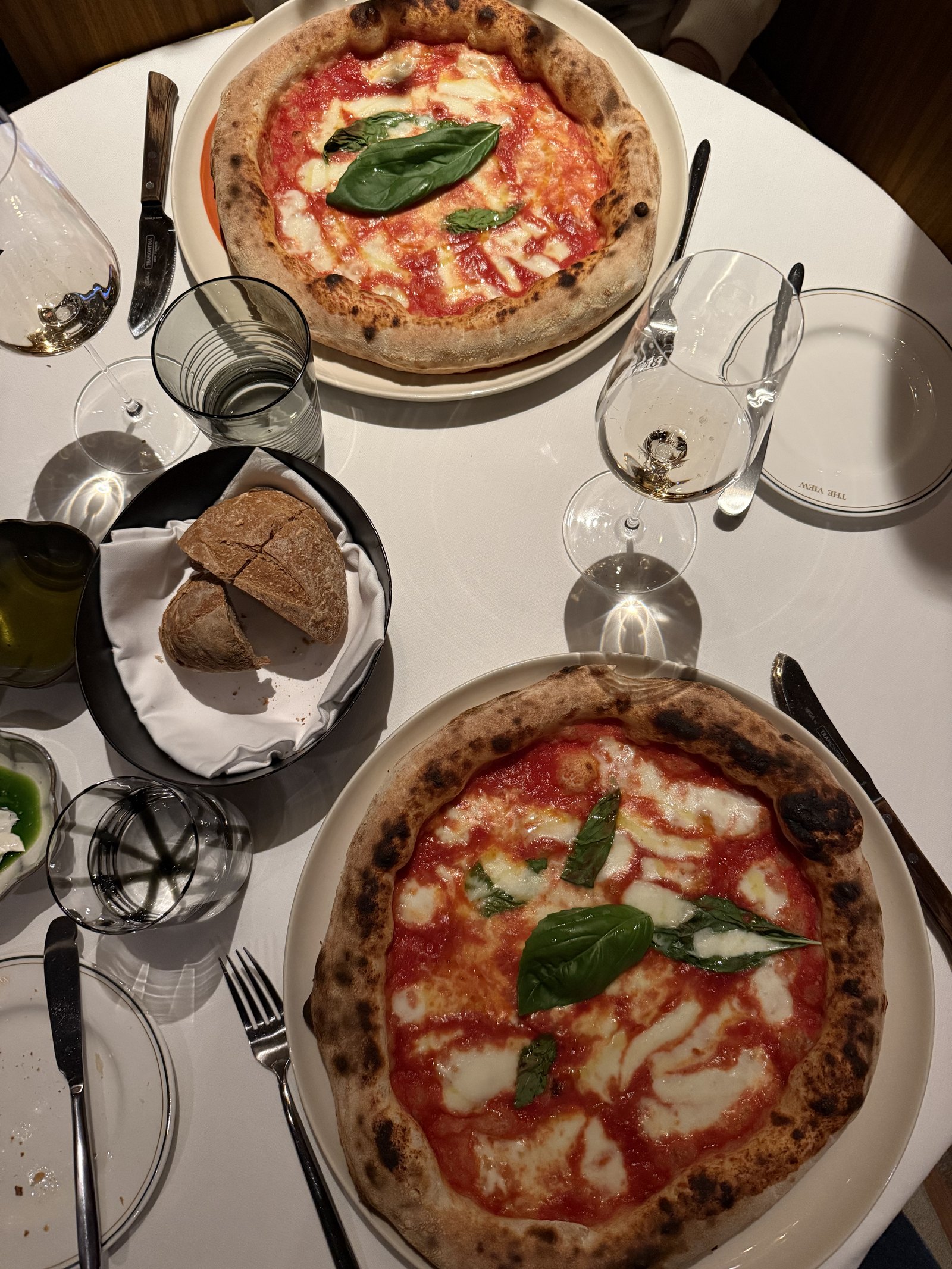
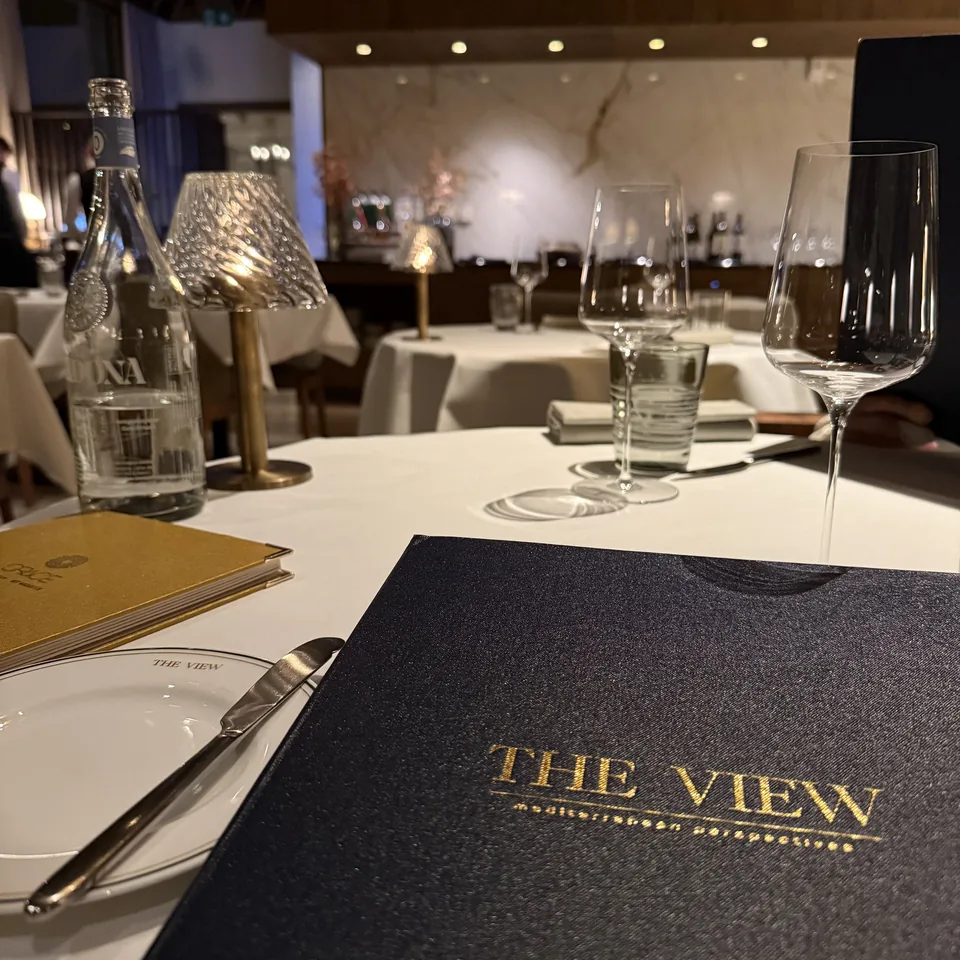
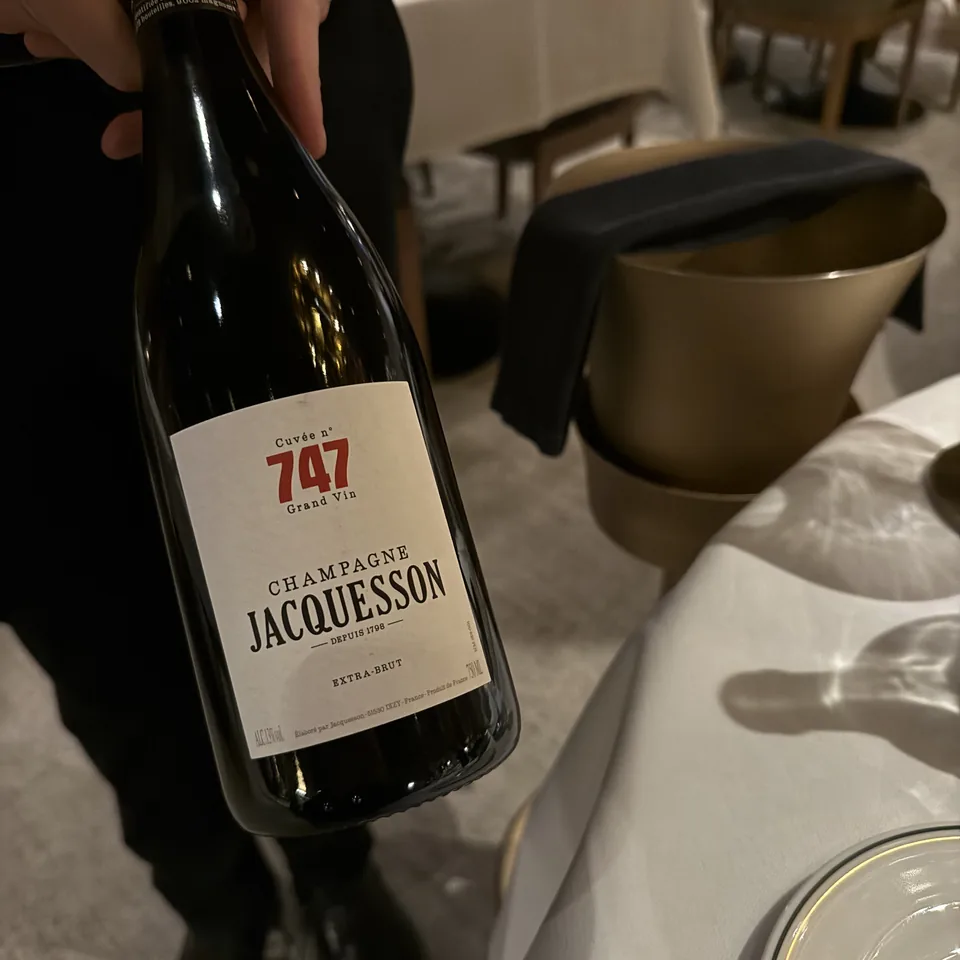
The View is the main restaurant and it is where breakfast happens as well. It does the things a hotel restaurant at this level does, and it also does a pizza, which I ordered on the first night with a bottle of Jacquesson and ate with the attention of somebody prepared to be unkind about it. It was very good. A proper base, a proper edge, mozzarella that had not been cooked to oil. I mention it because an Italian in Switzerland orders a pizza as a test and usually regrets it.
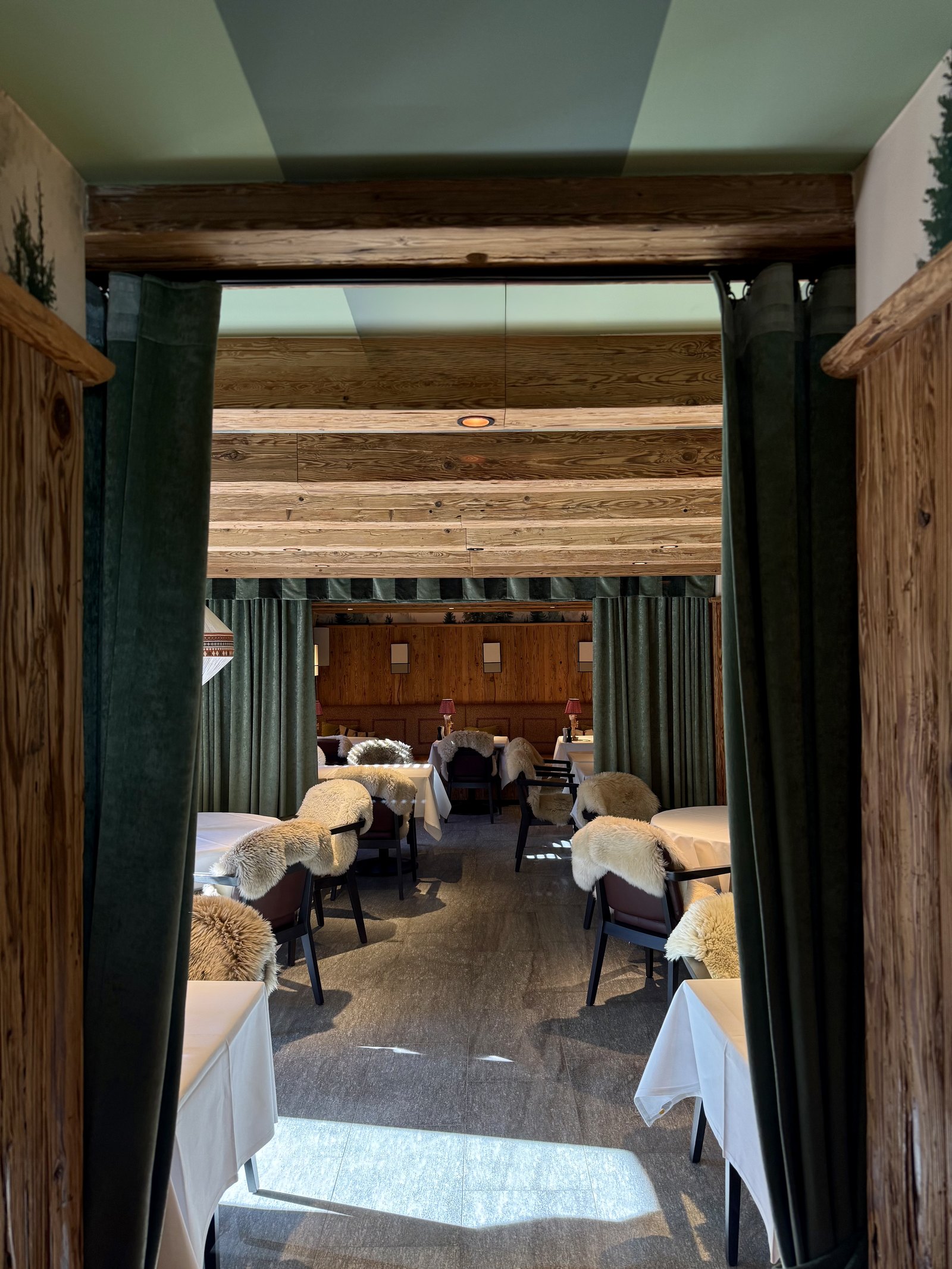
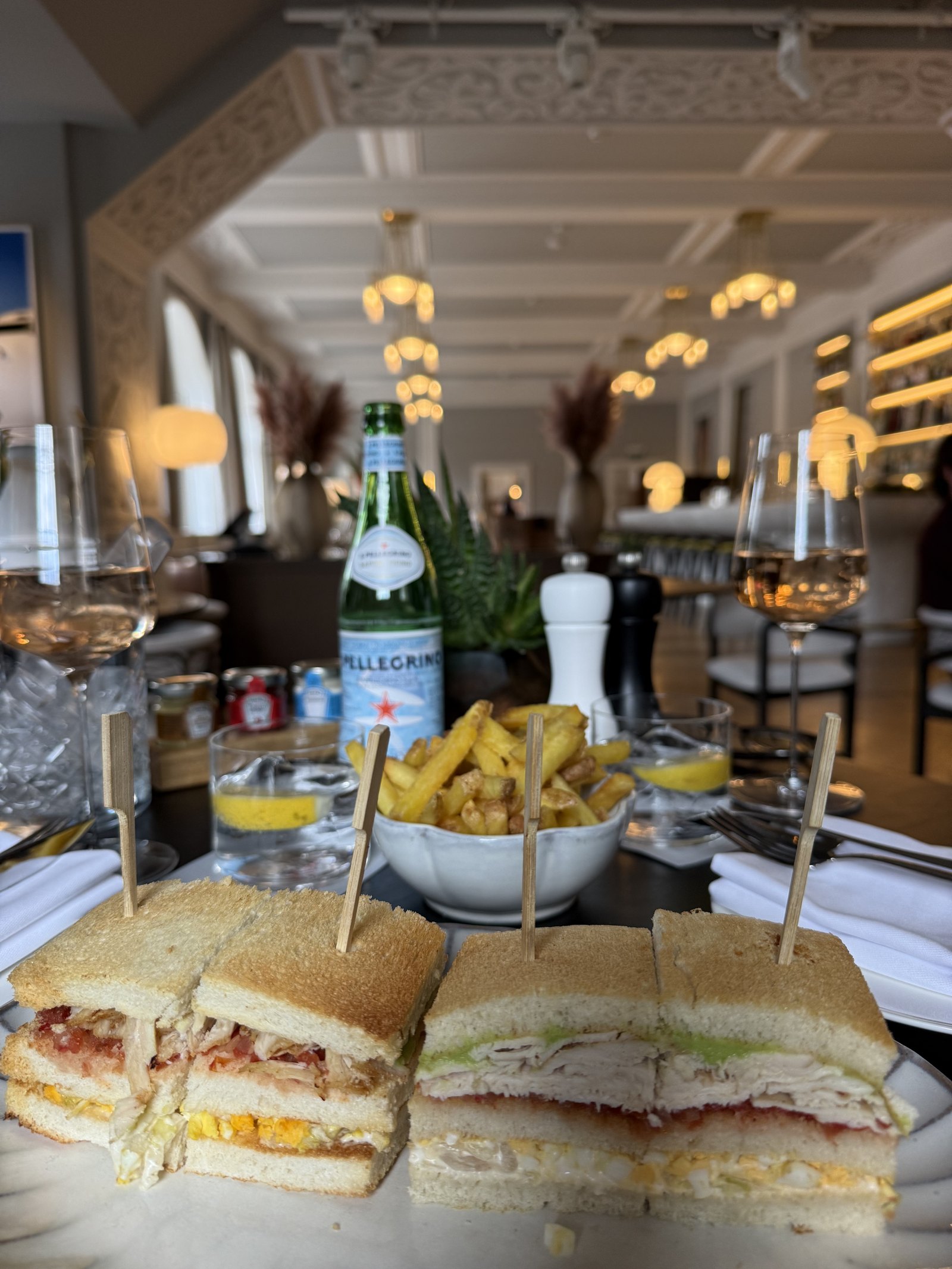
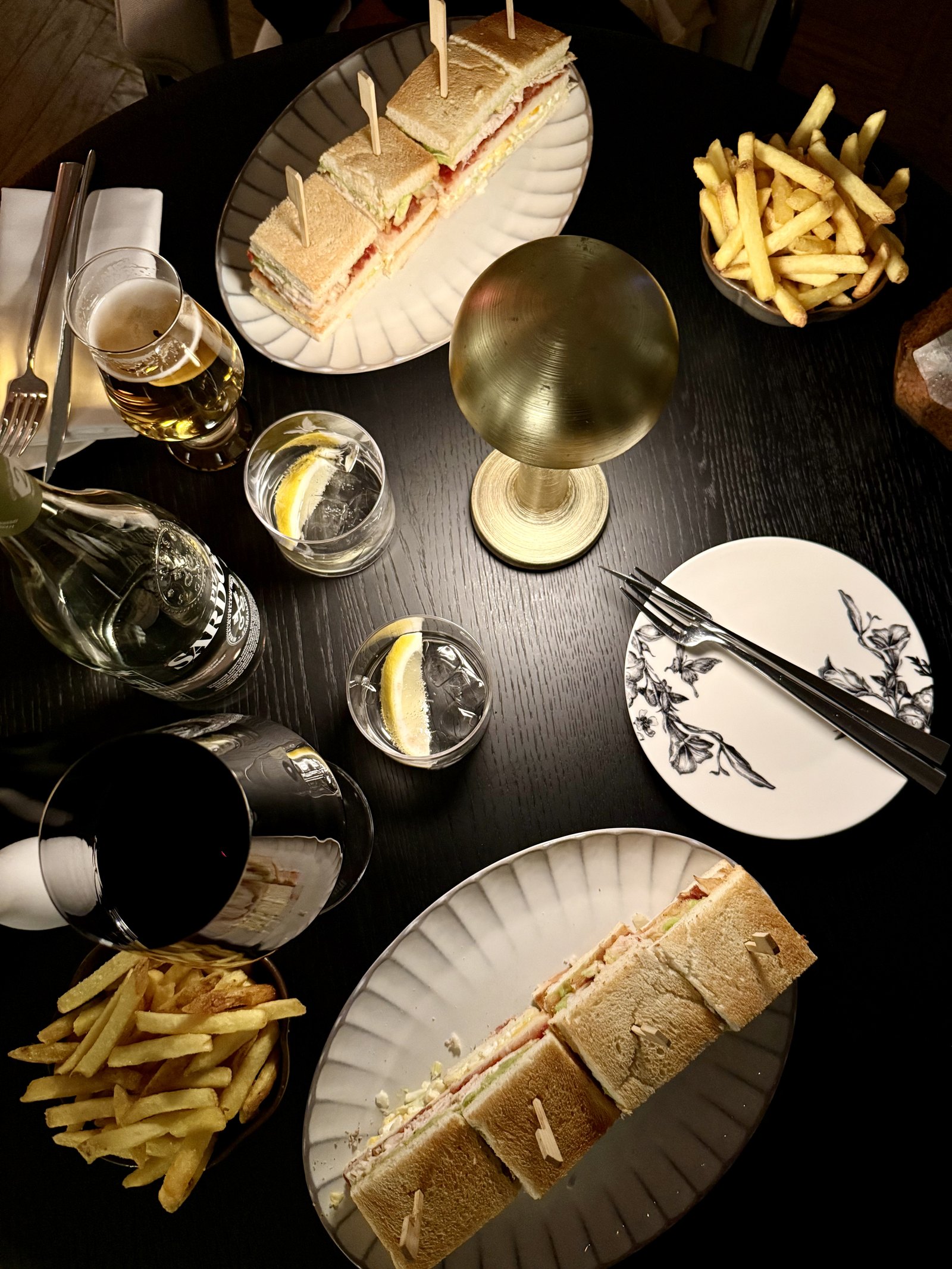
N/5 is the bar, which lives in the Lobby Lounge under the vaults and runs from eleven in the morning until eleven at night. It is where the hotel is sociable, and it is where I had the second dinner, a club sandwich and chips at a table in the corner, which is a thing a good hotel should let you do without making it feel like a failure. A sushi pop-up was running inside it while I was there. Then there is Stüvetta Moritz, behind green curtains, old timber on every surface, sheepskins on the chairs, redesigned by the Berlin designer Fabian Freytag and dedicated to the fondues and the rösti. And The Living Room does afternoon tea in front of a fire with Mariage Frères. The Beefbar, the fifth, keeps a season and was closed.
I ate the same sandwich twice in two days, in two different rooms and two different lights, which is either a failure of imagination or a recommendation. It is a recommendation. The first was lunch an hour after I arrived, at a table in the bar with the sun still on the floor. The second was dinner on the last night, at a low round table with the lamps on.
Breakfast
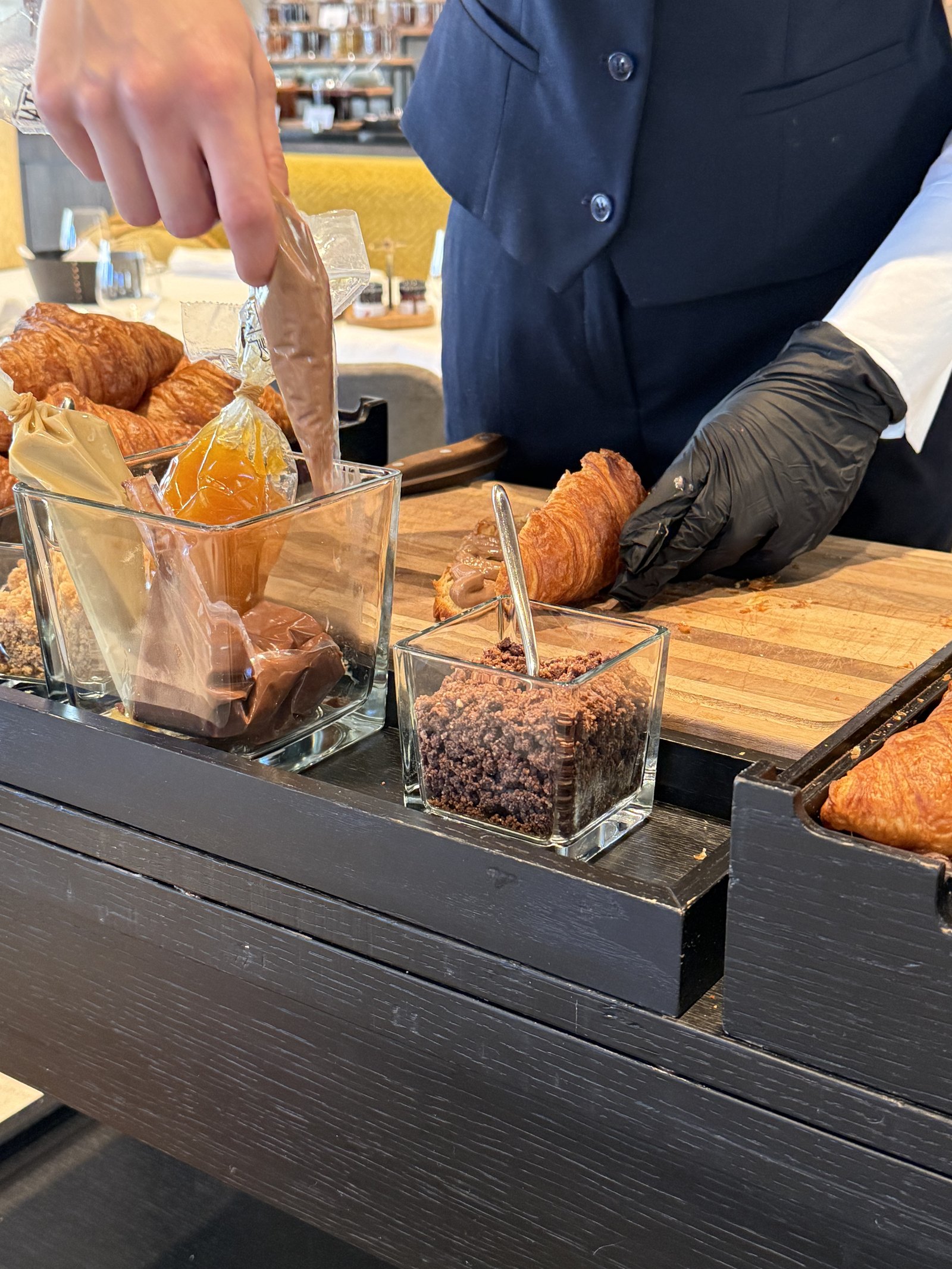
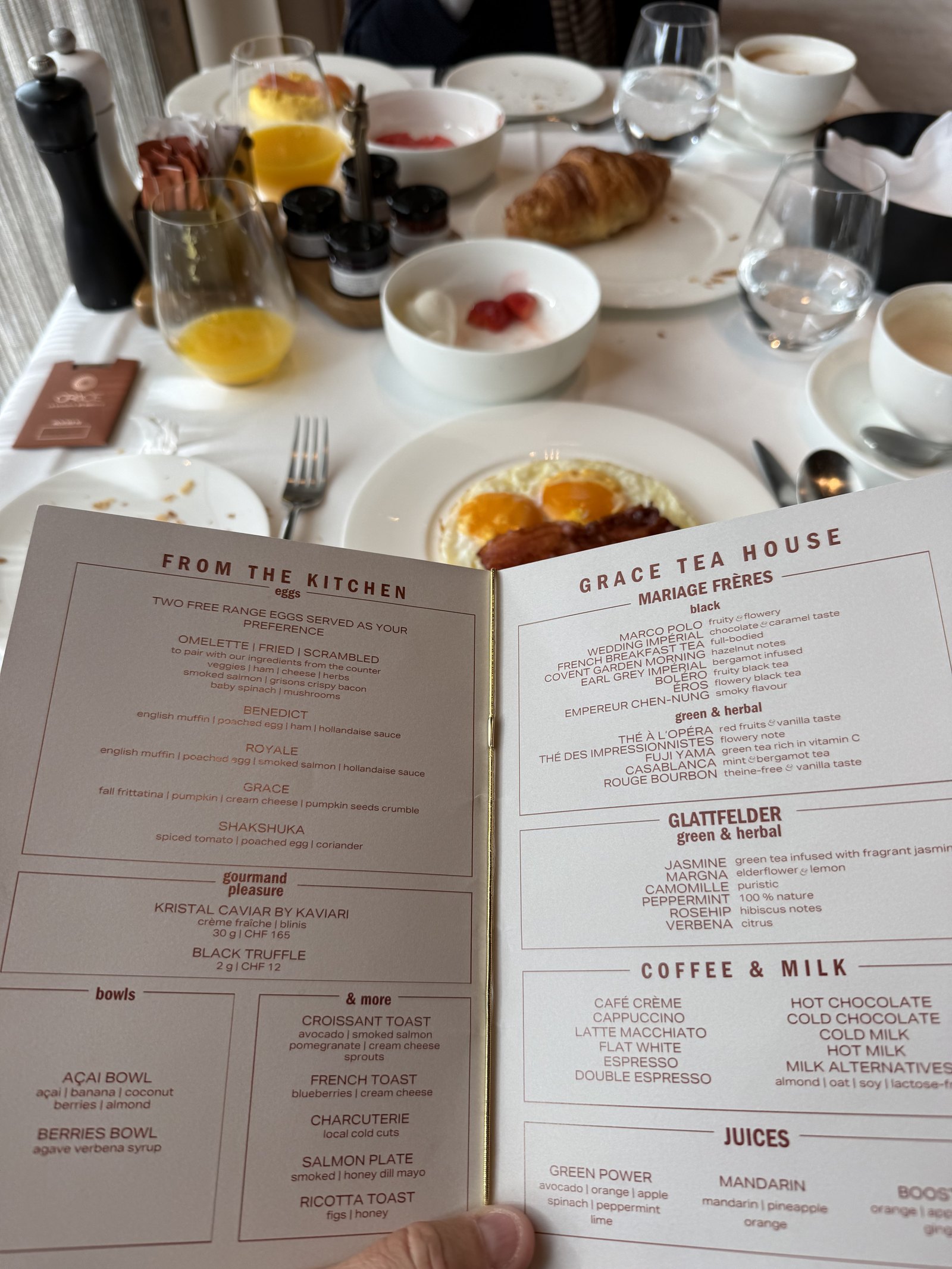
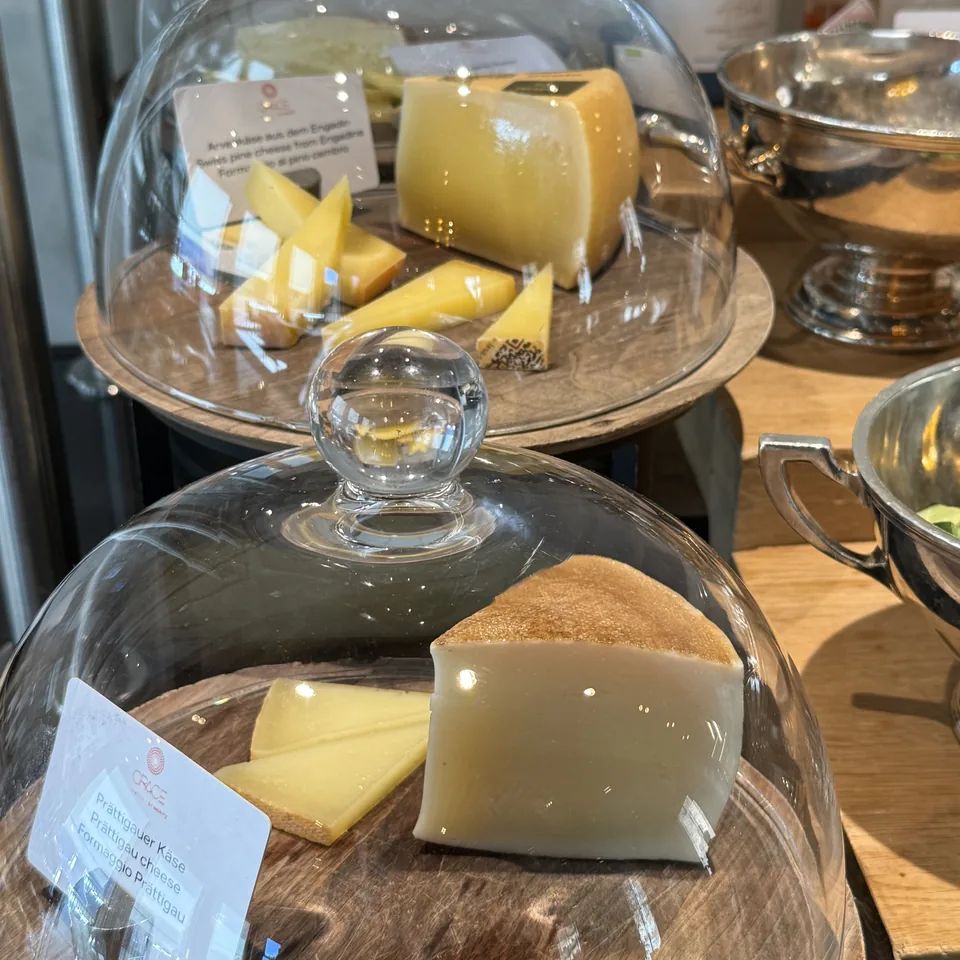
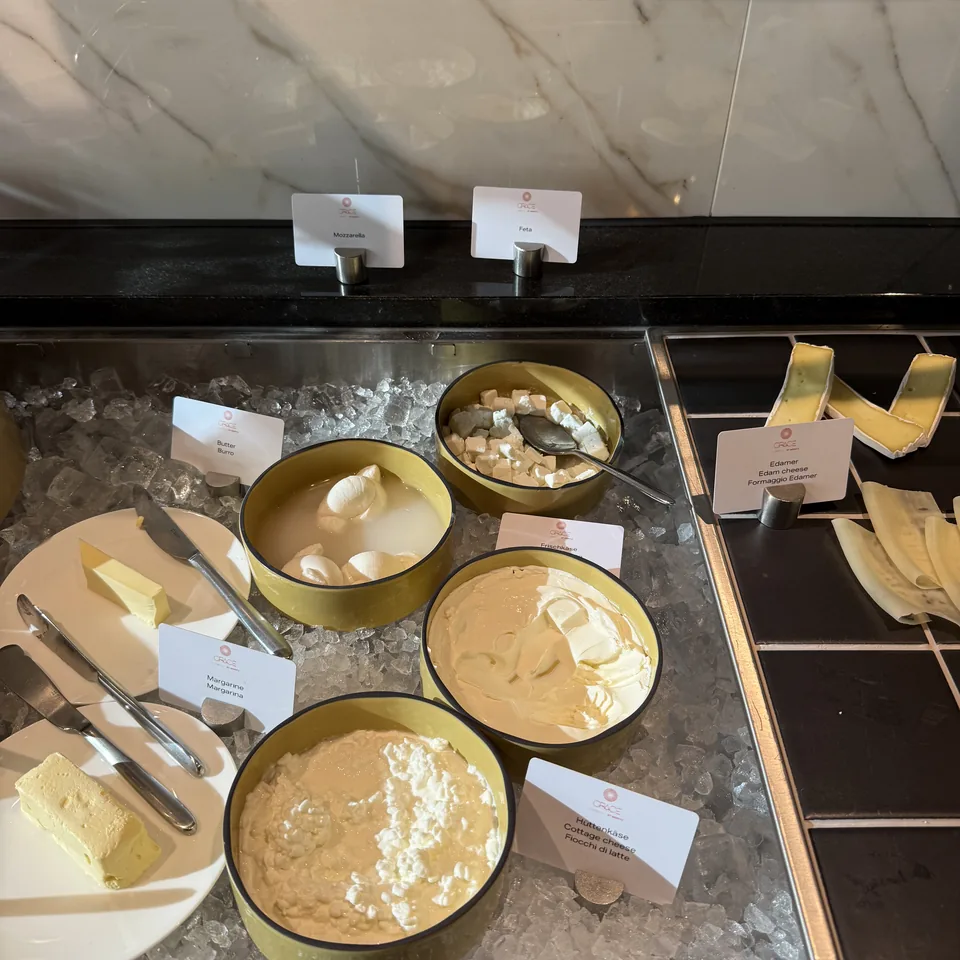
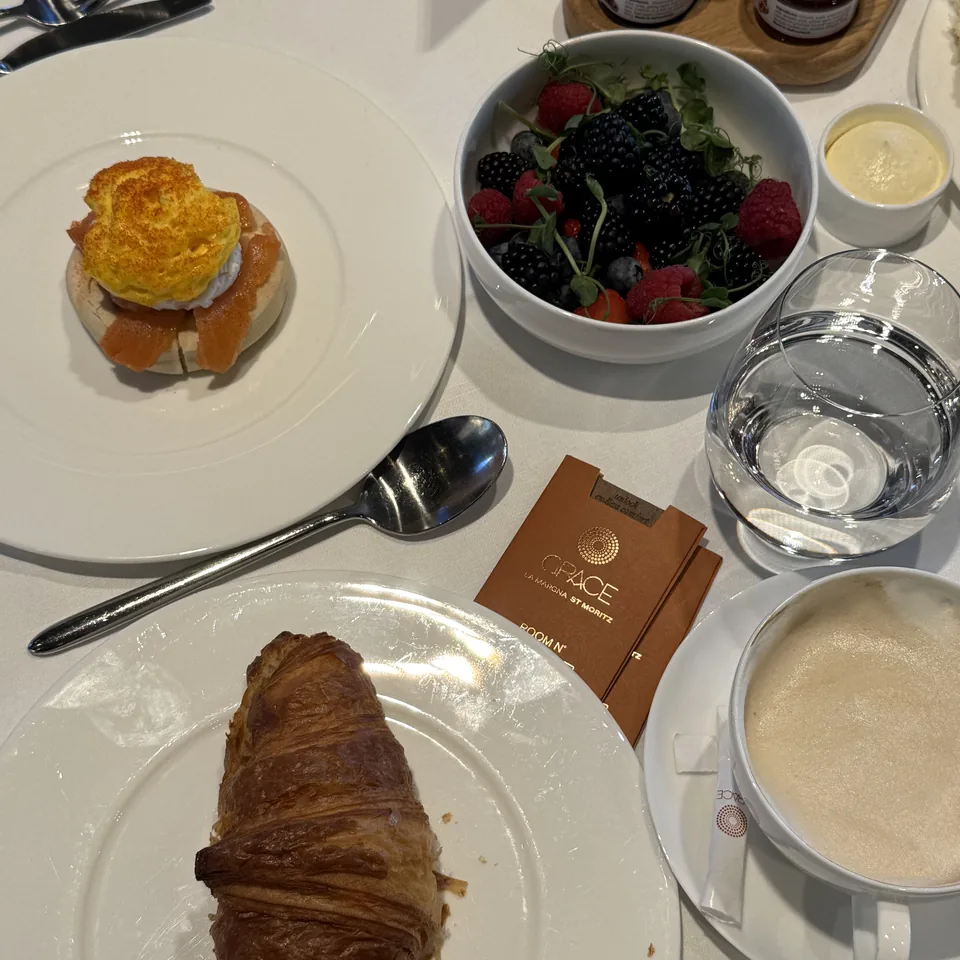
Breakfast is at The View, and it is the part of the stay the house is proudest of. A long buffet down one wall and a card of hot dishes to order from on top of it, with champagne standing in the included part. The detail that stayed with me is the butter: four kinds in open tins set into crushed ice, each with its own card, which is a small thing that takes somebody's attention every single morning. There are cheeses under glass domes, a pastry station with somebody behind it who cuts and serves it to you, and a tea point with the Mariage Frères list on it.
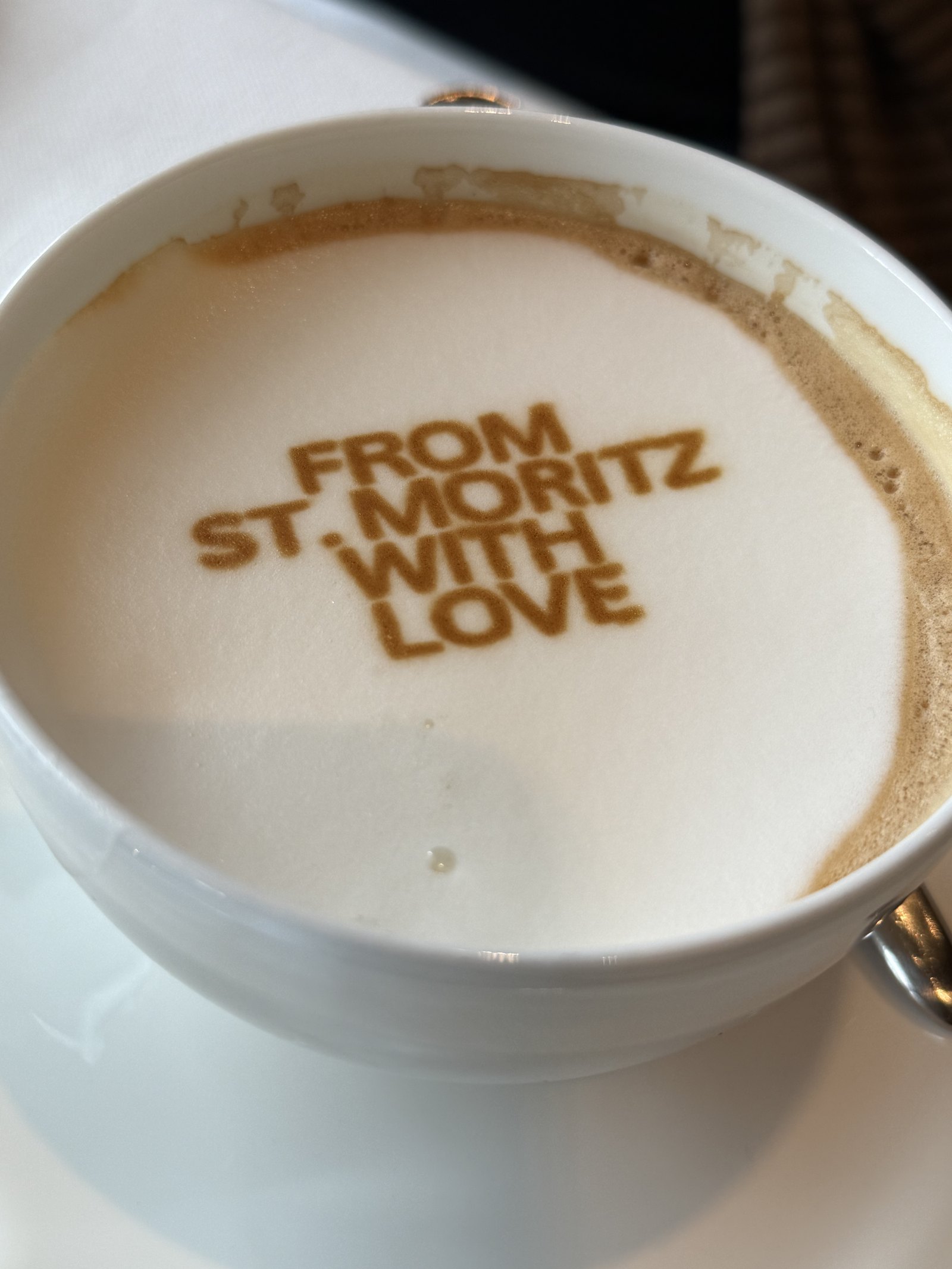
And there is the cappuccino, which arrives with a message written into the foam. On the first morning mine said BUT FIRST CAPPUCCINO. On the second it said FROM ST. MORITZ WITH LOVE. I have no defence of this at all and I looked forward to it both days.
The spa, and the season
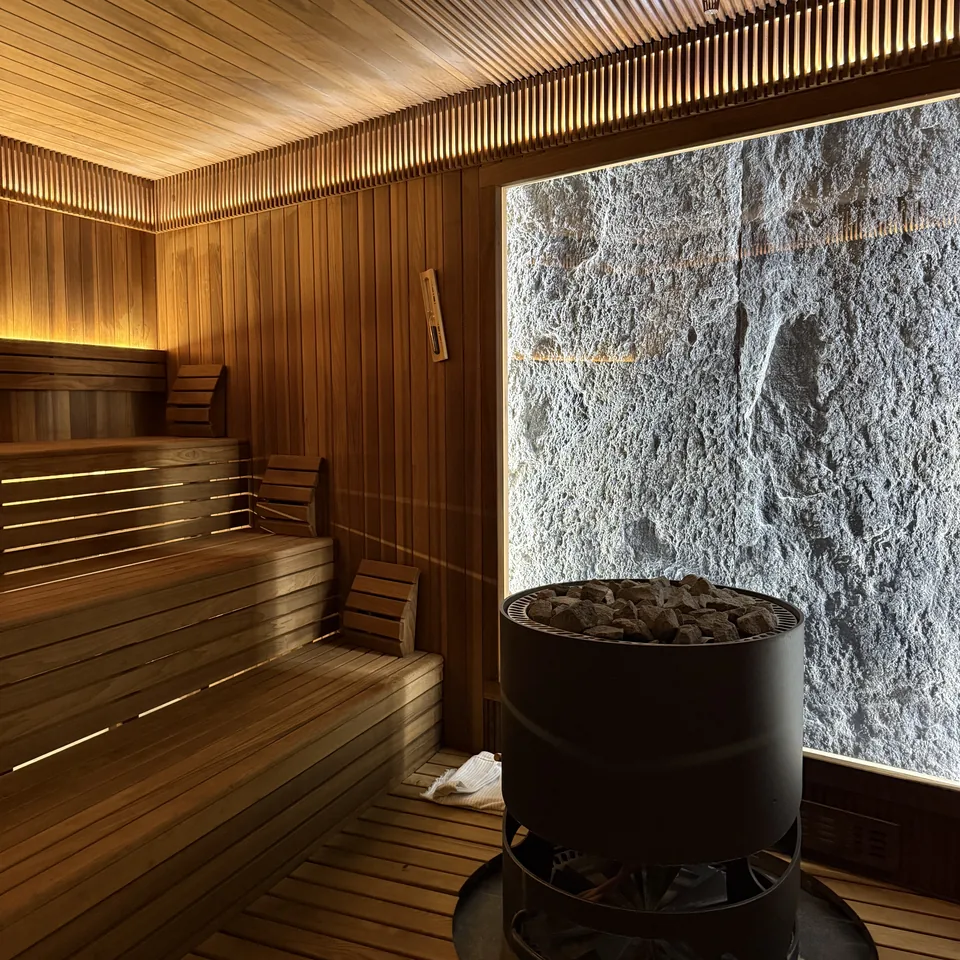
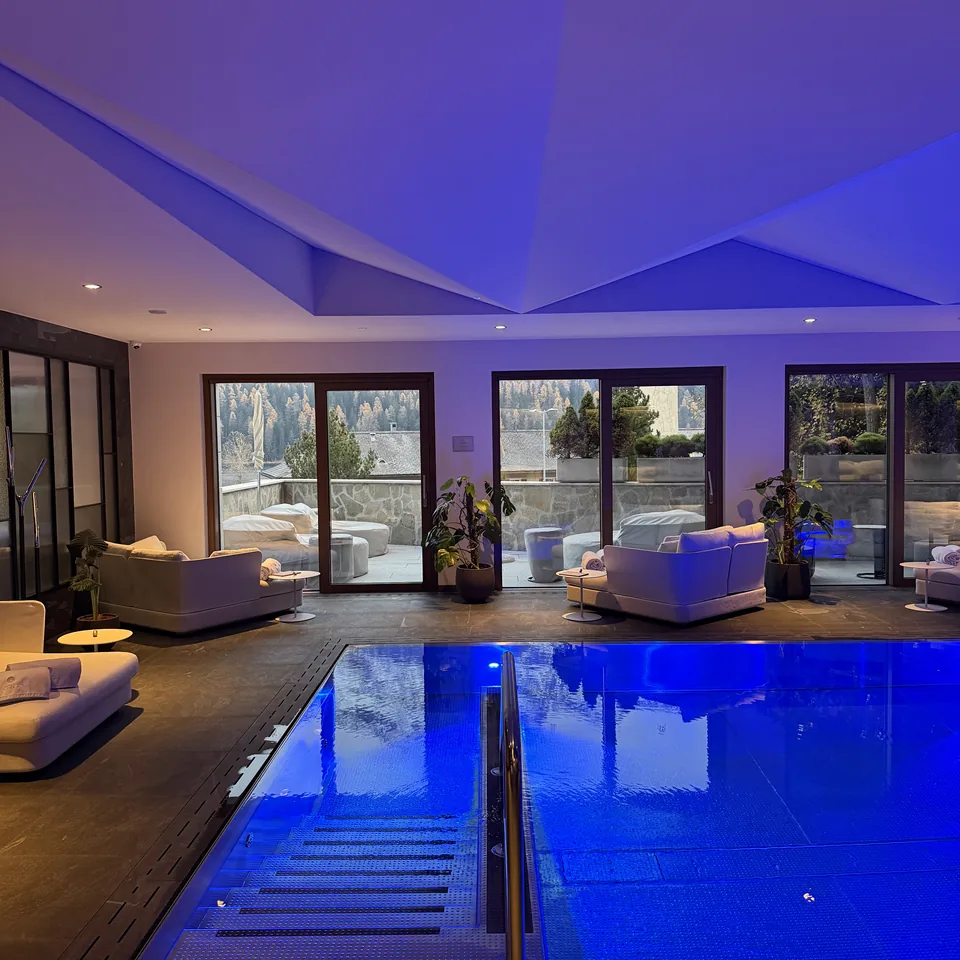
THE SPA runs to over seven hundred square metres on the lower floors and all of it was open and included. The pool is twenty metres at twenty-six degrees with a counter-current to swim against. The Finnish sauna goes to ninety and looks onto a wall of raw rock. There is a steam room at forty-four degrees and saturated, a hot tub at thirty-four, an organic salt sauna at seventy, experience showers, a long run of white relaxation beds along the glass, and a gym that is open at any hour. A private spa suite with its own terrace, hammam and double cabin can be taken on its own. I had no treatment, so I can describe the rooms and not the hands.
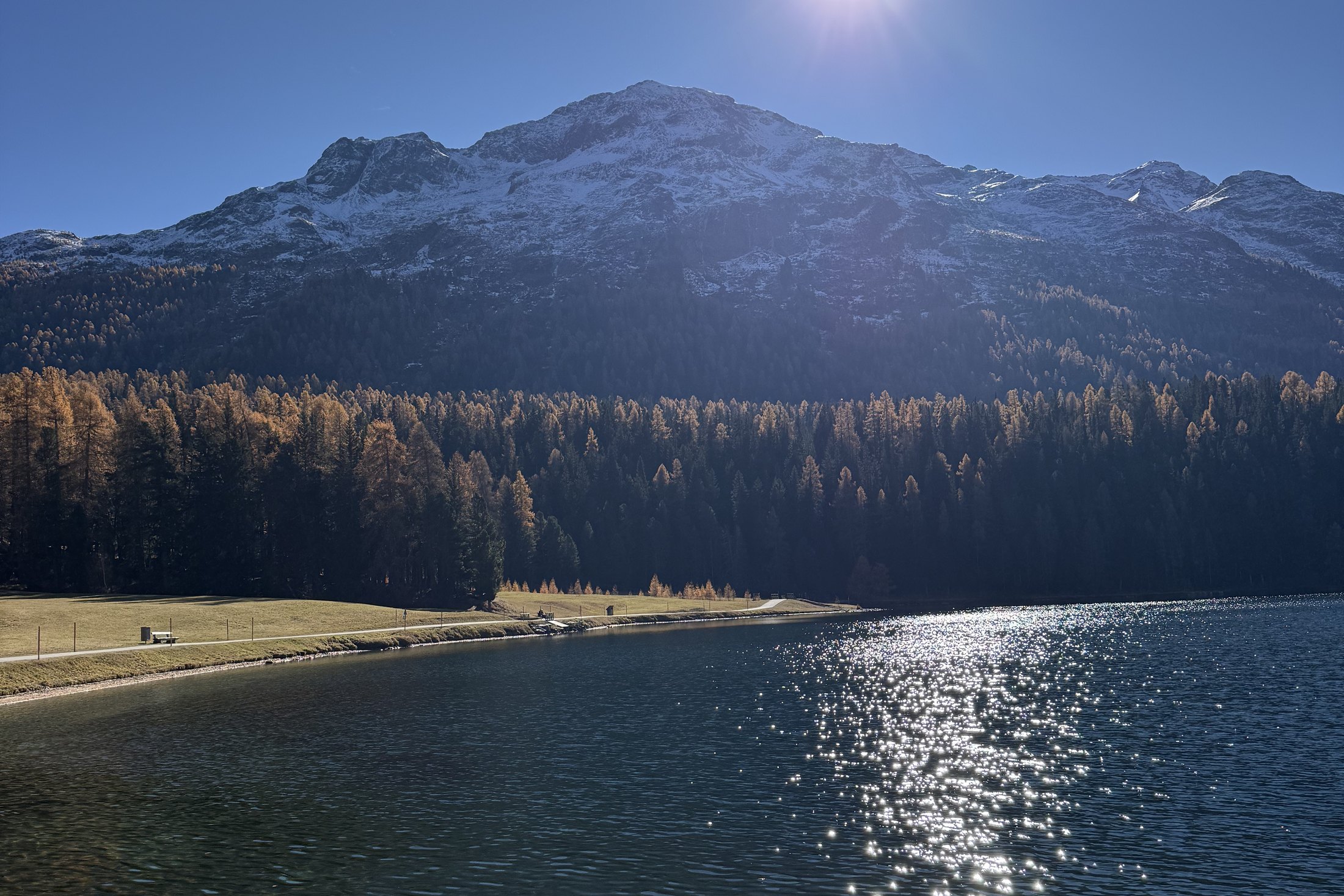
The season is the last thing and it may be the first reason to come. St. Moritz runs on two seasons and a good number of the famous houses close in the weeks between them. This one stays open all year, which in the first week of November meant gold larches, a lake still liquid, no snow underfoot, several shuttered restaurants in the village and a town that belonged to the people who live in it. For the full programme, with everything running, come in the season. For the Engadine with nobody in it, this is the address that will have you, and the way back down is the same red train with the windows that open.
Before you book
The questions people send me about Grace La Margna.
- Is the Grace La Margna noisy? The railway station is right below it
- It was not, and I slept two nights listening for it. St. Moritz is the end of the line and not a corridor that freight runs through, the service is daytime, and nothing moves through the night. Both wings of the hotel face that way, so there is no quiet side to ask for and no decision to make about it. The window gives you the platforms in the foreground and then the lake and the wooded slope behind them, which after an hour stops reading as a station and starts reading as the thing that brought you here.
- La Margna Wing or Grace Wing, which room should I book?
- They are genuinely different hotels and the price list will not tell you which is which. The La Margna Wing is the original 1906 house, forty-seven rooms and suites, from around thirty-five square metres up to a three-bedroom suite of a hundred and thirty, and what you get there is the building itself: the thick walls, the panelled reveals, the proportions of the period. The Grace Wing is the new part, twenty-seven units, larger plans, glass walls that hold the whole lake, topped by a penthouse of two hundred and fifteen square metres with a private terrace. I had a Deluxe Junior Suite in the old wing and I would take it again for the room, while admitting the new wing wins on the view and on floor area. Say which one you want by name when you book.
- Is the Grace La Margna open all year?
- Yes, and in St. Moritz that is unusual enough to be a reason to choose it. A good number of the best-known houses here work a winter season and a summer season and close in the weeks between. This one runs through. What changes between seasons is what is open around it: in the first week of November the Beefbar inside the hotel was closed, and a fair number of restaurants in the village were as well, while the main restaurant, the bar, the Engadine room and the whole spa were running normally.
- How do you get from the hotel up into St. Moritz village?
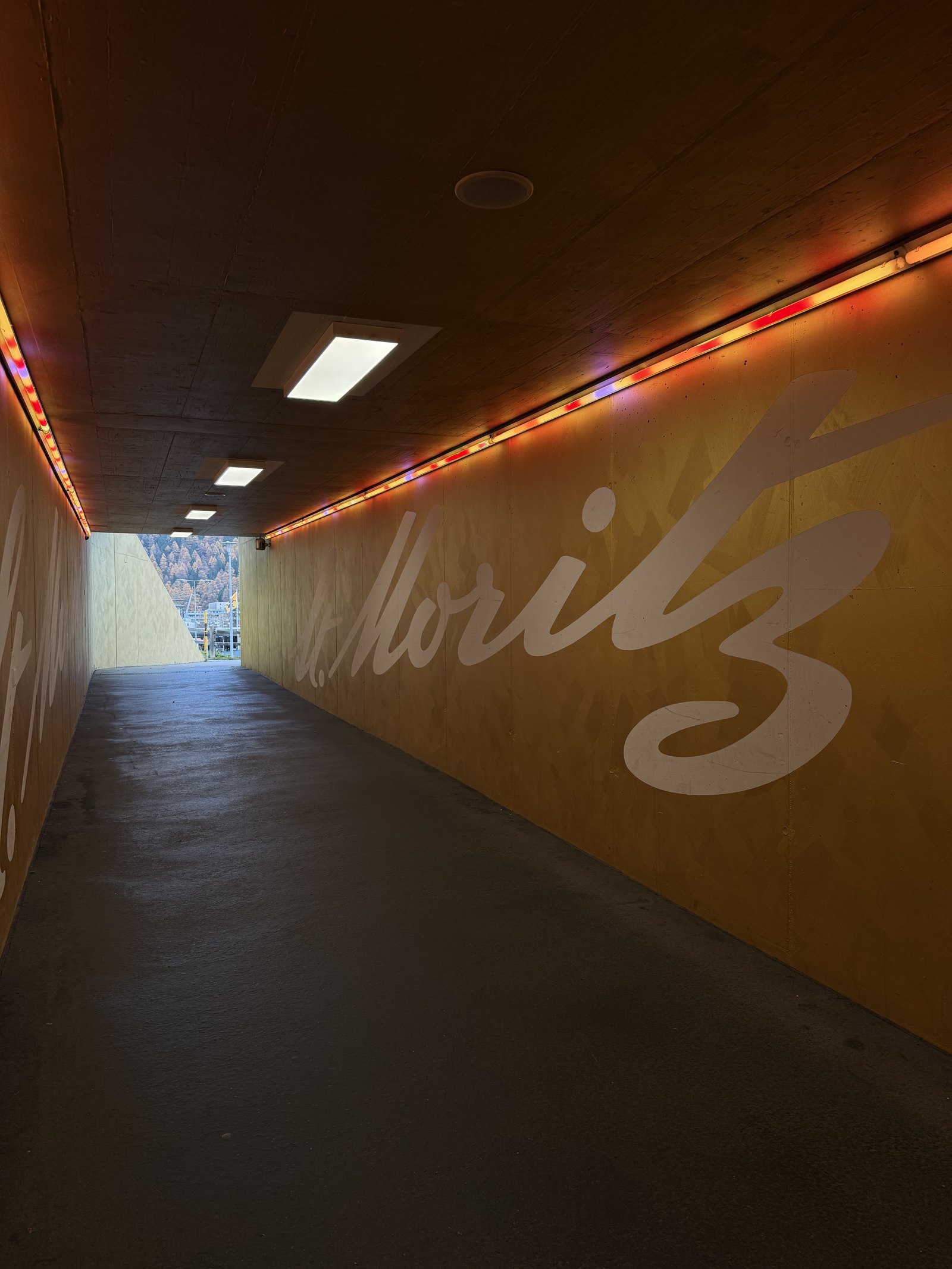
- On foot through a tunnel, which is better than it sounds. A short walk from the door there is a lit pedestrian underpass, with the name of the town painted along the wall, and at the far end escalators lift you into the centre of the village. The climb that the map implies does not happen. The hotel also keeps a car for guests who would prefer to be driven up, so either way the village is a few minutes from the lobby.
- Where do you eat at the Grace La Margna?
- There are four places and they are not variations on each other. The View is the main restaurant, where breakfast is also served, and the pizza there is the real thing and I am Italian enough to say so. N/5 is the bar, in the protected Lobby Lounge under the vaults, open from eleven in the morning until eleven at night, and it does coffee, an informal lunch, the afternoon and the cocktails; while I was there a sushi pop-up was running inside it. Stüvetta Moritz is the Engadine room, all old timber behind green curtains, where the cheese and meat fondues and the rösti live. The Living Room does the afternoon tea with Mariage Frères in front of a fire. The Beefbar is the fifth and it keeps a season.
- What is the spa like?
- It runs to over seven hundred square metres and everything in it was open and included. A twenty-metre indoor pool at twenty-six degrees with a counter-current, a Finnish sauna that goes to ninety, a steam room at forty-four and saturated, a separate hot tub at thirty-four, an organic salt sauna at seventy, experience showers, a long run of relaxation beds, and a gym that never closes. There is also a private spa suite with its own terrace, hammam and double cabin if you want the whole thing to yourselves. I took no treatment, so I can tell you what the rooms are and not what the hands are like.
Something else you want to know? Write to me and I will answer it here.
Book online
Via Classic Travel, with the benefits attached.
The hotel's own rate, booked through a Virtuoso preferred-partner agency. Register once; the account stays linked to Wheresnik.
Check rates at Grace La Margna →Or let me arrange it
The room, the dates, the rest of the list.
Write in English, Italian or Spanish. I answer personally, usually within a day.
Let Nik arrange it →