
Inspection · Hanoi, Vietnam
Capella Hanoi
Forty-seven rooms in the French Quarter, each one given to a performer of the 1920s, inside a building Bill Bensley filled to the ceiling. The loudest hotel I have stayed in, and one of the most precise.
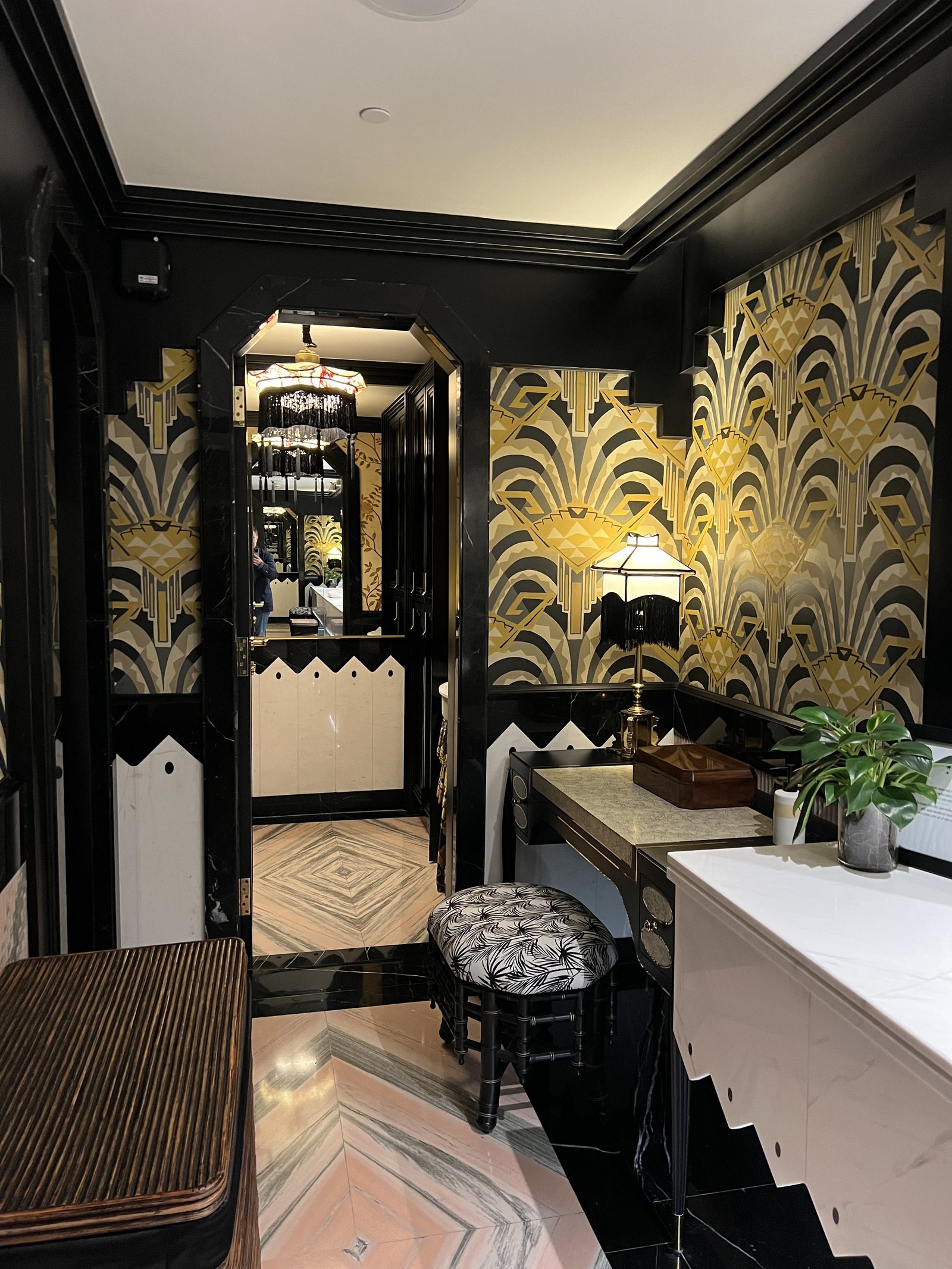
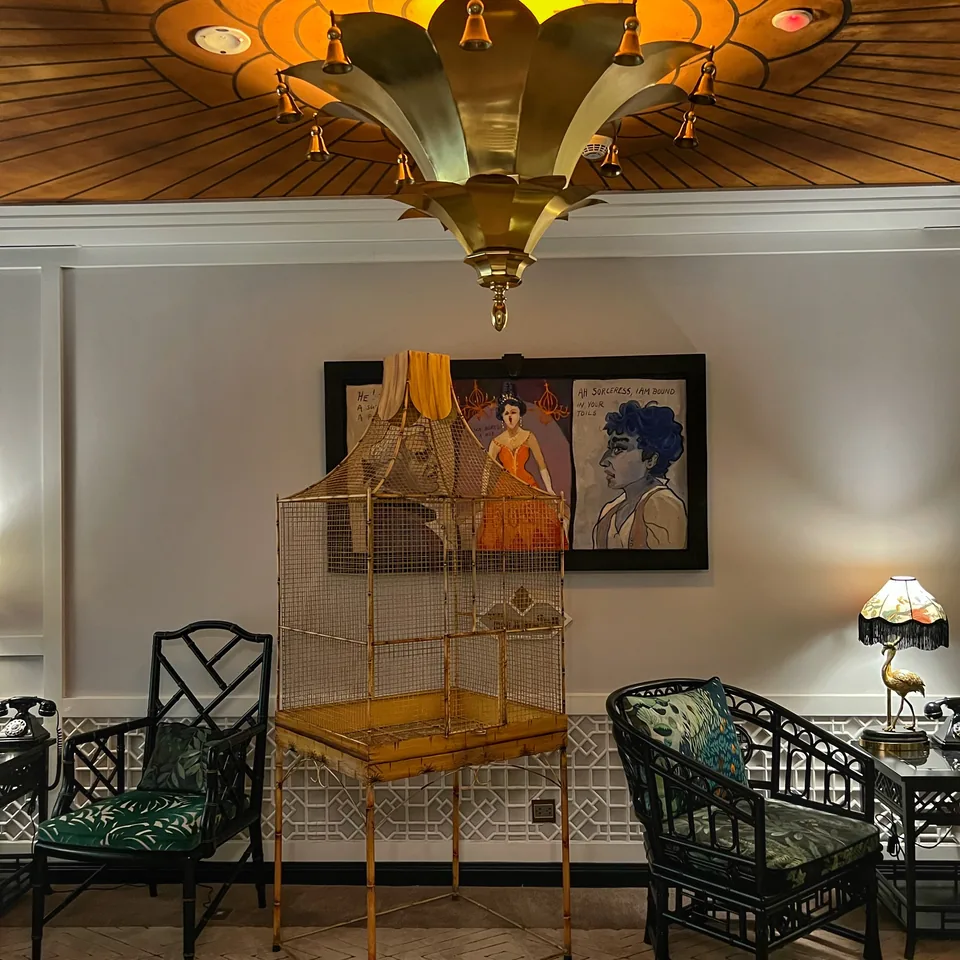
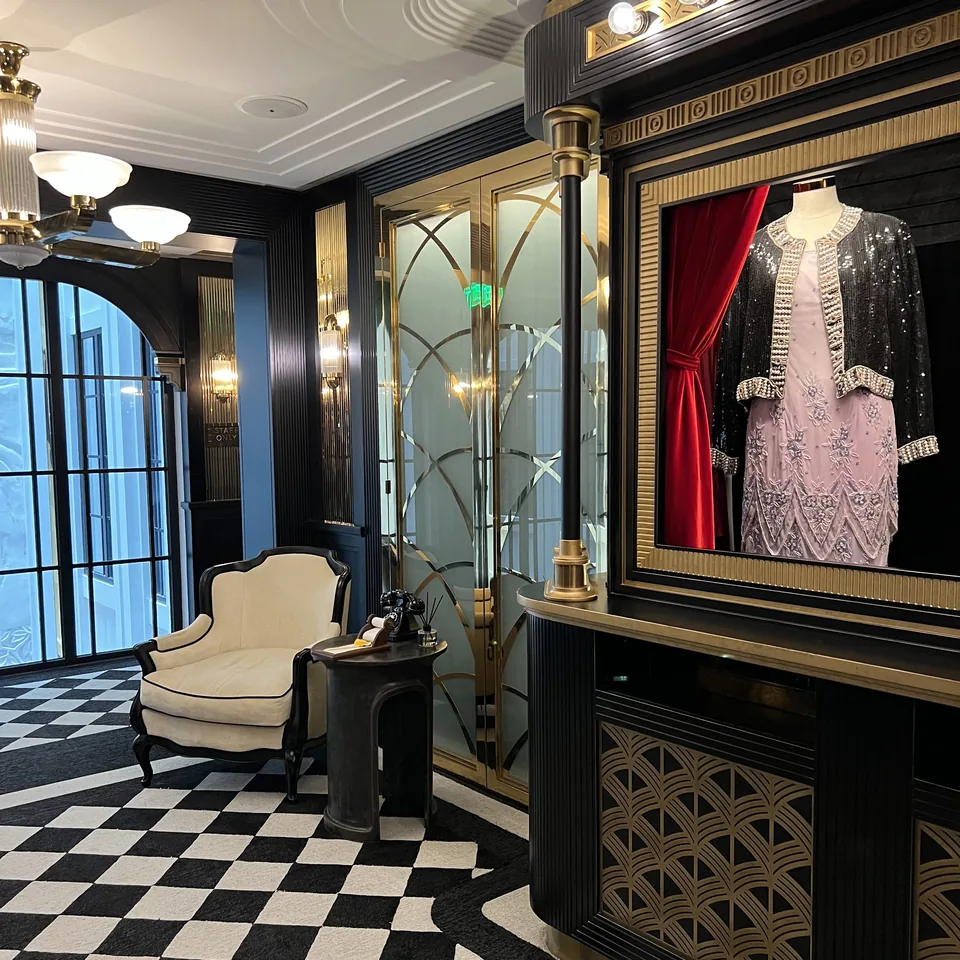
Book Capella Hanoi with me, through Classic Travel Register first, free of charge, and the rates and partner benefits open up, with the account linked to Wheresnik. Tell me your dates before you book and I will say which room to ask for here, and which week I would avoid.Capella Hanoi has forty-seven rooms and not one of them is the same as another. The building sits on a corner of the French Quarter, a few minutes from the Opera House and a short walk from Hoan Kiem Lake, and it was given to Bill Bensley, the American landscape architect who has built something like two hundred hotels across fifty countries and who does nothing quietly. He treated the place as a jewel box for the opera: a house where singers, composers, dancers and designers of the 1920s might have come to eat after a performance and stayed too late. Every room carries the name of one of them. Every corridor carries their faces. It opened in 2021, and it is the most decorated interior I have walked into.
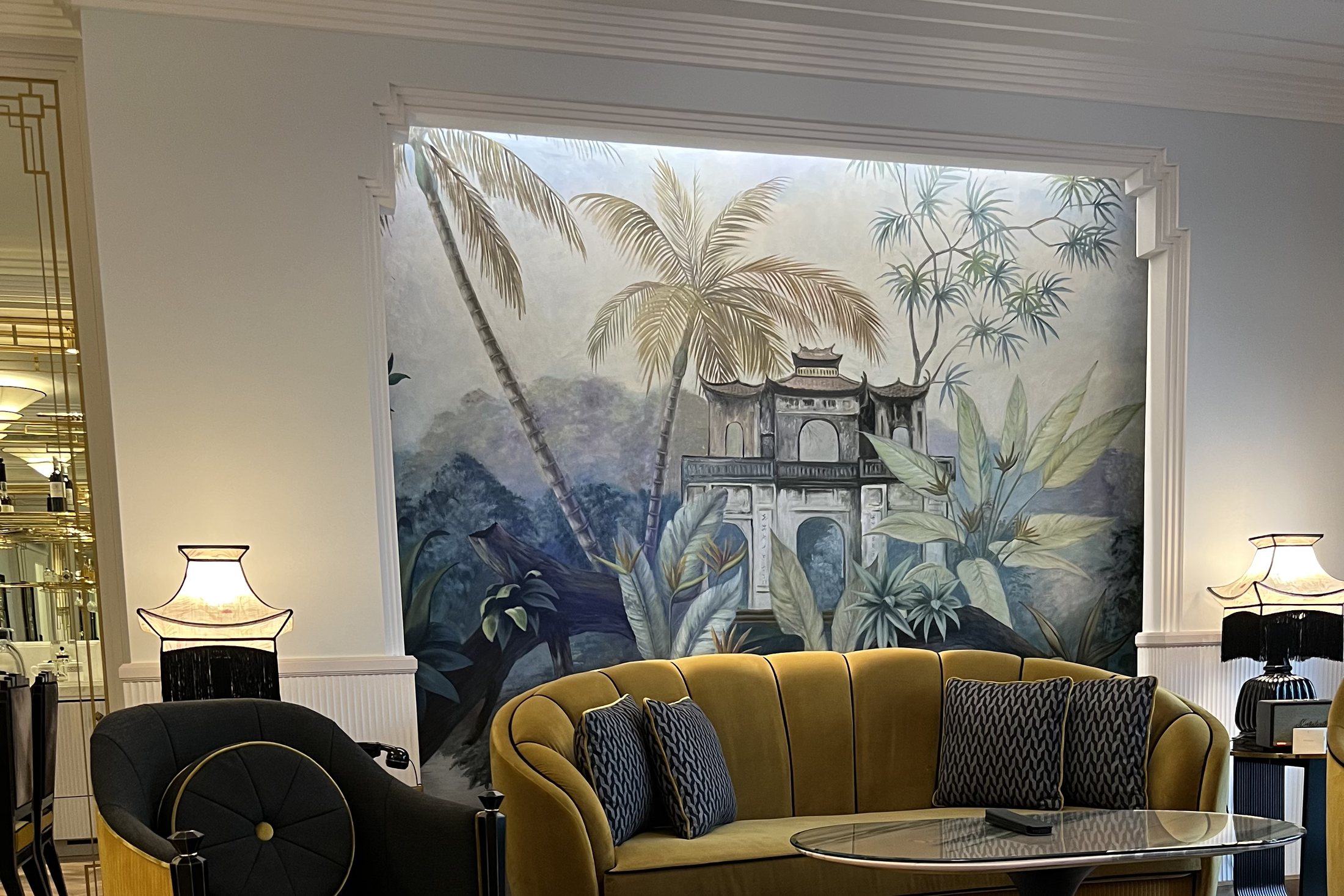
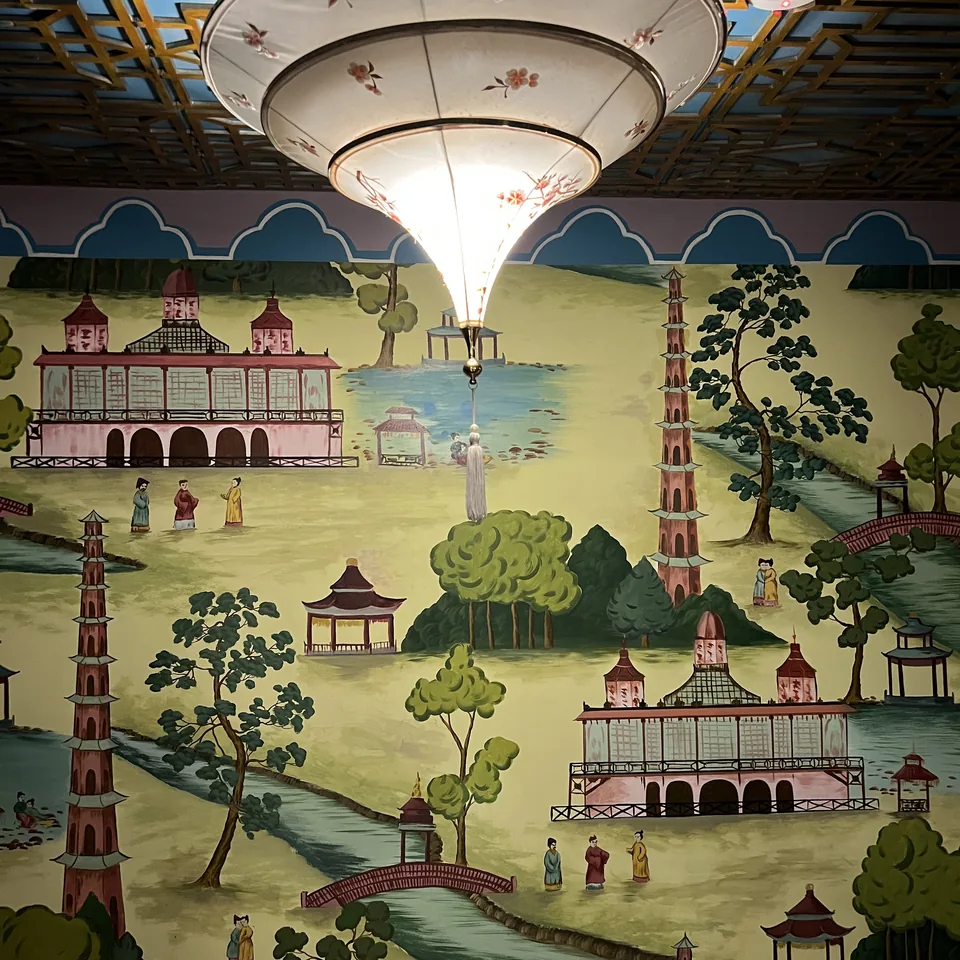
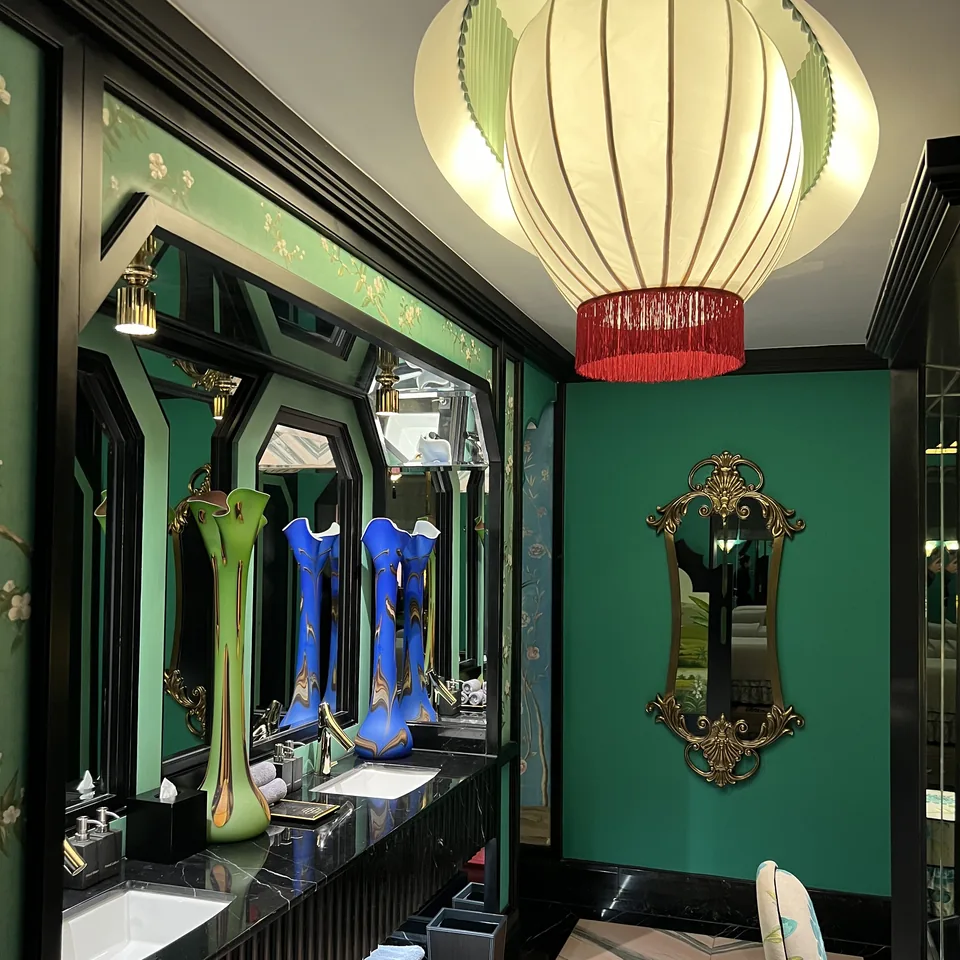
I should say at the start what this hotel is not. It is not restful to look at. The first ten minutes are loud: gold, lacquer, fringe, mirror, murals of crowds staring back at you. If your idea of a good room is pale linen and nothing on the walls, you will want to go somewhere else and you will be right to. What happened to me is that the eye settles, quite quickly, and then the detail starts paying you back. After a day I was finding things I had walked past four times.
Arriving
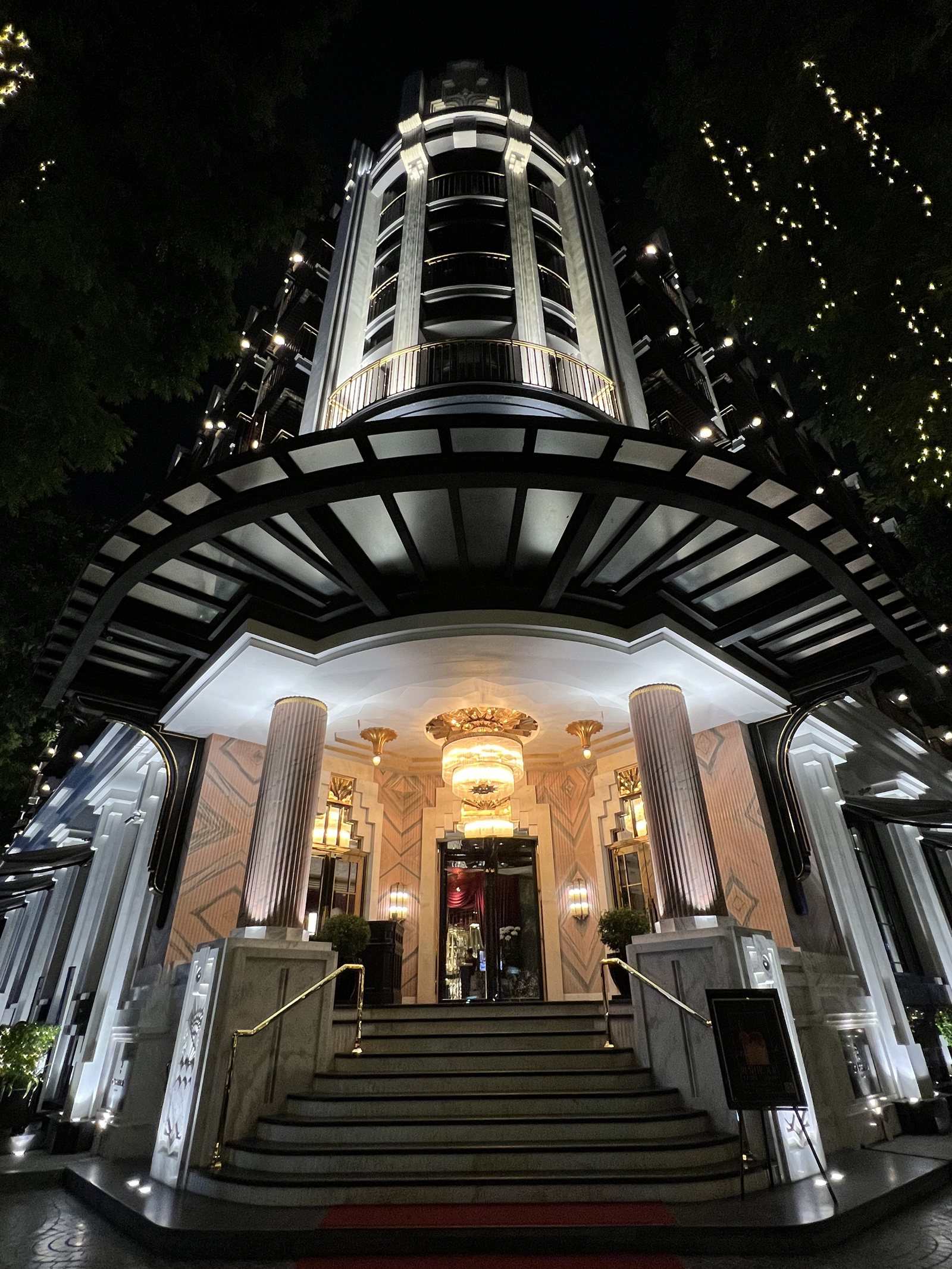
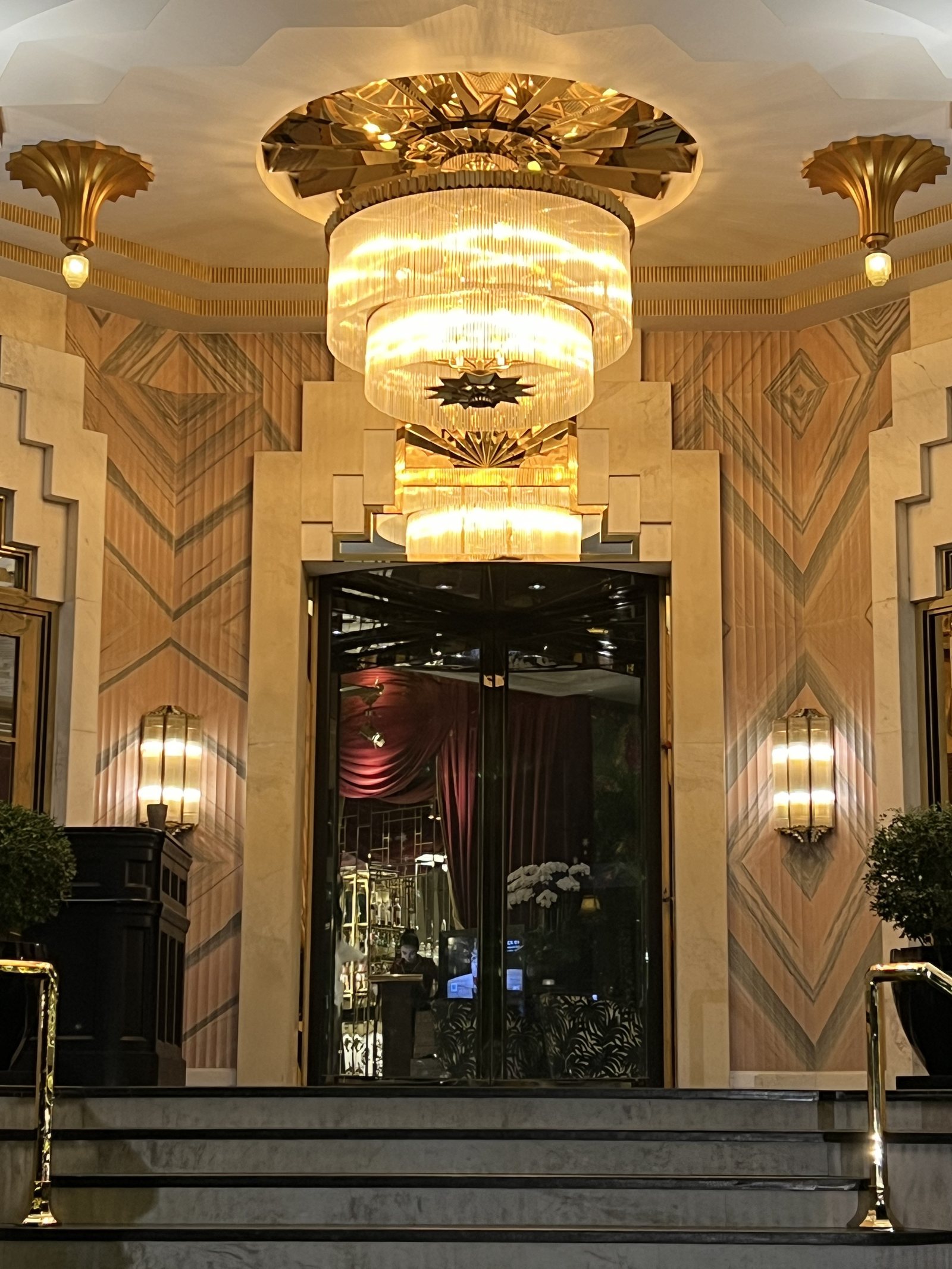
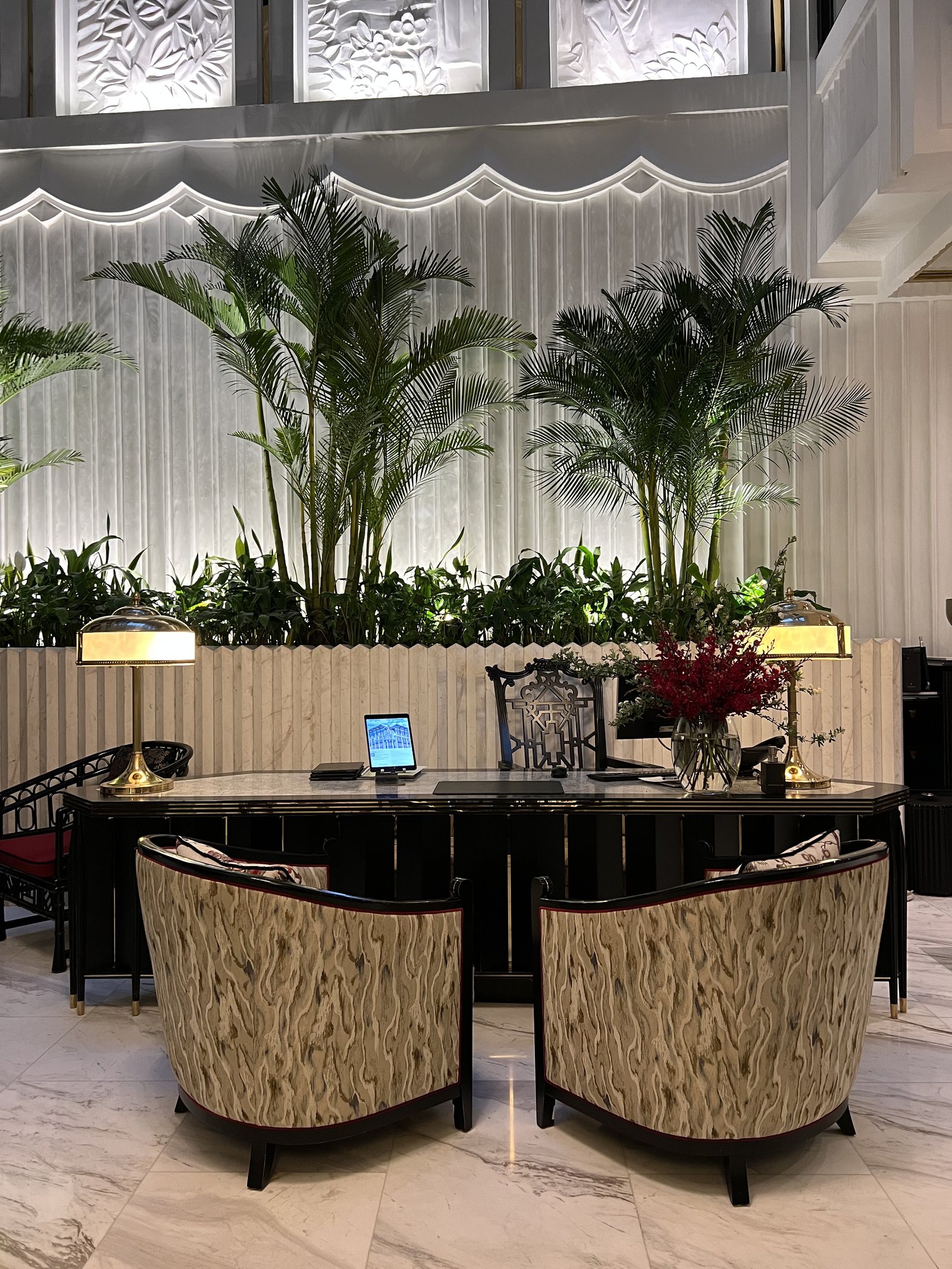
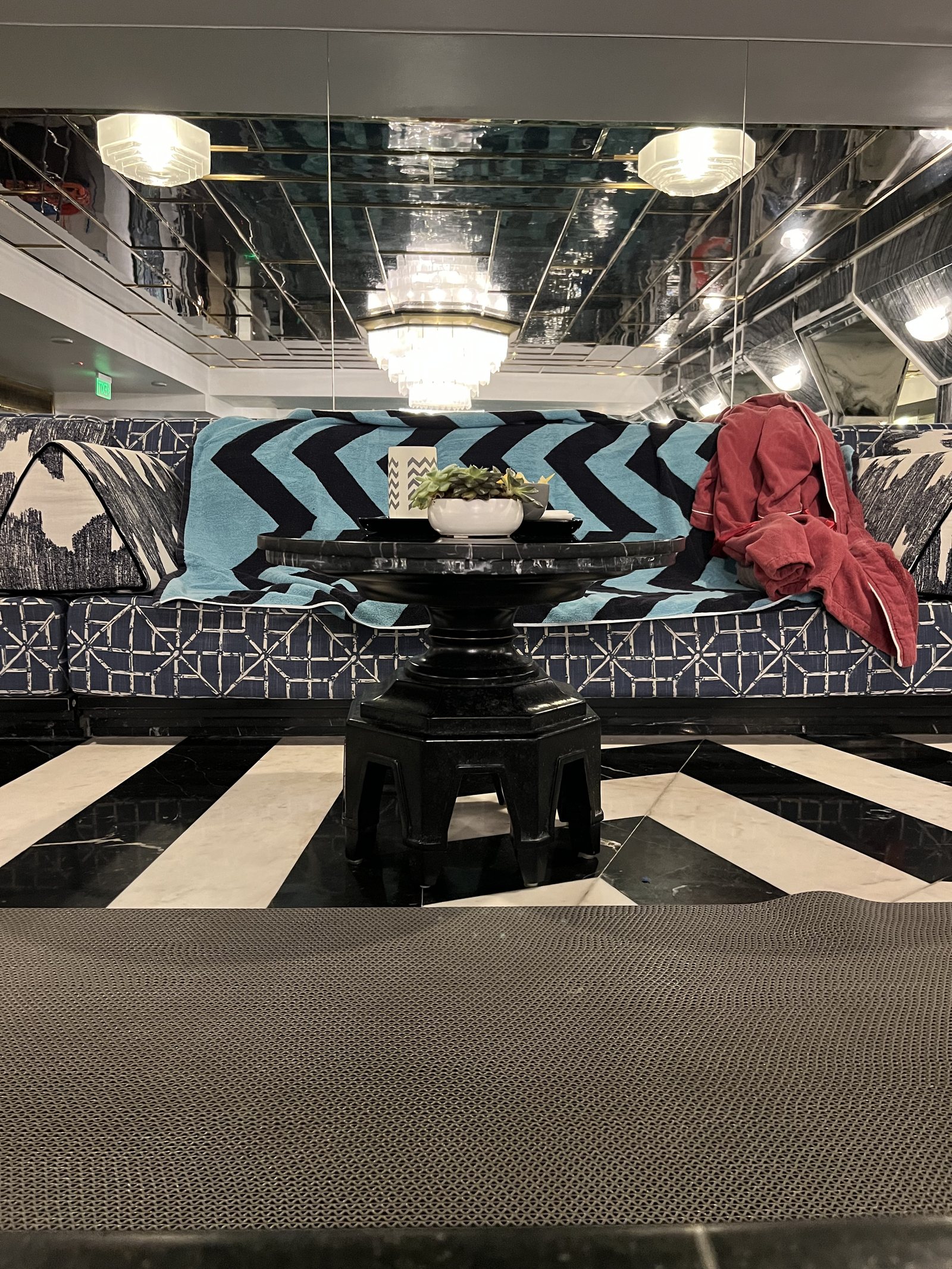
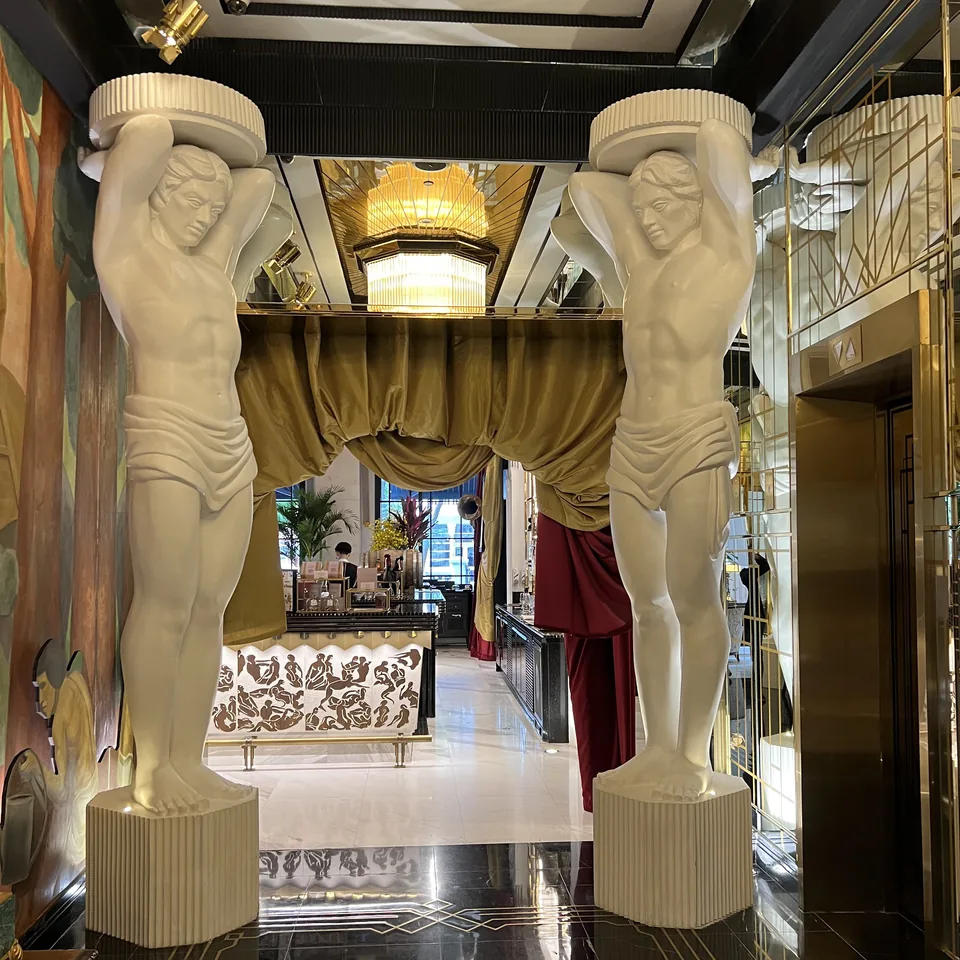
You come in off the junction and the noise stops at the door. The entrance is a tall Art Deco canopy of black steel and lit glass, and the lobby behind it is small, because this is a city building and the ground floor has work to do. The reception desk is there, the Living Room is there, and the lift is there, and all three are covered in painted people.
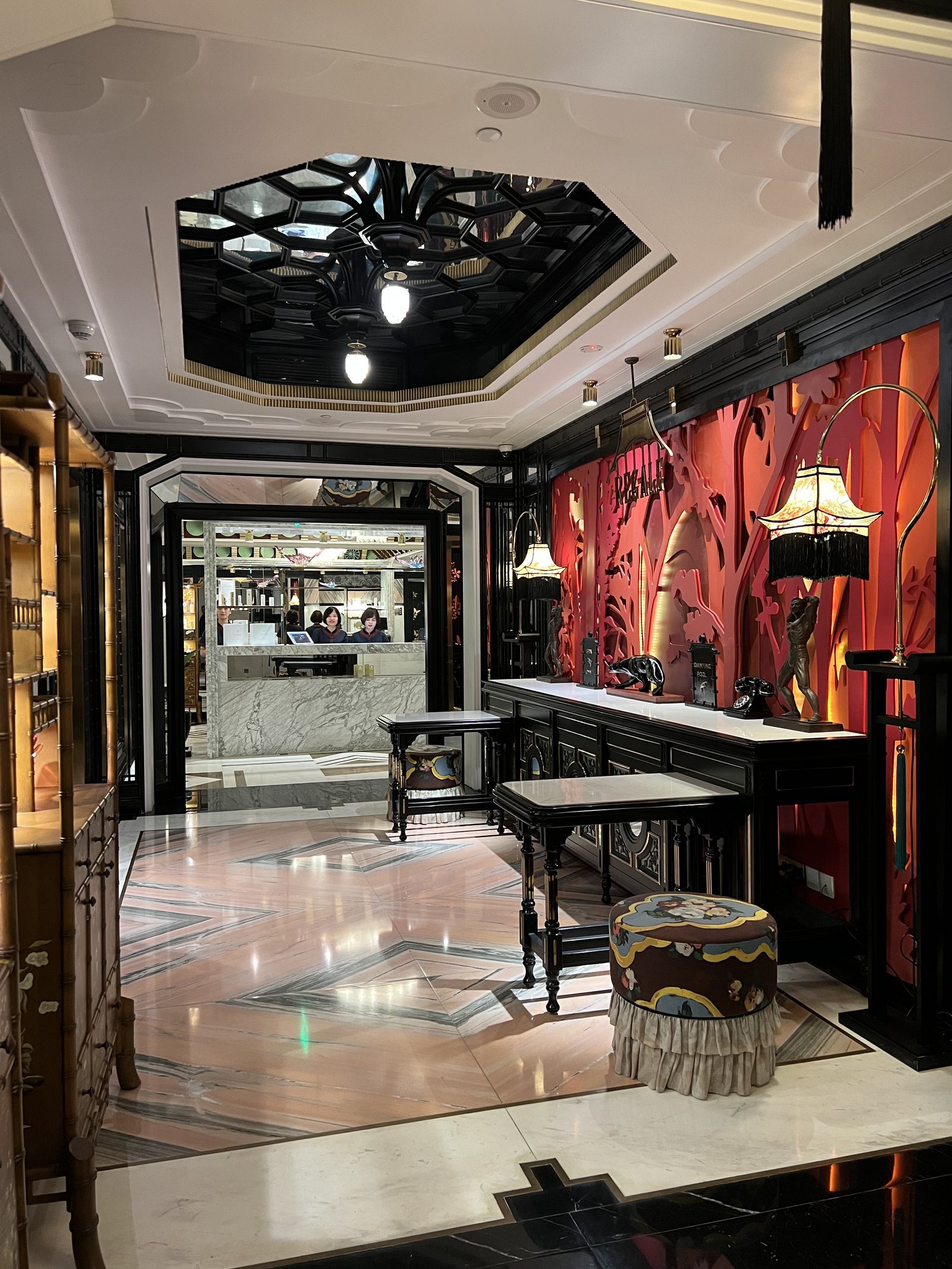
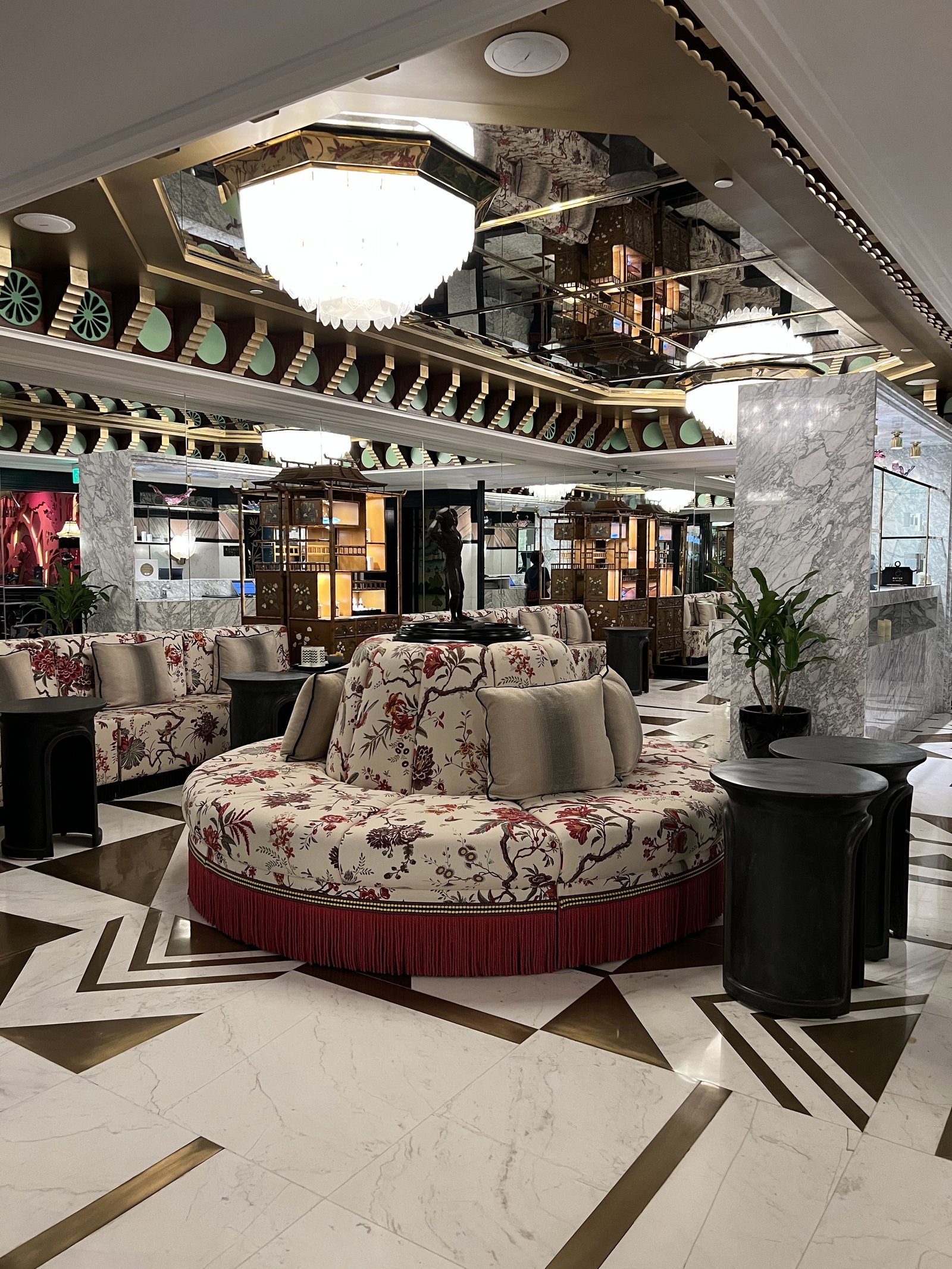
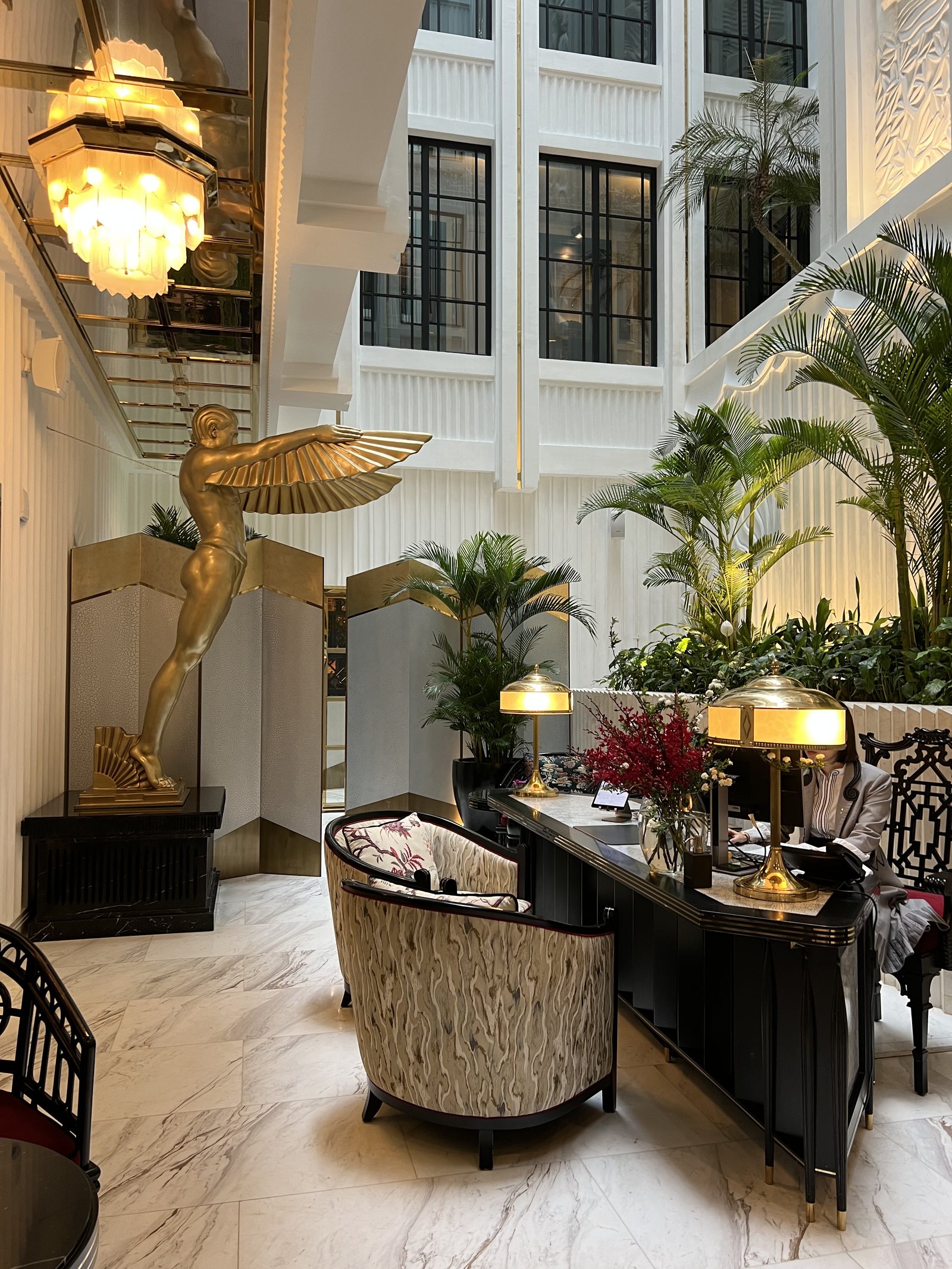
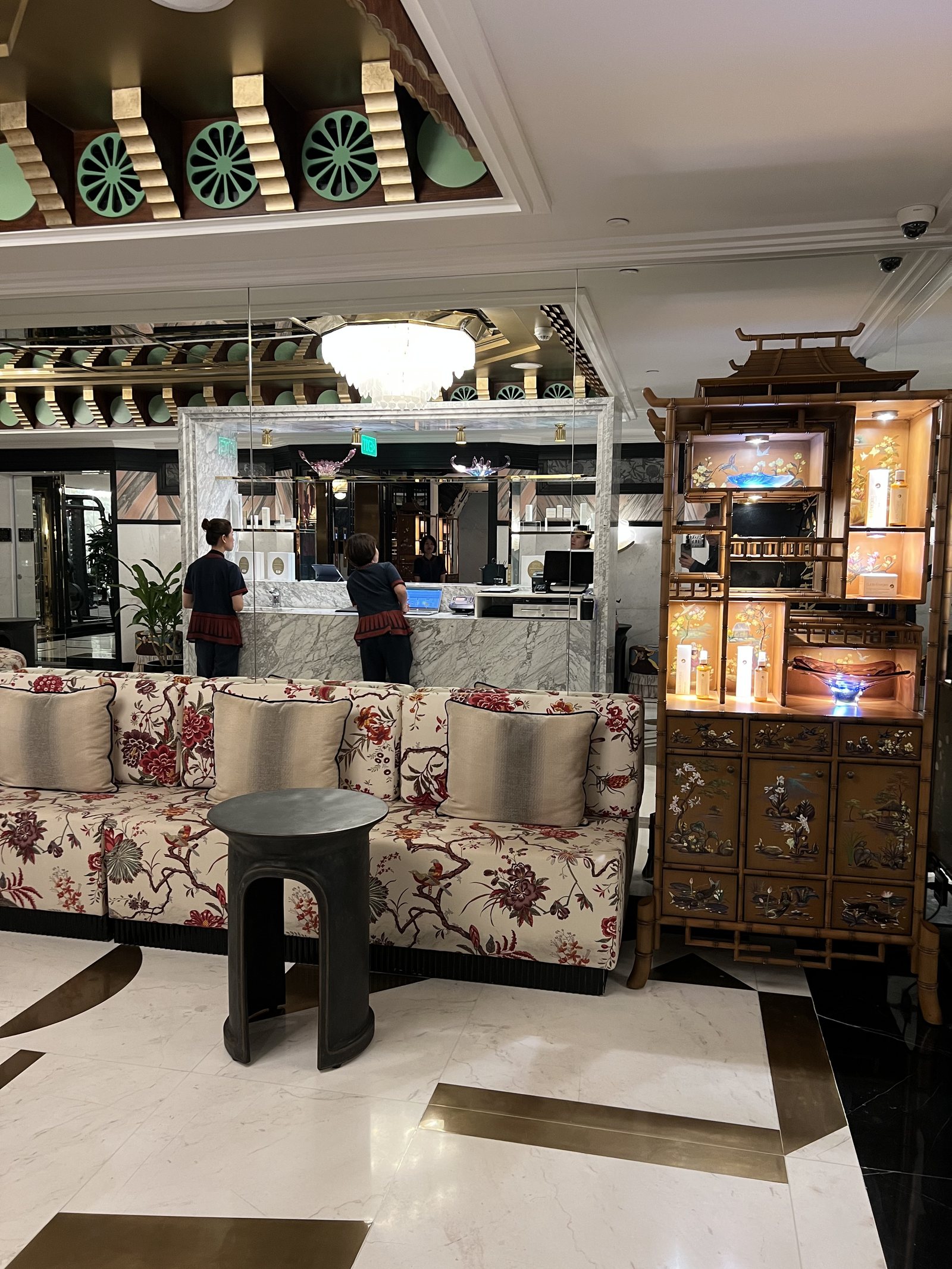
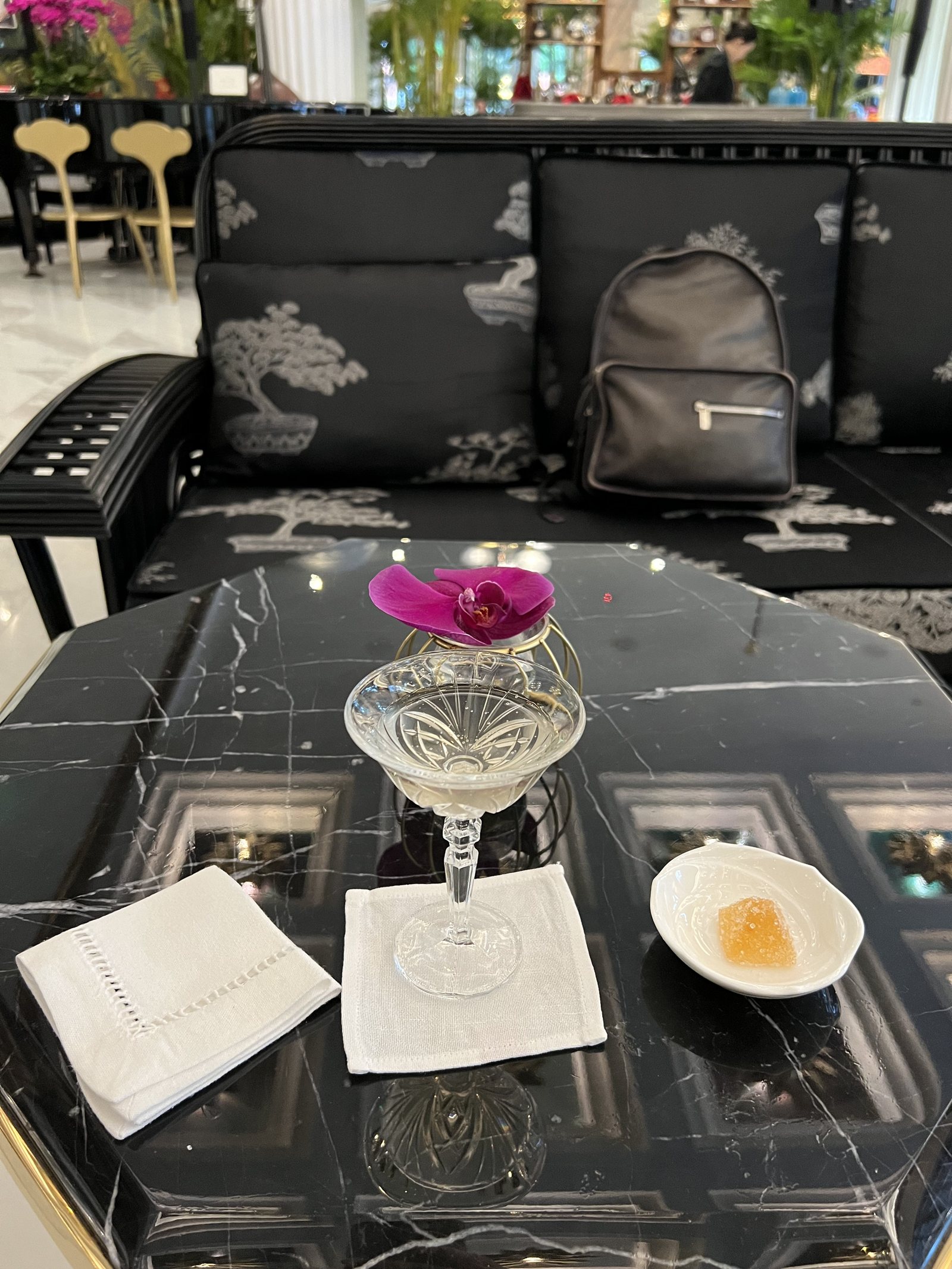
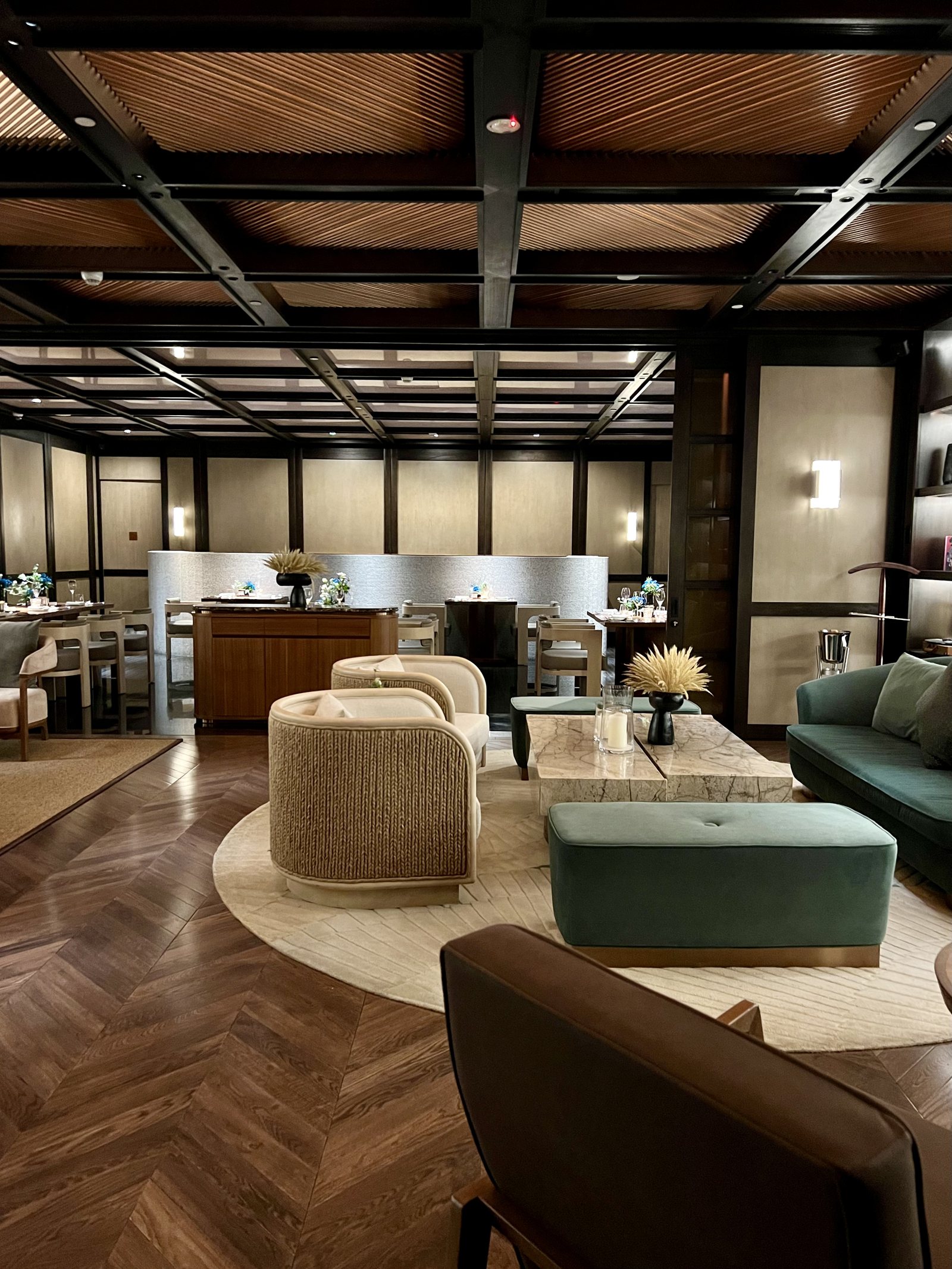
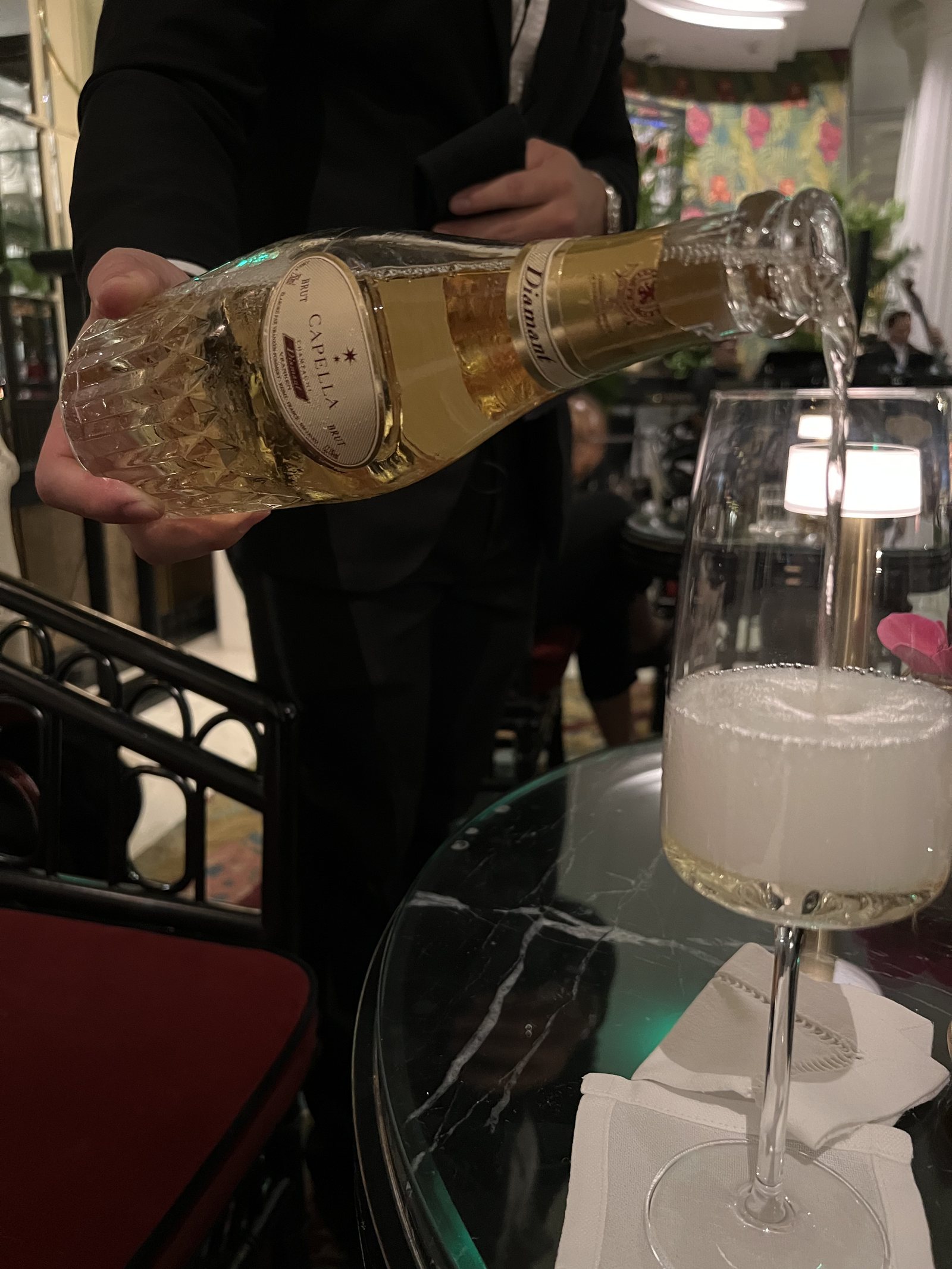
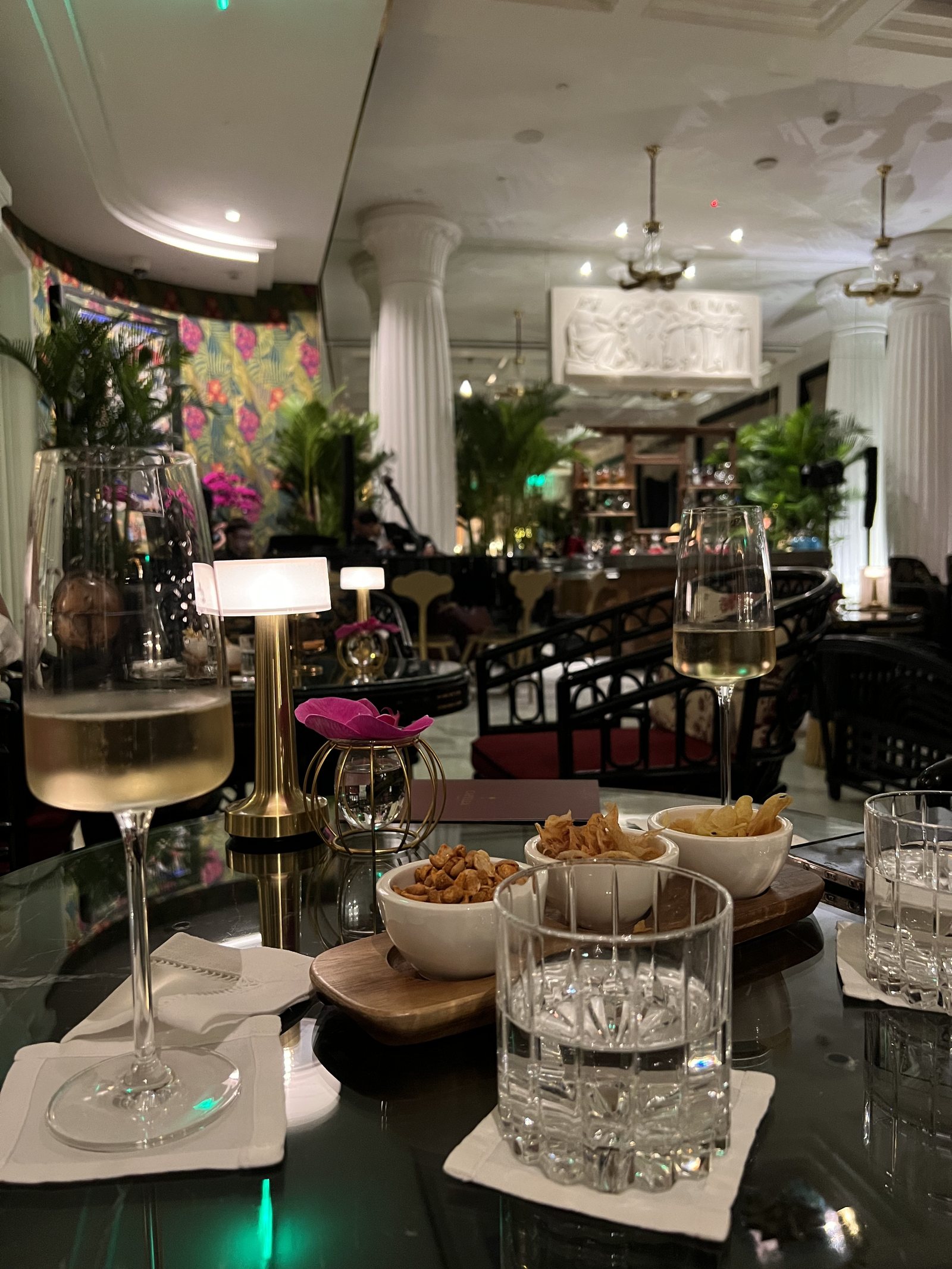
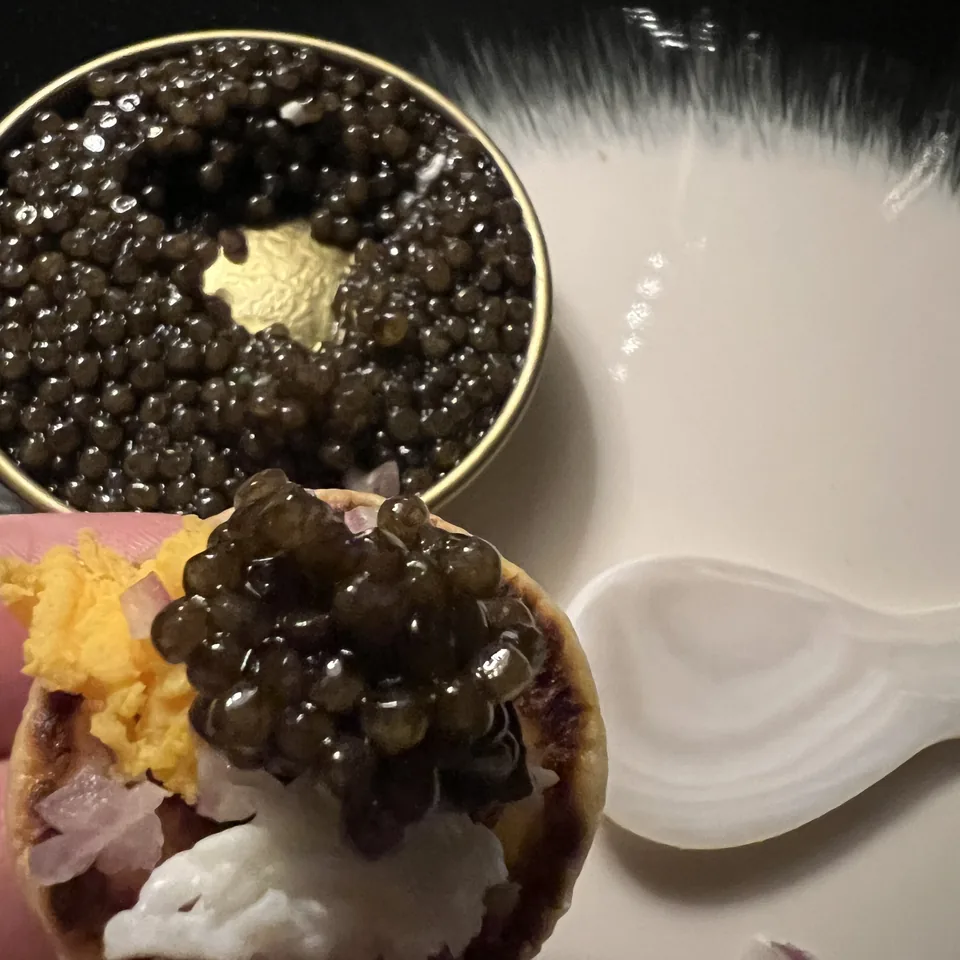
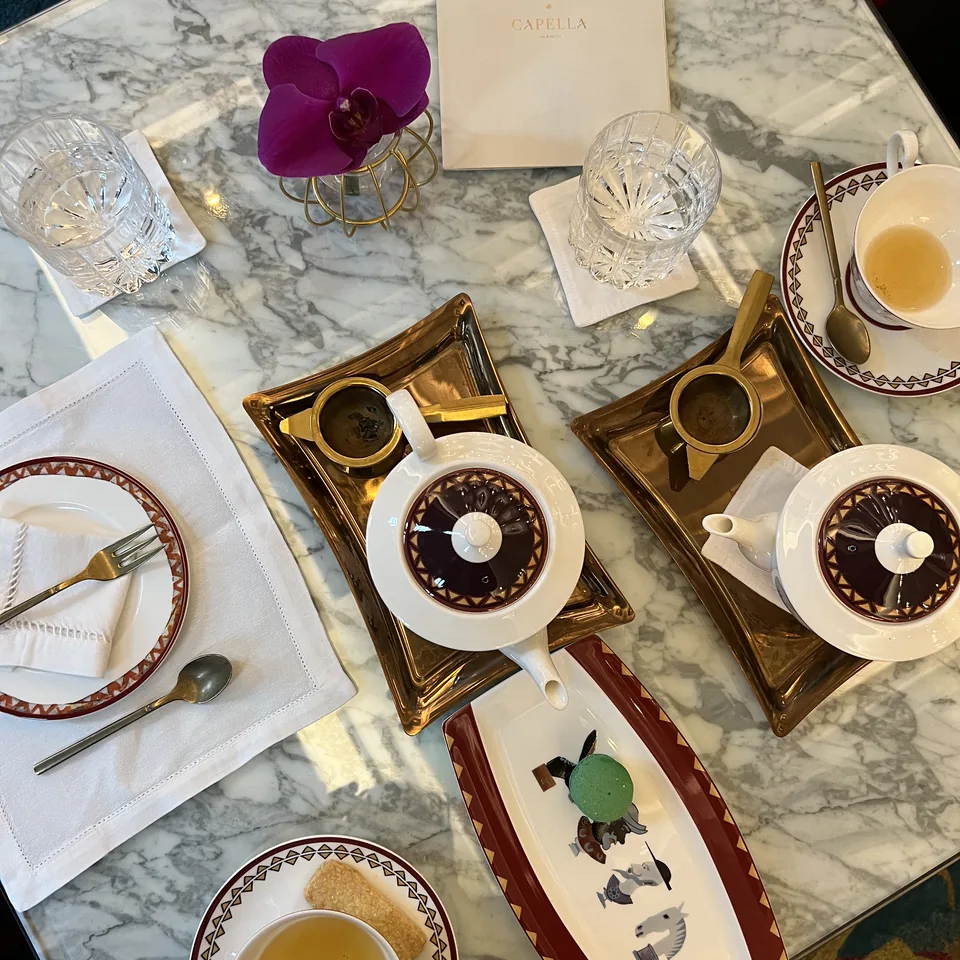
The Living Room is the Capella idea, and it is the reason to care about this hotel beyond the decoration. It is a lounge off the entrance that belongs to guests all day. Soft drinks, coffee and tea come from it whenever you want them. In the afternoon there is tea. In the evening, every evening, it turns into a party that costs nothing: champagne and cocktails poured freely, canapés carried round, a band playing. I came down both nights. The second night I had meant to stay twenty minutes.
The Musidora Suite
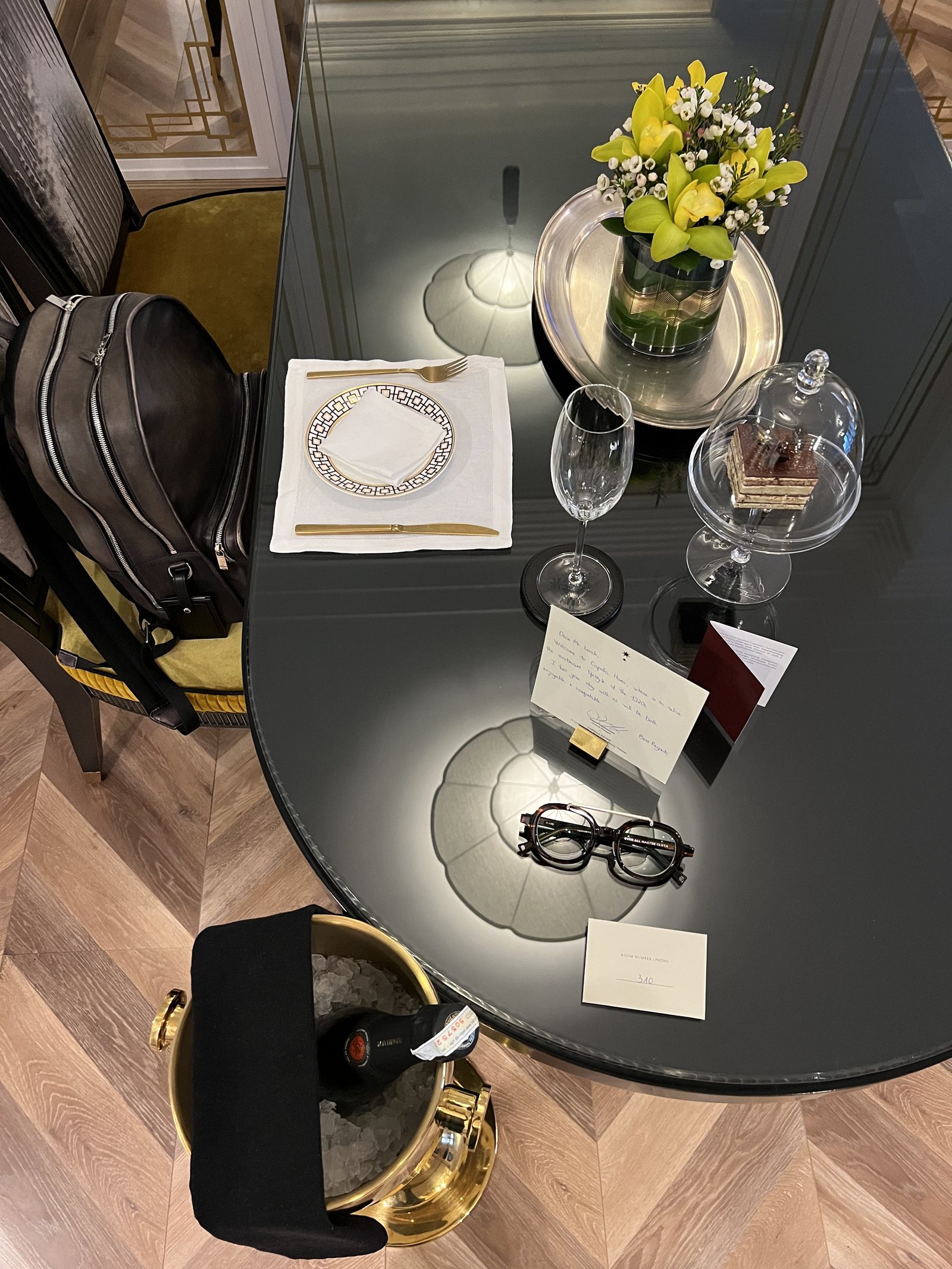
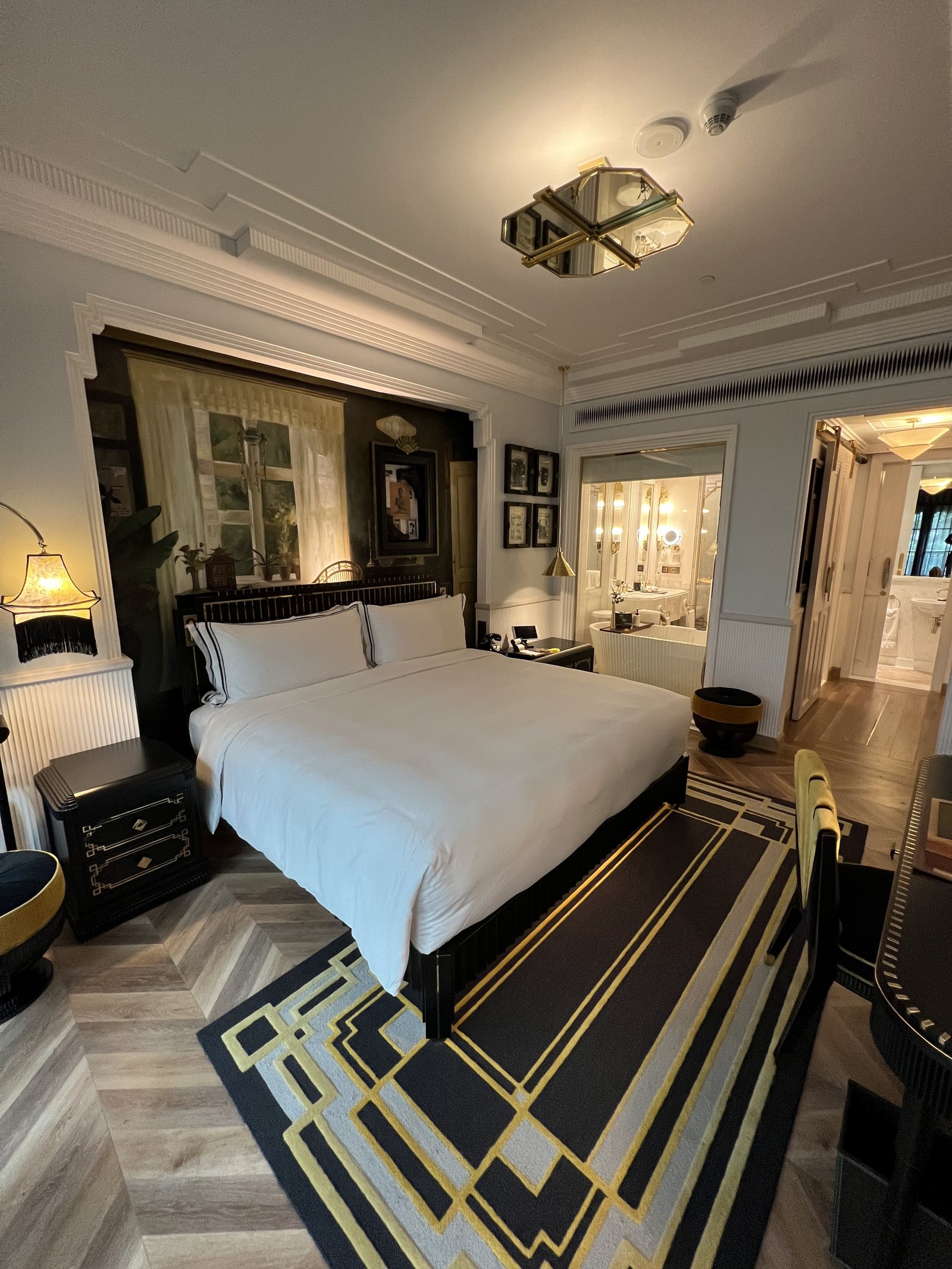
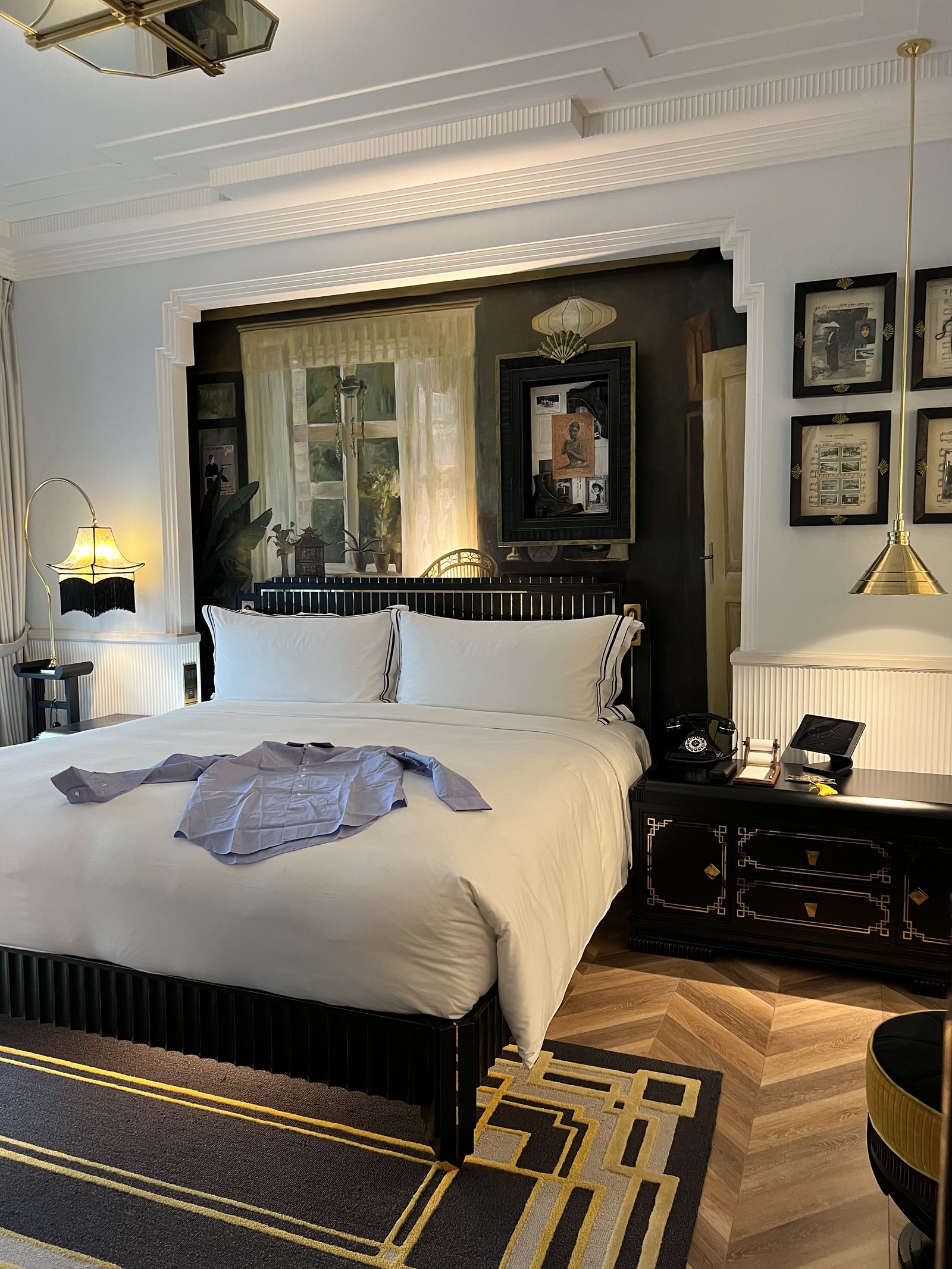
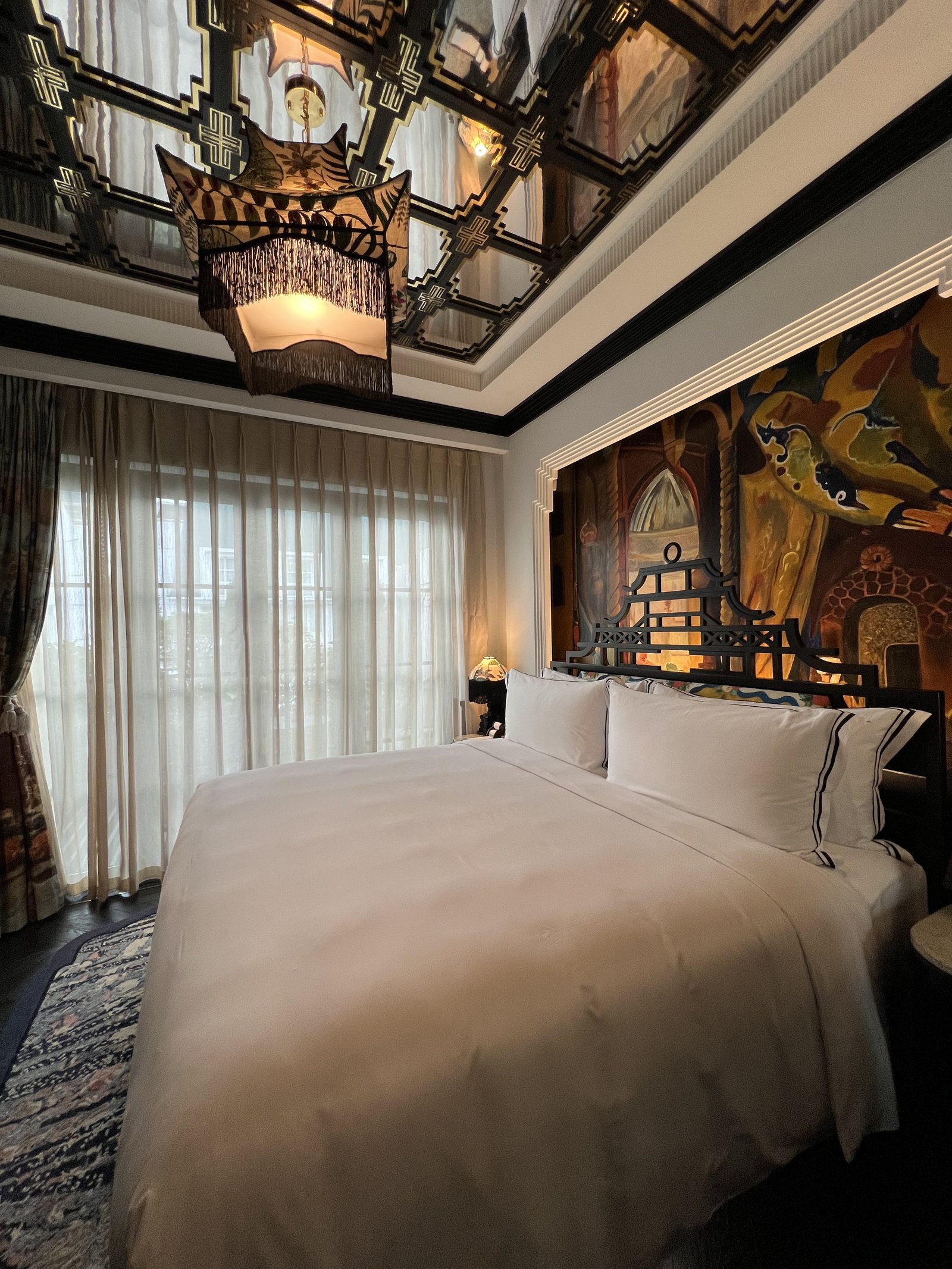
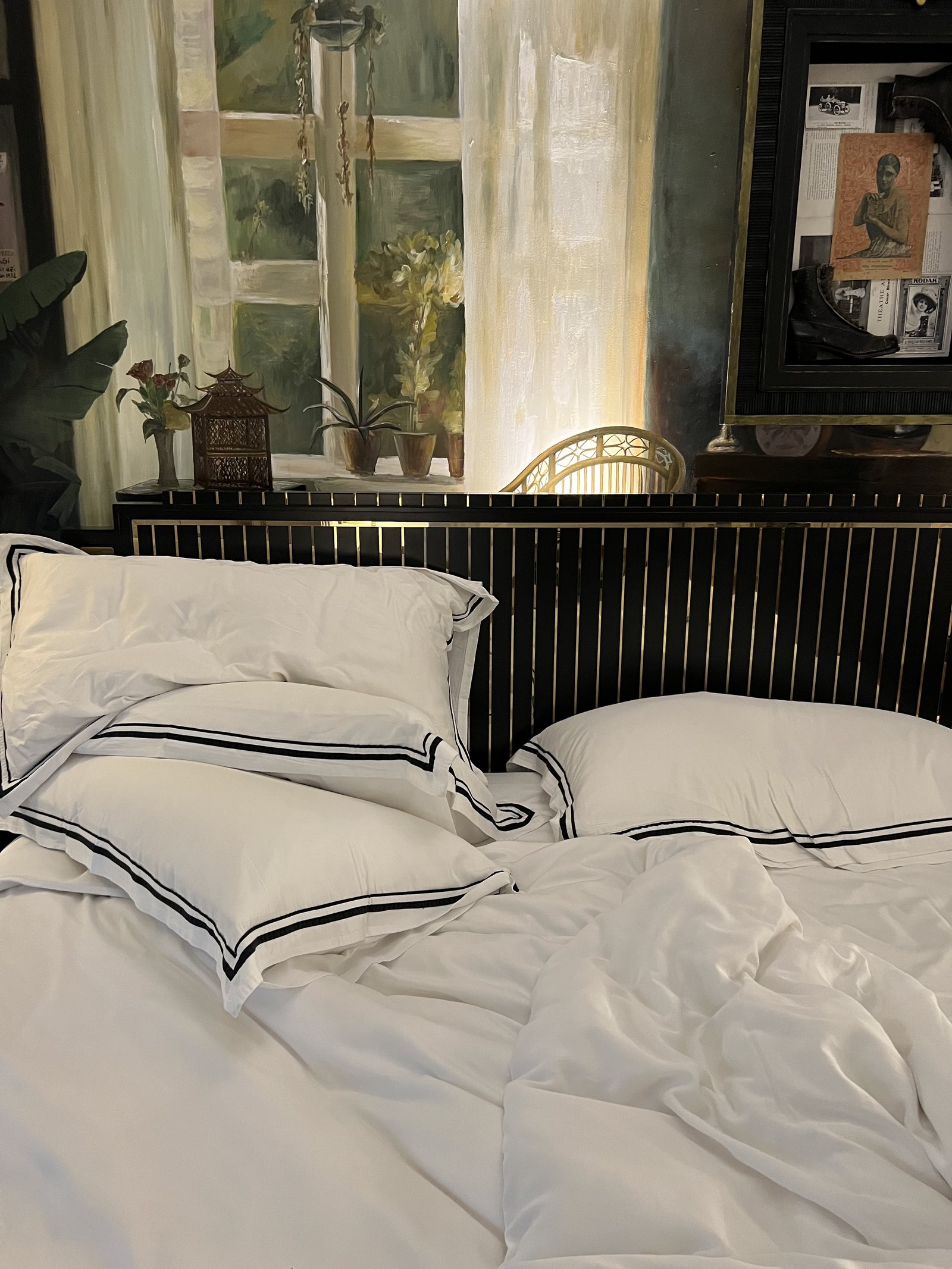
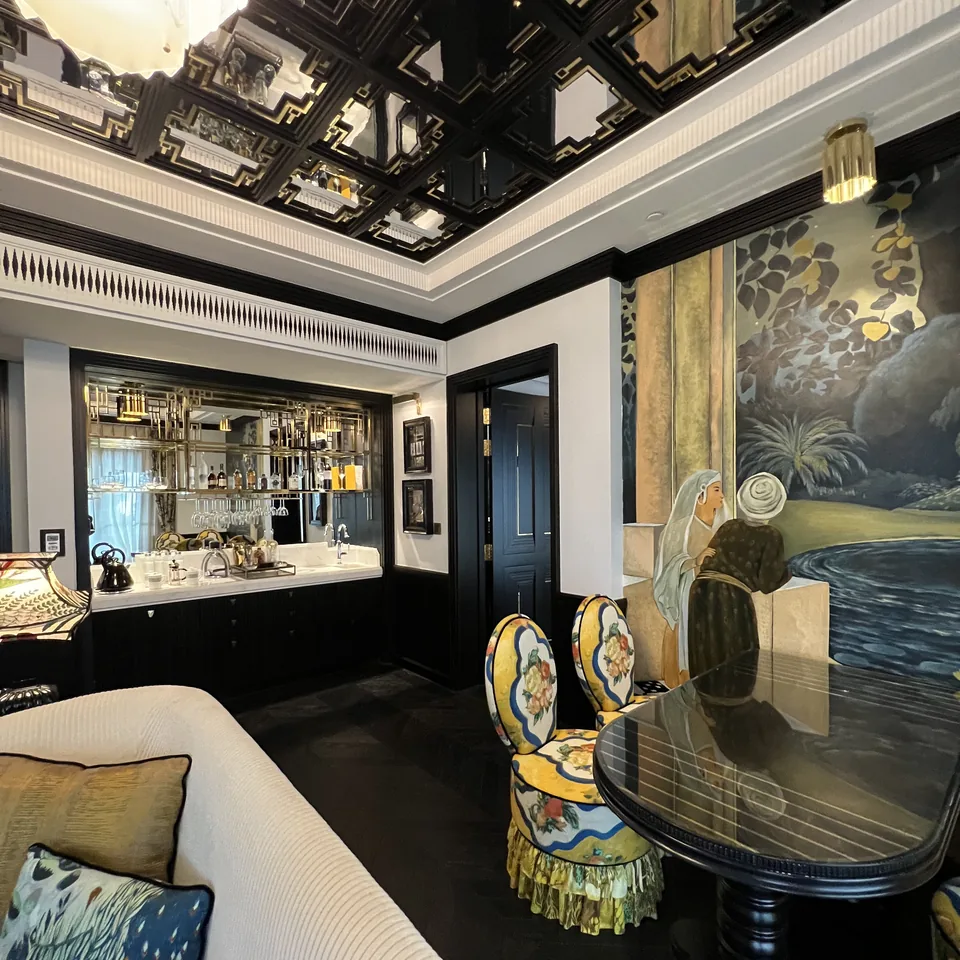
My room was Musidora, named for Jeanne Roques, the French actress who took that stage name and who played Irma Vep in the serial Les Vampires in 1915. She acted, then directed, then wrote. Her face is in the room, on the wall and in the frames by the bed, and once I had looked her up I found the room had been put together by somebody who knew exactly who she was. That is the trick of this hotel. The themes are not wallpaper. Somebody did the reading.
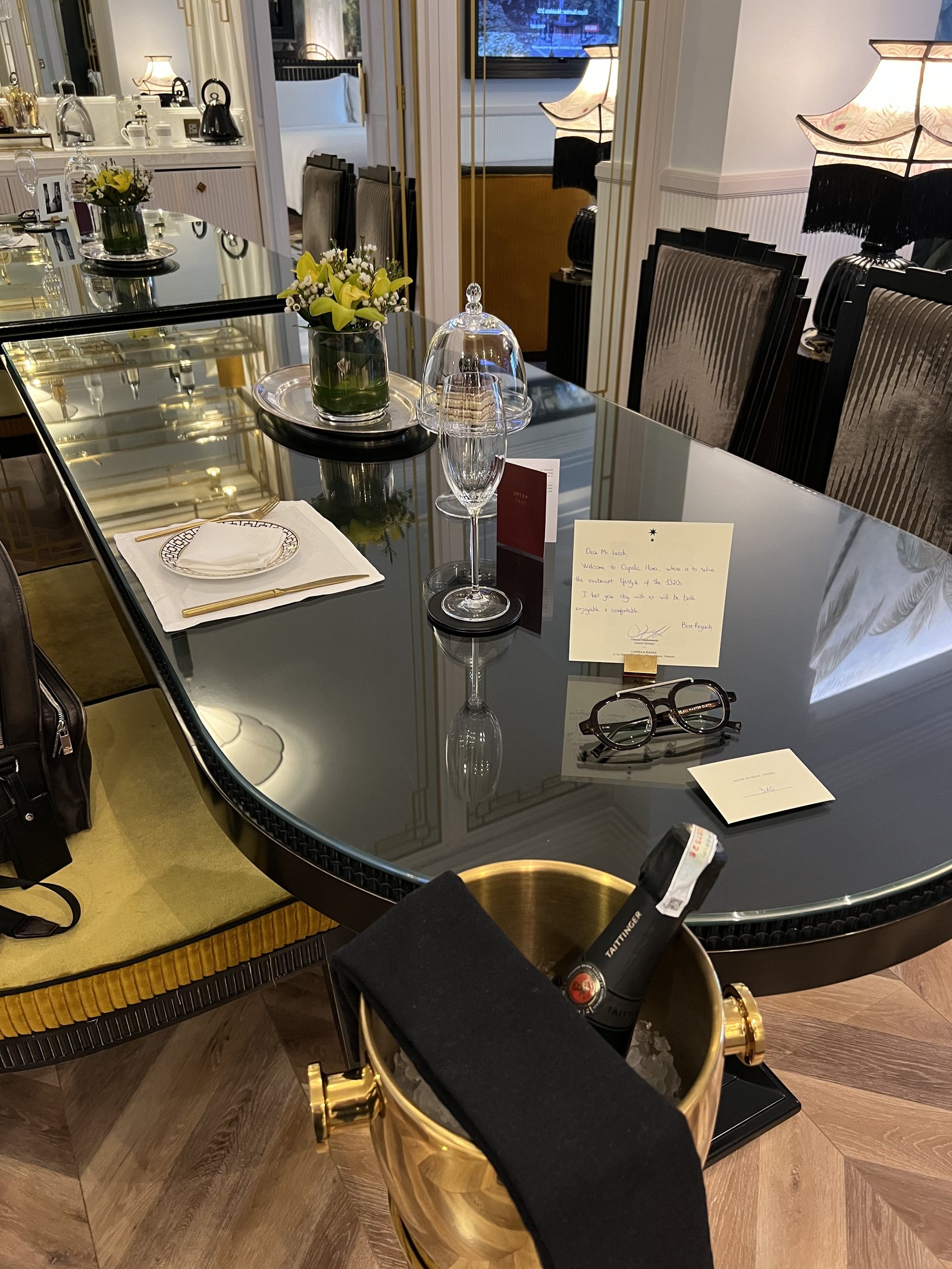
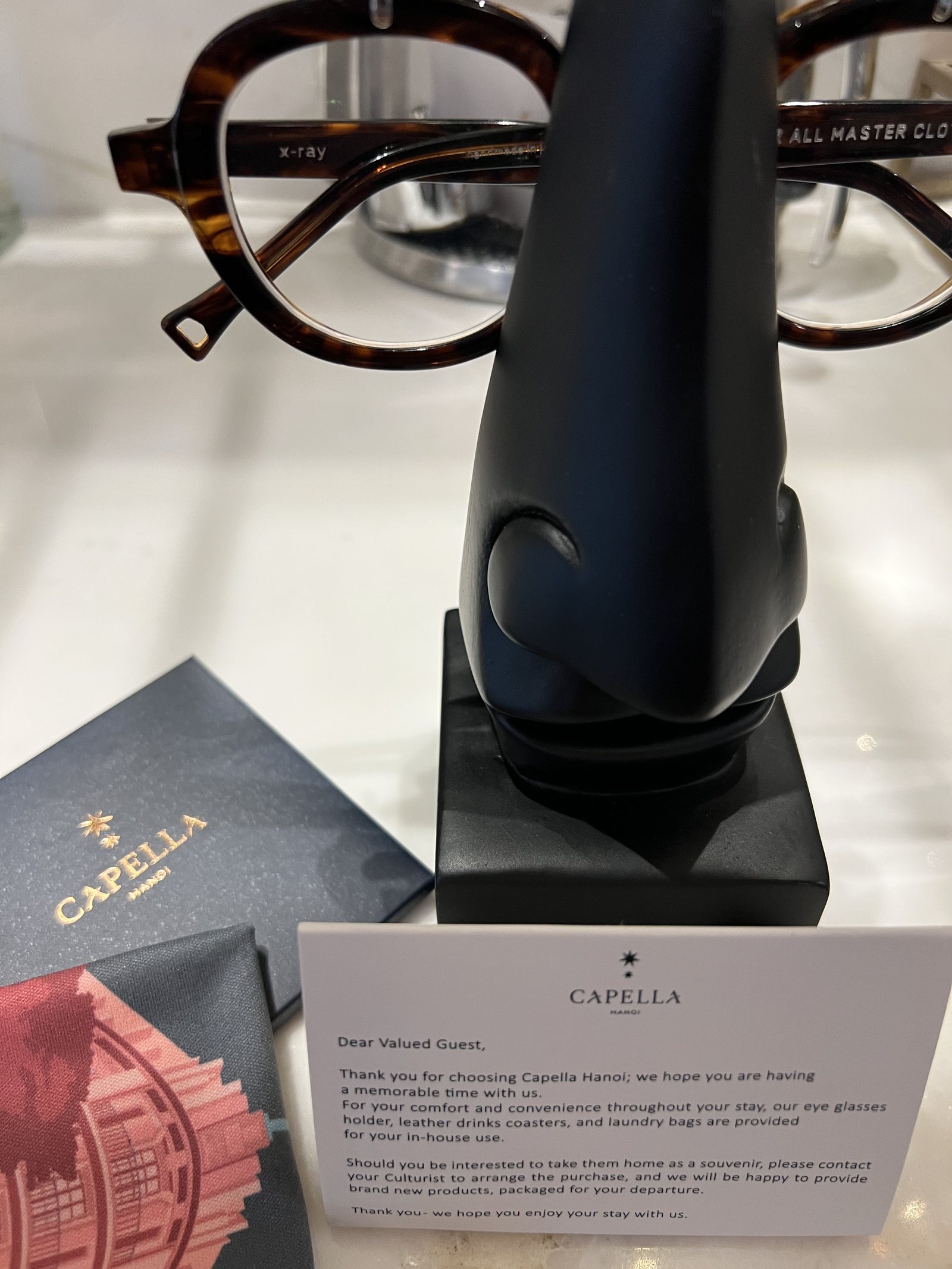
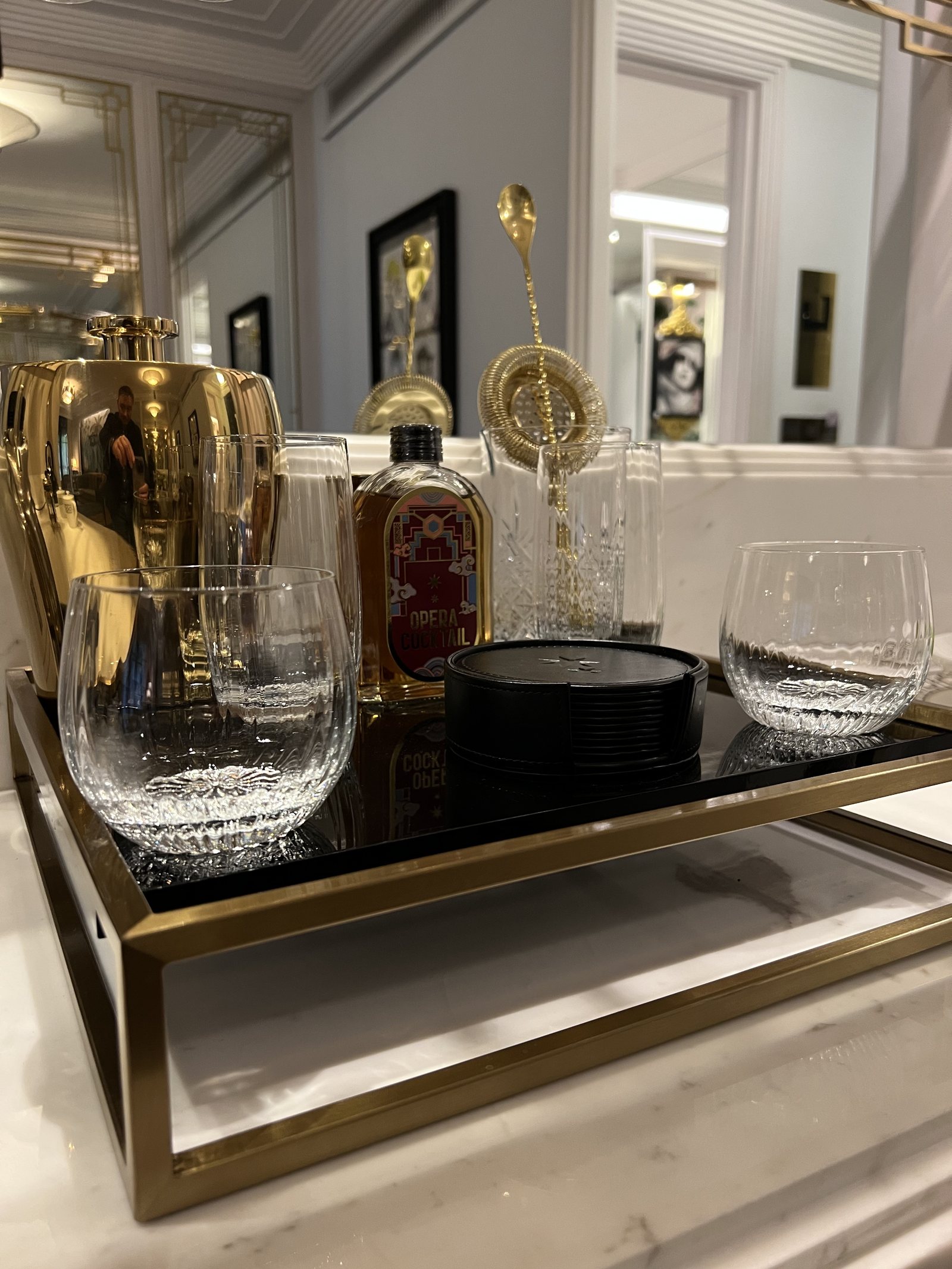
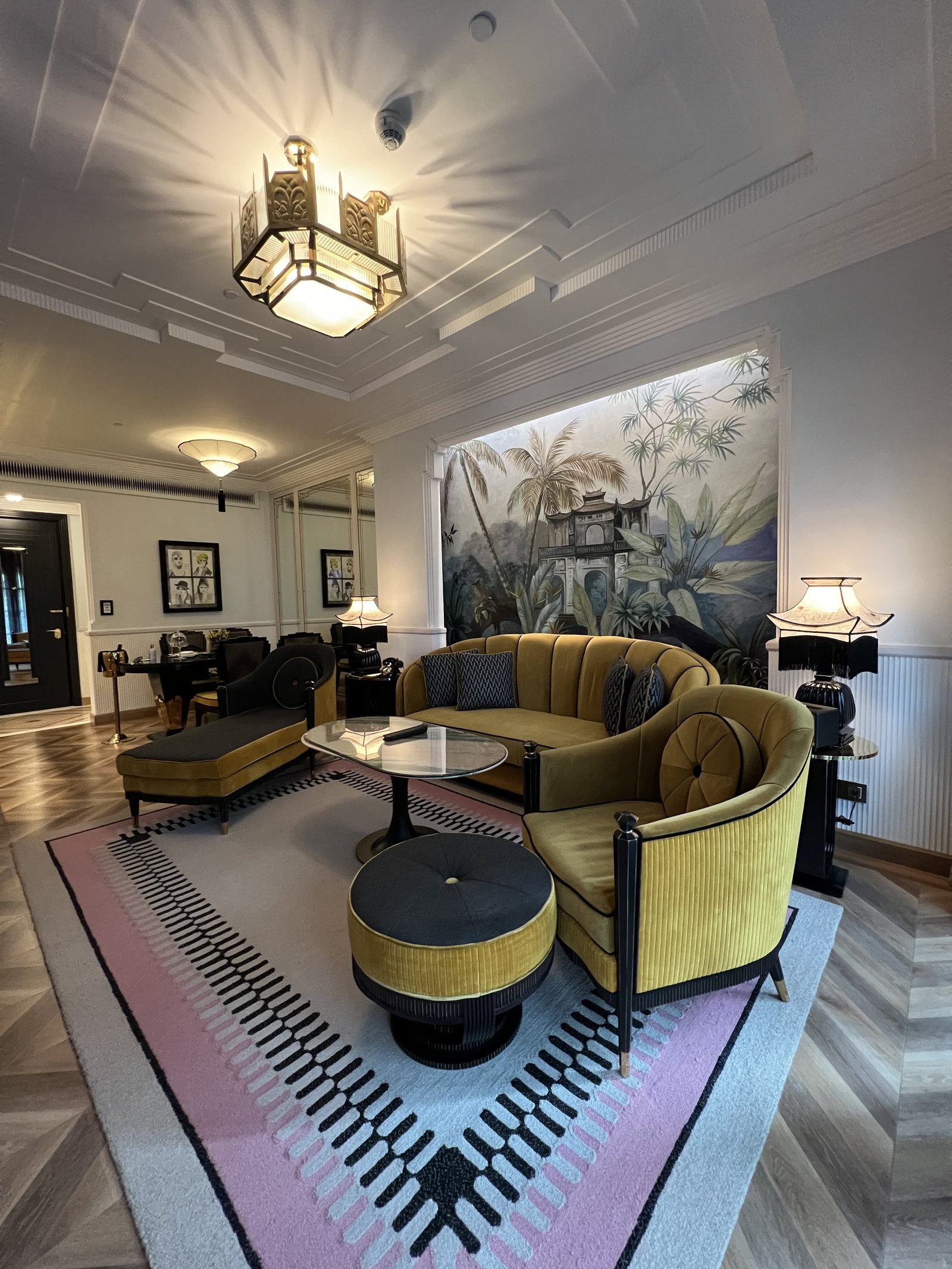
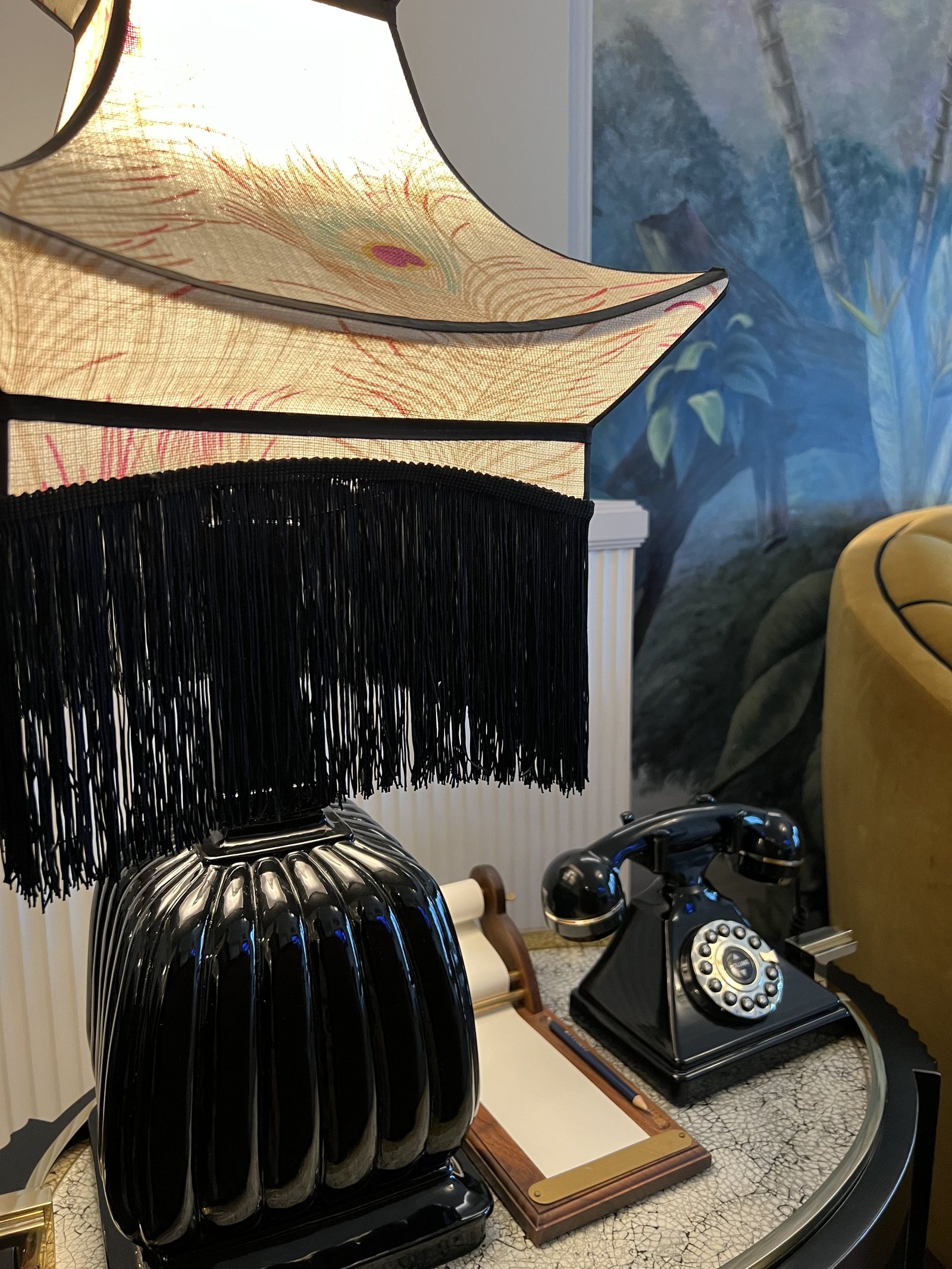
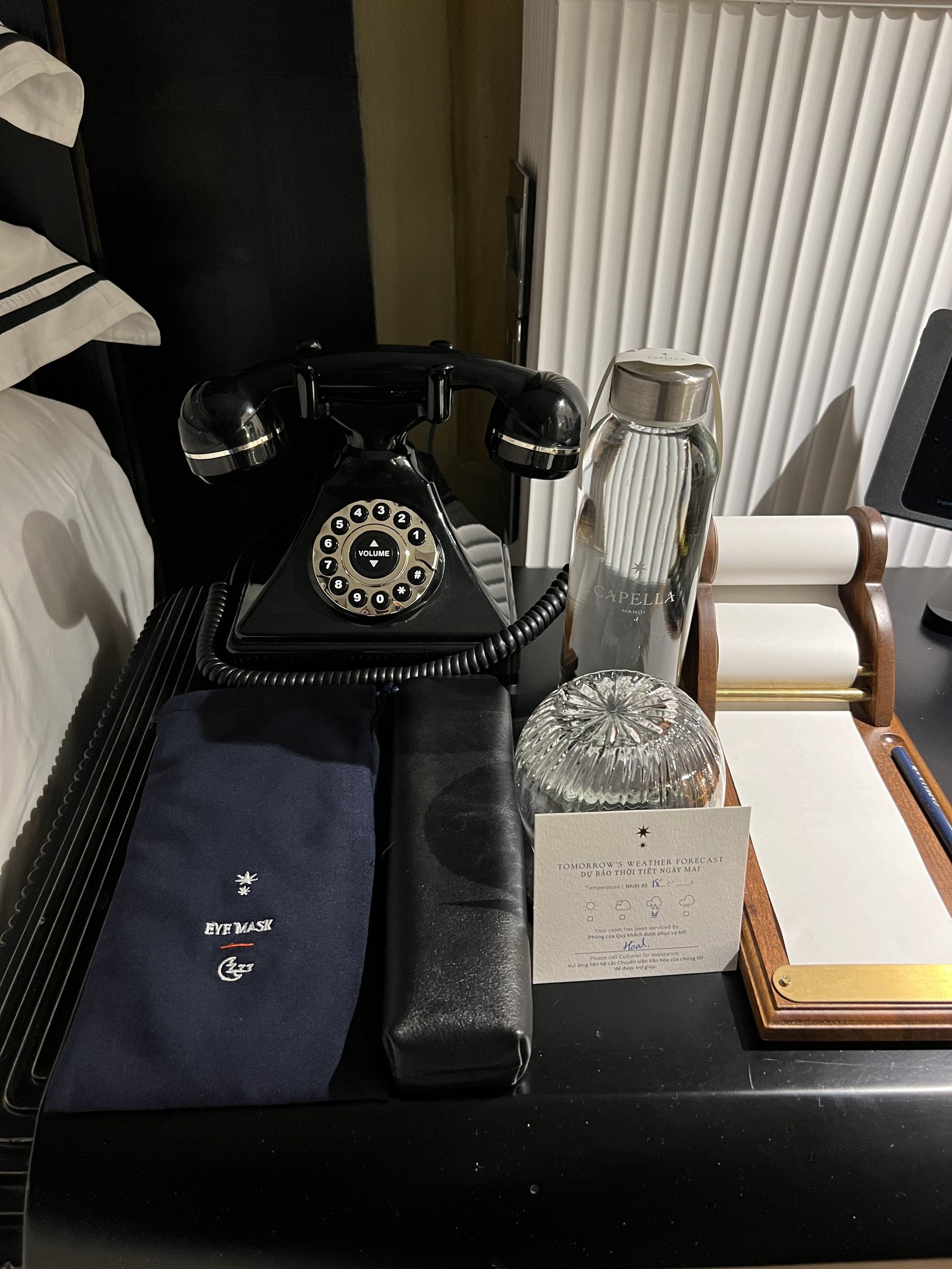
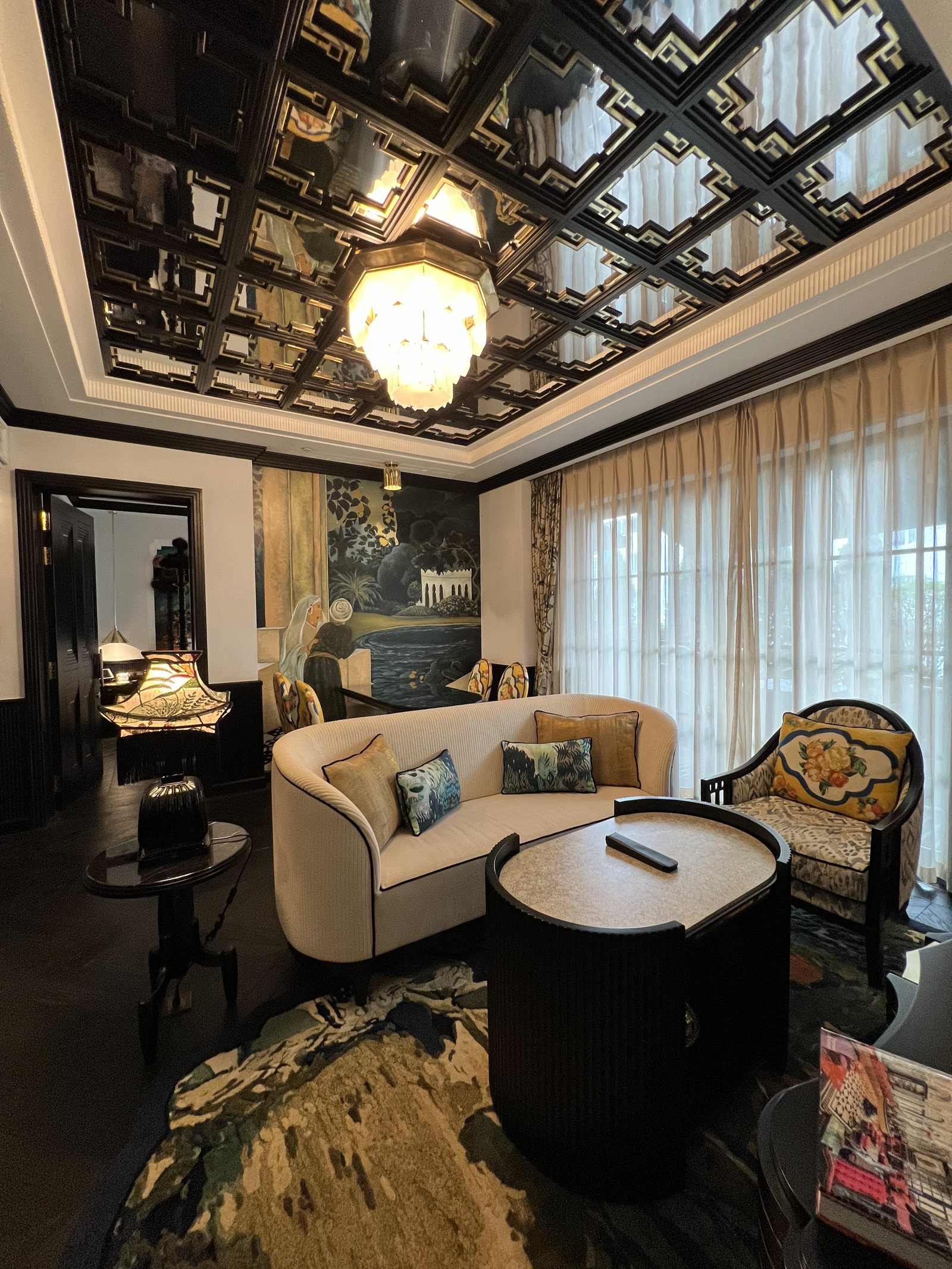
The suite runs as a line of rooms. You come in past the bar, into a sitting room with a sofa, a low table and a French Juliet balcony, then past the bathroom, and the bedroom is at the end. The minibar is included, and the chocolates and nuts in it were better than that word usually means. There is a coffee kit. There is a Marshall speaker. There is a black rotary telephone that works.
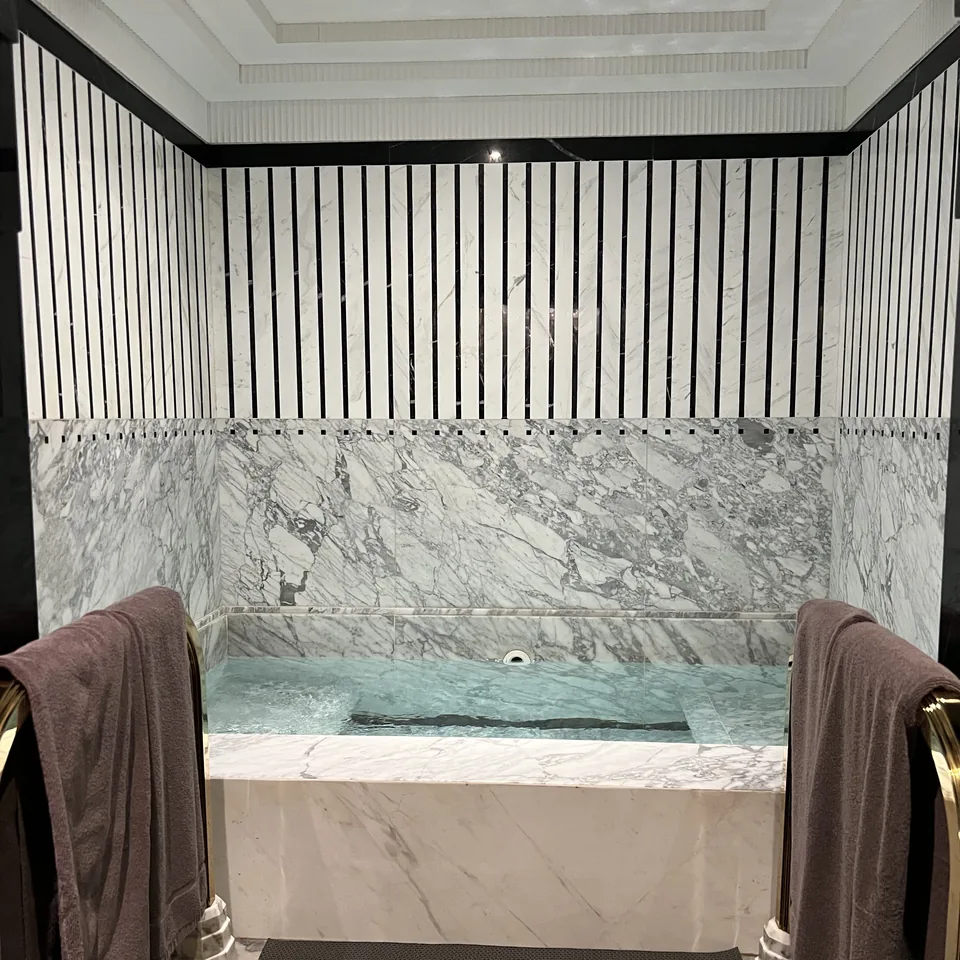
The bathroom is where the money went. Marble on the floor in a chevron, a freestanding ribbed bath, a separate walk-in shower lined in mosaic, a lit mirror at each basin and two deep red robes on the hooks. The robes are the softest I have put on in a hotel and I thought about the suitcase.
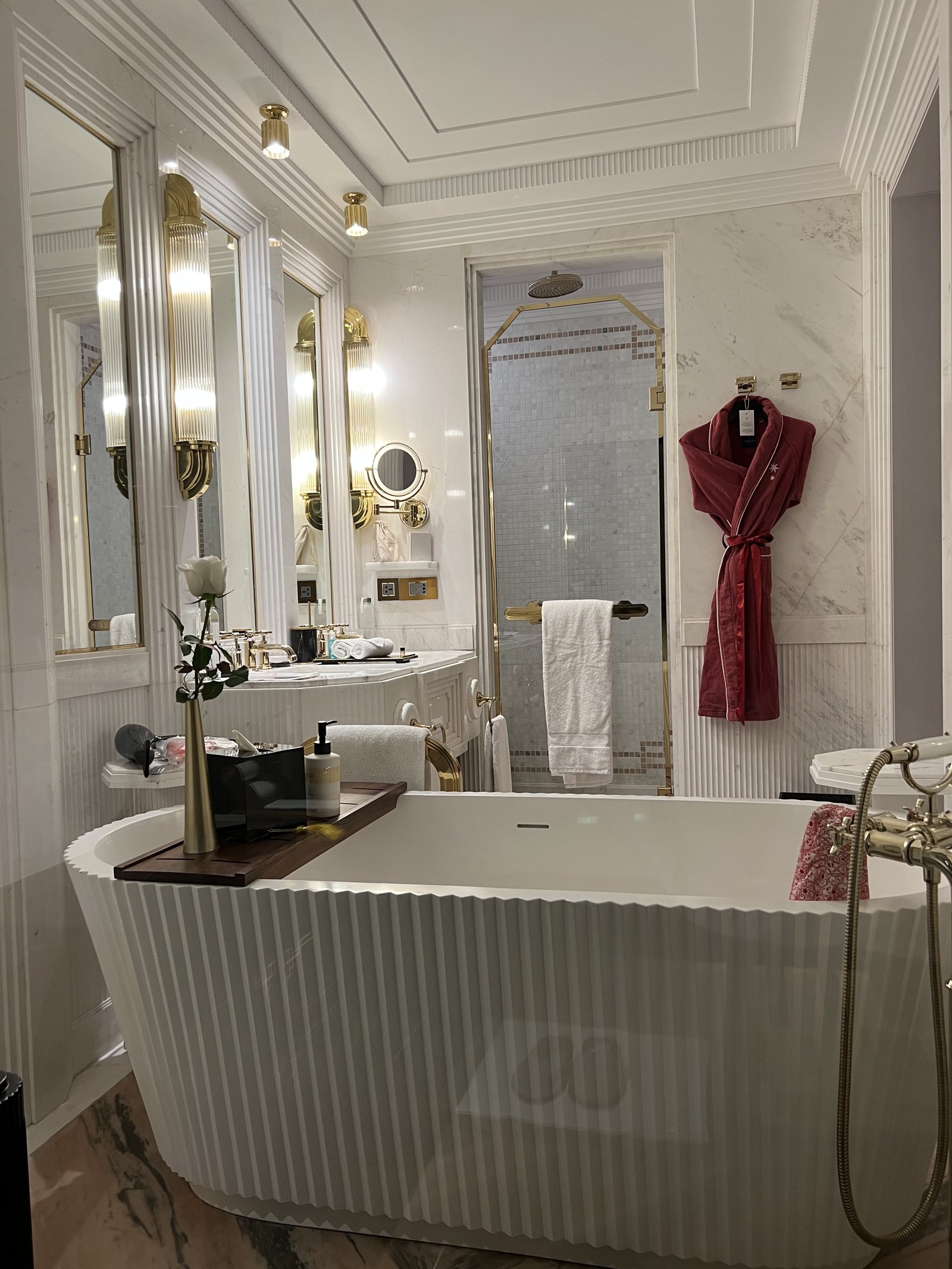
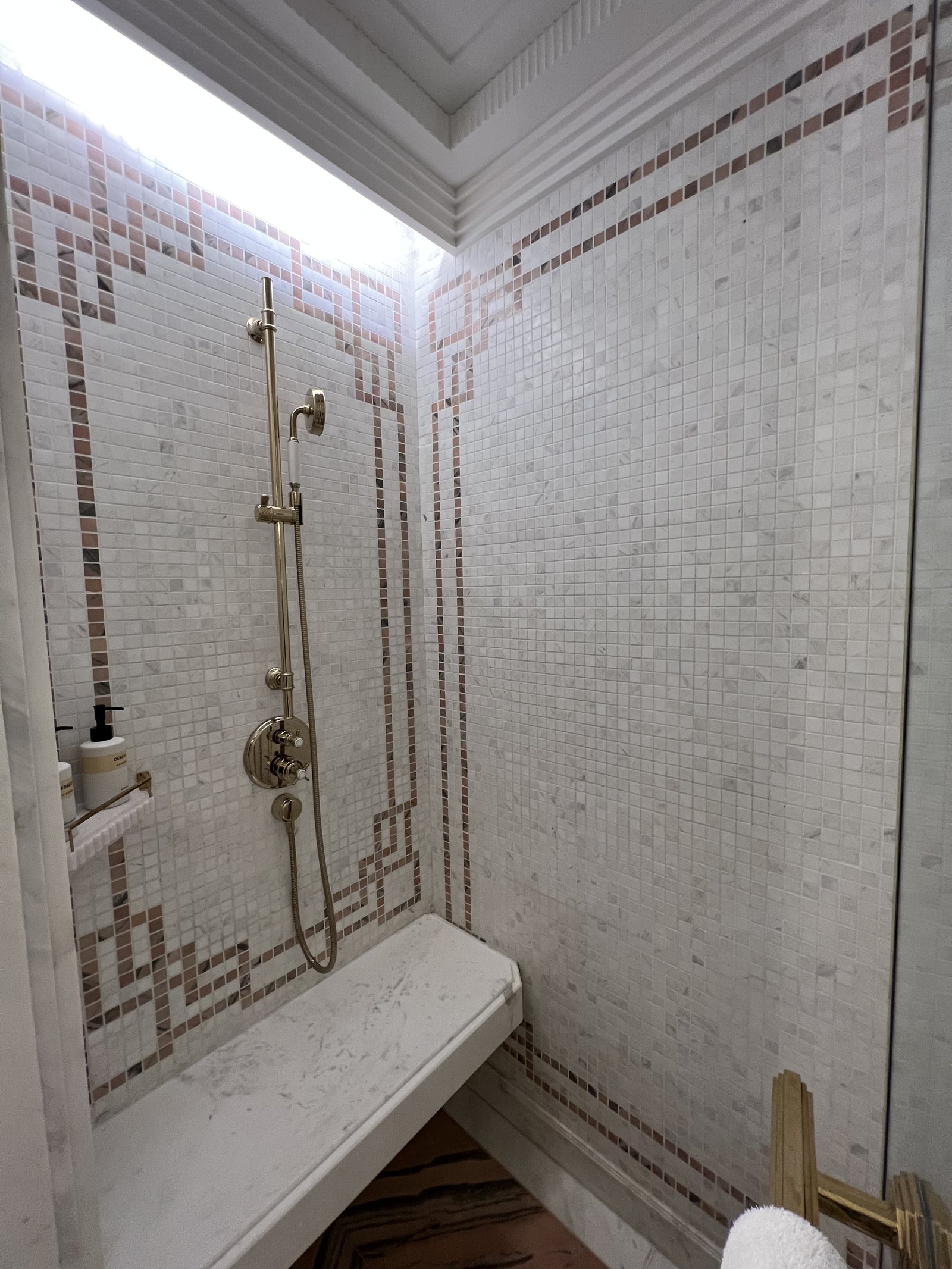
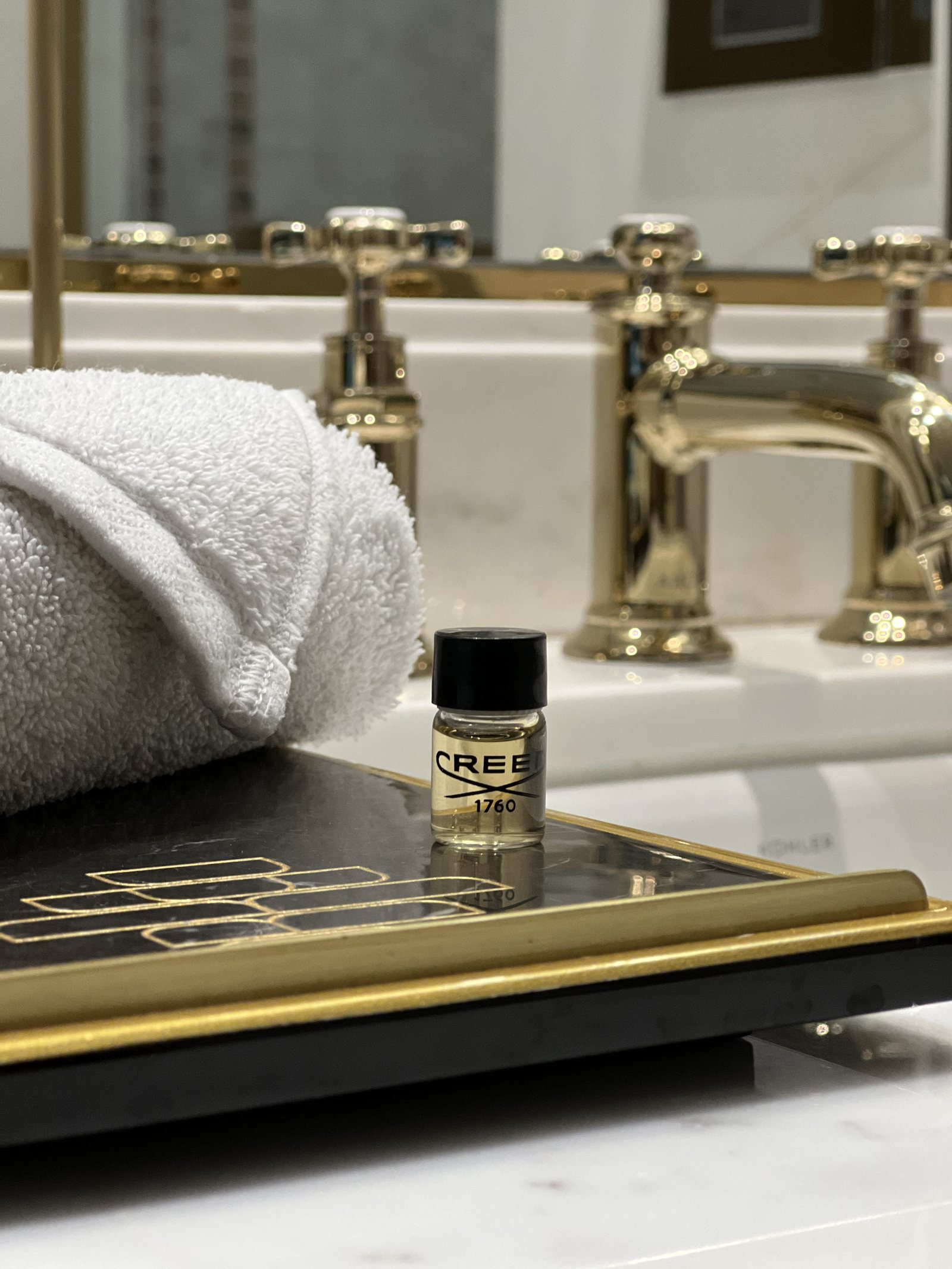
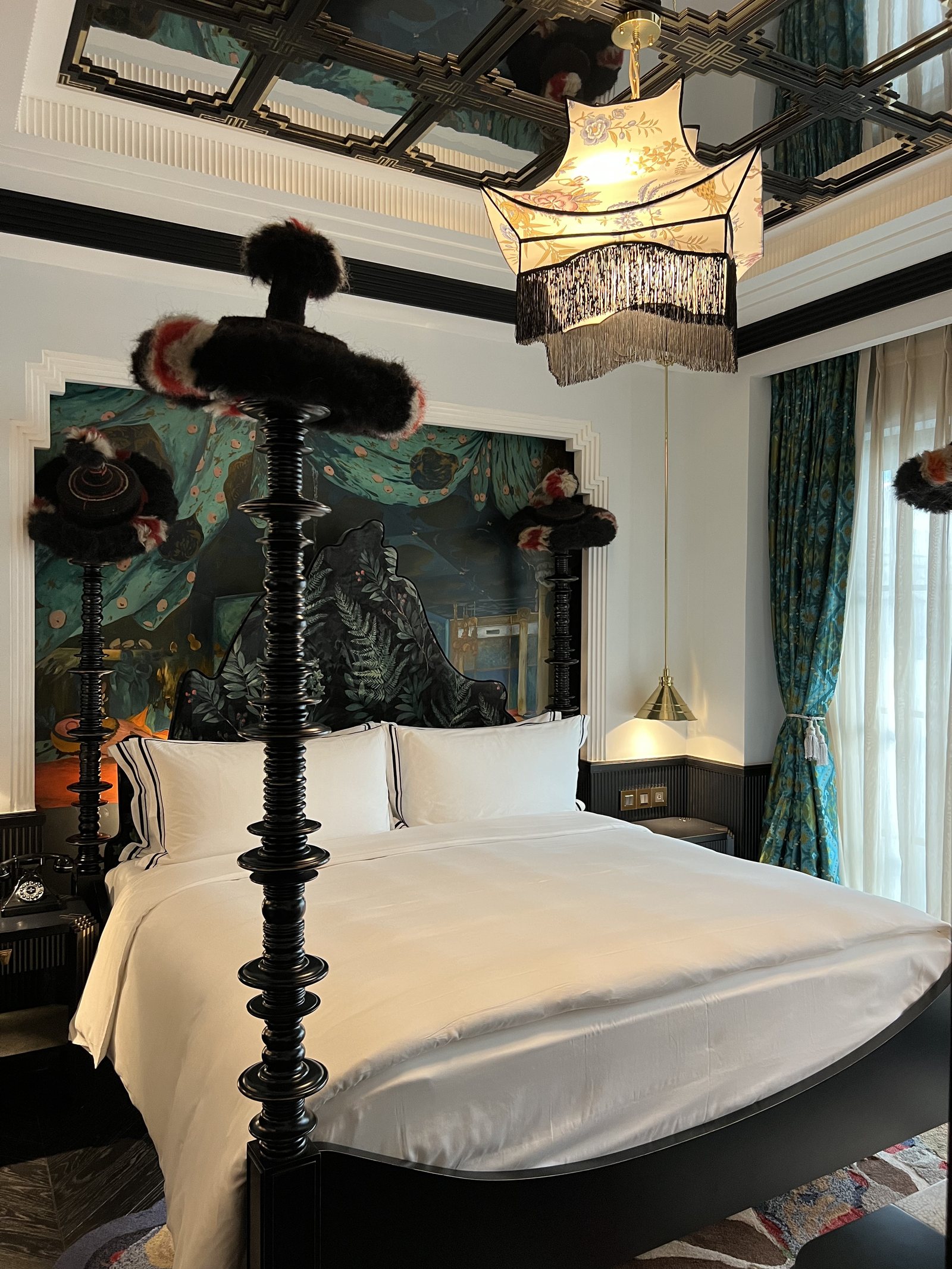
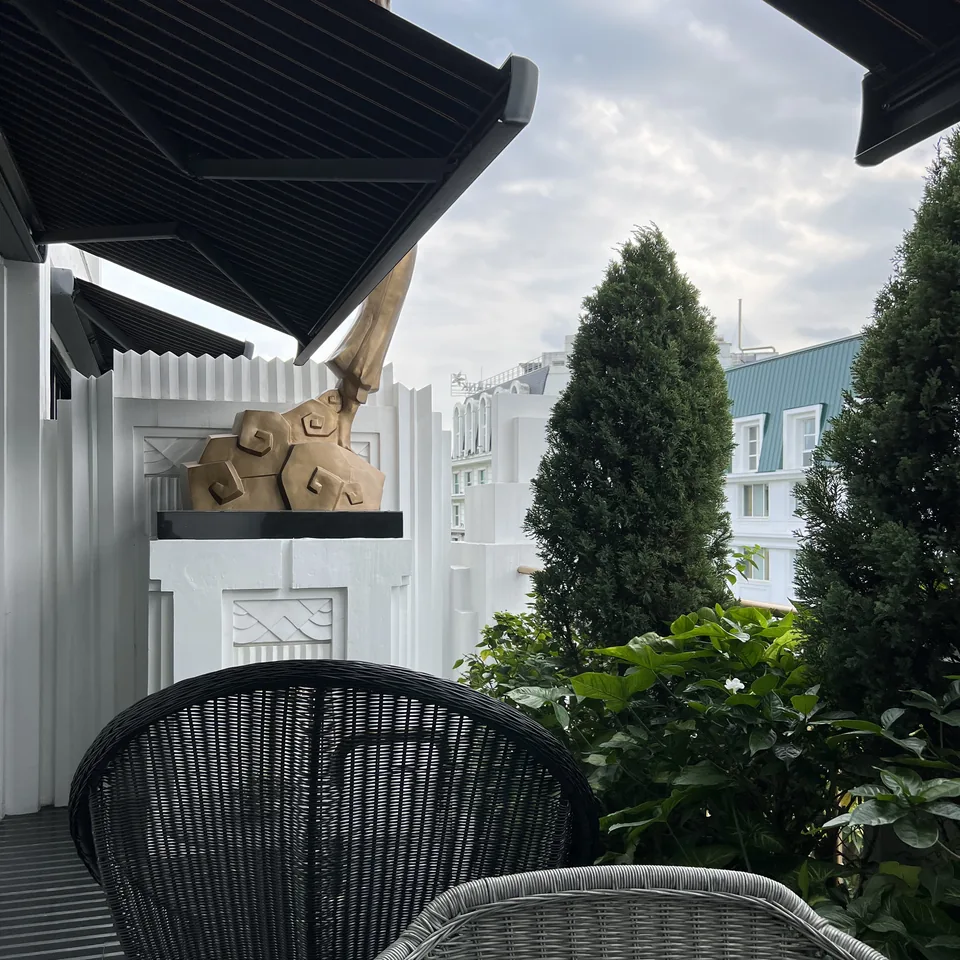
Because the hotel has forty-seven rooms and all of them differ, I asked to see others, and the staff walked me round without making it a performance. One bedroom has a painted mural behind the bed. One has a black four-poster with feathered finials. One suite has its own dining table for six. The top rooms open onto terraces. If you are choosing, the thing to ask is which room, not which category.
What is on the walls
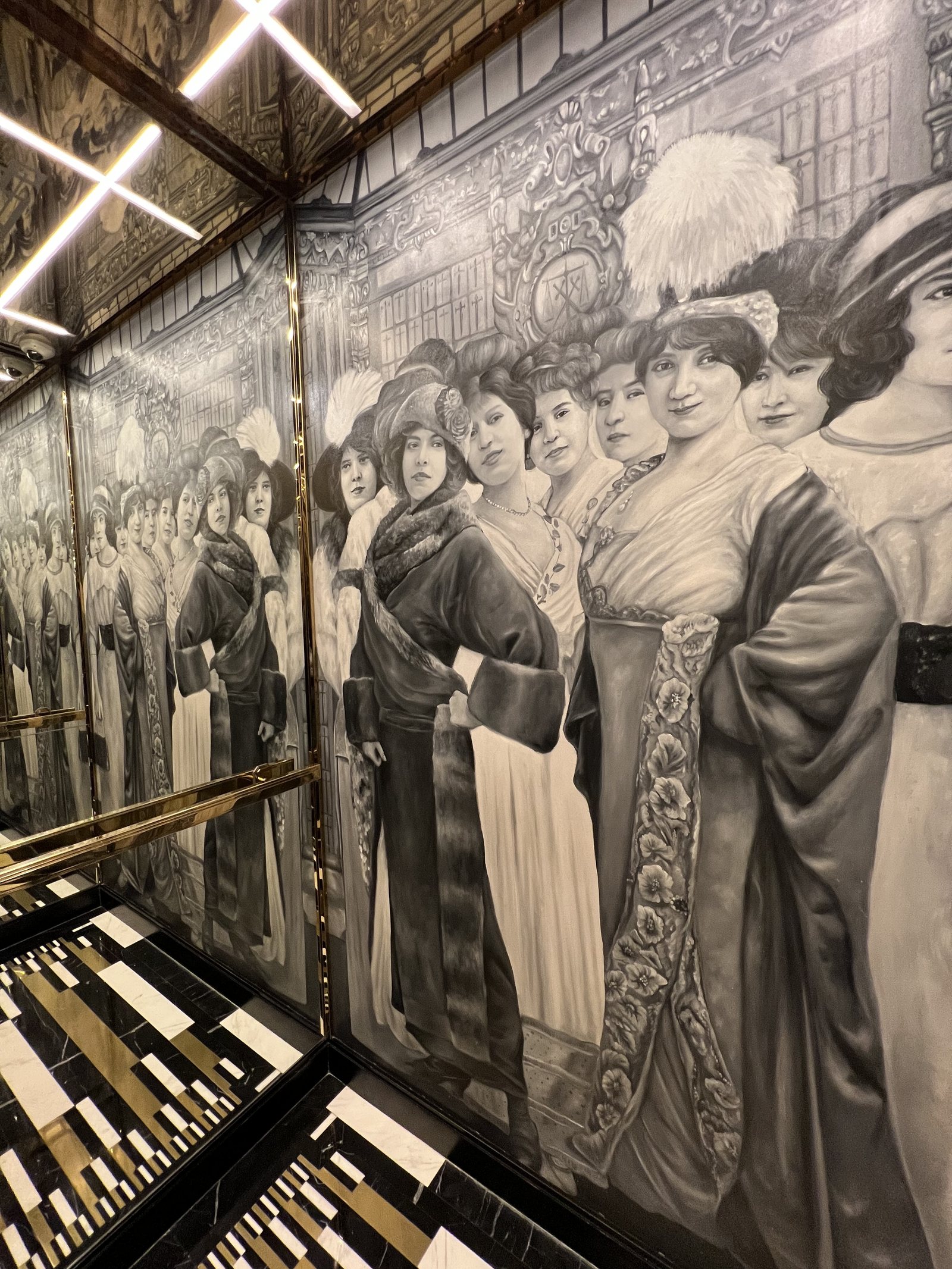
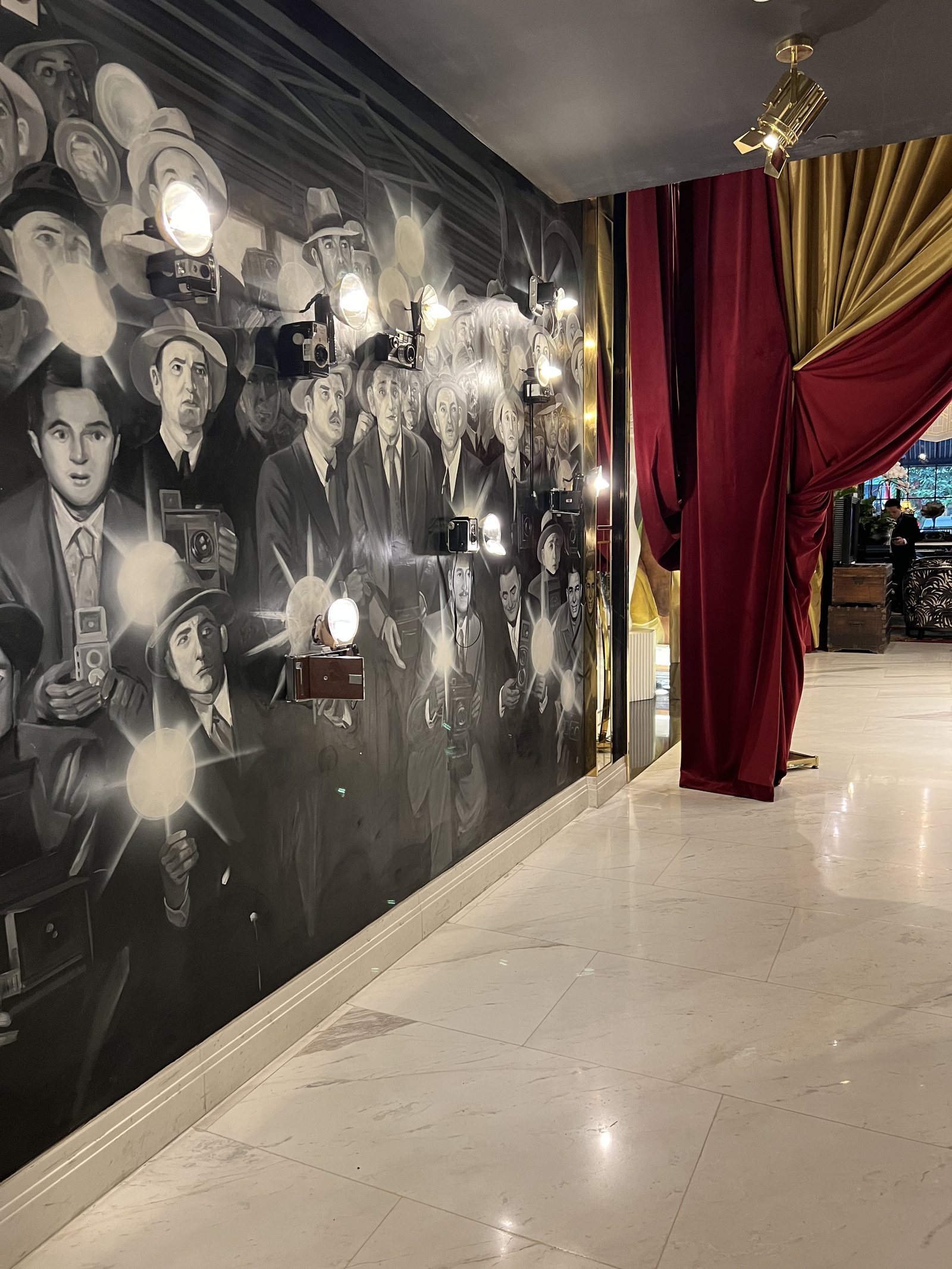
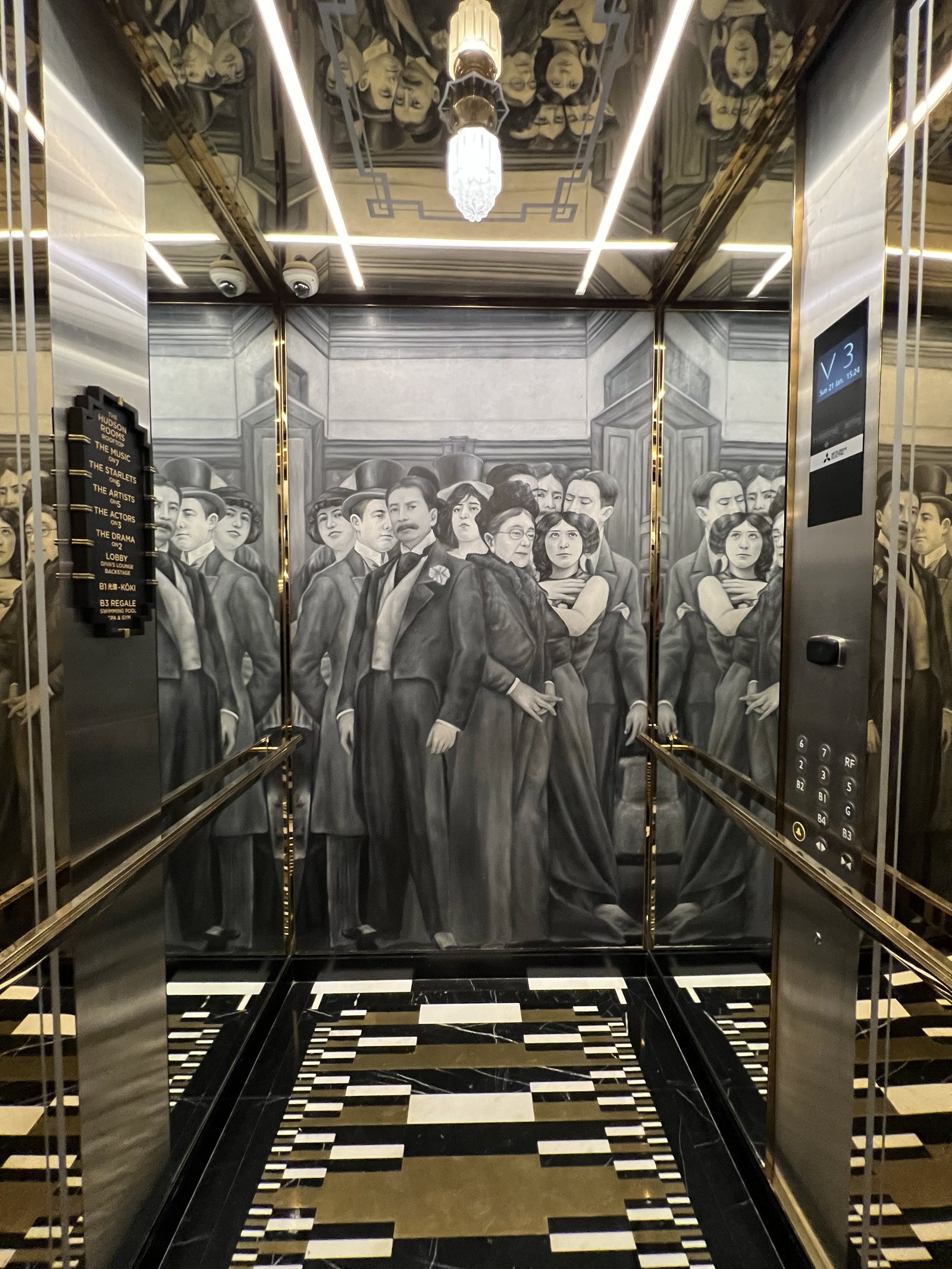
The murals are the part I kept coming back to. There is a corridor of photographers with flashbulbs going off, painted at full height in grey, so that walking down it feels like arriving somewhere you should not be. There is a wall of women in 1910s hats and furs. The lift is lined with a crowd in evening dress who watch you ride. The artist who did the portraits through the hotel is Kate Spencer, and the work is specific enough that you can tell the figures apart.
Backstage, and breakfast
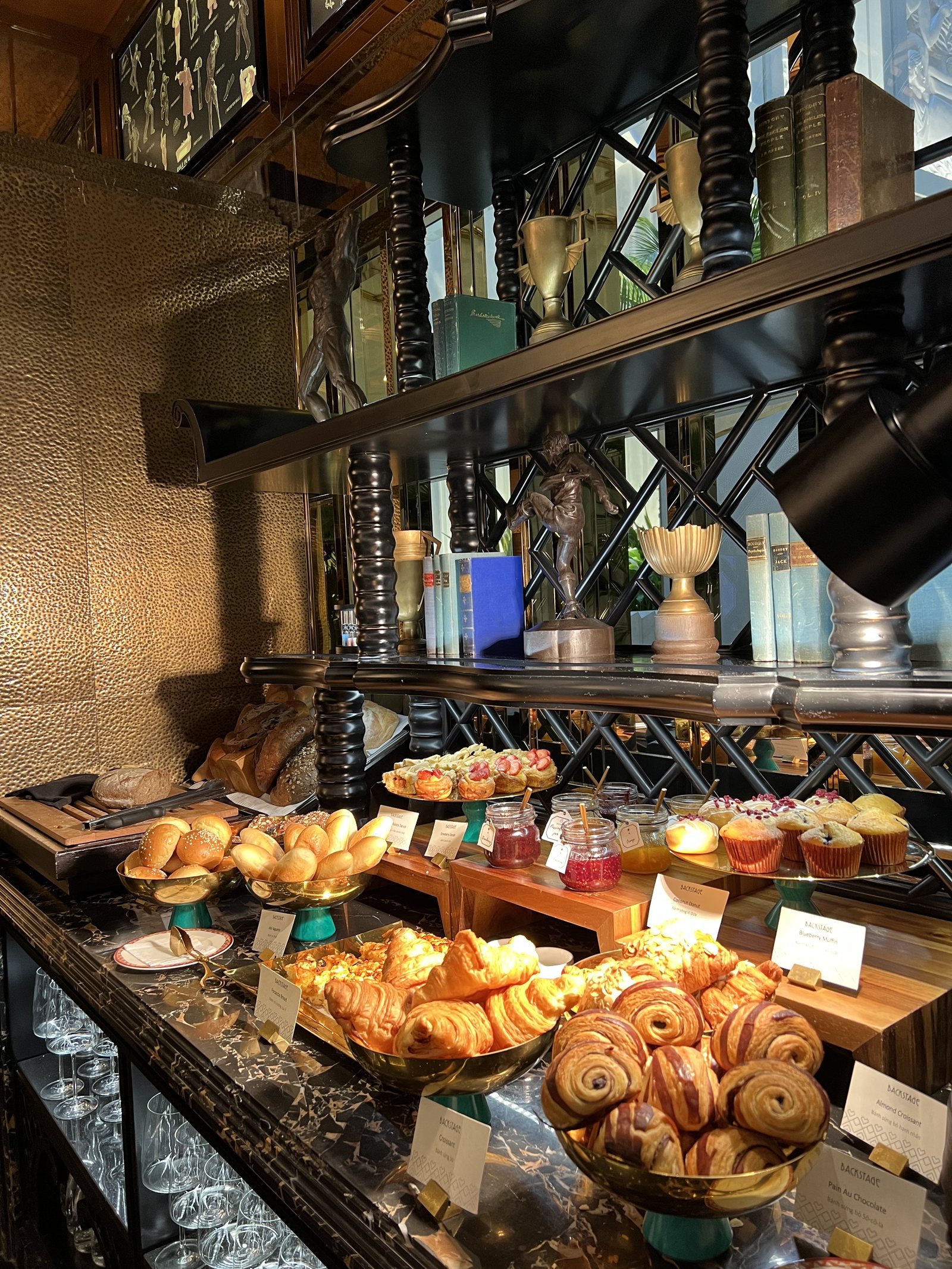
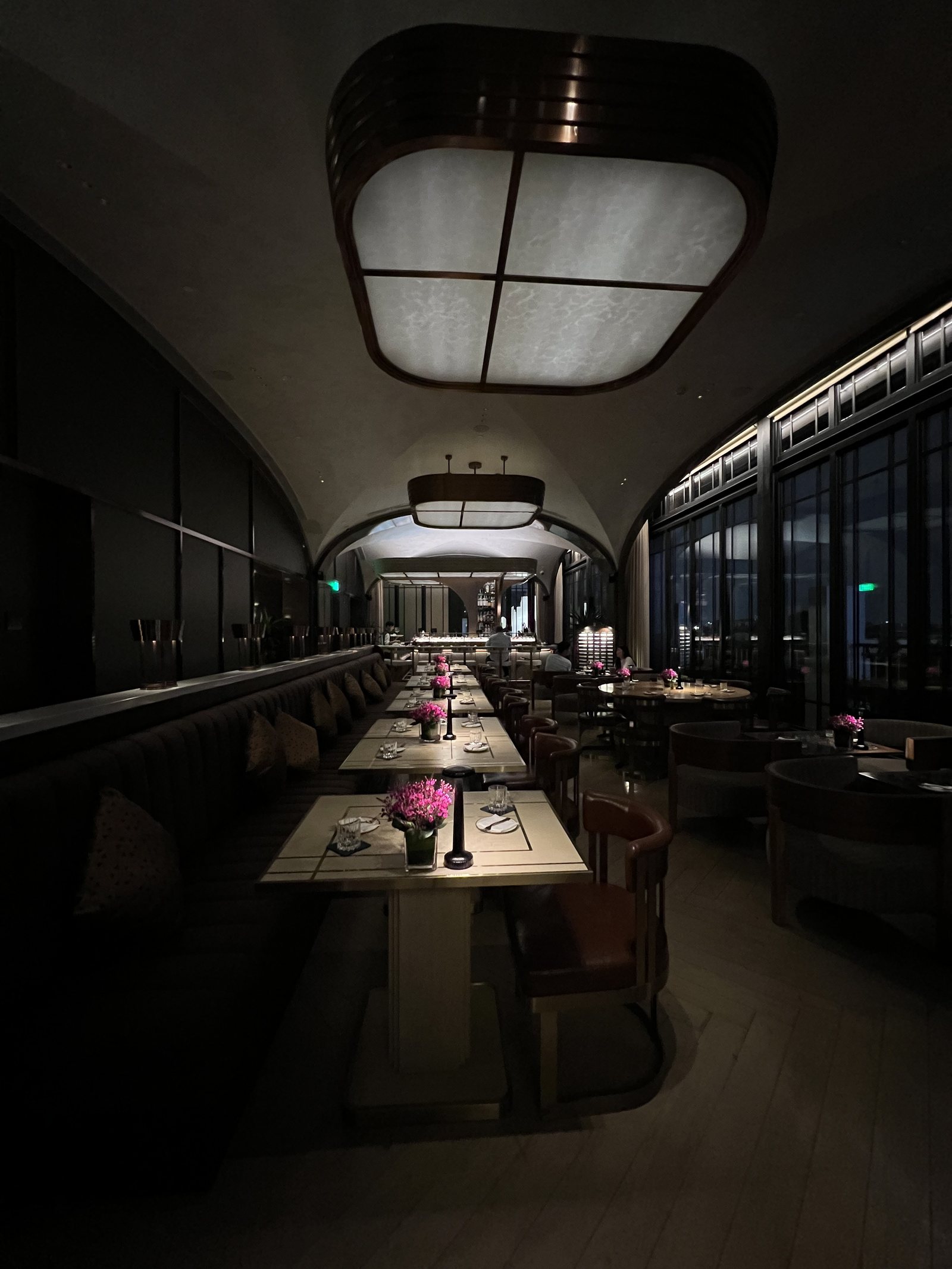
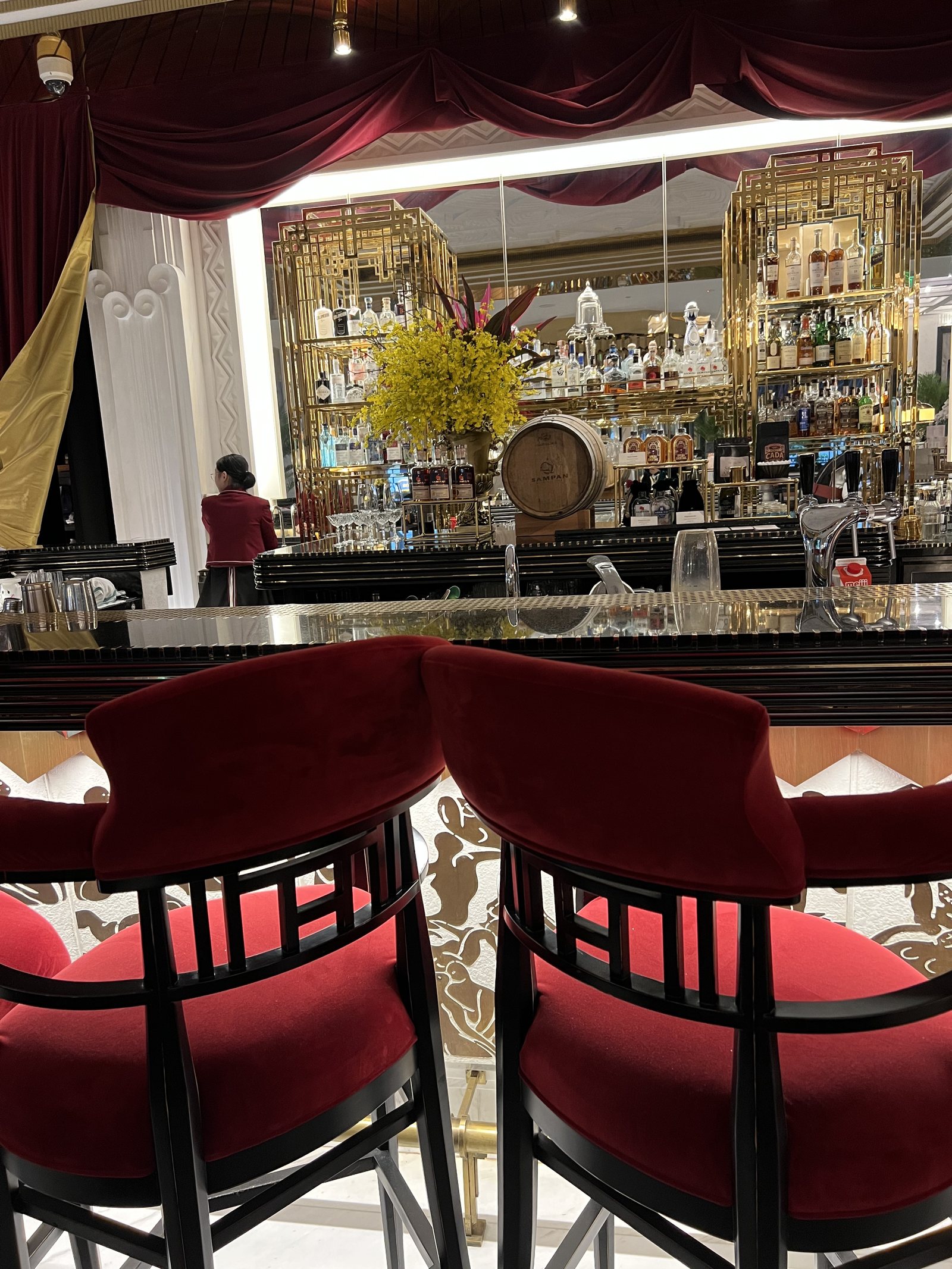
Backstage is the ground-floor restaurant, under a coffered ceiling of gold squares with lights set into them, with red chairs and black lacquer tables. Michelin has listed it. It runs all day and it is where breakfast happens.
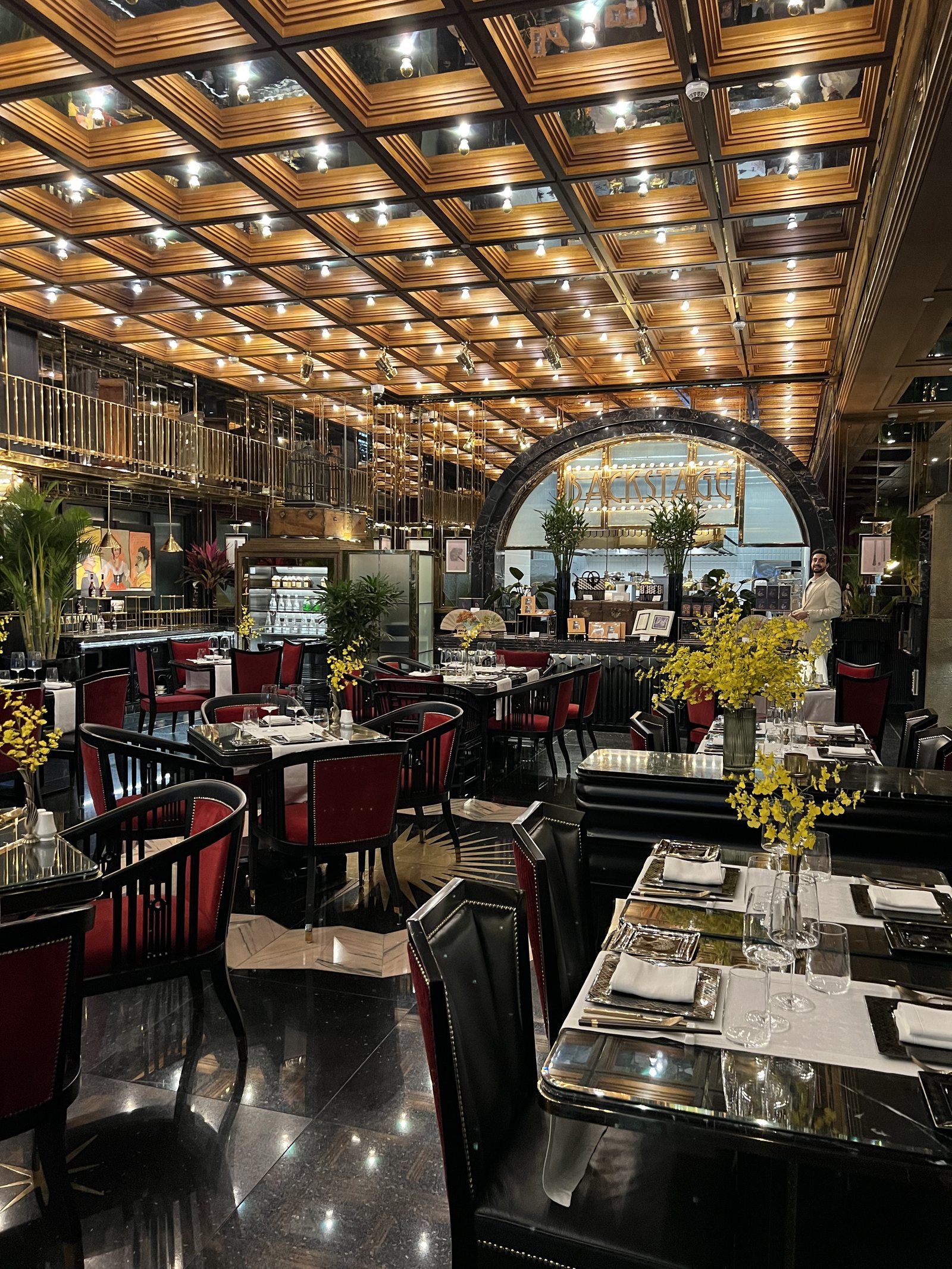
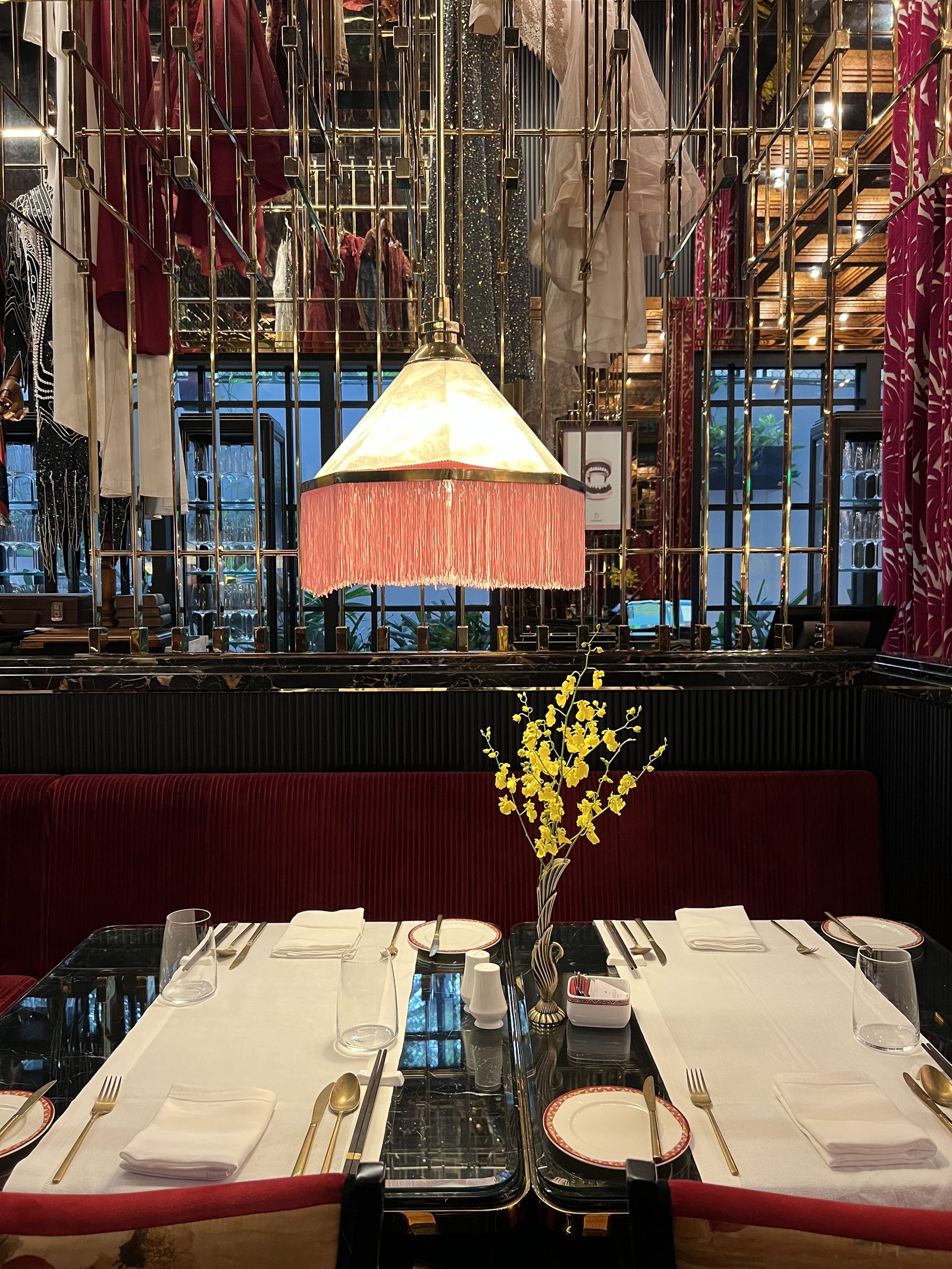
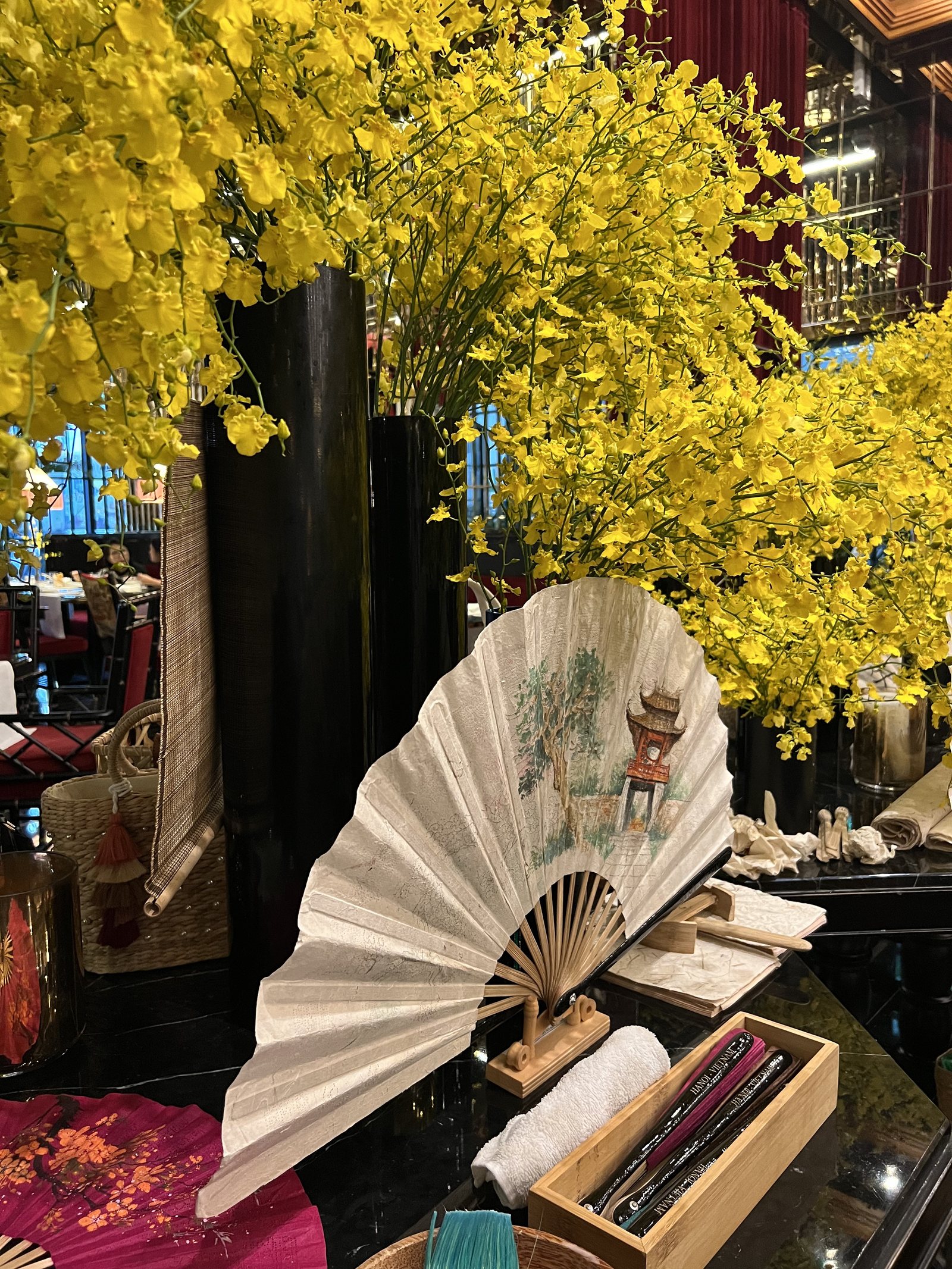
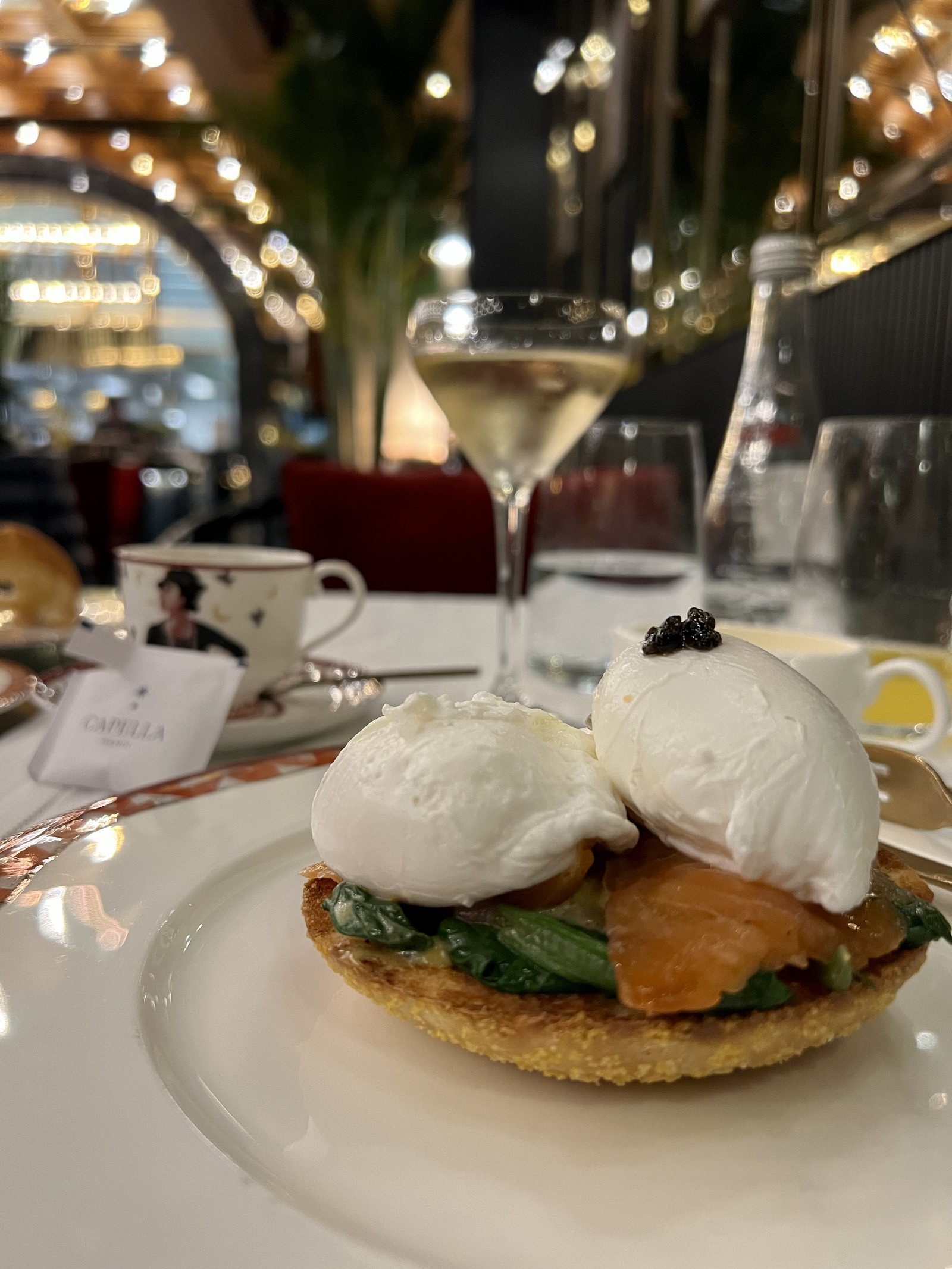
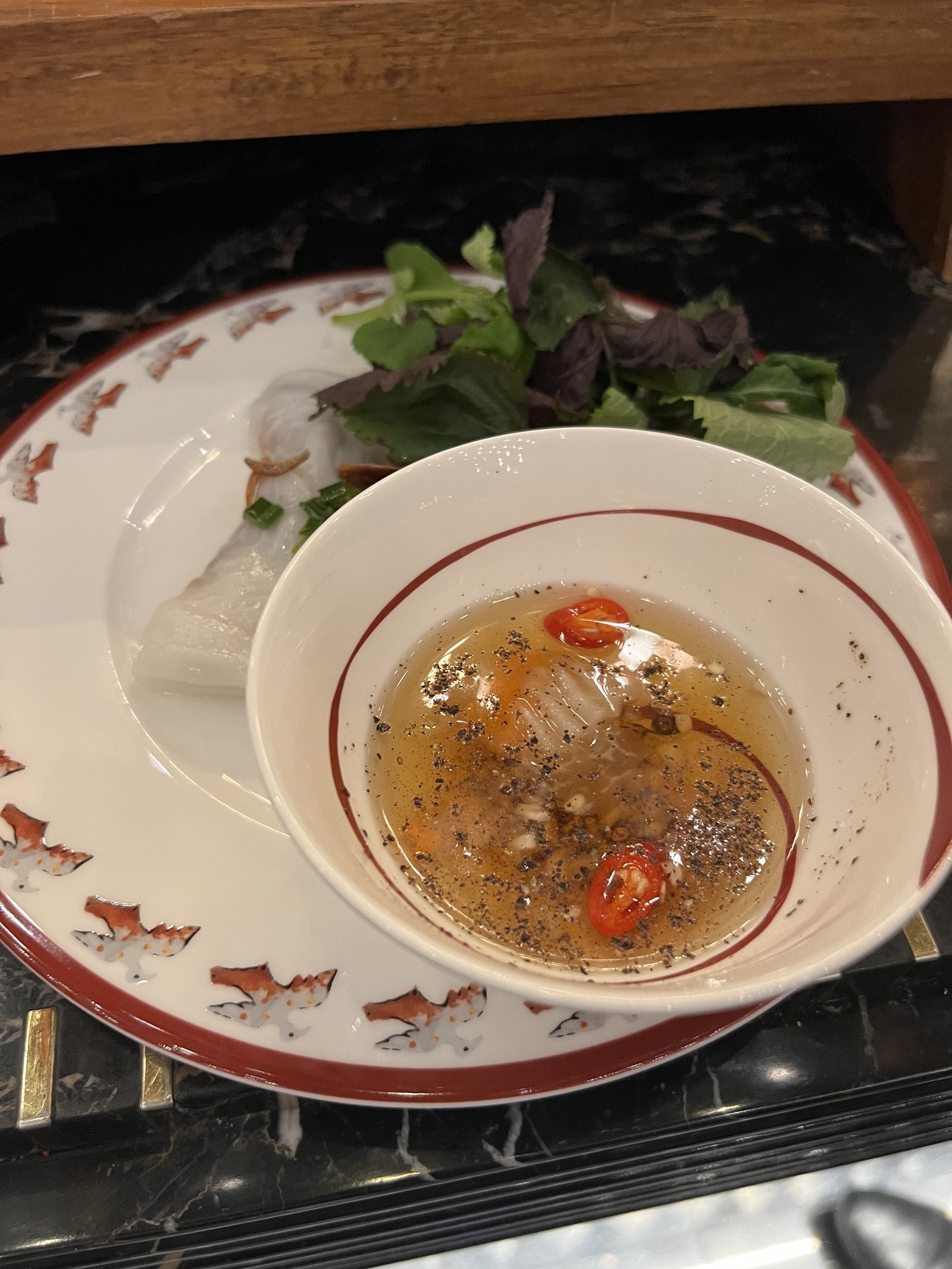
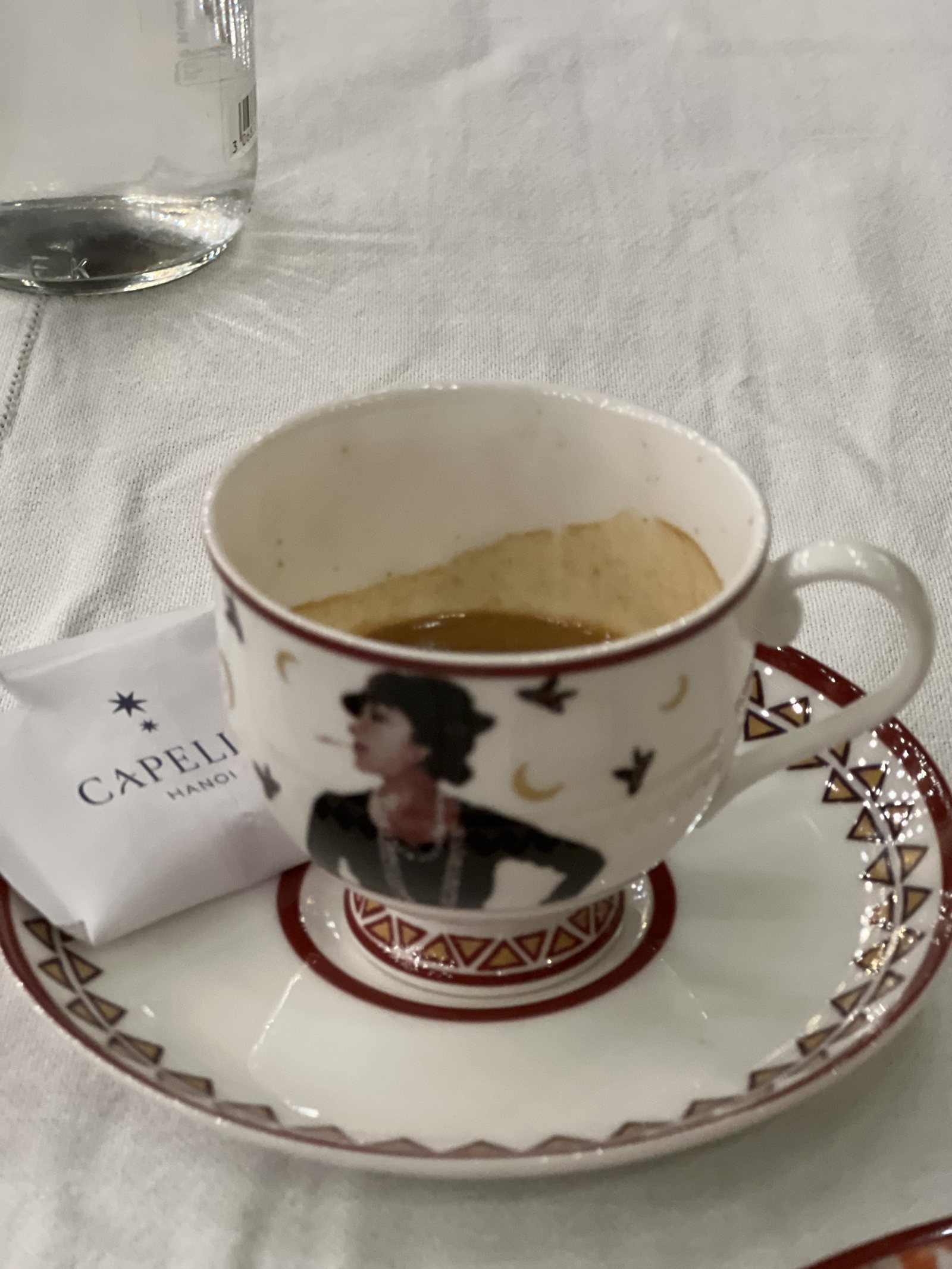
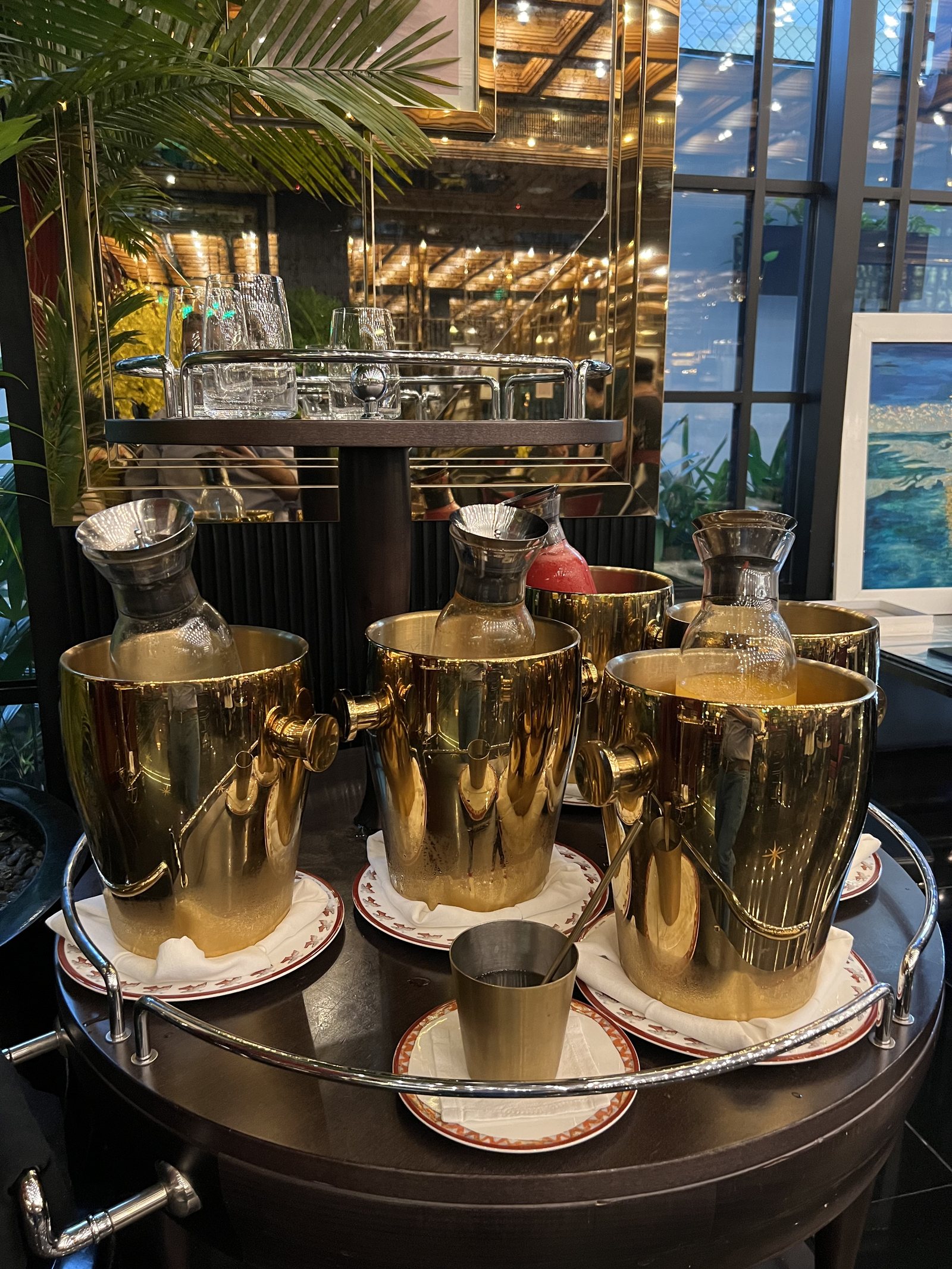
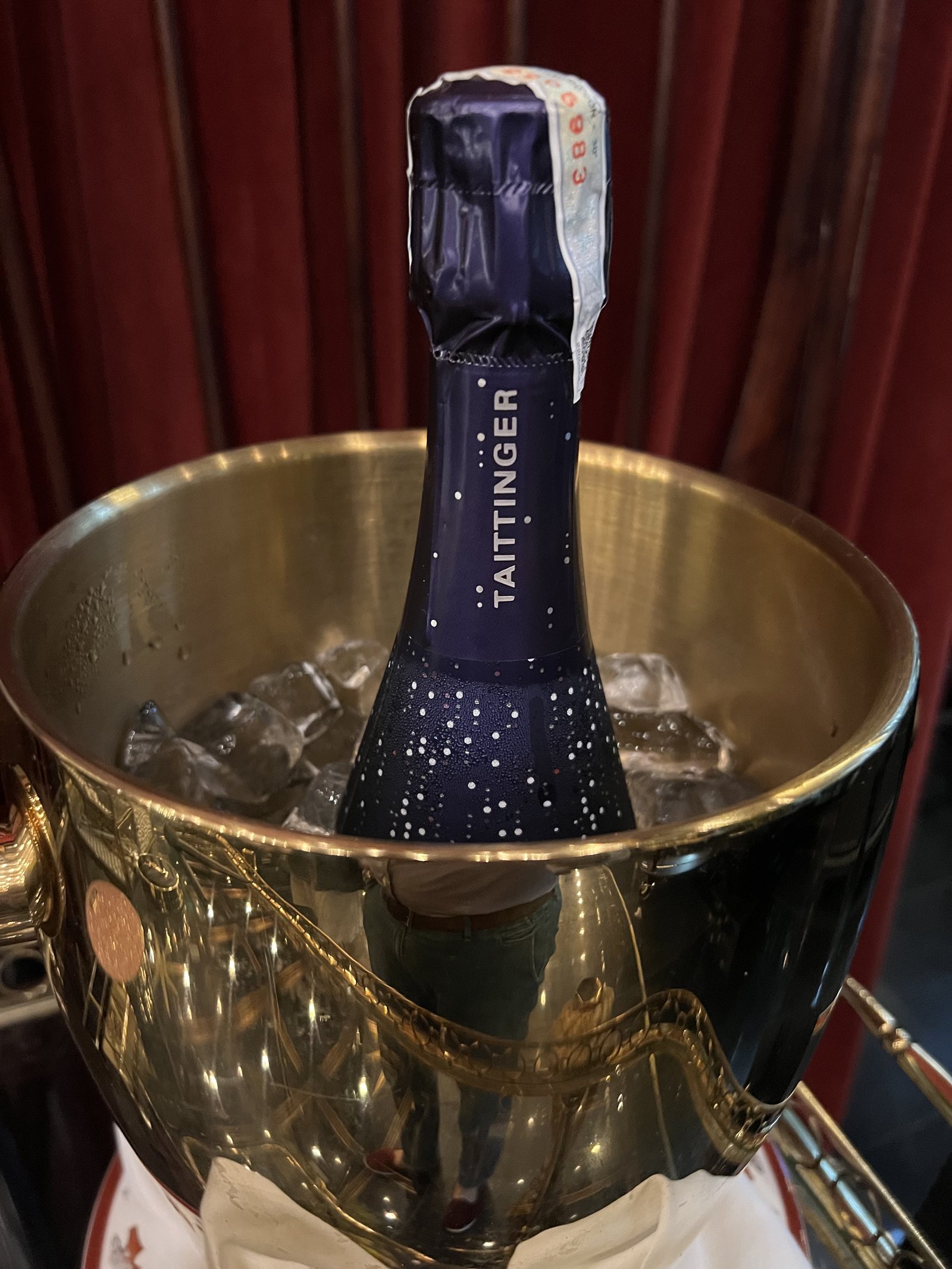
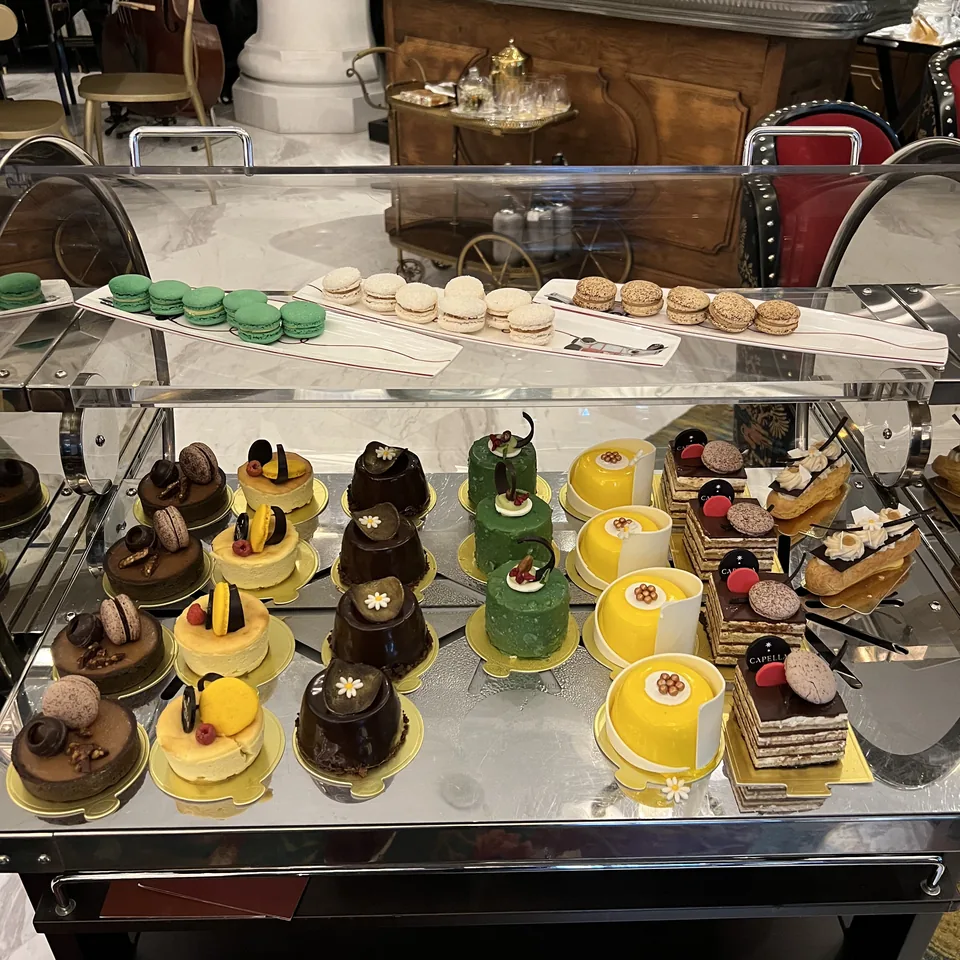
Breakfast is the meal I would plan around. There is a counter of pastries and a cold table, and then a kitchen that cooks Vietnamese to order: pho, bun cha, bread rolls with the herbs and the chilli brought separately. There is a long list of fresh juices. There is champagne, and on my stay it was Taittinger. The china has a 1920s face painted on each piece.
La Grotta
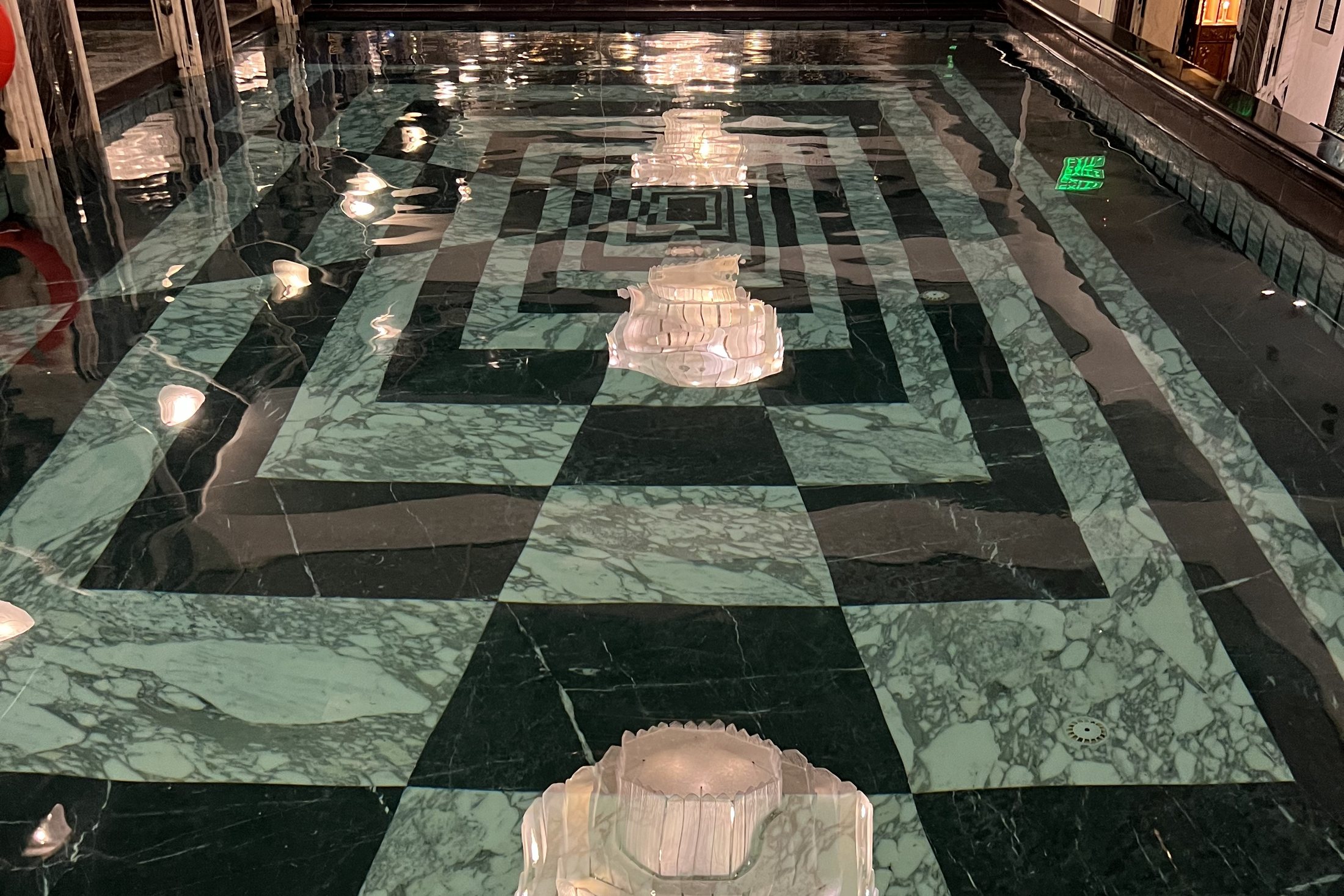
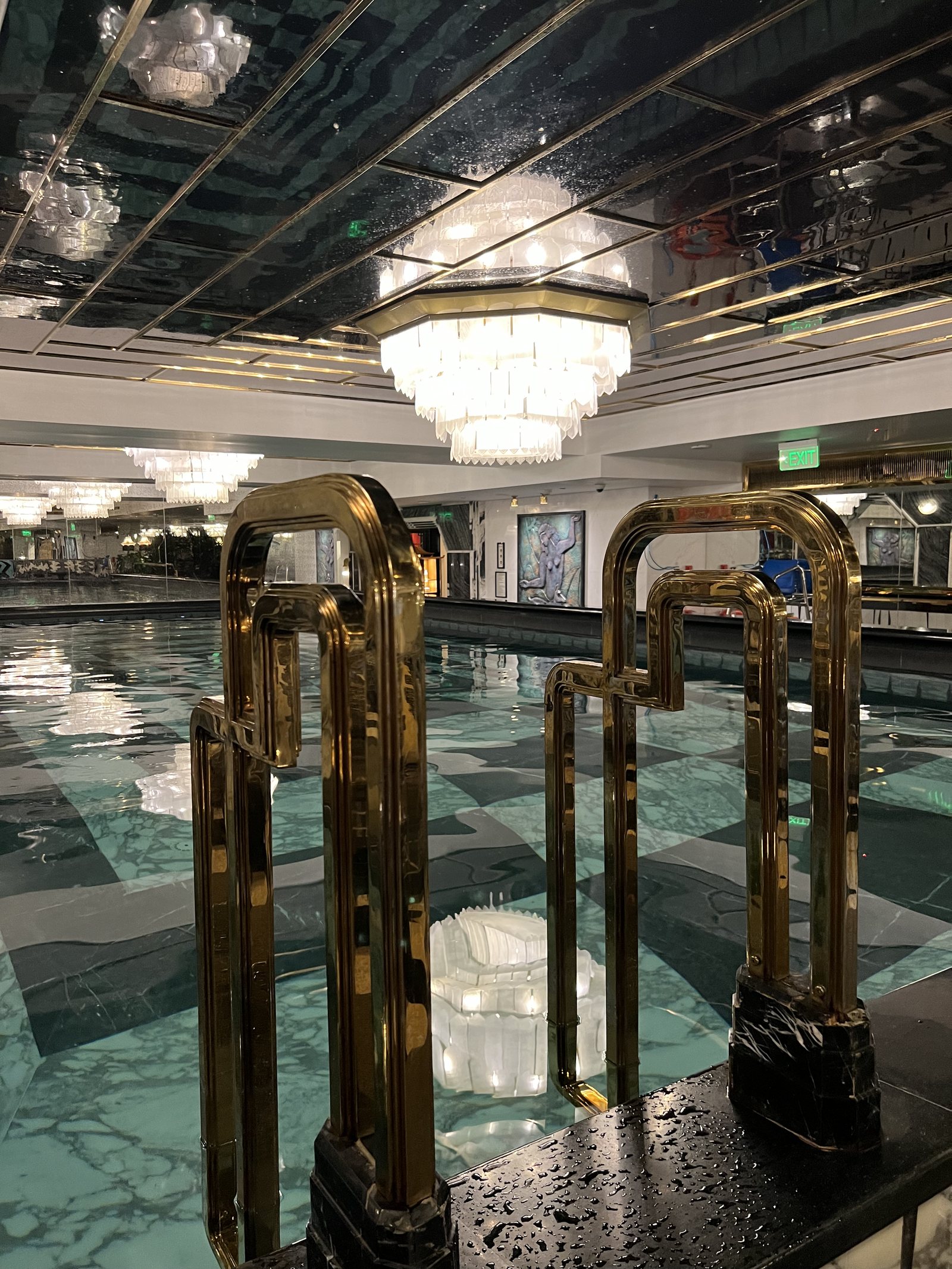
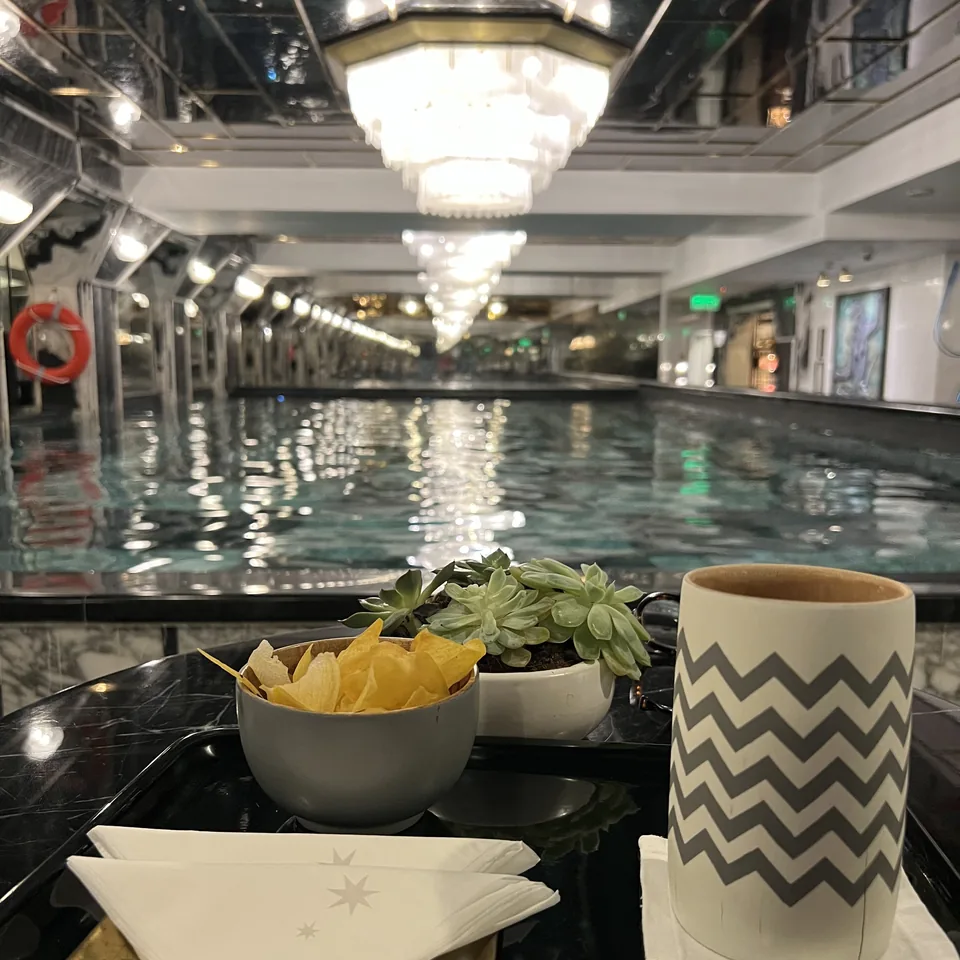
The indoor pool is the single best room in the building. It is long and narrow, the floor around it is laid in green and white marble in a diamond pattern, the ceiling is mirrored, and a line of lit glass domes runs the whole way down. When you arrive somebody brings a drink, a bowl of crisps and a cold towel. I swam in the late afternoon with nobody else in the water and it was the quietest half hour of the trip.
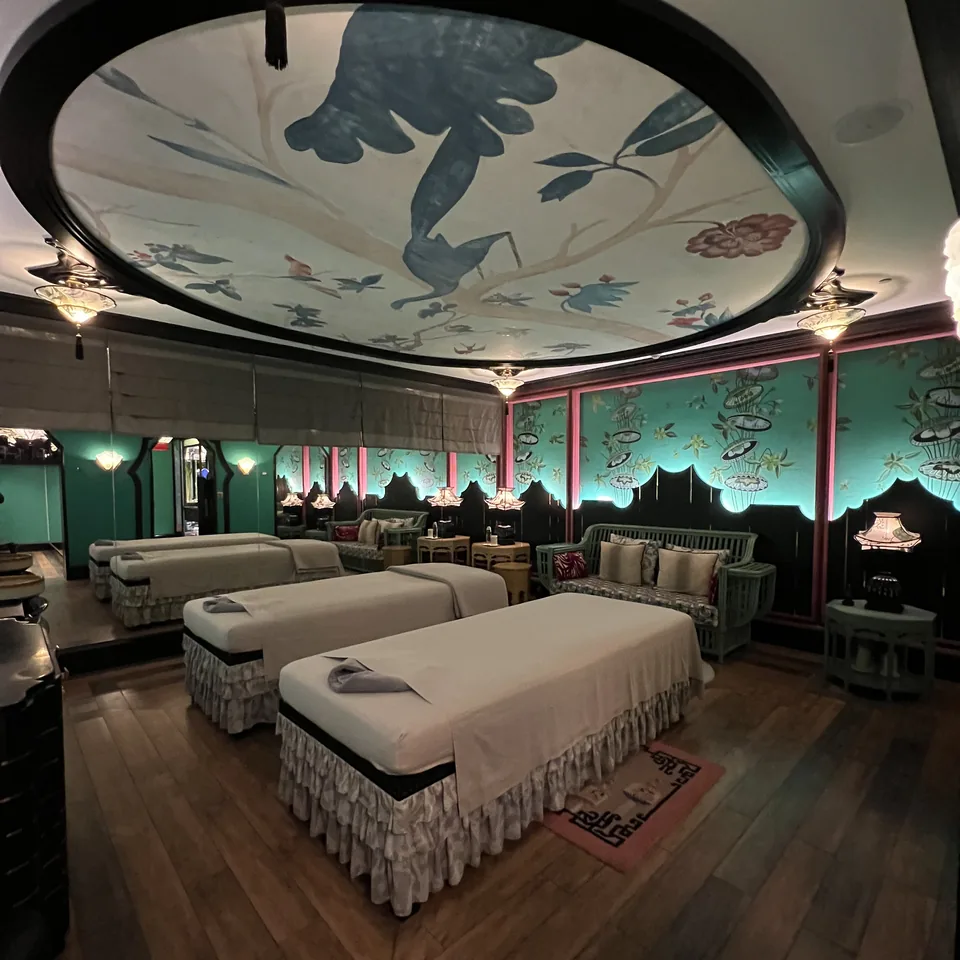
Auriga is the spa, and I walked it without booking a treatment, so I can tell you what the rooms look like and nothing about the hands. The treatment rooms are green and gold with painted ceilings, there is a double room, and there is a hydrotherapy area to use afterwards. If the spa is part of why you are coming, book before you arrive.
The evening
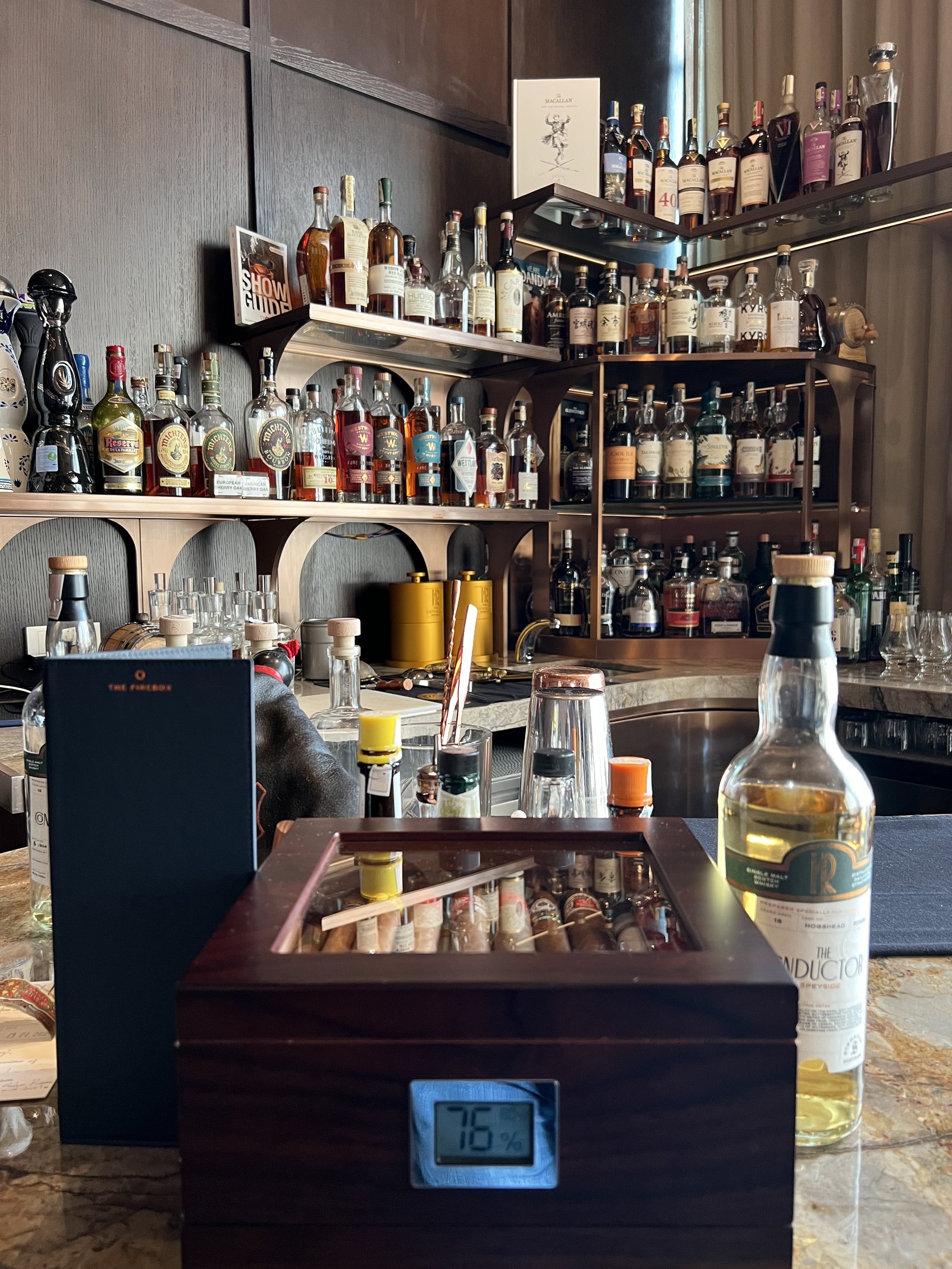
The ritual in the Living Room is at the centre of the day here. Champagne poured at the table, cocktails from a long list, canapés carried round, and a band. It is free-flow and nothing arrives on the bill. The crowd is small, because the hotel is small, and by the second evening you recognise people.
What the rate already pays for
This is the part that changes the arithmetic, and it is worth setting out plainly before you compare the room price with anything else in the city. The minibar is included, soft drinks and snacks and chocolates, and the quality of it is not the usual tray of forgotten biscuits. Coffee and tea come from the Living Room all day. Afternoon tea is served there. The evening hour with champagne, cocktails and canapés is included, every night, with the band. On top of that there is a calendar of things to do inside the building: coffee cupping, calligraphy, paper craft, a Japanese tea session, a leather-making class, To He, which is the Vietnamese figure modelled from rice flour that children have been given for generations, and a morning run for anyone who wants it. The hotel calls them Capella Moments and the list rotates through the week.
Then the Virtuoso rate sits on top of all that. An upgrade on arrival when the hotel has one. Breakfast for two. A credit to spend inside the hotel during the stay. Early check-in and late check-out when the house can manage it. None of that replaces what is already included, which means the two stack.
The last piece is the arithmetic of size. Forty-seven rooms is small enough that the staff learn who you are on the first evening, and by the second they are ahead of you. That is the thing the photographs cannot show and the reason the service held up under all that decoration.
Is it worth it
Yes, with one condition. Capella Hanoi is a hotel for somebody who wants the building to be an event. If you want calm walls you will fight it for three days. If you want a house with a story in every room, there is nothing else in Hanoi doing this, and the service underneath the decoration is precise in a way the decoration might make you doubt. Handwritten cards with your name on them. A weather card at turndown. Staff who walked me through four rooms because I asked.
I slept in the Musidora Suite and saw a good number of the others, which is the only way to say anything useful about a hotel where no two rooms are alike. The interiors, the room, the breakfast and the warmth of the people working there are the four things I would name, and I would book it again for Hanoi without looking at the alternatives. It suits anybody who wants a high-end stay in this city and wants to come away with a real sense of Vietnamese hospitality, which is a different thing from a well-run international hotel that happens to stand in Vietnam.
What I would do differently is stay longer. Two nights let me see the hotel and gave me one evening for the city. Three would have fixed that.
Where it is
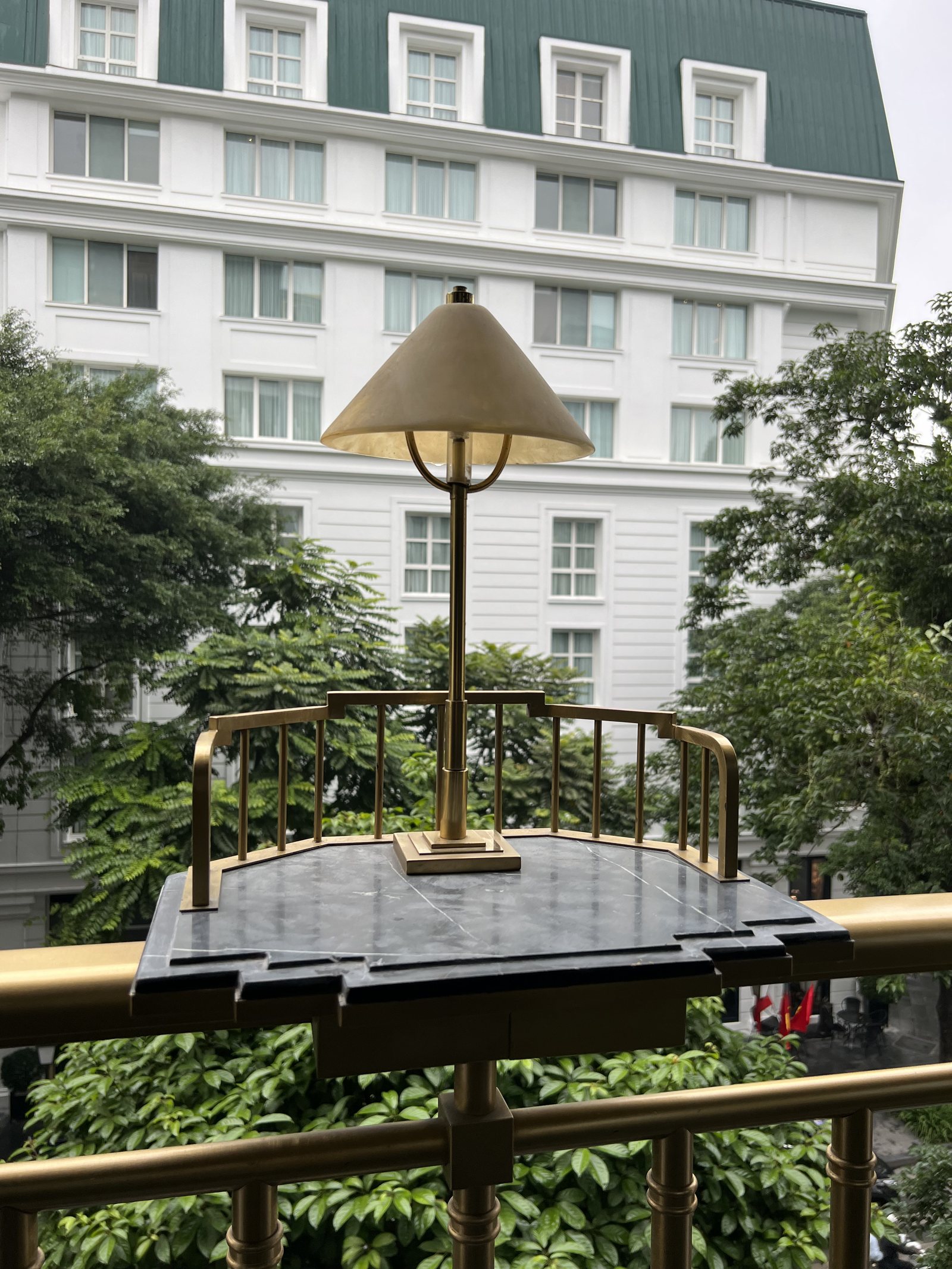
11 Le Phung Hieu, Hanoi, in the French Quarter, about half an hour in from the airport. The Opera House is a few minutes on foot, Hoan Kiem Lake a short walk, and the Old Quarter begins on the far side of it. Booked through Classic Travel on the Virtuoso programme, which carries an upgrade on arrival when the hotel has one, breakfast for two, a credit to use in the hotel during the stay, and early check-in and late check-out when they are available. Write to me and I will tell you which of the forty-seven rooms I would ask for.
Before you book
The questions people send me about Capella Hanoi.
- How many nights does Capella Hanoi deserve?
- Two nights is the shortest stay that works, and three is better. The hotel itself takes an evening to read, because there is something painted, framed or hung on almost every surface and you keep stopping. Add the Living Room ritual at the end of each day, a morning at Backstage and one dinner in the building, and two nights is already full. The Old Quarter and the lake are a walk away, so a third night buys you the city without moving hotels.
- Is it a good base for seeing Hanoi on foot?
- Yes, and that is a large part of why I would choose it. It sits in the French Quarter at a busy junction, with the Opera House a few minutes away and Hoan Kiem Lake a short walk. The Old Quarter begins just beyond that. You step out of a very quiet building into a street full of motorbikes and horns, and you step back into the quiet when you have had enough, which is the thing a city hotel has to get right.
- What is included in the rate, beyond the room?
- More than most hotels at this level include. The minibar comes with the room, soft drinks and snacks and chocolates, and the quality of it is high. Coffee and tea are available in the Living Room all day. Afternoon tea is served there, and so is the evening hour with champagne, cocktails, canapés and live music. There is a calendar of activities inside the hotel through the week, coffee cupping, calligraphy, paper craft, a tea session, a leather class, To He figures and a morning run. Spirits and wine from the room bar are a separate matter and sit on the bill. The Virtuoso benefits are added on top of all of this, so the two stack.
- Which restaurants are in the building, and which one has the star?
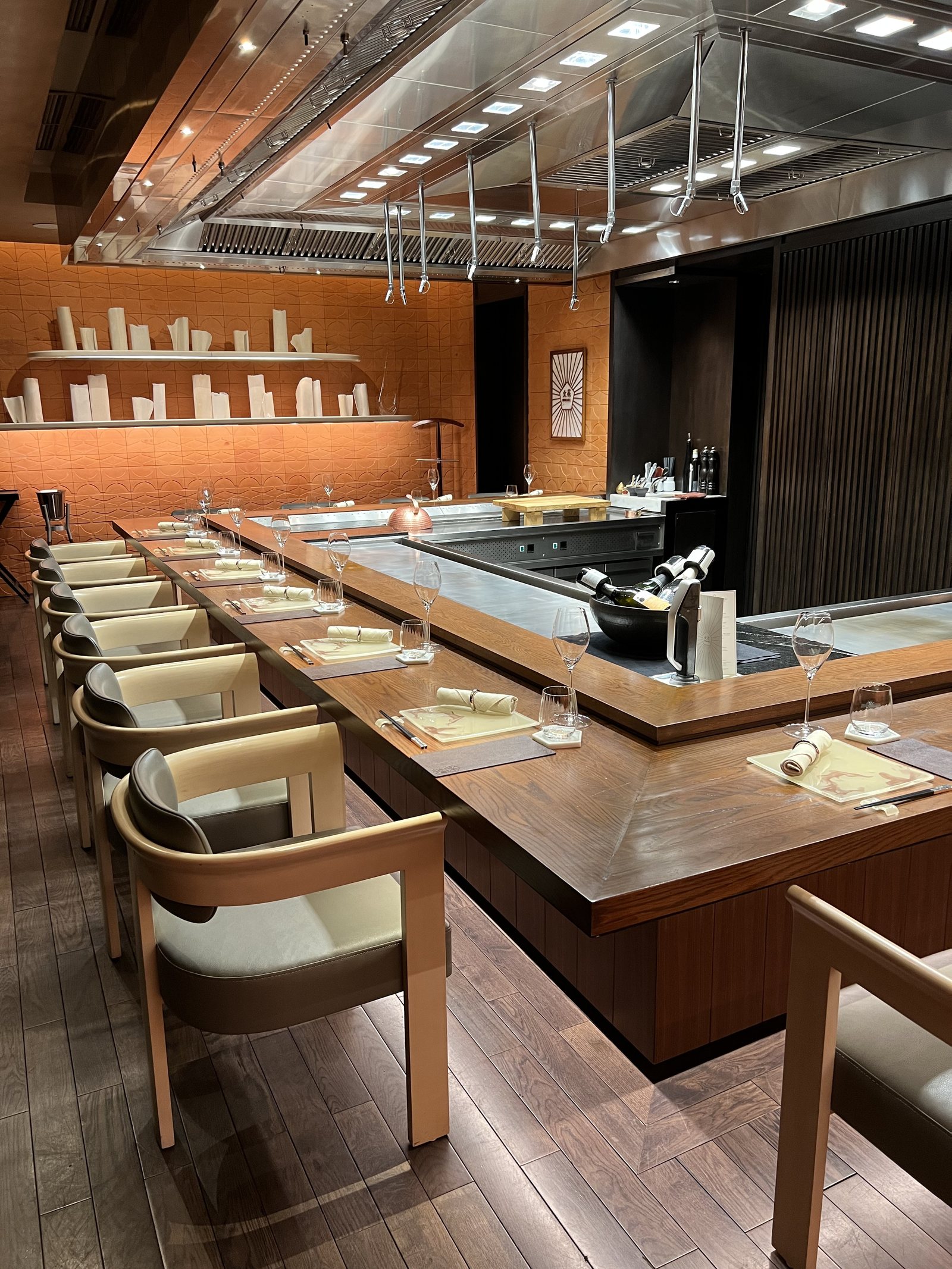
- Backstage on the ground floor is the main room and serves breakfast and northern Vietnamese cooking through the day. Koki holds the Japanese dining, and inside it Hibana by Koki is the teppanyaki counter that carries one Michelin star. The Hudson Rooms is a seafood and grill bistro done as 1920s New York, with Track 61 hidden behind it, and Diva's Lounge is the Art Deco bar for cocktails. Backstage and the Izakaya at Koki have both been listed by Michelin as well.
- What exactly comes with the evening ritual?
- Champagne and cocktails poured without a tab, canapés brought to the table, and live music in the room. It happens in the Living Room, the lounge by the entrance where guests also check in. There is an afternoon tea earlier in the day in the same room. All of it is part of staying there, and nothing came to the bill.
- Are the pool and the spa worth the time?
- La Grotta, the indoor pool, is the piece of the hotel I would not skip. It runs long and narrow under a line of lit glass, with green and white marble on the floor and mirrors overhead, and it looks like a set. You are given a drink, crisps and a cold towel when you arrive at it. I walked through Auriga, the spa, and saw the treatment rooms and the hydrotherapy area, and I did not book a treatment, so I cannot tell you how the hands are. If a treatment matters to your stay, book it before you come.
Something else you want to know? Write to me and I will answer it here.
Book online
Via Classic Travel, with the benefits attached.
The hotel's own rate, booked through a Virtuoso preferred-partner agency. Register once; the account stays linked to Wheresnik.
Check rates at Capella Hanoi →Or let me arrange it
The room, the dates, the rest of the list.
Write in English, Italian or Spanish. I answer personally, usually within a day.
Let Nik arrange it →